Adhyaya 210
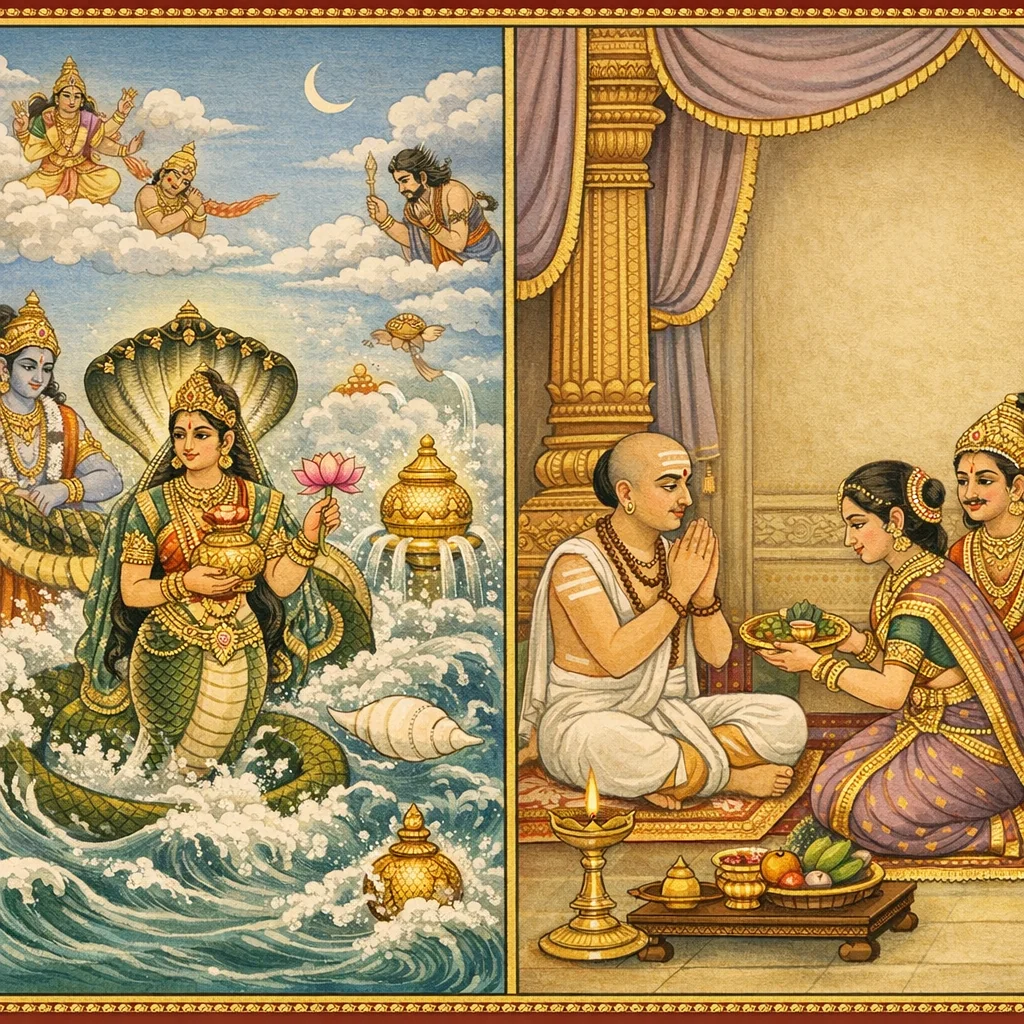
Adhyāya 210 opens with a restoration episode at Śaṅkhatīrtha: a king afflicted by disease is freed through a precisely timed rite—bathing and worship of Sūrya at sunrise on the Mādhava month’s aṣṭamī that falls on a Sunday. The text presents right timing and sincere observance as the means of relief. It then turns to the ethics of consumption and fault: improper use of tāmbūla (betel preparation) brings defects and loss of prosperity, and prāyaścitta measures are taught to regain purity. An origin-myth, set within the churning of the ocean, traces the rise of nāgavallī from divine events and substances linked with amṛta, and describes its spread among humans as increasing sensuality and diminishing ritual practice. The chapter ends with a formal corrective rite: at an auspicious time one invites a learned brāhmaṇa, honors him, prepares a golden leaf and related offerings, presents them with mantric confession, and receives assurance of purification. Thus it lays down a norm of regulated enjoyment, ethical restraint, and reparative gifting.
Shlokas
Verse 1
विश्वामित्र उवाच । तच्छ्रुत्वा वचनं तस्य देवर्षेर्नारदस्य च । सिद्धसेनो महीपालः प्राप्य तं योगमुत्तमम्
Viśvāmitra said: Having heard the words of the divine seer Nārada, King Siddhasena attained that supreme discipline of yoga.
Verse 2
माधवे मासि संप्राप्ते अष्टम्यां सूर्यवासरे । सूर्योदये तु संप्राप्ते यावत्स्नात्वाऽर्चयेद्रविम्
When the month of Mādhava (Vaiśākha) arrived—on the eighth lunar day, a Sunday—at sunrise he should bathe and then worship Ravi, the Sun, for the prescribed time.
Verse 3
तावत्कुष्ठविनिर्मुक्तः सहसा समपद्यत । ततो दिव्यवपुर्भूत्वा सन्तोषं परमं गतः
At that very moment he was suddenly freed from leprosy. Then, assuming a radiant divine form, he attained supreme contentment.
Verse 4
प्रायश्चित्तं ततश्चक्रे तांबूलस्य च भक्षणम् । अज्ञानेन कृतं यच्च चूर्णपत्रसमन्वितम्
Then he performed prāyaścitta, an act of expiation, for chewing tāmbūla (betel), which in ignorance he had taken together with powdered ingredients and the leaf.
Verse 5
ततश्च परमां लक्ष्मीं संप्राप्तः स महीपतिः । पितृपैतामहं राज्यं स प्रचक्रे यथा पुरा
Thereafter that king attained supreme Lakṣmī—highest prosperity—and he ruled again over the ancestral kingdom of his fathers and grandfathers, just as before.
Verse 6
एतत्ते सर्वमाख्यातं शंखतीर्थसमुद्भवम् । माहात्म्यं पार्थिवश्रेष्ठ किं भूयः श्रोतुमि च्छसि
All this has been told to you—the greatness that arises from Śaṃkhatīrtha. O best of kings, what more do you wish to hear?
Verse 7
आनर्त उवाच । अत्याश्चर्यमिदं ब्रह्मन्यत्त्वया परिकीर्तितम् । यल्लक्ष्मीस्तस्य सन्नष्टा चूर्णपत्रस्य भक्षणात्
Ānarta said: O Brāhmaṇa, what you have recounted is most astonishing—that his prosperity was destroyed because of chewing the powdered leaf-mixture.
Verse 8
कीदृक्तेन कृतं तस्य प्रायश्चित्तं विशुद्धय्रे । कीदृक्तेन कृतं तच्च निजराज्यं यथा पुरा
By what kind of act was his expiation performed for purification? And by what means did he regain his own kingdom as before?
Verse 9
विश्वामित्र उवाच । एषा पुण्यतमा मेध्या नागवल्ली नराधिप । अयथावत्कृता वक्त्रे बहून्दोषान्प्रयच्छति । तस्माद्यत्नेन संभक्ष्या दत्त्वा चैव स्वशक्तितः
Viśvāmitra said: O king, this nāgavallī (betel vine) is most meritorious and purifying. If prepared improperly and placed in the mouth, it produces many faults. Therefore it should be chewed with care, and one should also offer gifts according to one’s capacity.
Verse 10
आनर्त उवाच । नागवल्ली कथं जाता कस्माद्दोषो महान्स्मृतः । अयथावद्भक्षणाच्च तन्मे वक्तुमिहार्हसि
Ānarta said: How did the nāgavallī originate, and why is a great fault said to arise from consuming it improperly? You should explain that to me here.
Verse 11
विश्वामित्र उवाच । प्रश्नभारो महानेष त्वया मे परिकीर्तितः । तथापि च वदिष्यामि यदि ते कौतुकं नृप । यस्मात्सञ्जायते दोषश्चूर्णपत्रस्य भक्षणात्
Viśvāmitra said: Truly weighty is the burden of questions you have set before me. Yet, if you are eager to know, O king, I shall explain why a fault arises from chewing the leaf-mixture ground into powder.
Verse 12
अमृतार्थं पुरा देवैर्मथितः कलशोदधिः । मन्थानं मन्दरं कृत्वा नेत्रं कृत्वा तु वासुकिम्
Formerly, to obtain amṛta, the gods churned the Ocean of the Pot, making Mandara the churning-rod and Vāsuki the churning-cord.
Verse 13
मुखदेशे बलिर्लग्नः पुच्छदेशेऽखिलाः सुराः । वासुदेवमतेनैव सन्दधाराथ कच्छपः
Bali was stationed at the mouth-end, while all the gods took their place at the tail-end. Guided by Vāsudeva’s counsel, the Tortoise bore the strain and held firm.
Verse 14
मन्दरे भ्रममाणे तु प्रागेव नृपसत्तम । आनर्त सहसा जातं रत्नत्रितयमेव च
O best of kings, as Mandara was being whirled, suddenly—right at the outset—there arose Ānarta, and also a triad of precious jewels.
Verse 15
नीलांबरधरः कृष्णः पुरुषो वक्रनासिकः । कृष्णदन्तः स्थूलशिरा दीर्घग्रीवो महोदरः । शूर्पाकारांघ्रिरेवाऽसौ चिपिटाक्षो भयावहः
A dark man clad in blue garments appeared—crooked-nosed, with blackened teeth, a heavy head, a long neck, and a great belly; his feet were shovel-shaped, his eyes flat and distorted—terrifying to behold.
Verse 16
तथा तद्रूपिणी तस्य कुभार्या राक्षसी यथा । शिशुनांगुलिलग्नेन गर्भश्रमपरायणा
And likewise there appeared a rākṣasī woman, matching his form—his wicked wife—wearied by pregnancy, with an infant clinging to her finger.
Verse 17
ततो देवगणाः सर्वे दानवाश्च विशेषतः । मन्थानं तत्परित्यज्य तान्ग्रहीतुं प्रधाविताः
Then all the hosts of gods—and especially the dānavas—abandoned the churning and rushed forward to seize them.
Verse 18
अथ तान्विकृतान्दृष्ट्वा सर्वे शंकासमन्विताः । जगृहुर्नैव राजेंद्र जहसुश्च परस्परम्
But seeing those distorted forms, all were filled with doubt; they did not seize them, O king, and instead laughed among themselves.
Verse 19
अथोवाच बलिर्दैत्यः कृतांजलिपुटः स्थितः । ब्रह्माऽदि यल्लभेत्सर्वं यत्पुरस्तात्प्रजायते
Then Bali the daitya spoke, standing with hands joined in reverence: “Let Brahmā and the others receive whatever first comes forth, whatever is born at the forefront.”
Verse 20
रत्नत्रितयमेतद्धि तस्माद्गृह्णातु पद्मजः । येन सिद्धिर्भवेदस्मिन्मन्थने कस्य चाऽर्पणात्
“Indeed this is the triad of jewels; therefore let the Lotus-born (Brahmā) take it—by whose acceptance and offering may success be secured in this churning, for whoever is to receive it.”
Verse 21
तद्वाक्यं विष्णुना तस्य शंसितं शंकरेण तु । इंद्राद्यैश्च सुरैः सर्वैर्दानवैश्च विशेषतः
His statement was approved by Viṣṇu and likewise by Śaṅkara—by Indra and all the gods, and especially by the dānavas as well.
Verse 22
एतस्मिन्नंतरे ब्रह्मा जग्राह त्रितयं च तत् । दाक्षिण्यात्सर्वदेवानामनिच्छन्नपि पार्थिव । ममन्थुः सागरं राजन्पुनस्ते यत्नमाश्रिताः
Meanwhile Brahmā took up that triad—out of regard for all the gods, though unwilling, O king. Then, O ruler, they again exerted themselves and churned the ocean once more.
Verse 23
ततश्च वारुणी जाता दिव्यगन्धसमन्विता । बलिना संगृहीता सा प्रत्यक्षं बलविद्विषः
Then Vāruṇī arose, endowed with a divine fragrance; and she was taken by Bali—plainly, in the very presence of Bali’s foe (the Lord).
Verse 24
आवर्ते चापरे जाते निष्क्रांतः कौस्तुभो मणिः । स गृहीतो महाराज विष्णुना प्रभविष्णुना
When another whirlpool arose, the Kaustubha jewel emerged; and that jewel, O great king, was taken by Viṣṇu—the Lord of supreme might.
Verse 25
अथापरे स्थिते तत्र महावर्ते निशापतिः । सञ्जातः स वृषांकेन संगृहीतश्च तत्क्षणात्
Then, when yet another great whirlpool formed there, the Lord of the Night (the Moon) arose; and at once he was taken up by Vṛṣāṅka (Śiva).
Verse 26
पारिजातस्ततो जातो दिव्यगन्धसमन्वितः । स गृहीत्वा सुरैः सर्वैः स्थापितो नंदने वने
Thereupon the Pārijāta tree arose, suffused with celestial fragrance; and all the gods, taking it up, installed it in the Nandana grove.
Verse 27
तस्यानंतरमेवाथ सुरभी वत्ससंयुता । निष्क्रांता व्योममार्गेण गोलोकं समवस्थिता
Immediately after that, Surabhī—together with her calf—came forth and, traveling by the path of the sky, took her place in Goloka.
Verse 28
ततो धन्वंतरिर्जातो बिभ्रद्धस्ते कमंडलुम् । संपूर्णममृतेनैव स देवैर्दानवैनृप
Then Dhanvantari arose, bearing in his hand a water-pot (kamaṇḍalu) filled completely with amṛta; and at once, O king, the gods and the dānavas confronted him.
Verse 29
गृहीतो युगपत्क्रुद्धैः परस्परजिगीषया । देवानां हस्तगो वैद्यो दैत्यानां च कमण्डलुः
Seized at once by the wrathful parties, each intent on defeating the other—the physician (Dhanvantari) was in the hands of the gods, while the water-pot (kamaṇḍalu) was in the hands of the daityas.
Verse 30
ततस्तं लोभसंयुक्ता ममंथुः सागरं नृप । पद्महस्तात्र संजाता ततो लक्ष्मीः सितांबरा
Then, driven by greed, O king, they churned that ocean again; and there arose Lakṣmī, white-robed, with a lotus in her hand.
Verse 31
स्वयमेव वृतो विष्णुस्तया पार्थिवसत्तम । मथ्यमाने ततोतीव समुद्रे देवदानवैः
O best of kings, as the gods and the dānavas churned the ocean with mighty force, she of her own accord chose Viṣṇu.
Verse 32
कालकूटं समुत्पन्नं येन सर्वे सुरासुराः । संप्राप्ताः परमं कष्टं प्रभग्नाश्च दिशो दश
Then arose the Kālakūṭa poison, by which all the gods and asuras were driven into utmost distress, and the ten directions were thrown into turmoil.
Verse 33
तं दृष्ट्वा भगवाञ्छंभुस्तीव्रं तीवपराक्रमः । भक्षयामास राजेंद्र नीलकण्ठस्ततोऽभवत्
Seeing that fearsome poison, Bhagavān Śambhu—of irresistible valor—swallowed it, O king; and by that deed he became renowned as Nīlakaṇṭha, the Blue-throated Lord.
Verse 34
अथ संत्यज्य मंथानं मंदरं वासुकिं तथा । अमृतार्थेऽभवद्युद्धं दैत्यानां विबुधैः सह
Then, abandoning the churning-gear—Mount Mandara and Vāsuki as well—war arose between the Daityas and the gods, driven by the desire for amṛta, the nectar of immortality.
Verse 35
अथ स्त्रीरूपमाधाय विष्णुर्दैत्यानुवाच तान् । ततो हृष्टो बलिस्तस्यै दत्त्वा पीयूषमेव तत्
Then Viṣṇu assumed a woman’s form and addressed those Daityas; and Bali, delighted, gave her that very pīyūṣa—the nectar of immortality.
Verse 36
विश्वासं परमं गत्वा युद्धं चक्रे सुरैः सह । ततो विष्णुः परित्यज्य स्त्रीरूपं पुरुषाकृतिः
Having won complete trust, he fought together with the Devas; then Viṣṇu, returning to his male form, cast off the guise of a woman.
Verse 37
तदेवामृतमादाय ययौ यत्र दिवौकसः । अब्रवीत्तान्सुहृष्टात्मा पिवध्वममृतं सुराः
Taking that very nectar, he went to where the Devas were, and with a joyful heart said to them: “Drink the amṛta, O Devas.”
Verse 38
येनामरत्वमासाद्य व्यापादयत दानवान् । ते तथेति प्रतिज्ञाय पपुः पीयूषमुत्तमम्
By that nectar they would attain immortality and destroy the Dānavas; so they pledged, “So be it,” and drank the supreme draught.
Verse 39
अमराश्च ततो जाता जघ्नुः संख्ये महासुरान्
And then, becoming deathless, they slew the great Asuras in battle.
Verse 40
तेषां पानविधौ तत्र वर्तमाने महीपते । राहुर्विबुधरूपेण पपौ पीयूषमुत्सुकः
While the rite of drinking was proceeding there, O lord of the earth, Rāhu—eager—drank the nectar, having assumed the form of a god.
Verse 41
स लक्षितो महादैत्यश्चंद्रार्काभ्यां च तत्क्षणात् । निवेदितो हरे राजन्नायं देवो महासुरः
That great Daitya was recognized at once by the Moon and the Sun, and it was reported to Hari: “O king, this ‘god’ is a mighty Asura.”
Verse 42
तच्छ्रुत्वा वासुदेवेन तस्य चक्रं सुदर्शनम् । वधाय पार्थिवश्रेष्ठ मुक्तं वज्रसमप्रभम्
Hearing this, Vāsudeva released his Sudarśana discus to slay him, O best of kings—blazing with a splendor like a thunderbolt.
Verse 43
यावन्मात्रं शरीरं तत्तस्य व्याप्तं महीपते । अमृतेन ततः कृत्तममोघेनापि तच्छिरः
O king, as much of his body as had been pervaded (by the nectar), just so far did it become immortal; but his head, though struck down by the unfailing (discus), had already been cut off after tasting the amṛta.
Verse 44
ततोऽमरत्वमापन्नः स यावत्सिंहिकासुतः । तावत्प्रोक्तोऽच्युतेनाथ साम्ना परमवल्गुना
Thereupon, the son of Siṃhikā became immortal to that extent; then Acyuta addressed him with words of supreme gentleness and conciliation.
Verse 45
त्यज दैत्यान्महाभाग देवानां संमतो भव । संप्राप्स्यसि परां पूजां सदा त्वं ग्रहमंडले
O fortunate one, abandon the Daityas and become approved by the Devas; then you will ever receive the highest worship in the circle of the planets.
Verse 46
स तथेति प्रतिज्ञाय त्यक्त्वा तान्दैत्यसत्तमान् । पूजां प्राप्नोति मर्त्यानां संस्थितो ग्रहमण्डले
He vowed, “So be it,” and, abandoning those foremost among the Daityas, he came to receive the worship of mortals, established within the circle of the planets.
Verse 47
एतस्मिन्नंतरे दैत्या निर्जिताः सुरसत्तमैः । दिशो जग्मुः परित्रस्ताः केचिन्मृत्युमुपागताः
Meanwhile, the Daityas—defeated by the foremost of the gods—fled in terror to all directions, and some even met their death.
Verse 48
पीतशेषं च पीयूषं स्थापितं नन्दने वने । नागराजस्य यत्रैव स्थितमालानमेव च
The nectar that remained after it was drunk was placed in the Nandana grove—there, where the Nāga-king’s tethering-post (ālāna) also stood.
Verse 49
अहर्निशं मदस्रावी करींद्रः सोऽपि संस्थितः । तत्प्रभावैः प्रभिन्नः स पीयूषस्य कमंडलुः
There too stood the lordly elephant, oozing rut day and night; and by that influence, the nectar-pot (kamaṇḍalu) was split open.
Verse 50
ततो वल्ली समुत्पन्ना तस्माच्चैव कमण्डलोः । तत्रालानसमारूढा वृद्धिं च परमां गता
Then a creeper sprang forth from that very kamaṇḍalu, and, climbing upon the tethering-post there, it grew to a most extraordinary abundance.
Verse 51
तदुद्भवानि पत्राणि गृहीत्वा सुरसत्तमाः । अपूर्वाणि सुगंधीनि मत्वा ते भक्षयंति च
The foremost of the gods took the leaves that had sprung from it; deeming them unprecedented and sweetly fragrant, they ate them as well.
Verse 52
वक्त्रशुद्धिकृते राजन्विशेषेण प्रहर्षिताः
O king, they were especially delighted, for it brought purification of the mouth (and of speech).
Verse 53
अथ धन्वतरिर्वैद्यः स्वबुद्ध्या पृथिवीपते । नागालाने यतो जाता नागवल्ली भविष्यति
Then Dhanvantari, the divine physician, by his own insight, O lord of the earth, declared: “Since it has arisen within the Nāgālaya enclosure, it shall be known as Nāgavallī, the betel creeper.”
Verse 54
सदा स्मरस्य संस्थानं मम वाक्याद्भविष्यति । नागवल्लीति वै नाम तस्याश्चक्रे ततः परम्
“By my word, it shall forever be a seat of Smara (Kāma).” Thereafter he formally bestowed upon it the name ‘Nāgavallī.’
Verse 55
संयोगं च चकाराथ तांबूलं जायते यथा । पूगीफलेन चूर्णेन खदिरेणापि पार्थिव
Then, O king, he prepared the proper combination by which tāmbūla is made—mixing it with powdered areca-nut and also with khadira (catechu).
Verse 56
कस्यचित्त्वथ कालस्य वाणीवत्सरको नृपः । प्रतोषं नीतवाञ्छक्रं तपसा निर्मलेन च
After some time, King Vāṇīvatsaraka, by pure and stainless austerity, brought Śakra (Indra) to full satisfaction.
Verse 57
ततस्तत्तपसा तुष्ट इन्द्रो वचनमब्रवीत्
Then Indra, pleased by that austerity, spoke these words.
Verse 58
इन्द्र उवाच । भोभोः पार्थिव तुष्टोऽस्मि तपसाऽनेन सांप्रतम् । ब्रूहि यत्ते वरं दद्मि मनसा वांछितं सदा
Indra said: “O king, I am now pleased by this austerity of yours. Speak—whatever boon you always desire in your heart, that I shall grant you.”
Verse 59
सोऽब्रवीद्यदि मे तुष्टो यदि देयो वरो मम । विमानं खेचरं देहि येनागच्छामि ते गृहे । नित्यमेव धरापृष्ठाद्वंदनार्थं तव प्रभो
He said: “If you are pleased with me, and if a boon is to be granted, then give me a sky-going aerial chariot, by which I may come to your abode—daily from the surface of the earth—to bow to you, O Lord.”
Verse 60
स तथेति प्रतिज्ञाय हंसबर्हिणनादितम् । विमानं प्रददौ तस्मै मनोमारुतवेगधृक्
He (Indra) pledged, “So be it,” and granted him a vimāna resounding like swans and peacocks, swift as thought and as the wind in its speed.
Verse 61
स तत्र नित्यमारुह्य प्रयाति त्रिदशालयम् । भक्त्या परमया युक्तः सहस्राक्षं प्रवंदितुम्
Mounting it each day, he would go to the abode of the Thirty gods, endowed with supreme devotion, to bow before Sahasrākṣa (Indra).
Verse 62
तस्य शक्रः स्वहस्तेन तांबूलं च प्रयच्छति । स च तद्भक्षयामास प्रहृष्टेनांतरात्मना
Śakra (Indra) would personally offer him tāmbūla with his own hand; and he, inwardly delighted, would partake of it.
Verse 63
वृद्धभावेऽपि संप्राप्ते तस्य कामोऽत्यवर्द्धत । तांबूलस्य प्रभावेन सुमहान्पृथिवीपते
O lord of the earth, though old age had come upon him, his passion increased exceedingly—so great was the potency of tāmbūla.
Verse 64
अथ शक्रमुवाचेदं स राजा विनयान्वितः । नागवल्लीप्रदानेन प्रसादो मे विधीयताम्
Then that king, endowed with humility, spoke to Śakra (Indra): “By granting me the nāgavallī (betel vine), may your favor be bestowed upon me.”
Verse 65
मर्त्यलोके समानेतुं प्रचारं येन गच्छति । स तथेति प्रतिज्ञाय तस्मै तां प्रददौ तदा
So that it might spread and be carried into the mortal world, he agreed, saying “So be it,” and at that time gave it to him.
Verse 66
गत्वा निजपुरं सोपि स्वोद्यानेऽस्थापयत्तदा । ततः कालेन महता प्रचारं सा गता क्षितौ
Returning to his own city, he planted it in his garden. In the passing of great time, it spread far and wide upon the earth.
Verse 67
यस्याः स्वादनतो लोकः कामात्मा समपद्यत । न कश्चिद्यजनं चक्रे याजनं च विशेषतः । अन्या धर्मक्रियाः सर्वाः प्रणष्टा धर्मसंभवाः
By tasting it, people came under the rule of desire. None performed yajña, nor did anyone arrange for sacrifices to be offered; and all other dharmic observances, born of righteousness, were brought to ruin.
Verse 68
ततो देवगणाः सर्वे यज्ञभागविवर्जिताः । पीड्यमानाः क्रुधा विष्टा गत्वा प्रोचुः पितामहम्
Then all the hosts of gods, deprived of their shares in the yajña, distressed and filled with wrath, went and spoke to Pitāmaha (Brahmā).
Verse 69
मर्त्यलोके सुरश्रेष्ठ नष्टा धर्मक्रिया भृशम् । कामासक्तो यतो लोकस्तांबूलस्य च भक्षणात् । तस्मात्कुरु प्रसादं नो येनास्माकं क्रिया भवेत्
“O best of the gods, in the mortal world the rites of dharma have greatly perished, for people, by chewing tāmbūla, have become addicted to desire. Therefore show us grace, so that our due rites and offerings may once again be performed.”
Verse 70
एतस्मिन्नेव काले तु पुष्करस्थं पितामहम् । यजनार्थे समायातं दरिद्रो वीक्ष्य पार्थिव
At that very time, O king, a poor man, seeing Pitāmaha (Brahmā) at Puṣkara, who had come there for the sake of yajña, approached him.
Verse 71
प्रणिपत्य ततः प्राह विनयावनतः स्थितः । निर्विण्णोऽहं सुरश्रेष्ठ ब्राह्मणानां गृहे स्थितः
Having bowed down, he then spoke, standing in humility: “O best of the gods, I am weary, dwelling in the houses of brāhmaṇas, dependent upon them.”
Verse 72
तस्मात्कीर्तय मे स्थानं श्रेष्ठं वित्तवतां हि यत् । तत्र सञ्जायते तृप्तिः शाश्वती प्रचुरा प्रभो
“Therefore, O Lord, tell me of that excellent abode of the prosperous, where abundant and everlasting satisfaction arises.”
Verse 73
तस्य तद्वचनं श्रुत्वा चिरं ध्यात्वा पितामहः । अब्रवीच्च दरिद्रं तं छिद्रार्थं धनिना मिह
Having heard his words, the Grandsire (Brahmā) reflected for a long time. Then he addressed that poor one, saying: “Here are the means by which the wealthy may be ‘pierced’—their vulnerable points.”
Verse 74
चूर्णपत्रे त्वया वासः सदा कार्यो दरिद्र भोः । तांबूलस्य तु पर्णाग्रे भार्यया मम वाक्यतः
“O poor man, you must always make your dwelling in the powdered leaf. And, by my command, let my wife remain at the tip of the betel leaf (tāmbūla).”
Verse 75
पर्णानां चैव वृंतेषु सर्वेषु त्वत्सुतेन च । रात्रौ खदिरसारे च त्वं ताभ्यां सर्वदा वस
“And in all the stalks of the leaves—together with your son—make your abode. At night, dwell as well in the essence of khadira; thus remain with them always.”
Verse 76
धनिनां छिद्रकृत्प्रोक्तमेतत्स्थानचतुष्टयम् । पार्थिवानां विशेषेण मम वाक्या द्व्रज द्रुतम्
“These four ‘stations’ have been declared to create vulnerabilities for the wealthy—especially for kings. By my command, go there swiftly.”
Verse 77
नारद उवाच । एतत्ते सर्वमाख्यातं यत्पृष्टोऽस्मि नराधिप
Nārada said: “O lord of men, I have told you everything that you asked of me.”
Verse 78
तांबूलोत्थानि छिद्राणि यथा स्युर्धनिनामिह । तानि सर्वाणि चीर्णानि त्वया राजन्नजानता । तेन वै विभवोच्छित्तिः संजाता सहसा नृप
“The vulnerabilities that arise from tāmbūla (betel) among the wealthy—those very faults, O King, you have all committed unknowingly. Therefore, O ruler, the destruction of your prosperity has suddenly come about.”
Verse 79
राजोवाच । तदर्थमपि मे ब्रूहि प्रायश्चित्तं मुनीश्वर । कदाचिद्भक्षणं मे स्यात्तांबूलस्य तथाविधम्
The King said: “For that very reason, O lord among sages, tell me the expiation (prāyaścitta). At times it may happen that I partake of such betel in that improper manner.”
Verse 80
येन सञ्जायते शुद्धिः कुतांबूलसमुद्भवा
“By what means does purification arise for the impurity produced from improper betel (kutāmbūla)?”
Verse 81
विश्वा मित्र उवाच । शृणु राजन्प्रवक्ष्यामि प्रायश्चित्तं तु यच्चरेत् । आश्वासनेन शुद्ध्यर्थं कुतांबूलस्य भक्षणात्
Viśvāmitra said: “Listen, O King; I shall declare the expiation (prāyaścitta) that ought to be performed. For purification—after consuming improper betel—one should undertake the rite called ‘āśvāsana’, an act of pacifying assurance.”
Verse 82
पर्वकालं समुद्दिश्य सम्यक्छ्रद्धासमन्वितः । आनयेद्ब्राह्मणं राजन्वेदवेदांगपारगम्
“Having chosen an auspicious festival time (parva-kāla) and being duly endowed with faith (śraddhā), O King, one should invite a Brāhmaṇa learned in the Vedas and their auxiliaries, the Vedāṅgas.”
Verse 83
प्रक्षाल्य चरणौ तस्य वाससी परिधापयेत् । संपूज्य गंधपुष्पाद्यैस्ततः पत्रं हिरण्मयम् । स्वशक्त्या कारयित्वाऽथ चूर्णे मुक्ताफलं न्यसेत्
“Having washed his feet, one should clothe him with garments. After duly honoring him with fragrances, flowers, and the like, one should then have a golden betel-leaf prepared according to one’s means, and place a pearl upon the aromatic powder.”
Verse 84
पूगीफलं च वैडूर्यं खदिरं रूप्यमेव च । मन्त्रेणानेन विप्राय तथैव च समर्पयेत्
“And one should likewise present to the Brāhmaṇa—together with this mantra—areca-nut (pūgī), a vaiḍūrya gem (cat’s-eye), khadira, and also silver.”
Verse 85
यन्मया भक्षितं पूर्वं वृन्तं पत्रसमुद्भवम् । चूर्णपत्रं तथैवान्यद्रात्रौ खदिरमेव च
“Whatever I previously consumed—stalks and things arising from leaves, leaf-preparations with powder, and likewise other items, and even khadira at night—”
Verse 86
तस्य पापस्य शुद्ध्यर्थं तांबूलं प्रतिगृह्यताम् । ततस्तु ब्राह्मणो मंत्रमेवं राजन्नुदाहरेत्
For the cleansing of that sin, let the tāmbūla be accepted. Then, O King, the brāhmaṇa should recite the mantra in this manner.
Verse 87
यजमानहितार्थाय सर्वपापविशुद्धये । अज्ञानाज्ज्ञानतो वापि कुतांबूलं प्रभक्षितम्
For the welfare of the yajamāna and for the purification of all sins: whether through ignorance or even knowingly, impure or forbidden tāmbūla has been consumed—
Verse 88
भक्षयिष्यसि यच्चान्यत्कदाचिन्मे प्रसादनात् । तस्य दोषो न ते भावी मम वाक्यादसंशयम्
And whatever else you may eat at any time through my gracious acceptance, its fault will not accrue to you—of this there is no doubt, by my word.
Verse 89
अनेन विधिना दत्त्वा तांबूलं शुद्धिमाप्नुयात् । कुतांबूलस्य दोषेण गृह्यते न नरो नृप
Having given tāmbūla by this prescribed method, one attains purification. O King, a man is not seized by the fault arising from improper tāmbūla.
Verse 90
तस्मात्त्वं हि महाराज व्रतमेतत्समाचर । बहु पुण्यतमं ह्येतन्महाभोगविवर्द्धनम्
Therefore, O great King, undertake this vow. Indeed, it is exceedingly meritorious and it increases great prosperity and enjoyments.
Verse 91
यः प्रयच्छति राजेन्द्र विधिनानेन भक्तितः । जन्मजन्मान्तरे वापि न तांबूलेन मुच्यते
O lord of kings, whoever offers this tāmbūla with devotion according to this rite—even through birth after birth—will not be deprived of its auspicious blessing.
Verse 92
तांबूलं भक्षयित्वा यो नैतद्दानं प्रयच्छति । तांबूलवर्जितः सोऽत्र भवेज्जन्मनिजन्मनि
But whoever consumes tāmbūla and does not give the corresponding gift will, in this world, be one deprived of tāmbūla—birth after birth.
Verse 93
तांबूलवर्जितं यस्य मुखं स्यात्पृथिवीपते । कृपणस्य दरिद्रस्य तद्बिलं न हि तन्मुखम्
O lord of the earth, the mouth of one who is without tāmbūla is like a hole; for the miserly and impoverished, it is truly no ‘mouth’ at all.
Verse 94
तांबूलं ब्राह्मणेन्द्राय यो दत्त्वा प्राक्प्रभक्षयेत् । सुरूपो भाग्यवान्दक्षो भवेज्जन्मनिजन्मनि
Whoever, after first giving tāmbūla to an eminent Brāhmaṇa, then partakes of it, becomes handsome, fortunate, and capable—birth after birth.
Verse 95
एतत्ते सर्वमाख्यातं कुतांबूलस्य भक्षणात् । यत्फलं जायते पुंसां यद्दानेन महीपते
O king, I have now fully explained to you the fruits that arise for people from consuming tāmbūla and from giving it in charity.
Verse 96
शंखादित्यानुषंगेण तांबूलस्य च भक्षणे । ये दोषा ये गुणा राजन्दानं चैव प्रभक्षणे
O king, I have explained the faults and the virtues connected with eating tāmbūla, together with its attendant observances; and likewise the merits and concerns regarding its gifting as dāna and its consumption.
Verse 210
इति श्रीस्कांदे महापुराण एकाशीतिसाहस्र्यां संहितायां षष्ठे नागरखण्डे हाटकेश्वरक्षेत्रमाहात्म्ये तांबूलोत्पत्ति तांबूलमाहात्म्यवर्णनंनाम दशोत्तरद्विशततमोऽध्यायः
Thus ends, in the Śrī Skanda Mahāpurāṇa—within the Ekāśītisāhasrī Saṃhitā, in the sixth book, the Nāgara-khaṇḍa—within the Hāṭakeśvara-kṣetra-māhātmya, the two-hundred-and-tenth chapter, titled “The Origin of Tāmbūla and the Description of the Glory of Tāmbūla.”