Adhyaya 206
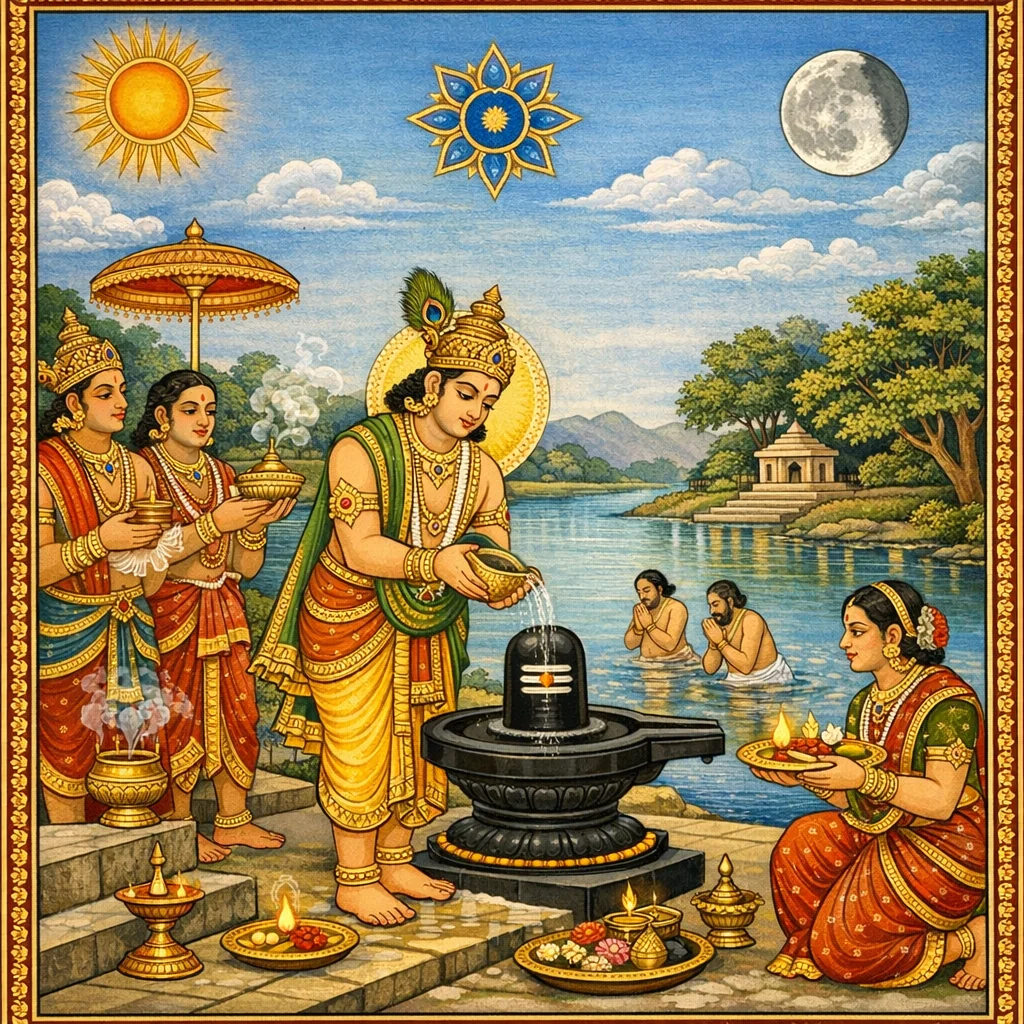
The chapter is framed as a tīrtha-māhātmya in a dialogue between Viśvāmitra and Ānarta. Acting on Viṣṇu’s instruction, Indra meets severe ascetics on Himavat and invites them to a śrāddha at Gayākūpī in Cāmatkārapura. The sages hesitate, fearing ethical danger: contact with quarrelsome people may provoke anger and diminish tapas, and accepting royal gifts may compromise ascetic purity. Indra replies that the place’s power, connected with Hāṭakeśvara, can indeed stir conflict, yet he will protect them from anger and ritual obstruction, and he extols the exceptional fruit of Gayā-related śrāddha. A crisis follows when the Viśvedevas are absent (attending Brahmā’s śrāddha); Indra declares that humans may perform ekoddiṣṭa-śrāddha without the Viśvedevas, and a disembodied voice confirms that the intended recipients still receive salvific benefit. Later Brahmā re-regulates the rule: only on specific days—especially the caturdaśī before pretapakṣa—and in certain death-circumstances is śrāddha without Viśvedevas valid. The narrative further explains the rise of kūṣmāṇḍas from the Viśvedevas’ tears and prescribes protective ash-lines on śrāddha food vessels to prevent disruption. Finally, Indra establishes a Śiva-liṅga near Bālamaṇḍana at a precisely stated calendrical moment (Māgha, bright fortnight, Puṣya, Sunday, trayodaśī), proclaims the merits of bathing and pitṛ-tarpaṇa there, and addresses priestly stewardship, patronage, and the moral peril of ingratitude.
Shlokas
Verse 1
विश्वामित्र उवाच । इंद्रोऽपि विष्णुवाक्येन हिमवंतं समागतः । ऐरावतं समारुह्य नागेद्रं पर्वतोपमम्
Viśvāmitra said: Urged by Viṣṇu’s words, Indra too came to Himavān; mounting Airāvata, he approached the lord of mountains, lofty as a peak itself.
Verse 2
तत्रापश्यदृषींस्तान्स चमत्कार समुद्भवान् । नियमैः संयमैर्युक्तान्सदाचारपरायणान् । वानप्रस्थाश्रमोपेतान्कामक्रोधविवर्जितान्
There he saw those ṛṣis—wondrous in their spiritual radiance—disciplined by observances and self-restraint, devoted to right conduct, established in the vānaprastha stage, and free from desire and anger.
Verse 3
एके विप्राः स्थितास्तेषामेकांतरितभोजनाः । षष्ठकालाशिनश्चान्ये चांद्रायणपरायणाः
Among them some brāhmaṇas lived eating only on alternate days; others ate only at the sixth time-period, and some were wholly devoted to the Cāndrāyaṇa vow.
Verse 4
अश्मकुट्टाः स्थिताः केचिद्दंतोलूखलिनः परे । शीर्णपर्णाशनाः केचिज्जलाहारास्तथा परे । वायुभक्षास्तथैवान्ये तपस्तेपुः सुदारुणम्
Some performed austerities by pounding stones; others used their teeth as mortars. Some lived on fallen leaves, others on water alone, and still others seemed to “feed on air”—thus they undertook exceedingly severe tapas.
Verse 5
अथ शक्रं समालोक्य तत्राऽयांतं द्विजोत्तमाः । पूजितं चारणैः सिद्धैस्तैरदृष्टं कदाचन
Then, seeing Śakra arrive there—he who is worshipped by the Cāraṇas and the Siddhas—the foremost of the twice-born were struck with wonder, for they had never beheld him before.
Verse 6
ते सर्वे ब्राह्मणाः प्रोक्तास्तदाश्रमसमीपगैः
All those brāhmaṇas were then addressed by the residents near that hermitage.
Verse 7
अयं शक्रः समायातो भवतामाश्रमे द्विजाः । क्रियतामर्हणं चास्मै यच्चोक्तं शास्त्रचिंतकैः
“O twice-born, this is Śakra who has come to your hermitage. Offer him the due arhaṇa—rightful honour—as enjoined by those learned in the śāstras.”
Verse 8
ततस्ते ब्राह्मणाः सर्वे विस्मयोत्फुल्ललोचनाः । संमुखाः प्रययुस्तूर्णं कृतांजलिपुटाः स्थिताः
Then all those brāhmaṇas, their eyes widened in wonder, quickly went forward to face him and stood with hands folded in reverence.
Verse 9
गृह्योक्तविधिना तस्मै संप्रहृष्टतनूरुहा । प्रोचुश्च विनयात्सर्वे किमागमनकारणम्
With hair standing on end in joy, they received him according to the rites taught in the Gṛhya tradition, and with humility all asked: “What is the reason for your coming?”
Verse 10
निरीहस्यापि देवेंद्र कौतुकं नो व्यवस्थितम्
O lord of the gods, even for one who is desireless, your purpose in coming here is not clear to us.
Verse 11
इन्द्र उवाच । कुशलं वो द्विजश्रेष्ठा अनिहोत्रेषु कृत्स्नशः । तपश्चर्यासु सर्वासु वेदाभ्यासे तथा श्रुते
Indra said: “O best of the twice-born, is all well with you in every respect—regarding your sacred rites without Agnihotra, your many austerities and disciplined observances, and your study of the Veda and the holy teachings?”
Verse 12
हाटकेश्वरजं क्षेत्रं त्यक्त्वा तीर्थमयं शुभम् । कस्मादत्र समायाता हिमार्तिजनके गिरौ
“Having left the auspicious Hāṭakeśvara sacred region, abounding in tīrthas, why have you come here, to this mountain that gives rise to the affliction of cold?”
Verse 13
तस्मात्सर्वे मया सार्धं समागच्छंतु सद्द्विजाः । चमत्कारपुरे पुण्ये बहुविप्रसमाकुले
“Therefore, let all you noble Brāhmaṇas come together with me to the holy Camatkārapura, thronged with many learned priests.”
Verse 14
वासुदेवसमादेशात्तत्र गत्वाथ सांप्रतम् । गयाकूपे करिष्यामि श्राद्धं भक्त्या द्विजोत्तमाः
By the command of Vāsudeva, having gone there now, I shall perform the śrāddha with devotion at the Gayā-kūpa, O foremost of Brāhmaṇas.
Verse 15
युष्मदग्रे चतुर्दश्यां प्रेतपक्ष उपस्थिते । खेचरत्वं समायातं सर्वेषां भवतां स्फुटम्
In your very presence, on the fourteenth day when the Pitṛ-season (Pretapakṣa) arrives, the attainment of sky-going status has clearly come to all of you.
Verse 16
सबालवृद्धपत्नीकाः साग्निहोत्रा मया सह । तस्माद्गच्छत भद्रं वस्तत्र स्थानं भविष्यति
With your children, elders, and wives—and with your Agnihotra fires—go along with me. Therefore proceed; may welfare be yours. There, a proper abode shall be granted to you.
Verse 17
ब्राह्मणा ऊचुः । न वयं तत्र यास्यामश्चमत्कारपुरं पुनः । अन्येऽपि ब्राह्मणास्तत्र वेदवेदांगपारगाः
The Brāhmaṇas said: “We shall not go there again to Camatkārapura. There are other Brāhmaṇas there as well, accomplished in the Vedas and the Vedāṅgas.”
Verse 18
नागरा याज्ञिकाः संति स्मार्ताः श्रुतिपरायणाः । तेषामग्रे कुरु श्राद्धं श्रद्धा चेच्छ्राद्धजा तव
There are Nāgara priests there—ritual experts, followers of Smṛti, devoted to Śruti. Perform the śrāddha in their presence, if your faith is truly born for śrāddha.
Verse 19
इन्द्र उवाच । तत्र ये ब्राह्मणाः केचिद्भवद्भिः संप्रकीर्तिताः । तथाविधाश्च ते सर्वे वेदवेदांगपारगाः
Indra said: “Those Brāhmaṇas there, whom you have mentioned—indeed all of them are of that kind: masters of the Vedas and the Vedāṅgas.”
Verse 20
श्रुताध्ययनसंपन्ना याज्ञिकाश्च विशेषतः । परं द्वेषपराः सर्वे तथा परुषवादिनः
“They are endowed with study of Śruti and are especially skilled as ritualists; yet all of them are excessively given to hatred and are harsh in speech.”
Verse 21
अहंकारेण संयुक्ताः परस्परजिगीषवः । तपसा विप्रयुक्ताश्च भोगसक्ता दिवानिशम्
“Bound by ego, striving to outdo one another, fallen away from austerity, and attached to pleasures day and night—such people are driven by rivalry rather than dharma.”
Verse 22
यूयं सर्वगुणोपेता विष्णुना मे प्रकीर्तिताः । तस्मादागमनं कार्यं मया सार्धं समस्तकैः
“You are endowed with all virtues, and Viṣṇu has praised you to me. Therefore you should come—together with me, all of you without exception.”
Verse 23
ब्राह्मणा ऊचुः । अस्माभिस्तेन दोषेण त्यक्तं स्थानं निजं हि तत् । बहुतीर्थसमोपेतं स्वर्गमार्गप्रदर्शकम्
The brāhmaṇas said: “Because of that fault, we abandoned our own dwelling-place—indeed that very place which is adorned with many tīrthas and which reveals the path that leads to heaven.”
Verse 24
यदि यास्यामहे तत्र त्वया सार्धं पुरंदर । अस्माकं स्वजनाः सर्वे रागद्वेषपरायणाः
“If we go there with you, O Purandara, all our own people are devoted to passion and hatred.”
Verse 25
अपराधान्करिष्यंति नित्यमेव पदेपदे । ईर्ष्याधर्मसमोपेताः परुषाक्षरजल्पकाः
“At every step they will constantly commit offenses—filled with envy and unrighteousness, speaking harsh words.”
Verse 26
ततः संपत्स्यते क्रोधः क्रोधाच्च तपसः क्षयः । ततो न प्राप्यते मुक्तिस्तद्गच्छामः कथं विभो
“From that, anger will arise; from anger comes the wasting away of austerity. Then liberation is not attained—so how can we go there, O Lord?”
Verse 27
अपरं तत्र भूपोऽस्ति देशे दानपरः सदा । आनर्ताधिपतिः ख्यातः सर्वभूमौ सदैव सः
“Moreover, there is a king in that region, always devoted to giving. He is renowned as the lord of Ānarta, famous throughout all the lands.”
Verse 28
ददाति विविधं दानं हस्त्यश्वकनकादिकम् । यदि तत्र न गृह्णीमस्तदा कोपं स गच्छति
“He gives many kinds of gifts—elephants, horses, gold, and the like. If we do not accept them there, then he becomes angry.”
Verse 29
भूपाले कोपमापन्ने स्वजनेषु विरोधिषु । सिद्धिर्नो तपसोऽस्माकं तेन त्यक्तं निजं पुरम्
“When the king is seized by wrath and our own people turn hostile, the fruition of our austerity will not be attained. Therefore we abandoned our own city.”
Verse 30
यदि गृह्णीमहे दानं तस्य भूपस्य देवप । तपसः संप्रणाशः स्याद्यद्धि प्रोक्तं स्वयंभुवा
“If we accept the gift of that king, O divine one, our austerity would be utterly ruined—so it has indeed been declared by Svayambhū (Brahmā).”
Verse 31
दशसूनासमश्चक्री दशचक्रिसमो ध्वजी । दशध्वजि समा वेश्या दशवेश्यासमो नृपः
A maker of wheels is said to be as sinful as ten slaughter-houses; a banner-bearer equals ten wheel-makers; a courtesan equals ten banner-bearers; and a king equals ten courtesans.
Verse 32
तत्कथं तस्य गृह्णीमो दानं पापरतस्य च । यथाऽन्ये नागराः सर्वे लोभेन महतान्विताः
How, then, can we accept a gift from one devoted to sin—when all other townsmen too are heavily driven by greed?
Verse 33
इन्द्र उवाच । प्रभावोऽयं द्विजश्रेष्ठास्तस्य क्षेत्रस्य संस्थितः । हाटकेश्वरसंज्ञस्य सर्वदैव व्यवस्थितः
Indra said: “O best of the twice-born, this is the enduring power established in that sacred field—the kṣetra known as Hāṭakeśvara—ever present at all times.”}]}
Verse 34
पितॄणां च सुतानां च बंधूनां च विशेषतः । श्वश्रूणां च स्नुषाणां च भगिनीभ्रातृभार्ययोः
For fathers and sons, and especially for one’s kinsfolk; for mothers-in-law and daughters-in-law; and for sisters and the wives of brothers—
Verse 35
तस्याधस्तात्स्वयं देवो हाटकेश्वरसंज्ञितः । पुरस्य विद्यते तस्य प्रतापेनाखिला जनाः
Beneath it, the God Himself—known as Hāṭakeśvara—abides; by the majesty of that city, all people are swayed (and held within its power).
Verse 36
सन्तप्यंते ततो द्वेषं प्रकुर्वंति परस्परम् । किं न श्रुतं भवद्भिस्तु यथा रामः सलक्ष्मणः । सीतया सह संप्राप्तो विरोधं परमं गतः
Then they burn within and fashion hatred toward one another. Have you not heard how Rāma, together with Lakṣmaṇa, arriving with Sītā, fell into a great conflict?
Verse 37
सीतया लक्ष्मणेनैव सार्धं कोपेन संयुतः । अवाच्यं प्रोक्तवान्विप्रास्तौ च तेन समं तदा
Joined with anger, along with Sītā and Lakṣmaṇa, he spoke what should not be spoken; and those two, at that time, responded in kind to him.
Verse 38
अपि मासं वसेत्तत्र यदि कोपविवर्जितः । तदा मुक्तिमवाप्नोति स्वर्गभाक्पञ्चरात्रतः
Even if one dwells there for a month, free from anger, then he attains liberation; and after five nights he becomes a partaker of heaven.
Verse 39
तस्मात्तत्र प्रगंतव्यं युष्माभिस्तु मया सह । ईर्ष्याधर्मं न युष्माभिस्ते करिष्यंति नागराः
Therefore you must go there along with me. The townsmen will not practice the “dharma of jealousy” against you.
Verse 40
न चैव भवतां कोपस्तत्रस्थानां भविष्यति । प्रसादान्मम विप्रेंद्राः सत्यमेतन्मयोदितम्
And your anger too will not arise while you remain there. By my favor, O foremost of brāhmaṇas, this is truly what I declare.
Verse 41
आनर्तः पार्थिवो दाने योजयिष्यति न क्वचित् । युष्माकं पुत्रपौत्रेभ्यो ये दास्यंति च कन्यकाः
The king of Ānarta will never at any time compel anyone in matters of gifting. Those maidens who are given in marriage to your sons and grandsons—their families shall act by free will, not by coercion.
Verse 42
सहस्रगुणितं तेषां तत्फलं संभविष्यति । अमावास्यादिने श्राद्धं कन्यासंस्थे दिवाकरे
For them, the fruit of that act will arise multiplied a thousandfold—especially when śrāddha is performed on the new-moon day, with the Sun placed in Kanyā (Virgo).
Verse 43
युष्मदग्रे द्विजश्रेष्ठा गया कूप्यां करिष्यति । यस्तस्य तत्फलं भावि सहस्रशतसंमितम्
In your very presence, O best of twice-born ones, the Gayā rite will be performed at Kūpyā. Whoever undertakes it—its fruit to come will be measured as a hundred-thousandfold.
Verse 44
गयाश्राद्धान्न सन्देहः सत्यमेतन्मयोदितम् । यदि श्राद्धकृते तत्र नायास्यथ द्विजोत्तमाः
There is no doubt regarding the Gayā-śrāddha; what I have spoken is truth. If you, O best of Brahmins, do not go there for the sake of performing śrāddha…
Verse 45
ततः शापं प्रदास्यामि तपोविघ्नकरं हि वः । एवं ज्ञात्वा मया सार्धं तत्राऽगच्छत सत्वरम्
Then I shall pronounce a curse upon you—one that will indeed obstruct your austerities. Knowing this, come swiftly there along with me.
Verse 46
इत्युक्तास्तेन ते सर्वे शक्रेण सह तत्क्षणात् । कश्यपश्चैव कौंडिन्य उक्ष्णाशः शार्कवो द्विषः
Thus addressed by him, all of them set out at that very moment together with Śakra—namely Kaśyapa, Kauṇḍinya, Ukṣṇāśa, Śārkava, and Dviṣa.
Verse 47
बैजवापश्चैव षष्ठः कापिष्ठलो द्विकस्तथा । एतत्कुलाष्टकं प्राप्तमिंद्रेण सह पार्थिव
And Baijavāpa as the sixth, along with Kāpiṣṭhala and Dvika—this group of eight lineages arrived together with Indra, O king.
Verse 48
अग्निष्वात्तादिकान्सर्वान्पितॄनाहूय कृत्स्नशः । विश्वेदेवांस्तथा चैव प्रस्थितः पाकशासनः
Having summoned in full all the Pitṛs beginning with the Agniṣvāttas, and also the Viśvedevas, Pākaśāsana (Indra) set forth.
Verse 49
सम्यक्छ्रद्धासमाविष्टश्चमत्कारपुरं प्रति । एतस्मिन्नेव काले तु ब्रह्मा लोकपितामहः
Fully permeated with sacred faith, he set forth toward Camatkārapura. And at that very time, Brahmā—the Pitāmaha, grandsire of the worlds—(also took action).
Verse 50
गयायां प्रस्थितः सोऽपि श्राद्धार्थं तत्र वासरे । विश्वेदेवाः प्रतिज्ञाय गयायां प्रस्थिता विधिम्
On that very day he too set out for Gayā, for the performance of śrāddha. And the Viśvedevas, having pledged to take part, likewise departed for Gayā in accordance with the ordained rite.
Verse 51
शक्र श्राद्धं परित्यज्य गता यत्र पितामहः । शक्रोऽपि तत्पुरं प्राप्य गयाकूप्यामुपागतः
To the place where Pitāmaha (Brahmā) had once gone, setting aside even the śrāddha—Śakra (Indra) too reached that city and came to the Gayā-kūpī, the sacred well of Gayā.
Verse 52
ततः स्नात्वाह्वयामास श्राद्धार्थं श्रद्धयान्वितः । विश्वेदेवान्पितॄंश्चैव काले कुतपसंज्ञिते
Then, after bathing and filled with faith, he invoked—for the sake of performing śrāddha—the Viśvedevas and the Pitṛs, at the time known as Kutapa.
Verse 53
एतस्मिन्नंतरे प्राप्ताः समाहूताश्च तेन ये । पितरो देवरूपा ये प्रेतरूपास्तथैव च
Meanwhile, those whom he had invoked arrived—the Pitṛs, some appearing in divine forms and others likewise in the forms of preta, departed spirits.
Verse 54
प्रत्यक्षरूपिणः सर्वे द्विजोपांते समाश्रिताः । विश्वेदेवा न संप्राप्ता ये गयायां गतास्तदा
All of them, in visible form, took their place beside the brāhmaṇa; but the Viśvedevas did not arrive then, for they had gone to Gayā.
Verse 55
ततो विलंबमकरोत्तदर्थं पाक शासनः । विश्वेदेवा यतः श्राद्धे पूज्याः प्रथममेव च
Therefore Pākaśāsana (Indra) delayed the rite for that reason—because in śrāddha the Viśvedevas are to be worshipped first of all.
Verse 56
एतस्मिन्नंतरे प्राप्तो नारदो मुनिसत्तमः । शक्रं प्राह समागत्य विश्वेदेवाऽभिकांक्षिणम्
Just then Nārada, best of sages, arrived; coming near, he spoke to Śakra, who was longing for the Viśvedevas to appear.
Verse 57
नारद उवाच । विश्वेदेवा गताः शक्र श्राद्धे पैतामहेऽधुना । गयायां ते मया दृष्टा गच्छमानाः प्रहर्षिताः
Nārada said: “O Śakra, the Viśvedevas have now gone to Pitāmaha’s śrāddha. I saw them in Gayā—departing joyfully.”
Verse 58
तच्छ्रुत्वा तत्र कुपितस्तेषामुपरि तत्क्षणात् । अब्रवीत्परुषं वाक्यं विप्राणां पुरतः स्थितः
Hearing this, he became angry at them at once; standing before the brāhmaṇas, he spoke harsh words.
Verse 59
विश्वेदेवान्विना श्राद्धं करिष्याम्यहमद्य भोः । तथान्ये मानवाः सर्वे करिष्यंति धरातले
“Without the Viśvedevas I shall perform śrāddha today; and in the same way all other men upon the earth will perform it.”
Verse 61
एवमुक्त्वा सहस्राक्ष एकोद्दिष्टानि कृत्स्नशः । चकार सर्वदेवानां ये हता रणमूर्धनि
Having spoken thus, Sahasrākṣa (Indra) performed, in full, the ekoddiṣṭa offerings for all the gods who had been slain on the battlefield.
Verse 62
एतस्मिन्नेव काले तु वागुवाचाशरीरिणी । येषामुद्दिश्य तच्छ्राद्धं कृतं तेषां नृपोत्तम
At that very moment, an incorporeal voice spoke: “O best of kings, those for whom that śrāddha has been performed—having been duly intended by name and purpose—shall surely attain its ordained result.”
Verse 63
शक्रशक्र महाबाहो येषां श्राद्धं कृतं त्वया । प्रेतत्वे संस्थितानां च प्रेतत्वेन विवर्जिताः
“O Śakra, O mighty-armed one! Those for whom you have performed the śrāddha—even if they were abiding in the state of preta—have been freed from pretahood.”
Verse 64
गताः स्वर्गप्रसादात्ते दिव्यरूपवपुर्धराः । ये पुनः स्वर्गताः पूर्वं युध्यमाना महाहवे
“By the grace that leads to heaven, they have gone to heaven, bearing divine forms. And those who had earlier reached heaven while fighting in a great battle…”
Verse 65
ते च मोक्षं गताः सर्वे प्रसादात्तव वासव । तच्छ्रुत्वा वासवो वाक्यं तोषेण महतान्वितः
“And all of them, O Vāsava, have likewise attained liberation by your grace.” Hearing these words, Vāsava (Indra) was filled with great satisfaction.
Verse 66
अहो तीर्थमहो तीर्थं शंसमानः पुनःपुनः । एतस्मिन्नन्तरे प्राप्ता विश्वे देवाः समुत्सुकाः
Exclaiming again and again, “Ah! What a tīrtha—what a tīrtha!”, he praised it. Meanwhile, the Viśvedevas arrived there, eager and expectant.
Verse 67
निर्वृत्य ब्रह्मणः श्राद्धं गयायां तत्र पार्थिव । प्रोचुश्च वृत्रहंतारं कुरु श्राद्धं शतक्रतो
O king, having duly completed Brahmā’s śrāddha there at Gayā, they spoke to the slayer of Vṛtra: “O Śatakratu, perform śrāddha.”
Verse 68
भूयोऽपि न विनाऽस्माभिर्लभ्यते श्राद्धजं फलम् । वयं दूरात्समायातास्तव श्राद्धस्य कारणात् । निर्वर्त्य ब्रह्मणः श्राद्धं येन पूर्वं निमंत्रिताः
“Moreover, the fruit born of śrāddha is not obtained without us. We have come from far away for the sake of your śrāddha—having completed Brahmā’s śrāddha, to which we had been previously invited.”
Verse 69
तच्छ्रुत्वा वचनं तेषां कुपितः पाकशासनः । अब्रवीत्परुषं वाक्यं मेघगम्भीरया गिरा
Hearing their words, Pākaśāsana (Indra) became angry and spoke harshly, in a voice deep as thunderclouds.
Verse 70
अद्यप्रभृति यः श्राद्धं मर्त्यलोके करिष्यति । अन्योऽपि यो भवत्पूर्वं वृथा तस्य भविष्यति
(Indra said:) “From this day onward, whoever performs śrāddha in the mortal world—by any other manner as before you—shall find it fruitless.”
Verse 71
एकोद्दिष्टानि श्राद्धानि करिष्यंत्यखिला जनाः । सांप्रतं मर्त्यलोकेऽत्र मर्यादेयं कृता मया
(Indra said:) “Now all people shall perform ekoddiṣṭa-śrāddhas. At this time, in this mortal world, this boundary and rule have been established by me.”
Verse 72
भूताः प्रेताः पिशाचाश्च ये चान्ये श्राद्धहारकाः । विश्वेदेवैः प्ररक्ष्यंते रक्षयिष्यामि तानहम्
“As for the bhūtas, pretas, piśācas, and all other beings who steal away the offerings of śrāddha—those whom the Viśvedevās protect, I myself shall protect.”
Verse 73
यजमानस्य काये च श्राद्धं संयोज्य यत्नतः । मया हताः प्रयास्यंति सर्वे ते दूरतो द्रुतम्
“When the śrāddha is carefully bound and secured upon the sacrificer’s person, all those beings—struck down by me—will swiftly flee far away.”
Verse 74
एवमुक्त्वा सहस्राक्षो विश्वेदेवांस्ततः परम् । प्रोवाच ब्राह्मणान्सर्वान्विश्वेदेवैर्विना कृतम् । श्राद्धकर्म भवद्भिस्तु कार्यमन्यैश्च मानवैः
Having spoken thus, Sahasrākṣa (Indra) then addressed the Viśvedevās further, and proclaimed to all the brāhmaṇas: “The śrāddha rite is to be performed by you and by other men—yet performed without the due participation of the Viśvedevās.”
Verse 76
तेषामुष्णाश्रुणा तेन यत्पृथ्वी प्लाविता नृप । भूतान्यंडान्यनेकानि संख्यया रहितानि च
O King, by their hot tears the earth was flooded; and there were countless eggs of beings—beyond all reckoning.
Verse 77
ततोंऽडेभ्यो विनिष्क्रांताः प्राणिनो रौद्ररूपिणः । कृष्णदंताः शंकुकर्णा ऊर्ध्वकेशा भयावहाः । रक्ताक्षाश्च ततः प्रोचुर्विश्वेदेवांश्च ते नृप
Then, from those eggs emerged living beings of dreadful form—black-toothed, spike-eared, with hair standing upright, terrifying, and red-eyed. Thereupon, O King, they spoke to the Viśvedevās.
Verse 78
वयं बुभुक्षिताः सर्वे भोजनं दीयतां ध्रुवम् । भवद्भिर्विहिता यस्माद्याचयामो न चापरम्
We are all hungry—give us food without fail. Since we have been appointed by you, we ask only this, and nothing else.
Verse 79
तथेत्युक्ते द्विजेंद्रैश्च विश्वेदेवाः सुदुःखिताः । रुरुदुर्बाष्पपूरेण प्लावयन्तो वसुन्धराम्
When the foremost brāhmaṇas said, “So be it,” the Viśvedevās, overwhelmed with grief, wept torrents of tears, flooding the earth.
Verse 80
एवमुक्त्वा तु ते श्राद्धं विश्वेदेवा नृपोत्तम । ब्रह्मलोकं गताः सर्वे दुःखेन महताऽन्विताः । प्रोचुश्च दीनया वाचा प्रणिपत्य पितामहम्
Having spoken thus concerning the śrāddha, O best of kings, all the Viśvedevās—laden with great sorrow—went to Brahmaloka; and, bowing down to Pitāmaha (Brahmā), they addressed him in a humble voice.
Verse 81
वयं बाह्याः कृता देव श्राद्धानां बलविद्विषा । तव श्राद्धे गता यस्माद्गयायां प्राङ्निमंत्रिताः
O Lord, we have been cast out from the śrāddha rites by the enemy of Bala (Indra). For we had gone to your śrāddha at Gayā, having been invited beforehand.
Verse 82
तेन रुष्टः सहस्राक्षस्तव चांते समागताः । तस्मात्कुरु प्रसादं नः श्राद्धार्हाः स्याम वै यथा
Therefore Sahasrākṣa (Indra) grew wrathful, and we have come into your presence. Grant us your grace, so that we may truly become fit to receive the śrāddha offerings.
Verse 83
तच्छ्रुत्वा सत्वरं ब्रह्मा कृपया परयान्वितः । विश्वेदेवान्समादाय कूप्माण्डैस्तैः समन्वितान्
Hearing this, Brahmā at once—moved by supreme compassion—gathered the Viśvedevas together, accompanied by those Kūṣmāṇḍas.
Verse 85
एतस्मिन्नेव काले तु ब्रह्मा तत्र समागतः । विश्वेदेवसमायुक्तो हंसयानसमाश्रितः
At that very time Brahmā arrived there, accompanied by the Viśvedevas, seated upon his swan-borne chariot.
Verse 86
शक्रोऽपि सहसा दृष्ट्वा संप्राप्तं कमलासनम् । अर्घ्यमादाय पाद्यं च सत्वरं सम्मुखो ययौ
Śakra (Indra) too, suddenly seeing the Lotus-seated one arrive, quickly took the arghya and the water for washing the feet (pādya), and went forward to greet him.
Verse 87
ततः प्रणम्य शिरसा साष्टांगं विनयान्वितः । प्रोवाच प्रांजलिर्भूत्वा स्वागतं ते पितामह
Then, bowing his head and prostrating fully (sāṣṭāṅga) in humility, he spoke with folded hands: “Welcome to you, O Pitāmaha (Grandsire).”
Verse 88
तव संदर्शनादेव ज्ञातं जन्मत्रयं मया । द्रुतं पूर्वं शुभं कर्म करोमि च यथाऽधुना
By your very presence (darśana) I have come to know my threefold births; and now I swiftly perform the auspicious deed that was formerly due to be done.
Verse 89
करिष्यामि परे लोके व्यक्तमेतदसंशयम्
I shall do it in the world beyond—this is clear, without any doubt.
Verse 90
निःस्पृहस्यापि ते देव यदागमनकारणम् । तन्मे द्रुततरं ब्रूहि येन सर्वं करोम्यहम्
O god, though you are desireless, tell me swiftly the reason for your coming—so that I may do everything required.
Verse 91
ब्रह्मोवाच । यैर्विना न भवेच्छ्राद्धं ममापि सुरसत्तम । विश्वेदेवास्त्वया तेऽद्य श्राद्धबाह्या विनिर्मिताः
Brahmā said: “O best among the gods, without whom even my own Śrāddha cannot be performed—those very Viśvedevas have today been made by you to stand outside the Śrāddha (excluded from it).”
Verse 92
तत्त्वया न कृतं भद्रं तेन कर्म वितन्वता । अप्रमाणं कृता वेदा यतश्च स्मृतयस्तथा
By you, in extending that deed, no good has been accomplished; for thereby the Vedas—and likewise the Smṛtis—have been made as though without authority, untrustworthy.
Verse 93
एते पूर्वं मया शक्र श्राद्धार्थं विनिमंत्रिताः । पश्चात्त्वया न दोषोऽस्ति तस्माच्चैषां महात्मनाम्
“O Śakra, these were first invited by me for the sake of the Śrāddha. Afterwards, there is no fault on your part; therefore, regarding these great-souled ones…”
Verse 94
तस्माच्छापप्रमोक्षार्थं त्वं यतस्व सुरेश्वर । येन स्युः श्राद्धयोग्याश्च सर्वेऽमी दुःखिता भृशम्
Therefore, O Lord of the gods, strive to bring about release from this curse, so that all these may again become fit to receive Śrāddha-offerings—for they are exceedingly afflicted with sorrow.
Verse 95
पुरा ह्येतन्मया प्रोक्तं सर्वेषां च द्विजन्मनाम् । एतत्पूर्वं च यच्छ्राद्धं सफलं तद्भविष्यति
Indeed, this was proclaimed by me long ago for all the twice-born; and whatever Śrāddha was performed before this, that shall be fruitful and effective.
Verse 96
तत्कथं मम वाक्यं त्वमसत्यं प्रकरोषि च
How then do you make my statement into something untrue?
Verse 97
इंद्र उवाच । मयाऽपि कोपयुक्तेन शप्ता एते पितामह । तद्यथा सत्यवाक्योऽहं प्रभवामि तथा कुरु
Indra said: O Grandfather, even I, seized by anger, cursed these. Therefore act so that I may remain a speaker of truth and that my word may stand effective.
Verse 98
ब्रह्मोवाच । तव वाक्यं यथा सत्यं प्रभविष्यति वासव । तथाऽहं संविधास्यामि विश्वेदेवार्थमेव ह
Brahmā said: O Vāsava, I shall arrange matters so that your word will indeed prove true—specifically with regard to the Viśvedevās.
Verse 99
विश्वेदेवैर्विना श्राद्धं यत्त्वया समुदाहृतम् । एकोद्दिष्टं नराः सर्वे करिष्यंति धरातले
The śrāddha you proclaimed to be performed without the Viśvedevās—on the earth, all people will perform it as an ekoddiṣṭa (single-intent) śrāddha.
Verse 100
तस्मिन्नहनि देवेंद्र त्वया यत्र विनिर्मितम् । प्रेतपक्षे चतुर्दश्यां शस्त्रेण निहतस्य च
On that very day, O Lord of the gods—the day instituted by you—namely, on the fourteenth day of the fortnight of the departed (preta-pakṣa), and also for one slain by a weapon—
Verse 101
क्षयाहे चाऽपि संजाते विश्वेदेवैर्विना कृतम् । नागरस्य शुभं श्राद्धं वचनान्मे भविष्यति
Even when a kṣayāha (a calendrically diminished day) occurs, the auspicious Nāgara śrāddha performed without the Viśvedevās shall, by my decree, be effective.
Verse 102
शेषकाले तु यः श्राद्धं प्रकरिष्यति तैर्विना । व्यर्थं संपत्स्यते तस्य मम वाक्यादसंशयम्
But at other times, whoever performs śrāddha without them (the Viśvedevās), for him it becomes fruitless—this is certain by my word, without doubt.
Verse 104
मुक्त्वा शस्त्रहतं चैकं तस्मिन्नहनि यो नरः । करिष्यति तथा श्राद्धं भूतभोज्यं भविष्यति । विश्वामित्र उवाच । तथेत्युक्ते तु शक्रेण ब्रह्मा लोकपितामहः । विश्वेदेवैस्ततः प्रोक्तो विनयावनतैः स्थितैः
Except in the single case of one slain by a weapon, if on that day a man performs śrāddha in that improper way, it will become food for spirits (bhūtas). Viśvāmitra said: When Śakra (Indra) had said, “So be it,” Brahmā, the grandsire of the worlds, was then addressed by the Viśvedevās, who stood bowed in humility.
Verse 105
एते पुत्राः समुत्पन्ना अस्मदश्रुभ्य एव च । तेषां तु भोजनं दत्तं क्षुधार्तानां मया विभो
“These sons have indeed arisen from my very tears; and I, O Lord, have given food to them when they were afflicted by hunger.”
Verse 106
अस्मद्विवर्जितं श्राद्धं कुपितैर्वासवोपरि । तद्यथा जायते सत्यं वाक्यमस्मदुदीरितम्
“A śrāddha offering that excludes us is being performed—thereby the divine powers are angered against Vāsava (Indra). May the words spoken by us prove true, just as they were uttered.”
Verse 107
अस्माकं वासवस्यापि तथा कुरु पितामह । निरूपय शुभाहारं येन स्यात्तृप्तिरुत्तमा
“So too, O Grandfather (Pitāmaha), arrange it for us—and for Vāsava (Indra) as well. Prescribe an auspicious food-offering by which the highest satisfaction may arise.”
Verse 108
एतेषामेव सर्वेषां प्रसादात्तव पद्मज
O Padmaja (Brahmā), by your grace alone does favor come to all of these.
Verse 109
पद्मज उवाच । श्राद्धकाले तु विप्राणां भोज्यपात्रेषु कृत्स्नशः । भस्मरेखां प्रदास्यंति ह्येतैस्तत्त्याज्यमेव हि
Padmaja (Brahmā) said: “At the time of śrāddha, these beings will draw lines of ash all around the brāhmaṇas’ eating-vessels. Therefore, in their case, that food/arrangement must indeed be avoided.”
Verse 111
एतेभ्यश्चैव तद्दत्तं मया तुष्टेन सांप्रतम् । एवमुक्त्वा ततो नाम तेषां चक्रे पितामहः
“And to these as well, I—now satisfied—have presently granted that share.” Having said so, Pitāmaha (Brahmā) then assigned them a name.
Verse 112
कुशब्देन स्मृता भूमिः संसिक्ता चाश्रुणा यतः । ततोंऽडानि च जातानि तेभ्यो जाता अमी घनाः । कूष्मांडा इति विख्याता भविष्यंति जगत्त्रये
“Because the earth was recalled by the word ‘ku’ and was moistened with tears, eggs were produced from that; and from those eggs these dense-bodied beings were born. They will become famous in the three worlds as ‘Kūṣmāṇḍas’.”
Verse 113
ततस्तांश्च त्रिधा कृत्वा क्रमेणैवार्पयत्तदा । अग्नेर्वायोस्तथार्कस्य वाक्यमेतदुवाच ह
Then, dividing them into three groups, he offered them in due order—to Agni, to Vāyu, and to Arka (the Sun). And he spoke these words.
Verse 114
यजुर्वेदे प्रविख्यातं यद्देवति ऋचां त्रयम् । तेन भागः प्रदातव्य एतेषां भक्तिहोमतः
That triad of ṛk-verses, renowned in the Yajurveda and addressed to the deities—by that rite their due share should be bestowed, through homa-offerings made with devotion.
Verse 115
कोटिहोमोद्भवे चैव निजभागस्य मध्यतः । तेन तृप्तिं प्रयास्यंति मम वाक्यादसंशयम्
And from the merit arising from a crore of homas—indeed, from the very midst of their own allotted share—by that they will attain satisfaction. By my word, there is no doubt.
Verse 116
एवमुक्त्वा चतुर्वक्त्रस्ततश्चादर्शनं गतः । विश्वेदेवास्तथा हृष्टाः कूष्माण्डाश्च विशेषतः
Having spoken thus, the four-faced one (Brahmā) then vanished from sight. The Viśvedevas rejoiced, and the Kūṣmāṇḍas in particular were delighted.
Verse 117
एतस्मात्कारणाद्रक्षा क्रियते भस्मसम्भवा । विप्राणां भोज्यपात्रेषु श्राद्धे कूष्मांडजाद्भयात् । नागराणां न वांछंति श्राद्धे छिद्रं यतः शृणु
For this reason, a protective rite born of ash (bhāsma) is performed—out of fear of trouble arising from the Kūṣmāṇḍas—upon the food-vessels of the brāhmaṇas during śrāddha. Therefore the people of Nāgara do not desire any “breach,” any fault, in the śrāddha; hear why.
Verse 118
तेषां स्थाने यतो जाता दाक्षिण्येन समन्विताः । निषिद्धा भस्मजा रक्षा भर्तृयज्ञेन तेजसा
Because, in their place, there arose those endowed with graciousness and proper reverence, the ash-born protective rite came to be prohibited—overpowered by the splendor of the Bhartṛ-yajña.
Verse 119
तदर्थं नागराः सर्वे न कुर्वन्ति हि कर्हिचित् । इन्द्रोऽपि च गते तस्मिंश्चतुर्वक्त्रे निजालयम्
For that reason, all the Nāgaras never perform it at any time. And when the four-faced one had gone to his own abode, Indra too then acted.
Verse 120
अब्रवीद्ब्राह्मणान्सर्वांश्चमत्कारपुरोद्भवान् । कृतांजलिपुटो भूत्वा विनयावनतः स्थितः
He addressed all the brāhmaṇas who had arisen in that wondrous city; forming his hands in añjali, he stood with humility, bent in reverence.
Verse 121
श्रूयतां मद्वचो विप्राः करिष्यथ ततः परम् । स्थापयिष्याम्यहं लिंगं देवदेवस्य शूलिनः
“Hear my words, O brāhmaṇas; then you shall act accordingly. I shall establish a liṅga of Śūlin, the God of gods.”
Verse 122
ततस्तैर्ब्राह्मणैस्तस्य दर्शितं स्थानमुत्तमम् । सोऽपि लिंगं च संस्थाप्य प्रहृष्टस्त्रिदिवं ययौ
Then those brāhmaṇas showed him an excellent place. He too, having installed the liṅga, departed joyfully to heaven.
Verse 123
विश्वामित्र उवाच । एतत्ते सर्वमाख्यातं यत्पृष्टोऽस्मि नराधिप । गयाकूप्याश्च माहात्म्यं सर्वकामप्रदायकम्
Viśvāmitra said: “O king, I have fully told you all that which you asked of me—the greatness of Gayākūpī, which bestows every desired aim.”
Verse 124
आनर्त उवाच । गयाकूप्याश्च माहात्म्यं भवता मे प्रकीर्तितम् । बालमंडनजं वापि सांप्रतं वक्तुमर्हसि
Ānarta said: “You have recounted to me the greatness of Gayākūpī. Now, pray explain as well the tīrtha-merit connected with the shaving rite of a child (bāla-maṇḍana).”
Verse 126
विश्वामित्र उवाच । सहस्राक्षेण ते विप्रा लिंगार्थं याचिता यदा । स्थानं शुभं पवित्रं च सर्वक्षेत्रस्य मध्यगम्
Viśvāmitra said: “When Sahasrākṣa (Indra) requested those brāhmaṇas, for the sake of establishing a liṅga, they pointed out a place auspicious and pure, situated in the very midst of the entire sacred region.”
Verse 127
ततस्तैर्दर्शितं लिंगं सुपुण्यं बालमंडनम् । यत्र बालाः पुरा जाता मरुदाख्या दितेः सुताः
Then they showed him that supremely meritorious Liṅga known as Bālamaṇḍana—at the very place where, in ancient times, the youthful Maruts were born as sons of Diti.
Verse 128
तेनैव च पुरा ध्वस्ता न च मृत्युमुपागताः । तच्च मेध्यतमं ज्ञात्वा स्थानं दृष्टं पुरा च यत्
By that very power they were once struck down, yet they did not meet death. Knowing this to be the most purifying place—the very spot seen and revered since ancient times—(they spoke of it thus).
Verse 129
यत्र दित्या तपस्तप्तं सुसुतं कांक्षमाणया । तद्दृष्ट्वा परमं स्थानं जीवं प्रोवाच देवपः
At that place Diti performed austerities, longing for noble sons. Beholding that supreme holy spot, the lord of the gods addressed Jīva, his preceptor.
Verse 130
गुरो ब्रूहि ममाशु त्वं सुमुहूर्तं च सांप्रतम् । दिवसं यत्र सल्लिंगं स्थापयामि हरोद्भवम् । प्रलयेऽपि समुत्पन्ने न नाशो यत्र जायते
“O Guru, tell me quickly the auspicious moment even now—the day on which I may install this true Liṅga, born of Hara—at that place where, even if the cosmic dissolution arises, no destruction occurs.”
Verse 131
ततः सोऽपि चिरं ध्यात्वा तं प्रोवाच शचीपतिम् । माघमासे सिते पक्षे पुष्यर्क्षे रविवासरे
Then he too, after long contemplation, spoke to Śacī’s lord: “In the month of Māgha, in the bright fortnight, under the Puṣya asterism, on a Sunday…”
Verse 132
त्रयोदश्यामभीष्टे तु संजातेऽ भ्युदये शुभे । संस्थापय विभो लिंगं मम वाक्येन सांप्रतम्
“On the desired Trayodaśī, when the auspicious rising is attained, O mighty one—install the Liṅga now, according to my instruction.”
Verse 133
आकल्पांतसमं दिव्यं स्थिरं ते तद्भविष्यति । तच्छ्रुत्वा देवराजस्तु हर्षेण महताऽन्वितः
“It will become divine and stable for you, lasting until the end of the aeon.” Hearing this, the king of the gods was filled with great joy.
Verse 134
बालमंडनसांनिध्ये स्थापयामास तत्तदा । विप्रपुण्याहघोषेण गीतवादित्रनिस्वनैः
Then, in the very presence of Bālamaṇḍana, he installed it at that time—amid Brahmins’ auspicious puṇyāha benedictions and the resonant sounds of songs and instruments.
Verse 135
ततो होमावसाने तु तर्पयित्वा द्विजोत्तमान् । दक्षिणायां ददौ तेषामाघाटं स्थानमुत्तमम्
Thereafter, at the close of the homa, having satisfied the foremost of the twice-born with tarpaṇa, he bestowed dakṣiṇā upon them, granting the excellent place called Āghāṭa.
Verse 136
मांकूले संस्थितं यच्च दिव्यप्राकारभूषितम् । सर्वेषामेव विप्राणां सामान्येन नृपोत्तम
And that which is situated at Māṃkūla, adorned with a divine enclosing wall, is held in common for all brāhmaṇas, O best of kings.
Verse 137
ततोऽष्टकुलिकान्विप्रान्समाहूयाब्रवीदिदम् । युष्माभिस्तु सदा कार्या चिंता लिंगसमुद्भवा
Then, summoning the brāhmaṇas of the eight lineages, he said: “You must always uphold the sacred observance and attentive care that arise from service to the Śiva-liṅga.”
Verse 138
अस्य यस्मान्मया दत्ता वृत्तिश्चन्द्रार्ककालिका । सा च ग्राह्या तदर्थे च द्वादशग्रामसंभवा
“Because I have granted him a livelihood enduring as long as the moon and the sun, that provision should be accepted; and for that very purpose it is to be drawn from twelve villages.”
Verse 139
ब्राह्मणा ऊचुः । न वयं विबुधश्रेष्ठ करिष्यामो वचस्तव । लिंगचिंतासमुद्भूतं श्रूयतामत्र कारणम्
The brāhmaṇas said: “O best among the gods, we will not carry out your command. Hear the reason here—one that arises from our concern regarding the liṅga.”
Verse 140
ब्रह्मस्वं विबुधस्वं च तडागोत्थं विशेषतः । भक्षितं स्वल्पमप्यत्र नाश येत्सर्वपूर्वजान्
Property belonging to brāhmaṇas and property belonging to the gods—especially that arising from a tank-endowment—if consumed here even in the smallest measure, destroys all one’s ancestors.
Verse 141
यदि कश्चित्कुलेऽस्माकं जातस्तद्भक्षयिष्यति । पातयिष्यति नः सर्वांस्तदस्माकं महद्भयम्
If anyone born in our family were to consume that, he would bring all of us down into ruin. That is our great fear.
Verse 142
अथ तं मध्यगः प्राह कृतांजलिर्द्विजोत्तमः । दृष्ट्वाऽन्यमनसं शक्रं कृतपूर्वोपकारिणम्
Then a foremost brāhmaṇa, standing among them with hands joined in reverence, spoke to Śakra, seeing his mind distracted—though he had been a benefactor before.
Verse 143
देवशर्माभिधानस्तु विख्यातः प्रवरैस्त्रिभिः । अहं चिंतां करिष्यामि तव लिंगसमुद्भवाम्
“I am called Devaśarmā, renowned as one of three eminent men. I will undertake, on your behalf, the observance connected with the liṅga.”
Verse 144
अपुत्रस्य तु मे पुत्रं यदि यच्छसि वासव । यस्मात्संजायते वंशो यावदाभूतसंप्लवम्
“But if you, O Vāsava, grant a son to me who am without a son—so that a lineage may arise and endure until the end of the age’s great dissolution—(then I will do it).”
Verse 145
धर्मज्ञस्तु कृतज्ञस्तु देवस्वपरिवर्जकः । तच्छ्रुत्वा वासवो हृष्टस्तमुवाच द्विजोत्तमम्
He was a knower of dharma, grateful, and one who shunned the misuse of what belongs to the gods. Hearing this, Vāsava (Indra) rejoiced and spoke to that foremost brāhmaṇa.
Verse 146
इन्द्र उवाच । भविष्यति शुभस्तुभ्यं पुत्रो वंशधरः परः । धर्मात्मा सत्यवादी च देवस्वपरिवर्जकः
Indra said: “A blessed son will be born to you—an excellent bearer of your lineage—righteous in soul, truthful in speech, and one who refrains from misusing what belongs to the gods.”
Verse 147
तस्यान्वये तु ये पुत्रा भविष्यंति महात्मनः । ते सर्वेऽत्र भविष्यंति तद्रूपा वेदपारगाः
And the sons who shall be born in the lineage of that great-souled one—all of them will dwell here, of his very nature, accomplished and learned, having crossed to the far shore of the Vedas.
Verse 148
अपरं शृणु मे वाक्यं यत्ते वक्ष्यामि सद्द्विज । तथा शृण्वंतु विप्रेंद्राः सर्वे येऽत्र समागताः
Hear further my words, O good brāhmaṇa—what I am about to declare to you. Let all the foremost brāhmaṇas who have assembled here listen as well.
Verse 149
बालमण्डनके तीर्थे मयैतल्लिंगमुत्तमम् । चतुर्वक्त्र समादेशाच्चतुर्वक्त्रं प्रतिष्ठितम्
At the Bālamaṇḍanaka sacred ford, I established this supreme Liṅga. By the command of the Four-faced (Brahmā), it was installed as ‘Caturvaktra’—the Four-faced Liṅga.
Verse 150
योऽत्र स्नानविधिं कृत्वा तीर्थेऽत्र पितृतर्पणम् । आजन्म पितरस्तेन प्रभविष्यंति तर्पिताः
Whoever performs the proper rite of bathing here and offers tarpaṇa—libations to the ancestors—at this tīrtha, by that very act his forefathers will indeed be satisfied, generation after generation.
Verse 151
ग्रामा द्वादश ये दत्ता मया देवस्य चास्य भोः । वसिष्यंति च ये विप्रा वृद्धिश्राद्ध उपस्थिते । ते श्राद्धं प्रथमं चास्य कृत्वा श्राद्धं ततः परम्
O sir, I have donated twelve villages for this Lord, this deity. When the time for vṛddhi-śrāddha—the śrāddha rite for prosperity—arrives, the brāhmaṇas dwelling there will first perform the śrāddha for this deity, and only thereafter the other śrāddha rites.
Verse 152
तत्कृत्यानि करिष्यन्ति ते विघ्नेन विवर्जिताः । वृद्धिः संपत्स्यते तेषां नो चेद्विघ्नं भविष्यति
They will accomplish those required duties, free from obstacles; prosperity will arise for them, and no hindrance will come to be.
Verse 153
माघमासे सिते पक्षे त्रयो दश्यां दिने स्थिते । तद्ग्रामसंस्थिता लोका येऽत्रागत्य समाहिताः
In the month of Māgha, in the bright fortnight, when the thirteenth lunar day arrives, the people residing in those villages who come here with focused minds—
Verse 154
बालमण्डनके स्नात्वा लिंगमेतत्समाहिताः । पूजयिष्यंति सद्भक्त्या ते यास्यंति परां गतिम्
Having bathed at Bālamaṇḍanaka and, with minds well-collected, worshipped this Liṅga with true devotion, they will attain the highest state.
Verse 155
ग्रामाणां मम लिंगस्य ये करिष्यंति पीडनम् । कालांतरेऽपि संप्राप्तास्ते यास्यंति च संक्षयम्
But those who harm the villages (endowed for this holy place) or my Liṅga—even if they arise in later times—shall surely come to ruin.
Verse 156
पृथिव्यां यानि तीर्थानि ह्यासमुद्रसरांसि च । बालमण्डनके तीर्थ आगमिष्यंति तद्दिने
All the sacred tīrthas upon the earth—even those connected with seas and lakes—will come to the Bālamaṇḍanaka tīrtha on that very day.
Verse 157
विश्वामित्र उवाच । एतदुक्त्वा सहस्राक्षस्ततश्चाष्टकुलान्द्विजान् । अग्रतः कोपसंयुक्तस्ततोवचनमब्रवीत्
Viśvāmitra said: Having spoken thus, Sahasrākṣa (Indra), filled with anger, summoned the Brāhmaṇas of the eight lineages before him and addressed them with these words.
Verse 158
एतैः सप्तकुलैर्विप्रैर्यत्कृतं वचनं न मे । कृतघ्नैस्ता ञ्छपिष्यामि कृतघ्नत्वान्न संशयः
“Since these Brāhmaṇas of seven lineages have not carried out my command, being ungrateful, I shall curse them—of their ingratitude there is no doubt.”
Verse 159
यस्मादिदंपुरा प्रोक्तं मनुना सत्यवादिना । स्वायंभुवेन प्रोद्दिश्य कृतघ्नं सकलं जनम्
“For this was proclaimed long ago by Manu Svāyambhuva, the speaker of truth, pointing out that ingratitude stains people everywhere.”
Verse 160
ब्रह्मघ्ने च सुरापे च चौरे भग्नवते शठे । निष्कृतिर्विहिता सद्भिः कृतघ्ने नास्ति निष्कृतिः
For the slayer of a Brāhmaṇa, the drinker of liquor, the thief, the breaker of trust, and the deceiver—the good have ordained expiations; but for the ungrateful there is no expiation.
Verse 161
अवध्या ब्राह्मणा गावः स्त्रियो बालास्तपस्विनः । तेनाऽहं न वधाम्येताञ्छिद्रेऽपि महति स्थिते
Brāhmaṇas, cows, women, children, and ascetics are not to be slain. Therefore, even though a great fault has arisen, I will not kill them.
Verse 162
ततस्तोयं समादाय सदर्भं निजपाणिना । शशाप तान्द्विजश्रेष्ठान्कृतघ्नान्पाकशासनः
Then Pākaśāsana (Indra), taking water together with darbha-grass in his own hand, cursed those foremost Brāhmaṇas for their ingratitude.
Verse 163
मम वाक्यादपि प्राप्य एते लक्ष्मीं द्विजोत्तमाः । निर्धनाः संभविष्यंति नीत्वा यद्द्वारतो ऽखिलम्
“Though they have obtained prosperity by my very command, these best of Brāhmaṇas shall become destitute—after carrying away everything that came to their door.”
Verse 164
भक्तानां च पीरत्यागमेतेषां वंशजा द्विजाः । करिष्यंति न सन्देहो यथा मम सुनिष्ठुराः । दाक्षिण्यरहिताः सर्वे तथा बह्वाशिनः सदा
“And the Brāhmaṇas born in their lineage will abandon the afflicted devotees—there is no doubt—being as harsh as they were toward me: all devoid of kindness, and ever excessive in eating.”
Verse 165
एवमुक्त्वाऽथ तान्विप्रान्सप्तवंशसमुद्भवान् । पुनः प्रोवाच तान्विप्राञ्छेषान्नगरसंभवान्
Having spoken thus to those Brāhmaṇas born of seven lineages, he again addressed the remaining Brāhmaṇas who had arisen in the city.
Verse 166
ममात्र दीयतां स्थानं स्थानेऽत्रैव द्विजोत्तमाः । येन संवत्सरस्यांते पंचरात्रं वसाम्यहम्
“O best of Brāhmaṇas, grant me a place here—indeed, a fixed abode here—so that at the end of each year I may dwell for five nights.”
Verse 167
देवस्यास्य प्रपूजार्थं मर्त्यलोकसु खाय च । ब्राह्मणानां प्रपूजार्थं सर्वेषां भवतामिह
“For the full worship of this Deity—and for wellbeing in the mortal world—and also for the proper honoring of the Brāhmaṇas—let this be undertaken here by all of you.”
Verse 168
विश्वामित्र उवाच । ततस्ते ब्राह्मणाः सर्वे तदर्थं स्थानमुत्तमम् । दर्शयामासुः संहृष्टाः प्रोचुश्च तदनंतरम्
Viśvāmitra said: “Then all those Brāhmaṇas, delighted, showed (him) the excellent place suited for that purpose, and immediately thereafter they spoke.”
Verse 169
ब्रह्मस्थाने त्वया शक्र पंचरात्रमुपेत्य च । स्थातव्यं मर्त्यलोकस्य सुखमासेव्यतां प्रभो
“O Śakra, having come to the Brahmā-place, you should stay for five nights; O Lord, let the happiness of the mortal world be enjoyed (through this observance).”
Verse 170
अत्र स्थाने तवाऽग्रे तु करिष्यामो महोत्सवम् । गीतवादित्रनिर्घोषैर्गंधमाल्यानुलेपनैः । द्विजानां तर्पणैश्चैव सर्वकामसमृद्धिदम्
Here, in this very place, before You, we shall hold a great festival—resounding with song and instruments, with perfumes, garlands, and sacred unguents, and with tarpaṇa offerings to satisfy the twice-born; it bestows abundance of all desired aims.
Verse 171
विश्वामित्र उवाच । तच्छ्रुत्वा वचनं तेषां प्रहृष्टः पाकशासनः । पूजयित्वा द्विजान्सर्वान्गतोऽथ त्रिदिवालयम्
Viśvāmitra said: Hearing their words, Pākaśāsana (Indra) was filled with delight; having honored all the twice-born, he then departed to his celestial abode.
Verse 206
इति श्रीस्कांदे महापुराण एकाशीतिसाहस्र्यां संहितायां षष्ठे नागरखण्ड हाटकेश्वरक्षेत्रमाहात्म्ये बालमण्डनतीर्थमाहात्म्यवर्णनंनाम षडुत्तर द्विशततमोऽध्यायः
Thus ends, in the Śrī Skanda Mahāpurāṇa—within the Saṃhitā of eighty-one thousand verses—in the Sixth division, in the Nāgarakhaṇḍa, in the Māhātmya of Hāṭakeśvara-kṣetra, the chapter called “The Description of the Greatness of Bālamaṇḍana Tīrtha,” being Chapter 206.
Verse 215
कस्मिन्स्थाने च शक्रेण तच्च लिंगं प्रतिष्ठितम । वदास्माकं महाभाग तस्मिन्दृष्टे तु किं फलम्
And in what place did Śakra establish that Liṅga? Tell us, O greatly fortunate one—what fruit is gained when that (Liṅga) is beheld?
Verse 984
शक्रोऽपि श्राद्धकर्माणि कृत्वा तेषां दिवौकसाम् । तीर्थयात्रापरो भूत्वा तथैव च व्यवस्थितः
Śakra too, having performed the śrāddha rites for those celestial beings, became devoted to pilgrimage to the tīrthas and remained steadfast in that very course.