Adhyaya 197
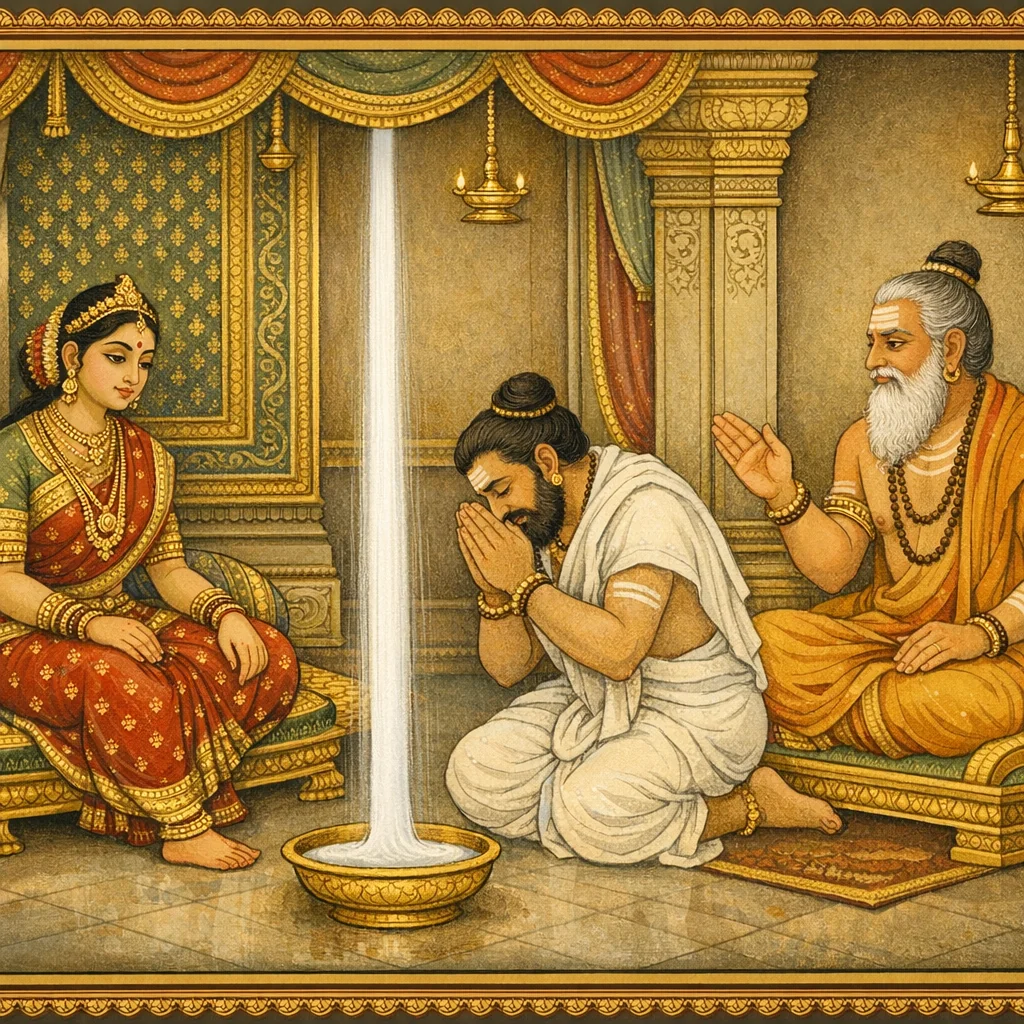
Sūta recounts a moral crisis involving Parāvasu, son of the learned Brahmin Viśvāvasu. In the month of Māgha, weary and careless, Parāvasu stays at a courtesan’s house and mistakenly drinks liquor, thinking it water. Realizing his fault, he is overcome with remorse, bathes at Śaṅkha-tīrtha, and approaches his teacher in a posture of social self-abasement to request prāyaścitta (expiatory purification). Though friends first mock him with an improper suggestion, Parāvasu insists on a serious remedy, and smṛti-versed Brahmins are consulted. They distinguish intentional from unintentional drinking and prescribe a classical expiation: consuming fire-hot ghee in proportion to the amount drunk. His parents try to prevent so perilous a penance, fearing death and disgrace. The community then turns to the respected authority Bhartṛyajña (also linked with Haribhadra in the court scene), who reframes the matter: even words spoken in jest can become operative within local dharma when validated by learned interpretation and context. With court mediation and the king’s cooperation, the king’s daughter Ratnāvatī, adopting a maternal stance, enables a symbolic ritual test—upon touch and lip-contact, milk rather than blood appears, publicly signifying restored purity. The episode ends with civic regulation: an ordinance forbids intoxicants and meat in such households, with penalties for violations, joining personal expiation to public ethical governance.
Shlokas
Verse 1
सूत उवाच । एतस्मिन्नेव काले तु नागरो द्विजसत्तमाः । विश्वावसुरिति ख्यातो वेदवेदांगपारगः
Sūta said: At that very time, O best of twice-born ones, there was a Nāgara Brahmin renowned as Viśvāvāsu, a master well-versed in the Vedas and their auxiliaries.
Verse 2
पश्चिमे वयसि प्राप्ते तस्य पुत्रो बभूव ह । परावसुरिति ख्यातस्तस्य प्राणसमः सदा
When he had reached the later stage of life, a son was born to him, renowned as Parāvasu—always as dear to him as his very breath.
Verse 3
स वेदाध्ययनं चक्रे यौवने समुपस्थिते । वयस्यैः संमतैः सार्धं सदा हास्य परायणैः
When youth came upon him, he undertook the study of the Vedas, together with agreeable companions of his own age, ever devoted to laughter and lightness.
Verse 4
कस्यचित्त्वथ कालस्य माघमास उपस्थिते । रात्रौ सोऽध्ययनं चक्र उपाध्यायगृहं गतः
Then, at a certain time, when the month of Māgha had arrived, he went to his teacher’s house and studied at night.
Verse 5
निशीथे स समुत्थाय सर्वैर्मि त्रैश्च रक्षितः । वेश्यागृहं समासाद्य प्रसुप्तो वेश्यया सह
At midnight he rose, guarded by all his companions; reaching the courtesan’s house, he lay down and slept together with her.
Verse 6
जलपूर्णं समाधाय जलपात्रं समीपगम् । निजाचमनयोग्यं च जलपानार्थमेव च
He set nearby a vessel filled with water—fit for his own ācamanam (ritual sipping and rinsing), and meant solely for drinking water.
Verse 7
निशाशेषे तु संप्राप्ते स पिपासासमाकुलः । निद्रालस्यसमोपेतः शय्यां त्यक्त्वा समुत्थितः
When the night was nearly spent, tormented by thirst and still heavy with sleep and lethargy, he rose, leaving the bed.
Verse 8
वेश्याया मद्यपात्रं तु ह्यधस्तात्सं व्यवस्थितम् । तदादाय पपौ मद्यं जलभ्रांत्या यदैव सः
But beneath there had been placed the courtesan’s vessel of liquor; taking it up, he drank the alcohol, mistaking it for water.
Verse 9
तदा मद्यं परिज्ञाय पात्रं त्यक्त्वा सुदुःखितः । वैराग्यं परमं गत्वा प्रलापानकरो द्बहून्
Then, realizing it was liquor, he cast away the cup in deep anguish; seized by intense dispassion, he uttered many lamentations.
Verse 10
अहो निद्रान्वितेनाद्य किं मया विकृतं कृतम् । यदद्य मद्यमापीतं जलभ्रांत्या विगर्हितम्
“Alas! Overcome by sleep, what dreadful deed have I done today—drinking liquor, a censured act, through mistaking it for water?”
Verse 11
किं करोमि क्व गच्छामि कथं शुद्धिर्भवेन्मम । प्रायश्चित्तं करिष्यामि यद्यपि स्यात्सुदुष्करम्
“What shall I do, and where shall I go? How may purity come to me? I will perform expiation (prāyaścitta), even if it is exceedingly difficult.”
Verse 12
एवं निश्चित्य मनसा प्रभाते समुपस्थिते । शंखतीर्थं समासाद्य कृत्वा स्नानं तथा परम्
Having thus resolved in his mind, when morning came he reached Śaṃkhatīrtha and performed an excellent purifying bath.
Verse 13
सशिखं वपनं पश्चात्कारयित्वा त्वरावितः । गतश्च तिष्ठते यत्र ब्रह्मघोषपरायणः
Afterwards, having his shaving done while keeping the śikhā, he hurried on to the place where one devoted to Vedic recitation (brahmaghoṣa) was staying.
Verse 14
उपाध्यायः सशिष्यश्च ब्रह्मस्थानं समाश्रितः । स गत्वा दूरतः स्थित्वा संनिविष्टो यथान्त्यजः
The preceptor, together with his disciple, was residing in the Brahmasthāna. Going there, he stood at a distance and sat down, as though he were an outcaste—humbled by his fault.
Verse 15
श्मश्रुमूर्धजहीनस्तु यदा मित्रैर्विलोकितः । तदा हास्याद्धतो मूर्ध्नि हस्ताग्रैश्च मुहुर्मुहुः
When his friends saw him bereft of beard and head-hair, they burst into laughter and, again and again, struck the crown of his head with their fingertips in mockery.
Verse 16
उपाध्यायस्तु तं दृष्ट्वा दीनं बाष्पपरिप्लुतम् । श्मश्रुमूर्धजसंत्यक्तं ततः प्रोवाच सादरम्
Seeing him wretched, drenched in tears, and having abandoned his beard and head-hair, the teacher then spoke to him with kindness.
Verse 17
किमद्य वत्स दूरे त्वमुपविष्टस्तु दैन्यधृक् । एहि मे संनिधौ ब्रूहि पराभूतोऽसि केन वा
“What is the matter today, dear child? Why are you sitting far away, bearing such dejection? Come near me and tell me—by whom have you been humiliated?”
Verse 18
परावसुरुवाच । अयोग्योऽहं गुरो जातः सेवायास्तव सांप्रतम् । वेश्याया मंदिरस्थेन ज्ञात्वा निजकमंडलुम्
Parāvasu said: “O venerable Guru, I have now become unfit for your service; for, while I was in a courtesan’s house, I came to know something concerning my own kamaṇḍalu, my water-pot.”
Verse 19
वेश्याया मद्यपात्रं तु मद्यपूर्णं प्रगृह्य च । तस्माद्देहि विभो मह्यं प्रायश्चित्तं विशुद्धये
“I took up a courtesan’s liquor-vessel, filled with wine. Therefore, O venerable one, grant me an expiation (prāyaścitta) so that I may be purified.”
Verse 20
धर्मद्रोणेषु यत्प्रोक्तं तत्करिष्याम्यसंशयम्
“Whatever has been laid down in the Dharma-texts, that I shall do—without any doubt.”
Verse 21
अथ तं बटवः प्रोचुर्वयस्यास्तस्य ये स्थिताः । हास्यं कृत्वा प्रकामाश्च वेश्या या गुरुसंनिधौ
Then the boys—his companions of the same age who stood nearby—spoke to him; after making much sport of him, they began to speak of that courtesan who was near the teacher’s abode.
Verse 22
या एषा नृपतेः कन्या ख्याता रत्नावती जने । अस्याः स्तनौ गृहीत्वा त्वमधरं पिबसि द्रुतम् । ततस्ते स्याद्विशुद्धिश्च नान्यथा प्रभविष्यति
“This is the king’s daughter, famed among the people as Ratnāvatī. If you seize her breasts and quickly drink her lips, then you will attain purification; it will not come about in any other way.”
Verse 23
परावसुरुवाच । न वयस्या नर्मकालो विषमे मम संस्थिते । ममोपरि यदि स्नेहो वालमित्रत्वसंभवः । तदानीय द्विजानन्यान्वदध्वं निष्कृतिं मम
Parāvasu said: “Friends, this is no time for jest, for I stand in a grave predicament. If you truly bear affection for me, born of our childhood friendship, then bring other brāhmaṇas and tell me the proper prāyaścitta—the means of expiation—for my deliverance.”
Verse 24
अथ ते नर्ममुत्सृज्य तद्दुःखेन च दुःखिताः । विश्वावसुं समासाद्य तद्वृत्तांतमथाब्रुवन्
Then they gave up their joking and, grieved by his sorrow, approached Viśvāvasu and related to him the entire account of what had occurred.
Verse 25
सोऽपि तेषां समाकर्ण्य तत्कर्णकटुकं वचः । सभार्यः प्रययौ तत्र यत्र पुत्रो व्यवस्थितः
Hearing their words—harsh and bitter to the ear—he too set out, together with his wife, to the place where his son was staying.
Verse 26
दुःखेन महता युक्तः स्खलमानः पदेपदे । वृद्धभावात्तथा शोकात्पुत्राकृत्यसमुद्भवात्
Overwhelmed by great sorrow, he stumbled at every step—because of old age, and because of grief arising from his son’s misdeed.
Verse 27
ततस्तौ प्रोचतुः पुत्रं बाष्पगद्गदया गिरा । दंपती बहुशोकार्तौ हा पुत्र किमिदं कृतम् । सोऽपि सर्वं समाचख्यौ ताभ्यां वृतांतमात्मनः
Then the husband and wife, distressed by much grief, spoke to their son in a voice choked with tears: “Alas, my child—what is this you have done?” And he, in turn, told them everything: the full account of what had happened to him.
Verse 28
प्रायश्चित्तं करिष्यामि तस्मादात्मविशुद्धये । ततो विश्वावसुर्विप्रान्स्मार्ताञ्छ्रुतिसमन्वितान् । तदर्थमानयामास वेदविद्याविचक्षणान्
“Therefore, for the purification of my own self, I shall perform prāyaścitta (expiation).” Then Viśvāvasu brought learned brāhmaṇas—authorities in Smṛti, grounded in Śruti—discerning experts in Vedic knowledge, for that very purpose.
Verse 29
ततः परावसुस्तेषां पुरः स्थित्वा कृतांजलिः । प्रोवाच स्वादितं मद्यं मया रात्रावजानता । वेश्या भांडं समादाय ज्ञात्वा निजकमंडलुम्
Then Parāvasu, standing before them with folded hands, said: “At night, unknowingly, I tasted intoxicating liquor. A courtesan, having taken up a vessel—recognizing it as my own kamaṇḍalu (water-pot) …”
Verse 31
एवमुक्तास्ततस्तेन विप्रास्ते स्मृतिवादिनः । धर्मशास्त्रं समालोक्य ततः प्रोचुश्च तं द्विजाः
Thus addressed by him, those brāhmaṇas—expounders of the Smṛtis—consulted the Dharmaśāstra, and then the twice-born spoke to him.
Verse 32
अतिमानादतिक्रोधात्स्नेहाद्वा यदि वा भयात् । प्रायश्चित्तमनर्हं तु ददत्तत्पापमश्नुते
Out of excessive pride, excessive anger, affection, or even fear—if one prescribes prāyaścitta to a person unfit for it, the giver incurs that very sin.
Verse 33
प्रायश्चित्तं प्रदास्यामस्तस्माद्युक्तं वयं तव । यदि शक्नोषि तत्कर्तुं तत्कुरुष्व समाहितः
“Therefore we shall prescribe for you a fitting prāyaścitta. If you are able to perform it, then do it—steadfast and composed.”
Verse 34
परावसुरुवाच । करोमि वो न चेद्वाक्यं तत्पृच्छामि कुतो द्विजाः । नाहं केनापि संदृष्टो मद्यपानं समाचरन्
Parāvasu said: “I shall do as you say; yet I ask, O twice-born—how is this known? No one saw me while I was drinking liquor.”
Verse 35
तस्माद्ब्रूत यथार्हं मे प्रायश्चित्तं विशुद्धये । अपि प्राणहरं रौद्रं नो चेत्पापमवाप्स्यथ
“Therefore tell me the expiation fitting for my purification—even if it is fierce and life-taking; otherwise you will incur sin.”
Verse 36
ब्राह्मणा ऊचुः । बुध्यमानो द्विजो यस्तु मद्यपानं समाचरेत् । तावन्मात्रं हिरण्यं च तप्तं पीत्वा विशुध्यति
The brāhmaṇas said: “If a twice-born man, fully aware, commits the drinking of liquor, then he is purified by drinking molten gold in the same measure.”
Verse 37
अज्ञानतो यदा पीतं मद्यं विप्रेण कर्हिचित् । अग्नितुल्यं घृतं पीत्वा तावन्मात्रं विशुध्यति
“But if at some time a brāhmaṇa drinks liquor out of ignorance, then by drinking ghee heated like fire, in that same measure, he becomes purified.”
Verse 38
एवं ते सर्वमाख्यातं प्रायश्चित्तं विशुद्धये । यदि शक्तोषि चेत्कर्तुं कुरुष्व त्वं द्विजोत्तम
“Thus, the entire expiation for purification has been explained to you. If you are able to perform it, then do so, O best of the twice-born.”
Verse 39
परावसुरुवाच । गंडूषमेकं मद्यस्य मया पीतं द्विजोत्तमाः । तावन्मात्रं पिबाम्येव घृतं वह्निसमं कृतम्
Parāvasu said: “O best of the twice-born, I drank only a single mouthful of liquor. Therefore I shall indeed drink ghee, heated to be like fire, in that same measure.”
Verse 40
युष्मदादेशतोऽद्यैव स्वशरीरविशुद्धये । विश्वावसुश्च तच्छ्रुत्वा वज्रपातोपमं वचः
“By your command, this very day, for the purification of my own body…” And Viśvāvasu, hearing those words—like a thunderbolt’s strike—
Verse 41
विप्राणां चाथ पुत्रस्य तदोवाच सुदुःखितः । कृत्वाश्रुमोक्षणं भूरि बाष्पगद्गदया गिरा
Then, deeply distressed, he spoke to the brāhmaṇas and to his son, shedding many tears, his voice choked with sobs.
Verse 42
सर्वस्वमपि दास्यामि पुत्रस्यास्य विशुद्धये । प्रायश्चित्तं समाचर्तुं न दास्यामि कथंचन
“I will give even all that I possess for the purification of this son. But I will never give permission for him to undertake this expiation (prāyaścitta).”
Verse 43
अश्राद्धेयो विपांक्तेयः सपुत्रो वा भवाम्यहम् । स्थानं वा संत्यजाम्येतत्पुत्र मैवं समाचर
“I may become one unfit for the śrāddha rites and unfit to sit in the line of brāhmaṇas—together with my son; or I may abandon this place. O son, do not act in this way.”
Verse 44
तच्छ्रुत्वा वचनं तस्य पितुर्विघ्नकरं परम् । प्रायश्चित्तस्य सस्नेहं पुत्रो वचनमब्रवीत्
Hearing his father’s words—most obstructive to the prāyaścitta—the son then spoke with affection concerning that expiatory rite.
Verse 45
त्यज तात मम स्नेहं मा विघ्नं मे समाचर । प्रायश्चित्तं करिष्यामि निश्चयोऽयं मया कृतः
The son said: “Father, set aside your affection for me; do not place an obstacle in my way. I shall perform the prāyaścitta—this resolve I have firmly made.”
Verse 46
मातोवाच । यदि पुत्र त्वया कार्यं प्रायश्चित्तं विशुद्धये । तदहं पतिना सार्धं प्रवेक्ष्यामि पुरोऽनलम्
The mother said: “If, my son, you must undertake the prāyaścitta for the sake of purification, then I, together with your father, shall enter the blazing fire before you.”
Verse 47
त्वां द्रष्टुं नैव शक्रोमि पिबंतमग्निवद्घृतम् । पश्चात्प्राणपरित्यक्तं सत्येना त्मानमालभे
“I cannot bear to see you drinking ghee as though it were fire. After you have relinquished your life, I too shall, by the power of truth, give up my own self.”
Verse 48
पितोवाच । युक्तं पुत्रानया प्रोक्तं मात्रा तव हितं तथा । ममापि संमतं ह्येतत्करिष्यामि न संशयः
The father said: “Son, what your mother has spoken is fitting and truly for your welfare. I too consent to this; I shall do it—without doubt.”
Verse 49
तच्छ्रुत्वा तं समायाता वृत्तांतं दुःखसंयुताः
Hearing that account, they gathered there, overcome with sorrow.
Verse 51
पुत्रं प्रबोधयामासुः प्रायश्चित्तनिवृत्तये । तदा न शक्नुवंति स्म निवर्तयितुमं जसा
They tried to counsel the son so that he would desist from the expiation; yet even then they were unable to turn him back easily.
Verse 52
तावुभौ च पितापुत्रौ प्राणत्यागकृतादरौ
Thus both father and son became intent upon giving up their lives.
Verse 53
ततो वास्तुपदं जग्मुः सर्वज्ञो यत्र तिष्ठति । भर्तृयज्ञो महाभागः सर्वसंदेह वारकः
Then they went to Vāstupada, where the all-knowing one dwelt—Bhartṛyajña, the greatly fortunate, the remover of all doubts.
Verse 54
तस्य सर्वं समाचख्युः परावसुसमुद्भवम् । वृत्तांतं मद्यपानोत्थं यन्मित्रैस्तस्य कीर्तितम्
To him they related everything: the entire affair arising from Parāvasu—the incident born of drinking liquor, as his friends had reported it.
Verse 55
प्रायश्चित्तं तु हास्येन यच्च स्मार्तैः प्रकीर्तितम् । विश्वावसोश्च संकल्पं वह्निसाधनसंभवम्
They also reported the expiation (prāyaścitta) spoken of by the Smārta authorities—recounted with derision—and Viśvāvasu’s resolve, which had arisen from the “means of fire.”
Verse 56
सपत्नीकस्य मित्राणां यच्च दुःखमुपस्थितम् । निवेद्य तत्तथा प्रोचुर्भू योऽपिविनयान्वितम्
They further submitted the sorrow that had come upon the friends along with their wives; having informed him of this, they spoke again with humility.
Verse 57
अतीतं वर्तमानं च भविष्यद्वापि यद्भवेत् । न तेऽस्त्यविदितं किंचित्सर्वं जानीमहे वयम्
Past, present, and whatever may yet arise in the future—nothing at all is unknown to you. Indeed, we know you as one who understands everything.
Verse 58
एतच्च नगरं सर्वं विश्वावसुकृतेऽधुना । संशयं परमं प्राप्तं तेन प्राप्तास्तवांतिकम्
Because of what Viśvāvasu has done just now, this entire city has fallen into grave doubt; therefore we have come to your presence.
Verse 59
तस्माद्ब्रूहि महाभाग यद्यस्त्यपरमेव हि । प्रायश्चित्तं द्विजस्यास्य मद्यपानविशुद्धये
Therefore, O greatly fortunate one, tell us—if there is indeed any supreme remedy—what expiation (prāyaścitta) can purify this twice-born man from the fault of drinking liquor.
Verse 60
न ते ह्यविदितं किंचित्तव वेदसमुद्भवम् । भर्तृयज्ञो विहस्योच्चैस्ततो वचनमब्रवीत्
Nothing born of the Veda is unknown to you. Then Bhartṛyajña, laughing aloud, spoke these words.
Verse 61
ब्राह्मणस्यास्य शुद्ध्यर्थमप्ययुपायः सुखावहः । विद्यमानोऽपि नास्त्येव मतिरेषा स्थिता मम
For the purification of this brāhmaṇa, there is indeed a means that brings ease; yet, though it exists, it is as though it does not—such is the thought firmly settled in me.
Verse 62
ब्राह्मणा ऊचुः पूर्वापरविरोधे नवाक्यमेतन्महामते । कथमस्ति कथं नास्ति तस्मात्त्वं वक्तुमर्हसि । विस्मयोऽयं महाञ्जातः सर्वेषां च द्विजन्मनाम्
The brāhmaṇas said: “O great-minded one, this statement is new and seems to conflict with what comes before and after. How can it be—and how can it not be? Therefore you should explain it. Great astonishment has arisen in all the twice-born.”
Verse 63
भर्तृयज्ञ उवाच । जपच्छिद्रं तपश्छिद्रं यच्छिद्रं यज्ञकर्मणि । सर्वं भवति निश्छिद्रं यस्य चेच्छंति ब्राह्मणाः
Bhartṛyajña said: “Any flaw in japa, any flaw in austerity, and whatever flaw there may be in sacrificial rites—all of it becomes faultless for the one whom the brāhmaṇas approve and desire (to set right).”
Verse 64
अच्छिद्रमिति यद्वाक्यं वदंति क्षितिदेवताः । विशेषान्नागरोद्भूतास्तत्तथैव न चान्यथा
The ‘earth-gods’ (brāhmaṇas) speak the saying, “It is without flaw.” But those arising in the Nāgara tradition are a special case—so it is exactly thus, and not otherwise.
Verse 65
तथा च ब्रह्मशालायां संस्थितैर्यदुदाहृतम् । नान्यथा तत्परिज्ञेयं हास्येनापि स्मृतिं विना
Moreover, whatever was proclaimed by those assembled in the Brahma-hall should be understood in that very sense and not otherwise; even if spoken in jest, it is not to be taken without due recollection of the authoritative Smṛti (sacred tradition).
Verse 66
स एष हास्यभावेन प्रोक्तो मित्रैः परावसुः
This Parāvasu was spoken of by his friends in a jocular mood.
Verse 67
रत्नवत्याः स्तनौ गृह्य यद्यास्वादयतेऽधरम् । तद्भविष्यति मे शुद्धिर्मद्यपान समुद्भवा
“If, taking Ratnavatī’s breasts, he tastes her lower lip, then the impurity that has arisen in me from drinking liquor will be purified.”
Verse 68
तदुपायो मया प्रोक्तो विप्रस्यास्य सुखावहः । पराशरमतेनैव करोति यदि शुध्यति
“This remedy has been stated by me for this brāhmaṇa, and it is said to be conducive to his ease. If he performs it according to Parāśara’s opinion, he becomes purified.”
Verse 69
ब्राह्मणा ऊचुः । यद्येतच्छुणुते राजा वाक्यमीर्ष्यापरायणः । तत्सर्वेषां वधं कुर्याद्विप्राणामन्यथा भवेत्
The brāhmaṇas said: “If the king—given over to jealousy—hears this statement, he may put all of us brāhmaṇas to death; otherwise, it will turn out differently (than intended).”
Verse 70
तस्मात्करोतु चाभीष्टमेष विप्रः परावसुः । मातापितृसमोपेतो वयं यास्यामहे गृहम्
Therefore let the brāhmaṇa Parāvasu do as he desires. We, accompanied by our mother and father, shall go home.
Verse 71
भर्तृयज्ञ उवाच । स राजा नीतिमान्विज्ञः सर्वधर्मपरायणः । भक्तो देवद्विजानां च सर्वशास्त्र विचक्षणः
Bhartṛyajña said: “That king is righteous in policy, discerning, devoted to all dharma—devoted also to the gods and the twice-born—and skilled in understanding all the śāstras.”
Verse 72
तस्मान्मया समं सर्वे नागरायांतु तद्ग्रहे
Therefore let all the townsmen go with me to his house in the city.
Verse 73
मध्यगं पुरतः कृत्वा तद्वक्त्रेण च तत्पुरः । कथयंतु च वृत्तांतं मद्यपान समुद्भवम्
Placing him in the middle and bringing him to the front, let them—by his own mouth, in the king’s presence—relate the account that arose from the drinking of liquor.
Verse 74
परावसोश्च यत्प्रोक्तं वयस्यैर्हास्यमाश्रितैः । पराशरसमुत्थं च यद्वाक्यं तत्स्मृतेः परम्
And what his companions said to Parāvasu in jest—together with the statement derived from Parāśara—carries weight beyond mere recollection, bearing authoritative force.
Verse 75
तच्छ्रुत्वा यदि भूपाल ईर्ष्या लोभसमन्वितः । भविष्यति ततोऽहं तं धारयिष्यामि सत्पथे
“If, on hearing it, the king becomes possessed of jealousy and greed, then I shall restrain him and keep him upon the righteous path of dharma.”
Verse 76
सूतौवाच । ततस्ते नागराः सर्वे सन्तोषं परमं गताः । साधुवादैः समभ्यर्च्य भर्तृयज्ञं पृथग्विधैः
Sūta said: “Then all those townsmen attained the highest contentment, and, honoring Bhartṛyajña with many kinds of benedictions and cries of ‘Well done!’, they paid him reverence.”
Verse 77
तेनैव सहितं तूर्णं मध्ये कृत्वा च मध्यगम् । गर्त्तातीर्थसमुद्भूतं वेदवेदांगपारगम्
Swiftly, keeping him with them and placing him in their midst, they brought forward the one who had arisen in connection with Garttā-tīrtha—an expert who had crossed to the far shore of the Vedas and the Vedāṅgas.
Verse 78
स्मृतिज्ञं लक्षणज्ञं तमाहिताग्निं यशस्विनम् । यष्टारं बहुयज्ञानां भर्तृयज्ञमते स्थितम्
He was a knower of Smṛti and of auspicious marks, a renowned maintainer of the sacred fires (āhita-agni), a performer of many sacrifices (yajñas), and one established in the sacrificial discipline of Bhartṛyajña.
Verse 79
आनर्तेनापि भूपेन स्वर्गभ्रष्टेन वै पुरा । कर्णोत्पलाजनित्रेण यश्च पूर्वं चिरन्तनः
In former times, even the king of Ānarta—who had fallen from heaven—honored/established this venerable one of ancient renown, born of the lineage of Karṇotpalājanitrā.
Verse 80
चमत्कारपुरे न्यस्तः स्थानेऽस्मिन्विप्रगौरवात् । येन सिध्यंति कार्याणि सर्वेषां च द्विजन्मनाम्
Out of reverence for the Brāhmaṇas, he was installed at this very spot in Camatkārapura; through him, the undertakings of all the twice-born attain fulfillment.
Verse 81
तथा चैव तु चान्यानि चमत्कारपुरस्य च । हरिभद्राभिधानं तं भर्तृयज्ञसमन्वितम्
Likewise, in other accounts connected with Camatkārapura, he is spoken of by the name Haribhadra—endowed with the observance of Bhartṛyajña.
Verse 82
कृत्वा ते नागराः सर्वे राजद्वारमुपागताः । परावसुं समादाय मातापितृसमन्वितम्
After doing so, all the citizens came to the royal gate, bringing along Parāvasu together with his mother and father.
Verse 83
अथ द्वाःस्थो द्रुतं गत्वा भूपतेस्तान्न्यवेदयत् । ब्राह्मणान्भर्तृयज्ञेन हरिभद्रेण संयुतान्
Then the gatekeeper quickly went and informed the king: “Brāhmaṇas have arrived, accompanied by Haribhadra, who is connected with Bhartṛyajña.”
Verse 84
आनर्तोऽपि च ताञ्छ्रुत्वा राजद्वारसमागतान् । पुरोधसा समायुक्तः संमुखं प्रययौ तदा
Hearing that they had arrived at the royal gate, King Ānarta too—accompanied by his royal priest—went out then to meet them face to face.
Verse 85
दत्त्वार्घं मधुपर्कं च विष्टरं गां तथा नृपः । प्रथमं भर्तृयज्ञाय हरिभद्राय वै ततः
The king offered arghya, madhuparka, a seat, and a cow—first to Haribhadra, the practitioner of the Bhartṛ-yajña, and then to the others.
Verse 86
चतुर्णां मुद्गहस्तानां तथान्येषां द्विजन्मनाम् । आद्यऋग्यजुःसाम्नां च प्रगृह्याशीर्वचः परम्
And from four “mudga-hasta” Brāhmaṇas, as well as from other twice-born—foremost among the Ṛg-, Yajur-, and Sāma-Veda traditions—he received the supreme words of blessing.
Verse 88
तथा तेषूपविष्टेषु सर्वेषु पृथिवीपतिः । उपविश्य धरापृष्ठे कृतांजलिर भाषत
When all of them had thus taken their seats, the lord of the earth, the king, sat down upon the ground and, with palms joined in reverence, he spoke.
Verse 89
धन्योऽस्म्यनुगृहीतोऽस्मि यन्मे गृहमुपागतः । सर्वोऽयं नागरो लोको भर्तृयज्ञसमन्वितः
“Blessed am I; graced am I—since you have come to my house. This entire community of Nāgara people stands united in the observance of the Bhartṛ-yajña.”
Verse 90
तदादिशतु मां लोको यत्कृत्यं प्रकरोमि वः । अदेयमपि यच्छामि गृहायातस्य सांप्रतम्
“Let the assembly instruct me as to what should be done for you. Even what ought not to be given, I shall give now—since you have come to my home.”
Verse 91
अगम्यमपि यास्यामि करिष्येऽकृत्यमेव च । तच्छ्रुत्वा हरिभद्रः स समुत्थाय त्वरान्वितः
“Even to a place hard to reach I shall go; and I shall do even what is otherwise improper.” Hearing this, Haribhadra rose at once, filled with urgency.
Verse 92
पप्रच्छाद्यांस्तदर्थं च बह्वृचांस्तदनंतरम् । अध्वर्यूंश्चैव छांदोग्याननुज्ञातश्च तैस्तदा
He then questioned the foremost among the Bahvṛcas about that matter; thereafter he also consulted the Adhvaryus and the Chāndogyas—and with their permission, proceeded.
Verse 93
प्राणरुद्रान्वदंत्वाद्या जीवसूक्तं च बह्वृचाः । एषां चैव पृथिव्यादिसवनं यत्पुरा कृतम्
“Let the foremost recite the Prāṇa-Rudras, and let the Bahvṛcas recite the Jīva-sūkta. And (let there be performed) the ‘Pṛthivī and the rest’ savana, as was done formerly for these rites.”
Verse 94
पठन्त्वध्वर्यवः सर्वे छांदोग्याश्च पृथक्पृथक् । मधुच्युतेन संयुक्तं प्रपठन्तु च सिद्धये
“Let all the Adhvaryus and the Chāndogyas recite, each in their own manner. And let them recite in conjunction with the ‘Madhucyuta’ (hymn/portion), for the sake of successful completion.”
Verse 95
भर्तृयज्ञमतेनैवं तेन प्रोक्ता द्विजोत्तमाः । पप्रच्छुश्चैव तत्सर्वं यत्प्रोक्तं तेन धीमता
Thus, according to the doctrine of the Bhartṛ-yajña, the best of the twice-born were instructed by that wise one; and they in turn asked about all that he had declared.
Verse 96
ततः पाठावसाने तु मध्यगः प्राह सादरम् । परावसुसमुद्भूतं वृत्तांतं तस्य भूपतेः
Then, when the recitation had ended, the one seated in the midst spoke with reverence, relating an account that had arisen from Parāvasu concerning that king.
Verse 97
सभामंडपमासाद्य सर्वान्समुपवेशयत् । वरासनेषु हैमेषु यथावदनुपूर्वशः
Having reached the assembly-hall, he seated everyone properly, in due order, upon excellent golden seats.
Verse 98
भर्तृयज्ञेन चानीता यथा सर्वे द्विजातयः । तच्छ्रुत्वा पार्थिवो हृष्टः कृतांजलिपुटोऽब्रवीत्
When Bhartṛyajña had thus brought her, along with all the twice-born men, the king—hearing this—rejoiced, and with folded hands spoke.
Verse 99
धन्योहं कृतपुण्योऽस्मि यस्य मे नागरैर्द्विजैः । विप्रत्रयप्ररक्षार्थं प्रसादोऽयं महान्कृतः
“Blessed am I; truly I am filled with merit—since, by the Nāgara twice-born, this great favor has been done for me, for the protection of the three brāhmaṇas.”
Verse 100
धन्या मे कन्यका चेयं रक्षयिष्यति च स्वयम् । ब्राह्मणत्रितयं ह्येतन्मरणे कृतनिश्चयम्
“Blessed too is this daughter of mine—she herself will protect this triad of brāhmaṇas, who have resolved upon death.”
Verse 101
अथाऽसावानयामास तां कन्यां तत्क्षणाद्द्विजाः । उपविष्टं सभामध्ये ब्राह्मणेभ्यो न्यवेदयत्
Then he immediately brought that maiden; and, seated in the midst of the assembly, he presented the matter to the brāhmaṇas.
Verse 102
एषा कन्या मयानीता युष्मद्वाक्याद्द्विजोत्तमाः । भर्तृयज्ञेन यत्प्रोक्तं तत्करोतु च स द्विजः
“O best of the twice-born, at your word I have brought this maiden. Let that brāhmaṇa do exactly what Bhartṛyajña has declared.”
Verse 103
ततस्तत्र समानीय ब्राह्मण तं परावसुम् । भर्तृयज्ञ इदं वाक्यं कन्यायाः पुरतोऽब्रवीत्
Then, having brought the brāhmaṇa Parāvasu there, Bhartṛyajña spoke these words in front of the maiden.
Verse 104
इमां त्वं कन्यकां चित्ते जननीं यदि मन्यसे । अधरास्वादनं कुर्वंस्ततः सिद्धिमवाप्स्यसि
“If, in your heart, you regard this maiden as your mother, then by tasting her lips you will attain success (the intended proof will be established).”
Verse 105
अनुरागपरो भूत्वा यद्यास्वादनतत्परः । भविष्यति ततो रक्तं तव वक्त्रे परावसो
“But if you do it driven by passion—intent on sensual tasting—then blood will appear in your mouth, O Parāvasu.”
Verse 106
शुद्धस्य त्वथ दुग्धं च भविष्यति न संशयः
But for one who is pure, milk will appear—of this there is no doubt.
Verse 107
स्तनाभ्यां तव हस्ताभ्यां स्पर्शात्क्षीरं भवेद्यदि । तत्ते शुद्धिः परिज्ञेया रक्तं वा न भविष्यति
If, by the touch of your hands upon her breasts, milk should flow, then your purity is to be known; and blood will not appear.
Verse 108
एवमुक्त्वाथ तं कन्यां ततः प्रोवाच स द्विजः । एनं त्वं पुत्रवत्पश्य पुत्रि ब्राह्मणसत्तमम्
Having spoken thus to the maiden, the brāhmaṇa then said: “Daughter, look upon this excellent brāhmaṇa as you would a son.”
Verse 109
येन शुद्धिमवाप्नोति त्वदोष्ठास्वादने कृते । स्पर्शिताभ्यां स्तनाभ्यां च प्रायश्चित्तं यतः स्मृतम्
“By this he attains purification—since, after tasting your lips and also touching your breasts, an act of expiation is indeed enjoined.”
Verse 110
एतदस्य द्विजेंद्रस्य वयस्यैर्हास्यसंयुतैः । येन शुद्धिमवाप्नोति नो चेन्मृत्युमवाप्स्यति
“This is what his companions, laughing, have set upon this chief of brāhmaṇas: by it he may regain purity; otherwise he will meet with death.”
Verse 111
सूत उवाच । सा तथेति प्रतिज्ञाय सव्रीडं तमुवाच ह । एहि वत्स कुरुष्व त्वं प्रायश्चित्तं विशुद्धये
Sūta said: She assented, saying, “So be it,” and, with modest shame, spoke to him: “Come, dear one; perform the expiation (prāyaścitta) for the sake of complete purification.”
Verse 112
मातृभावं समाधाय मया त्वं कल्पितः सुतः । सोऽपि तां मातृवन्मत्वा तस्याः सांनिध्यमागतः
“Assuming a motherly disposition, I appointed you as a son; and he too, regarding her as a mother, came into her presence.”
Verse 113
स्पृष्टवांश्च स्तनौ तस्याः सर्वलोकस्य पश्यतः । स्पृष्टाभ्यां च स्तनाभ्यां च तत्क्षणाद्द्विजसत्तमाः
And he touched her breasts in the sight of all the people; and from the very moment those breasts were touched, O best of brāhmaṇas—
Verse 114
क्षीरधारे विनिष्क्रांते कुन्देंदुहिमसंनिभे
A stream of milk issued forth, white like jasmine, like the moon, and like snow.
Verse 115
अथौष्ठास्वादनं यावत्तस्याः स कुरुते द्विजः । तावत्क्षीरं विनिष्क्रांतं तादृग्रूपं तदाननात्
Then, for as long as the brāhmaṇa tasted her lips, for that very duration milk of the same appearance flowed forth from her mouth.
Verse 116
एतस्मिन्नंतरे सर्वैस्ताला दत्ता द्विजातिभिः । राज्ञाऽयं ब्राह्मणः शुद्धो वदमानैर्मुहुर्मुहुः
Meanwhile, all the twice-born applauded again and again, declaring: “By the king’s authority, this brāhmaṇa has been purified!”
Verse 117
सोऽपि प्रदक्षिणीकृत्य तां च कन्यां मुहुर्मुहुः । नमस्कृत्य क्षमस्वेति त्वं मातः पुत्रवत्सले
He too circumambulated that maiden again and again; bowing down, he said: “Mother, forgiving and affectionate to a son—please pardon me.”
Verse 118
तद्दृष्ट्वा महदाश्चर्यमानर्तो विस्मयान्वितः । शशंस भतृयज्ञं तं प्रायश्चित्तप्रदायकम्
Seeing that great marvel, Ānarta, filled with astonishment, extolled that Bhatṛ-yajña as a rite that bestows prāyaścitta—purifying expiation for sin.
Verse 119
अहोऽतीव सुभा ग्योऽहं यस्य मे गृहमागताः । ईदृशा ब्राह्मणाः सर्वे चमत्कारपुरोद्भवाः
“Ah! I am exceedingly fortunate, for such brāhmaṇas—marvel-born and wondrous in their very presence—have come to my house.”
Verse 120
तथा चैतादृशी कन्या ह्यसामान्यप्रवर्तिनी । रत्नावती महाभागा सत्यशौचसमन्विता
“And likewise, this maiden—Ratnāvatī—acts in no ordinary way: a greatly blessed one, endowed with truthfulness and purity.”
Verse 121
तथाऽयं नैव सामान्यो ब्राह्मणश्च परावसुः । यश्चेदृशीं समासाद्य कन्यां नो विकृतः स्थितः
So too, this brāhmaṇa Parāvasu is certainly not ordinary; for, having encountered such a maiden, he yet remains unperverted and steadfast.
Verse 122
एवमुक्त्वा विसृज्याथ तान्विप्रान्पार्थिवोत्तमाः । तां च कन्यां समादाय ततश्चांतःपुरं ययौ
Having spoken thus, the best of kings dismissed those brāhmaṇas; and taking the maiden with him, he then went into the inner palace.
Verse 123
अथ ते नागराः सर्वे मर्यादां चक्रिरे ततः । अद्यप्रभृति या वेश्या स्थानेऽस्मिन्वासमेष्यति
Then all the townsmen established a civic ordinance: “From today onward, whatever courtesan comes to dwell in this place—”
Verse 124
तया नैव गृहे धार्यं सुरामांसं कथंचन । दूषयंति सदा दुष्टा नागराणां सुतानिह
“By her, liquor and meat must never be kept in the house in any manner; for such depraved women continually corrupt the sons of the townsmen here.”
Verse 125
अथ व्यवस्थामुत्क्रम्य या हि तद्धारयिष्यति । सा दण्ड्यास्माच्च निर्वास्या प्रेत्य स्यात्पापभागिनी
And if any woman transgresses this regulation and keeps those things, she shall be punished and expelled from us; and after death she will become a sharer in sin.
Verse 126
औदुम्बर्या मध्यगेन दत्तं तालत्रयं तदा
Then, at that time, a cluster of three tāla trees was granted and set apart, with an udumbara (sacred fig) standing in the middle.
Verse 197
इति श्रीस्कांदे महापुराण एकाशीतिसाहस्र्यां संहितायां षष्ठे नागरखण्डे हाटकेश्वरक्षेत्रमाहात्म्ये परावसुप्रायश्चित्तविधानवृत्तांतवर्णनंनाम सप्तनवत्युत्तरशततमोऽध्यायः
Thus ends, in the Śrī Skanda Mahāpurāṇa—within the Ekāśīti-sāhasrī Saṃhitā, in the sixth Nāgara-khaṇḍa, in the Māhātmya of the sacred region of Hāṭakeśvara—the chapter entitled “Narration of the procedure of Parāvasu’s expiation,” being Chapter 197.