Adhyaya 165
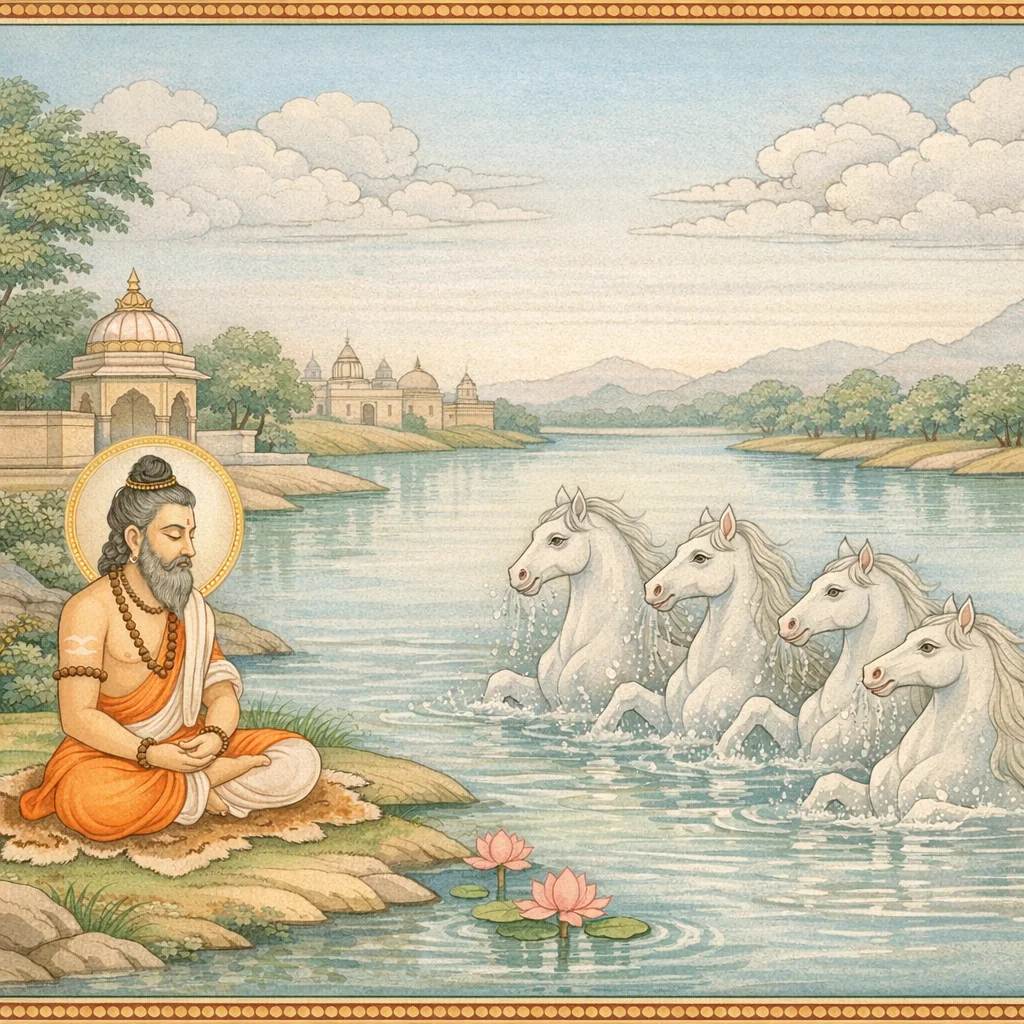
The chapter begins with Sūta describing a time when the auspicious bank of the Sarasvatī becomes socially prominent for outsiders and townspeople. A disturbing reversal follows: the sage Viśvāmitra curses Sarasvatī, and she turns into raktavāhinī, a “blood-flowing” river. The altered river is then haunted by rākṣasas and liminal beings—bhūtas, pretas, and piśācas—so human communities abandon the region and move toward safer sacred terrain, including the Narmadā bank near Mārkaṇḍa’s āśrama. When the sages ask the cause of the curse, Sūta frames it within the wider rivalry between Viśvāmitra and Vasiṣṭha, highlighting the theme of status transformation—especially a kṣatriya’s aspiration to attain brāhmaṇa-hood. The narrative then turns to an origin-legend: the Bhṛgu-descendant ṛṣi Ṛcīka arrives at Bhojakaṭa by the Kauśikī river, beholds Gādhi’s daughter (linked with Gaurī worship), and seeks her hand in a brāhma-form marriage. Gādhi sets a bride-price of seven hundred swift horses, each with one dark ear. Ṛcīka goes to Kānyakubja and, on the Gaṅgā’s bank, performs a specialized mantra-japa—the “aśvo voḍhā” formula—stating its chandas, ṛṣi, devatā, and viniyoga. From the river emerge the required horses, establishing the renown of Aśvatīrtha. Bathing there is said to grant the fruit of an Aśvamedha sacrifice, translating Vedic sacrificial prestige into tīrtha-based, widely accessible merit.
Shlokas
Verse 1
सूत उवाच । ततःप्रभृतिपुण्ये च सरस्वत्यास्तटेशुभे । बाह्यानां नागराणां च स्थानं जातं महत्तरम्
Sūta said: From that time onward, on the auspicious and meritorious bank of the Sarasvatī, the settlement of the Outer Nāgaras became very great and prominent.
Verse 2
पुत्रपौत्रप्रवृद्धानां दौहित्राणां द्विजोत्तमाः । चमत्कारपुरस्याग्रे यज्ज्ञातं विद्यया धनैः
O best of the twice-born, as their sons and grandsons multiplied, and their daughters’ sons too increased, there—before (the place called) Camatkārapura—what had been attained became known through learning and wealth.
Verse 3
कस्यचित्त्वथ कालस्य विश्वामित्रेण धीमता । शप्ता सरस्वती कोपात्कृता रुधिरवाहिनी
Then, at a certain time, the wise Viśvāmitra—angered—cursed Sarasvatī, and she was made to flow as a stream of blood.
Verse 4
ततः संसेव्यते हृष्टै राक्षसैः सा दिवानिशम् । गीतनृत्यपरैश्चान्यैर्भूतैः प्रेतैः पिशाचकैः
Thereafter, that place was frequented day and night by delighted rākṣasas, and also by other beings devoted to song and dance—bhūtas, pretas, and piśācas.
Verse 5
ततस्ते नागरा बाह्यास्तां त्यक्त्वा दूरतः स्थिताः । कांदिशीकास्ततो याता भक्ष्यमाणास्तु राक्षसैः । नर्मदायास्तटे पुण्ये मार्कण्डाश्रमसंनिधौ
Then those Outer Nāgaras abandoned that place and stayed far away. From there they went toward Kāṃdiśī, being preyed upon by rākṣasas, until they reached the holy bank of the Narmadā, near the hermitage of Mārkaṇḍeya.
Verse 6
ऋषय ऊचुः । कस्मात्सरस्वती शप्ता विश्वामित्रेण धीमता । महानद्या कोऽपराधस्तया तस्य विनिर्मितः
The sages said: Why was Sarasvatī cursed by the wise Viśvāmitra? What offense did that great river commit against him?
Verse 7
सूत उवाच । आसीत्पुरा महद्वैरं विश्वामित्रवसिष्ठयोः । ब्राह्मण्यस्य कृते विप्राः प्राणान्तकरणं महत् । स सर्वैर्ब्राह्मणैः प्रोक्तो विश्वामित्रो महामुनिः
Sūta said: Long ago there arose a great enmity between Viśvāmitra and Vasiṣṭha. For the sake of attaining brāhmaṇa-hood, O brāhmaṇas, he undertook a severe, life-endangering effort; and Viśvāmitra, the great sage, was acknowledged as such by all brāhmaṇas.
Verse 8
क्षत्रियोऽपि पुरस्कृत्य देवदेवं पितामहम् । न चैकेन वसिष्ठेन तेनैतद्वैरमाहितम्
Though a kṣatriya, he set before himself Pitāmaha Brahmā, the God of gods; and this enmity was not established by Vasiṣṭha alone, but had broader causes.
Verse 9
ऋषय ऊचुः । क्षत्रियोऽपि कथं विप्रो विश्वा मित्रो महामते । वसिष्ठेन कथं नोक्तो यः प्रोक्तो ब्रह्मणा स्वयम्
The sages said: O great-minded one, though he was a kṣatriya, how did Viśvāmitra become a brāhmaṇa? And why was he not acknowledged by Vasiṣṭha, even though Brahmā himself had declared him so?
Verse 10
एतन्नः सर्वमाचक्ष्व परं कौतूहलं स्थितम्
Tell us all this in full; a great curiosity has arisen in us.
Verse 11
सूत उवाच । आसीत्पुरा ऋचीकाख्यो भृगुपुत्रो महामुनिः । व्रताध्ययनसंपन्नः सुतपस्वी महायशाः
Sūta said: In former times there lived the great sage named Ṛcīka, son of Bhṛgu—accomplished in vows and sacred study, rich in austerity, and renowned.
Verse 12
तीर्थयात्राप्रसंगेन स कदाचिन्मुनीश्वरः । स्थानं भोजकटं नाम प्राप्तो गाधिमहीपतेः । यत्र सा कौशिकीनाम नदी त्रैलोक्यविश्रुता
On one occasion, in the course of a pilgrimage to sacred fords, that lord among sages arrived at the place called Bhojakaṭa, belonging to King Gādhi—where flows the river named Kauśikī, famed throughout the three worlds.
Verse 13
तस्यां स्नात्वा द्विजश्रेष्ठो यावत्तिष्ठति तीरगः । समाधिस्थो जपं कुर्वन्संतर्प्य पितृदेवताः
Having bathed in that river, the foremost of the twice-born remained at the ford; abiding in samādhi, he performed japa and offered tarpaṇa, satisfying the Pitṛs and the deities.
Verse 14
तावत्तत्र समायाता राजकन्या सुशोभना । सर्वलक्षणसम्पूर्णा सर्वैरेव गुणैर्युता
Just then a radiant princess arrived there—complete in every auspicious mark and endowed with all virtues.
Verse 15
स तां संवीक्षते यावत्सर्वावयवशोभनाम् । तावत्कामशरैर्व्याप्तः कर्तव्यं नाभ्यविंदत
As he gazed upon her—radiant in every limb—he was at once pierced by Kāma’s arrows and could not discern what ought to be done.
Verse 16
ततः पप्रच्छ लोकान्स लब्ध्वा कृच्छ्रेण चेतनाम् । कस्येयं कन्यका साध्वी किमर्थमिह चागता
Then, regaining composure with difficulty, he asked the people: “Whose virtuous maiden is this, and for what purpose has she come here?”
Verse 17
क्व यास्यति वरारोहा सर्वं मे कथ्यतां जनाः
“Where is that noble maiden going? Tell me everything, O people.”
Verse 18
जना ऊचुः । एषा गाधिसुतानाम ख्याता त्रैलोक्यसुन्दरी । अन्तःपुरात्समायाता गौरीपूजनलालसा
The people said: “She is famed as Gādhi’s daughter, the beauty of the three worlds. She has come forth from the inner palace, longing to worship Gaurī.”
Verse 19
वांछमाना सुभर्त्तारं सर्वैः समुदितंगुणैः । प्रासादोऽयं स्थितो योऽत्र नदीतीरे बृहत्तरः
“Desiring a worthy husband endowed with every excellent quality, she comes here; and this great palace stands here upon the riverbank.”
Verse 20
उमा संतिष्ठते चात्र सर्वैः संपूजिता सुरैः । एतां च स्नापयित्वेयं पूजयित्वा यथा क्रमम्
Here Umā abides—honoured and worshipped by all the gods. One should bathe her (image) and then worship her in due order, according to the proper rite.
Verse 21
नैवेद्यं विविधं दत्त्वा करिष्यति ततः परम् । वीणाविनोदमात्रं च श्रुतिमार्गसुखावहम्
Having offered varied naivedya, she will thereafter engage in gentle vīṇā-music—mere recreation that brings the sweetness of the path of sacred sound.
Verse 22
ततो यास्यति हर्म्यं स्वं मन्दीभूते च भास्करे । ऋचीकस्तु तदाकर्ण्य लोकानां वचनं च यत्
Then, when the sun has grown mild toward evening, she will go to her own mansion. But Ṛcīka, having heard what the people were saying, reflected upon it.
Verse 23
ययौ गाधिगृहं शीघ्रं कामबाणप्रपीडितः । तं दृष्ट्वा सहसा प्राप्तमृचीकं भृगु सत्तमम् । संमुखः प्रययौ तूर्णं गाधिः पार्थिवसत्तमः
Struck by the arrows of desire, he swiftly went to Gādhi’s house. Seeing Ṛcīka—the foremost of the Bhṛgus—arrive all at once, King Gādhi, best among rulers, hastened forward to receive him face to face.
Verse 24
गृह्योक्तेन विधानेन कृत्वा चैवार्हणं ततः । कृतांजलिपुटो भूत्वा वाक्यमेतदुवाच ह
After performing the reception and honours according to the household rites, he joined his palms in reverence and then spoke these words.
Verse 25
निःस्पृहस्यापि ते विप्र किमागमनकारणम् । तत्सर्वं मे समाचक्ष्व येन यच्छामि तेऽखिलम्
O brāhmaṇa, though you are free from desire, what is the reason for your coming? Tell me all of it, so that I may grant you everything.
Verse 26
ऋचीक उवाच । तव कन्याऽस्ति विप्रेंद्र वरार्हा वरवर्णिनी । ब्राह्मोक्तेन विवाहेन तां मे देहि महीपते
Ṛcīka said: You have a daughter, O chief among kings—worthy of a noble husband and of excellent complexion. Give her to me, O lord of the earth, in marriage according to the Brāhma rite as enjoined.
Verse 27
एतदर्थमहं प्राप्तो गृहे तव स्मरार्दितः । सा मया वीक्षिता राजन्गौरीपूजार्थमागता
For this very purpose I have come to your house, afflicted by Love. O King, I saw her when she came for the worship of Gaurī.
Verse 28
सूत उवाच । तच्छ्रुत्वा भयसंत्रस्तो गाधिः पार्थिवसत्तमः । असवर्णं च तं मत्वा दरिद्रं वृद्धमेवच । अदाने शापभीतस्तु ततो व्याजमुवाच सः
Sūta said: Hearing this, King Gādhi—the best of rulers—trembled with fear. Thinking him of unequal station, poor and aged, yet dreading a curse if he refused to give, he spoke then with a pretext.
Verse 29
अस्माकं कन्यकादाने शुल्कमस्ति द्विजोत्तम । तच्चेद्यच्छसि कन्यां तां तुभ्यं दास्याम्यसंशयम्
“O best of the twice-born, in giving our daughter there is a bride-price. If you provide it, I shall give you the maiden without doubt.”
Verse 30
ऋचीक उवाच । ब्रूहि पार्थिवशार्दूल कन्याशुल्कं मम द्रुतम् । येन यच्छामि ते सर्वं यद्यपि स्यात्सुदुर्लभम्
Ṛcīka said: “O tiger among kings, tell me quickly your daughter’s bride-price, so that I may give you everything—even if it is exceedingly hard to obtain.”
Verse 31
गाधिरुवाच । एकतः श्यामकर्णानामश्वानां वातरंहसाम् । शतानि सप्त विप्रेंद्र श्वेतानां चैव सर्वतः
Gādhi said: “On one side, seven hundred wind-swift horses with dark ears; and, O best of Brahmins, in every other respect they must be entirely white.”
Verse 32
य आनीय प्रदद्यान्मे तस्मै कन्यां ददाम्यहम्
“Whoever brings them and presents them to me—to him I shall give my daughter.”
Verse 33
सूत उवाच । स तथेति प्रतिज्ञाय ऋचीको मुनिसत्तमः । कान्यकुब्जं समासाद्य गंगातीरे विवेश ह
Sūta said: “So be it.” Having thus pledged, Ṛcīka—the foremost of sages—set forth; reaching Kānyakubja, he entered upon the bank of the holy Gaṅgā.
Verse 34
अश्वो वोढेति यत्सूक्तं चतुःषष्टिसमुद्भवम् । छंदऋषिदेवतायुक्तं जपं चक्रे ततः परम्
Then he performed japa of the hymn beginning “aśvo voḍhā…”, sprung from the set of sixty-four, duly endowed with its metre (chandas), its seer (ṛṣi), and its presiding deity.
Verse 35
विनियोगं वाजिकृतं गाधिना यत्प्रकीर्तितम् । ततस्ते वाजिनस्तस्मान्निष्क्रांताः सलिलाद्द्विजाः
In accordance with the horse-producing application (viniyoga) proclaimed by Gādhi, O twice-born, those horses then emerged from that water.
Verse 36
सर्वश्वेताः सुवेगाश्च श्यामैकश्रवणास्तथा । शतानि सप्तसंख्यानि तावत्संख्यै र्नरैयुताः
They were all white, exceedingly swift, and bore one dark ear; they numbered seven hundred, and were accompanied by men in the same number.
Verse 37
ततः प्रभृति विख्यातमश्वतीर्थं धरातले । गंगातीरे शुभे पुण्ये कान्यकुब्जसमीपगम् । यस्मिन्स्नाने कृते मर्त्यो वाजिमेधफलं लभेत्
From that time onward, Aśvatīrtha became renowned upon the earth—on the auspicious, holy bank of the Gaṅgā near Kānyakubja. By bathing there, a mortal gains the fruit of the Aśvamedha sacrifice.
Verse 165
इति श्रीस्कांदे महापुराण एकाशीतिसाहस्र्यां सहितायां षष्ठे नागरखण्डे हाटकेश्वरक्षेत्रमाहात्म्येऽश्वतीर्थोत्पत्तिवर्णनंनाम पंचषष्ट्यधिकशततमोऽध्यायः
Thus ends, in the revered Skanda Mahāpurāṇa—within the compilation of eighty-one thousand verses—the one-hundred-and-sixty-fifth chapter of the sixth book, the Nāgara Khaṇḍa, in the Māhātmya of the sacred region of Hāṭakeśvara, entitled “The Description of the Origin of Aśvatīrtha.”