Adhyaya 162
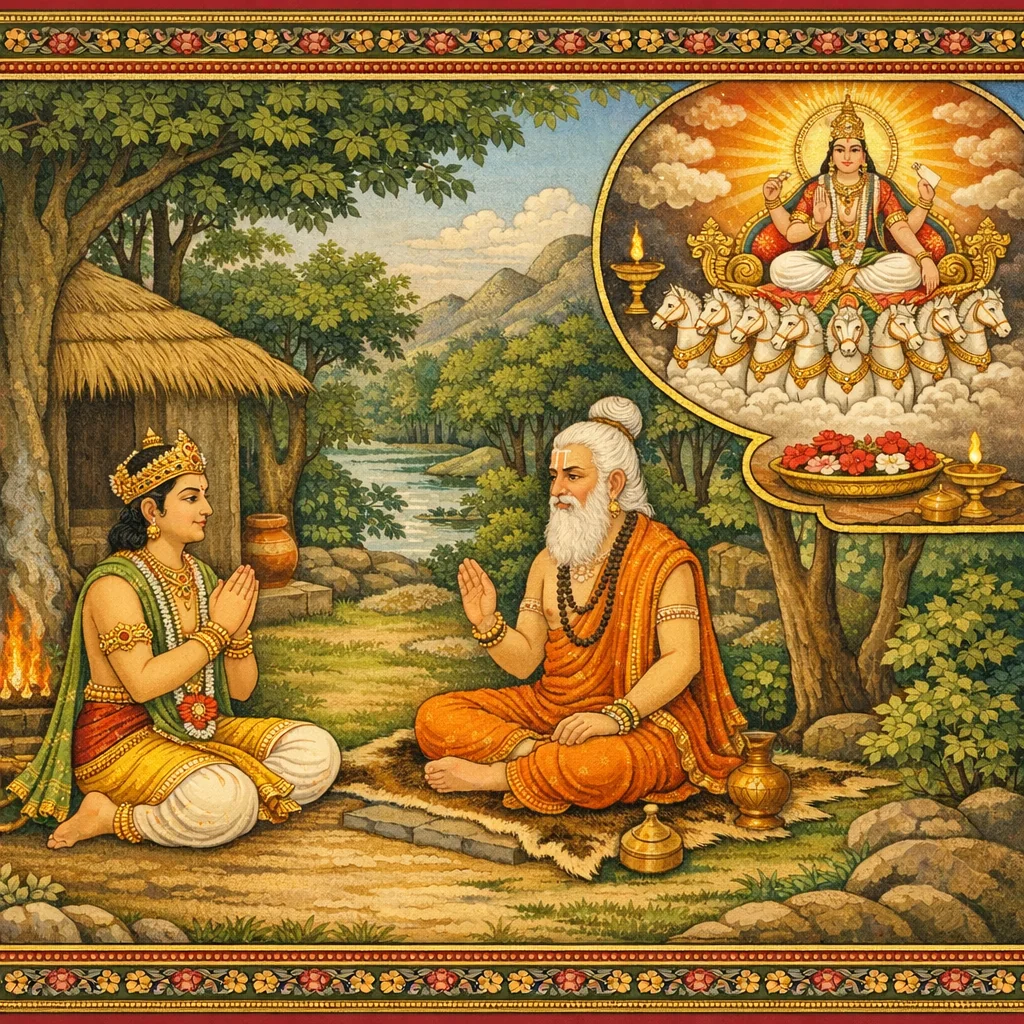
Adhyāya 162 unfolds as an ethical-ritual case narrative that culminates in a full vrata-vidhi. Sūta relates that Puṣpa, after recounting disputed deeds connected with the killing of Maṇibhadra and the ensuing social blame, is rebuked by Brahmins and branded a grave offender, with the discourse even raising the charge of brahma-ghna. Seeing his anguish, the Nāgara Brahmins consult śāstra, smṛti, purāṇa, and vedānta to find an authoritative means of purification. A Brahmin named Caṇḍaśarman cites the Skanda Purāṇa and identifies the Puraścaraṇa-Saptamī as an expiatory discipline; Puṣpa performs it and is said to be purified at the end of a year. The chapter then embeds an older dialogue: King Rohitāśva asks the sage Mārkaṇḍeya how sins of mind, speech, and body are removed. The sage distinguishes remedies—repentance for mental faults, restraint and non-consummation for verbal faults, and formal prāyaścitta disclosed to Brahmin authority or enforced by royal discipline for bodily faults. Mārkaṇḍeya finally prescribes the Sun-centered Puraścaraṇa-Saptamī vow, to be observed in Māgha (bright fortnight) when the Sun is in Makara, on a Sunday, with fasting and ritual purity, image-worship, red flowers and offerings, and arghya with red sandal. It concludes with feeding Brahmins, giving dakṣiṇā, and specified purificatory ingestions (including pañcagavya). Month-by-month offerings are continued through the year, ending with a prescribed donation (including a sixth share) to a Brahmin and the declaration of complete purification for the observer.
Shlokas
Verse 1
सूत उवाच । एवं नाम्नि कृते तस्य भास्करस्यांशुमालिनः । द्विजानां पुरतः पुष्पः कथयामास चेष्टितम्
Sūta said: When that radiant Sun—Bhāskara, garlanded with rays—had thus received the name, Puṣpa, in the presence of the Brāhmaṇas, began to recount what had occurred.
Verse 2
आत्मीयं कुत्सितं तेषां मणिभद्रवधो यथा । विहितो विहिता पत्नी तस्य व्याजेन कृत्स्नशः
He related their own shameful affair in full—how the slaying of Maṇibhadra was brought about, and how a wife was arranged for him, all of it through a contrived pretext.
Verse 3
ततस्ते ब्राह्मणाः प्रोचुस्तच्छ्रुत्वा कोपसंयुताः । सीत्कारान्प्रचुरान्कृत्वा धिक्त्वां पाप प्रगम्यताम्
Then those Brāhmaṇas, hearing it, were filled with anger; making many hissing sounds, they said: “Shame on you, sinner—be gone!”
Verse 4
आत्मीयं हेम चादाय न ते शुद्धिर्भविष्यति
“Even if you take back your own gold, purity will not come to you.”
Verse 5
ब्रह्मघ्नस्त्वं यतः प्रोक्तास्त्रयो वर्णा द्विजोत्तमाः । ब्राह्मणः क्षत्रियो वैश्यः स्मृतिशास्त्रप्रपाठकैः
“Because the teachers and reciters of the Smṛti-śāstras declare that the three twice-born varṇas—Brāhmaṇa, Kṣatriya, and Vaiśya—when they violate Brahmanical sanctity are called ‘brahmaghna’ (slayers of Brahman), therefore you are spoken of as a brahmaghna, O best of the twice-born.”
Verse 6
सूत उवाच । ततस्तु दुःखितः पुष्पो बाष्पसंपूरितेक्षणः । ब्रह्मस्थानाद्विनिर्गत्य प्ररुरोद सुदुःखितः
Sūta said: “Then Puṣpa, stricken with grief, his eyes filled with tears, went out from the Brahma-sthāna and wept bitterly, overwhelmed by sorrow.”
Verse 7
रोरूयमाणमालोक्य ततस्ते नागरा द्विजाः । दयां च महतीं कृत्वा ततः प्रोचुः परस्परम्
Seeing him weeping aloud, those Nāgara Brāhmaṇas, moved by great compassion, then spoke among themselves.
Verse 8
नानाविधानि शास्त्राणि स्मृतयश्च पृथग्विधाः । पुराणानि समस्तानि वीक्षध्वं सुसमाहिताः
Examine, with care and full attention, the many kinds of śāstras, the various Smṛtis, and all the Purāṇas in their entirety.
Verse 9
कुत्रचित्क्वचिदेवास्य कथंचिच्छुद्धिरस्ति चेत् । न तच्च विद्यते शास्त्रमस्मिन्स्थाने न चास्ति यत्
If, somewhere—at least in some manner—there could be a purification for him, then there must be some śāstric authority for it; yet no such authoritative teaching is found here in this place.
Verse 10
न स्मृतिर्न पुराणं च वेदांतं वा द्विजोत्तमाः । न चास्ति ब्राह्मणः सोऽत्र सर्वज्ञप्रतिमो न यः
There is no Smṛti here, no Purāṇa, nor even Vedānta, O best of the twice-born; nor is there a brāhmaṇa here who is like an omniscient one.
Verse 11
तस्माच्चिन्तयत क्षिप्रमस्य शुद्धिप्रदं हि यत् । तच्च प्रमाणतां नीत्वा शुद्धिरस्य प्रदीयते
Therefore, think quickly about what truly grants purification for him; and after establishing it as a valid authority (pramāṇa), let his purification be bestowed.
Verse 12
अथैको ब्राह्मणः प्राह चंडशर्मेति विश्रुतः । मया स्कांदपुराणेऽस्मिन्पुरश्चरणसंश्रिता
Then one brāhmaṇa, renowned as Caṇḍaśarman, spoke: “In this Skanda Purāṇa I have relied upon a teaching connected with puraścaraṇa…”
Verse 13
पठिता सप्तमी या च पुरश्चरणसंज्ञिता । पुरश्चरणतः पापं विहितं तु यथा व्रजेत्
That Saptamī which is recited and known as “Puraścaraṇa”—by that puraścaraṇa, sin is enjoined to depart, exactly as prescribed.
Verse 14
सम्यक्तथापि विप्रेंद्रास्ततो याति न संशयः । तस्मात्करोतु तामेष पुरश्चरणसप्तमीम्
Even so, O best of brāhmaṇas, if it is performed properly, it surely takes effect—there is no doubt. Therefore let this man perform that Puraścaraṇa Saptamī.
Verse 15
अपरं भूभुजादेशान्मणिभद्रो निपातितः । वधकैस्तस्य तत्पापं यदि पापं प्रजायते
Moreover, Maṇibhadra was slain by executioners at the king’s command. If any sin arises from that act, that sin truly accrues to the one responsible for the unjust command.
Verse 16
राजा भूत्वा न यः सम्यग्विचारयति वादिनम् । तस्य तत्पातकं घोरं राज्ञश्चैव प्रजायते
He who, though a king, does not properly examine the plea of the litigant—upon that king indeed arises that dreadful sin.
Verse 17
तथास्य पत्न्यास्तत्पापं जानंत्या यत्तयोदितम् । मत्पित्रा ब्राह्मणैर्दत्तोऽयं पुरा वह्निसंनिधौ
Likewise, that sin also touches his wife, since she knew what had been said by them. “This rite/observance was formerly given by my father, together with the brāhmaṇas, in the presence of the sacred fire.”
Verse 18
विडंबितेन चानेन कृतप्रतिकृतं कृतम् । तस्मान्न चास्य दोषः स्याद्यतः प्रोक्तं मुनीश्वरैः
And by this one—who had been deceived—retaliation was done in response to what had been done. Therefore no fault should belong to him, for so it has been declared by the lordly sages.
Verse 19
कृते प्रतिकृतं कुर्याद्धिंसने प्रतिहिंसनम् । न तत्र जायते दोषो यो दुष्टे दुष्टमाचरेत्
One should render a counter-deed to a deed done, and counter-violence to violence. In that case no fault arises for one who behaves ‘as the wicked’ toward the wicked, responding in kind to wrongdoing.
Verse 20
ब्राह्मणा ऊचुः । यद्येवं वद विप्रास्य पुरश्चरणसंज्ञिताम् । सप्तमीमद्य विप्रेंद्र वराकस्य विशुद्धये
The brāhmaṇas said: “If it is so, O best of brāhmaṇas, then tell today of that Saptamī known as ‘Puraścaraṇa,’ for the purification of this poor man.”
Verse 21
सूत उवाच । अथास्य कथयामास सप्तमीं तां द्विजोत्तमाः । चंडशर्माभिधानस्तु कृत्वा तस्योपरि कृपाम्
Sūta said: Then the best of brāhmaṇas told him about that Saptamī. One named Caṇḍaśarmā, having shown compassion toward him, instructed him.
Verse 22
तेनापि विहिता सम्यग्यथा तस्य मुखाच्छ्रुता । ततः संवत्सरस्यांते विपाप्मा समपद्यत
He too performed it correctly, just as he had heard it from his mouth. Then, at the end of a year, he became free from sin.
Verse 23
ऋषय ऊचुः । पुरश्चरणसंज्ञां तु सप्तमीं वद सूतज । विधिना केन कर्तव्या कस्मिन्काल उपस्थिते
The sages said: “O son of Sūta, tell us of the Saptamī called Puraścaraṇa—by what rite is it to be performed, and at what time should it be undertaken?”
Verse 24
सूत उवाच । अहं वः कीर्तयिष्यामि रोहिताश्वस्य भूपतेः । मार्कंडेन पुरा प्रोक्ता पृच्छयमानेन भक्तितः
Sūta said: “I shall recount it to you—the observance that was formerly taught by Mārkaṇḍeya to King Rohitāśva, when he asked with devotion.”
Verse 25
सप्तकल्पस्मरो विप्रा मार्कंडाख्यो महामुनिः । रोहिताश्वेन पृष्टः स हरिश्चंद्रात्मजेन च
O brāhmaṇas, the great sage named Mārkaṇḍa—who remembers the events of seven kalpas—was questioned by Rohitāśva, the son of Hariścandra.
Verse 26
रोहिताश्व उवाच । अज्ञानाज्ज्ञानतो वापि यत्पापं कुरुते नरः । उपायं तस्य नाशाय किंचिन्मे वद सन्मुने
Rohitāśva said: “Whether a man commits sin out of ignorance or knowingly, tell me, O good sage, some means by which that sin may be destroyed.”
Verse 27
मार्कंडेय उवाच । मानसं वाचिकं चैव कायिकं च तृतीयकम् । त्रिविधं पातकं लोके नराणामिह जायते
Mārkaṇḍeya said: “In this world, sin arises for human beings in three forms—of the mind, of speech, and as the third, of the body.”
Verse 28
तत्रोपाया विनाशाय तस्य संपरिकीर्तिताः । तानहं ते प्रवक्ष्यामि शृणुष्व नृपसत्तम
There, the means for destroying that threefold sin have been well proclaimed. I shall tell them to you—listen, O best of kings.
Verse 29
मानसं चैव यत्पापं नराणामिह जायते । पश्चात्तापे कृते तस्य तत्क्षणादेव नश्यति
Whatever sin arises in people here at the level of the mind—once repentance is performed for it, it perishes at that very moment.
Verse 30
वाचिकं चैव यत्पापं नाभुक्त्वा तत्प्रणश्यति । पुरश्चरणबाह्यं तु सत्यमेतन्मयोदितम्
And whatever sin is committed by speech—without the sinner having to undergo its fruit—can be destroyed. This is a true statement spoken by me, without requiring elaborate preparatory observances (puraścaraṇa).
Verse 31
निवेद्य ब्राह्मणेंद्राणां तदुक्तं च समाचरेत् । प्रायश्चित्तं यथोक्तं तु ततः शुद्धिमवाप्नुयात्
Having confessed it to the foremost brāhmaṇas, one should act according to what they prescribe. Performing the prāyaścitta as instructed, one then attains purification.
Verse 32
अथवा पार्थिवो ज्ञात्वा कुरुते तस्य निग्र हम् । तेन शुद्धिमवाप्रोति यद्यपि स्यात्स किल्विषी
Or else, when the king comes to know of the offence and imposes punishment upon him, by that lawful chastisement he attains purification—even if he is indeed guilty of sin.
Verse 33
लज्जया ब्राह्मणेंद्राणां यो न ब्रूते कथंचन । न च राजा विजानाति शरीरस्थेन यो म्रियेत् । तस्य निग्रहकर्ता च स्वयं वैवस्वतो यमः
Out of shame before the foremost brāhmaṇas, if someone does not confess at all, and the king also does not come to know, and he dies while that sin still remains within his body—then the restrainer and punisher of such a one is Yama Vaivasvata himself.
Verse 34
तस्मात्सर्वप्रयत्नेन कृत्वा पापं विजानता । प्रायश्चित्तं तु कर्तव्यं यथोक्तं ब्राह्मणो दितम्
Therefore, with every effort, one who knows he has committed sin must perform prāyaścitta (expiation) exactly as declared by the brāhmaṇas.
Verse 35
रोहिताश्व उवाच । सर्वेषामेव पापानां विहितानां मुनीश्वर । किंचिद्व्रतं समाचक्ष्व दानं वा होममेव वा । विपाप्मा जायते येन पुरश्चरणवर्जितम्
Rohitāśva said: “O lord among sages, for the removal of all sins that cling to a person, teach me some observance—whether a vrata (sacred vow), a dāna (gift), or a homa (fire-offering)—by which one becomes free from sin even without performing the full rite of puraścaraṇa.”
Verse 36
नित्यं पापानि कुरुते नरः सूक्ष्माणि सर्वतः । प्रायश्चित्तानि सर्वेषां कर्तुं शक्तिः कथं भवेत्
A person constantly commits subtle faults on every side; how could one possibly have the capacity to perform prāyaścitta (expiations) for them all?
Verse 37
मार्कंडेय उवाच । अस्ति राजन्व्रतं पुण्यं पुरश्चरणसंज्ञितम् । पुरश्चरणसंज्ञा तु सप्तमी सूर्यवल्लभा
Mārkaṇḍeya said: “O King, there is a meritorious vow known as ‘Puraścaraṇa.’ The day called Puraścaraṇa is the Saptamī (seventh lunar day), beloved of the Sun.”
Verse 38
यया संचीर्णया राज न्कायस्थो यमसंभवः । विचित्रो मार्जयेत्पापं कृतं जन्मनि संचितम्
By performing it duly, O King, even Vicitra—the kāyastha born of Yama—wiped away the sin amassed and committed over the course of a lifetime.
Verse 39
तस्मात्कुरु महाराज तथाशु वचनं मम । येन वा मुच्यते पापा त्सर्वस्मात्कायसंभवात्
Therefore, O great king, carry out my instruction without delay, by which one is freed from all sin that arises from embodied existence.
Verse 40
रोहिताश्व उवाच । पुरश्चरणसंज्ञा तु सप्तमी मुनिसत्तम । विधिना केन कर्तव्या कस्मिन्काले वद स्व मे
Rohitāśva said: “O best of sages, this Saptamī called Puraścaraṇa—by what procedure should it be observed, and at what time? Tell me.”
Verse 41
मार्कंडेय उवाच । माघमासे सिते पक्षे मकरस्थे दिवाकरे । सूर्यवारेण सप्तम्यां व्रतमेतत्समाचरेत्
Mārkaṇḍeya said: “In the month of Māgha, in the bright fortnight, when the Sun is in Capricorn, one should observe this vow on the Saptamī that falls on a Sunday.”
Verse 42
पाखंडैः पतितैः सार्धं तस्मिन्नहनि नालपेत् । भक्षयित्वा नृपश्रेष्ठ प्रभाते दन्तधावनम् । मंत्रेणानेन पश्चाच्च कर्तव्यो नियमो नृप
On that day one should not converse with heretics or the fallen. After eating at the proper time, O best of kings, in the morning one should clean the teeth; thereafter, O King, one should undertake the observance (niyama) with this mantra.
Verse 43
पुरश्चरणकृत्यायां सप्तम्यां दिवसाधिप । उपवासं करिष्यामि अद्य त्वं शरणं मम
O Lord of the Day (Sūrya), on this Saptamī appointed for the Puraścaraṇa rite, I shall fast; today You are my refuge.
Verse 44
ततोऽपराह्णसमये स्नात्वा धौतांबरः शुचिः । प्रतिमां पूजयेद्भक्त्या दिनाधिपसमुद्भवाम्
Then, in the afternoon, having bathed and donned clean garments, being pure, one should worship with devotion the image (pratimā) of the Lord of the Day (Sūrya).
Verse 45
रक्तैः पुष्पैर्महावीर पादाद्यं पूजयेत्ततः । पतंगाय नमः पादौ मार्तंडायेति जानुनी
O great hero, then one should worship the feet and the lower limbs with red flowers. Reciting “Homage to Pataṅga,” one should worship the Feet; and reciting “(Homage) to Mārtaṇḍa,” one should worship the Knees.
Verse 46
गुह्यं दिवसनाथाय नाभिं द्वादश मूर्तये । बाहू च पद्महस्ताय हृदयं तीक्ष्णदीधिते
One should worship the secret part with the name “Lord of Day”; the navel with the name “He of Twelve Forms”; the arms with the name “Lotus-Handed”; and the heart with the name “Sharp-Rayed.”
Verse 47
कंठं पद्मदलाभाय शिरस्तेजोमयाय च । एवं संपूज्य विधिवद्धूपं कर्पूरमाददेत्
One should worship the throat with the name “Lotus-Petal-Lustrous,” and the head with the name “Made of Radiance.” Having thus worshipped in due manner, one should then offer incense—especially camphor.
Verse 48
गुडौदनं च नैवेद्यं रक्तवस्त्राभिवेष्टितम् । रक्तसूत्रेण दीपं च तथैवारार्तिकं नृप
One should offer as naivedya sweet rice with jaggery, wrapped in a red cloth. One should also prepare a lamp with a red thread, and likewise perform ārārtika, O king.
Verse 49
शंखे तोयं समादाय रक्तचन्दनमिश्रितम् । सफलं च ततः कृत्वा अर्घ्यं दद्यात्ततः परम्
Taking water in a conch and mixing it with red sandal, and then placing fruit with it, one should thereafter offer arghya (the reverential water-offering).
Verse 50
कुकृतं यत्कृतं किंचिदज्ञानाज्ज्ञानतोऽपि वा । प्रायश्चित्तं कृतं देव ममार्घ्यश्च प्रगृह्यताम्
Whatever wrong I have done—whether out of ignorance or even knowingly—the expiation (prāyaścitta) has been performed. O Lord, may my arghya also be accepted.
Verse 51
ततः संपूजयद्विप्रं गन्धपुष्पानुलेपनैः । दत्त्वा तु भोजनं तस्मै दक्षिणां च स्वशक्तितः । प्राशनं कायशुद्ध्यर्थं पञ्चगव्यस्य चाचरेत्
Thereafter, one should duly honor a brāhmaṇa with fragrances, flowers, and unguents. Having given him food and a gift-fee (dakṣiṇā) according to one’s capacity, one should also partake of pañcagavya for bodily purification.
Verse 52
कृतांजलिपुटो भूत्वा समुद्वीक्ष्य दिवाकरम् । दिवाकरं गतश्चैव मन्त्रमेतं समुच्चरेत्
Forming the cupped hands in reverence, and looking toward the Sun, and then approaching the Sun in worship, one should recite this mantra.
Verse 53
इदं व्रतं मया देव गृहीतं पुरतस्तव । अविघ्नं सिद्धिमायातु प्रसादात्तव भास्कर
O Lord, I have undertaken this vow in your very presence. O Bhāskara, by your grace may it be fulfilled without obstacles.
Verse 54
ततश्च फाल्गुने मासि संप्राप्ते मुनिसत्तम । कुन्देन पूजयेद्देवं तेनैव विधिना ततः
Then, when the month of Phālguna arrives, O best of sages, one should worship the Lord with kunda-flowers, and thereafter proceed by that very same rite.
Verse 55
धूपं च गुग्गुलुं दद्यान्नैवेद्यं भक्तमेव च । प्राशनं गोमयं प्रोक्तं सर्वपापविशुद्धये
One should offer guggulu incense as fumigation and present cooked rice as the naivedya. The prescribed ‘prāśana’—the ritual intake—is cow-dung, declared to purify one from all sins.
Verse 56
चैत्रे मासि तु संप्राप्ते सुरभ्या पूज्येद्धरिम् । नैवेद्यं गुणिकाः प्रोक्ता धूपं सर्जरसोद्भवम्
When the month of Caitra arrives, one should worship Hari with offerings from the fragrant cow, Surabhī. The recommended naivedya is sweet cakes (guṇikā), and the incense is that produced from the resin of the śarja tree.
Verse 57
कुशोदकं च संप्राश्य कायशुद्धिमवाप्नुयात् । वैशाखे किंशुकैः पूजां यथावच्च घृताशनैः
By ritually sipping kuśa-infused water, one attains purification of the body. In the month of Vaiśākha, worship should be performed with kiṃśuka blossoms, and in due manner with the prescribed intake of ghee-based offerings.
Verse 58
नैवेद्यं च सुरामांसं धूपं च विनिवेदयेत् । दधिप्राशनमेवात्र कर्तव्यं कायशुद्धये
One should offer wine and meat as naivedya, and also present incense. Here, the prescribed ritual intake is the eating of curd (dadhi), to purify the body.
Verse 59
पुष्पपाटलया पूजा विधातव्या रवेर्नृप । नैवेद्ये सक्तवः प्रोक्ताः प्राशनं च घृतं स्मृतम्
O King, worship of Ravi (the Sun) should be performed with pāṭalā flowers. As naivedya, saktu (parched-grain flour) is prescribed, and the ritual intake is remembered to be ghee.
Verse 60
कपिलाया महावीर सर्वपापविशुद्धये । आषाढे मुनिपुष्पैश्च पूजयेद्भास्करं नृप
O great hero, for purification from all sins, the rite is to be done with the kapilā (the tawny cow/kapilā-oblation). In Āṣāḍha, O King, one should worship Bhāskara with muni-flowers.
Verse 61
नैवेद्ये घारिका प्रोक्ता प्राशनं मधुसर्पिषोः । धूपं चैवागरुं दद्यात्परया श्रद्धया युतः
The prescribed naivedya is ghārikā (a fried cake). The ritual intake is honey and ghee. One should also offer agaru as incense, endowed with supreme faith.
Verse 62
श्रावणे तु कदंबेन पूजनं तीक्ष्णदीधितेः । नैवेद्ये मोदकाश्चैव तगरं धूप माददेत्
In the month of Śrāvaṇa, worship the sharp-rayed one (the Sun) with kadamba flowers. Offer modakas as naivedya, and use tagara as the incense.
Verse 63
गोशृंगोदकमादाय सद्यः पापात्प्रमुच्यते । जात्या भाद्रपदे पूजा क्षीरनैवेद्यमाददेत्
By taking water sanctified through a cow’s horn, one is at once released from sin. In Bhādrapada, worship should be performed with jasmine (jāti), and milk should be offered as the naivedya.
Verse 64
धूपं नखसमुद्भूतं प्राशनं क्षीरमेव च । आश्विने कमलैः पूजा नैवेद्ये घृतपूरिका
Offer as incense that which arises from “nakhā” (a fragrance derived from nail/hoof), and let the ritual intake (prāśana) be milk alone. In Āśvina, worship should be performed with lotuses, and ghṛtapūrikā is prescribed as the naivedya.
Verse 65
धूपं कुंकुमजं प्रोक्तं कर्पूरप्राशनं स्मृतम्
The incense is declared to be made from kuṅkuma (saffron), and the ritual intake (prāśana) of camphor is remembered as the proper observance.
Verse 66
तुलस्या कार्तिके पूजा भास्करस्य प्रकीर्तिता । नैवेद्ये चैव खंडाख्यं धूपं कौसुंभिकं नृप
In Kārttika, worship of Bhāskara (the Sun-Lord) with tulasī is proclaimed. And as the naivedya, O king, one should offer the sweet called “khaṇḍa” and incense made from safflower.
Verse 67
प्राशनं च लवंगाख्यं सर्वपापविशोधनम् । भृंगराजेन पूजा च सौम्ये मासि समाचरेत्
One should also perform prāśana of the substance called lavaṅga (clove), which purifies one from all sins. And in the month of Saumya, worship should be duly performed with bhṛṅgarāja.
Verse 68
नैवेद्ये फेणिका देया धूपं गुडसमुद्भवम् । कंकोलप्राशनं चैव भास्करस्य प्रतुष्टये
For the naivedya, one should offer pheṇikā, and present incense made from jaggery (guda). One should also perform the prāśana of kankola, for the complete satisfaction of Bhāskara.
Verse 69
शतपत्रिकया पूजा पौषे मासि रवेः स्मृता । सहजं धूपमादिष्टं नैवेद्ये शुष्कली तथा
In the month of Pauṣa, worship of Ravi with the hundred-petalled flower is prescribed. Natural incense is enjoined, and śuṣkalī likewise as the naivedya.
Verse 70
प्राशने पूर्वमुक्तानि सर्वाण्येव समाचरेत् । समाप्तौ च ततो दद्यात्षड्भागं गृहसंभवम्
At the time of prāśana, one should carry out all that was stated before. And upon completion, one should then give as a gift a sixth share of one’s household produce.
Verse 71
ब्राह्मणाय नृपश्रेष्ठ सर्वपापविशुद्धये । इष्टभोज्यं ततः कार्यं स्वशक्त्या पार्थिवोत्तम
To a brāhmaṇa, O best of kings, for the cleansing of all sins; then, O foremost ruler, a pleasing meal should be arranged according to one’s capacity.
Verse 72
एवं तु कुरुते योऽत्र सप्तमीं भास्करोद्भवाम् । सर्वपापविनिर्मुक्तो निर्मलत्वं स गच्छति
Whoever, in this manner, observes here the Saptamī sacred to Bhāskara, becomes freed from all sins and attains purity.
Verse 73
ब्राह्मणा ऊचुः । एवं पुरा वै कथिता रोहिताश्वाय धीमते । मार्कंडेन महाभाग तस्मात्त्वमपि तां कुरु
The Brāhmaṇas said: “Thus, in former times, this was indeed taught by the greatly blessed Mārkaṇḍa to the wise Rohitāśva. Therefore, O fortunate one, you too should perform it.”
Verse 74
येन संजायते सम्यक्पुरश्चरणमेव ते
By this, for you, the puraścaraṇa will be truly and properly accomplished in full.
Verse 75
सूत उवाच । तस्य तद्वचनं श्रुत्वा पुष्पोऽपि द्विजसत्तमाः । तां चक्रे सप्तमीं हृष्टो यथा तेन निवेदिता
Sūta said: Hearing his words, Puṣpa too—O best of Brāhmaṇas—joyfully observed the Saptamī rite exactly as it had been instructed to him.
Verse 76
षड्भागं प्रददौ तस्मै ब्राह्मणाय महात्मने । स्ववित्तस्य गृहस्थस्य कुप्याकुप्यस्य कृत्स्नशः
He gave to that great-souled Brāhmaṇa a sixth share of his own wealth as a householder—of all his possessions, both movable goods and stored property, in full.
Verse 77
सोऽपि जग्राह तद्वित्तं प्रहृष्टेनांतरात्मना । सुवर्णमणि रत्नानि संख्यया परिवर्जितम्
He too accepted that wealth with an inwardly delighted heart—gold, gems, and jewels, beyond counting.
Verse 162
इति श्रीस्कान्दे महापुराण एकाशीतिसाहस्र्यां संहितायां षष्ठे नागरखण्डे हाटकेश्वरक्षेत्रमाहात्म्ये पुरश्चरणसप्तमीव्रतविधानवर्णनंनाम द्विषष्ट्युत्तरशततमोऽध्यायः
Thus, in the Śrī Skanda Mahāpurāṇa, in the Ekāśīti-sāhasrī Saṃhitā, in the sixth Nāgara Khaṇḍa, within the Māhātmya of the sacred region of Hāṭakeśvara, ends the one-hundred-and-sixty-second chapter, entitled “Description of the Procedure for the Puraścaraṇa Saptamī Vow.”