Adhyaya 149
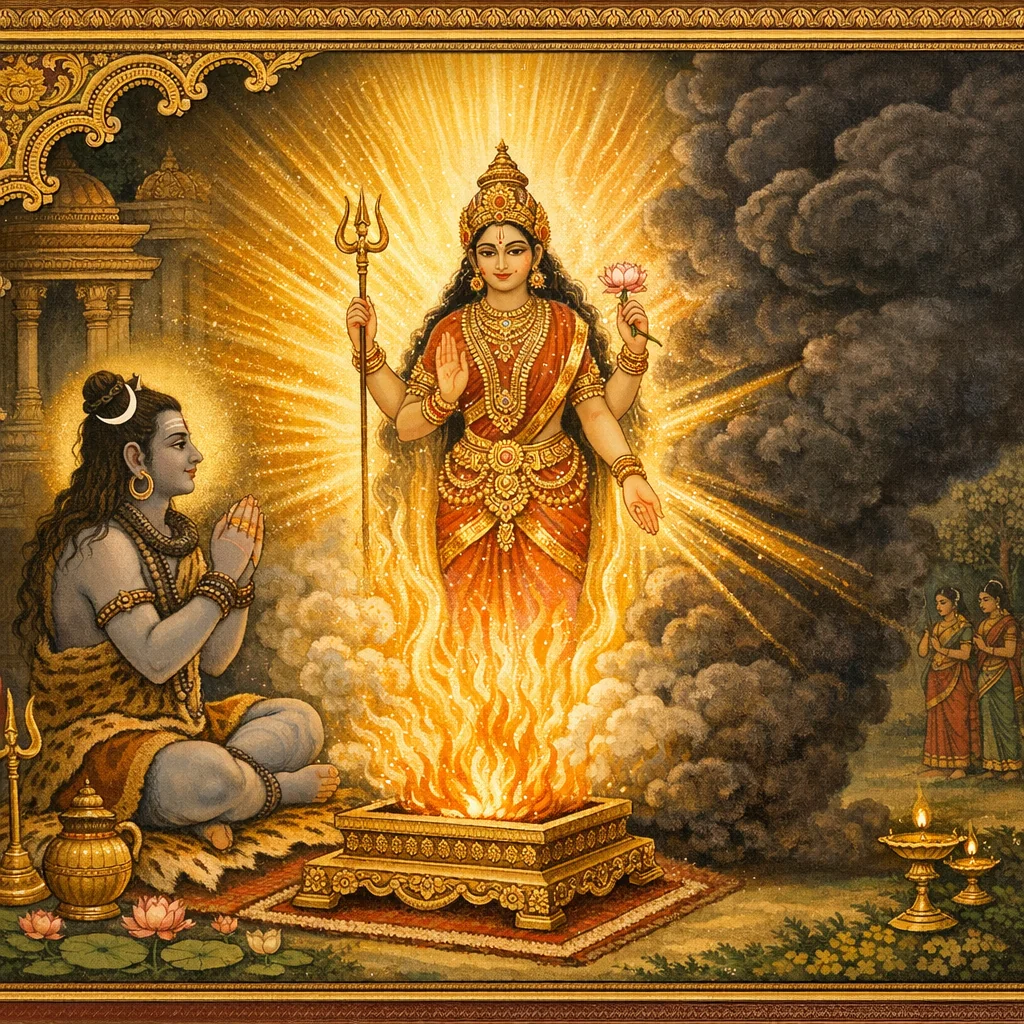
This chapter unfolds as a theological question-and-answer: the Ṛṣis inquire and Sūta explains that the Goddess is the one primordial Power who manifests in many forms for the welfare of the gods and the curbing of disruptive forces. It recalls her famed earlier descents—Kātyāyanī against Mahīṣāsura, Cāmuṇḍā against Śumbha and Niśumbha, and Śrīmātā in a later cycle—then introduces a less elaborated form, Keliśvarī. The narrative turns to the menace of Andhaka. Śiva, using Atharvaṇa-style mantras, summons the supreme Power; the Goddess is praised with universal epithets declaring all feminine forms to be her modalities. Śiva seeks her aid to neutralize Andhaka, who has displaced the gods. An etymology is given: because she assumes a “keli-maya” (playful, multiform) mode and is invoked from the fire (agni) context, she is renowned in the three worlds as Keliśvarī. Practical instruction follows: worship of Keliśvarī on Aṣṭamī and Caturdaśī is said to grant desired results; a royal agent who recites her praise in wartime is promised victory even with limited forces. The chapter also embeds Andhaka’s lineage and arc—linked to Hiraṇyakaśipu’s line, he performs austerities to Brahmā seeking freedom from aging and death (absolutely denied), then turns to vengeance and war. Battle scenes depict exchanges of divine weapons, Śiva’s arrival, the mobilization of maternal/yoginī powers, Andhaka’s “male vow” not to strike women, and his eventual resort to the darkness-weapon (tamo’stra), giving the conflict a martial yet moral-ritual tone.
Shlokas
Verse 1
ऋषय ऊचुः । केलीश्वरी च या देवी श्रूयते सूतनंदन । माहात्म्यं वद नस्तस्या उत्पत्तिं च सुविस्तरात्
The sages said: “O son of Sūta, we have heard of the Goddess Kelīśvarī. Tell us her greatness, and also her origin, fully and in detailed measure.”
Verse 2
कस्मिन्काले समुत्पन्ना किमर्थं च सुरेश्वरी । किं तस्या जायते श्रेयः पूजया नमनेन च
At what time did the Sovereign Lady of the gods (Sureśvarī) arise, and for what purpose? What śreyas—highest good—comes from worshipping her and bowing in reverence to her?
Verse 3
त्वया कात्यायनी प्रोक्ता चामुण्डा च सुरेश्वरी । श्रीमाता च समुत्पन्ना किमर्थं च सुरेश्वरी
You have already spoken of Kātyāyanī, and of Cāmuṇḍā, the divine Sureśvarī; and of Śrīmātā and her manifestation. For what purpose, then, did this Sureśvarī (Kelīśvarī) arise?
Verse 4
श्रीमाता च तथा तारा देवी शत्रुविनाशिनी । केलीश्वरी न संप्रोक्ता तस्मात्तां वद सांप्रतम्
Śrīmātā, and likewise Tārā—the Goddess who destroys enemies—have been spoken of. But Kelīśvarī has not yet been explained; therefore, speak of her now.
Verse 5
कौतुकं नः समुत्पन्नमत्रार्थे सूतनंदन
In this matter, curiosity has arisen in us, O son of Sūta.
Verse 6
सूत उवाच । आद्यैका देवता लोके बहुरूपा व्यवस्थिता । देवतानां हितार्थाय दैत्यपक्षक्षयाय च
Sūta said: In the world there is one primordial Divinity, established in many forms—working for the welfare of the gods and for the destruction of the hosts of the Daityas.
Verse 7
यदायदात्र देवानां व्यसनं जायते क्वचित् । तदातदा परा शक्तिर्या सा व्याप्य व्यवस्थिता
Whenever, at any time, calamity befalls the gods, at that very moment the Supreme Power—pervading all—manifests and takes her station.
Verse 8
सर्वमेतज्जगद्धात्री जन्म चक्रे धरातले । महिषासुरनाशाय सा च कात्यायनी भुवि
That very World-Mother assumed birth upon the earth in all these ways; and for the destruction of Mahiṣāsura, she became Kātyāyanī in the world.
Verse 9
अवतीर्णा परा मूर्तिर्गतास्मिन्भुवनत्रये । यदा शुंभनिक्षंभौ च दानवौ बलदर्पितौ
The Supreme Form descended and moved throughout the three worlds, when the Dānava brothers Śumbha and Niśumbha—intoxicated with strength—rose to power.
Verse 10
अवतीर्णा तदा सैव चामुंडा रूपमाश्रिता । प्रोद्गते कालयवने सर्वदेवभयावहे
Then she herself descended again, taking the form of Cāmuṇḍā, when Kālayavana arose—bringing terror to all the gods.
Verse 11
श्रीमातारूपिणी देवी सैव जाता महीतले । अंधासुरवधार्थाय शंभुनाऽक्रांतचेतसा । सृष्टा केलीवरी देवी यया व्याप्तमिदं जगत्
That same Goddess, in the form of Śrīmātā, was born upon the earth. For the purpose of slaying Andhāsura, Śambhu—his mind stirred to action—brought forth Kelīvarī Devī, by whom this entire world is pervaded.
Verse 12
ततस्तस्याः प्रभावेन हत्वा दैत्यानशेषतः । अन्धको निहतः पश्चात्त्रैलोक्यव्यसनप्रदः
Then, by her mighty power, after slaying the Daityas without remainder, Andhaka—who brought distress upon the three worlds—was afterward killed.
Verse 13
ऋषय ऊचुः । अन्धकः कस्य पुत्रोऽयं किंप्रभावः कथं हतः । कस्माद्धतस्तु संग्रामे सर्वं विस्तरतो वद
The sages said: “Andhaka—whose son is he? What is his power, and how was he slain? For what reason was he killed in battle? Tell us everything in full detail.”
Verse 14
सूत उवाच । दक्षस्य दुहिता नाम्ना दितिः सर्वगुणालया । हिरण्यकशिपुर्नाम तस्याः पुत्रो बभूव ह
Sūta said: “Dakṣa had a daughter named Diti, a repository of many virtues. From her was born a son renowned as Hiraṇyakaśipu.”
Verse 15
येन शक्रादयो देवा जिताः सर्वे रणाजिरे । स्वर्गे राज्यं कृतं भूरि स्वयमेव महात्मना
By him, Indra and the other gods were all defeated on the battlefield; and that great one established for himself vast sovereignty in heaven.
Verse 16
यद्भयात्सकलैर्देवैर्नानाशस्त्राण्यनेकशः । निर्मितान्यतिमुख्यानि वर्मचर्मयुतानि च
Out of fear of him, all the gods fashioned many kinds of weapons—especially the most formidable ones—along with armours and protective hides.
Verse 18
तस्य पुत्रद्वयं जज्ञ वीर्यौदार्यगुणान्वितम् । ज्येष्ठः प्रह्लाद इत्युक्तो द्वितीयश्चांधकस्तथा
To him were born two sons, endowed with valour and generous virtue: the elder was called Prahlāda, and the second, Andhaka.
Verse 19
हिरण्यकशिपौ प्राप्ते मृत्युलोकं सुहृद्गणैः । अमात्यैश्च ततः प्रोक्तः प्रह्लादो विनयान्वितैः
When Hiraṇyakaśipu departed to the world of death, Prahlāda was then addressed by his circle of friends and by ministers endowed with humility and decorum.
Verse 21
प्रह्राद उवाच । नाहं राज्यं करिष्यामि कथंचिदपि भूतले । यतस्ततो निबोधध्वं वचनं मम सांप्रतम्
Prahlāda said: “I will not assume kingship upon this earth—by no means. Therefore, understand well the words I speak to you now.”
Verse 22
दैत्यराज्यं न वांछंति देवाः शक्रपुरोगमाः । तेषां रक्षाकरो नित्यं विष्णुः स भगवान्स्वयम्
The gods, led by Indra, do not desire the dominion of the Daityas; for their constant protector is Viṣṇu—the Blessed Lord Himself.
Verse 23
अप्यहं सन्त्यजे प्राणान्सर्वस्वं वा न संशयः । हरिणा सह संग्रामं नाहं कर्तुमहो क्षमः
I would rather give up my life—or even all that I possess, without doubt; but alas, I am not capable of waging war against Hari (Viṣṇu).
Verse 24
यो मयाऽभ्यर्चितो नित्यं प्रणतश्च सुरेश्वरः । न तेन सहितो युद्धं करिष्यामि कथञ्चन
He whom I worship each day and before whom I bow—the Lord of the gods—I shall never, in any manner, wage war against Him.
Verse 25
सूत उवाच । प्रह्लादेन च संत्यक्ते राज्ये पितृसमुद्भवे । अन्धकः स्थापितस्तत्र संमंत्र्य सचिवैर्मिथः
Sūta said: When Prahlāda renounced the kingdom inherited from his father, Andhaka was installed there, after mutual counsel with the ministers.
Verse 26
हिरण्यकशिपोः पुत्रो देवदानवदर्पहा । सोऽपि राज्यममात्येभ्यो निधाय तदनन्तरम्
Hiraṇyakaśipu’s son—he who shattered the arrogance of both devas and dānavas—entrusted his kingdom to his ministers, and thereafter withdrew from rule.
Verse 27
तपश्चक्रे चिरं कालं ध्यायमानः पितामहम् । त्यक्त्वा कामं तथा क्रोधं दंभं मत्सरमेव च
For a long time he performed austerities, meditating on Pitāmaha (Brahmā), having cast away desire, anger, hypocrisy, and envy as well.
Verse 28
जितेंद्रियः सुशांतात्मा समः सर्वेषु जन्तुषु । वृक्षमूलाश्रयः शांतः संतुष्टेनांतरात्मना
Self-controlled, inwardly tranquil, and equal toward all beings, he lived at the root of a tree—calm, with a heart content within itself.
Verse 29
यावद्वर्षसहस्रांतं फलाहारो बभूव ह । शीर्णपर्णाशनाहारो यावद्वर्षसहस्रकम्
For a thousand years he lived on fruits; and for another thousand years he subsisted on fallen leaves as his food.
Verse 30
ध्यायमानो दिवानक्तं देवदेवं पितामहम् । वायुभक्षस्ततो जज्ञे तावत्कालं द्विजोत्तमाः
Meditating day and night on Pitāmaha, the God of gods, he then became one who ‘fed on air’ for that length of time, O best of the twice-born.
Verse 31
ततो वर्षसहस्रांते चतुर्थे समुपस्थिते । तमुवाच स्वयं ब्रह्मा स्वयमभ्येत्य हर्षितः
Then, when the fourth thousand-year period had been completed, Brahmā himself—delighted—came in person and spoke to him.
Verse 33
ब्रह्मोवाच । परितुष्टोऽस्मि ते वत्स वरं वरय सुव्रत । तुष्टोऽहं ते प्रदास्यामि यद्यपि स्यात्सुदुर्लभम् । अन्धक उवाच । यदि यच्छसि मे ब्रह्मन्वरं मनसि वांछितम् । जरामरणनाशाय दीयतां सुरसत्तम
Brahmā said: “I am well pleased with you, dear child; O steadfast in vows, choose a boon. Being satisfied, I shall grant it to you—even if it be exceedingly hard to obtain.” Andhaka said: “If you will grant me, O Brahman, the boon my mind desires, then let it be given for the destruction of old age and death, O best among the gods.”
Verse 34
श्रीब्रह्मोवाच । न कश्चिच्च जराहीनो विद्यतेऽत्र धरातले । मरणेन विना नैव यस्य जन्म भवेत्क्षितौ
Śrī Brahmā said: “Indeed, on this earth none exists who is free from old age; and without death, there is no one whose birth can occur upon the ground.”
Verse 35
तथापि तव दास्यामि बहुधर्मरतस्य च । तस्मात्कुरु महाभाग राज्यं गत्वा निजं गृहम्
Even so, I shall grant you a boon, since you delight in many forms of dharma. Therefore, O fortunate one, go to your own home and take up the governance of your kingdom.
Verse 36
भवेद्बहुफलं राज्यं श्मशानं भवनं यथा । बहुकण्टकसंकीर्णं क्रूरकर्मभिरावृतम्
Kingship yields many consequences—like a dwelling that is a cremation-ground: filled with many thorns, and surrounded by harsh deeds and their burdens.
Verse 37
सूत उवाच । एवमुक्त्वा चतुर्वक्त्रस्ततश्चादर्शनं गतः । कस्यचित्त्वथ कालस्य प्रेरितः कालधर्मणा । प्रोवाच सचिवान्सोऽथ पितुर्वैरमनुस्मरन्
Sūta said: Having spoken thus, the Four-faced (Brahmā) then vanished from sight. After some time, driven onward by the law of Time, he (Andhaka), remembering the enmity against his father, addressed his ministers.
Verse 38
अन्धक उवाच । पितास्माकं हतो देवैः पितृव्यश्च महाबलः । कपटेन न शौर्येण तस्मात्तान्सूदयाम्यहम्
Andhaka said: Our father was slain by the gods, and our very powerful uncle as well—by deceit, not by valor. Therefore I shall destroy them.
Verse 39
कोऽर्थः पुत्रेण जातेन यो न कृत्यैः सुशंसितैः । प्राकट्यं याति सर्वत्र वंशस्याग्रे ध्वजो यथा
What is the use of a son who, by praiseworthy deeds, does not become renowned everywhere—like a banner raised at the forefront of a lineage?
Verse 41
अस्माकं खल्विमे लोकाः के देवाः के द्विजातयः । यज्ञभागान्हरिष्यामो हत्वा शक्रमुखान्सुरान्
Indeed, these worlds are ours—what are the gods, what are the twice-born? After slaying the gods led by Śakra, we shall seize the portions of the sacrifice.
Verse 42
एवं ते समयं कृत्वा सैन्येन महतान्विताः । प्रजग्मुस्त्वरितास्तत्र यत्र शक्रो व्यवस्थितः
Thus, having made their compact and accompanied by a great army, they swiftly went to the place where Śakra was stationed.
Verse 43
शक्रोऽपि दानवानीकं दृष्ट्वा तान्सहसागतान् । आरुह्यैरावणं नागं युद्धार्थं निर्ययौ तदा
Śakra too, seeing the host of Dānavas that had come suddenly, mounted the elephant Airāvata and then set out for battle.
Verse 44
सह देवगणैः सर्वैर्वसुरुद्रार्कपूर्वकैः । एतस्मिन्नंतरे शक्रो वज्रं रौद्रतमं च यत्
Along with all the hosts of gods—led by the Vasus, Rudras, and the Ādityas—in that very moment Śakra took up his vajra, most terrible in its fury.
Verse 45
समुद्दिश्यांधकं तस्मै मुमोच परवीरहा । स हतस्तेन वज्रेण विहस्य दनुजोत्तमः
Aiming at Andhaka, Śakra—the slayer of enemy-heroes—released the vajra at him. Struck down by that thunderbolt, the foremost of Danu’s sons laughed still.
Verse 46
शक्रं प्रोवाच संहृष्टस्तारनादेन संयुगे । दृष्टं बाहुबलं शक्र तवाद्य सुचिरान्मया
In the thick of battle, delighted, he cried out to Śakra: “O Śakra, today at last, after so long, I have beheld the strength of your arms.”
Verse 47
अधुना पश्य चास्माकं त्वमेव बलसूदन
Now behold our might—yes, you yourself, O slayer of Bala!
Verse 48
सूत उवाच । एवमुक्त्वाथ चाविध्य गदां गुर्वीं मुमोच ह । शतघंटामहारावां निर्मितां विश्वकर्मणा
Sūta said: Having spoken thus, he whirled and hurled a massive mace—thundering like the great roar of a hundred bells—fashioned by Viśvakarman.
Verse 49
सर्वायसमयीं गुर्वीं यमजिह्वाभिवापराम् । शतहस्तां प्रमाणेन प्राणिनां भयवर्द्धिनीम्
All of iron, exceedingly heavy, like Yama’s blazing tongue; a hundred hands in measure, it multiplied fear among living beings.
Verse 50
तया विनिहतः शक्रो मूर्छाव्याकुलितेंद्रियः । ध्वजयष्टिं समाश्रित्य निविष्टो गजमूर्द्धनि
Struck by it, Śakra (Indra) was felled; his senses, thrown into confusion by faintness, clung to the flagstaff as he sat upon the elephant’s head.
Verse 51
अथ संमूर्छितं दृष्ट्वा शक्रं स्कन्दः प्रकोपितः । मुमोचाथ निजां शक्तिममोघां वज्रसंनिभाम्
Then, seeing Śakra unconscious, Skanda blazed with wrath and released his own unfailing Śakti, like a thunderbolt.
Verse 52
तामायांतीं समालोक्य दानवो निशितैः शरैः । प्रतिलोमां ततश्चक्रे लीलयैव महाबलः
Seeing it coming toward him, the mighty Dānava, with sharp arrows, playfully made it turn back in the opposite direction.
Verse 53
ततः स्कन्दोऽपि संगृह्य चापं तं प्रति सायकान् । मुमोचाशीविषाकाराल्लंघ्वस्त्रं तस्य दर्शयन्
Then Skanda too, taking up his bow, loosed arrows against him—like dreadful serpents—displaying to him the swift mastery of his weapons.
Verse 54
एतस्मिन्नन्तरे देवाः सर्वे शस्त्रप्रवृष्टिभिः । समंताच्छादयामासुर्दानवानामनीकिनीम्
In the meantime, all the gods, with showers of weapons, covered the Dānava army on every side.
Verse 55
ततस्तु दानवाः सर्वे देवतानामनीकिनीम् । प्रहारैः पीडयामासुर्दुद्रुवुस्ते दिवौकसः
But then all the Dānavas battered the army of the gods with blows, and those dwellers of heaven fled.
Verse 57
मा भैष्ट देवताः सर्वाः पश्यध्वं मद्विचेष्टितम् । इत्युक्त्वा भगवाञ्छम्भुर्मंत्रैराथर्वणैस्तदा
“Do not fear, all you gods—behold my deed!” Saying this, the Blessed Śambhu then proceeded with Atharvanic mantras.
Verse 58
आह्वयामास विश्वेशां परां शक्तिमनुत्तमाम् । आहूता परमा शक्तिर्जगाम हरसंनिधिम्
He invoked the supreme, unsurpassed Power of the Lord of the universe; and when called, that highest Śakti came into Hara’s presence.
Verse 59
ततो भग्नान्सुरान्दृष्ट्वा सगणो वृषवाहनः । दर्शयामास चात्मानं देवानाश्वासयन्निव
Then, seeing the gods broken and routed, the Bull-bannered Lord (Śiva), accompanied by his attendants, revealed himself—appearing as though he were comforting and reassuring the devas.
Verse 60
श्रीभगवानुवाच । नमस्ते देवदेवेशि नमस्ते भक्तिवल्लभे । सर्वगे सर्वदे देवि नमस्ते विश्वधारिणि
The Blessed Lord said: “Homage to you, O Sovereign Lady of the gods; homage to you, O Beloved of devotion. O Goddess who moves everywhere, who grants all boons—homage to you, O Supporter of the universe.”
Verse 61
नमस्ते शक्तिरूपेण सृष्टिप्रलयकारिणि । नमस्ते प्रभया युक्ते विद्युज्ज्वलितकुण्डले
“Homage to you as Power itself—she who brings about creation and dissolution. Homage to you, endowed with radiant splendor, whose earrings blaze like lightning.”
Verse 62
त्वं स्वाहा त्वं स्वधा देवि त्वं सृष्टिस्त्वं शुचिर्धृतिः । अरुंधती तथेंद्राणी त्वं लक्ष्मीस्त्वं च पार्वती
O Goddess, you are Svāhā; you are Svadhā. You are Creation; you are Purity and Steadfastness. You are Arundhatī, and also Indrāṇī; you are Lakṣmī—and you too are Pārvatī.
Verse 63
यत्किंचित्स्त्रीस्वरूपं च समस्तं भुवनत्रये । तत्सर्वं त्वत्स्वरूपं स्यादिति शास्त्रेषु निश्चयः
Whatever feminine form exists anywhere throughout the three worlds—every bit of that is your very form; thus is the settled conclusion of the scriptures.
Verse 64
श्रीदेव्युवाच । किमर्थं च समाहूता त्वयाहं वृषवाहन । मंत्रैराथर्वणै रौद्रैस्तत्सर्वं मे प्रकीर्तय
The Goddess said: “For what purpose have I been summoned by you, O Bull-mounted Lord? You have called me with fierce Atharvaṇa and Raudra mantras—tell me fully the whole matter.”
Verse 65
येन ते कृत्स्नशः कृत्यं प्रकरोमि यथोदितम्
“So that, as you instruct, I may carry out your task completely and in full.”
Verse 66
श्रीभगवानुवाच । एते शक्रादयो देवाः सर्वे स्वर्गाद्विवासिताः । अंधकेन महाभागे दैत्यानामधिपेन च
The Blessed Lord said: “These gods, led by Śakra (Indra), have all been driven out of heaven by Andhaka, O greatly fortunate one—by that ruler of the Daityas.”
Verse 67
तस्मात्तस्य वधार्थाय गच्छमानस्य मे शृणु । साहाय्यं कुरु मे चाशु सूदयामि रणाजिरे
Therefore, as I set out to slay him, hear me: grant me your aid at once, that I may strike him down upon the battlefield.
Verse 68
एते मातृगणाः सर्वे मया दत्तास्तवाधुना । क्षुत्क्षामाः सूदयिष्यंति दानवान्ये पुरः स्थिताः
All these hosts of the Mothers (Mātṛgaṇas) have now been bestowed by me upon you. Famished with hunger, they shall destroy the Dānavas who stand before (us).
Verse 69
यस्मात्केलीमयं रूपं विधाय त्वं सहस्रधा । अनेकैर्विकृतै रूपैः समाहूताग्निमध्यतः
Because you assumed a playful, wondrous form in a thousand ways, and—taking on many awe-inspiring, transformed appearances—were invoked from the very midst of the sacred fire,
Verse 70
तस्मात्केलीश्वरीनाम त्रैलोक्ये त्वं भविष्यसि । अनेनैव तु रूपेण यस्त्वां भक्त्याऽर्चयिष्यति
Therefore, throughout the three worlds you shall be known by the name “Kelīśvarī”. And whoever worships you with devotion in precisely this form,
Verse 71
अष्टम्यां च चतुर्दश्यां तस्याभीष्टं भविष्यति । युद्धकालेऽथ संप्राप्ते स्तोत्रेणानेन ते स्तुतिम्
On the eighth and on the fourteenth lunar days, his desired aim shall be fulfilled. And when the time of battle arrives, by this very hymn your praise is to be offered.
Verse 72
यः करिष्यति भूपालो जयस्तस्य भविष्यति । अपि स्वल्पस्वसैन्यस्य स्वल्पाश्वस्य च संगरे
Whichever king shall do so, victory shall be his—even in battle, though his own army be small and his horses few.
Verse 73
भविष्यति जयो नूनं त्वत्प्रसादादसंशयम् । एवं सा देवदेवेन प्रोक्ता केलीश्वरी तदा
Victory will indeed come—without doubt—by your favor. Thus, at that time, Kelīśvarī was addressed in this manner by Devadeva.
Verse 74
प्रस्थिता पुरतस्तस्य भवसैन्यस्य हर्षिता । सर्वैर्मातृगणैः सार्धं रौद्रारावैःसुभीषणैः
Rejoicing, she set forth before the army of Bhava, together with all the hosts of the Mothers, with fierce and terrifying war-cries.
Verse 75
युद्धोत्साहपरै रौद्रैर्नानाशस्त्रप्रहारिभिः । अथ ते दानवा दृष्ट्वा स्त्रीसैन्यं तत्समागतम्
Fierce and battle-eager, striking with many kinds of weapons—then those Dānavas, seeing that army of women arriving there,
Verse 76
विकृतं विकृताकारं विकृताकाररावणम् । शस्त्रोद्यतकरं सर्वयुद्धवांछापरायणम्
They saw it as strange—strangely formed, roaring in a strange manner—hands raised with weapons, wholly devoted to the desire for battle.
Verse 77
जहसुः सुस्वरं केचित्केचिन्निर्भर्त्सयंति च । अन्ये स्त्रीति परिज्ञाय प्रहरंति न दानवाः
Some laughed aloud; some reviled them. Others, recognizing, “They are women,” the Dānavas did not strike.
Verse 78
वध्यमानापि लज्जंतः पौरुषे स्वे व्यवस्थिताः । एतस्मिन्नंतरे प्राप्तो नारदो मुनिसत्तमः
Though being slain, they felt shame, remaining fixed in their own sense of manliness. In the meantime, Nārada—the best of sages—arrived.
Verse 79
अन्धकाय स वृत्तांतं कथयामास कृत्स्नशः । नैताः स्त्रियो दनुश्रेष्ठ युद्धार्थं समुपस्थिताः
He then narrated the entire account to Andhaka in full: “O best of Danu’s line, these are not ordinary women who have come forward for battle.”
Verse 80
एषा कृत्या वधार्थाय तव रुद्रेण निर्मिता । यैषा सिंहसमारूढा चक्रांकितकरा स्थिता
“This is a kṛtyā—an empowered destructive rite-form—created by Rudra for your slaying. She stands mounted upon a lion, with her hand marked by the discus.”
Verse 81
एषा केलीश्वरीनाम वह्निकुण्डाद्विनिर्गता । एताभिः सह रौद्राभिः स्त्रीभिर्मंत्रबलाश्रयात्
“This one, named Kelīśvarī, has arisen from the fire-pit. Supported by the power of mantras, she has come together with these fierce Raudra women.”
Verse 82
स्वरक्तेन कृते होमे देवदेवेन शम्भुना । स एष भगवान्क्रुद्धः स्वयमभ्येति तेंऽतिकम्
When Śambhu, the God of gods, performed the homa with his own blood, that very Lord—now wrathful—comes of his own accord into your presence.
Verse 83
युद्धाय निजहर्म्ये तान्स्थापयित्वा सुरोत्तमान् । प्रतिज्ञाय वधं तुभ्यं पुरतः परमेष्ठिनः
For battle he stationed the foremost of the gods within his own abode, and before Parameṣṭhin (Brahmā) he vowed to slay you.
Verse 84
एतज्ज्ञात्वा महाभाग यद्युक्तं तत्समाचर
Knowing this, O noble one, do what is fitting and proper.
Verse 85
अन्धक उवाच । नाहं बिभेमि रुद्रस्य तथान्यस्यापि कस्यचित् । न स्त्रीणां प्रहरिष्यामि पालयन्पुरुषव्रतम्
Andhaka said: “I do not fear Rudra—nor anyone else at all. I will not strike women, for I uphold the vow of manly honor.”
Verse 86
सूत उवाच । एवं प्रवदतस्तस्य दानवस्य महात्मनः । आक्रंदः सुमहाञ्जज्ञे तस्मिन्देशे समंततः
Sūta said: As that great-souled Dānava spoke thus, a tremendous wailing arose in that region on every side.
Verse 87
भक्ष्यन्ते दानवाः केचिद्वध्यन्ते त्वथ चापरे । अर्धभक्षित गात्राश्च प्रणश्यंति तथा परे
Some Dānavas were being devoured; others were being slain. Still others, with limbs half-eaten, likewise perished.
Verse 88
युध्यमानास्तथैवान्ये शक्तिमंतोऽपि दानवाः । भक्ष्यंते मातृभिस्तत्र सायुधाश्च सवाहनाः
Likewise, other Dānavas—though powerful and fighting—were devoured there by the Mātr̥kās, together with their weapons and mounts.
Verse 89
तच्छ्रुत्वा स महाक्रंदमंधकः क्रोधमूर्छितः । आदाय खड्गमुत्तस्थौ किमिदं किमिदं ब्रुवन्
Hearing that, Andhaka—raising a terrible cry and swooning with rage—snatched up his sword and sprang to his feet, repeatedly exclaiming, “What is this? What is this?”
Verse 90
अथ पश्यति विध्वस्तान्दानवान्बलदर्पितान् । भक्ष्यमाणास्तथैवान्यान्पलायनपरायणान्
Then he saw the Dānavas—once intoxicated with the pride of strength—lying shattered; and he saw others as well being devoured, wholly intent on flight.
Verse 91
अन्येषां निहतानां च रुदंत्यो निकटस्थिताः । स पश्यति प्रिया भार्याः प्रलपंत्योऽतिदुःखिताः
Nearby he saw women weeping over others who had been slain; and he saw beloved wives lamenting, overwhelmed with grief.
Verse 92
अथ तत्कदनं दृष्ट्वा अंधकः क्रोधमूर्छितः । भर्त्सयामास ताः सर्वा योगिनीः समरोद्यताः
Seeing that slaughter, Andhaka—once more overcome by wrath—reviled all those Yoginīs who stood ready for battle.
Verse 93
न च तास्तस्य दैत्यस्य भयं चक्रुः कथंचन । केवलं सूदयंति स्म भक्षयंति च दानवान्
But they felt no fear of that Daitya in any way; they simply kept slaying and devouring the Dānavas.
Verse 94
ततः स दानवस्तासां दृष्ट्वा तच्चेष्टितं रुषा । स्वस्य गात्रस्य रक्षां स चकार भयसंकुलः
Then that Dānava, seeing their conduct and burning with fury, became filled with fear and set about protecting his own body.
Verse 95
तमोऽस्त्रं मुमुचे रौद्रं कृत्वा रावं स तत्क्षणात् । एतस्मिन्नंतरे कृत्स्नं त्रैलोक्यं तमसा वृतम्
With a fierce roar, he instantly released the dreadful Weapon of Darkness; and in that very interval the entire three worlds were shrouded in gloom.
Verse 96
न किंचिज्ज्ञायते तत्र समं विषममेव च । केवलं दानवेन्द्रश्च सर्वं पश्यति नेतरः
There, nothing could be discerned—neither level nor uneven; only the lord of the Dānavas could see everything, and no one else.
Verse 97
ततः स सूदयामास योगिनीस्ताः शितैः शरैः । यथायथा परा नार्यस्तादृग्रूपा भवन्ति च
Then he struck down those Yoginīs with sharp arrows; yet, as he did so, more women appeared—taking on forms of the same kind again and again.
Verse 98
अथ दृष्ट्वा परां वृद्धिं योगिनीनां स दानवः । संहारं तस्य चास्त्रस्य चकार भयसंकुलः
Then, seeing the extraordinary increase of the Yoginīs, that Dānava—filled with fear—withdrew that weapon of his.
Verse 99
ततः शुक्रं समासाद्य दीनः प्राह कृतांजलिः । पश्य मे भार्गवश्रेष्ठ स्त्रीभिर्यत्कदनं कृतम्
Then, approaching Śukra, the supremely excellent Bhārgava, the afflicted one spoke with joined palms: “Behold, O best of Bhṛgu’s line, the devastation that has been wrought upon me by women.”
Verse 101
तस्मात्त्वमपि तां विद्यां प्रसाधय महामते । यदि मे वांछसि श्रेयो नान्यथास्ति जयो रणे
“Therefore, O great-minded one, you too should duly master that sacred knowledge. If you desire my welfare, there is no other way to win in battle.”
Verse 107
स्वयं विदारितो यश्च विष्णुना प्रभविष्णुना । करजैर्जानुनि पृष्ठे विनिधाय प्रकोपतः
“And he who was himself torn apart by Viṣṇu—the mighty, all-prevailing Viṣṇu—who, in wrath, set his nails upon the back while pinning him down at the knee.”