Adhyaya 122
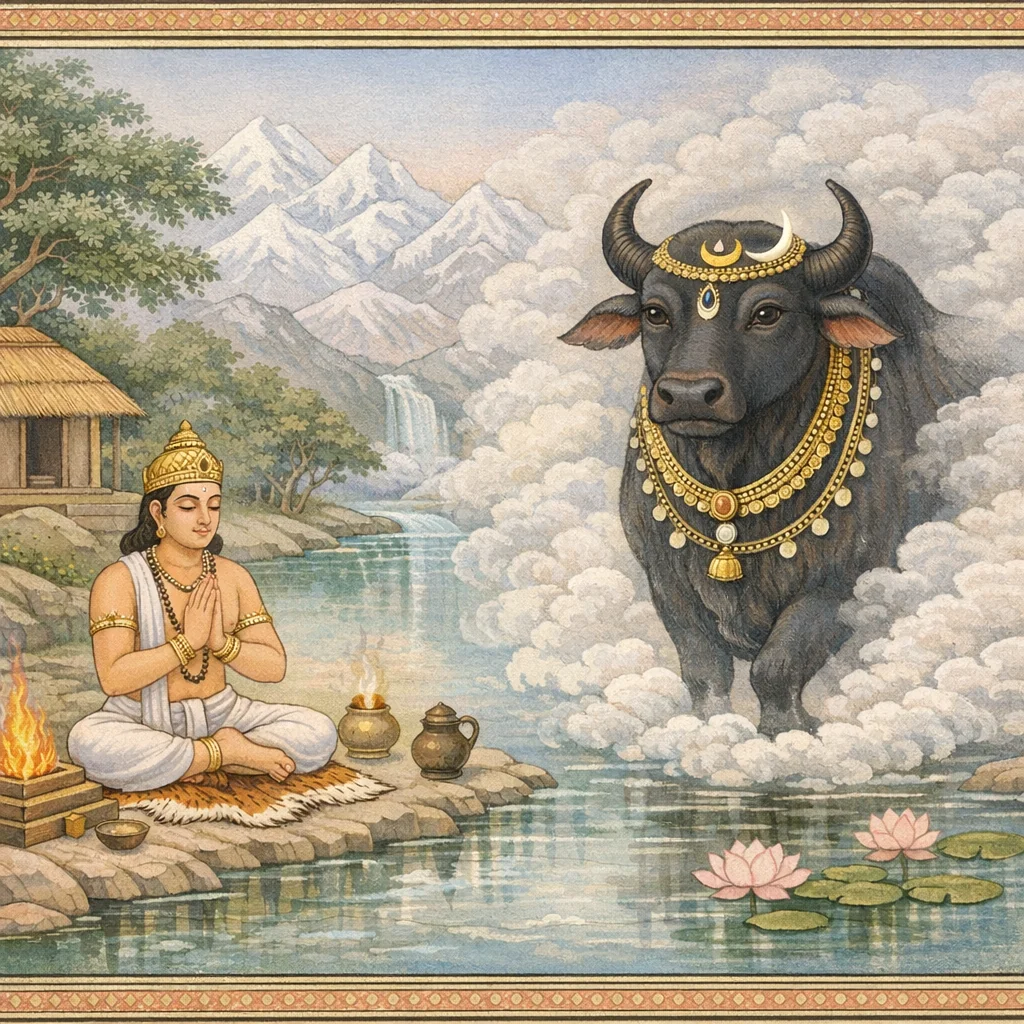
This chapter is framed as a Sūta–ṛṣi dialogue, turning from demon-slaying tales to a Kedāra-centered account that destroys sin. The sages ask how Kedāra—said to be near Gaṅgādvāra in the Himalaya—came to be established. Sūta explains Śiva’s seasonal presence: He abides long in the Himalayan region, yet in snow-bound months the place cannot be reached, so a complementary sacred arrangement is provided elsewhere. The narrative returns to mythic time: Indra, driven from his station by the daitya Hiraṇyākṣa and allied chiefs, performs austerities at Gaṅgādvāra. Śiva manifests in the form of a mahiṣa (buffalo), grants Indra’s request, and destroys the chief daityas, whose weapons cannot harm Him. At Indra’s urging, Śiva remains in that form to protect the worlds and establishes a crystal-clear kuṇḍa. A technical rite is then taught: the purified devotee beholds the kuṇḍa, drinks its water three times with prescribed hand/side orientations, and performs mudrā-like gestures connected with the maternal line, paternal line, and the self, aligning bodily action with divine instruction. Indra institutes ongoing worship, names the deity “Kedāra” (the one who ‘splits/tears’), and builds a splendid shrine. For the four months when Himalayan access is blocked, Śiva is said to abide at Hāṭakeśvara-kṣetra in Ānarta, from the sun’s entry into Vṛścika until Kumbha, with directions to install the form, build a temple, and maintain worship there. The chapter ends with merit statements: four-month worship leads toward Śiva; even off-season devotion removes sins; the learned praise with song and dance; and a verse cited by Nārada links drinking Kedāra water and offering piṇḍa at Gayā with brahmajñāna and freedom from rebirth. Hearing, reciting, or causing recitation is declared to destroy heaps of sin and uplift family lines.
Shlokas
Verse 1
सूत उवाच । एतद्वः सर्वमाख्यातं यत्पृष्टोस्मि द्विजोत्तमाः । यथा स निहतो देव्या महिषाख्यो दनूत्तमः
Sūta said: O best of the twice-born, I have told you all that you asked—how that foremost of Dānavas, named Mahiṣa, was slain by the Goddess.
Verse 2
सांप्रतं कीर्तयिष्यामि कथां पातकनाशिनीम् । केदारसंभवां पुण्यां तां शृणुध्वं समाहिताः
Now I shall proclaim a sin-destroying story—holy and born of Kedāra. Listen to it with collected minds.
Verse 3
ऋषय ऊचुः । केदारः श्रूयते सूत गंगाद्वारे हिमाचले । स कथं चेह संप्राप्तः सर्वं विस्तरतो वद
The sages said: “O Sūta, we hear that Kedāra is at Gaṅgādvāra upon the Himālaya. How, then, has it come to be present here? Tell us everything in full detail.”
Verse 4
सूत उवाच । एतत्सत्यं गिरौ तस्मिन्स्वयंभूः संस्थितः प्रभुः । परं तत्र वसेद्देवो यावन्मासाष्टकं द्विजाः
Sūta said: “This is true—upon that mountain the self-manifest Lord abides. Yet, O twice-born ones, the God dwells there only for eight months.”
Verse 5
यावद्घर्मश्च वर्षा च तावत्तत्र वसेत्प्रभुः । शीतकाले पुनश्चात्र क्षेत्रे संतिष्ठते सदा
So long as the hot season and the rainy season endure, the Lord dwells there; and when winter comes, He again remains ever established here, in this sacred kṣetra.
Verse 6
ऋषय ऊचुः । किं तत्कार्यं वसेद्येन क्षेत्रे मासचतुष्टयम् । हिमाचले यथैवाष्टौ सूतपुत्र वदस्व नः
The sages said: “For what purpose should one dwell in this sacred kṣetra for four months—and likewise for eight months in Himācala? O son of Sūta, tell us.”
Verse 7
सूत उवाच । पूर्वं स्वायंभुवस्यादौ मनोर्दैत्यो महाबलः । हिरण्याक्षो महातेजास्तपोवीर्यसमन्वितः
Sūta said: “Formerly, at the beginning of the Svāyambhuva (Manvantara), there was a mighty Daitya of Manu—Hiraṇyākṣa, radiant and endowed with the power born of austerity.”
Verse 8
तैर्व्याप्तं जगदेतद्धि निरस्य त्रिदशाधिपम् । यज्ञ भागाश्चदेवानां हृता वीर्यप्रभावतः
By them this world was indeed overrun, having driven away the lord of the Thirty (Indra); and, by the force of their might, the gods’ allotted portions in sacrifice were seized.
Verse 9
अथ शक्रः सुरैः सार्धं गंगाद्वारं समाश्रितः । तपस्तेपे सुदुःखार्तो राज्यश्रीपरिवर्जितः
Then Śakra (Indra), together with the gods, took refuge at Gaṅgādvāra. Stricken with intense sorrow and bereft of royal fortune, he performed austerities.
Verse 10
तस्यैवं तप्यमानस्य तपस्तीव्रं महात्मनः । माहिषं रूपमास्थाय निश्चक्राम धरातलात्
While that great-souled one was thus practicing fierce austerity, (the Lord) assumed the form of a buffalo and emerged from the surface of the earth.
Verse 11
स्वयमेव महादेवस्ततः शक्रमुवाच ह । केदारयामि मे शीघ्रं ब्रूहि सर्वं सुरोत्तम । दैत्यानामथ सर्वेषां रूपेणानेन वासव
Then Mahādeva Himself spoke to Śakra: “O best of gods, tell Me quickly everything. In this very form, O Vāsava, I shall ‘pierce/cleave’ (kedārayāmi) all the Daityas.”
Verse 12
इन्द्र उवाच । हिरण्याक्षो महादैत्यः सुबाहुर्वक्र कन्धरः । त्रिशृंगो लोहिताक्षश्च पंचैतान्दारय प्रभो । हतैरेतैर्हतं सर्वं दानवानामसंशयम्
Indra said: “Hiraṇyākṣa is the great Daitya; (also) Subāhu, Vakrakandhara, Triśṛṅga, and Lohitākṣa. O Lord, pierce and destroy these five—when these are slain, all the Dānavas are surely slain.”
Verse 13
किमन्यैः कृपणैर्ध्वस्तैर्यैः किंचिन्नात्र सिध्यति । तस्य तद्वचनश्रुत्वा भगवांस्तूर्णमभ्यगात् । यत्र दानवमुख्योऽसौ हिरण्याक्षो महाबलः
“What need is there of other wretched foes, already crushed, by whom nothing is accomplished here?” Hearing those words, the Blessed Lord swiftly set forth to where mighty Hiraṇyākṣa—the foremost of the Dānavas—stood.
Verse 14
अथ तं दूरतो दृष्ट्वा महिषं पर्वतोपमम् । आयातं रौद्ररूपेण दानवाः सर्वतश्च ते
Then, seeing from afar that buffalo, mountain-like in form, advancing with a fierce and wrathful aspect, those Dānavas gathered from every side.
Verse 15
ततो जघ्नुश्च पाषाणैर्लगुडैश्च तथापरे । क्ष्वेडितास्फोटितांश्चक्रुस्तथान्ये बलगर्विताः
Then some struck (him) with stones and clubs; others, swollen with pride of strength, uttered threatening cries and clapped and snapped their fingers in boastful display.
Verse 16
अथवमन्य तान्देवः प्रहारं लीलया ददौ । यत्रास्ते दानवेन्द्रोऽसौ चतुर्भिः सचिवैः सह
Then the Lord, disregarding them, dealt a blow with effortless play and advanced to where that king of the Dānavas stood together with his four ministers.
Verse 17
ततः शस्त्रं समुद्यम्य यावद्धावति सम्मुखः । तावच्छृंगप्रहारेण सोनयद्यमसादनम्
Then, as (the foe) raised his weapon and rushed forward face to face, the Lord, with a blow of his horn, sent him to Yama’s abode.
Verse 18
हत्वा तं सचिवान्पश्चात्सुबाहुप्रमुखांश्च तान् । जघान हन्यमानोऽपि समन्ताद्दानवैः परैः
After slaying that demon-king’s ministers—those led by Subāhu—he struck down the others as well, even while the remaining Dānavas assailed him from every side.
Verse 19
न तस्य लगते क्वापि शस्त्रं गात्रे कथंचन । यत्नतोऽपि विसृष्टं च लब्धलक्षैः प्रहारिभिः
No weapon could take hold upon his body anywhere, in any manner—though hurled with utmost effort by attackers who had carefully taken aim.
Verse 20
एवं पंच प्रधानास्तान्हत्वा दैत्यान्महेश्वरः । भूयो जगाम तं देशं यत्र शक्रो व्यवस्थितः । अब्रवीच्च प्रहष्टात्मा ततः शक्रं तपोन्वितम्
Thus, having slain those five chief Daityas, Maheśvara again went to the place where Śakra (Indra) was stationed; and with a delighted heart he spoke to Śakra, endowed with austerity.
Verse 22
मत्तोऽन्यदपि देवेश वरं प्रार्थय वांछितम् । कैलासशिखरं येन गच्छामि त्वरयाऽन्वितः
(Śiva said:) “O Lord of the Devas, ask of me another boon as you desire—by which I may swiftly go to the peak of Kailāsa.”
Verse 23
इन्द्र उवाच । अनेनैव हि रूपेण तिष्ठ त्वं चात्र शंकर । त्रैलोक्यरक्षणार्थाय धर्माय च शिवाय च
Indra said: “O Śaṅkara, remain here indeed in this very form—for the protection of the three worlds, for dharma, and for auspicious well-being.”
Verse 24
श्रीभगवानुवाच । एतद्रूपं मया शक्र कृतं तस्य वधाय वै । अवध्यः सर्वभूतानां यतोन्येषां मया हतः
The Blessed Lord said: “O Śakra, indeed I assumed this form for his slaying; for he was inviolable to all beings—therefore he was killed by Me, and not by others.”
Verse 25
तस्मादत्रैव ते वाक्यात्स्थास्यामि सुर सत्तम । अनेनैव तु रूपेण मोक्षदः सर्वदेहिनाम्
“Therefore, at your word I shall remain right here, O best of the gods; and in this very form I shall grant liberation to all embodied beings.”
Verse 26
एवमुक्त्वा विरूपाक्षश्चक्रे कुंडं ततः परम् । शुद्धस्फटिकसंकाशं सुस्वादुक्षीरवत्प्रियम्
Having spoken thus, Virūpākṣa (Śiva) then fashioned a sacred water-reservoir. It shone like pure crystal, and its water was beloved—sweet like milk to taste.
Verse 27
ततः प्रोवाच देवेन्द्रं मेघगंभीरया गिरा । शृण्वतां सर्वदेवानां भगवांस्त्रिपुरातकः
Then the Blessed Lord, the Slayer of Tripura, addressed Devendra in a voice deep as thunderclouds, while all the gods listened.
Verse 28
यो मां दृष्ट्वा शुचिर्भूत्वा कुंडमेतत्प्रपश्यति । त्रिः पीत्वा वामसव्येन द्वाभ्यां चैव ततो जलम्
Whoever, after beholding Me and becoming purified, gazes upon this sacred pond—having sipped its water three times, and then taking that water with the left and the right hands…
Verse 30
वामेन मातृकं पक्षं दक्षिणेनाथ पैतृकम् । उभाभ्यामथ चात्मानं कराभ्यां मद्वचो यथा
With the left hand sanctify the maternal side, and with the right hand the paternal side; then with both hands sanctify yourself—exactly as I instruct.
Verse 31
इन्द्र उवाच । अहमागत्य नित्यं त्वां स्वर्गाद्वृषभवाहन । अत्रस्थं पूजयिष्यामि पास्यामि च तथोदकम्
Indra said: “Coming here daily from heaven, O Bull-bannered Lord, I shall worship You as You abide in this place—and I shall also drink this sacred water.”
Verse 32
के दारयामि यत्प्रोक्तं त्वया महिषरूपिणा । केदार इति नाम्ना त्वं ततः ख्यातो भविष्यसि
“I shall bear and uphold what You have spoken in the form of a buffalo. Therefore, by the name ‘Kedāra’ You shall thereafter become renowned.”
Verse 33
श्रीभगवानुवाच । यद्येवं कुरुषे शक्र ततो दैत्यभयं न ते । भविष्यति परं तेजो गात्रे संपत्स्यतेऽखिलम्
The Blessed Lord said: “If you do so, O Śakra, then you will have no fear from the Dānavas. Supreme radiance shall arise and fully pervade your body.”
Verse 34
एवमुक्तः सहस्राक्षस्ततः प्रासादमुत्तमम् । तदर्थं निर्मयामास साध्वालोकं मनोहरम्
Thus instructed, Sahasrākṣa (Indra) then caused an excellent temple to be built for that purpose—beautiful, delightful, and worthy to be beheld by the virtuous.
Verse 35
ततः प्रणम्य तं देवमनुमन्त्र्य ततः परम् । जगाम निजमावासं मेरुशृंगाग्रसंस्थितम्
Then, bowing to that God and taking leave with due reverence, he went to his own abode situated upon the summit of Mount Meru.
Verse 36
ततश्चागत्य नित्यं स स्वर्गाद्देवस्य शूलिनः । केदारस्य सुभक्त्याढ्यां पूजां चक्रे समाहितः
Thereafter, coming daily from heaven, he performed—fully concentrated—a worship rich in devotion for Kedāra, the Trident-bearing Lord.
Verse 37
मन्त्रोदकं च त्रिः पीत्वा ययौ ब्राह्मणसत्तमाः । कस्यचित्त्वथ कालस्य यावत्तत्र समाययौ
Having drunk the mantra-consecrated water three times, that excellent brāhmaṇa departed. After some time had passed, he came again to that very place.
Verse 38
तावद्धिमेन तत्सर्वं गिरेः शृंगं प्रपूरितम् । तच्च कुण्डं स देवश्च प्रासादेन समन्वितः
By that time, the entire mountain-peak had been filled with snow. And there appeared that sacred pond (kuṇḍa), and that Deity as well—endowed with a splendid shrine (prāsāda).
Verse 39
ततो दुःखपरीतात्मा भक्त्या परमया युतः । तां दिशं प्रणिपत्योच्चैर्जगाम निजमंदिरम्
Then, with a heart overwhelmed by sorrow yet filled with supreme devotion, he bowed reverently toward that direction and went back to his own abode.
Verse 40
एवमागच्छतस्तस्य गतं मासचतुष्टयम् । अपश्यतो महादेवं दिदृक्षागतचेतसः
Thus, as he continued in that manner, four months passed by—yet he did not behold Mahādeva, though his mind was fixed upon the longing to see Him.
Verse 41
ततः प्राप्ते पुनर्विप्रा घर्मकाले हिमालये । संयातो दृक्पथं देवः स तथारूपसंस्थितः
Then, O brāhmaṇas, when the hot season returned in the Himālaya, the Deity came within the range of sight—manifest, established in that very form.
Verse 42
ततः पूजां विधायोच्चैश्चातुर्मास्यसमुद्भवाम् । गीतवाद्यादिकं चक्रे तत्पुरः श्रद्धयान्वितः
Then, having duly performed the worship connected with the Cāturmāsya observance, he offered before Him songs, musical instruments, and the like—filled with faith.
Verse 43
अथ देवः समालोक्य तां श्रद्धां तस्य गोपतेः । प्रोवाच दर्शनं गत्वा भगवांस्त्रिपुरांतकः
Then the Lord—Tripurāntaka—seeing the faith of that gopati, came into his presence for darśana and spoke to him.
Verse 44
परितुष्टोऽस्मि देवेश भक्त्या चानन्ययाऽनया । तस्मात्प्रार्थय दास्यामि यं कामं हृदिसंस्थितम्
“O lord of gods, I am fully pleased by this exclusive devotion of yours. Therefore, ask—whatever desire rests within your heart, I shall grant it.”
Verse 45
शक्र उवाच । तव प्रसादात्संजातं ममैश्वर्यमनुत्तमम् । यत्किंचित्त्रिषु लोकेषु तत्सर्वं गृहसंस्थितम्
Śakra said: “By your grace, unsurpassed sovereignty has arisen for me. Whatever exists in the three worlds—all of it stands secure within my domain.”
Verse 46
तस्माद्यदि प्रसादं मे करोषि वृषभध्वज । वरं वा यच्छसि प्रीतस्तत्कुरुष्व वचो मम
“Therefore, if you would show me favor, O Vṛṣabhadhvaja (He whose banner is the bull), or if, being pleased, you grant a boon—then fulfill this request of mine.”
Verse 47
पर्वतोऽयं भवेद्गम्यो मासानष्टौ सुरेश्वर । यावन्मीनस्थितो भानुः प्रगच्छति श्रुतं मया
“O Lord of the gods, this mountain is said to be accessible for eight months—so long as the Sun passes while abiding in Pisces; thus have I heard.”
Verse 48
ततः परमगम्यश्च हिमपूरेण संवृतः । यदा स्याच्चतुरो मासान्यावत्कुम्भगतो रविः
“After that it becomes extremely difficult to reach, being enveloped in deep snow—this lasts for four months, until the Sun enters Aquarius.”
Verse 49
संजायतेऽप्यगम्यश्च ममापि त्रिपुरांतक । किं पुनः स्वल्पसत्त्वानां नरादीनां सुरेश्वर
“It becomes inaccessible even for me, O Tripurāntaka; what then of frail beings—men and the like, O Lord of the gods?”
Verse 50
तस्मात्स्वर्गेऽथ पाताले मर्त्ये वा त्रिदशेश्वर । कुरुष्वानेनरूपेण स्थितिं मासचतुष्टयम् । येन न स्यात्प्रतिज्ञाया हानिर्मम सुरेश्वर
Therefore—whether in heaven, in Pātāla, or on the mortal earth—O Lord of the Thirty (gods), abide in this very form for four months, so that my vow may not be broken, O Lord of the gods.
Verse 51
सूत उवाच । ततो देवश्चिरं ध्यात्वा प्रोवाच बलसूदनम् । परं संतोषमापन्नो मेघनिर्घोषनिःस्वनम्
Sūta said: Then the god, after long contemplation, addressed Balasūdana; greatly pleased, his voice resounded like the rumbling of clouds.
Verse 52
आनर्तविषये क्षेत्रं हाटकेश्वरसंज्ञितम् । अस्मदीयं सहस्राक्ष विद्यते धरणीतले
In the land of Ānarta there is a sacred field called Hāṭakeśvara; it is ours, O Sahasrākṣa, and it exists upon the earth.
Verse 53
तत्राहं वृश्चिकस्थेऽर्के सदा स्थास्यामि वासव । यावत्कुम्भस्य पर्यंतं तव वाक्यादसंशयम्
There I shall ever abide, O Vāsava, from the time the Sun is in Scorpio until the end of Aquarius—because of your word, without any doubt.
Verse 54
तस्मात्तत्र द्रुतं गत्वा कृत्वा प्रासादमुत्तमम् । मम रूपं प्रतिष्ठाप्य कुरुपूजा यथोचिताम् । येन तत्र निजं तेजो धारयामि तवार्थतः
Therefore go there quickly, build an excellent temple, install my form, and perform worship as is proper—so that I may sustain my own divine radiance there, for your sake.
Verse 55
सूत उवाच । एतच्छ्रुत्वा सहस्राक्षो देवदेवस्य शूलिनः । गत्वा तत्र ततश्चक्रे यद्देवेनेरितं वचः
Sūta said: “Hearing this, Sahasrākṣa went there and did exactly as Śūlin—the God of gods, the Trident-bearer—had commanded.”
Verse 56
प्रासादं निर्मयित्वाथ रूपं संस्थाप्य शूलिनः । कुण्डं चक्रे च तद्रूपं स्वच्छोदकसमावृतम्
“After building the temple and installing the sacred form of Śūlin, he also made a kuṇḍa—a holy pond matching that form—filled all around with clear water.”
Verse 57
ततश्चाराधयामास पुष्पधूपानुलेपनैः । स्नात्वा कुण्डेऽपिबत्तोयं त्रिःकृत्वा च यथापुरा
Then he worshipped the Lord with flowers, incense, and fragrant unguents. Having bathed in the kuṇḍa, he drank its water three times, just as in the ancient tradition.
Verse 58
एवं स भगवांस्तत्र शक्रेणाराधितः पुरा । समायातोऽत्र विप्रेंद्राः सुरम्यात्तु हिमाचलात्
Thus, in former times, that Blessed Lord was worshipped there by Śakra (Indra). And, O best of Brahmins, from the Himālaya—delightful to the gods—he came to this place.
Verse 59
यस्तमाराधयेत्सम्यक्सदा मासचतुष्टयम् । हिमपातोद्भवे मर्त्यः स शिवाय प्रपद्यते
Whoever worships Him properly, unceasingly for four months—at that snow-born holy place—such a mortal attains refuge in Śiva.
Verse 60
शेषकालेऽपि यः पूजां करोत्येव सुभक्तितः । स पापं क्षालयेत्प्राज्ञ आजन्ममरणांतिकम्
Even outside that period, whoever performs worship with true devotion washes away sin, O wise ones—sins extending from birth up to the end of life.
Verse 61
तत्र गीतं प्रशंसंति नृत्यं चैव पृथग्विधम् । देवस्य पुरतः प्राज्ञाः सर्वशास्त्रविशारदाः
There, before the deity, the wise—skilled in every śāstra—praise sacred song and many kinds of dance.
Verse 62
अत्र श्लोकः पुरा गीतो नारदेन सुरर्षिणा । तद्वोऽहं कीर्तयिष्यामि श्रूयतां ब्राह्मणोत्तमाः
Here a verse was once sung by Nārada, the divine seer. That I shall now recite to you—listen, O best of Brahmins.
Verse 63
केदारे सलिलं पीत्वा गयापिडं प्रदाय च । ब्रह्मज्ञानमथासाद्य पुनर्जन्म न विद्यते
Having drunk the water at Kedāra, and having offered the piṇḍa at Gayā, then attaining knowledge of Brahman—there is no rebirth.
Verse 64
एतद्वः सर्वमाख्यातं केदारस्य च संभवम् । आख्यानं ब्राह्मणश्रेष्ठाः सर्वपातकनाशनम्
All this has been told to you—the origin and manifestation of Kedāra. This sacred narrative, O best of Brahmins, destroys every sin.
Verse 65
यश्चैतत्छृणुयात्सम्यक्पठेद्वा तस्य चाग्रतः । श्रावयेद्वापि वा विप्राः सर्वपातकनानम् । केदारस्य स पापौघैर्मुच्यते तत्क्षणान्नरः
Whoever duly hears this, or recites it aloud in another’s presence, or even causes it to be heard—O Brahmins—this sacred account destroys all sins. That person is freed from heaps of sins connected with Kedāra at that very moment.
Verse 294
कराभ्यां स पुमान्नूनं तारयेच्च कुलत्रयम् । अपि पापसमाचारं नरकेऽपि व्यव स्थितम्
With his own hands, that man surely delivers three generations of his lineage—even if his conduct is sinful, even if he is situated in hell.