Adhyaya 121
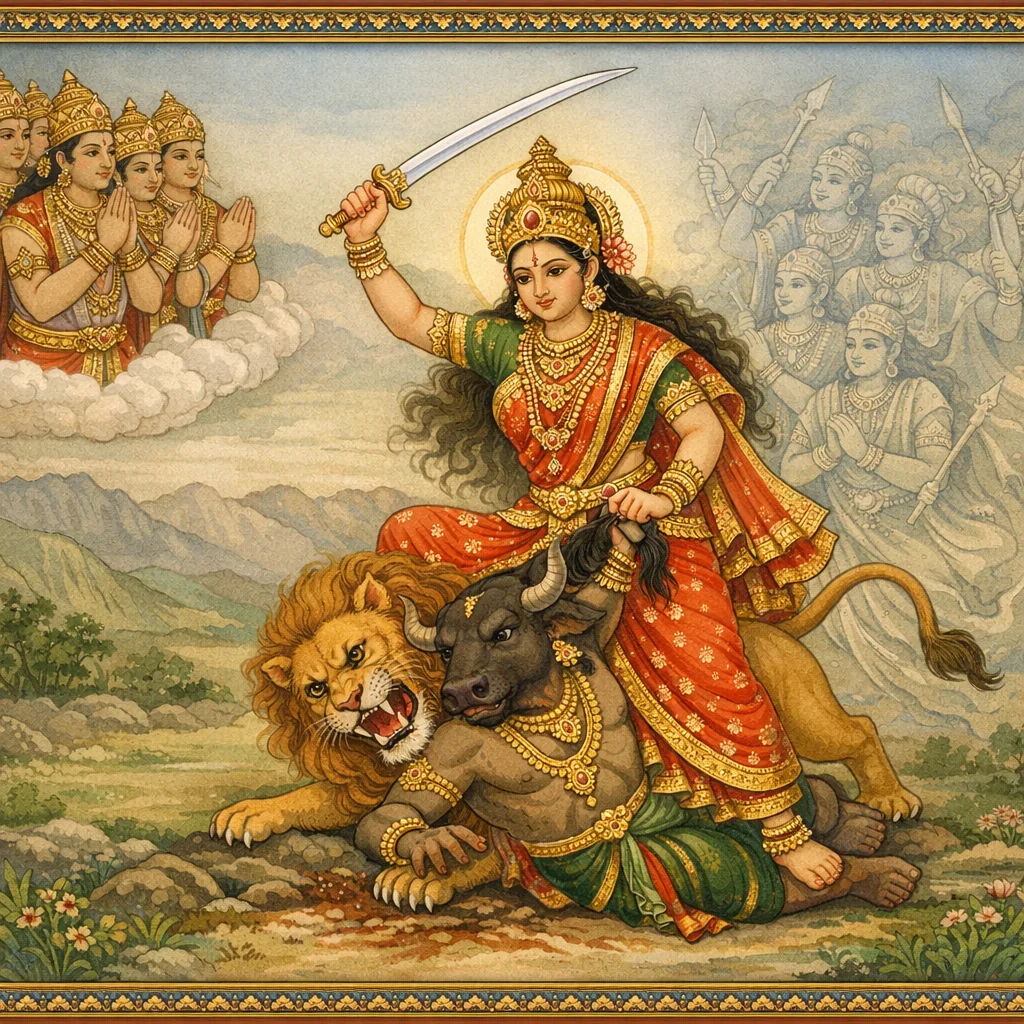
In this adhyāya, spoken by Sūta, a Vindhya episode is told in which the Goddess, with senses restrained, performs disciplined tapas while meditating on Maheśvara. As her austerity grows, her tejas—radiance and beauty—intensifies, and Mahīṣa’s scouts report an extraordinary ascetic maiden. Overcome by desire, Mahīṣa approaches with an army, offering sovereignty and proposing marriage; the Goddess declares instead her divine purpose to end his menace. Battle follows: she wounds Mahīṣa, routs his troops with arrows, and with a fearsome laugh manifests auxiliary warrior hosts that devastate the asura forces. When Mahīṣa attacks directly, the Goddess meets him in close combat; her lion immobilizes him, and the Devas urge immediate execution. She strikes his thick neck with a sword, satisfying the Devas and restoring order. A moment of supplication then introduces ethical tension: Mahīṣa praises the Goddess, claims release from a curse, and begs for mercy. The Devas warn of cosmic danger, and the Goddess resolves not to kill him again, but to keep him subdued as a perpetual restraint. The Devas proclaim her future renown as Vindhyavāsinī and prescribe worship—especially in the bright fortnight of Aśvina—promising protection, health, and success; the chapter closes with renewed harmony and references to later royal devotion and the merits of festival darśana.
Shlokas
Verse 2
सूत उवाच । देवानां तद्वचः श्रुत्वा ततः सा परमेश्वरी । प्रोवाच वाहनं किंचिद्देवा यच्छतु मे द्रुतम् । ततः सिंहं ददौ गौरी यानार्थं विकृताननम् । तमारुह्य प्रतस्थे सा ततो विंध्यं नगं प्रति
Sūta said: Hearing the words of the gods, the Supreme Goddess spoke: “Let the gods quickly provide me a mount.” Then Gaurī bestowed a lion, fearsome of visage, for her conveyance. Mounting it, she set out toward the Vindhya mountain.
Verse 3
तस्यैकं शृंगमास्थाय रम्यं श्रेष्ठद्रुमान्वितम् । फलपुष्पसमाकीर्णं लतामंडपमंडितम्
She reached a single lovely peak of that mountain, graced with excellent trees, strewn with fruits and blossoms, and adorned with vine-bowers.
Verse 4
ततस्तपोऽकरोत्साध्वी तीव्रव्रतपरायणा । संयम्येन्द्रियवर्गं स्वं ध्यायमाना महेश्वरम्
Then that virtuous maiden undertook austerities, wholly devoted to a severe vow; restraining the company of her senses, she meditated upon Maheśvara (Śiva).
Verse 5
यथायथा तपोवृद्धिस्तस्याः सञ्जायते द्विजाः । तथा रूपं च कांतिश्च शरीरे प्रतिवर्धते
O twice-born ones, as her austerity increased more and more, so too did beauty and radiance grow upon her body.
Verse 6
एतस्मिन्नंतरे प्राप्तास्तत्र दैत्येशकिंकराः । ते तां दृष्ट्वा व्रतोपेतामत्यद्भुतवपुर्ध राम् । गत्वा प्रोचुः स्वनाथस्य महिषस्य दुरात्मनः
Meanwhile, the attendants of the lord of the daityas arrived there. Seeing her—observing a vow and bearing a most wondrous form—they went and reported it to their own master, the wicked Mahiṣa.
Verse 7
चारा ऊचुः । भ्रममाणैर्धरापृष्ठे दृष्टाऽपूर्वा कुमारिका । विन्ध्याचलेऽद्य चास्माभिर्भुजैर्द्वादशभिर्युता । नानाशस्त्रधरैर्दीप्तैश्चर्मच्छादितगात्रका
The spies said: “While roaming over the face of the earth, today on the Vindhya mountain we beheld an unprecedented maiden—endowed with twelve arms, bearing many radiant weapons, her limbs covered in hide.”
Verse 8
न देवी न च गन्धर्वी नासुरी नागकन्यका । तादृग्रूपा पुराऽस्माभिः काचिद्दृष्टा नितम्बिनी
“She is neither a goddess, nor a Gandharva maiden, nor an Asurī, nor a Nāga princess. Never before have we seen any woman of such a form.”
Verse 9
न विद्मो यन्निमित्तं सा तपश्चक्रे यशस्विनी । स्वर्गकामाऽर्थकामा वा पतिकामाथ वा विभो
“We do not know for what reason that illustrious one performed austerity—whether desiring heaven, desiring wealth, or desiring a husband, O lord.”
Verse 10
सूत उवाच । तेषां तद्वचनं श्रुत्वा महिषो दानवाधिपः । कामदेव वशं प्राप्तः श्रवणादपि तत्क्षणात्
Sūta said: Hearing their report, Mahiṣa, the lord of the dānavas, fell under the power of Kāmadeva—immediately, even by the mere act of hearing.
Verse 11
ततस्तानग्रतः कृत्वा सैन्येन महता न्वितः । जगाम कौतुकाविष्टो यत्रास्ते सा तु कन्यका
Then, placing them in front and accompanied by a great army, he went—seized by curiosity—to the place where that maiden was staying.
Verse 12
यथा मृत्युकृते मन्दः शृगालः सिंहवल्लभाम् । वने सुप्तां सुविश्वस्तां सर्वथाप्य कुतोभयाम्
Like a foolish jackal, bent upon its own death, drawing near the lion’s beloved—sleeping in the forest, wholly trusting and in every way fearless—so did he advance.
Verse 13
तस्याः संदर्शनादेव ततः कामशरैर्हतः । स दानवप्रधानश्च तत्क्षणादेव सद्द्विजाः
O noble twice-born ones, merely upon seeing her, that chief of the dānavas was at once struck down by the arrows of Kāma.
Verse 14
अथ प्राह प्रियं वाक्यमेकाकी तत्पुरःस्थितः । धृत्वा दूरतरेसैन्यं तस्या रूपेण मोहितः
Then, standing alone before her—having kept his army far away—enchanted by her beauty, he spoke pleasing words.
Verse 15
विरुद्धं यौवनस्यैतद्व्रतं ते चारुहासिनि । तस्मादेतत्परित्यक्त्वा त्रैलोक्यस्वामिनी भव
“O fair-smiling one, this vow of yours is contrary to youth. Therefore, abandon it and become the sovereign lady of the three worlds.”
Verse 16
अहं हि महिषो नाम दानवेन्द्रो यदि श्रुतः । मया येन सहस्राक्षो द्वन्द्वयुद्धे विनिर्जितः
“I am indeed Mahiṣa, lord of the dānavas, if you have heard of me—the very one by whom Indra of the thousand eyes was defeated in single combat.”
Verse 22
अहं तव वधार्थाय निर्मिता विबुधोत्तमैः । तस्मात्त्वां नाशयिष्यामि स्मरेष्टं यद्धृदि स्थितम्
I have been brought forth by the foremost of the gods for the sake of your destruction. Therefore I shall annihilate you—along with whatever cherished desire is lodged in your heart.
Verse 23
महिष उवाच । यद्येवं तद्वरारोहे युक्ता स्याच्च कुमारिका । प्रार्थनीया भवेदत्र सर्वेषां प्राणिनां यतः
Mahiṣa said: “If so, O fair-hipped one, it would be fitting for you to be a maiden—one who is sought and petitioned here by all living beings.”
Verse 24
स्वर्गार्थं क्रियते धर्मस्तपश्च वरवर्णिनि । येन भोगाः प्रभुञ्जंति ये दिव्या ये च मानुषाः
O exquisitely beautiful one, dharma and austerity are performed for the sake of heaven—by which enjoyments are obtained, both divine and human.
Verse 25
तस्माद्देहि ममात्मानं गांधर्वेण सुशोभने । विवाहेन यतोऽन्येषां स प्रधानः प्रकीर्तितः
Therefore, O radiant beauty, give yourself to me in a Gāndharva marriage; for among other forms of marriage, that one is proclaimed foremost.
Verse 26
एवं प्रवदतस्तस्य सा देवी क्रोधमूर्छिता । तद्वक्त्रांतं समुद्दिश्य शरं चिक्षेप स क्षणात्
As he spoke thus, the Goddess—overwhelmed with wrath—instantly hurled an arrow, aiming at the corner of his mouth.
Verse 27
विवेश वदनं तस्य वल्मीकं पन्नगो यथा । अथ तैर्मार्गगणैर्विद्धः स वक्त्रांतान्नदंस्ततः
It entered his mouth like a serpent entering an anthill. Then, pierced by those attendants of Mārgā, he cried out from the corner of his mouth.
Verse 28
सुस्राव रुधिरं भूरि गैरिकं पर्वतो यथा । ततः कोपपरीतात्मा निवृत्त्याथ शनैः शनैः
Blood flowed from him in abundance, like red ochre streaming from a mountain. Then, his mind enveloped in rage, he withdrew—slowly, step by step.
Verse 29
स्वसैन्यं त्वरितो भेजे कामेन च वशी कृतः । प्रोवाच सैनिकान्सर्वान्दुष्टा स्त्रीयं प्रगृह्यताम् । यथा न त्यजति प्राणान्प्रहारैर्जर्जरीकृता
Overpowered by desire, he quickly turned to his own forces and commanded all the soldiers: “Seize that wicked woman! Strike her again and again, until—shattered by blows—she does not give up her life.”
Verse 30
एषा मम न सन्देहः प्रिया भार्या भविष्यति । यदि नो शस्त्रपातेन पंचत्वमुपयास्यति
“Of this I have no doubt: she will become my beloved wife—if only she does not, by the fall of weapons, meet the state of the five elements (i.e., die).”
Verse 32
एतस्मिन्नंतरे देवी सा दृष्ट्वा तानुपस्थितान् । युद्धाय कृतसंकल्पांस्तर्जतश्च मुहुर्मुहुः
Meanwhile, the Goddess, seeing them assembled—resolved for battle—repeatedly rebuked and challenged them.
Verse 33
ततस्तु लीलया देवी मुक्ता तीक्ष्णान्महाशरान् । तान्सर्वांस्ताडयामास सर्वमर्मसु तत्क्षणात्
Then, as if in divine sport, the Goddess loosed sharp, mighty arrows and in an instant struck them all upon their vital points.
Verse 34
अथ तीक्ष्णैः शरैर्दैत्या निहता दानवास्तथा । एके पंचत्वमापन्ना गताश्चान्य इतस्ततः
Struck down by those sharp arrows, the daityas and dānavas fell—some met death, while others fled in every direction.
Verse 35
ततः सैन्यं समालोक्य तद्भग्नं च तया रणे । कोपाविष्टस्ततो दैत्यः स्वयं तां समुपाद्रवत्
Then, seeing his army shattered by her in battle, the daitya—seized by wrath—rushed at the Goddess himself.
Verse 36
यच्छञ्छृंगप्रहारांश्च तस्याः शतसहस्रशः । गर्जितं विदधच्चोग्रं शारदाभ्रसमं मुहुः
Dealing her hundreds of thousands of horn-blows, he again and again let forth a dreadful roar, like a mass of autumn clouds.
Verse 37
एतस्मिन्नंतरे देवी साट्टहासकृतस्वना । त्रैलोक्यविवरं सर्वं यच्छब्देन प्रपूरितम्
At that moment the Goddess, sounding forth with a loud peal of laughter, filled every hollow and expanse of the three worlds with that sound.
Verse 38
एवं तस्या हसंत्याश्च वक्त्रान्तादथ निर्ययुः । पुलिंदाः शबरा म्लेछास्तथान्येऽरण्यवासिनः
As she laughed thus, from within her mouth there issued forth Pulindas, Śabaras, Mlecchas, and other dwellers of the forest.
Verse 39
शकाश्च यवनाश्चैव शतशश्तु वपुर्धरा । वर्म स्थगितगात्राश्च यमदूता इवापरे
And Śakas and Yavanas too appeared—by the hundreds—clad in armor that covered their limbs, like other attendants of Yama himself.
Verse 41
देव्युवाच । एतानस्य सुदुष्टस्य सैनिकान्बलगर्वितान् । सूदयध्वं द्रुतं वाक्यादस्मदीयाद्यथेच्छया
The Goddess said: “Swiftly strike down these soldiers of that utterly wicked one—those swollen with pride in their strength—at once upon my command, as you will in loyalty to me.”
Verse 42
अथ ते तद्वचः श्रुत्वा वल्गंतोऽसिधनुर्द्धराः । दैतेयबलमुद्दिश्य दुद्रुवुर्वेगमाश्रिताः
Hearing her words, those warriors—brandishing swords and bearing bows—leapt forward and rushed with great speed toward the Daitya host.
Verse 43
ततस्तेषां महद्युद्धं मिथो जज्ञे सुदारुणम् । नात्मीयं न परं तत्र केनचिज्ज्ञा यते क्वचित्
Then a vast and most dreadful battle arose between them. There, at no moment could anyone clearly discern who was ‘one’s own’ and who was ‘the other’.
Verse 44
अथ ते दानवाः सर्वे योधैर्देवीसमुद्भवैः । भग्ना व्यापादिताश्चान्ये प्रहारैर्जर्जरीकृताः
Then all those Dānavas were shattered by the warriors born of the Goddess; some were slain, and others were battered and broken by repeated blows.
Verse 45
ततो भग्नं बलं दृष्ट्वा महिषः क्रोधमूर्छितः । तामुवाच क्रुधा देवीं वचनैः परुषाक्षरैः
Seeing his army broken, Mahiṣa, overcome by rage, angrily addressed the Goddess with harsh and biting words.
Verse 46
आः पापे स्त्रीति मत्वाद्य न हतासि मया युधि । तस्मात्पश्य प्रहारं मे तत्त्वं बुध्यसि नान्यथा
“Ah, you sinful one! Thinking you are ‘only a woman,’ I did not kill you in battle. Therefore, behold my blow now—you will understand the truth, and not otherwise.”
Verse 47
एवमुक्त्वा विशेषेण प्रहारान्स विचिक्षिपे । विषाणाभ्यां महावेगो भर्त्सयानो मुहुर्मुहुः
Having spoken thus, he hurled fierce blows repeatedly; possessed of great speed, he kept threatening again and again, striking with his horns.
Verse 48
ततोऽभ्याशगतं दृष्ट्वा सा देवी दानवं च तम् । आरुरोहाथ वेगेन पृष्ठिदेशेन कोपतः
Then, seeing that Dānava come close, the Goddess—angered—swiftly mounted upon his back with great force.
Verse 49
ततश्चुक्रोश दैत्योऽसौ व्योममार्गं समाश्रितः । पृष्ठ्यास्तलेन निर्भिन्नो रुधिरौघपरिप्लुतः
Then that Daitya cried out and took to the path of the sky; pierced by the surface of her back-press, he was drenched in a torrent of blood.
Verse 50
एतस्मिन्नंतरे सिंहः स तस्या ज्योतिसंभवः । जग्राह पश्चिमे भागे दंष्ट्राग्रैर्निशितैः क्रुधा
At that very moment, her lion—born of her radiant energy—seized him from behind with sharp-tipped fangs in wrath.
Verse 51
ततो निश्चलतां प्राप्तः पादाक्रांतश्च दानवः । अकरोद्भैरवान्नादान्न शक्तश्चलितुं पदम्
Then the dānava, pinned beneath Her foot, became utterly motionless. He let out terrifying, Bhairava-like roars, yet he was unable to move even a single step.
Verse 52
एतस्मिन्नंतरे प्राप्ताः सर्वे देवाः सवासवाः । व्योमस्थास्तां तदा प्रोचुर्देवीं हर्षसमन्विताः
Just then, all the gods—along with Indra—arrived and, standing in the sky, joyfully addressed the Goddess.
Verse 53
एतस्य शिरसश्छेदं शीघ्रं कुरु सुरेश्वरि । खङ्गेनानेन तीक्ष्णेन यावन्नो याति चान्यतः
“O Queen of the gods, swiftly cut off his head with this sharp sword—before he escapes elsewhere.”
Verse 54
सा श्रुत्वा वचनं तेषां देवी कोपसमन्विता । खड्गं व्यापारयामास कंठे तस्यातिपीवरे
Hearing their words, the Goddess—filled with righteous wrath—set Her sword to his exceedingly thick neck.
Verse 55
स तेन खड्गघातेन कंठः पीनोऽपि निष्ठुरः । द्विधा जज्ञेऽथ दैत्यस्य दधत्तुष्टिं दिवौकसाम्
By that blow of the sword, the demon’s neck—though thick and hard—was split in two, bringing satisfaction to the dwellers of heaven.
Verse 56
द्वादशार्कप्रतीकाशो वक्त्रांतश्चर्मखड्गधृक् । भर्त्सयंस्तां महादेवीं खड्गोद्यतकरां तदा । खड्गं व्यापारयन्गात्रे तस्या बालार्कसन्निभम्
Radiant like twelve suns, bearing shield and sword, he reviled the great Goddess as She stood with sword raised, and he swung his blade against Her body, which shone like the rising sun.
Verse 57
ततः केशेषु चाधाय यावत्तस्यापि चिक्षिपे । प्रहारं गात्रनाशाय तावदूचे स दानवः
Then, seizing (Her) by the hair, as he was about to hurl a blow meant to destroy Her body, that dānava spoke.
Verse 58
दानव उवाच । जय देवि जयाचिंत्ये जय सर्वसुरेश्वरि । जय सर्वगते देवि जय सर्वजनप्रिये
The dānava said: “Victory to You, O Goddess—victory, O Inconceivable One! Victory, sovereign of all the gods! Victory, O all-pervading Goddess! Victory, beloved of all beings!”
Verse 59
जय कामप्रदे नित्यं जय त्रैलोक्यसुन्दरि । जय त्रैलोक्य रक्षार्थमुद्यते ह्यकुतोभये
Victory ever to You, bestower of boons! Victory, beauty of the three worlds! Victory to You who rise to protect the three worlds—O Fearless One!
Verse 60
जय देवि कृतानंदे जय दैत्यविनाशिनि । जय क्लेशच्छिदे कांते जयाभक्तविमोहदे
Victory, O Goddess who brings forth bliss! Victory, destroyer of demons! Victory, cutter of afflictions, O Beloved! Victory, You who confound those devoid of devotion!
Verse 62
तस्मात्कुरु प्रसादं मे प्राणान्रक्ष दयां कुरु । प्रणतस्य सुदीनस्य हीनस्य च विशेषतः
Therefore, show me Your grace; protect my life and extend compassion—especially to me who has bowed down, who is utterly wretched, and who stands humbled and fallen.
Verse 63
अहं दुर्वाससा शप्तो हिरण्याक्षसुतो बली । महिषत्वं समानीतस्त्वया देवी विमोक्षितः
I am Bali, the son of Hiraṇyākṣa, cursed by Durvāsas. Brought into the state of a buffalo, I have been released by You, O Goddess.
Verse 64
तस्माद्दर्पः प्रमुक्तोऽद्य मया दानवसंभवः । किंकरत्वं प्रयास्यामि सांप्रतं ते सुरेश्वरि
Therefore, today I have cast off my pride, born of my Dānava nature. Now, O Lady of the gods, I shall enter into Your service as Your attendant.
Verse 65
जय सर्वगते देवि सर्वदुष्टविनाशिनि
Victory to You, O all-pervading Goddess, destroyer of every wickedness!
Verse 66
इति तस्य वचः श्रुत्वा कृपणं सा सुरेश्वरी । कृपाविष्टाऽब्रवीद्वाक्यं ततो व्योमस्थितान्सुरान्
Hearing his pitiable words, the Queen of the gods was moved with compassion. Then, filled with mercy, she spoke to the gods who were stationed in the sky.
Verse 67
किं करोमि दया जाता ममैनं प्रति हे सुराः । तस्मान्नाहं हनिष्यामि दानवं दीनजल्पकम्
What can I do? O gods, compassion has arisen in me toward him. Therefore I will not slay this Dānava who speaks in such a miserable way.
Verse 68
विमुखं खड्गशस्त्रं च तवास्मीति प्रवादिनम् । अपि मे पितृहंतारं न हन्यां रिपुमाहवे
Even if he turned away with sword and weapon, yet declaring, ‘I am yours,’ I would not kill an enemy in battle—even if he were the slayer of my father.
Verse 69
देवा ऊचुः । न चेदसि च देवेशि त्वमेनं दानवाधमम् । नाशयिष्यति तत्कृत्स्नं त्रैलोक्यं सचराचरम्
The gods said: If you do not destroy this vilest of Dānavas, O Goddess of gods, he will annihilate the entire three worlds, with all that moves and all that does not.
Verse 70
एष व्यर्थःश्रमः सर्वस्तथास्माकं भविष्यति । तव संभूतिसंभूतस्तव क्लेशस्तथाऽखिलः
All this effort will become futile for us. And every distress of yours will likewise arise again—born from the very recurrence of his power.
Verse 71
देव्युवाच । नाहमेनं हनिष्यामि त्यजिष्यामि तथाऽमराः । एनं कचग्रहं कृत्वा धारयिष्यामि सर्वदा
The Goddess said: “I will not kill him, nor will I abandon him, O immortals. Seizing him by the hair, I shall hold him thus forever.”
Verse 72
देवा ऊचुः । साधुसाधु महाभागे युक्तमुक्तं त्वया वचः । एतद्धि युज्यते कर्तुं कालेऽस्मिंस्त्रिदशेश्वरि
The Devas said: “Well spoken, well spoken, O greatly fortunate one! Your words are fitting and well reasoned. Indeed, in this very time, O sovereign lady of the Thirty Gods, this is what ought to be done.”
Verse 73
सांप्रतं मर्त्यलोके त्वं रूपमेतत्समाश्रिता । शस्त्रोद्यतकरा रौद्रा महिषोपरि संस्थिता
Now, in the mortal world, you have assumed this very form—fierce, with weapons raised in your hands, seated upon a buffalo.
Verse 74
अवाप्स्यसि परां पूजां दुर्लभा ममरैरपि । यस्त्वामेतेन रूपेण संस्थितां पूजयिष्यति
You will obtain supreme worship—rare even among the immortals—when a person worships you as you stand established in this very form.
Verse 75
त्वमस्य संगतो भावि विख्याता विंध्यवासिनी । किं ते वा बहुनोक्तेन शृणु संक्षेपतो वचः
You shall be joined to this place and become renowned as Vindhyavāsinī. But what is the use of many words? Hear the matter in brief.
Verse 76
अस्मदीयं परं तथ्यं सर्वलोकहितावहम् । पार्थिवानां त्वदायत्तं बलं देवि भविष्यति
This supreme truth of ours is for the welfare of all worlds: O Devī, the strength of kings will come to depend upon you.
Verse 77
युद्धकाले समुत्पन्ने भक्तानां नात्र संशयः । प्रस्थानं वा प्रवेशं च यः करिष्यति मानवः
When the time of battle arises, for devotees there is no doubt. Any person who is about to set out on a journey—or enter (a place or undertaking)…
Verse 78
त्वां स्मृत्वा प्रणिपत्याथ पूजयित्वा विशेषतः । तस्य संपत्स्यते सिद्धिः सर्वकृत्येषु सर्वदा । इह कापुरुषस्यापि किं पुनः सुभटस्य च
Remembering you, bowing down, and worshipping you with special devotion—such a person will attain success in all undertakings, at all times. If this holds true even for a timid man here, how much more for a brave warrior!
Verse 79
आश्विनस्य सिते पक्षे नवम्यां चाष्टमीदिने । पूजयिष्यति यो मर्त्त्यस्त्वां सद्भक्तिसमन्वितः
In the bright fortnight of Āśvina—on the ninth day and also on the eighth—whoever among mortals worships you with true devotion…
Verse 80
तस्य संवत्सरं यावत्समग्रं सुरसुन्दरि । न भविष्यति वै रोगो न भयं न पराभवः । नापमृत्युर्न चौरादि समुद्भूत उपद्रवः
O beautiful one among the gods, for a full year there shall be no illness, no fear, no defeat; neither untimely death nor troubles arising from thieves and the like.
Verse 82
तत्र गत्वा चिरात्प्राप्य स्वं राज्यं पाकशासनः । पालयामास संहृष्टस्त्रैलोक्यं हतकटकम्
Having gone there and, after a long time, regained his own kingdom, Pākaśāsana (Indra) ruled joyfully the three worlds, his opposing forces destroyed.
Verse 83
लोकाश्च सुखसंपन्नाः सर्वे जाता स्ततः परम् । यज्ञभागभुजो देवा भूयो जाता जगत्त्रये
Thereafter all the worlds became filled with well-being and prosperity. And the gods—partakers of the sacrificial shares—again came to flourish throughout the three worlds.
Verse 84
ततः परं च सा देवी त्रैलोक्ये ख्यातिमागता । सर्वक्षेत्रेषु तीर्थेषु स्थानेषु च विशेषतः
After that, the Goddess attained renowned fame across the three worlds—especially in all sacred fields, pilgrimage-fords (tīrthas), and holy abodes.
Verse 85
एतस्मिन्नंतरे जातः सुरथोनाम भूपतिः । आनर्तस्तेन सद्भक्त्या क्षेत्रेऽत्रैव विनिर्मिता
In the meantime, a king named Suratha was born. By his true devotion, an Ānarta—a sacred foundation and settlement—was established right here in this holy field.
Verse 86
यस्तां पश्यति सद्भक्त्या चैत्राष्टम्यां सितेऽहनि । स पुमान्वत्सरं यावत्कृतार्थः स्यान्न संशयः
Whoever beholds Her with sincere devotion on the bright eighth day of Caitra remains fulfilled and successful for a full year; of this there is no doubt.
Verse 91
।सूत उवाच । एवमुक्त्वाथ ते देवास्तां देवीं हर्षसंयुताः । अनुज्ञातास्तया जग्मुः स्वां पुरीममरावतीम्
Sūta said: Having spoken thus, those gods—filled with joy—took leave of that Goddess with her permission and departed to their own city, Amarāvatī.
Verse 121
इति श्रीस्कांदे महापुराण एकाशीतिसाहस्र्यां संहितायां षष्ठे नागरखण्डे हाटकेश्वरक्षेत्रमाहात्म्ये महिषासुरपराजय कात्यायनीमाहात्म्यवर्णनंनाम एकविंशत्युत्तरशततमोऽध्यायः
Thus ends, in the Śrī Skanda Mahāpurāṇa—within the eighty-one-thousand-verse recension—of the sixth book, the Nāgara-khaṇḍa, in the Hāṭakeśvara-kṣetra Māhātmya, the chapter named “The Defeat of Mahiṣāsura and the Description of Kātyāyanī’s Greatness,” being Chapter 121.