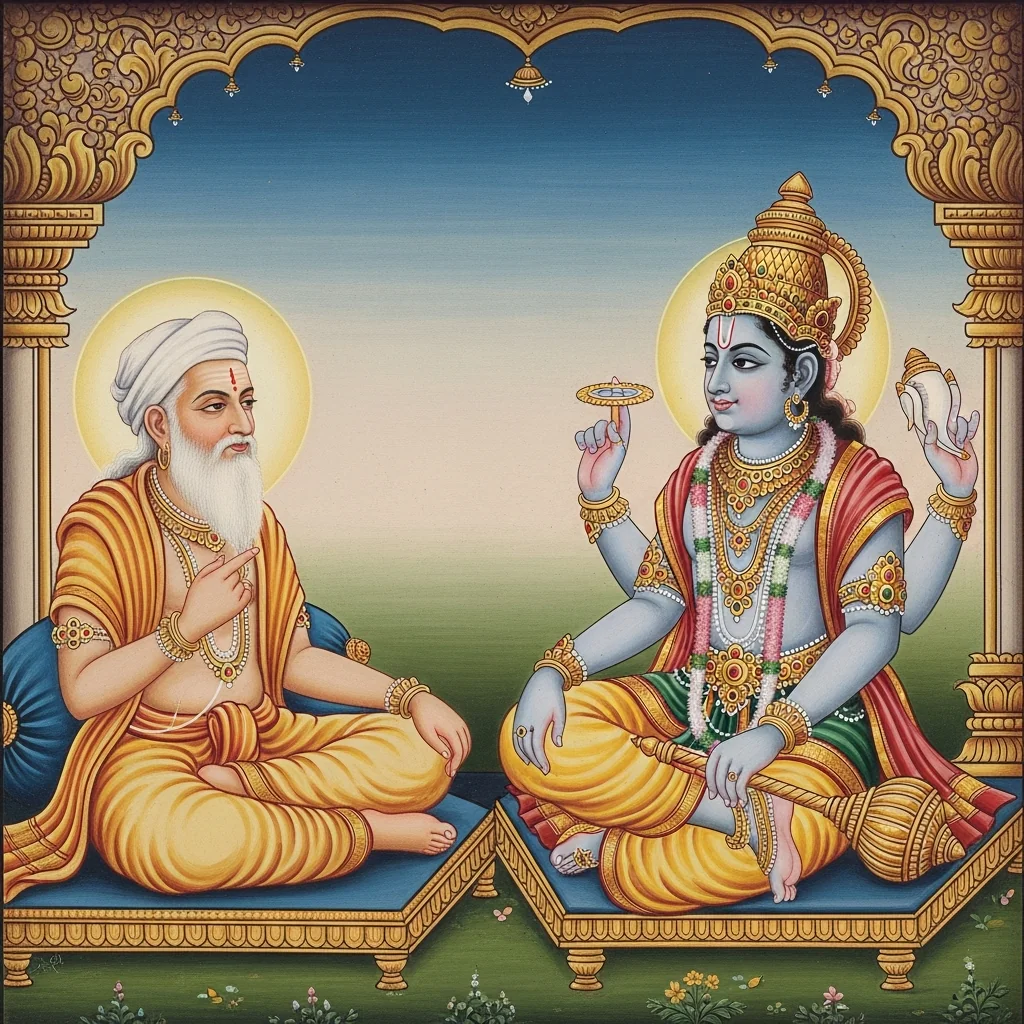
Adhyaya 4
This chapter weaves a layered theological teaching into a battle narrative. Lomāśa recounts Dakṣa’s reply to Viṣṇu, questioning how Vedic action can be valid without Īśvara. Viṣṇu explains that the Veda functions within the three guṇas, and that rites bear fruit only through dependence on Īśvara; therefore one should take refuge in God. War then escalates: the devas, emboldened by Bhṛgu’s mantra-power (uccaṭana), initially rout Śiva’s gaṇas. Vīrabhadra counterattacks with fierce auxiliaries and overwhelms the devas, who seek counsel from Bṛhaspati. Bṛhaspati confirms the doctrine: mantras, medicines, sorcery, worldly means, and even Veda/Mīmāṃsā cannot fully know Īśvara; Śiva is known through exclusive devotion and inner peace. Vīrabhadra confronts the devas and then Viṣṇu; a conciliatory exchange affirms the functional equivalence of Śiva and Viṣṇu while sustaining narrative tension. Combat resumes with reversals, including the rise of burning afflictions (jvaras) from Rudra’s wrath and their containment by the Aśvins. The episode culminates when Viṣṇu’s cakra is swallowed and returned; Viṣṇu withdraws, revealing the limits of force and the primacy of Īśvara-centered devotion over mere ritual or power.
Shlokas
Verse 1
लोमश उवाच । विष्णुनोक्तं वचः श्रुत्वा दक्षो वचनमब्रवीत् । वेदानामप्रमाणं च कृतं ते मधुसूदन
Lomaśa said: Hearing Viṣṇu’s words, Dakṣa replied, “O Madhusūdana, by your speech you have made the Vedas seem bereft of authority.”
Verse 2
वैदिकं कर्म चोत्सृज्य कथं सेश्वरतां व्रजेत् । तदुच्यतां महाविष्णो येन धर्मः प्रतिष्ठितः
If one abandons the Vedic rites, how can one attain a path centered on the Lord? O Mahāviṣṇu, declare that by which dharma is firmly established.
Verse 3
दक्षेणोक्तो महाविष्णुरुवाच परिसांत्वयन् । त्रैगण्यविषया वेदाः संभवंति न चान्यथा
Thus addressed by Dakṣa, Mahāviṣṇu replied, gently consoling him: “The Vedas arise with the three guṇas as their field of concern—indeed, it is not otherwise.”
Verse 4
वेदोदितानि कर्माणि ईश्वरेण विना कथम् । सफलानि भविष्यंति विफलान्येव तानि च
How can actions enjoined by the Veda bear fruit without Īśvara? Without the Lord, those very acts become fruitless.
Verse 5
तस्मात्सर्वप्रयत्नेन ईश्वरं शरणं व्रऐजा । एवं ब्रुवति गोविन्द आगतः सैन्यसागरः । वीरभद्रेण सदृशो ददृशुस्तं तदा सुराः
Therefore, with every effort, take refuge in Īśvara. As Govinda spoke thus, an ocean-like host of troops arrived; then the gods beheld one resembling Vīrabhadra.
Verse 6
इंद्रोपि प्रहसन्विष्णुमात्मवादरतं तदा । वज्रपाणिः सुरैः सार्द्धं योद्धुकामोऽभवत्तदा
Then Indra too, laughing at Viṣṇu intent on his doctrinal stance, grew eager to fight—Vajra in hand—together with the gods.
Verse 7
भृगुणाचारितः शीघ्रमुच्चाटनपरेण हि । तदा गणाः सुरैः सार्धं युयुधुस्ते गणान्विताः
Urged on swiftly by Bhṛgu—intent on driving them off—then the gaṇas, accompanied by their own hosts, fought together with the gods.
Verse 8
शरतोमरनागचैर्जघ्नुस्ते च परस्परम् । नेदुःशंखाश्च बहुशस्तस्मिन्रणमहोत्सवे
They struck one another with arrows, javelins, and elephants; and conches roared again and again in that great festival of battle.
Verse 9
तथा दुन्दुभयो नेदुः पटहा डिंडिमादयः । तेन शब्देन महताश्लाघ्यमानास्तदा सुराः । लोकपालैश्च सहिता जघ्नुस्ताञ्छिवकिंकरान्
Then the war-drums resounded—kettledrums, battle-drums, and dindima-drums. Stirred and emboldened by that mighty roar, the Devas, together with the Lokapālas, struck down those attendants of Śiva.
Verse 10
खड्गैश्चापि हताः केचिद्गदाभिश्च विपोथिताः । देवैः पराजिताः सर्वे गणाः शतसहस्रशः
Some were cut down by swords, and others were crushed by maces; thus the gaṇas, by the hundreds of thousands, were all defeated by the Devas.
Verse 11
इंद्राद्यौर्लोकपालैश्च गणास्ते च पराङ्गमुखाः । कृताश्च तत्क्षणादेव भृगोर्मंत्रबलेन हि
Those gaṇas were made to turn away—routed—by Indra and the Lokapālas at that very moment, truly through the power of Bhṛgu’s mantra.
Verse 12
उच्चाटनं कृतं तेषां भृगुणा यज्विना तदा । यजनार्थं च देवानां तुष्ट्यर्थं दीक्षितस्य च
Then Bhṛgu, the sacrificer, performed the uccāṭana rite against them, so that the Devas’ sacrifice might proceed and the initiated patron (dīkṣita) might be satisfied.
Verse 13
तेनैव देवा जयिनो जातास्तत्क्षणमेव हि । स्वानां पराजयं दृष्ट्वा वीरभद्रो रुपान्वितः
By that very act, the Devas became victorious in an instant. Seeing the defeat of his own forces, Vīrabhadra—terrible in form—prepared to strike back.
Verse 14
भूतान्प्रेतान्पिशाचांश्च कृत्वा तानेव पृष्ठतः । वृषभस्थान्पुरस्कृत्य स्वयं चैव महाबलः । तीक्ष्णं त्रिशूलमादाय पातयामास तान्रणे
Placing bhūtas, pretas, and piśācas behind him, and sending forward those mounted on bulls, the mighty one himself took up a sharp trident and felled them in battle.
Verse 15
देवान्यक्षान्पिशाचांश्च गुह्यकान्राक्षसां स्तथा । शूलघातैश्च ते सर्वे गणा देवान्प्रजघ्निरे
With blows of the trident, all those gaṇas struck down the Devas, along with yakṣas, piśācas, guhyakas, and rākṣasas as well.
Verse 16
केचिद्द्विधाकृताः खङ्गैर्मुद्गरैश्चापि पोथिताः । परश्वधैः खंडशश्च कृताः केचिद्रणाजिरे
Some were split in two by swords; others were crushed by hammers. Some were hewn into pieces by axes upon the battlefield.
Verse 17
शूलैर्भिन्नाश्च शतशः केचिच्च शकलीकृताः । एवं पराजिताः सर्वे पलायनपरायणाः
Hundreds were pierced by tridents, and some were cut into fragments. Thus all were defeated and became intent only on fleeing.
Verse 18
परस्परं परिष्वज्य गतास्तेपि त्रिविष्टपम् । केवलं लोकपालाश्च इंद्राद्यास्तस्थुरुत्सुकाः । बृहस्पतिं पृच्छमानाः कुतोस्माकं जयो भवेत्
Embracing one another, they too went to Triviṣṭapa (heaven). Only the Lokapālas—Indra and the rest—stood there, anxious, asking Bṛhaspati: “From where will victory come to us?”
Verse 19
बृहस्पतिरुवाचेदं सुरेंद्रं त्वरितस्तदा । बृहस्पतिरुवाच । यदुक्तं विष्णुना पूर्वं तत्सत्यं जातमद्य वै
Bṛhaspati quickly addressed Indra: “What Viṣṇu had said earlier has indeed become true today.”
Verse 20
अस्ति चेदीश्वरः कश्चित्फलरूप्यस्य कर्म्मणः । कर्तारं भजते सोपि न ह्यकर्तुः प्रभुर्हिसः
If there is some Lord who dispenses the fruits of karma, even He depends upon the doer; for He is not the master of one who does not act.
Verse 21
न मंत्रौषधयः सर्वे नाभिचारा न लौकिकाः । न कर्माणि न वेदाश्च न मीमांसाद्वयं तथा
Neither all mantras and medicinal remedies, nor occult acts or worldly means; neither rituals nor even the Vedas, nor the two Mīmāṃsās—none of these, by themselves, can accomplish it.
Verse 22
ज्ञातुमीशाः संभवंति भक्त्याज्ञेयस्त्वनन्यया । शांत्या च परया तृष्ट्या ज्ञातव्यो हि सदाशिवः
The Lord can be truly known through devotion—through single-minded devotion. With supreme peace and deep contentment, indeed, Sadāśiva is to be realized.
Verse 23
तेन सर्वं संभवंति सुखदुःझखात्मकं जगत् । परंतु संवदिष्यामि कार्याकार्यविवक्षया
From Him, this entire world—made of pleasure and pain—comes into being. Yet I shall now speak, with the intention of distinguishing what ought to be done from what ought not to be done.
Verse 24
त्वमिंद्र बालिशो भूत्वा लोकपालैः सहाद्य वै । आगतो बालिशो भूत्वा इदानीं किं करिष्यसि
Indra, having acted foolishly, you have come here today along with the guardians of the worlds. Having come in folly—what will you do now?
Verse 25
एते रुद्रसहायाश्च गणाः परमशोभनाः । कुपिताश्च महाभागा न तु शेषं प्रकुर्वते
These Gaṇas—Rudra’s companions—are exceedingly splendid. Though enraged, those mighty ones will not leave anything remaining in their onslaught.
Verse 26
एवं बृहस्पतेर्वाक्यं श्रुत्वा तेऽपि दिवौकसः । चिंतामापेदिरे सर्वे लोकपाला महेश्वराः
Hearing Bṛhaspati’s words, those dwellers in heaven—the Lokapālas—were all seized by anxiety.
Verse 27
ततोऽब्रवीद्वीरभद्रो गणैः परिवृतो भृशम् । सर्वे यूयं बालिशत्वादवदानार्थमागताः
Then Vīrabhadra, surrounded closely by the gaṇas, spoke: “All of you, through your foolishness, have come here seeking punishment.”
Verse 28
अवदानानि दास्यामि तृप्त्यर्थं भवतां त्वरन् । एवमुक्त्वा शितैर्बाणैर्जघानाथ रुषान्वितः
“I shall give you punishment—swiftly—for your ‘satisfaction’.” Having said so, he then, filled with wrath, struck them with sharp arrows.
Verse 29
तैर्बाणैर्निहताः सर्वे जग्मुस्ते च दिशो दश
Struck down by those arrows, they all fled away, scattering into the ten directions.
Verse 30
गतेषु लोकपालेषु विद्रुतेषु सुरेषु च । यज्ञवाटे समायातो वीरभद्रो गणान्वतः
When the guardians of the worlds had fled and the gods, stricken with fear, had scattered, Vīrabhadra came to the sacrificial arena, attended by Śiva’s gaṇas.
Verse 31
तदा त ऋषयः सर्वे सर्वमेवेश्वरेश्वरम् । विज्ञप्तुकामाः सहसा ऊचुरेवं जनार्दनम्
Then all those sages, wishing at once to appeal to Janārdana—the Lord of lords, who is all in all—spoke to him thus.
Verse 32
रक्ष यज्ञं हि दक्षस्य यज्ञोसि त्वं न संशयः । एतच्छ्रुत्वा तु वचनमृषीणां वै जनार्दनः
“Protect Dakṣa’s sacrifice, for you are yajña itself—without doubt.” Hearing these words of the sages, Janārdana turned his attention and replied.
Verse 33
योद्धुकामः स्थितो युद्धे विष्णुरध्यात्मदीपकः । वीरभद्रो महाबाहुः केशवं वाक्यमब्रवीत्
Viṣṇu, the lamp that illumines the inmost Self, stood upon the battlefield, eager to fight. Then mighty-armed Vīrabhadra spoke these words to Keśava.
Verse 34
अत्र त्वयागतं कस्माद्विष्णो वेत्त्रा महाबलम् । दक्षस्य पक्षमाश्रित्य कथं जेष्यसि तद्वद
“O Viṣṇu, wielder of mighty strength, why have you come here? Taking Dakṣa’s side, how will you prevail? Tell me that.”
Verse 35
दाक्षायण्या कृतं यच्च न दृष्टं किं त्वयानघ । त्वं चापि यज्ञे दक्षस्य अवदानार्थमागतः । अवदानं प्रयच्छामि तव चापि महाभूज
O sinless one, have you not seen what Dakṣāyaṇī (Satī) has done? You too have come to Dakṣa’s sacrifice seeking your allotted share. I shall grant you your share as well, O mighty-armed one.
Verse 36
एवमुक्त्वा प्रणम्यादौ विष्णुं सदृशरूपिणम् । वीरभद्रोऽग्रतो भूत्वा विष्णुं वाक्यमथाब्रवीत्
Having spoken thus, Vīrabhadra first bowed to Viṣṇu—whose form is akin (to Śiva’s)—and then, standing before him, again addressed Viṣṇu in words.
Verse 37
यथा शंभुस्तथा त्वं हि मम नास्त्यत्र संशयः । तथापि त्वं महाबाहो योद्धुकामोऽग्रतः स्तितः । नेष्याम्यपुनरावृत्तिं यदि तिष्ठेस्त्वमात्मना
“As Śambhu is, so are you—of this I have no doubt. Yet, O mighty-armed one, you stand before me intent on battle. If you persist by your own will, I shall send you to the state of no return.”
Verse 38
तस्य तद्वचनं श्रुत्वा वीरभद्रस्य धीमतः । उवाच प्रहसन्देवो विष्णुः सर्वेश्वरेश्वरः
Hearing those words of the wise Vīrabhadra, the god Viṣṇu—Lord over all lords—replied with a smile.
Verse 39
विष्णुरुवाच । रुद्रतेजःप्रसूतोसि पवित्रोऽसि महामते । अनेन प्रार्थितः पूर्वं यज्ञार्थं च पुनः पुनः
Viṣṇu said: “You are born of Rudra’s fiery splendor; you are pure, O great-minded one. Formerly too, by him you were repeatedly entreated for the sake of the sacrifice.”
Verse 40
अहं भक्तपराधीनस्तथा सोऽपि महेश्वरः । तेनैव कारणेनात्र दक्षस्य यजनं प्रति
“I am dependent upon my devotees—and so too is Maheśvara. For that very reason, in this matter concerning Dakṣa’s sacrifice…”
Verse 41
आगतोऽहं वीरभद्र रुद्रकोपसमुद्भव । अहं निवारयामि त्वां त्वं वा मां विनिवारय
“I have come, O Vīrabhadra—born of Rudra’s wrath. I shall restrain you; or else you restrain me.”
Verse 42
इत्युक्तवति गोविंदे प्रहस्य स महाभुजः । प्रश्रयावनतो भूत्वा इदमाह जनार्दनम्
When Govinda had spoken thus, that mighty-armed one smiled; then, bowing with courtesy, he spoke these words to Janārdana.
Verse 43
यथा शिवस्तथा त्वं हि यथा त्वं च तथा शिवः । सेवकाश्च वयं सर्वे तव वा शंकरस्य च
“As Śiva is, so indeed are you; and as you are, so is Śiva. And we all are servants—either of you or of Śaṅkara.”
Verse 44
तच्छ्रुत्वा वचनं तस्य सोऽच्युतः संप्रहस्य च । इदं विष्णुर्महावाक्यं जगाद परमेश्वरः
Hearing his words, the unfailing Lord (Acyuta) smiled; then Viṣṇu—the Supreme Lord—uttered this great statement.
Verse 45
योधयस्व महाबाहो मया सार्धमशंकितः । तवास्त्रैः पूर्यमाणोऽहं गच्छामि भवनं स्वकम्
“Fight with me, O mighty-armed one, without hesitation. When I am enveloped by your weapons, I shall depart to my own abode.”
Verse 46
तथेत्युक्त्वा तु वीरोऽसौ वीरभद्रो महाबलः । गृहीत्वा परमास्त्राणि सिंहनादैर्जगर्ज ह
Saying, “So be it,” that hero Vīrabhadra of great strength took up his supreme weapons and roared with lion-like cries.
Verse 47
विष्णुश्चापि महाघोषं शंखनादं चकार सः । तच्छ्रुत्वा ये गता देवा रणं हित्वाऽययुः पुनः
Viṣṇu too raised a great tumult, sounding his conch. Hearing it, the gods who had fled returned again, abandoning their retreat from the battlefield.
Verse 48
व्यूहं चक्रुस्तदा सर्वे लोकपालाः सवासवाः । तदेन्द्रेण हतो नंदीवज्रेण शतपर्वणा
Then all the guardians of the worlds, together with Indra, formed a battle-array. Thereupon Nandī was struck down by Indra with the thunderbolt (vajra) of a hundred joints.
Verse 49
नंदीना च हतः शक्रस्त्रिशूलेन स्तनांतरे । वायुना च हतो भृंगी भृंगिणा वायुराहतः
Indra was struck down by Nandin, pierced in the chest with a trident; and Bhṛṅgī was slain by Vāyu, while Vāyu himself was struck by Bhṛṅgī.
Verse 50
शूलेन सितधारेण संनद्धो दण्डधारिणा । यमेन सह संग्रामं महाकालो बलान्वितः
Armed with a bright-edged trident and equipped with a staff-weapon, mighty Mahākāla, filled with strength, entered into battle with Yama.
Verse 51
कुबेरेण च संगम्य कूष्मांडानां पतिः स्वयम् । वरुणेन समं युद्धं मुंडश्चैव महाबलः
Joining with Kubera, the lord of the Kūṣmāṇḍas himself advanced; and the mighty Muṇḍa fought an equal battle with Varuṇa.
Verse 52
युयुधे परयाशक्त्या त्रैलोक्यं विस्मयन्निव । नैरृतेन समागम्य चंडश्चबलवत्तरः
He fought with supreme power, as though astonishing the three worlds; and Caṇḍa, even more powerful, came face to face with Nairṛta.
Verse 53
युयुधे परमास्त्रेण नैरृत्यं च विडंबयन् । योगिनीचक्रसंयुक्तो भैरवो नायको महान्
Wielding a supreme missile, he fought on, humiliating Nairṛta; great Bhairava, the mighty leader, stood accompanied by the circle of Yoginīs.
Verse 54
विदार्य देवानखिलान्पपौ शोणितमद्बुतम् । क्षेत्रपालास्तथा चान्ये भूतप्रमथगुह्यकाः
Tearing apart all the devas, they drank wondrous blood; likewise the Kṣetrapālas and other hosts—Bhūtas, Pramathas, and Guhyakas—raged on.
Verse 55
साकिनी डाकिनी रौद्रा नवदुर्गास्तथैव च । योगिन्यो यातुदान्यश्च तथा कूष्मांडकादयः । नेदुः पपुः शोणितं च बुभुजुः पिशितं बहु
Sākinīs, Ḍākinīs, the fierce ones, and the Nine Durgās; Yoginīs, yātudhānīs, and hosts such as the Kūṣmāṇḍas—roared aloud, drank blood, and devoured much flesh.
Verse 56
भक्ष्यमाणं तदा सैन्यं विलोक्य सुरराट्स्वयम् । विहाय नंदिनं पश्चाद्वीरभद्रं समाक्षिपत्
Seeing his army being devoured, the king of the gods himself turned away from Nandin and then assailed Vīrabhadra.
Verse 57
वीरभद्रो विहायैव विष्णुं देवेन्द्रमास्थितः । तयोर्युद्धमभूद्धोरं बुधांगारकयोरिव
Vīrabhadra, leaving Viṣṇu aside, engaged Indra, lord of the gods; and their battle became dreadful, like that of Mercury and Mars.
Verse 58
वीरभद्रं यदा शक्रो हंतुकामस्त्वरान्वितः । तावच्छंक्रं गजस्थं हि पुरयामास मार्गणैः
When Śakra, eager to slay Vīrabhadra and driven by haste, advanced, at that moment he filled the elephant-mounted warrior with volleys of arrows.
Verse 59
वीरभद्रो रुषाविष्टो दुर्निवार्यो महाबलः । तदेद्रेंणाहतः शीघ्रं वज्रेण शतपर्वणा
Vīrabhadra, possessed by fierce wrath—irresistible and of immense strength—was swiftly struck by Indra with the thunderbolt, the hundred-jointed vajra.
Verse 60
सगजं च सवज्रं च वासवं ग्रस्तुमुद्युतः । हाहाकारो महा नासीद्भूतानां तत्र पश्यताम्
Rushing forth to devour Vāsava (Indra) together with his elephant and his vajra, Vīrabhadra advanced; and before the hosts of beings who watched, a great cry of alarm arose.
Verse 61
वीरभद्रं तताभूतं तथाभूतं हंतुकामं पुरंदरम् । तव्रमाणस्तदा विष्णुर्वीरभद्राग्रतः स्थितः
Seeing Vīrabhadra in that dreadful state, and Purandara (Indra) likewise in peril, wishing to protect him, Viṣṇu then stood before Vīrabhadra.
Verse 62
शक्रं च पृष्ठतः कृत्वा योधयामास वै तदा । वीरभद्रस्य विष्णोश्च युद्धं परमभूत्तदा
Placing Śakra (Indra) behind him, Viṣṇu then engaged in battle; and at that time the combat between Vīrabhadra and Viṣṇu became exceedingly intense.
Verse 63
शस्त्रास्त्रैर्विविधाकारैर्योधयामासतुस्तदा । पुनर्नंदिनमालोक्य शक्रो युद्ध विशारदः
Then the two fought with weapons and missiles of many kinds. Again, seeing Nandin, Śakra (Indra)—skilled in warfare—turned his attention toward him.
Verse 64
द्वंद्वयुद्धं सुतुमुलं देवानां प्रमथैः सह । प्रमथा मथिता देवैः सर्वे ते प्राद्रवन्रणात्
A very tumultuous series of single combats erupted between the Devas and the Pramathas. But the Pramathas, crushed by the Devas, all fled from the battlefield.
Verse 65
गणान्पराङ्मुखान्दृष्ट्वा सर्वे ते व्याधयो भृशम् । रुद्रकोपात्समुद्भूता देवाश्चापि प्रदुद्रुवुः
Seeing the gaṇas turn away, those fierce diseases—born of Rudra’s wrath—spread with violent force; and the Devas too fled in panic.
Verse 66
ज्वरैस्तु पीडितान्देवान्दृष्ट्वा विष्णुर्हसन्निव । जीवग्राहेण जग्राह देवांस्तांश्च पृथक्पृथक्
Seeing the Devas tormented by fevers, Viṣṇu, as if smiling, seized those gods one by one with the “life-seizing” grasp.
Verse 67
देवाश्चिनौ तदाहूय व्याधीन्हंतुं तदा भृतिम् । ददौ ताभ्यां प्रयत्नेन गणयित्वा सुबुद्धिमान्
Then, summoning the two Aśvins, the wise one carefully assigned them the task of destroying those diseases, with due effort and consideration.
Verse 68
ज्वरांश्च सन्निपातांश्च अन्ये भूतद्रुहस्तदा । तान्सर्वान्निगृहीत्वाथ अश्विनौ तौ मुदान्वितौ । विज्वरानथ देवांश्च कृत्वा मुमुदतुश्चिरम्
Then the two Aśvins, filled with joy, subdued all those fevers, all the dangerous “sannipāta” afflictions, and other being-harming forces. Having made the Devas free from fever, they rejoiced for a long time.
Verse 69
तैर्जितं योगिनीचक्रं भैरवं व्याकुलीकृतम् । तीक्ष्णाग्रैः पातयामासुः शरैर्भूतगणानपि
Overcome by them, the circle of Yoginīs fell into disarray, and even Bhairava was shaken. With sharp-pointed arrows they struck down the hosts of bhūtas as well.
Verse 70
सुरैर्विद्रावितं सैन्यं विलोक्य पतितं भुवि । वीरभद्रो रुपाविष्टो विष्णुं वचनमब्रवीत्
Seeing the army driven off by the gods and fallen upon the earth, Vīrabhadra—assuming a dreadful form—addressed Viṣṇu with words.
Verse 71
त्वं शूरोसि महाबाहो देवानां पालको ह्यसि । युध्यस्व मां प्रयत्नेन यदि ते मतिरीदृशी
“You are a hero, O mighty-armed one; indeed you are the protector of the gods. Fight me with full effort, if such is your resolve.”
Verse 72
इत्युक्त्वा तं समासाद्य विष्णुं सर्वेश्वरेश्वरम् । ववर्ष निशितैर्बाणैर्वीरभद्रो महाबलः
Having spoken thus and closing in upon Viṣṇu—the lord of lords—mighty Vīrabhadra showered him with keen arrows.
Verse 73
तदा चक्रेण भगवान्वीरभद्रं जघान सः । आयांतं चक्रमालोक्य ग्रसितं तत्क्षणाच्च तत्
Then the Blessed Lord struck Vīrabhadra with his discus. Seeing the discus coming, it was swallowed up that very instant.
Verse 74
ग्रसितं चक्रमालोक्य विष्णुः परपुरंजयः । मुखं तस्य परामृज्य विष्णुनोद्गिलितं पुनः
Seeing his discus swallowed, Viṣṇu—the conqueror of enemy strongholds—wiped his face; and the discus was cast back out again by Viṣṇu.
Verse 75
स्वचक्रमादाय महानुभावो दिवं गतोऽथो भुवनैकभर्ता । ज्ञात्वा च तत्सर्वमिदं च विष्णुः कृती कृतं दुष्प्रसहं परेषाम्
Taking back his own discus, the great-souled one—the sole sustainer of the worlds—then departed to heaven. And Viṣṇu, knowing all that had occurred, understood that a deed had been accomplished which others can scarcely endure or withstand.