Adhyaya 32
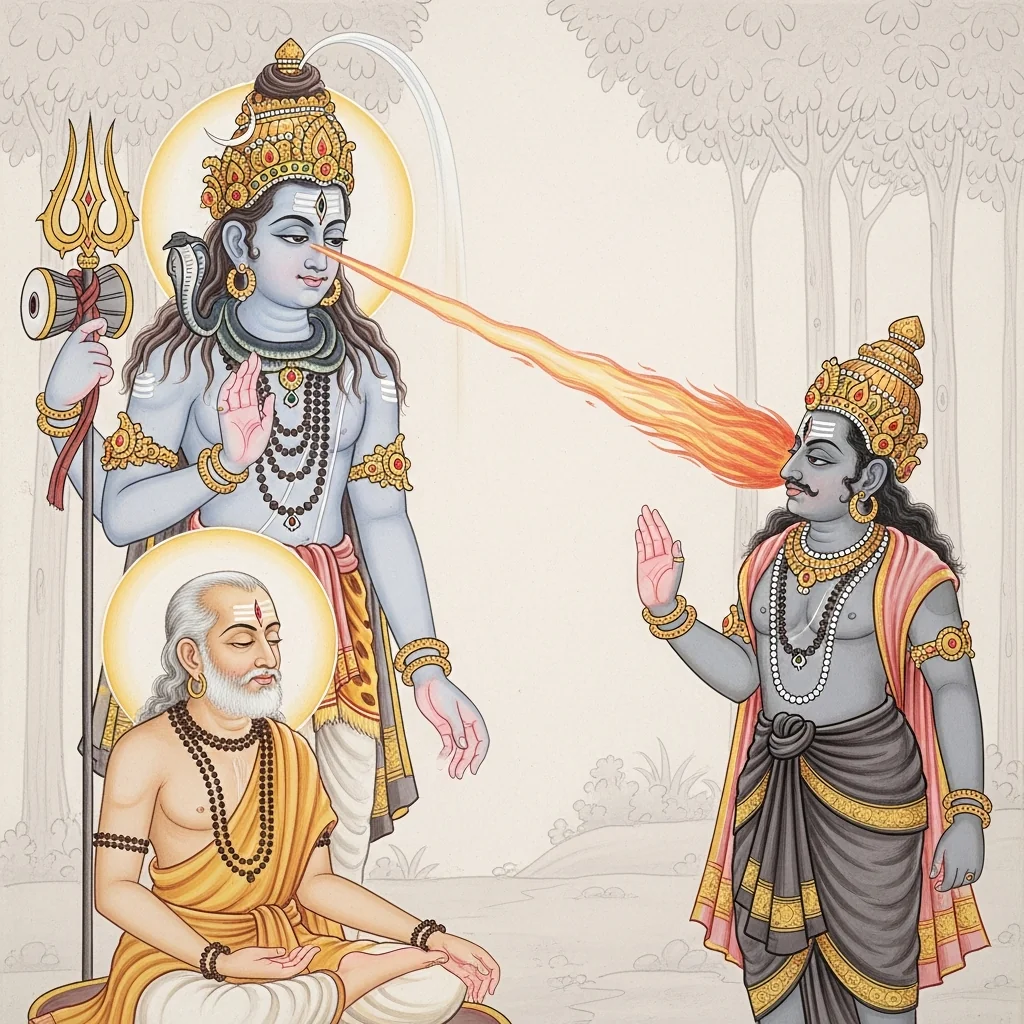
Framed as a dialogue, the sages ask Lomāśa to recount the wondrous story of King Śveta (also called rājasimha), famed for unbroken Śiva-bhakti and dhārmic rule. His kingdom is first portrayed as ideal—stable, free from disease and calamity, and prosperous—arising from constant worship of Śaṅkara. When his lifespan ends, Yama, acting on Citragupta’s directive, sends messengers to seize the king. Finding him absorbed in Śiva-dhyāna within the temple precinct, they hesitate; Yama comes himself. Then Kāla appears, insisting that the law of time is inescapable, and attempts to kill the king in the sacred space. Śiva (Pinākin), hailed as Kālântaka, intervenes and with the ‘third eye’ burns Kāla to ashes to protect his devotee. Questioned by the king, Śiva explains that Kāla is the universal devourer of beings. Yet Śveta argues that Kāla is also a necessary cosmic regulator for the world’s moral order, and requests his restoration. Śiva revives Kāla; Kāla praises Śiva’s cosmic deeds and acknowledges the king’s exceptional devotional power. The chapter ends with an injunction to Yama’s agents: those bearing Śaiva marks (tripuṇḍra, jaṭā, rudrākṣa, affiliation with Śiva’s name) are not to be taken to Yama’s realm; true worshippers are to be regarded as Rudra-like. King Śveta finally attains Śiva-sāyujya, affirming that devotion grants both protection and liberation-oriented fulfillment.
Shlokas
Verse 1
। लोमश उवाच । एवं ते शिवधर्माश्च कथितास्तेन वै द्विजाः । सविशेषाः पाशुपताः प्रसादाच्चैव विस्तरात्
Lomaśa said: “Thus, O twice-born sages, the duties of Śiva have been explained—together with the distinct Pāśupata observances—fully and in detail, by grace.”
Verse 2
अनेकागमसंवीता यथातत्त्वमुदाहृताः । कापालिकानां भेदाश्च प्रोक्ता व्याससमासतः
These teachings—grounded in many Āgamas—have been stated in accordance with reality. The divisions among the Kāpālikas, too, have been described, in both expanded and concise form.
Verse 3
धर्मा नानाविधाः प्रोक्ता नंदिनं प्रति वै तदा
At that time, many kinds of dharmas were taught, addressed to Nandin.
Verse 4
ऋषय ऊचुः । श्रुतं कुमारचरितमविशेषं सुमंगलम् । अस्माभिश्च महाभागकिंचित्पृच्छामहे वयम्
The sages said: “We have heard the auspicious, wholly detailed account of Kumāra. Now, O greatly fortunate one, we wish to ask you something.”
Verse 5
श्वेतस्य राजसिंहस्य चरितं परमाद्भुतम् । येन संतोषितो रुद्रः शिवो भक्त्याऽप्रमेयया
The life of Śveta, the lion among kings, is supremely wondrous—for by his immeasurable devotion, Rudra, Śiva, was pleased.
Verse 6
ते भक्तास्ते महात्मानो ज्ञानिनस्ते च कर्मिणः । येऽर्चयंति महाशंभुं देवं भक्त्या समावृताः
They are true devotees; they are great-souled; they are knowers and doers—those who worship the god Mahāśambhu, enveloped in devotion.
Verse 7
तस्मात्पृच्छामहे सर्वे चरितं शंकरस्य च । व्यासप्रसादात्सर्वं यज्जानासि त्वं न चापरः
Therefore we all ask about the deeds of Śaṅkara as well. By Vyāsa’s grace, you know all that—none other does.
Verse 8
निशम्य वचनं तेषां मुनीनां लोमशोऽब्रवीत्
Having heard the words of those sages, Lomaśa replied.
Verse 9
लोमश उवाच । आकर्ण्यतां महाभागाश्चरितं परमाद्भुतम् । तस्य राज्ञो हि भजतो राजभोगांश्च सर्वशः । मतिर्द्धिर्मे समुत्पन्ना श्वेतस्य च महात्मनः
Lomaśa said: “Hear, O noble ones, a most wondrous account. Seeing that king—though enjoying every royal pleasure—remain devoted, my reverence and admiration have arisen for that great-souled Śveta.”
Verse 10
पृथिवीं पालयामास प्रजा धर्मेण पालयन् । ब्रह्मण्यः सत्यवाक्छूरः शिवभक्तो निरंतरम्
He ruled the earth, safeguarding the people through dharma. Devoted to the Brahmins and the sacred order, truthful in speech and heroic in valor, he remained ever a devotee of Śiva.
Verse 11
राज्यं शशासाथ स शक्तितो नृपो भक्त्या तदा चैव समर्चयत्सदा । शंभुं परेशं परमं परात्परं शांतं पुराणं परमात्मरूपम्
That king governed his realm to the full measure of his power, and in devotion he ever worshipped Śambhu—the Supreme Lord, the Highest beyond the highest, serene, primeval, and of the very form of the Paramātman.
Verse 12
आयुस्तस्य परिक्षीणमर्चतः परमेश्वरम् । अथैतच्च महाभाग चरितं श्रूयतां मम
As he continued worshipping the Supreme Lord, his allotted lifespan came to its end. Now, O noble one, hear from me what happened next in this account.
Verse 13
वाणी शिवकथायुक्ता परमाश्चर्यसंयुता । न वाऽधयो हि तस्यैव व्याधयो हि महीपतेः
His speech was filled with discourse on Śiva and endowed with wondrous depth. For that king had neither mental afflictions nor bodily diseases.
Verse 14
तस्य राज्ञो न बाधंते तथा चोपद्रवास्त्वमी । निरीतिको जनो ह्यासीन्निरुपद्रव एव च
No troubles afflicted that king, nor did calamities arise. The people were free from plague and fear, and remained wholly undisturbed in peace.
Verse 15
अकृष्टपच्यौषधयस्तस्य राज्ञोऽभवन्भुवि । तपस्विनो ब्राह्मणाश्च वर्णाश्रमयुता जनाः
In that king’s realm, medicinal herbs ripened upon the earth even without cultivation. The Brahmins were ascetics, and the people lived established in the disciplines of varṇa and āśrama.
Verse 16
न पुत्रमरणे दुःखं नापमानं न मारकाः । न दारिद्र्यं च ते सर्वे प्राप्नुवन्ति कदाचन
They never suffered grief from the death of a child, nor disgrace, nor deadly threats; and none of them ever fell into poverty.
Verse 17
एवं बहुतरः कालस्तस्य राज्ञो महात्मनः । गतो हि सफलो विप्राः शिवपूजारतस्य वै
Thus, a long span of time passed fruitfully for that great-souled king—O Brahmins—for he was truly devoted to the worship of Śiva.
Verse 18
एकदा पूजमानं तं शंकरं परमार्थदम् । यमो हि प्रेषयामास यमदूतान्नृपं प्रति
Once, while he was worshipping Śaṅkara—the giver of the highest truth—Yama sent his messengers toward the king.
Verse 19
वचनाच्चित्रगुप्तस्य श्वेत आनीयतामिति । तथेति मत्वा ते दूता आगताः शिवमंदिरम्
At Citragupta’s command—“Let Śveta be brought”—those messengers, accepting the order, came to Śiva’s temple.
Verse 20
राजानं नेतुकामास्ते पाशहस्ता महाभयाः । यावत्समागता याम्या राजानं ददृशुस्त्वरात्
Eager to seize the king, Yama’s dread messengers—nooses in hand—rushed forward; and as soon as they arrived, they swiftly beheld the king.
Verse 21
न चक्रिरे तदा दूता आज्ञां धर्मस्य चैव हि । ज्ञात्वा सर्वं यमश्चैव आगतः स्वयमेव हि
But then the messengers did not carry out Dharma’s command; learning everything, Yama himself came there in person.
Verse 22
उद्धृत्य दंडं सहसा नेतुकामस्तदा नृपम् । ददर्श च महाबाहुः शिवध्यानपरायणम्
Raising his staff at once, intent on taking the king away, the mighty-armed one saw him wholly absorbed in meditation upon Śiva.
Verse 23
शिवभक्तियुतं शांतं केवलं ज्ञानसंयुतम् । यमोऽपि दृष्ट्वा राजानं परं क्षोभमुपागमत्
Seeing the king—endowed with devotion to Śiva, tranquil, and established in pure knowledge—even Yama was shaken with profound agitation.
Verse 24
चित्रस्थो ह्यभवत्स्द्यः प्रेतराजोऽतिविह्वलः । कालरूपश्च यो नित्यं प्रजानां क्षयकारकः
Then the lord of departed spirits became as though fixed like a painted figure—utterly bewildered—he who, as Kāla, Time embodied, is ever the cause of beings’ dissolution.
Verse 25
आगतस्तत्क्षणादेव नृपं प्रति रुषान्वितः । खड्गेन सितधारेण चर्मणा परमेम हि
At that very moment he arrived, wrathful toward the king—bearing a sword with a bright, keen blade and clad in a hide—indeed in a most formidable manner.
Verse 26
तावत्तं ददृशे सोऽपि स्थितं द्वारि भयावृतम् । उवाच कालो हि तदा यमं वैवस्वतं प्रति
Just then he too saw him standing at the doorway, overcome by fear. Then Kāla spoke to Yama Vaivasvata.
Verse 27
कस्मात्त्वया धरमराज नो नीतोऽयं नृपो महान् । यम दूतसहायश्च भीतवत्प्रतिभासि मे
“Why, O Dharmarāja, have you not taken this great king? Even with your messengers as helpers, you appear fearful to me.”
Verse 28
कालात्ययो न कर्त्तव्यो वचनान्मम सुव्रत । कालेनोक्तस्तदा धर्म उवाच प्रस्तुतं वचः
“Do not transgress against Time—heed my word, O virtuous one.” Thus addressed by Kāla, Dharma (Yama) then replied with fitting words.
Verse 29
तवाज्ञां च करिष्यामि नात्र कार्या विचारणा । असौ हुरत्ययोऽस्माकं शिवभक्तो निरंतरम्
“I will carry out your command—there is no need for deliberation here. That Huratyaya is continually a devotee of Śiva and stands on our Lord’s side.”
Verse 30
चित्रस्था इव तिष्ठाम भयाद्देवस्य शूलिनः । यमस्य वचनं श्रुत्वा कालः क्रोधसमन्वितः । राजानं हंतुमारेभे त्वरितः खड्गमाददे
We stood motionless, as if painted, out of fear of the trident-bearing Lord. But when Kāla heard Yama’s words, wrath seized him; in haste he set about slaying the king and drew his sword.
Verse 31
त्रिगुणाष्टाक्रसंकाशं प्रविवेश शिवालयम् । यावत्कोपेन महता तावद्दृष्टः पिनाकिना । स्वभक्तं हंतुकामोसौ श्वेतराजानमुत्तमम्
Kāla, blazing with dreadful radiance, entered Śiva’s abode. Yet as he advanced in great wrath, he was at once seen by Pinākin—Śiva who bears the bow—for Kāla desired to kill Śvetarāja, the noble devotee of Śiva.
Verse 32
ध्यानस्थितं चात्मनि तं विशुद्धज्ञानप्रदीपेन विशुद्धचित्तम् । आत्मानमात्मात्मतया निरंतरं स्वयंप्रकाशं परमं पुरस्तात्
He beheld Him established in meditation within the Self—pure in mind, illumined by the lamp of stainless knowledge—ever realizing the Self as the Self’s own essence, self-luminous, supreme, and present before all.
Verse 33
एवंविधं तं प्रसमीक्ष्य कालं संचिंत्यमानं मनसाऽचलेन । शैवं पदं यत्परमार्थरूपं कैवल्यसायुज्यकरं स्वरूपतः
Seeing Kāla in that state, pondering with an unwavering mind, (he contemplated) the Śaiva Supreme Abode—whose very nature is the highest truth and which, by its own essence, grants union leading to liberation (kaivalya).
Verse 34
सदाशिवेन दृष्टोऽसौ कालः कालांतकेन च । उच्छृंखलः खलो दर्पाद्विशमानो निजांतिके
That Kāla was seen by Sadāśiva—by the Ender of Time as well. Yet, unrestrained and wicked through pride, he kept drawing near to the Lord’s very presence.
Verse 35
नंदिकेश्वरमध्यस्थो यावद्दृष्टो निजांतिके । शिवेन जगदीशेन भक्तवत्सलबंधुना
As he stood in the midst of Nandikeśvara’s domain, he was seen nearby by Śiva—the Lord of the worlds, the kinsman of the devotee, ever tender toward His bhaktas.
Verse 36
निरीक्षितस्तृतीयेन चक्षुषा परमेष्ठिना । स्वभक्तं रक्षमाणेन भस्मसादभवत्क्षणात्
When the Supreme Lord looked with His third eye—protecting His own devotee—Kāla was reduced to ashes in an instant.
Verse 37
ददाह तं कालमनेकवर्णं व्यात्ताननं भीमबहूग्ररूपम् । ज्वालावलीभिः परिदह्यमानमतिप्रचंडं भुवनैकभक्षणम्
He burned that Kāla—many-hued, with gaping mouth, terrifying and of countless fierce forms—engulfed by garlands of flame, exceedingly violent, the would-be sole devourer of the worlds.
Verse 38
ददर्शिरे देवगणाः समेताः सयक्षगंधर्वपिशाचगुह्यकाः । सिद्धाप्सरःसर्वखगाश्च पन्नगाः पतत्रिणो लोकपालास्तथैव
Gathered together, the hosts of gods witnessed it—along with Yakṣas, Gandharvas, Piśācas, and Guhyakas; Siddhas and Apsarases; all manner of birds and serpents; winged beings, and the guardians of the directions as well.
Verse 39
ज्वालामालावृतं कालमीश्वरस्याग्रतः स्थितम् । लब्धसंज्ञस्तदा राजा कालं स्वं हंतुमागतम्
Before the Lord stood Kāla (Death/Time), encircled by a garland of flames. Regaining consciousness then, the king came forward, intent on striking down his own Death.
Verse 40
पुनः पुनर्द्ददर्शाथ दह्यमानं कृशानुना । प्रार्थयामास स व्यग्रो रुद्रं कालाग्निसन्निभम्
Again and again he beheld him being burned by the fire. Anxious and shaken, he began to beseech Rudra, who was like the cosmic fire of Time itself.
Verse 41
राजोवाच । नमो रुद्राय शांताय स्वज्योत्स्नायात्मवेधसे । निरंतराय सूक्ष्माय ज्योतिषां पतये नमः
The king said: Salutations to Rudra, the Peaceful One—self-luminous radiance and knower of the Self; salutations to the ever-present, the subtle, the Lord of all lights.
Verse 42
त्राता त्वं हि जगन्नाथ पिता माता सुहृत्सखा । त्वमेव बंधुः स्वजनो लोकानां प्रभुरीश्वरः
You alone are the savior, O Lord of the world—father and mother, well-wisher and friend. You alone are kinsman and one’s own; for all the worlds you are the sovereign Lord.
Verse 43
किं कृतं हि त्वया शंभो कोऽसौ दग्धो ममाग्रतः । न जानामि च किं जातं कृतं केन महत्तरम्
What have you done, O Śambhu? Who is that burned one before me? I do not understand what has occurred, nor by whom this mighty deed was accomplished.
Verse 44
एवं प्रार्थयतस्तस्य श्रुत्वा च परिदेवनम् । उवाच शंकरो वाक्यं बोधयन्निव तं नृपम्
Hearing his supplication and lament in this manner, Śaṅkara spoke words, as though instructing and awakening the king.
Verse 45
रुद्र उवाच । मया दग्धो ह्ययं कालस्तवार्थे च तवाग्रतः । दह्यमानो हि दृष्टस्ते ज्वाला मालाकुलो महान्
Rudra said: “For your sake, and right before you, I have burned this Kāla. Indeed you saw him burning—vast and mighty, wrapped in a mass of garlands of flame.”
Verse 46
एवमुक्तस्तदा तेन शंभुना राजसत्तमः । उवाच प्रश्रितो भूत्वा वचनं शिवमग्रतः
Thus addressed by Śambhu, the best of kings spoke again; becoming humble, he uttered his words in Śiva’s presence.
Verse 47
किमनेन कृतं शंभो अकृत्यं वद तत्त्वतः । य इमां प्राप्तितोऽवस्थां प्राणात्ययकरीं भव
“What wrongful act has he done, O Śambhu? Tell me the truth of it—by what has he come to this condition that brings the destruction of life?”
Verse 48
एवं विज्ञापितस्तेन ह्युवाच परमेश्वरः । भक्षकोऽयं महाराज सर्वेषां प्राणिनामिह
Thus informed by him, the Supreme Lord replied: “O great king, this one is the devourer of all living beings here.”
Verse 49
भक्षणार्थं तव विभो सोऽयं क्रूरोऽधुनाऽगतः । ममांतिकं महाराज तस्माद्दग्धो मया विभो
“O mighty Lord, this cruel one has now come near me, intending to devour (me/your devotee). Therefore, O great king, close to me he has been burned up by me, O Lord.”
Verse 50
बहूनां क्षेममन्विच्छंस्तवार्थेऽन्हं विशेषतः
Seeking the welfare and safety of many, I have acted—especially for your sake.
Verse 51
ये पापिनो ह्यधर्मिष्ठा लोकसंहारकारकाः । पाषंडवादसंयुक्ता वध्यास्ते मम चैव हि । वाक्यं निशम्य रुद्रस्य श्वेतो वचनमब्रवीत्
Those who are sinful, most unrighteous, and who bring ruin upon the world—joined to heretical and delusive doctrines—are indeed fit to be slain by me. Having heard Rudra’s words, Śveta then spoke in reply.
Verse 52
कालेनैव हि लोकोऽयं पुण्यमाचरते सदा । धर्मनिष्ठाश्च केचित्तु भक्त्या परमया युताः
Indeed, in due course of time this world continually practices merit. And some are steadfast in dharma, endowed with the highest devotion.
Verse 53
उपासनारताः केचिज्ज्ञानिनो हि तथा परे । केचिदध्यात्मसंयुक्ताश्चान्ये मुक्ताश्च केचन
Some delight in worship, and others indeed are knowers of truth. Some are joined to the inner spiritual path, and some among them are liberated.
Verse 54
कालो हि हर्ता च चराचराणां तथा ह्यसौ पालकोऽप्यद्वितीयः । स स्रष्टा वै प्राणिनां प्राणभूतस्तस्मादेनं जीवयस्वाशु भूयः
Time (Kāla) is indeed the taker-away of all moving and unmoving beings; and he alone is also the unrivaled protector. He is truly the creator, the very life-breath of creatures—therefore, revive him again at once.
Verse 55
यदि सृष्टिपरोऽसि त्वं कालं जीवय सत्वरम् । यदि संहारभूतोऽसि सर्वेषां प्राणिनामिह
If You are inclined toward creation, then revive Kāla swiftly. But if You are the very form of dissolution for all beings here…
Verse 56
तर्ह्येवं कुरु शंभो त्वं कालस्य च महात्मनः । विना कालेन यत्किंचिद्भविष्यति न शंकर
Therefore, O Śaṁbhu, act thus concerning the great-souled Kāla. Without Kāla, nothing whatsoever will come to be, O Śaṅkara.
Verse 57
इति विज्ञापितस्तेन राज्ञा शंभुः प्रतापिना । चकार वचनं तस्य भक्तस्य च चिकीर्षितम्
Thus petitioned by that radiant king, Śaṁbhu carried out his request and accomplished what his devotee longed to have done.
Verse 58
शंभुः प्रहस्याथ तदा महेशः संजीवयामास पिनाकपाणिः । चकार रूपं च यथा पुरासीदालिंगतोसौ यमदूतमध्ये
Śaṁbhu then smiled; and Mahēśa, bearer of the Pināka bow, revived him. He also restored his form as it had been before—there, amid Yama’s messengers, he stood as one who had been seized.
Verse 59
उपस्थितोऽसौ त्वथ लज्जमानस्तुष्टाव देवं वृषभध्वजं तम् । नत्वा पुरःस्थाग्निमयं हि कालः सविस्मयो वाक्यमिदं बभाषे
Then he approached, ashamed, and praised that God who bears the bull as His banner. Having bowed to Kāla, who stood before him in a fiery form, he—filled with wonder—spoke these words.
Verse 60
काल उवाच । कालांतक त्रिपुरेश त्रिपुरांतकर प्रभो । मदनो हि त्वया देव कृतोऽनंगो जगत्पते
Kāla said: “O Ender of Time, Lord of Tripurā, Destroyer of Tripura, O Master! It was you, O God, who made Madana (Kāma) bodiless, O Lord of the worlds.”
Verse 61
दक्षयज्ञविनाशश्च कृतो हि परमाद्भुतः । कालकूटं दुःप्रसहं सर्वेषां क्षयकृन्महत्
“You brought about the wondrous destruction of Dakṣa’s sacrifice. You also dealt with the terrible Kālakūṭa poison—hard for any to withstand—vast and capable of bringing ruin to all.”
Verse 62
ग्रसितं तत्त्वया शंभो अन्येषामपि दुर्द्धरम् । लिंगरूपेण महता व्याप्तमासीज्जगत्त्रयम्
“O Śambhu, you swallowed that which is unbearable even for others. And in a vast form as the Liṅga, you pervaded the three worlds.”
Verse 63
लयनाल्लिंगमित्युक्तं सर्वैरपि सुरा सुरैः । यस्यांतं न विदुर्द्देवा ब्रह्मविष्णुपुरोगमाः
“Because it dissolves (all things) into itself, it is called the ‘Liṅga’ by all—gods and asuras alike. Even the gods, led by Brahmā and Viṣṇu, do not know its end.”
Verse 64
लिंगस्य देवदेवस्य महिमानं परस्य च । नमस्ते परमेशाय नमस्ते विश्वमंगल । नमस्ते शितिकण्ठाय नमस्तस्मै कपर्दिने
“(I praise) the greatness of the supreme Lord of gods, manifest as the Liṅga. Salutations to you, O Parameśvara; salutations to you, O Blessing of the universe. Salutations to you, O White-throated One; salutations to Him, the matted-haired Lord.”
Verse 65
नमोनमः कारणकारणाय ते नमोनमो मंगलमंगलात्मने । ज्ञानात्मने ज्ञानविदां मनीषिणां त्वमादिदेवोऽसि पुमान्पुराणः
Again and again, salutations to You—the cause of all causes; again and again, salutations to You whose very nature is supreme auspiciousness. You are the Self of knowledge for the wise who know; You are the primordial God, the Ancient Person.
Verse 66
त्वमेव सर्वं जगदेवबंधो वेदांतवेद्योऽसि महानुभावः । महानुभावैः परिकीर्त्तनीयस्त्वमेव विश्वेश्वर विश्वमान्यः
You alone are everything, O friend of the world. You are the Great One, knowable through Vedānta. By the great-souled You are to be celebrated; You alone are Viśveśvara, honored by the entire universe.
Verse 67
त्वं पासि लुंपसि जगत्त्रितयं महेश स्रष्टासि भूतपतिरेव न कश्चिदन्यः
You protect and You dissolve the three worlds, O Maheśa. You are the creator; You alone are the Lord of beings—there is none other.
Verse 68
इति स्तुतस्तदा तेन कालेन जगदीश्वरः । उवाच कालो राजानं श्वेतं संबोधयन्निव
Thus praised at that time by Kāla, the Lord of the world (Śiva) then spoke—while Kāla, as though instructing, addressed King Śveta.
Verse 69
काल उवाच । मनुष्यलोके सकले नान्यस्त्वत्तो हि विद्यते । येन त्वया जितो देवो ह्यजेयो भुवनत्रये
Kāla said: “In the entire world of humans, none exists equal to you. For by you that Lord—unconquerable in the three worlds—has been conquered.”
Verse 70
मया हतमिदं विश्वं जगदेतच्चराचरम् । जेताहं सर्वदेवानां सर्वेषां दुरतिक्रमः
By me this entire universe—this moving and unmoving world—has been struck down. I am the conqueror of all the gods, invincible and hard for anyone to overcome.
Verse 71
स हि ते चानुगो जातो महाराज प्रयच्छ मे । अभयं देवदेवाच्च शूलिनः परमेष्ठिनः
For he has become your follower, O great king. Grant me fearlessness—pardon—from the God of gods, the trident-bearing Supreme Lord.
Verse 72
एवमुक्तस्तदा तेन श्वेतः कालेन चैव हि । उवाच प्रहसन्वाचा मेघनादगभीरया
Thus addressed at that time by Kāla, King Śveta indeed replied, smiling, in a voice deep as the rumble of clouds.
Verse 73
राजोवाच । शिवस्य परमं रूपं त्वमेको नास्ति संशयः । कालस्त्वमसि भूतानां स्थितिसंहाररूपवान्
The king said: “You alone are the supreme form of Śiva—there is no doubt. You are Kāla for all beings, embodying their continuance and their dissolution.”
Verse 74
तस्मात्पूज्यतमोऽसि त्वं सर्वेषां च नियामकः । त्वद्भयात्कृतिनः सर्वे शरणं परमेश्वरम् । व्रजंति विविधैर्भार्वैरात्मलक्षणतत्पराः
Therefore you are most worthy of worship and the regulator of all. Out of fear of you, all the wise take refuge in the Supreme Lord, approaching Him in diverse inner dispositions, intent upon the true mark of the Self.
Verse 75
सुत उवाच । तेनैवं रक्षिततः कालो राज्ञा परमधर्मिणा । शिवप्रसादमात्रेण लब्धसंज्ञो बभूवह
Sūta said: “Thus protected by that supremely righteous king, Kāla regained consciousness solely by Śiva’s grace.”
Verse 76
तदा यमेन स्तवितो मृत्युना यमदूतकैः । शिवं प्रणम्य संस्तुत्य श्वेतं राजानमेव च । ययौ स्वमालयं विप्रा मेने स्वं जनितं पुनः
Then, praised by Yama, by Mṛtyu, and by the messengers of Yama, he bowed to Śiva and extolled Him, and also honoured King Śveta. He went to his own abode; O brāhmaṇas, he felt as though he had been born anew.
Verse 77
मायया सह पत्न्या च शिवस्य चरितं महत् । अनुसंस्मृत्य संस्मृत्य विस्मयं परमं ययौ
Along with Māyā and his wife, he repeatedly recalled the great deeds of Śiva, and again and again he fell into profound wonder.
Verse 78
कथयामास सर्वेषां दूतानां स्वयमेव हि । आकर्ण्यतां मम वचो हे दूतास्त्वरितेन हि
He himself addressed all the messengers: “Hear my words, O envoys—quickly, without delay.”
Verse 79
कर्त्तव्यं च प्रयत्नेन नान्यथा मम भाषितम्
This must be carried out with full effort—never otherwise than as I have spoken.
Verse 80
काल उवाच । ये त्रिपुण्ड्रंधारयंति तथा ये वै जटाधराः । ये रुद्राक्षधराश्चैव तथा ये शिवनामिनः
Kāla said: Those who wear the tripuṇḍra; those indeed who bear matted locks; those who wear rudrākṣa beads; and those who are marked by the name of Śiva—
Verse 81
उपजीवनहेतोश्च भिया ये ह्यपि मानवाः । पापिनोऽपि दुराचाराः शिववेषधरा ह्यमी
Even those men who, for livelihood or out of fear, wear Śiva’s dress—though sinful and of bad conduct—these indeed are Śiva’s outwardly marked ones.
Verse 82
नानेतव्या भवद्भिश्च मम लोकं कदाचन । वर्ज्यास्ते हि प्रयत्नेन पापिनोऽपि सदैव हि
They must never be brought by you to my world. They are to be avoided with care—always, even if they are sinners.
Verse 83
अन्येषां का कथा दूता येऽर्चयंति सदाशिवम् । भक्त्या परमया शंभुं रुद्रास्ते नात्र संशयः
What need to speak of others, O messengers? Those who worship Sadāśiva—Śambhu—with supreme devotion: they are Rudras; of this there is no doubt.
Verse 84
रुद्राक्षमेकं शिरसा बिभर्ति यस्तथा त्रिपुंड्रं च ललाटमध्यके । पंचाक्षरीं ये प्रजपंति साधवः पूज्य भवद्भिश्च न चान्यथा क्वचित्
He who bears even a single rudrākṣa upon his head, and also the tripuṇḍra in the middle of the forehead—those good people who repeat the five-syllabled mantra must be honored by you, and never treated otherwise in any case.
Verse 85
यस्मिन्राष्ट्रोऽथ वा देशे ग्रामे चापि विचक्षणः । शिवभक्तो न दृश्येत स्मशानात्तु विशिष्यते । तद्राष्ट्रं देशमित्याहुः सत्यं प्रतिवदामि वः
In whatever kingdom, region, or even village a discerning devotee of Śiva is not seen, that land is worse than a cremation ground. Such alone is called a “country”—this truth I declare to you.
Verse 86
यस्मिन्न संति नित्यं हि शिवभक्तिसमन्विताः । तद्ग्रमस्था जनाः सर्वे शासनीया न संशयः
Where people endowed with devotion to Śiva are not present continually, all the inhabitants of that village are fit to be chastised—of this there is no doubt.
Verse 87
एवमाज्ञापयामास यमोऽपि निजकिंकरान् । तथेति मत्वा ते सर्वे तूष्णी मासन्सुविस्मिताः
Thus Yama too commanded his own servants. Thinking, “So be it,” they all remained silent, greatly astonished.
Verse 88
एवंविधोऽयं भुवनैकभर्ता सदाशिवो लोकगुरुः स एकः । दाता प्रहर्ता निजभावयुक्तः सनातनोऽयं जगदेकबंधुः
Such is this Sadāśiva—the sole sustainer of the worlds, the one teacher of all beings. He is the giver and the chastiser, acting in accord with his own nature; eternal is he, the single true kinsman of the universe.
Verse 89
दग्ध्वा कालं महादेवो निर्भयं च ददौ विभुः । श्वेतस्य राजराजस्य महीपालवरस्य च
Having burnt (subdued) Kāla, the mighty Mahādeva bestowed fearlessness upon Śveta—the king of kings, the foremost of rulers.
Verse 90
तदा निर्भयमापन्नः श्वेतराजो महामनाः । भक्त्या च परया मुक्तो बभूव कृतनिश्चयः
Then the great-souled King Śveta attained fearlessness; freed by supreme devotion, he became steadfast in his resolve toward Śiva.
Verse 91
तदा देवैः पूज्यमान ऋषिभिः पन्नगैस्तथा । श्वतो राजन्यवर्योऽसौ शिवसायुज्यमाप्तवान्
Then, honored by the gods, the sages, and even the nāgas, that foremost of kings—Śveta—attained union with Śiva (śiva-sāyujya).
Verse 92
एवं भक्तिपराणां च महेशे च जगद्गुरौ । सिद्धिः करतले तेषां सत्यं प्रतिवदामि वः
Thus, for those devoted in bhakti to Maheśa, the Guru of the world, success is as if in the palm of their hand—this truth I declare to you.
Verse 93
श्वपचोऽपि वरिष्ठः स्यात्प्रसादाच्छं करस्य च । तस्मात्सर्वप्रयत्नेन पूजनीयो हि शंकरः
Even a dog-cooker (one of the lowest castes) becomes the foremost by the grace of Śaṅkara. Therefore, with every effort indeed, Śaṅkara should be worshipped.
Verse 94
बहूनां जनमनामंते शिवभक्तिः प्रजायते
In the hearts of many people, devotion to Śiva arises in due course.
Verse 95
ज्ञानिनां कृतबुद्धीनां जन्मजन्मनिशंकरः । किं मया बहुनोक्तेन पूजनीयः सदाशिवः
For the wise and the steadfast in resolve, through birth after birth, Śaṅkara remains their refuge and their aim. What need have I to say more? Sadāśiva is to be worshipped.
Verse 96
अत्रैवोदाहरंतीममितिहासं पुरातनम् । किरातेन कृतं व्रतं च परमाद्भुतम् । येनैव तारितं विश्वं जगदेतच्चराचरम्
Here itself I shall recount an ancient legend: a most wondrous vow (vrata) undertaken by a Kirāta, by which this entire world—moving and unmoving—was upheld and delivered.