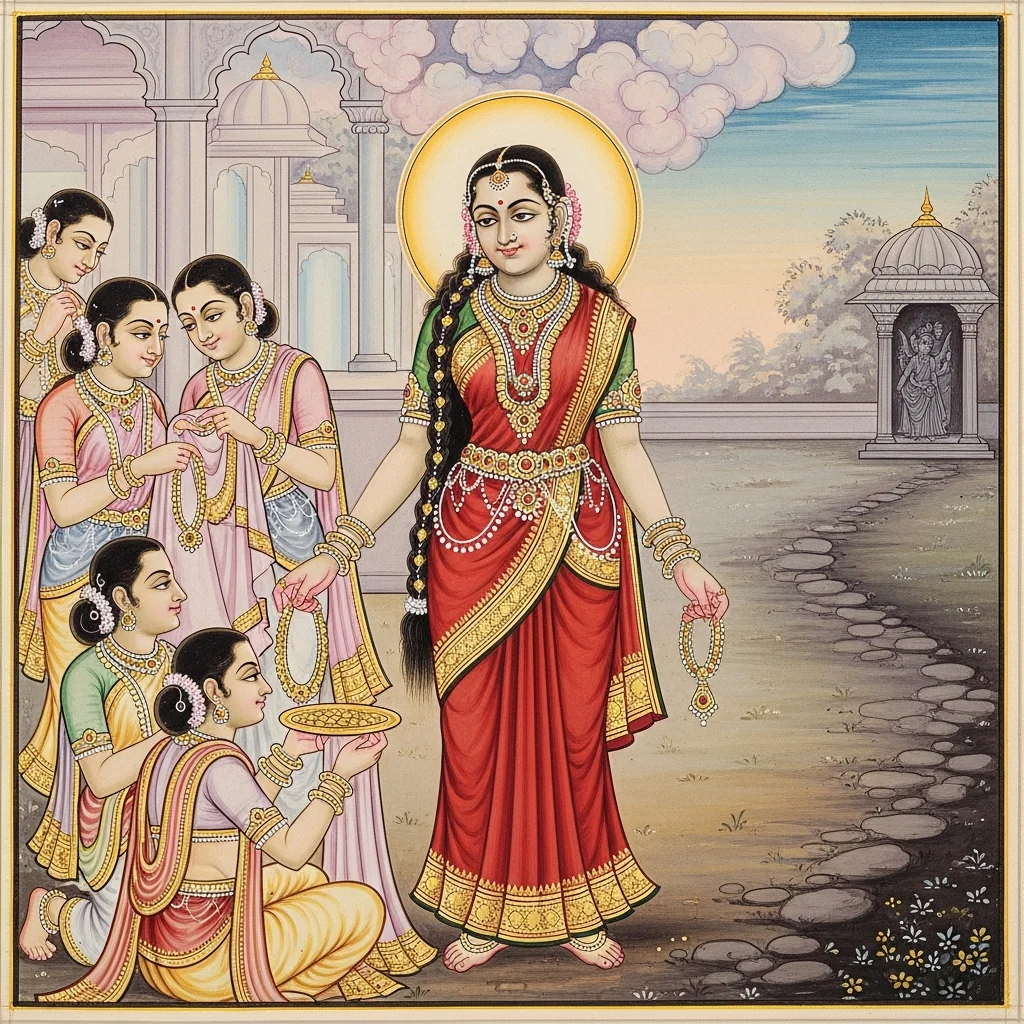
Adhyaya 2
This chapter portrays a ritual and social conflict within a grand yajña. Lomaśa relates how Dakṣa begins a great sacrifice at Kanakhala, inviting many ṛṣis (Vasiṣṭha, Agastya, Kaśyapa, Atri, Vāmadeva, Bhṛgu, and others) and deities (Brahmā, Viṣṇu, Indra, Soma, Varuṇa, Kubera, the Maruts, Agni, Nirṛti), all honored with splendid quarters fashioned by Tvaṣṭṛ. As the rite proceeds, the sage Dadhīci declares publicly that the sacrifice lacks true splendor without Pinākin/Śiva: what is auspicious becomes inauspicious when severed from Tryambaka. He urges that Śiva be invited along with Dākṣāyaṇī. Dakṣa rejects the counsel, asserting Viṣṇu as the ritual root and disparaging Rudra as unfit, thereby revealing pride and exclusion as faults in worship. Dadhīci departs, warning of impending ruin. The narrative then turns to Satī (Dākṣāyaṇī) in a celestial realm. Learning that Soma is going to Dakṣa’s yajña, she asks why she and Śiva were not invited. She approaches Śiva amid his gaṇas (Nandin, Bhṛṅgi, Mahākāla, and others) and seeks permission to go despite the lack of invitation. Śiva advises against it for reasons of social-ritual propriety and the harm of uninvited attendance; Satī insists. Śiva permits her to go with a vast gaṇa retinue, while inwardly sensing she will not return—marking the tension between familial obligation, ritual honor, and divine dignity.
Shlokas
Verse 1
लोमश उवाच । एकदा तु तदा तेन यज्ञः प्रारंभितो महान् । तत्राहूतास्तदा सर्वे दीक्षितेन तपस्विना
Lomaśa said: Once, at that time, he began a mighty sacrifice (yajña); and there, the ascetic who had received dīkṣā (consecration) invited all to attend.
Verse 2
ऋषयो विविधास्तत्र वशिष्ठाद्याः समागताः । अगस्त्यः कश्यपोऽत्रिश्च वामदेवस्तथा भृगुः
Many sages (ṛṣis) assembled there—beginning with Vasiṣṭha: Agastya, Kaśyapa, Atri, Vāmadeva, and Bhṛgu as well.
Verse 3
दधीचो भगवान्व्यासो भरद्वाजोऽथ गौतमः । एते चान्ये च बहवः समाजग्मुर्महर्षयः
Dadhīci, the revered Vyāsa, Bharadvāja, and then Gautama—these and many other great sages (maharṣis) came together.
Verse 4
तथा सर्वे सुरगणा लोकपालस्तथाऽपरे विद्याधराश्च गंधर्वाः किंनराप्सरसां गणाः
Likewise, all the hosts of the gods came, together with the Lokapālas (guardians of the worlds) and others: Vidyādharas, Gandharvas, and the companies of Kiṃnaras and Apsarases.
Verse 5
सप्तलोकात्समानीतो ब्रह्मा लोकपितामहः । वैकुंठाच्च तथा विष्णुः समानीतो मरवं प्रति
From the seven worlds, Brahmā—the Pitāmaha, grandsire of the worlds—was brought there; and likewise Viṣṇu was brought from Vaikuṇṭha, toward Marava.
Verse 6
देवेन्द्रो हि समानीत इंद्राण्या सह सुप्रभः । तथा चंद्रो हि रोहिण्या वरुणः प्रिययया सह
Indra, radiant and splendid, was brought there together with Indrāṇī. Likewise, the Moon came with Rohiṇī, and Varuṇa with his beloved consort.
Verse 7
कुबेरः पुष्पकारूढो मृगाऽरूढोऽथ मारुतः । बस्ताऽरूढः पावकश्च प्रेताऽरूढोऽथ निरृति
Kubera came mounted on Puṣpaka; Māruta (Vāyu) came mounted on a deer. Pāvaka (Agni) came riding a goat, and Nirṛti came riding upon a preta (a ghostly being).
Verse 8
एते सर्वे समायाता यज्ञवाटे द्विजन्मनः । ते सर्वे सत्कृतास्तेन दक्षेण च दुरात्मना
All these arrived at the sacrificial enclosure, O twice-born one. And all of them were duly honored by that Dakṣa—though he was evil-minded.
Verse 9
भवनानि महार्हाणि सुप्रभाणि महांति च । त्वष्ट्रा कृतानि दिव्यानि कौशल्येन महात्मना
There were mansions of great value—vast and brilliantly radiant—divine structures crafted by Tvaṣṭṛ, the great-souled one, with consummate skill.
Verse 10
तेषु सर्वेषु धिष्ण्येषु यथाजोषं समास्थिताः
In all those sacred seats and assigned stations, they took their places according to propriety and comfort.
Verse 11
वर्त्तमाने महायज्ञे तीर्थे कनखले तथा । ऋत्विजश्च कृतास्तेन भृग्वाद्याश्च तपोधनाः
As the great sacrifice proceeded at the sacred ford of Kanakhala, he appointed as officiating priests (ṛtvij) the ascetic-rich sages, beginning with Bhṛgu.
Verse 12
दीक्षायुक्तस्तदा दक्षः कृतकौतुकमंगलः । भार्यया सहितो विप्रैः कृतस्वत्ययनो भृशम्
Then Dakṣa, duly consecrated (dīkṣā) for the rite, having performed the auspicious preliminary ceremonies, and accompanied by his wife, was greatly honored by the brāhmaṇas with blessings of welfare and protection.
Verse 13
रेजे महत्त्वेन तदा सुहृद्भिः परितः सदा । एतस्मिन्नंतरे तत्र दधीचिर्वाक्यमब्रवीत्
Then he shone in grandeur, ever surrounded by friends. Meanwhile, at that moment there, Dadhīci spoke these words.
Verse 14
दधीचिरुवाच । एते सुरेशा ऋषयो महत्तराः सलोकपालाश्च समागतास्तव । तथाऽपि यज्ञस्तु न शोभते भृशंपिनाकिना तेन महात्मना विना
Dadhīci said: “O Dakṣa, mighty gods, great sages, and even the guardians of the worlds have assembled for you; yet this sacrifice does not shine at all without that great-souled Pinākin (Śiva), bearer of the bow.”
Verse 15
येनैव सर्वाण्यपि मंगलानि जातानि शंसंति महाविपश्चितः । सोऽसौ न दृष्टोऽत्र पुमान्पुराणो वृषध्वजो नीलकण्ठः कपर्दी
He by whom all auspiciousness is born—so proclaim the great seers—yet that Primeval Person is not seen here: Vṛṣadhvaja, the Blue-throated Lord Nīlakaṇṭha, Kapardī, the matted-haired Śiva.
Verse 16
अमंगलान्येव च मंगलानि भवंति येनाधिकृतानि दक्ष । त्रियंबकेनाथ सुमंगलानि भवंति सद्योह्यपमंगलानि
O Dakṣa, even the inauspicious becomes auspicious when ordered by Him; and by Triyambaka, even what is ill-omened becomes instantly supremely auspicious.
Verse 17
तस्मात्त्वयैव कर्तव्यमाह्वानं परमेष्ठिना । त्वरितं चैव शक्रेण विष्णुना प्रभविष्णुना
Therefore, you—O Parameṣṭhin—must yourself make the invocation; and quickly too, with Śakra and with Viṣṇu, the mighty Lord of power.
Verse 18
सर्वैरेव हि गंतव्यं यत्र देवो महेश्वरः
Indeed, all must go to where the Lord Maheśvara is.
Verse 19
दाक्षायण्या समेतं तमानयध्वं त्वरान्विताः । तेन सर्वं पवित्रं स्याच्छंभुना योगिना भृशम्
Hasten and bring him here together with Dākṣāyaṇī (Satī). By that yogin Śambhu, everything will become abundantly purified.
Verse 20
यस्य स्मृत्या च नामोक्त्या समग्रं सुकृतं भवेत् । तस्मात्सर्वप्रयत्नेन समानेयो वृषध्वजः
By whose mere remembrance and utterance of the Name all merit becomes complete—therefore, with every effort, Vṛṣadhvaja (Śiva, whose banner bears the bull) should be brought here (invoked and welcomed).
Verse 21
तस्य तद्वचनं श्रुत्वा प्रहसन्नाह दुष्टधीः । मूलं विष्णुर्हि देवानां यत्र धर्मः सनातनः
Hearing those words, the wicked-minded one laughed and said: “For Viṣṇu is indeed the very root of the gods—where the eternal Dharma abides.”
Verse 22
यस्मिन्वेदाश्च यज्ञाश्च कर्माणिविविधानि च । प्रतिष्ठितानि सर्वाणि सोऽसौ विष्णुरिहागतः
He in whom the Vedas, the sacrifices, and the many kinds of rites are all established—he, that very Viṣṇu, has come here.
Verse 23
सत्यलोकात्समायातो ब्रह्मा लोकपितामहः । वेदैश्चोपनिषद्भिश्च आगमैर्विविधैः सह
From Satyaloka has come Brahmā, the grandsire of the worlds—together with the Vedas, the Upaniṣads, and diverse Āgamas.
Verse 24
तथा सुरगणैः साकमागतः सुरराट् स्वयम् । तथा यूयं समायाता ऋषयो वीतकल्मषाः
Likewise the lord of the gods himself has come, accompanied by hosts of deities; and likewise you too have arrived—sages purified of sin.
Verse 25
येये यज्ञोचिताः शांतास्तेते सर्वे समागताः । वेदवेदार्थतत्त्वज्ञाः सर्वे यूयं दृढव्रताः
All those who are fit for sacrifice, peaceful in nature, have assembled here. You all are knowers of the Veda and the true purport of the Veda—firm in your vows.
Verse 26
अत्रैव च किमस्माकं रुद्रेणापि प्रयोजनम् । कन्या दत्ता मया विप्रा ब्रह्मणा नोदितेन हि
Here itself, what need have we of Rudra at all? O brāhmaṇas, the maiden has been given by me—indeed at the urging of Brahmā.
Verse 27
अकुलीनो ह्यसौ विप्रा नष्टो नष्टप्रियः सदा । भूतप्रेतपिशाचानां पतिरेको दुरत्ययः
“He is of no noble lineage, O brāhmaṇas—ruined, ever fond of what is lost. He alone is the lord of bhūtas, pretas, and piśācas—hard to overcome.”
Verse 28
आत्मसंभावितो मूढःस्तब्धो मौनी समत्सरः । कर्मण्यस्मिन्नयोग्योऽसौ नानीतो हि मयाऽधुना
“Self-conceited, deluded, obstinate, silent, and jealous—he is unfit for this rite; therefore I have not brought him here now.”
Verse 29
तस्मात्त्वया न वक्तव्यं पुनरेवं वचोद्विज । सर्वैर्भवद्भिः कर्तव्यो यज्ञो मे सफलो महान्
“Therefore, O twice-born, you must not speak such words again. By all of you this great sacrifice of mine must be performed—and it will be fruitful.”
Verse 30
एतच्छ्रुत्वा वचस्तस्य दधीचिर्वाक्यमब्रवीत्
Hearing his words, Dadhīci then spoke in reply.
Verse 31
दधीचिरुवाच । सर्वेषामृषिवर्याणां सुराणां भावितात्मनाम् । अनयोऽयं महाञ्जातो विना तेन महात्मना
Dadhīci said: “Among all the foremost seers and the gods of purified minds, this great calamity has arisen—because that great-souled one is absent/withheld.”
Verse 32
विनाशोऽपि महान्सद्योह्यत्रत्यानां भविष्यति । एवमुक्त्वा दधीचोऽसावेक एव विनिर्गतः
“Indeed, a great destruction will swiftly befall those present here.” Having said this, Dadhīci departed—alone.
Verse 33
यज्ञवाटाच्च दक्षस्य त्वरितः स्वाश्रमं ययौ । मुनौ विनिर्गते दक्षः प्रहसन्निदमब्रवीत्
From Dakṣa’s sacrificial enclosure he hurried to his own hermitage. When the sage had left, Dakṣa, smiling, spoke these words.
Verse 34
गतः शिवप्रियो वीरो दधीचिर्नाम नामतः । आविष्टचित्ता मंदाश्च मिथ्यावादरताः खलाः
“Gone is the heroic Dadhīci, famed by name, a beloved of Śiva. (But) these villains—dull-witted, minds possessed, and devoted to false speech—remain.”
Verse 35
वेदबाह्य दुराचारास्त्याज्यास्ते ह्यत्र कर्मणि । वेदवादरता यूयं सर्वे विष्णुपुरोगमाः
“Those who stand outside the Veda and behave wickedly should be excluded from this rite. You all are devoted to Vedic doctrine—followers with Viṣṇu in the lead.”
Verse 36
यज्ञं मे सफलं विप्राः कुर्वंतु ह्यचिरादिव । तदा ते देवयजनं चक्रुः सर्वे सहर्षयः
“Brāhmaṇas, quickly make my sacrifice successful.” Then all of them, together with the sages, performed the worship of the gods.
Verse 37
एतस्मिन्नंतरे तत्र पर्वते गंधमादने । धारागृहे विमानेन सखीभिः परिवारिता
Meanwhile, there on Mount Gandhamādana, in the Dhārāgṛha (“house of streams”), she arrived in a celestial chariot, surrounded by her companions.
Verse 38
दाक्षायणी महादेवी चकार विविधास्तदा । क्रीडा विमानमध्यस्ता कन्दुकाद्याः सहस्रशः
Then Dākṣāyaṇī, the great goddess, engaged in many kinds of play—seated within the aerial chariot—ball-games and other pastimes by the thousand.
Verse 39
क्रीडासक्ता तदा देवी ददर्शाथ महासती । यज्ञं प्रयांतं सोमं च रोहिण्या सहितं प्रभुम्
While absorbed in play, the goddess—Mahāsatī—then saw Soma, the lord, proceeding to the sacrifice, accompanied by Rohiṇī.
Verse 40
क्व गमिष्यति चंद्रोऽयं विजये पृच्छ सत्वरम् । तयोक्ता विजया देवी तं पप्रच्छ यथोचितम्
“Where is this Moon-god going? Vijayā, ask him at once.” Thus addressed, the goddess Vijayā questioned the Moon in a fitting manner.
Verse 41
कथितं तेन तत्सर्वं दक्षस्यैव मखादिकम् । तच्छ्रुत्वा त्वरिता देवी विजया जातसंभ्रमा । कथयामास तत्सर्वं यदुक्तं शशिना भृशम्
He told her everything—beginning with Dakṣa’s sacrifice and all that followed. Hearing it, the goddess Vijayā, hastening and inwardly stirred, reported in full whatever the Moon had spoken.
Verse 42
विमृश्य कारणं देवी किमाह्वानं करोति न । दक्षः पिता मे माता च विस्मृता मां कुतोऽधुना
Pondering the reason, the goddess thought: “Why is no invitation sent? Dakṣa is my father, and my mother as well—have they forgotten me? How could that be, even now?”
Verse 43
पृच्छामि शंकरं चाद्य कारणं कृतनिश्चया । स्थापयित्वा सखीस्तत्र आगता शंकरं प्रति
Resolved in mind, she decided: “Today I shall ask Śaṅkara the reason.” Leaving her companions there, she went toward Śaṅkara.
Verse 44
ददर्शतं सभामध्ये त्रिलोचनमवस्थितम् । गणैः परिवृतं सर्वैश्चंडमुंडादिभिस्तदा
She beheld the Three-eyed Lord stationed in the midst of the assembly, at that time surrounded on every side by all the gaṇas—such as Caṇḍa, Muṇḍa, and others.
Verse 45
बाणो भृंगिस्तथा नंदी शैलादो हि महातपाः । महाकालो महाचंडो महामुंडो महाशिराः
There were Bāṇa, Bhṛṅgi, and Nandī; and Śailāda, the great ascetic. Also present were Mahākāla, Mahācaṇḍa, Mahāmuṇḍa, and Mahāśiras.
Verse 46
धूम्राक्षो धूम्रकेतुश्च धूम्रपादस्तथैव च । एते चान्ये च बहवो गणा रुद्रानुवर्तिनः
There were Dhūmrākṣa, Dhūmraketu, and Dhūmrapāda as well. These and many others were gaṇas who followed Rudra.
Verse 47
केचिद्भयानका रौद्राः कबंधाश्च तथा परे । विलोचनाश्च केचिच्च वक्षोहीनास्तथा परे
Some were terrifying and fierce; others were headless trunks. Some had strange eyes, and others again were without chests.
Verse 48
एवंभूताश्च शतशः सर्वे ते कृत्तिवाससः । जटाकलापसंभूषाः सर्वे रुद्राक्षभूषणाः
Thus, in their hundreds, they all were—clad in skins, adorned with masses of matted hair, and all ornamented with rudrākṣa beads.
Verse 49
जितेंद्रिया वीतरागाः सर्वे विषयवैरिणः । एभिः सर्वैः परिवृतः शंकरो लोकशंकरः । दृष्टस्तया उपाविष्ट आसने परामाद्भुते
All of them were self-controlled, free from passion, and enemies of sense-objects. Surrounded by them all, Śaṅkara—the benefactor of the worlds—was seen by her, seated upon a supremely wondrous throne.
Verse 50
आक्षिप्तचित्ता सहसा जगाम शिवसंनिधिम् । शिवेन स्थापिता स्वांके प्रीतियुक्तेन वल्लभा
Her mind suddenly stirred, she at once went into Śiva’s presence. Loving Śiva placed his beloved upon his own lap, with affection.
Verse 51
प्रेम्णोदिता वचोभिः सा बहुमानपुरःसरम् । किमागमनकार्यंमे वद शीघ्रं सुमध्यमे
Moved by love, she spoke with words preceded by honor and reverence: “Tell me quickly, O fair-waisted one—what is the purpose of your coming?”
Verse 52
एवमुक्ता तदा तेन उवाचासितलोचना
Thus addressed by him, then the dark-eyed lady replied.
Verse 53
सत्युवाच । पितुर्मम महायज्ञे कस्मात्तव न रोचते । गमनं देवदेवश तत्सर्वं कथय प्रभो
Satyā said: “At my father’s great sacrifice, why does going there not please you, O Lord of the gods? Tell me all of it, O Master.”
Verse 54
सुहृदामेष वै धर्मः सुहृद्भिः सह संगतिम् । कुर्वंति यन्महादेव सुहृदां प्रीतिवर्धिनीम्
“This indeed is the dharma of friends, O Mahādeva: that friends keep company with friends, thereby increasing the affection among well-wishers.”
Verse 55
तसमात्सर्वप्रयत्नेन अनाहूतोऽपि गच्छ भोः । यज्ञवाटं पितुर्मेऽद्य वचनान्मे सदाशिव
“Therefore, with every effort, go—though uninvited—today to my father’s sacrificial enclosure, O Sadāśiva, at my request.”
Verse 56
तस्यास्तद्वचनं श्रुत्वा ब भाषे सूनृतं वचः । त्वया भद्रे न गंतव्यं दक्षस्य यजनं प्रति
Hearing her words, he replied with gentle and truthful speech: “O noble lady, you should not go to Dakṣa’s sacrifice (yajña).”
Verse 57
तस्य ये मानिनः सर्वे ससुरासुकिंनराः । ते स्रेव यजनं प्राप्ताः पितुस्तव न संशयः
“All those who are honored by him—together with gods and Kiṃnaras—have indeed reached the sacrifice of your father; of this there is no doubt.”
Verse 58
अनाहूताश्च ये सुभ्रु गच्छंति परमन्दिरम् । अपमानं प्राप्नुवन्ति मरणादधिकं ततः
“O fair-browed one, those who go uninvited to another’s exalted house incur humiliation—worse than death.”
Verse 59
परेषां मंदिरं प्राप्त इंद्रोपि लघुतां व्रजेत् । तस्मात्त्वाया न गंतव्यं दक्षस्य यजनं शुभे
“Even Indra, upon entering another’s house, could become diminished. Therefore, O auspicious one, you should not go to Dakṣa’s sacrifice.”
Verse 60
एवमुक्ता सती तेन महेशेन महात्मना । उवाच रोषसंयुक्तं वाक्यं वाक्यविदां वरा
Thus addressed by that great-souled Maheśa, Satī—the foremost among those skilled in speech—replied with words charged with indignation.
Verse 61
यज्ञो हि सत्यं लोके त्वं स त्वं देववरेश्वर । अनाहूतोऽसि तेनाद्य पित्रा मे दृष्टचारिणा । तत्सर्वं ज्ञातुमिच्छामि तस्य भावं दुरात्मनः
A yajña is revered in the world as a sacred act that bears Truth—and You are that very Truth, O Lord, the best among the gods. Yet today my father, of perverse conduct, has left You uninvited. I wish to know it all—what is the intention of that evil-minded one?
Verse 62
तस्माच्चाद्यैव गच्छामि यज्ञवाडं पितुर्म्मम । अनुज्ञां देहि मे नाथ देवदेव जगत्पते
Therefore I shall go this very day to my father’s sacrificial arena. Grant me permission, O Lord—O God of gods, O Master of the worlds.
Verse 63
इत्युक्तो भगवान्रुद्रस्तया देव्या शिवः स्वयम् । विज्ञाताखिलदृग्द्रष्टा भगवान्भूतभावनः
So addressed by the Goddess, the Blessed One—Rudra, Śiva Himself—knower and seer of all, the Lord who brings forth and sustains beings, understood everything.
Verse 64
स तामुवाच देवेशो महेशः सर्वसिद्धिदः । गच्छ देवि त्वरायुक्ता वचनान्मम सुव्रते
Then the Lord of gods, Maheśa—bestower of all attainments—said to her: “Go, O Goddess; go swiftly, O you of noble vows, in accordance with my word.”
Verse 65
एतं नंदिनमारुह्य नानाविधगणान्विता । गणाः षष्टिसहस्राणि जग्मूरौद्राः शिवज्ञया
Mounted upon Nandin and accompanied by hosts of various gaṇas, sixty thousand fierce, Rudra-like attendants set forth by Śiva’s command.
Verse 66
तैर्गणैः संवृता देवी जगाम पितृमंदिरम् । निरीक्ष्य तद्बलं सर्वं महादेवोतिविस्मितः
Surrounded by those gaṇas, the Goddess went to her father’s abode. Beholding the whole force arrayed with her, Mahādeva was greatly astonished.
Verse 67
भूषणानि महार्हाणि तेभ्यो देव्यै परंतपः । प्रेषयामास चाव्यग्रो महादेवोऽनु पृष्ठतः
And Mahādeva—subduer of foes—without delay sent precious ornaments for the Goddess to follow after her, dispatching them from behind.
Verse 68
देव्या गतं वै स्वपितुर्गृहं तदा विमृश्य सर्वं भगवान्महेशः । दाक्षायणी पित्रवमानिता सती न यास्यतीति स्वपुरं पुनर्जगौ
When the Goddess had gone to her father’s house, the Blessed Maheśa reflected on everything. Concluding that Dakṣāyaṇī Satī—insulted by her father—would not return, he went back again to his own abode.