Adhyaya 7
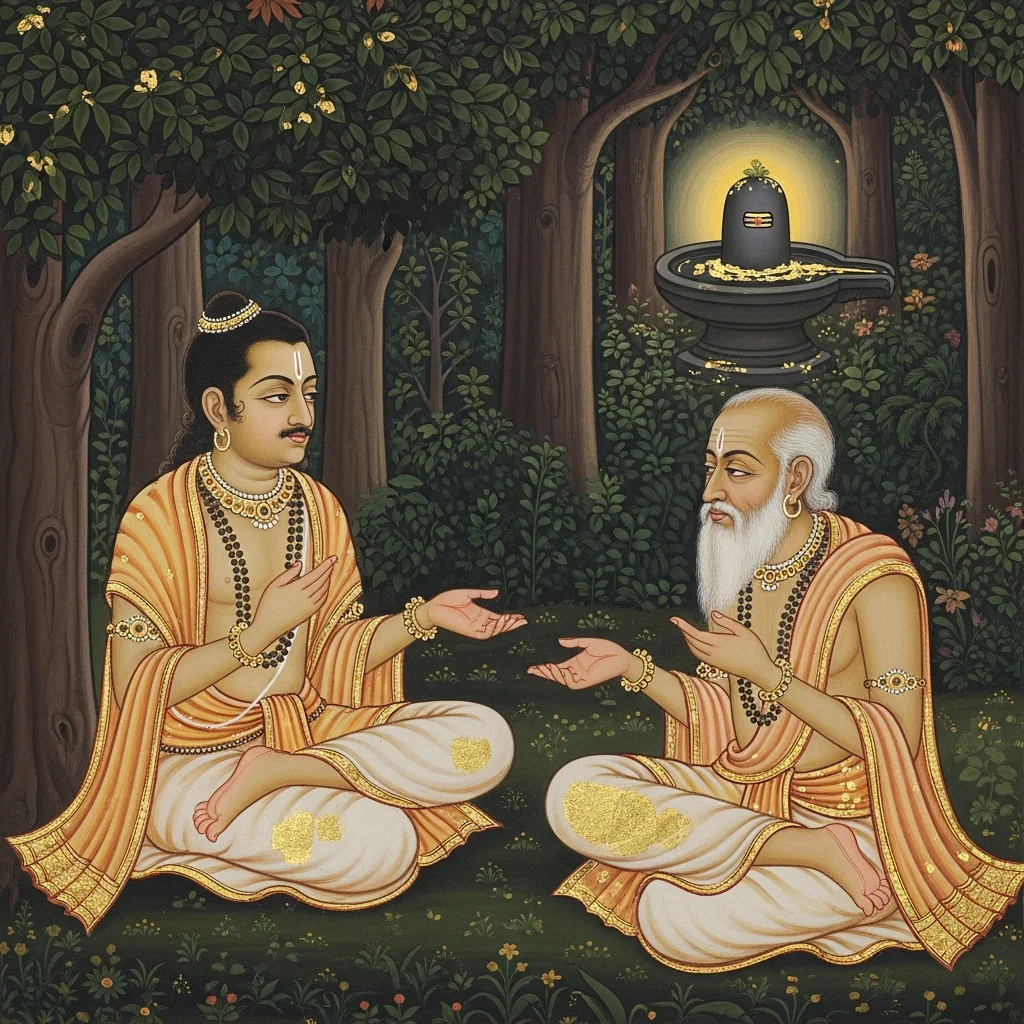
Arjuna questions Nārada after hearing earlier praise, asking for a fuller account of a crisis afflicting the earth and the deeper origin it suggests. Nārada introduces the model king Indradyumna, renowned for generosity, knowledge of dharma, and vast public works and gifts. Though his merit is immense, Brahmā commands him to return to earth: merit alone cannot uphold one’s heavenly standing without an unblemished, widely diffused fame across the three worlds (niṣkalmaṣā kīrti), for time (kāla) erodes remembrance. Indradyumna descends to find his name forgotten, seeks a long-lived witness, and is directed to Mārkaṇḍeya at Naimiṣāraṇya. Mārkaṇḍeya too cannot recall him, but points to his ancient friend Nāḍījaṅgha. Nāḍījaṅgha likewise does not remember Indradyumna, and explains his extraordinary longevity through a layered account: childhood wrongdoing involving a Śiva-liṅga set in a ghee vessel; later repentance and renewed worship by covering liṅgas with ghṛta, gaining Śiva’s favor and gaṇa-status; then a fall through pride and desire, an attempted abduction of the ascetic Gālava’s wife, a curse to become a crane (baka), and a mitigation—he will help restore a hidden reputation and thus share in Indradyumna’s eventual liberation. The chapter weaves kingship ethics, the metaphysics of time and fame, and the teaching that devotion must be joined to moral restraint.
Shlokas
Verse 1
अर्जुन उवाच । महीसागरमाहात्म्यमद्भुतं कीर्तितं त्वया । विस्मयः परमो मह्यं प्रहर्षश्चोपजायते
Arjuna said: “You have proclaimed the wondrous greatness of Mahīsāgara. In me, profound amazement arises, and joy is born as well.”
Verse 2
तदहं विस्तराच्छ्रोतुमिदमिच्छामि नारद । कस्य यज्ञे मही ग्लाना वह्नितापाभितापिता
“Therefore, O Nārada, I wish to hear this in full detail: in whose sacrifice was the Earth distressed, tormented by the scorching heat of fire?”
Verse 3
नारद उवाच । महादाख्यानमाख्यास्ये यथा जाता महीनदी । श्रृण्वन्नेतां कथां पुण्यां पुण्यमाप्स्यसि पांडव
Nārada said: “I shall relate the great narrative—how the river named Mahī came into being. By listening to this holy account, O Pāṇḍava, you will attain merit.”
Verse 4
पुराभूद्भूपतिर्भूमाविन्द्रद्युम्न इति श्रुतः । वदान्यः सर्वधर्मज्ञो मान्यो मानयिता प्रभुः
“In ancient times there was a king upon the earth, famed by the name Indradyumna—generous, knowing all dharma, worthy of honor, honoring others, and a true lord.”
Verse 5
उचितज्ञो विवेकस्य निवासो गुणसागरः । न तदस्ति धरापृष्ठे नगरं ग्रामपत्तनम्
“He knew what was fitting, was a dwelling-place of discernment, an ocean of virtues. There was no city, village, or market-town upon the earth…”
Verse 6
तदीयपूर्तधर्मस्य चिह्नेन न यदंकितम् । कन्यादानानि बहुधा ब्राह्मेण विधिना व्यधात्
No place remained unmarked by the signs of his public works of dharma. In many ways he performed kanyādāna—giving maidens in marriage—according to the Brāhma rite.
Verse 7
भूपालोऽसौ ददौ दानमासहस्राद्धनार्थिनाम् । दशमीदिवसे रात्रौ गजपृष्ठेन दुन्दुभिः
That king bestowed gifts upon supplicants—up to a thousand among those seeking wealth. On the night of the tenth lunar day (Daśamī), the dundubhi drum resounded from atop an elephant…
Verse 8
ताड्यते तत्पुरे प्रातः कार्यमेकादशीव्रतम् । यज्वना तेन भूपेन विच्छिन्नं सोमपायिनाम्
In that city, at dawn, the drum was beaten in proclamation: “The Ekādaśī vow is to be observed.” By that king, a performer of sacrifices, the custom of the Soma-drinkers was restrained (interrupted).
Verse 9
स्वरणैरास्तृता दर्भैर्द्व्यंगुलोत्सेधिता मही । गंगायां सिकता धारा वर्षतो दिवि तारकाः
The ground was spread with golden darbha-grass, raised by two finger-breadths; in the Gaṅgā there flowed a stream of sand, and in the sky the stars rained down.
Verse 10
शक्या गणयितुं प्राज्ञैस्तदीयं सुकृतं न तु । ईदृशैः सुकृतैरेष तेनैव वपुषा नृपः
The wise may count many things, yet they cannot measure the extent of his meritorious deeds. By such extraordinary merits, that king attained the divine state in that very same body.
Verse 11
धाम प्रजापतेः प्राप्तो विमानेन कुरूद्वह । बुभुजे स तदा भोगान्दुर्लभानमरैरपि
O best of the Kurus, borne in a celestial vimāna to Prajāpati’s abode, he then partook of delights difficult to attain even for the immortals.
Verse 12
अथ कल्पशतस्यांते व्यतीते तं महीपतिम् । प्राह प्रजापतिः सेवावसरायातमात्मनः
Then, when a hundred kalpas had passed, Prajāpati spoke to that king, who had come to him at the appointed time of service.
Verse 13
ब्रह्मोवाच । इंद्रद्युम्न द्रुतं गच्छ धरापृष्ठं नृपोत्तम । न स्तातव्यं मदीयेद्य लोके क्षणमपि त्वया
Brahmā said: “Indradyumna, O best of kings, go swiftly to the surface of the earth. Today you must not remain in my world even for a moment.”
Verse 14
इंद्रद्युम्न उवाच । कस्माद्ब्रह्मन्नितो भूमौ मां प्रेषयसि सम्प्रति । सति पुण्ये मदीये तु बहुले वद कारणम्
Indradyumna said: “O Brahmā, why do you now send me from here down to the earth? When my merit is still abundant, tell me the reason.”
Verse 15
ब्रह्मोवाच । न पुण्यं केवलं राजन्गुप्तं स्वर्गस्य साधकम् । विना निष्कल्मषां कीर्ति त्रिलोकीतलविस्तृताम्
Brahmā said: “O king, merit alone—especially when it remains hidden—does not by itself secure heaven, if it is without spotless fame spread across the three worlds.”
Verse 16
तव कीर्तिसमुच्छेदः सांप्रतं वसुधातले । संजातश्चिरकालेन गत्वा तां कुरु नूतनाम्
Now upon the earth, with the passing of a long age, your fame has been cut off. Go there and make that renown new again.
Verse 17
यदि वांछा महीपाल मम धामनि संस्थितौ
O king, if you desire to remain firmly established in my abode…
Verse 18
इन्द्रद्युम्न उवाच । मदीयं सुकृतं ब्रह्मन्कथं भूमौ भवेदिति । किं कर्तव्यं मया नैतन्मम चेतसि तिष्ठति
Indradyumna said: “O Brahmā, how could my merit be lost or altered upon the earth? What should I do? This does not find rest within my mind.”
Verse 19
ब्रह्मोवाच । बलवानेष भूपाल कालः कलयति स्वयम्
Brahmā said: “O king, mighty indeed is Time; Time itself brings all things to their measure and their end.”
Verse 20
ब्रह्मांडान्यपि मां चैव गणना का भवादृशाम् । तदेतदेव मन्येऽहं तव भूपाल सांप्रतम्
Even the countless cosmic eggs (universes)—and even I—are beyond the reckoning of one like you. Thus, O king, this is exactly what I deem to be your present condition.
Verse 21
यत्कीर्तिमात्मनो व्यक्तिं नीत्वाभ्येहि पुनर्दिवम् । शुश्रुवानिति वाचं स ब्रह्मणः पृथिवीपतिः
“Bearing with you your own fame and your manifest identity, come again to heaven.” Hearing these words of Brahmā, the lord of the earth—the king—listened in reverent awe.
Verse 22
पश्यतिस्म तथात्मानं महीतलमुपागतम् । कांपिल्यनगरे भूयः पप्रच्छात्मानमात्मना
Then he beheld himself come down upon the earth. Arriving again in the city of Kāmpilya, he questioned about himself, reflecting within his own mind.
Verse 23
नगरं स तदा देशमप्राक्षीदिति विस्मितः । जना ऊचुः । न जानीमो वयं भूपमिंद्रद्युम्नं न तत्पुरम्
Amazed, he asked about the city and the region. The people replied: “We do not know that king Indradyumna, nor do we know that city of his.”
Verse 24
यत्त्वं पृच्छसि भो भद्र कञ्चित्पृच्छ चिरायुषम् । इन्द्रद्युम्न उवाच । कः संप्रति धरापृष्ठे चिरायुः प्रथितो जनाः
They said: “Good sir, if you ask about this, then ask someone renowned for long life.” Indradyumna said: “Who, at present upon the earth’s surface, is famed among people as ‘the long-lived one’?”
Verse 25
पृथिवीजयराज्येस्मिन्यत्र प्रबूत मा चिरम् । जना ऊचुः । श्रूयते नैमिषारण्ये सप्तकल्पस्मरो मुनिः
In this realm of earth-conquest, where you believe you ruled not long ago, the people said: “It is heard that in Naimiṣāraṇya there is a sage who remembers seven kalpas.”
Verse 26
मार्कंडेय इति ख्यातस्तं गत्वा पृच्छ संशयम् । तथोपदिष्टस्तैर्गत्वा तत्र तं मुनिपुंगवम्
He is renowned as Mārkaṇḍeya—go to him and ask your doubt. Thus instructed by them, he went there to that foremost sage, a bull among munis.
Verse 27
निशम्य प्रणिपत्याह नृपः स्वहृदयस्थितम् । इंद्रद्युम्न उवाच । चिरायुर्भगवान्भूमौ विश्रुतः सांप्रतं ततः
Having heard, the king bowed down and spoke what was settled in his heart. Indradyumna said: “Therefore the venerable ‘Long-lived One’ is now renowned upon the earth.”
Verse 28
पृच्छाम्यहं भवान्वेत्ति इंद्रद्युम्नं नृपं न वा
I ask you: do you know King Indradyumna—or do you not?
Verse 29
श्रीमार्कंडेय उवाच । सप्तकल्पान्तरे नाभूत्कोपींद्रद्युम्नसंज्ञितः । भूपाल किमहं वच्मि तवान्यत्पृच्छ संशयम्
Śrī Mārkaṇḍeya said: “At the end of seven kalpas, there was no one at all known as Indradyumna. O king, what more can I say? Ask whatever other doubt you have.”
Verse 30
स निराशस्तदाकर्ण्य वचो भूपोग्निसाधने । समुद्योगं तदा चक्रे तं दृष्ट्वाह तदा मुनिः
Hearing those words about the king’s resolve to enter the fire, he fell into despair; yet then he set himself to act. Seeing him thus preparing, the sage spoke at once.
Verse 31
मार्कंडेय उवाच । मा साहसमिदं कार्षीर्भद्र वाचं श्रृणुष्व मे । एति जीवंतमानंदो नरं वर्षशतादपि
Mārkaṇḍeya said: “Do not commit this rash deed, O noble one; listen to my words. A man may live even for a hundred years, and yet still meet with sorrow.”
Verse 32
तत्करोमि प्रतीकारं तव दुःखोपशांतये । श्रृणु भद्र ममास्तीह बको मित्रं चिरंतनः
“I shall make a remedy to bring your sorrow to rest. Listen, O noble one: here I have an ancient friend—Baka.”
Verse 33
नाडीजंघ इति ख्यातः स त्वा ज्ञास्यत्यसंशयम् । तस्मादेहि द्रुतं यावदावां तत्र व्रजावहे
“He is renowned as Nāḍījaṅgha; without doubt he will recognize you. Therefore come quickly—let us both go there at once.”
Verse 34
परोपकारैकफलं जीवितं हि महात्मनाम् । यदि ज्ञास्यत्यसंदिग्धमिंद्रद्युम्नं स वक्ष्यति
“Indeed, for great souls, life bears a single fruit—service to others. If he knows Indradyumna with certainty, he will tell (us).”
Verse 35
तौ प्रस्थिताविति तदा विप्रेंद्रनृपपुंगवौ । हिमाचलं प्रति प्रीतौ नाडीजंघालयं प्रति
Then those two—the best of brāhmaṇas and the foremost of kings—set out with glad hearts toward Himācala, toward the dwelling of Nāḍījaṅgha.
Verse 36
बकोऽथ मित्रं स्वं वीक्ष्य चिरकालादुपागतम् । मार्कंडेयं ययौ प्रीत्युत्कंठितः सम्मुखं द्विजैः
Then Baka, seeing his own friend returned after a long time, went forth with affection, eager at heart, to meet Mārkaṇḍeya together with the brāhmaṇas.
Verse 37
कृतसंविदभूत्पूर्वं कुशलस्वागतादिना । पप्रच्छानंतरं कार्यं वदागमनकारणम्
After first exchanging greetings—inquiring after well-being and offering welcome—he then asked about the matter at hand: “Tell me the reason for your coming.”
Verse 38
मार्कंडेयोथ तं प्राह बकं प्रस्तुतमीप्सितम् । इंद्रद्युम्नं भवान्वेत्ति भूपालं पृथिवीतले
Then Mārkaṇḍeya said to Baka, stating his intended matter: “Do you know Indradyumna, the king upon the earth?”
Verse 39
एतस्य मम मित्रस्य तेन ज्ञातेन कारणम् । नो वायं त्यजति प्राणान्पुरा वह्निप्रवेशनात्
“For this friend of mine, the reason is known to you: this man will not relinquish his life—he is set on entering fire, as he had earlier resolved.”
Verse 40
एतस्य प्राणरक्षार्थं ब्रूहि जानासि चेन्नृपम्
If you know it, O king, tell me the means by which this man’s life may be protected.
Verse 41
नडीजंघ उवाच । चतुर्दश स्मराम्यस्मि कल्पान्विप्रेंद्र सांप्रतम् । आस्तां तद्दर्शनं वार्तामपि वा न स्मराम्यहम्
Nāḍījaṃgha said: “O best of brāhmaṇas, I now remember fourteen kalpas. But as for that—leave aside even seeing it—I do not remember even the report of it.”
Verse 42
इंद्रद्युम्नो महीपालः कोऽपि नासीन्महीतले । एतावन्मात्रमेवाहं जानामि द्विजपुंगव
No king named Indradyumna existed anywhere on the earth. This much alone I know, O bull among twice-born ones.
Verse 43
नारद उवाच । ततः स विस्मयाविष्टस्तस्यायुरिति शुश्रुवान् । पप्रच्छ राजा को हेतुर्दानस्य तपसोऽथ वा । यदायुरीदृशं दीर्घं संजातमिति विस्मितः
Nārada said: Then, astonished on hearing of his lifespan, the king asked: “What is the cause—charity or austerity, or something else—by which such a long life has arisen?”
Verse 44
नाडीजंघ उवाच । घृतकंबलमाहात्म्यान्मम देवस्य शूलिनः । दीर्घमायुरिदं विप्र शापाद्बकवपुः श्रृणु
Nāḍījaṃgha said: “O brāhmaṇa, by the greatness of Ghṛtakaṃbala—of my Lord, the trident-bearing Śiva—this long life has come to me. And due to a curse I have the form of a crane. Listen.”
Verse 45
पुरा जन्मन्यहं बालो ब्राह्मणस्याभवं भुवि । पाराशर्यसगोत्रस्य विश्वरूपस्य सन्मुनेः
In a former birth, while on earth, I was a young boy in the household of a brāhmaṇa—of the Parāśarya lineage—of the noble sage named Viśvarūpa.
Verse 46
बालको बक इत्येवं प्रतीतोऽतिप्रियः पितुः । चपलोऽतीव बालत्वे निसर्गादेव भद्रक
As a mere child I was known by the name “Baka,” and I was exceedingly dear to my father; and in childhood I was, by nature itself, very restless—O good one.
Verse 47
अथ मारकतं लिंगं देवतावसरात्पितुः । चापल्याद्वालभावाच्चापहृत्य निहितं मया
Then, taking advantage of the time of my father’s worship, I stole his crystal Śiva-liṅga, emerald-like in hue; and out of childish fickleness I hid it away.
Verse 48
घृतस्य कुंभे संक्रांतौ मकरस्योत्तरायणे । अथ प्रातर्व्यतीतायां निशि यावत्पिता मम
At the time of Makara-saṅkrānti, in the season of Uttarāyaṇa, when a pot of ghee had been set there, and when the night had passed into morning—until that time my father…
Verse 49
निर्माल्यापनयं चक्रे तावच्छून्यं शिवालयम् । निशम्य कांदिशीको मां पप्रच्छ मधुरस्वरम्
He began to remove the nirmālya, the previous day’s offerings; until then the Śiva-temple was empty. Hearing (something), Kāṃdiśīka addressed me in a sweet voice and questioned me.
Verse 50
वत्स क्व नु त्वया लिंगं नूनं विनिहितं वद । दास्यामि वांछितं यत्ते भक्ष्यमन्यत्तवेप्सितम्
“Dear child, tell me—where indeed have you surely placed the liṅga? Speak! I shall give you whatever you desire: food to eat, and anything else you wish for.”
Verse 51
ततो मया बालभावाद्भक्ष्यलुब्धेन तत्पितुः । घृतकुंभांतराकृष्य भद्रलिंगं समर्पितम्
Then I—childish and greedy for food—pulled it from inside his father’s pot of ghee and offered that auspicious liṅga.
Verse 52
अथ काले तु संप्राप्ते प्रमीतोऽहं नृपालये । जातो जातिस्मारस्तावदानर्ताधिपतेः सुतः
In due course I died in the king’s abode; then I was born as the son of the lord of Ānarta, endowed with memory of my former birth.
Verse 53
घृतकंबलमाहात्म्यान्मकरस्थे दिवाकरे । अपि बाल्यादवज्ञानात्संयोगाद्घृतलिंगयोः
By the greatness of the ‘ghṛta-kambala’—the worship of covering the liṅga with ghee—when the Sun was in Makara (Capricorn), even through childish heedlessness, by the mere contact of ghee and the liṅga…
Verse 54
ततः संस्थापितं लिंगं प्राग्जन्म स्मरता मया । ततः प्रभृति लिंगानि घृतेनाच्छादयाम्यहम्
Therefore, remembering my former birth, I established the liṅga; and from that time onward I cover the liṅgas with ghee as an act of worship.
Verse 55
पितृपैतामहं प्राप्य राज्यं शक्त्यनुरूपतः । ततः प्रसन्नो भगवान्पार्वतीपतिराह माम्
Having obtained my paternal and ancestral kingdom according to my capacity, then the Blessed Lord—the Consort of Pārvatī—being pleased, spoke to me.
Verse 56
पूर्वजन्मनि तुष्टोऽहं घृतकंबलपूजया । प्रयच्छाम्यस्मि त राज्यमधुनाभिमतं वृणु
In your former birth I was pleased by your worship through the ghṛta-kambala rite. Therefore I grant you sovereignty; now choose the boon you desire.
Verse 57
ततो मया वृतः प्रादाद्गाणपत्यं मदीप्सितम् । कैलासे मां शिवो नित्यं संतुष्टः प्राह चेति च
Then, when I made my choice, he granted me the desired lordship among the Gaṇas. On Kailāsa, Śiva—ever pleased—spoke to me thus as well.
Verse 58
तेनैव हि शरिरेण प्रणतं पुरतः स्थितम् । अद्यप्रभृति संक्रांतौ मकरस्यापरोपि यः
With that very same body, a devotee shall stand before (Śiva), bowed down in reverence. From today onward, on the Makara-saṅkrānti, whoever else (does so)…
Verse 59
घृतेन पूजां कर्तासौ भावी मम गणः स्फुटम् । इत्युक्त्वा मां शिवो भद्र गणकोटीश्वरं व्यधात्
“He will worship with ghee; clearly he shall become one of my Gaṇas.” Saying this, auspicious Śiva appointed me as Gaṇakoṭīśvara, a lord over a koṭi of Gaṇas.
Verse 60
प्रतीपपालकंनाम संस्थितं शिवशासनम् । ततः कामादिभिः षड्भिः पदैश्चंक्रमणात्मिकाम्
A Śaiva ordinance called “Pratīpapālaka” became established. Thereafter, driven by the six impulses beginning with desire, my very life turned into restless wandering—step after step.
Verse 61
निसर्गचपलां प्राप्य भ्रमरीमिव तां श्रियम् । नैवालमभवं तस्या धारणे दैवयोगतः
Having gained that fortune—fickle by nature like a roaming bee—I was not able to hold on to her, by the workings of destiny.
Verse 62
विचचार तदा मत्तः किलाहं वारणो यथा । कृत्याकृत्यविचारेण विमुक्तोऽतीव गर्वितः
Then I roamed about like a maddened elephant—freed from discernment of what should and should not be done, and swollen with pride.
Verse 63
विद्यामभिजनं लक्ष्मीं प्राप्य नीचनरो यथा । आपदां पात्रतामेति सिंधूनामिव सागरः
Just as a base man, upon gaining learning, noble birth, and wealth, becomes a vessel fit for calamities—so too the ocean, receiving the rivers, becomes their receptacle.
Verse 64
अथ काले व्यतिक्रांते कियन्मात्रे यदृच्छया । विचरन्नगमं शैलं हिमानीरुद्धकंदरम्
Then, after some time had passed, wandering by chance, I came to a mountain whose caves were blocked by sheets of snow.
Verse 65
तपस्यति मुनिस्तत्र गालवो भार्यया सह । सदैव तीव्रतपसा कृशो धमनिसंततः
There the sage Gālava was performing austerities along with his wife—ever emaciated by intense penance, his veins standing out.
Verse 66
ब्राह्मणस्य हि देहोयं नैवैहिकफलप्रियः । कृच्छ्राय तपसे चेह प्रेत्यानंतसुखाय च
For this body of a brāhmaṇa is not meant to delight in worldly rewards. It is for arduous austerity here, and after death, for endless bliss.
Verse 67
तस्य भार्याऽतिरूपेण विजिग्ये विश्ववर्णिनी । तन्वी श्यामा मृगाक्षी सा पीनोन्नतपयोधरा
His wife, adorned with beauty, seemed to surpass all women: slender, dark-complexioned, doe-eyed, with full and uplifted breasts.
Verse 68
हंसगद्गदसंभाषा मत्तमातंगगामिनी । विस्तीर्णजघना मध्ये क्षामा दीर्घशिरोरुहा
Her speech was soft and trembling like a swan’s; her gait like that of an intoxicated she-elephant. Broad-hipped, slender at the waist, she had long flowing hair.
Verse 69
निम्ननाभिर्विधात्रैषा निर्मिता संदिदृक्षुणा । विकीर्णमिव सौंदर्यमेकपात्रमिव स्थितम्
With a deep navel, she seemed fashioned by the Creator who wished to behold his own work—beauty as though scattered everywhere, yet gathered into a single vessel.
Verse 70
ततोऽविनीतस्तां वीक्ष्य भद्र गालववल्लभाम् । अहमासं शरव्रातैस्ताडितः पुष्पधन्विना । विवेकिनोऽपि मुनयस्तावदेव विवेकिनः
Then, undisciplined at heart, on seeing that auspicious maiden—dear to Gālava—I was struck by volleys of arrows shot by the Flower-bowed one, Kāma. Even sages endowed with discernment remain discerning only so long.
Verse 71
यावन्न हरिणाक्षीणामपांगविवरेक्षिताः । मया व्यवसितं चित्ते तदानीं तां जिहीर्षुणा
So long as I had not been pierced by the sidelong, corner-of-the-eye glances of doe-eyed maidens, my resolve remained firm within my heart; but when the desire to carry her away arose, that resolve began to waver.
Verse 72
इति चेति हरिष्यामि तपसा रक्षितां मुनेः । अस्याः कृते यदि शपेन्मुनिस्तत्र पराभवः
“If that be so, I shall take her away—even though she is guarded by the sage’s power of austerity.” Yet if the sage were to curse me on her account, ruin would surely be mine.
Verse 73
मम भावी भवेदेषा भार्या मृत्युरुतापि मे । तस्माच्छिष्यो भवाम्यस्य शुश्रूषानिरतो मुनेः
She may become my future wife—or she may even become my death. Therefore I shall become this sage’s disciple, steadfastly devoted to his service.
Verse 74
प्राप्यांतरं हरिष्यामि नास्य योग्येयमंगना । इति व्यवस्य विद्यार्थिमूर्तिमास्थाय गालवम्
“When I find an opening, I shall take her away; this woman is not fit for him.” Having resolved thus, he approached Gālava, assuming the guise of a student seeking sacred learning.
Verse 75
नमस्कृत्य वचोऽवोचमिति भाव्यर्थनोदितः । तथा मतिस्तथा मित्रं व्यवसायस्तथा नृणाम्
Having bowed in reverence, I spoke—urged on by the aim I had set within. For in men, such is the mind, such the companions they choose, and such the undertakings they pursue.
Verse 76
भवेदवश्यं तद्भावि यथा पुंभिः पुरा कृतम् । विवेकवैराग्ययुतो भगवंस्त्वासमुपस्थितः
What is destined surely comes to pass, just as the deeds of men in former times bear their fruit. O Blessed One, endowed with discernment and dispassion, I have approached you.
Verse 77
शिष्योऽहं भवता पाठ्यं कर्णधारं महामुनिम् । अपारपारदं विष्णुं विप्रमूर्तिमुपाश्रितम्
I am your disciple—teach me, O great sage, my helmsman across the shoreless ocean: Viṣṇu, who carries beings beyond the farther shore, and who is here approached in the form of a brāhmaṇa.
Verse 78
नमस्ये चेतनं ब्रह्मा प्रत्यक्षं गालवाख्यया । अविद्याकृष्णसर्पेण दष्टं तद्विषपीडितम्
I bow to the conscious Supreme Reality, manifest before me as the one named Gālava. Bitten by the black serpent of ignorance, I am tormented by its poison.
Verse 79
उपदेशमहामंत्रैर्मां जांगुलिक जीवय । महामोहमहा वृक्षो हृद्यावापसमुत्थितः
Revive me with the great mantras of instruction, O serpent-charmer. A mighty tree of great delusion has sprung up from the seed-bed within my heart.
Verse 80
त्वद्वाक्यतीक्ष्णधारेण कुठारेण क्षयं व्रजेत् । अपवर्गपथव्यापी मूढसंसर्गसेचनः
May the watering of my folly—born of keeping company with the deluded—be cut down and brought to ruin by the axe whose keen edge is your instruction, so that the path to liberation (apavarga, mokṣa) may be cleared and spread before me.
Verse 81
छिद्यतां सूत्रधारेण विद्यापरशुनाधुना । भजामि तव शिष्योऽहं वरिवस्यापरश्चिरम्
Let it be cut away now by the guiding thread and by the axe of true knowledge. I take refuge in you as your disciple; for long I served only outward worship, not the higher inner discipline.
Verse 82
समिद्दर्भान्मूलफलं दारूणि जलमेव च । आहरिष्येऽनुगृह्णीष्व विनीतं मामुपस्थितम्
I shall bring firewood, darbha grass, roots and fruits, logs, and water as well. Please show favor to me—humble and standing ready in attendance.
Verse 83
इत्थं पुरा बकाभिख्यं बकवृत्तिमुपाश्रितम् । तदाऽर्जवे कृतमतिरनुजग्राह मां मुनिः
Thus, in former times, I—known as ‘Baka’ and living by the conduct of a crane—was shown grace by the sage when my resolve turned toward straightforward honesty.
Verse 84
ततोऽतीव विनीतोऽहं भूत्वा तं ब्राह्मणीयुतम् । विश्वासनाय सुदृढं तोषयामि दिनेदिने
Thereafter, becoming exceedingly humble, I pleased him day by day—he who was accompanied by his brāhmaṇī wife—so as to establish firm trust.
Verse 85
स च जानन्मुनिः पत्नीं पात्रभूतामविश्वसन् । स्त्रीचरित्रविदंके तां विधाय स्वपिति द्विजः
Yet the sage—though knowing his wife to be worthy—did not fully trust; aware of the ways of the world, the twice-born placed her upon his lap and slept.
Verse 86
अथान्यस्मिन्दिने साभूद्ब्राह्मण्यथ रजस्वला । तद्दूरशायिनी रात्रौ विश्वासान्मे तपस्विनी
Then, on another day, the brāhmaṇī began her courses; and at night, trusting me, that ascetic woman lay apart, at a distance.
Verse 87
इदमन्तरमित्यंतर्विचिंत्याहं प्रहर्षितः । मलिम्लुचाकृतिर्भूत्वा निशीथे तामथाहरम्
Thinking inwardly, “This is my opportunity,” I rejoiced; taking the form of a malimluca (a vile outcaste, a robber), at midnight I carried her off.
Verse 88
विललाप तदा बाला ह्रियमाणा मयोच्चकैः । मैवं मैवमिति ज्ञात्वा मां स्वरेणाब्रवीन्मुनिम्
Then the young woman wailed as I carried her off by force. Recognizing me, she cried out in alarm, “Don’t! Don’t!” and called to the sage in her own voice.
Verse 89
बकवृत्तिरयं दुष्टो धर्मकंचुकमाश्रितः । हरते मां दुराचारस्तस्मात्त्वं त्राहि गालव
She cried, “This wicked one follows the ‘crane’s conduct’—a hypocrite cloaked in the garb of dharma. The evil-doer is abducting me; therefore, O Gālava, protect me!”
Verse 90
तव शिष्यः पुरा भूत्वा कोप्वेषोद्य मलिम्लुचः । मां जिहीर्षति तद्रक्ष शरण्य शरणं भव
“Though once your disciple, this vile malimluca—now wrapped in anger—seeks to seize me. Protect me from him; O refuge of the helpless, become my shelter.”
Verse 91
तद्वाक्यसमकालं स प्रबुद्धो गालवो मुनिः । तिष्ठतिष्ठेति मामुक्त्वा गतिस्तम्भं व्यधान्मम
At that very moment the sage Gālava awoke; saying to me, “Stop, stop!”, he checked my motion and rendered my going powerless.
Verse 92
ततश्चित्राकृतिरहं स्तम्भितो मुनिनाऽभवम् । व्रीडितं प्रविशामीव स्वांगानि किल लज्जया
Then, made into a strange and distorted form, I was immobilized by the sage; and from shame it was as though I wished to shrink and enter into my own limbs.
Verse 93
ततः प्रकुपितः प्राह मामभ्येत्याथ गालवः । तद्वज्रदुःसहं वाक्यं येनाहमभवं बकः
Then Gālava, enraged, came up to me and spoke those thunderbolt-like, unbearable words—by which I became a crane.
Verse 94
गालव उवाच । बकवृत्तिमुपाश्रित्य वंचितोऽहं यतस्त्वया । तस्माद्बकस्त्वं भविता चिरकालं नराधम
Gālava said: “Because, resorting to the conduct of a crane, you deceived me—therefore you shall become a crane for a long time, O vilest of men.”
Verse 95
इति शप्तोऽहमभवं मुनिनाऽधर्ममाश्रितः । परदारोपसेवार्थमनर्थमिममागतः
Thus, cursed by the sage, I became one who had taken refuge in adharma; and in pursuit of consorting with another man’s wife, I fell into this calamity.
Verse 96
न हीदृशमनायुष्यं लोके किंचन विद्यते । यादृशं पुरुषस्येह परदारोपसेवनम्
In this world there is nothing so ruinous to a man’s life and well-being as consorting with another man’s wife.
Verse 97
ततः सती सा मत्स्पर्शदूषितांगी तपस्विनी । मया विमुक्ता स्नात्वा मां तथैवानुशशाप ह
Then that virtuous ascetic woman—her body defiled by my touch—once released by me, bathed, and in the same manner pronounced a curse upon me.
Verse 98
एवं ताभ्यामहं शप्तो ह्यश्वत्थपर्णवद्भयात् । कंपमानः प्रणम्योभाववोचं तत्र दम्पती
Thus cursed by both of them, trembling in fear like a leaf of the aśvattha tree, I bowed down and spoke there to that husband and wife.
Verse 99
गणोऽहमीश्वरस्यैव दुर्विनीततरो युवाम् । निरोधमेवं कुरुतं भगवंतावनुग्रहम्
“I am indeed a gaṇa of Īśvara, though I have become exceedingly ill-disciplined. O revered couple, show me favor—restrain this fault in this manner.”
Verse 100
वाचि क्षुरो नावनीतं हृदयं हि द्विजन्मनाम् । प्रकुप्यंति प्रसीदंति क्षणेनापि प्रसादिताः
In speech, the twice-born can be like a razor—yet their hearts are not without butter-like softness. They may flare up, and they may be pacified; once appeased, even in a moment, they become gracious again.
Verse 101
त्वयि विप्रतिपन्नस्य त्वमेव शरणं मम । भूमौ स्खलितपादानां भूमिरेवावलंबनम्
For me, bewildered and at a loss, You alone are my refuge. As for those whose feet slip upon the earth, the earth itself becomes the support by which they rise again.
Verse 102
गणाधिपत्यमपि मे जातं परिभवास्पदम् । विषदंता हि जायन्ते दुर्विनीतस्य सम्पदः
Even lordship over the Gaṇas became for me a ground of humiliation. For the undisciplined, prosperity itself arises bearing poison-fangs.
Verse 103
विदुरेष्यद्धियाऽपायं परतोऽन्ये विवेकिनः । नैवोभयं विदुर्नीचा विनाऽनुभवमात्मनः
The discerning know danger even as it approaches, and others understand it after it has occurred. But the base-minded know neither—unless they themselves undergo the experience.
Verse 104
दुर्वीनीतः श्रियं प्राप्य विद्यामैश्वर्यमेव वा । न तिष्ठति चिरं स्थाने यथाहं मदगर्वितः
An undisciplined person, having attained fortune—or learning, or lordly power—does not remain long in a stable station, just as I, intoxicated with pride, did not endure.
Verse 105
विद्यामदो धनमदस्तृतीयोऽभिजनो मदः । एते मदा मदांधानामेत एव सतां दमाः
Pride of learning, pride of wealth, and third, pride of noble birth—these are the intoxications that blind the intoxicated. Yet these very things become disciplines of self-restraint for the virtuous.
Verse 106
नोदर्कशालिनी बुद्धिर्येषामविजितात्मनाम् । तैः श्रियश्चपला वाच्यं नीयंते मादृशैर्जनैः
Those who have not conquered themselves do not possess a discerning, far-seeing intellect. By such people, fickle prosperity is inevitably drawn away—just as it befell one like me.
Verse 107
तत्प्रसीद मुनिश्रेष्ठ शापांतं मेऽधुना कुरु । दुर्विनीतेष्वपि सदा क्षमाचारा हि साधवः
Therefore be gracious, O best of sages—now bring my curse to an end. For the good are ever devoted to forgiveness, even toward the ill-disciplined.
Verse 108
इत्थं वचसि विज्ञप्ते विनीतेनापि वै मया । प्रसादप्रवणो भूत्वा शापांतं मे तदा व्यधात्
When I—who had now become humble—addressed him thus, he, inclined to compassion, then ordained the ending of my curse.
Verse 109
गालव उवाच । छन्नकीर्तिसमुद्धारसहायस्त्वं भविष्यसि । यदेन्द्रद्युम्नभूपस्य तदा मोक्षमवाप्स्यसि
Gālava said: You will become a helper in restoring the fame of Channakīrti. And when you aid King Indradyumna, then you will attain liberation.
Verse 110
इत्यहं मुनिशापेन तदाप्रभृति पर्वते । हिमाचले बको भूत्वा काश्यपेयो वसामि च
“Thus, by a sage’s curse, from that time onward I have dwelt on the mountain Himācala; becoming a crane, I—Kāśyapeya—continue to live here.”
Verse 111
राज्यं चिरायुरिति मे घृतकम्बलस्य जातिस्मरत्वमधुनापि तथानु भावान् । शापाद्बकत्वमभवन्मुनिगालवस्य तद्भद्र सर्वमुदितं भवताद्य पृष्टम्
“Kingship” and “long life”—such were my experiences as Ghṛtakambala; even now I remember those births and their effects. By the curse of the sage Gālava, I became a crane. O noble one, I have now told you all that you asked.”