Adhyaya 64
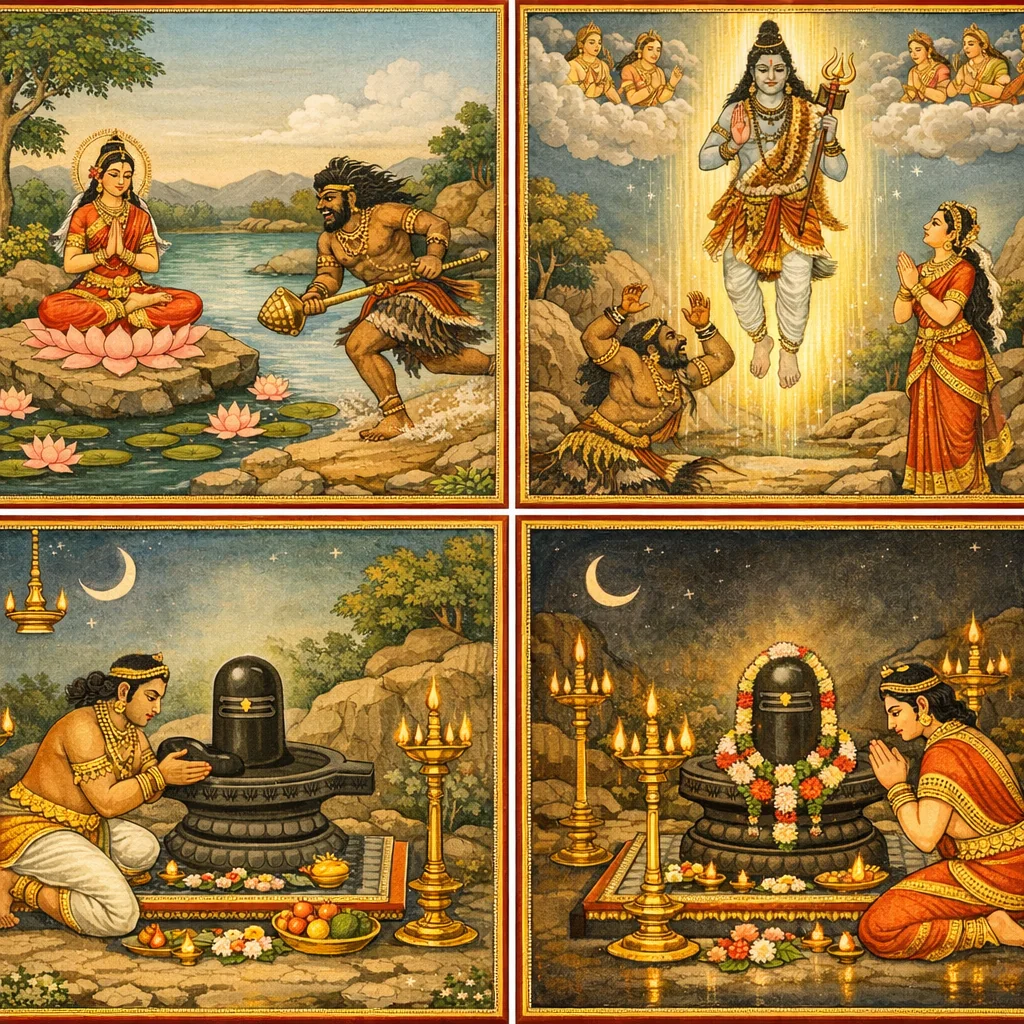
Chapter 64 recounts an ethical and ritual dispute at the consecrated Devī-kuṇḍa during the Pāṇḍavas’ pilgrimage in exile after the dice game. Arriving weary with Draupadī at Caṇḍikā’s sacred place, Bhīma—overcome by thirst—steps into the kuṇḍa to drink and wash, despite Yudhiṣṭhira’s warning about proper conduct. A guardian figure named Suhṛdaya rebukes him, declaring the water reserved for divine bathing; one should wash the feet outside and never defile consecrated waters, for carelessness at a tīrtha bears grave moral consequence according to śāstra. Bhīma answers with a practical defense grounded in bodily need and the general injunction to bathe at holy places. The quarrel turns to combat; Bhīma is subdued by the extraordinarily strong Bārbarīka, who tries to hurl him into the sea. Divine oversight intervenes: Rudra commands Bārbarīka to release Bhīma, reveals a kinship/patriarchal bond, and frames the clash as an error born of ignorance. Stricken with remorse, Bārbarīka seeks self-destruction, but Devī-associated goddesses restrain him, cite śāstric principles about unintended fault, and foretell his eventual death at Kṛṣṇa’s hands as a higher, divinely sanctioned end. The episode closes with reconciliation, renewed tīrtha bathing by the Pāṇḍavas, and Bhīma’s स्थापना of the Bhīmeśvara liṅga. A vrata on Kṛṣṇapakṣa Caturdaśī in Jyeṣṭha is indicated, promising purification from birth-linked faults; the liṅga is praised as equal in fruit to other eminent liṅgas and as a remover of sins.
Shlokas
Verse 1
एवं तत्र स्थिते तीरे देव्याराधनतत्परे । सप्तलिंगार्चनरते भीमनन्दननन्दने
Thus he remained on that riverbank, intent on worship of the Goddess Devī, rejoicing in the adoration of seven liṅgas; Barbarīka, Bhīma’s grandson, continued to stay there.
Verse 2
ततः कालेन केनापि पांडवा द्यूतनिर्जिताः । तत्राजग्मुश्च क्रमतस्तीर्थस्नानकृते भुवम्
Then, after some time, the Pāṇḍavas—defeated in the game of dice—came there in due course, wandering the land to bathe at sacred tīrthas.
Verse 3
प्रागेव चंडिकां देवीं क्षेत्रादीशानतः स्थिताम् । आसेदुर्मार्गखिन्नास्ते द्रौपदीपंचमास्तदा
First they approached Caṇḍikā Devī, who was situated to the northeast of that sacred precinct. Wearied by the journey, they arrived there then, with Draupadī as the fifth among them.
Verse 4
तत्रैव चोपविष्टोऽभूत्तदानीं चंडिकागणः । बर्बरीकश्च तान्वीरान्समायातानपश्यत
Right there, at that time, Caṇḍikā’s attendant band was seated. And Barbarīka saw those heroes as they arrived.
Verse 5
परं नासौ वेद पाण्डून्पाण्डवास्तं च नो विदुः । आजन्म यस्मान्नैवाभूत्पाण्डूनां चास्य संगमः
Indeed, he did not know Pāṇḍu, and the Pāṇḍavas too did not know him; for from birth there had never been any meeting between him and Pāṇḍu’s sons.
Verse 6
ततः प्रविश्य वै तस्मिन्देवीमासाद्य पांडवाः । पिंडकाद्यं तत्र मुक्त्वा तृषा प्रैक्षि जलं तदा
Then, entering that place and approaching the Goddess, the Pāṇḍavas set down their piṇḍa-offerings and the like there; and, tormented by thirst, they then looked about for water.
Verse 7
ततो भीमः कुण्डमध्यं जलं पातुं विवेश ह । प्रविशंतं च तं प्राह युधिष्ठिर इदं वचः
Then Bhīma entered the middle of the pond to drink water. As he was stepping in, Yudhiṣṭhira spoke these words to him.
Verse 8
उद्धृत्य भीम तोयं त्वं पादौ प्रक्षाल्य भो बहिः । ततः पिबाऽन्यथा दोषो महांस्त्वामुपपत्स्यते
“O Bhīma, draw the water out and wash your feet outside; then drink. Otherwise a great fault will befall you.”
Verse 9
एतद्राज्ञो वचो भीमस्तृषा व्याकुललोचनः । अश्रुत्वैव विवेशासौ कुण्डमध्ये जलेच्छया
Bhīma, his eyes distressed with thirst, did not heed the king’s words; driven by desire for water, he entered right into the middle of the pond.
Verse 10
स च दृष्ट्वा जलं पातुं तत्रैव कृतनिश्चयः । मुखं हस्तौ च चरणौ क्षालयामास शुद्धये
Seeing the water and resolved to drink then and there, he washed his face, hands, and feet in it, thinking to become pure.
Verse 11
यतः पीतं जलं पुंसामप्रक्षाल्य च यद्भवेत् । प्रेताः पिशाचास्तद्रूपं संक्रम्य प्रपिबंति तत्
For when a man drinks water without first washing as is proper, pretas and piśācas take on that very form and drink it, as though through him.
Verse 12
एवं प्रक्षालयाने च पादौ तत्र वृकोदरे । उपरिस्थस्तदा प्राह सत्यं सुहृदयो वचः
As Vṛkodara was washing his feet there, one standing above spoke then—truthful words, born of goodwill.
Verse 13
दुर्मते भोः किमेतत्त्वं कुरुषे पापनिश्चयः । देवीकुण्डे क्षालयसि मुखं पादौ करौ च यत्
“O foolish-minded one! What is this you do with sinful intent—washing your face, your feet, and your hands in the Devī-kuṇḍa?”
Verse 14
यतो देवी सदानेन जलेन स्नाप्यते मया । दत्र प्रक्षिपंस्तोयं मलपापान्न बिभ्यसि
“For with this very water I always bathe the Goddess. Yet you, as you wash and cast into it, do you not fear impurity and sin!”
Verse 15
मलाक्ततोयं यन्नाम अस्पृश्यं तन्नरैरपि । कुतो देवैश्च तत्पापं स्पृश्यते तत्त्वतो वद
Tell me the truth: if some water is said to be smeared with filth and thus untouchable even for humans, how could that sin be touchable by the gods at all?
Verse 16
शीघ्रं च त्वं निःसरास्मात्कुण्डाद्भूत्वा बहिः पिब । यद्येवं पाप मूढोऽसि तीर्थेषु भ्रमसे कुतः
Quickly come out of this pond, and drink the water only from outside. If you are such a sinful fool, why do you wander at all among the sacred tīrthas?
Verse 17
भीम उवाच । किमेतद्भाषसे क्रूर परुषं राक्षसाधम । यतस्तोयानि जंतूनामुपभो गार्थमेव हि
Bhīma said: Why do you speak such cruel and harsh words, O lowest of rākṣasas? Water truly exists for the use and sustenance of living beings.
Verse 18
तीर्थेषु कार्यं स्नानं चेत्युक्तं मुनिवरैरपि । अंगप्रक्षालनं स्नानमुक्तं मां निंदसे कुतः
Even the foremost sages have declared that bathing should be done at the tīrthas. And “bathing” has been defined as washing the limbs—so why do you revile me?
Verse 19
यदि न क्रियते पानमंगप्रक्षालनं तथा । तत्किमर्थं पूर्तधर्माः क्रियन्ते धर्मशालिभिः
If drinking and the washing of the limbs are not to be done, then for what purpose do the righteous perform works of public merit (pūrta-dharma) at all?
Verse 20
सुहृदय उवाच । स्नातव्यं तीर्थमुख्येषु सत्यमेतन्न संशयः । चरेषु किं तु संविश्य स्थावरेषु बहिः स्थितः
Suhṛdaya said: It is true—without doubt—one should bathe in the foremost tīrthas. Yet in moving waters one may enter; but in still waters one should remain outside.
Verse 21
स्थावरेष्वपि संविश्य तन्न स्नानं विधीयते । न यत्र देवस्नानार्थं भक्तैः संगृह्यते जलम्
Even if one enters still waters, that is not the bathing that is enjoined—especially where devotees have gathered water for bathing the Deity.
Verse 22
यच्च हस्तशतादूर्ध्वं सरस्तत्र विधीयते । संवेशेऽपि क्रमश्चायं पादौ प्रक्षाल्य यद्बहिः
And when a lake lies beyond a hundred hastas, bathing there is sanctioned. Yet even then, the proper sequence is this: remain outside and first wash the feet.
Verse 23
ततः स्नानं प्रकर्तव्यमन्यथा दोष उच्यते । किं न श्रुतस्त्वया प्रोक्तः श्लोकः पद्मभुवा पुरा
Only then should bathing be performed; otherwise a fault is declared. Have you not heard the verse spoken long ago by Padmabhū (Brahmā)?
Verse 24
मलं मूत्रं पुरीषं च श्लेष्म निष्ठीनाश्रु च । गंडूषाश्चैव मुञ्चति ये ते ब्रह्महणैः समाः
Those who discharge filth, urine, feces, phlegm, spittle, tears, and also mouth-rinsings into such sacred waters are deemed equal to slayers of a brāhmaṇa.
Verse 25
तस्मान्निःसर शीघ्रं त्वं यद्येवमजितेन्द्रियः । तत्किमर्थं दुराचार तीर्थेष्वटसि बालिश
Therefore, come out quickly—if your senses are indeed unconquered. Why then, you wicked-minded fool, do you wander about among the tīrthas, the sacred fords?
Verse 26
यस्य हस्तौ च पादौ च मनश्चैव सुसंयतम् । निर्विकाराः क्रियाः सर्वाः स हि तीर्थफलं लभेत्
He whose hands and feet—and indeed whose mind—are well restrained, and whose every action is free from agitation and distortion, he truly obtains the fruit of the sacred tīrthas.
Verse 27
भीम उवाच । अधर्मो वापि धर्मोऽस्तु निर्गंतुं नैव शक्नुयाम् । क्षुधा तृषा मया नित्यं वारितुं नैव शक्यते
Bhīma said: “Whether it be unrighteousness or righteousness, I am unable to refrain from going forth. Hunger and thirst—ever present in me—cannot be held back.”
Verse 28
सुहृदय उवाच । जीवितार्थे भवान्कस्मात्पापं प्रकुरुते वद । किं न श्रुतस्त्वया श्लोकः शिबिना यः समीरितः
Suhṛdaya said: “Tell me—why, for the sake of mere survival, do you commit sin? Have you not heard the verse proclaimed by King Śibi?”
Verse 29
मुहूर्तमपि जीवेत नरः शुक्लेन कर्मणा । न कल्पमपि जीवेत लोकद्वयविरोधिना
Let a man live even for a single moment by pure action; but let him not live even for an aeon by deeds that oppose both worlds (this world and the next).
Verse 30
भीम उवाच । काकारवेण ते मह्यं कर्णौ बधिरतां गतौ । पास्याम्येव जलं चात्र कामं विलप शुष्य वा
Bhīma said: “By your crow-like cawing, my ears have gone deaf. I will drink the water here anyway—cry as you wish, or dry up if you like.”
Verse 31
सुहृदय उवाच । क्षत्रियाणां कुले जातस्त्वहं धर्माभिरक्षिणाम् । तस्मात्ते पातकं कर्तुं न दास्यामि कथंचन
Suhṛdaya said: “I am born in the lineage of Kṣatriyas, the protectors of Dharma. Therefore, I will never allow you to commit this sin in any way.”
Verse 32
तद्वराकाथ शीघ्रं त्वमस्मात्कुंडाद्विनिःसर
"Therefore, O wretched one, come out of this pond immediately!"
Verse 33
इष्टकाशकलैः शीघ्रं चूर्णयिष्येऽन्यथा शिरः । इत्युक्त्वा चेष्टकां गृह्य मुमोच शिरसः प्रति
“Otherwise, I will quickly smash your head to powder with pieces of brick.” Saying this, he grabbed a brick and threw it at his head.
Verse 34
भीमश्च वंचयित्वा तामुत्प्लुत्य बहिराव्रजत् । भर्त्सयंतौ ततश्चोभावन्योन्यं भीमविक्रमौ
Bhīma, evading him, leapt up and emerged. Then both of them, possessing terrible prowess, began to revile each other.
Verse 35
युयुधाते प्रलंबाभ्यां बाहुभ्यां युद्धपारगौ । व्यूढोरस्कौ दीर्घभुजौ नियुद्धकुशलावुभौ
Those two masters of combat fought with their long arms; both were broad-chested, long-armed, and skilled in wrestling.
Verse 36
मुष्टिभिः पार्ष्णिघातैश्च जानुभिश्चाभिजघ्नतुः । ततो मुहूर्तात्कौरव्यः पर्यहीयत पांडवः
They struck one another with fists, heel-blows, and knees. Soon the Kaurava gained the upper hand, and the Pāṇḍava began to weaken.
Verse 37
हीयमानस्ततो भीम उद्यतोऽभूत्पुनः पुनः । अहीयत ततोऽप्यंग ववृधे बर्बरीककः
As Bhīma was being worn down, he rose up again and again. Yet even so, O dear one, he kept losing ground, while Barbarīka only grew stronger.
Verse 38
ततो भीमं समुत्पाट्य बर्बरीको बलादिव । निष्पिपेष ततः क्रुद्धस्तदद्भुतमिवाभवत्
Then Barbarīka, as if by sheer force alone, tore Bhīma up and, enraged, crushed him—an act that seemed utterly astonishing.
Verse 39
मूर्छितं चैवमादाय विस्फुरन्तं पुनःपुनः । सागराय प्रचलितः क्षेप्तुं तत्र महांभसि
Taking him up in that fainted state, even as he kept twitching again and again, he set out toward the ocean, intending to hurl him there into the vast waters.
Verse 40
ददृशुः पांडवा नैतद्देव्या नयनयंत्रिताः
The Pāṇḍavas did not see this—as though the Goddess herself had held them back, restraining their sight.
Verse 41
तथा गृहीते कुरुवीरमुख्ये वीरेण तेनाद्भुतविक्रमेण । आश्चर्यमासीद्दिवि देवतानां देवीभिराकाशतले निरीक्ष्य तम्
When that foremost hero among the Kurus was seized by that warrior of wondrous prowess, the gods in heaven were filled with amazement, and the goddesses too watched him from the expanse of the sky.
Verse 42
सागरस्य ततस्तीरे बर्बरीकं गतं तदा । निरीक्ष्य भगवान्रुद्रो वियत्स्थः समभाषत
Then, when Barbarīka had reached the shore of the ocean, the Blessed Rudra—stationed in the sky—looked on and spoke.
Verse 43
भोभो राक्षसशार्दूल बर्बरीक महाबल । मुंचैनं भरतश्रेष्ठं भीमं तव पितामहम्
“Ho there, tiger among rākṣasas—Barbarīka of great strength! Release this Bhīma, the best of the Bharatas—your own grandfather.”
Verse 44
अयं हि तीर्थयात्रायां विचरन्भ्रातृभिर्युतः । कृष्णया चाप्यदस्तीर्थं स्नातुमेवाभ्युपाययौ
“For he is traveling on pilgrimage, accompanied by his brothers and by Kṛṣṇā as well; he has come to this sacred ford specifically to bathe.”
Verse 45
सम्मानं सर्वथा तस्मादर्हः कौरवनंदनः । अपापो वा सपापो वा पूज्य एव पितामहः
Therefore, O son of the Kuru line, he is in every way worthy of honor. Whether free from sin or burdened with sin, a grandfather is to be revered all the same.
Verse 46
सूत उवाच । इति रुद्रवचः श्रुत्वा सहसा तं विमुच्य सः । न्यपतत्पादयोर्हा धिक्कष्टं कष्टं च प्राह सः
Sūta said: Having heard these words of Rudra, he at once released him, fell at his feet, and cried, “Alas! Fie upon this misery—how dreadful, how dreadful!”
Verse 47
क्षम्यतां क्षम्यतां चेति पुनः पुनरवोचत । शिरश्च ताडयन्स्वीयं रुरोद च मुहुर्मुहुः
Again and again he pleaded, “Forgive me, forgive me,” striking his own head and weeping repeatedly.
Verse 48
तं तथा परिशोचंतं मुह्यमानं मुहुर्मुहुः । भीमसेनः समालिंग्य आघ्राय च वचोऽब्रवीत्
Seeing him grieving like that and repeatedly losing composure, Bhīmasena embraced him, smelled his head in affection, and then spoke to him.
Verse 49
वयं त्वां नैव जानीमस्त्वं चास्माञ्जन्मकालतः । अत्र वासश्च ते पुत्र भैमेः कृष्णाच्च संश्रुतः
“We did not recognize you at all, and you too have not known us since birth. But, dear son, your residence here has been promised—on Bhīma’s behalf and also by Kṛṣṇā.”
Verse 50
परं नो विस्मृतं सर्वं नानादुःखैः प्रमुह्यताम् । दुःखितानां यतः सर्वा स्मृतिर्लुप्ता भवेत्स्फुटम्
“Moreover, everything has slipped from our memory, for we are overwhelmed by many kinds of sorrow. Indeed, for the afflicted, all recollection clearly becomes lost.”
Verse 51
तदस्माकमिदं दुःखं सर्वकालविधानतः । मा शोचस्त्वं च तनय न ते दोषोऽस्ति चाण्वपि
This sorrow of ours has come by the ordinance of Time. Do not grieve, my son—there is not even the slightest fault in you.
Verse 52
यतः सर्वः क्षत्रियस्य दंड्यो विपथिसंस्थि तः । आत्मापिदंड्यः साधूनां प्रवृत्तः कुपथाद्यदि
For anyone who stands upon a wrong path is punishable by a kṣatriya; even one’s own self becomes punishable in the sight of the righteous if it turns toward an evil course.
Verse 53
पितृमातृसुहृद्भ्रातृपुत्रादीनां किमुच्यते । अतीव मम हर्षोऽयं धन्योहं पूर्वजाश्च मे
What then need be said of fathers, mothers, friends, brothers, sons, and the rest? Great indeed is my joy; blessed am I—and blessed too are my forebears.
Verse 54
यस्य त्वीदृशकः पौत्रो धर्मज्ञो धर्मपालकः । वरार्हस्त्वं प्रशंसार्हो भवान्येषां सतां तथा
He whose grandson is such—one who knows dharma and protects dharma—he is worthy of the best honors and deserving of praise, as are all such righteous persons.
Verse 55
तस्माच्छोकं विहायेमं स्वस्थो भवि तुमर्हसि
Therefore, abandoning this grief, you should become composed and well again.
Verse 56
बर्बरीक उवाच । पापं मां ताततात त्वं ब्रह्मघ्नादपि कुत्सितम् । अप्रशस्यं नार्हसीह द्रष्टुं स्प्रष्टुमपि प्रभो
Barbarīka said: O revered father—indeed, O grandfather—I am a sinner, more contemptible even than a slayer of a brāhmaṇa. I am blameworthy; O Lord, you should not even look upon me here, much less touch me.
Verse 57
सर्वेषामेव पापानां निष्कृतिः प्रोच्यते बुधैः । पित्रोरभक्तस्य पुनर्निष्कृतिर्नैव विद्यते
The wise declare that expiation is taught for every sin; but for one who is devoted to neither father nor mother, no expiation is found again.
Verse 58
तद्येन देहेन मया ताततातोऽभिपीडितः । तत्त्वमेव समुत्स्रक्ष्ये महीसागरसंगमे
With that very body by which I oppressed my father and grandfather, with that alone I shall cast myself away at the confluence of land and ocean.
Verse 59
मैवं भवेयमन्येषु अपि जन्मसु पातकी । न मामस्मादभिप्रायादर्हः कोऽपि निवर्तितुम्
May I not become such a sinner in other births as well. No one has the right to turn me back from this resolve.
Verse 60
यतोंऽशेन विलुप्येत प्रायश्चित्तान्निवारकः । एवमुक्त्वा समुत्प्लुत्य ययौ चैवार्णवं बली
So that no obstacle might diminish the expiation even in the slightest, having spoken thus, the mighty one sprang up and went straight into the ocean.
Verse 61
समुद्रोऽपि चकंपे च कथमेनं निहन्म्यहम् । ततः सिद्धांबिकायाश्च देव्यस्तत्र चतुर्दश
Even the ocean trembled, thinking, “How could I not strike him down?” Then, there appeared the fourteen goddesses of Siddhāmbikā.
Verse 62
समालिंग्य च संस्थाप्य रुद्रेण सहिता जगुः । अज्ञातविहिते पापे नास्ति वीरेंद्र कल्मषम्
Embracing him and setting him aright, accompanied by Rudra, they sang: “O lord of heroes, when a sin is committed unknowingly, no stain rests upon you.”
Verse 63
शास्त्रेषूक्तमिदं वाक्यं नान्यथा कर्तुमर्हसि । अमुं च पृष्ठलग्नं त्वं पश्य भोः स्वं पितामहम्
This statement is declared in the śāstras; you should not act otherwise. And look—O sir—at your own grandfather, clinging to your back.
Verse 64
पुत्रपुत्रेति भाषंतमनु त्वा मरणोन्मुखम् । अधुना चेत्स्वकं देहं वीर त्वं परित्यक्ष्यसि
Crying, “Son, my son!”, he follows after you as you turn toward death. If now, O hero, you abandon your own body (consider what that means).
Verse 65
ततस्त्यक्ष्यति भीमोऽपि पातकं तन्महत्तव । एवं ज्ञात्वा धारय त्वं स्वशरीरं महामते
Thereafter even Bhīma will cast off that great sin of yours. Knowing this, O great-minded one, sustain your body and do not abandon it.
Verse 66
अथ चेत्त्यक्तुकामस्त्वं तत्रापि वचनं शृणु । स्वल्पेनैव च कालेन कृष्णाद्देवकिनंदनात्
But if you still long to give up your life, then even there listen to this word: within a very short time, from Kṛṣṇa, the son of Devakī, this matter will be set right.
Verse 67
देहपातस्तव प्रोक्तस्तं प्रतीक्ष यदीच्छ सि । यतो विष्णुकराद्वत्स देहपातो विशिष्यते
Your falling of the body—death—has been foretold; if you desire it, then wait for that. For, dear one, to lay down the body at the hand of Viṣṇu is held to be especially excellent.
Verse 68
तस्मात्प्रतीक्ष तं कालमस्माकं प्रार्थितेन च । एवमुक्तो निववृते बर्बरीकोऽपि दुर्मनाः
Therefore, wait for that time, as we have entreated. Thus addressed, Barbarīka too turned back—though his mind was troubled.
Verse 69
रुद्रं देवीश्च चामुंडां सोपालंभं वचोऽब्रवीत् । त्वमेव देवि जानासि रक्ष्यते शार्ङ्गधन्विना
He spoke words of reproach to Rudra and to the Goddess—even to Cāmuṇḍā: “You alone, O Goddess, know how he is being protected by the wielder of Śārṅga (Kṛṣṇa/Viṣṇu).”
Verse 70
पांडवा भूमिलाभार्थे तत्ते कस्मादुपेक्षितम् । त्वया च समुपागत्य रक्षितोऽयं वृकोदरः
“The Pāṇḍavas seek to regain their kingdom—why have you neglected that? And this Vṛkodara (Bhīma) has been protected after you came forth to intervene.”
Verse 71
देव्युवाच । अहं च रक्षयिष्यामि स्वभक्तं कृष्णमृत्युतः । यस्माच्च चंडिकाकृत्ये कृतोऽनेन महारणः । तस्माच्चंडिलनाम्नायं विश्वपूज्यो भविष्यति
The Goddess said: “I too shall protect my devotee Kṛṣṇa from death. And since, in the service of Caṇḍikā, he fought a great battle, therefore he shall become renowned throughout the world and be worshipped under the name ‘Caṇḍila.’”
Verse 72
एवमुक्त्वा गताः सर्वे देवा देव्यस्त्वदृश्यताम् । भीमोऽपि तं समादाय पांडुभ्यः सर्वमूचिवान्
Having spoken thus, all the gods and goddesses departed and became invisible. Bhīma too, taking him along, told the Pāṇḍavas everything.
Verse 73
विस्मिताः पांडवास्तं च पूजयित्वा पुनः पुनः । यथोक्तविधिना चक्रुस्तीर्थस्नानमतंद्रिताः
Amazed, the Pāṇḍavas worshipped him again and again; and, untiringly, they performed the sacred bathing at the tīrtha according to the prescribed rule.
Verse 74
भीमोपि यत्र रुद्रेण मोक्षितस्तत्र सुप्रभम् । लिंगं संस्थापयामास भीमेश्वरमिति श्रुतम्
And Bhīma too—at the very place where he was released from affliction by Rudra—established a splendid liṅga, famed by the name ‘Bhīmeśvara.’
Verse 75
ज्येष्ठमासे कृष्णपक्षे चतुर्दश्यामुपोषितः । रात्रौ संपूज्य भीमेशं जन्मपापाद्विमुच्यते
One who fasts on the fourteenth lunar day (caturdaśī) of the dark fortnight in the month of Jyeṣṭha, and worships Bhīmeśa at night with full devotion, is released from the sins accumulated since birth.
Verse 76
यथैव लिंगानि सुपूजितानि सप्तात्र मुख्यानि महाफलानि । भीमेश्वरं लिंगमिदं तथैव समस्तपापापहरं सुपूज्यम्
Just as the seven principal liṅgas here, when duly worshipped, bestow great fruits, so too this Bhīmeśvara liṅga is to be revered in worship, for it removes all sins.