Adhyaya 54
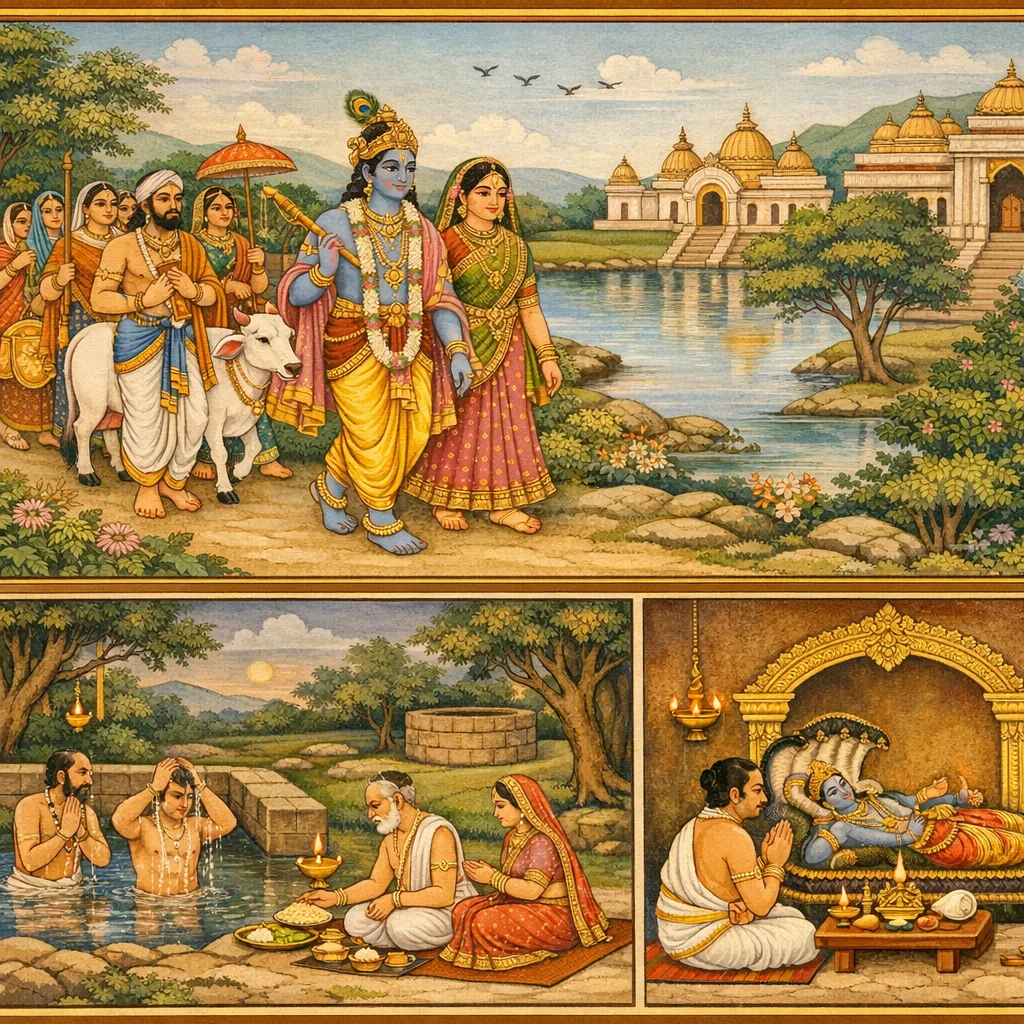
This chapter unfolds through layered dialogue and purāṇic relay narration. Nārada first speaks of his own worship on the Kārttika bright-fortnight Prabodhinī observance, declaring that devotion brings release from the defects born of Kali. Arjuna raises a long-standing doubt: how can Nārada—praised as equanimous, disciplined, and liberation-minded—seem restless, moving “like the wind,” in a world harmed by Kali? Sūta then reports the exchange and introduces Bābhravya, a brāhmaṇa of the Hārīta lineage, who explains the matter as he heard it from Kṛṣṇa. In the embedded account, Kṛṣṇa goes on pilgrimage to a sea-confluence region, performs piṇḍa-dāna and generous gifts, worships various liṅgas with care (including Guheśvara), bathes at Koṭitīrtha, and honors Nārada. When Ugrasena asks why Nārada roams without cease, Kṛṣṇa explains that Dakṣa cursed him for obstructing the paths of creation, condemning him to perpetual wandering and a reputation for stirring others; yet Nārada remains untainted through truthfulness, single-mindedness, and bhakti. Kṛṣṇa recites a long stotra listing Nārada’s virtues—self-control, non-duplicity, steadiness, learning, and non-malice—and promises Nārada’s favor to regular reciters. The chapter then prescribes a calendrical rite: on Kārttika Śukla Dvādaśī (Prabodhinī), one should bathe at the well established by Nārada, carefully perform śrāddha, and undertake tapas, dāna, and japa, said to be akṣaya at this site. One is to “awaken” Viṣṇu with the mantra “idaṁ viṣṇu,” then similarly rouse and worship Nārada, offering auspicious items and giving gifts to brāhmaṇas according to capacity—such as an umbrella (chatra), cloth (dhotra), and kamaṇḍalu. The phala concludes that this observance frees one from sin, prevents Kali’s afflictions from arising, and eases worldly distress.
Shlokas
Verse 1
नारद उवाच । ममापि पार्थ तत्रास्ति मूर्तिर्ब्राह्मणकाम्यया । तत्र नाहं त्यजाम्यंग च्छत्रदण्डविभूषिताम्
Nārada said: “O Pārtha, there too is my own manifestation, desired by the brāhmaṇas. There, dear one, I do not abandon it—adorned with umbrella and staff.”
Verse 2
कार्तिकस्य तु या शुक्ला भवत्येकादशी शुभा । तस्यां मदर्चनं कृत्वा कलिदोषैर्विमुच्यते
On the auspicious bright Ekādaśī of Kārtika, having performed worship of me, one is freed from the faults of the Kali age.
Verse 3
अर्जुन उवाच । बाल्यात्प्रभृति संदेहो ममायं हृदि वर्तते । पृच्छतस्तं च मे विप्र न क्रोधं कर्तुमर्हसि
Arjuna said: “From childhood this doubt has remained in my heart. As I ask you about it, O venerable brāhmaṇa, you should not become angry.”
Verse 4
सदा त्वं मोक्षधर्मेषु परिनिष्ठां परां गतः । सर्वभूतसमो दांतो रागद्वेषविवर्जितः
You are ever established in the dharmas that lead to liberation—having attained the highest steadiness. You are equal toward all beings, self-restrained, and free from attachment and aversion.
Verse 5
त्यक्तनिंदास्तुतिर्मौनी मोक्षस्थः परिकीर्त्यसे । त्वं च नारद लोकेषु वायुवच्चपलो मुने
You are praised as one who has abandoned both blame and praise, who is silent and established in liberation. Yet, O Nārada, you roam through the worlds with the restlessness of the wind, O sage.
Verse 6
सौदामिनीव विचरन्दृश्यसे प्राज्ञसंमतः । सदा कलिकरो लोके निर्दयः सर्वप्राणिषु
You are seen moving about like a flash of lightning, and the wise hold you in esteem. Yet you are ever a maker of strife in the world, merciless toward all living beings.
Verse 7
बहूनां हि सहस्राणि देवगंधर्वरक्षसाम् । राज्ञां मुनीन्द्रदैत्यानां कलेर्नष्टानि तेऽभवन्
Indeed, through your agency, thousands upon thousands—of gods, Gandharvas, and Rākṣasas, and likewise of kings, great sages, and Daityas—have been brought to ruin through conflict.
Verse 8
कस्मात्तदेषा चेष्टा ते संदेहं मे हर द्विज । संदेहान्न सुखं शेते बाणविद्धो मृगो यथा
Why, then, is this your manner of acting? Remove my doubt, O twice-born. For one does not rest happily while in doubt—like a deer pierced by an arrow.
Verse 9
सूत उवाच । शौनकेदं वचः श्रुत्वा फाल्गुनान्नारदो मुनिः । प्रहसन्निव बाभ्रव्यवदनं स निरैक्षत
Sūta said: O Śaunaka, hearing these words from Phālguna, the sage Nārada—smiling as though in laughter—looked toward the face of Bābhravya.
Verse 10
स च बाभ्रव्यनामा वै हारीतस्यान्वयोद्भवः । ब्राह्मणो नारदमुनेः समीपे वर्तते सदा
And he, indeed, was a brāhmaṇa named Bābhravya, born in the lineage of Hārīta; he ever remained in the presence of the sage Nārada.
Verse 11
स च ज्ञात्वा महाबुद्धिर्नारदस्य मनीषितम् । प्रहसन्निव प्रोवाच फाल्गुनं स्निग्धया गिरा
And he, of great understanding, discerning Nārada’s intention, spoke to Phālguna in a gentle voice, smiling as though.
Verse 12
बाभ्रव्य उवाच । सत्यमेतद्यथात्थ त्वं नारदं प्रति पांडव । सर्वोऽपि चात्र वृत्तांते संशयं याति मानवः
Bābhravya said: “True is what you have spoken to Nārada, O Pāṇḍava. Indeed, in this matter, every person falls into doubt.”
Verse 13
तदहं ते प्रवक्ष्यामि यथा कृष्णान्मया श्रुतम् । स्तोककालांतरे पूर्वं सर्वं यादवनंदनः
Therefore I shall explain to you, just as I heard it from Kṛṣṇa. A short time ago, the delight of the Yādavas—Śrī Kṛṣṇa—spoke all of this.
Verse 14
महीसागरयात्रायां कृष्णस्तत्राययौ प्रभुः । उग्रसेनेन सहितो वसुदेवेन बभ्रुणा
When the pilgrimage to Mahīsāgara was undertaken, Lord Kṛṣṇa himself arrived there, accompanied by Ugrasena and by Vasudeva (Babhru).
Verse 15
रामेण रौक्मिणेयेन युयुधानादिभिस्तदा । स च ज्ञात्वा ज्ञातिसमं महीसागरसंगमे
At that time he was accompanied by Rāma, by Raukmiṇeya, and by Yuyudhāna and others; and, knowing that his kinsmen too had assembled at the confluence of Mahīsāgara, he proceeded there accordingly.
Verse 16
पिंडदानादिकं कृत्वा दत्त्वा दानानि भूरिशः । गुहेश्वरादिलिंगानि यत्नतः प्रतिपूज्य च
Having performed the rites beginning with piṇḍa-offerings and having bestowed abundant charities, he then carefully worshipped the liṅgas such as Guheśvara and others.
Verse 17
स्नानं कृत्वा कोटितीर्थे जयादित्यं समर्च्य च । पूजयन्नारदमुनिं युक्तः कृष्णो महामनाः
After bathing at Koṭitīrtha and duly worshipping Jayāditya, the great-minded Kṛṣṇa—composed and devout—also honored the sage Nārada.
Verse 19
उग्रसेन उवाच । कृष्ण प्रक्ष्यामि त्वामेकं संशयं वद तं मम
Ugrasena said: “Kṛṣṇa, I wish to ask you one doubt—please explain it to me.”
Verse 20
योऽयं नाम महाबुद्धिर्नारदो विश्ववंदितः । कस्मादेषोऽतिचपलो वायुवद्भ्रमते जगत्
“This Nārada is famed as supremely wise and revered by the whole world—why then is he so exceedingly restless, roaming about the world like the wind?”
Verse 21
श्रीकृष्ण उवाच । सत्यं राजंस्त्वया पृष्टमेतत्सर्वं वदामि ते । दक्षेण तु पुरा शप्तो नारदो मुनिसत्तमः
Śrī Kṛṣṇa said: “Indeed, O king, your question is proper. I shall tell you all of it. Long ago, the foremost sage Nārada was cursed by Dakṣa.”
Verse 22
सृष्टिमार्गांस्तु तान्वीक्ष्य नारदेन विचालितान् । नावस्थानं च लोकेषु भ्रमतस्ते भविष्यति
Observing the courses of creation that Nārada had set in motion and disturbed, Dakṣa declared: “For you who wander, there shall be no settled abode in any of the worlds.”
Verse 23
पैशुन्य वक्ता च तथा द्वितीयानां प्रचालनात् । इति शापद्वयं प्राप्य द्विविधात्मजचालनात्
And further: “You will be one who speaks calumny,” because of stirring up others. Thus, having incurred a twofold curse for inciting two kinds of offspring, Nārada became bound to wander.
Verse 24
निराकर्तुं समर्थोऽपि मुनिर्मेने तथैव तत् । एतावान्साधुवादो हि यतश्च क्षमते स्वयम्
Though the sage was able to nullify it, he accepted the curse as it was. For this is the measure of true saintliness: to endure and to forgive of one’s own accord.
Verse 25
विनाशकालं चावेक्ष्य कलिं वर्धयते यतः । सत्यं च वक्ति तस्मात्स न च पापेन लिप्यते
Because he foresees the destined time of dissolution and thus allows Kali to run its course, and because he speaks only the truth, he is not tainted by sin.
Verse 26
भ्रमतोऽपि च सर्वत्र नास्य यस्मात्पृथङ्मनः । ध्येयाद्भवति नैव स्याद्भ्रमदोषस्ततोस्य च । यच्च प्रीतिर्मयि तस्य परमा तच्छृणुष्व च
Even while moving about everywhere, his mind never becomes divided, for it remains fixed upon the object of meditation; therefore the fault of distraction does not arise in him. And hear also of his supreme love for me.
Verse 27
अहं हि सर्वदा स्तौमि नारदं देवदर्शनम् । महेंद्रगदितेनैव स्तोत्रेण शृणु तन्नृप
Indeed, I always praise Nārada, the seer who beholds the gods. O king, listen to that hymn, spoken by Mahendra himself.
Verse 28
श्रुतचारित्रयोर्जाता यस्याहंता न विद्यते । अगुप्तश्रुत चारित्रं नारदं तं नमाम्यहम्
I bow to Nārada, in whom no ego arises despite learning and noble conduct, and whose learning and character are open and unhidden.
Verse 29
अरतिक्रोधचापल्ये भयं नैतानि यस्य च । अदीर्घसूत्रं धीरं च नारदं तं नमाम्यहम्
I bow to Nārada, for whom restlessness, anger, and fickleness hold no terror; who does not procrastinate, and who is steadfast and composed.
Verse 30
कामाद्वा यदि वा लोभाद्वाचं यो नान्यथा वदेत् । उपास्यं सर्वजंतूनां नारदं तं नमाम्यहम्
I bow to Nārada, who never speaks otherwise—whether from desire or from greed—and who is worthy of reverence by all beings.
Verse 31
अध्यात्मगतितत्त्वज्ञं क्षांतं शक्तं जितेंद्रियम् । ऋजुं यथार्थ वक्तारं नारदं तं नमाम्यहम्
I bow to Nārada—the knower of the truth of the soul’s path, patient and capable, master of the senses, straightforward, and a speaker of things as they truly are.
Verse 32
तेजसा यशसा बुद्ध्या नयेन विनयेन च । जन्मना तपसा वृद्धं नारदं तं नमाम्यहम्
I bow to Nārada—mature through spiritual radiance, renown, intelligence, right conduct and humility; venerable by birth and by austerity.
Verse 33
सुखशीलं सुखं वेषं सुभोजं स्वाचरं शुभम् । सुचक्षुषं सुवाक्यं च नारदं तं नमाम्यहम्
I bow to Nārada—gentle in disposition, simple in attire, moderate in food, auspicious in conduct; clear-sighted and sweet in speech.
Verse 34
कल्याणं कुरुते गाढं पापं यस्य न विद्यते । न प्रीयते परानर्थे यो ऽसौ तं नौमि नारदम्
I praise that Nārada who accomplishes profound good, in whom no sin is found, and who never delights in the misfortune of others.
Verse 35
वेदस्मृतिपुराणोक्तधर्मे यो नित्यमास्थितः । प्रियाप्रियविमुक्तं तं नारदं प्रणमाम्यहम्
I bow to Nārada, who remains ever established in the dharma taught in the Vedas, Smṛtis, and Purāṇas, and who is freed from attachment to what is pleasant and aversion to what is unpleasant.
Verse 36
अशनादिष्वलिप्तं च पंडितं नालसं द्विजम् । बहुश्रुतं चित्रकथं नारदं प्रणमाम्यहम्
I bow to Nārada—the learned twice-born, unstained by matters such as food and the like; never indolent; widely learned; and a wondrous narrator of many accounts.
Verse 37
नार्थे क्रोधे च कामे च भूतपूर्वोऽस्य विभ्रमः । येनैते नाशिता दोषा नारदं तं नमाम्यहम्
I bow to that Nārada in whom no delusion has ever arisen regarding wealth, anger, or desire—by whom these faults have been destroyed.
Verse 38
वीतसंमोहदोषो यो दृढभक्तिश्च श्रेयसि । सुनयं सत्रपं तं च नारदं प्रणमाम्यहम्
I bow to Nārada, who has cast off the fault of delusion, whose devotion is firm in what leads to the highest good, who is well-guided in conduct, and who is modest in demeanor.
Verse 39
असक्तः सर्वसंगेषु यः सक्तात्मेति लक्ष्यते । अदीर्घसंशंयो वाग्ग्मी नारदं तं नमाम्यहम्
I bow to Nārada—detached amid all associations, yet recognized as one whose mind is devoted to the Supreme; free from prolonged doubts; and eloquent in speech.
Verse 40
न त्यजत्यागमं किंचिद्यस्तपो नोपजीवति । अवंध्यकालो यस्यात्मा तमहं नौमि नारदम्
I praise Nārada, who does not abandon the sacred teachings in any respect, who does not make a livelihood out of austerity, and whose very life-time is never wasted.
Verse 41
कृतश्रमं कृतप्रज्ञं न च तृप्तं समाधितः । नित्यं यत्नात्प्रमत्तं च नारदं तं नमाम्यहम्
I bow to Nārada, who has labored and cultivated wisdom; who is not complacently satisfied in his samādhi, and who is ever vigilant through unceasing striving.
Verse 42
न हृष्यत्यर्थलाभेन योऽलाभे न व्यथत्यपि । स्थिरबुद्धिरसक्तात्मा तमहं नौमि नारदम्
I praise Nārada, who does not exult at gaining wealth, nor grieve at not gaining it; whose understanding is steady and whose mind is unattached.
Verse 43
तं सर्वगुणसंपन्नं दक्षं शुचिमकातरम् । कालज्ञं च नयज्ञं च शरणं यामि नारदम्
To Nārada I go for refuge—endowed with every virtue, capable and efficient, pure and untroubled; knowing the right time and knowing the right course of conduct.
Verse 44
इमं स्तवं नारदस्य नित्यं राजन्पठाम्यहम् । तेन मे परमा प्रीतिं करोति मुनिसत्तमः
O King, I recite this hymn to Nārada every day; by it, that best of sages grants me the highest favor and delight.
Verse 45
अन्योपि यः शुचिर्भूत्वा नित्यमेतां स्तुतिं जपेत् । अचिरात्तस्य देवर्षिः प्रसादं कुरुते परम्
And whoever else, becoming purified, regularly recites this hymn, the divine seer Nārada soon bestows upon him the highest grace.
Verse 46
एतान्गुणान्नारदस्य त्वमथाकर्ण्य पार्थिव । जप नित्यं स्तवं पुण्यं प्रीतस्ते भविता मुनिः
O king, having heard these virtues of Nārada, recite daily this meritorious hymn; the sage will be pleased with you.
Verse 47
बाभ्रव्य उवाच । इति कृष्णमुखाच्छ्रुत्वा नारदस्य गुणान्नृपः । बभूव परमप्री तश्चक्रे तच्च तथा वचः
Bābhravya said: Thus, hearing from Kṛṣṇa’s own mouth the virtues of Nārada, the king became exceedingly delighted and acted exactly according to those words.
Verse 48
ततो नारदमानर्च दत्त्वा दानं च पुष्कलम् । नारदीयद्विजाग्र्याणां नारदः प्रीयतामिति
Then he worshipped Nārada and gave abundant charity, saying, “May Nārada be pleased,” offering it to the foremost Brāhmaṇas devoted to Nārada’s tradition.
Verse 49
ययौ द्वारवतीं कृष्णः सभ्रातृजातिबांधवः । तीर्थयात्रामिमां कृत्वा विधिवत्पुरुषोत्तमः
Then Kṛṣṇa—the Supreme Person—having properly completed this pilgrimage, departed for Dvāravatī along with his brothers, kinsmen, and relatives.
Verse 50
तथा त्वमपि कौरव्य नारदस्य गुणानिमान् । श्रुत्वा श्रद्धामयो भूत्वा शृणु कृत्यं यदत्र च
So you too, O descendant of the Kurus—having heard these virtues of Nārada and becoming filled with faith—listen to the duty to be performed here as well.
Verse 51
कार्तिके शुक्लद्वादश्यां प्रबोधिन्यामसौ मुनिः । विष्णोर्ध्यानसमाधेश्च प्रबुद्धो जायते सदा
On the bright Dvādaśī of Kārttika—Prabodhinī—this sage Nārada, through meditation and samādhi upon Viṣṇu, ever becomes awakened in divine realization.
Verse 52
तस्मिन्दिने नारदेन निर्मितेऽत्रैव कूपके । स्नानं कृत्वा प्रयत्नेन श्राद्धं कुर्यात्समाहितः
On that day, in this very well built here by Nārada, one should bathe with care and, with a composed mind, earnestly perform śrāddha.
Verse 53
तपो दानं जपश्चात्र कूपे भवति चाक्षयम्
Austerity, charity, and mantra-recitation performed here at this well become imperishable in their fruit.
Verse 54
इदं विष्ण्विति मंत्रेण ततो विष्णुं प्रबोधयेत् । नारदं च मुनिं पश्चान्मन्त्रेणानेन पांडव
Then, with the mantra “Idaṃ Viṣṇu,” one should awaken Viṣṇu; and afterward, O Pāṇḍava, one should also invoke and honor the sage Nārada with this same mantra.
Verse 55
योगनिद्रा यथा त्यक्ता हरिणा मुनिसत्तम । तथा लोकोपकाराय भवानपि परित्यज
O best of sages, just as Hari set aside His yogic slumber, so too should you relinquish it—for the welfare of the world.
Verse 56
इति मंत्रेण चोत्थाप्य नारदं परिपूजयेत् । कृष्णप्रोदितया स्तुत्या छत्रधोत्रार्चनैः शुभैः
Thus, having roused Nārada with this mantra, one should worship him duly—using the hymn taught by Kṛṣṇa and with auspicious offerings such as a parasol and a cloth.
Verse 57
शक्त्या द्विजानां देयं च छत्रं धोत्रं कमंडलुम् । प्रणम्य ब्राह्मणान्भक्त्या नारदः प्रीयतामिति
According to one’s means, one should give the twice-born a parasol, a cloth, and a water-pot (kamaṇḍalu). Bowing to the brāhmaṇas with devotion, one should say: “May Nārada be pleased.”
Verse 58
एवं कृते प्रसादात्स मुनेः पापेन मुच्यते । जायते न कलिस्तस्य न चासौख्यं भवेदिह
When this is done, by the grace of that sage one is freed from sin. For him, Kali does not arise, and no misfortune occurs here in this life.