Adhyaya 33
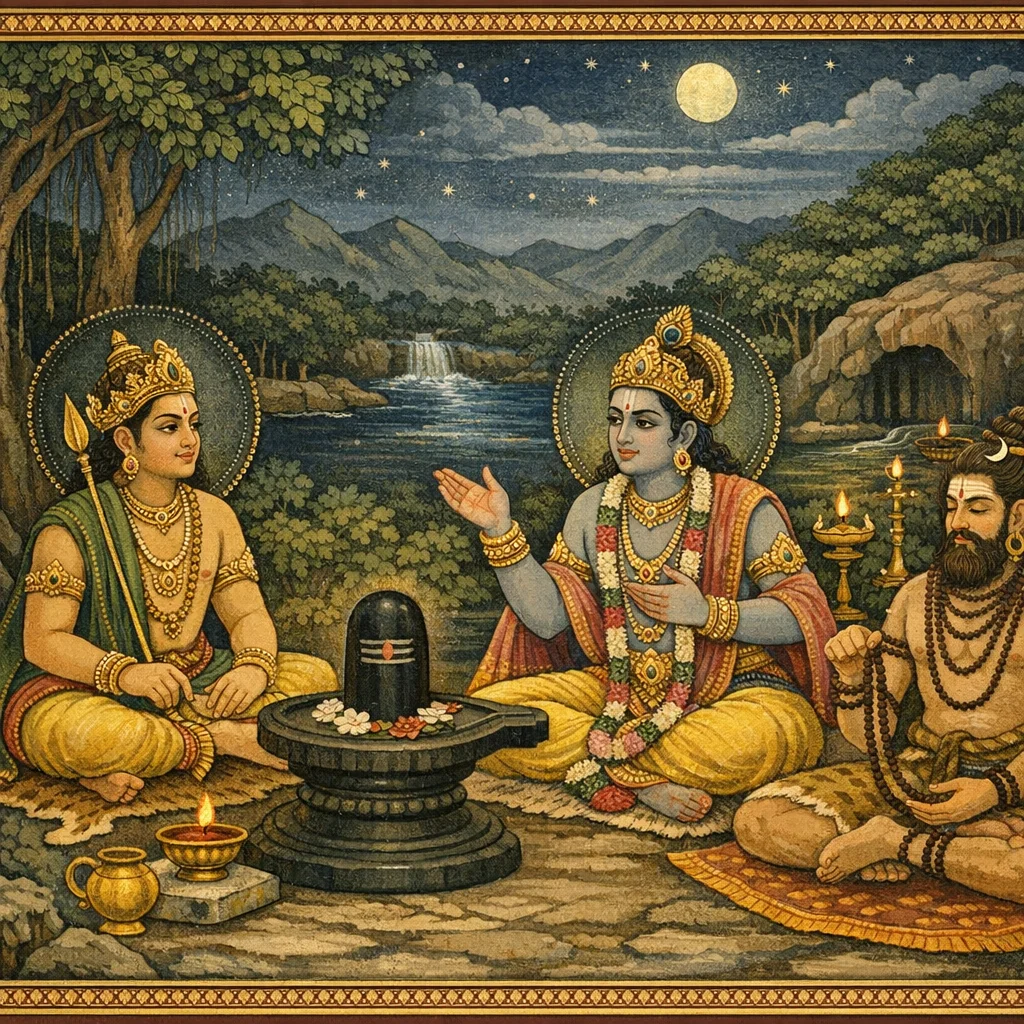
Chapter 33 begins with Nārada describing Tāraka’s fallen body and the devas’ astonishment. Skanda (Guha), though victorious, is morally troubled; he restrains festive praise, voices remorse, and seeks instruction on prāyaścitta, especially since the slain foe is said to be connected with Rudra-bhakti. Vāsudeva replies on śāstric authority—śruti, smṛti, itihāsa, and purāṇa—that there is no culpability in killing a harmful wrongdoer, for social order depends on curbing the violent. He then teaches a higher expiatory and liberating path: Rudra-ārādhana, above all liṅga worship, surpasses other penances, and Śiva’s supremacy is praised through exempla such as halāhala, Gaṅgā upon his head, the Tripura battle, and Dakṣa’s sacrifice as a warning. Ritual details follow: bathing the liṅga with water and pañcāmṛta, offering flowers and naivedya, and the extraordinary merit of establishing a liṅga—uplifting one’s lineage and attaining Rudraloka. Śiva affirms non-difference (abheda) between himself and Hari, grounding sectarian harmony in doctrine. Skanda vows to install three liṅgas tied to distinct narrative moments; Viśvakarmā fashions them, and their installation is described with names (notably Pratijñeśvara and Kapāleśvara), observances on aṣṭamī and kṛṣṇa-caturdaśī, adjacent Śakti worship, a ‘śakticchidra’ site, and a uniquely praised tīrtha whose snāna and japa grant purification and posthumous ascent.
Shlokas
Verse 1
नारद उवाच । ततस्तं गिरिवर्ष्माणं पतितं वसुधोपरि । आलिंगितमिव पृथ्व्या गुणिन्या गुणिनं यथा
Nārada said: Then that one, whose body was like a mountain, lay fallen upon the earth, as though the virtuous Earth herself had embraced a virtuous man.
Verse 2
दृष्ट्वा देवा विस्मितास्ते जयं जगुस्तथा मुहुः । केचित्समीपमागंतुं बिभ्यति त्रिदिवौकसः
Seeing it, the gods were astonished and again and again cried, “Victory!” Yet some of the dwellers of heaven were afraid to come near.
Verse 3
उत्थाय तारको दैत्यः कदा चिन्नो निहंति चेत् । तं तथा पतितं दृष्ट्वा वसुधामण्डले गुहः
“If Tāraka the demon should rise again, might he not kill us?”—thus, seeing him lying fallen upon the circle of the earth, Guha (Skanda) reacted.
Verse 4
आसीद्दीनमनाः पार्थ शुशोच च महामतिः । स्तवनं चापि देवानां वारयित्वा वचोऽब्रवीत्
O Pārtha, the great-souled one became downcast and grieved. Restraining even the gods’ praises, he spoke these words.
Verse 5
शोच्यं पातकिनं मां च संस्तुवध्वं कथं सुराः । पंचानामपि यो भर्ता प्राकृतोऽसौ न कीर्त्यते
“How, O gods, do you praise me—a sinner fit to be lamented? Even one who is the lord of the five (senses), if he becomes merely worldly, is not worthy of being celebrated.”
Verse 6
स तु रुद्रांशजः प्रोक्तस्तस्य द्रुह्यन्न रुद्रंवत् । स्वायंभुवेन गीतश्च श्लोकः संश्रूयते तथा
He is said to be born from a portion of Rudra; and whoever harms him is as though he harms Rudra himself. Thus, a śloka sung by Svāyambhuva (Manu) is likewise heard.
Verse 7
वीरं हि पुरुषं हत्वा गोसहस्रेण मुच्यते । यथाकथंचित्पुरुषो न हंतव्यस्ततो बुधैः
Having slain a heroic man, one is released (from the sin) by the expiation of a thousand cows. Therefore, the wise should not kill a man—by any means whatsoever.
Verse 8
पापशीलस्य हनने दोषो यद्यपि नास्ति च । तथापि रुद्रभक्तोऽयं संस्मरन्निति शोचिमि
Even if there is no fault in killing one of sinful conduct, still I grieve, remembering that this one was a devotee of Rudra.
Verse 9
तदहं श्रोतुमिच्छामि प्रायाश्चित्तं च किंचन । प्रायश्चित्तैरपैत्येनो यतोपि महदर्जितम्
Therefore I wish to hear of some expiation, by which—through acts of atonement—the great sin that has been incurred may be removed.
Verse 10
इति संशोचतस्तस्य शिवपुत्रस्य धीमतः । वासुदेवो गुरुः पुंसां देवमध्ये वचोऽब्रवीत्
As that wise son of Śiva thus grieved, Vāsudeva—the revered teacher of men—spoke these words in the midst of the gods.
Verse 11
श्रुतिः स्मृतिश्चेतिहासाः पुराणं च शिवात्मज । प्रमाणं चेत्ततो दुष्टवधे दोषो न विद्यते
O son of Śiva, if Śruti, Smṛti, the Itihāsas, and the Purāṇas are accepted as valid authority, then in the slaying of the wicked there is no fault.
Verse 12
स्वप्राणान्यः परप्राणैः प्रपुष्णात्यघृणः पुमान् । तद्वधस्तस्य हि श्रेयो यद्दोषाद्यात्यधः पुमान्
That merciless man who sustains his own life by taking the lives of others—his killing is indeed the better course; for because of his wrongdoing he drags people down to ruin.
Verse 13
अन्नादे भ्रूणहा मार्ष्टि पत्यौ भार्या पचारिणी । गुरौ शिष्यश्च याज्यश्च स्तेनो राजनि किल्बिषम्
A slayer of an embryo shifts his sin onto the giver of food; a wife who is unfaithful transfers it to her husband; a disciple (offending) to his guru, and an officiating priest to the patron; and a thief places his guilt upon the king.
Verse 14
पापिनं पुरुषं यो हि समर्थो न निहंति च । तस्य तावंति पापानि तदर्धं सोऽप्यवाश्रुते
Whoever is capable yet does not strike down a sinful man—so many sins of that offender accrue to him as well, and he takes upon himself half of them.
Verse 15
पापिनो यदि वध्यंते नैव पालनसंस्थितैः । ततोऽयमक्षमो लोकः कं याति शरणं गुह
O Guha, if those established in protection (rulers and guardians) do not put down the sinful, then this helpless world—whom will it go to for refuge?
Verse 16
कथं यज्ञाश्च वेदाश्च वर्तते विश्वधारकाः । तस्मात्त्वया पुण्यमाप्तं न च पापं कथंचन
How could the sacrifices and the Vedas—upholders of the world—continue to function, if the wicked were not restrained? Therefore you have gained merit, and in no way have you incurred sin.
Verse 17
अथ चेद्रुद्रभक्तेषु बहुमानस्तव प्रभो । तत्र ते कीर्तयिष्यामि प्रायश्चित्तं महोत्तमम्
And if, O Lord, you hold great reverence for the devotees of Rudra, then in that matter I shall proclaim to you an exceedingly supreme expiation.
Verse 18
आजन्मसंभवैः पापैः पुमान्येन विमुच्यते । आकल्पांत च वा येन रुद्रलोके प्रमोदते
By this a man is freed from sins accumulated since birth, and by this he rejoices in Rudra’s world even until the end of the aeon.
Verse 19
कृते पापेऽनुतापो वै यस्य स्कन्द प्रजायते । रुद्राराधनतोऽन्यच्च प्रायश्तित्तं परं न हि
O Skanda, for one in whom true remorse arises after committing sin, there is no higher expiation than the worship of Rudra.
Verse 20
न यस्यालमपि ब्रह्मामहिमानं विवर्णितुम् । श्रुतिश्च भीता यं वक्ति किं तस्मात्परमं भवेत्
Even Brahmā is not able to fully describe His greatness; even the Veda (Śruti), in awe, speaks of Him with restraint. What, then, could possibly be higher than Him?
Verse 21
अकांडे यच्च ब्रह्मांडक्षयोद्युक्तं हलाहलम् । कण्ठे दधार श्रीकण्ठः कस्तस्मात्परमो भवेत्
When, in a sudden crisis, the Hālāhala poison arose—poised to destroy the cosmos—Śrīkaṇṭha held it within His throat. Who could be greater than Him?
Verse 22
दुःखतांडवदीनोऽभूदण्डसंकीर्णमानसः । मारमारश्च यो देवः कस्तस्मात्परमो भवेत्
He is the Lord of the sorrowful Tāṇḍava; His mind pervades the whole cosmic sphere; and He is the slayer of Māra. What deity could be higher than Him?
Verse 23
वियद्व्यापी सुरसरित्प्रवाहो विप्रुषाकृतिः । बभूव यस्य शिरसि कस्तस्मात्परमो भवेत्
The heaven-filling current of the divine river became but a single droplet upon His head. Who could be greater than Him?
Verse 24
यज्ञादिकाश्च ये धर्मा विना यस्यार्चनं वृथा । दक्षोऽत्र सत्यदृष्टांतः कस्तस्मात्परमो भवेत्
All acts of dharma, beginning with sacrifice (yajña), become fruitless without His worship. Dakṣa stands as the true example of this. Who could be greater than Him?
Verse 25
क्षोणी रथो विधिर्यंता शरोऽहं मन्दरो धनुः । रथांगे चापि चंद्रार्कौ युद्धे यस्य च त्रैपुरे
In His battle against Tripura: the earth was His chariot, Brahmā the charioteer, I (Viṣṇu) became His arrow, Mount Mandara His bow, and the moon and sun were the wheels of His chariot.
Verse 26
आराधनं तस्य केचिद्योगमार्गेण कुर्वते । दुःखसाध्यं हि तत्तेषां नित्यं शून्यमुपासताम्
Some worship Him by the path of yoga; but for those who continually meditate on emptiness, that practice is indeed hard to accomplish and filled with hardship.
Verse 27
तस्मात्तस्यार्चयेल्लिंगं भुक्तिमुक्ती य इच्छति । सृष्ट्यादौ लिंगरूपी स विवादो मम ब्रह्मणः
Therefore, whoever desires both worldly enjoyment and liberation should worship His Liṅga. At the beginning of creation, when the dispute between me and Brahmā arose, He appeared in the form of the Liṅga.
Verse 28
अभूद्यस्य परिच्छेदे नालमावां बभूविव । चराचरं जगत्सर्वं यतो लीनं सदात्र च
When we tried to find His limit, we were utterly unable to do so. From Him, and within Him, this entire moving and unmoving universe is always absorbed.
Verse 29
तस्माल्लिंगमिति प्रोक्तं देवै रुद्रस्य धीमतः । तोयेन स्नापयेल्लिंगं श्रद्धया शुचिना च यः
Therefore it is called the “Liṅga”, so proclaimed by the gods, of wise Rudra. Whoever bathes the Liṅga with water, with faith and purity—
Verse 30
ब्रह्मादितृणपर्यंतं तेनेदं तर्पितं जगत् । पंचामृतेन तल्लिंगं स्नापयेद्यश्च बुद्धिमान्
From Brahmā down to a blade of grass, the whole universe is satisfied by him. The wise person who bathes that Śiva-liṅga with the five nectars (pañcāmṛta) thus becomes the cause of this universal appeasement.
Verse 31
तर्पितं तेन विश्वं स्यात्सुधया पितृभिः समम् । पुष्पैरभ्यर्चयेल्लिंगं यथाकालोद्भवैश्चयः
By that ambrosial offering the whole universe, together with the Pitṛs, is satisfied. And whoever worships the liṅga with flowers that bloom in their proper season performs the fitting adoration.
Verse 32
तेन संपूजितं विश्वं सकलं नात्र संशयः । नैवेद्यं तत्र यो दद्याल्लिंगस्याग्रे विचक्षणः
By that act the entire universe is fully worshipped—of this there is no doubt. The discerning devotee who offers naivedya, a food-offering, there before the liṅga accomplishes this all-encompassing honor.
Verse 33
भोजितं तेन विश्वं स्याल्लिंगस्यैवं फलं महत् । किमत्र बहुनोक्तेन स्वल्पं वा यदि व बहु
By him the universe is as though fed; such is the great fruit of worship of the liṅga. What need is there to say more—whether one offers little or offers much?
Verse 34
लिंगस्य क्रियते यच्च तत्सर्वं विश्वप्रीतिदम् । तच्च लिगं स्थापयेद्यः शुचौ देशे सुभक्तितः
Whatever is done for the liṅga becomes pleasing to the whole universe. And whoever, with pure devotion, establishes that liṅga in a clean and sacred place—his act is universally beneficent.
Verse 35
स सर्वपापनिर्मुक्तो रुद्रलोके प्रमोदते । यन्नित्यं यजतो यज्ञैः फलमाहुर्मनीषिणः
Freed from all sins, he rejoices in Rudra’s world. The wise declare that he attains the very fruit that comes from performing daily yajñas (sacrifices).
Verse 36
तच्च स्थापयतो लिंगं शिवस्य शुभलक्षणम् । यथाग्निः सर्वदेवानां मुखं स्कन्द प्रकीर्त्यते
For the one who establishes the Liṅga—Śiva’s auspicious emblem—just as, O Skanda, Fire is proclaimed the “mouth” of all the gods, the channel by which offerings reach them.
Verse 37
तथैव सर्वजगतां मुखं लिंगं न संशयः । प्रारंभान्मुच्यते पापैः सर्वजन्मकृतैरपि
So too, without doubt, the Liṅga is the “mouth” of all the worlds. From the very commencement of this act one is freed from sins—even those accumulated through many births.
Verse 38
अतीतं च तथागामि कुलानां तारयेच्छतम् । मृन्मयं काष्ठनिष्पन्नं पक्वेष्टं शैलमेव च
He delivers a hundred lineages—those that have passed and those yet to come. Whether the Liṅga is of clay, fashioned from wood, formed of baked brick, or of stone, its establishment bears saving power all the same.
Verse 39
कृतमायतनं दद्यात्क्रमाच्छतगुणं फलम् । कलशं तत्र चारोप्य एकविंशत्कुलैर्युतः
If one donates a completed shrine (āyatana), the fruit increases in due order a hundredfold. And having placed the consecration-pot (kalaśa) upon it, one becomes linked with—and brings benefit to—twenty-one lineages.
Verse 40
आकल्पांतं रुद्रलोके मोदते रुद्रवत्सुखी । एवंविधफलं लिंगमतो भूयोऽप्यधो न हि
Until the end of the aeon, he rejoices in Rudra’s world, happy like Rudra himself. Such is the fruit of this Liṅga; therefore, he never falls again to a lower state.
Verse 41
तस्मादत्र महासेन लिंगं स्थापितुमर्हसि । यदुक्तमेतदश्लीलं यदि किंचन चात्र चेत्
Therefore, O Mahāsena, you should establish a Liṅga here. And if anything spoken here seems improper in any way—
Verse 42
तद्ब्रवीतु महा सेन स्वयं साक्षी महेश्वरः । एवं वदति गोविंदे साधुवादो महानभूत्
Let Mahāsena declare it himself—Maheśvara is the direct witness. When Govinda spoke thus, a great acclaim of “Well said!” arose.
Verse 43
महादेवो ह्यथालिंग्य स्कन्दं वचनब्रवीत् । यद्भवान्मम भक्तेषु प्रकरोति कृपां पराम्
Then Mahādeva, embracing Skanda, spoke these words: “Because you show supreme compassion toward my devotees—”
Verse 44
तेनापि परमा प्रीतिर्मम जाता तवोपरि । किं तु यद्भगवानाह वासुदेवो जगद्गुरुः
By that very act, my highest affection for you has arisen. Yet, what the Blessed Vāsudeva, the Guru of the world, has said—
Verse 45
तत्त्था नान्यथा किंचिदत्र प्रोक्तं हि विष्णुना । यो ह्यहं स हरिर्ज्ञेयो यो हरिः सोऽहमित्युता
It is exactly so, not otherwise; for what has been spoken here by Viṣṇu is true. ‘He who is I is to be known as Hari; and he who is Hari is I’—so indeed it is.
Verse 46
नावयोरंतरं किंचिद्दीपयोरिव सुव्रत । एनं द्वेष्टि स मां द्वेष्टियोन्वेत्येनं स माऽनुगः
O man of good vows, there is no difference whatsoever between us, like the two flames of lamps. He who hates Him hates Me; and he who follows Him is My follower.
Verse 47
इति स्कन्द विजानाति स मद्भक्तोन्यथा न हि
Thus does Skanda understand; he is My devotee—certainly not otherwise.
Verse 48
स्कन्द उवाच । एवमेवास्मि जानामि त्वां च विष्णुं च शंकर
Skanda said: “Just so do I understand You, O Śaṅkara—and Viṣṇu as well.”
Verse 49
यच्च लिंगकृते प्राह हरिर्मां धर्मवत्सलः । खे वाणी तारकवधे एवमेव पुराह माम्
And what Hari, the lover of dharma, told me concerning the Liṅga—so too did a heavenly voice formerly tell me at the time of Tāraka’s slaying, in the very same way.
Verse 50
लिंगं संस्थापयिष्यामि सर्वपापा पहं ततः । एकं यत्र प्रतिज्ञा मे गृहीतास्य वधाय च
“I shall establish a Liṅga there, a remover of all sins. One (Liṅga) shall be at the place where I undertook my vow—to bring about his slaying.”
Verse 51
द्वितीयं यत्र निःसत्त्वसत्यक्तः शक्त्याऽसुरोऽभवत् । तृतीयं यत्र निहतो हत्या पापोपशांतिदम्
The second Liṅga shall be where the Asura, bereft of true strength, was cast down by Śakti. The third shall be where he was slain—granting the pacification of the sins of killing and other evils.
Verse 52
इत्युक्त्वा विश्वकर्माणमाहूय प्राह पावकिः । त्रीणि लिंगानि शुद्धानि शीघ्रं त्वं कर्तुमर्हसि
Having said this, Pāvaki summoned Viśvakarman and spoke: “You should quickly fashion three pure Liṅgas.”
Verse 53
वचनाद्बाहुलेयस्य निर्ममे देववर्द्धकिः । त्रीणि लिंगानि शुद्धानि न्यवेदयत तानि च
At the word of Bāhuleya, the divine artisan fashioned three pure Liṅgas and presented them as well.
Verse 54
ततो ब्रह्मादिभिः सार्धं विष्णुना शंकरेण च । पूर्वं संस्थापयामास पश्चिमायामदूरतः
Then, together with Brahmā and the other gods—with Viṣṇu and Śaṅkara—he first installed it to the east, not far from the western quarter of that region.
Verse 55
प्रतिज्ञेश्वरमित्येव लिंगं परमशोभनम् । अष्टम्यां बहुले चात्र चैत्रे स्नात्वा उपोष्य च
That supremely splendid Liṅga is called “Pratijñeśvara”. Here, on the eighth lunar day in the dark fortnight of Caitra, having bathed and observed a fast…
Verse 56
पूजां च जागरं कृत्वा मुच्येत्पारुष्यपापतः । इत्याह स्कंदप्रीत्यर्थं स्वयं तत्र महेश्वरः
And, having performed worship and kept the night-vigil, one is released from the sin of harshness and cruelty. Thus Maheśvara himself spoke there, for the sake of pleasing Skanda.
Verse 57
ततो द्वितीयं लिंगं तु वह्निकोणाश्रितं तथा । स्थापयामास सरसो यत्र शक्तिर्विनिर्ययौ
Then he installed the second Liṅga as well, situated in the corner of Agni (the southeast). It was set by the lake, at the spot where the Śakti issued forth.
Verse 58
कपालेश्वरमित्येव लिंगं पापापहं शुभम् । शक्तिं च तामभिष्टूय स्थापयामास तत्र च
That auspicious, sin-destroying Liṅga is called ‘Kapāleśvara’. Having praised that Śakti, he established her presence there as well.
Verse 59
कपालेश्वरसांनिध्यं देवीं कापालिकेश्वरीम् । तत्र चोत्तरदिग्भागे शक्तिच्छिद्रं प्रचक्षते
Near Kapāleśvara is the Goddess called Kāpālikeśvarī. There, in the northern part of that place, they point out what is known as ‘Śakti-chidra’, the fissure—an opening of Śakti.
Verse 60
पातालगंगा यत्रास्तिं सर्वपापहरा शिवा । तत्र स्नात्वा ददौ स्कंदः कृपयाभिपरिप्लुतः
Where the holy Pātāla-Gaṅgā flows—Śivā herself, the remover of all sins—there Skanda bathed; and, filled with compassion, he offered sacred gifts of charity.
Verse 61
तदा तोयं तारकाय सहितः सर्वदैवतैः
Then, together with all the gods, he offered that water as a sacred tarpaṇa-libation for Tāraka.
Verse 62
काश्यपेयाय वज्रांगतनयाय महात्मने । रुद्रभक्ताय सतिलमक्षय्योदकमस्त्विति
“For Kāśyapeya, for the great-souled son of Vajrāṅga, for the devotee of Rudra—may this inexhaustible water-offering, accompanied by sesame, be firmly established,” thus he proclaimed.
Verse 63
ततो महेश्वरः प्रीतः प्राह स्कंदस्य श्रृण्वतः । चतुर्दश्यां कृष्णपक्षे मधौ चैवात्र यो नरः । स्नात्वोपोष्य समभ्यर्च्य कपालेश्वरमीश्वरीम्
Then Maheśvara, pleased, spoke as Skanda listened: “On caturdaśī, the fourteenth lunar day of the dark fortnight, in the month of Madhu, whoever bathes here, keeps the upavāsa-fast, and duly worships Kapāleśvara and the Goddess…”
Verse 64
तेजोवधसमुद्भूतपातकेन स मुच्यते
He is freed from the sin that arises from slaying a “tejovat,” a being of spiritual radiance—an exceedingly grievous, brilliance-destroying transgression.
Verse 65
अस्यामेव तिथौ सोमः शिवयोगश्च तैतिलम् । षड्योगः शक्तिच्छिद्रेयो दिनं रुद्रं जपन्निशि । स्नात्वात्र सशरीरो वै रुद्रलोकं व्रजीष्यति
“On this very tithi, when Soma (the Moon) and Śiva-yoga coincide—when the auspicious tilam observance with sesame and the sixfold yoga at Śakticchidra are present—whoever spends the day in Rudra-japa and the night in worship, and bathes here, will indeed go to Rudra-loka, even with the body.”
Verse 66
कपालेशस्य सांनिध्ये शक्तिच्छिद्रं हि कीर्त्यते । तस्य तुल्यं परं तीर्थं पृथिव्यां नैव विद्यते
In the very presence of Kapāleśvara is proclaimed the tīrtha called Śakticchidra. On earth, no other supreme pilgrimage-site equal to it is found.
Verse 67
इति श्रुत्वा रुद्रवाक्यं स्कंदः प्रीतोऽभवद्भृशम् । देवाश्च मुदिताः सर्वे साधुसाध्विति ते जगुः
Hearing these words of Rudra, Skanda became greatly delighted; and all the gods, rejoicing, cried out, “Well said! Well said!”