Adhyaya 3
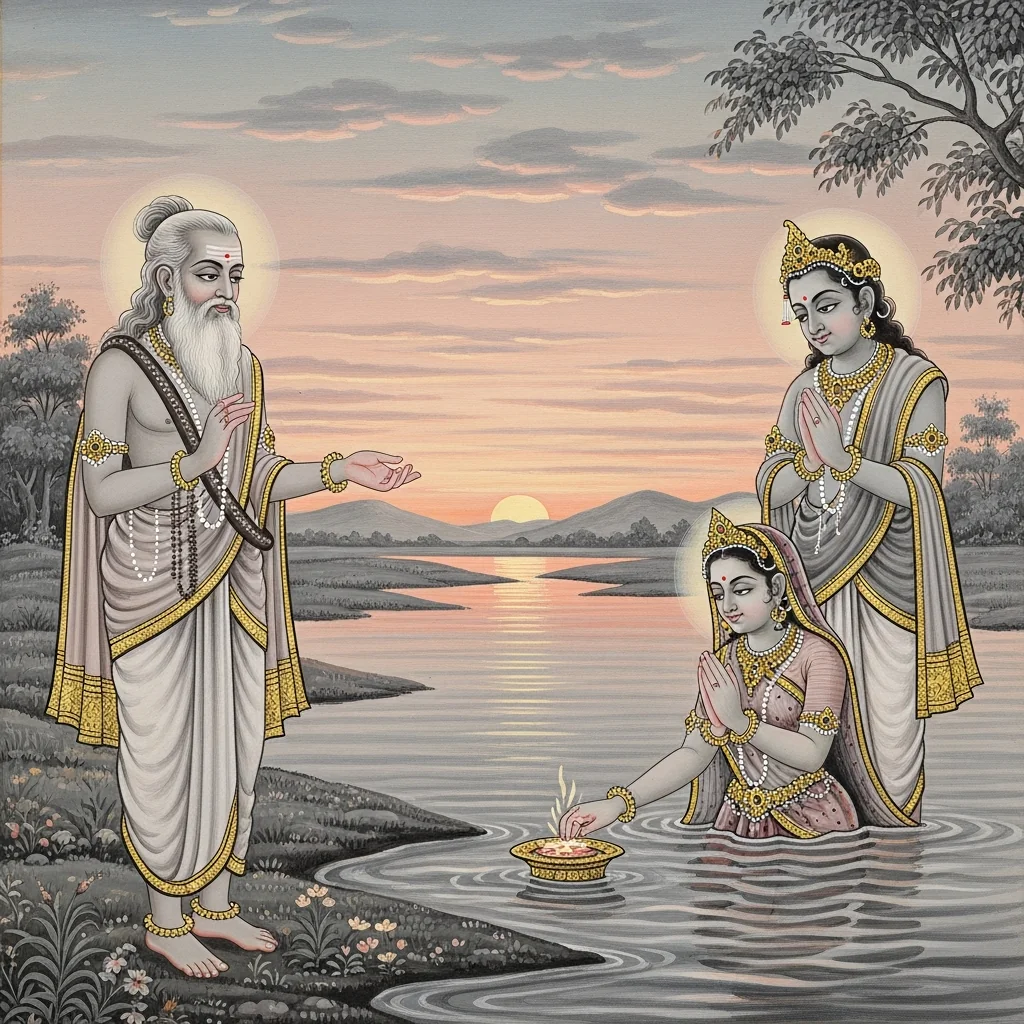
This adhyāya unfolds as Nārada journeys among sacred places and arrives at Bhṛgu’s āśrama beside the Revā, praised as supremely purifying, “embodying all tīrthas,” and powerful through praise—above all through mere sight and ritual bathing. Śuklatīrtha on the Revā is identified as a sin-destroying ford where bathing is said to remove even severe impurity. Bhṛgu then recounts a related tīrtha tradition focused on the Mahī–Sāgara confluence and the renowned Stambha-tīrtha, declaring that wise bathers there are freed from wrongdoing and escape Yama’s realm. An episode follows: Devśarmā, a restrained sage devoted to ancestral offerings at Gaṅgā–Sāgara, learns that Subhadra’s tarpaṇa at the Mahī–Sāgara confluence benefits ancestors more fully; he laments his misfortune and household strife when his wife refuses to travel. Subhadra offers a remedy by performing the śrāddha/tarpaṇa on Devśarmā’s behalf at the confluence, and Devśarmā promises a share of his accumulated ascetic merit. The chapter closes with Bhṛgu’s affirmation of the confluence’s extraordinary sanctity and Nārada’s renewed resolve to witness it and establish its sacred significance.
Shlokas
Verse 1
सू उवाच । एवं स्थानानि पुण्यानि यानियानीह वै भुवि । निरीक्षंस्तत्र तत्राहं नारदो वीरसत्तम
Sūta said: Thus, examining on this earth the many sacred places—each and every one—Nārada, best of heroes, went from one to another, seeking the most excellent.
Verse 2
विचरन्मेदिनीं सर्वां प्राप्तोऽहमाश्रमं भृगोः । यत्र रेवानदी पुण्या सप्तकल्पस्मरा वरा
Wandering over the whole earth, I reached the hermitage of Bhṛgu—where flows the holy river Revā, the excellent one, remembered through seven ages.
Verse 3
महापुण्या पवित्रा च सर्वतीर्थमयी शुभा । पुनानि कीर्तनेनैव दर्शनेन विशेषतः
She is supremely meritorious and purifying, auspicious and embodying all tīrthas; she purifies by mere remembrance and praise—and even more so by direct sight.
Verse 4
तत्रावगाहनात्पार्थ मुच्यते जंतुरंहसा । यथा सा पिङ्गला नाडी देहमध्ये व्यवस्थिता
O Pārtha, by bathing there a creature is swiftly freed from sin—just as the Piṅgalā nāḍī is established within the middle of the body.
Verse 5
इयं ब्रह्मांडपिण्डस्य स्थाने तस्मिन्प्रकीर्तिता । तत्रास्ते शुक्लतीर्थाख्यं रेवायां पापनाशनम्
This sacred locus is proclaimed as the “place of the Brahmāṇḍa (cosmic egg) and the Piṇḍa (embodied microcosm)”; and there, on the Revā, is the tīrtha known as Śukla-tīrtha, the destroyer of sins.
Verse 6
यत्र वै स्नानमात्रेण ब्रह्महत्या प्रणश्यति । तस्यापि सन्निधौ पार्थ रेवाया उत्तरे तटे
There, indeed, by bathing alone even the sin of brahma-hatyā is destroyed—O Pārtha, near that tīrtha, on the northern bank of the Revā.
Verse 7
नानावृक्षसमाकीर्णं लतागुल्मोपशोभितम् । नानापुष्पफलो पेतं कदलीखंडमंडितम्
It was filled with many kinds of trees, beautified by creepers and shrubs, abounding in diverse flowers and fruits, and adorned with groves of plantain.
Verse 8
अनेकाश्वापदाकीर्णं विहगैरनुनादितम् । सुगंधपुष्पशोभाढ्यं मयूररवनादितम्
It teemed with many wild creatures and resounded with birds; it was rich in the beauty of fragrant flowers, and echoed with the cries of peacocks.
Verse 9
भ्रमरैः सर्वमुत्सृज्य निलीनं रावसंयुतम् । यथा संसारमुत्सृज्य भक्तेन हरपादयोः
There the bees, abandoning everything, remained settled, humming; just as a devotee, casting off worldly entanglement, becomes absorbed at the feet of Hara (Śiva).
Verse 10
कोकिला मधुरैः स्वानैर्नादयंति तथा मुनीन् । यथा कथामृताख्यानैर्ब्राह्मणा भवभीरुकान्
There, cuckoos delight the sages with their sweet calls—just as Brāhmaṇas, by narrating nectar-like sacred stories, gladden those who fear worldly existence.
Verse 11
यत्र वृक्षा ह्लादयंति फलैः पुष्पैश्च पत्रकैः । छायाभिरपि काष्ठैश्च लोकानिव हरव्रताः
There, the trees delight with fruits, flowers, and leaves; by their shade, and even by their wood—like devotees vowed to Hara (Śiva), who benefit the worlds in every way.
Verse 12
पुत्रपुत्रेति वाशंते यत्र पुत्रप्रियाः खगाः । यथा शिवप्रियाः शैवा नित्यं शिवशिवेति च
There, birds fond of their young cry out, “son, son!”—just as Śaivas, dear to Śiva, continually utter, “Śiva, Śiva!”
Verse 13
एवंविधं मुनेस्तस्य भृगोराश्रममंडलम् । विप्रैस्त्रैविद्यसंयुक्तैः सर्वतः समलंकृतम्
Such was the hermitage-domain of that sage Bhṛgu—everywhere beautified by Brāhmaṇas endowed with the threefold Vedic learning.
Verse 14
ऋग्यजुः सामनिर्घोपैरारूरितदिगन्तरम् । रुद्रभक्तेन धीरेण यथैव भुवनत्रयम्
Its horizons resounded with the reverberations of Ṛg, Yajus, and Sāman—by a steadfast sage devoted to Rudra—just as the three worlds are pervaded by sacred sound and divine presence.
Verse 15
तत्राहं पार्थ संप्राप्तो यत्रास्ते मुनिसत्तमः । भृगुः परमधर्मात्मातपसा द्योतितप्रभः
There, O Pārtha, I arrived—where dwelt the foremost of sages, Bhṛgu, supremely righteous, his radiance illumined by austerity (tapas).
Verse 16
आगच्छंतं तु मां दृष्ट्वा दीनं च मुदितं तथा । अभ्युत्थआनं कृतं सर्वैर्विप्रैर्भृगुपुरोगमैः
Seeing me approach—wearied and yet joyful—all the Brāhmaṇas, with Bhṛgu at their head, rose to welcome me.
Verse 17
कृत्वा सुस्वागतं दत्त्वा अर्घाद्यं भृगुणा सह । आसनेषूपविष्टास्ते मुनींद्रा ग्राहिता मया
After offering a gracious welcome and, together with Bhṛgu, presenting arghya and other honors, those noble sages were seated upon their seats, and I attended upon them.
Verse 18
विश्रांतं तु ततो ज्ञात्वा भृगुर्मामप्युवाचह । क्व गंतव्यं मुनिश्रेष्ठ कस्मादिह समागतः
Then Bhṛgu, knowing that I had rested, spoke to me: “O best of sages, where are you bound for, and for what reason have you come here?”
Verse 19
आगमनकारणं सर्वं समाचक्ष्व परिस्फुटम् । ततस्तं चिंतयाविष्टो भृगुं पार्थाहमब्रुवम्
“Explain clearly the entire reason for your coming.” Then, absorbed in thought, I spoke to Bhṛgu, O Pārtha.
Verse 20
श्रूयतामभिधास्यामि यदर्थमहामागतः । मया पर्यटिता सर्वा समुद्रांता च मेदिनी
Listen—now I shall tell you the purpose for which I have come. I have journeyed across the whole earth, even to the shores of the ocean.
Verse 21
द्विजानां भूमिदानार्थं मार्गमाणः पदेपदे । निर्दोषां च पवित्रां च तीर्थेष्वपि समन्विताम्
At every step he sought a flawless, supremely pure tract of land to gift to the twice-born, endowed as well with the sanctity found at the holy tīrthas.
Verse 22
रम्यां मनोरमां भूमिं न पश्यामि कथंचन । भृगुरुवाच । विप्राणां स्थापनार्थाय मयापि भ्रमता पुरा
“In no way do I behold a land that is truly lovely and auspicious.” Bhṛgu said: “Formerly, I too wandered, seeking a place to establish the brāhmaṇas—”
Verse 23
पृथ्वी सागरपर्यंता दृष्टा सर्वा तदानघ । महीनाम नदी पुण्या सर्वतीर्थमयी शुभा
O sinless one, I beheld the whole earth up to the ocean’s edge. There is a sacred river named Mahī—auspicious and holy, holding within herself the power of all tīrthas.
Verse 24
दिव्या मनोरमा सौम्या महापापप्रणाशिनी । नदीरूपेण तत्रैव पृथ्वी सा नात्र संशयः
Divine, delightful, gentle, and a destroyer of great sins—there indeed the Earth herself abides in the form of a river; of this there is no doubt.
Verse 25
पृथिव्यां यानि तीर्थानि दृष्टादृष्टानि नारद । तानि सर्वाणि तत्रैव निवसंति महीजले
O Nārada, whatever tīrthas exist on earth—seen or unseen—all of them dwell there itself, within the waters of the Mahī.
Verse 26
सा समुद्रेण संप्राप्ता पुण्यतोया महानदी । संजातस्तत्र देवर्षे महीसागरसंगमः
That great river, whose waters are holy, reaches the ocean. There, O divine seer, arises the confluence of the Mahī and the sea.
Verse 27
स्तंभाख्यं तत्र तीर्थं तु त्रिषु लोकेषु विश्रुतम् । तत्र ये मनुजाः स्नानं प्रकुर्वंति विपश्चितः
There is a tīrtha there called ‘Staṃbha’, renowned in the three worlds. The wise among men who perform bathing there—
Verse 28
सर्वपापविनिर्मुक्ता नोपसर्पंति वै यमम् । तत्राद्भुतं हि दृष्टं मे पुरा स्नातुं गतेन वै
Freed from all sins, they do not approach Yama at all. Indeed, I once witnessed something wondrous there, when I had gone to bathe.
Verse 29
तदहं कीर्तयिष्यामि मुने श्रृणु महाद्भुतम् । यावत्स्नातुं व्रजाम्यस्मिन्महीसागरसंगमे
That I shall now recount—listen, O sage—this great marvel, as I went to bathe at this confluence of Mahī and the ocean.
Verse 30
तीरे स्थितं प्रपश्यामि मुनींद्रं पावकोपमम् । प्रांशुं वृद्धं चास्थिशेषं तपोलक्ष्म्या विभूषितम्
On the riverbank I beheld a lord among sages, radiant like fire—tall, aged, reduced to mere bone by austerity, yet adorned with the splendor born of tapas.
Verse 31
भुजावूर्ध्वौ ततः कृत्वा प्ररुदंतं मुहुर्मुहुः । तं तथा दुःखितं दृष्ट्वा दुःखितोऽहमथाभवम्
Then, raising both his arms aloft, he wept again and again. Seeing him so afflicted, I too became sorrowful.
Verse 32
सतां लक्षणमेतद्धि यद्दृष्ट्वा दुःखितं जनम् । शतसंख्य तस्य भवेत्तथाहं विललाप ह
This indeed is the hallmark of the good: on seeing a suffering person, their sorrow becomes manifold. Thus did I lament.
Verse 33
अहिंसा सत्यमस्तेयं मानुष्ये सति दुर्लभम् । ततस्तमुपसंगम्य पर्यपृच्छमहं तदा
Non-violence, truthfulness, and non-stealing are hard to find even among human beings. Therefore I approached him and questioned him then.
Verse 34
किमर्थं रोदिशि मुने शोके किं कारणं तव । सुगुह्यमपि चेद्बूहि जिज्ञासा महती हि मे
‘Why do you weep, O sage? What is the cause of your grief? Even if it is most secret, please tell—for my desire to know is great.’
Verse 35
मुनिस्ततो मामवदद्भृगो निर्भाग्यवानहम् । तेन रोदिमि मा पृच्छ दुर्भाग्यं चालपेद्धि कः
Then the sage said to me: ‘O Bhṛgu, I am unfortunate; therefore I weep. Do not ask—who would speak aloud of his own misfortune?’
Verse 36
तमहं विस्मयाविष्टः पुनरेवेदमब्रुवम् । दुर्लभं भारते जन्म तत्रापि च मनुष्यता
Amazed, I spoke again: “Birth in Bhārata is rare—and rarer still is the attainment of true human dignity.”
Verse 37
मनुष्यत्वे ब्राह्मणत्वं मुनित्वं तत्र दुर्लभम् । तत्रापि च तपःसिद्धिः प्राप्यैतत्पंचकं परम्
Among humans, Brahminhood is rare—and within that, the state of a muni is rarer still; rarer yet is success attained through tapas, holy austerity. Having obtained this supreme fivefold good fortune…
Verse 38
किमर्थं रोदिषि मुने विस्मयोऽत्र महान्मम । एवं संपृच्छते मह्यमेतस्मिन्नेव चांतरे
I asked, “Why do you weep, O sage? Great indeed is my wonder here.” As I questioned him thus, at that very moment…
Verse 39
सुभद्रोनाम नाम्ना च मुनिस्तत्राभ्युपाययौ । स हि मेरुं परित्यज्य ज्ञात्वा तीर्थस्य सारताम्
Just then a sage named Subhadra approached. For, having understood the true excellence of that tīrtha, he had even left Mount Meru behind.
Verse 40
कृताश्रमः पूजयति सदा स्तंभेश्वरं मुनिः । सोऽप्येवं मामि वापृच्छन्मुनिं रोदनकारणम्
That sage, having duly fulfilled the duties of his āśrama, worshipped Stambheśvara constantly. Seeing me thus, he questioned me as a fellow ascetic, asking the reason for my weeping.
Verse 41
अथाहाचम्य स मुनिः श्रूयतां कारणं मुनी । अहं हि देवशर्माख्यो मुनिः संयतवाङ्मनाः
Then that sage, having performed ācamana (sipping water for purification), said: “O sages, hear the reason. I am indeed the sage named Devaśarmā, one who keeps speech and mind restrained.”
Verse 42
निवसामि कृतस्थानो गंगासागरसंगमे । तत्र दर्शेतर्पयामि सदैव च पितॄनहम्
I dwell there, having established my residence at the confluence of the Gaṅgā and the ocean. There, on Darśa days, I always offer tarpaṇa—libations of water—to the Pitṛs, the ancestors.
Verse 43
श्राद्धांते ते च प्रत्यक्षा ह्याशिषो मे वदंति च । ततः कदाचित्पितरः प्रहृष्टा मामथाब्रवन्
At the conclusion of the śrāddha, they become visible and even speak blessings to me. Then once, my Pitṛs—delighted—addressed me as follows.
Verse 44
वयं सदात्र चायामो देवशर्मंस्तवांतिके । स्थानेऽस्माकं कदाचित्त्वं न चायासि कुतः सुतः
“Devaśarmā, we always come here to you. But to our own abode you never come at any time—why is that so, dear son?”
Verse 45
स्थानं दिदृक्षुस्तच्चाहं न शक्तोऽस्मि निवोदितुम् । ततः परममित्युक्त्वा गतवान्पितृभिः सह
Wishing to see their abode, I was not able to refuse. Saying, “Then let it be so; onward, to the supreme place,” I went together with the Pitṛs.
Verse 46
पितॄणां मंदिरं पुण्यं भौमलोकसमास्थितम् । तत्रतत्र स्थितश्चाहं तेजोमण्डलदुर्दृशान्
The holy mansion of the Pitṛs stood within the earthly sphere. Here and there I beheld beings hard to gaze upon, encircled by blazing orbs of radiance.
Verse 47
दृष्ट्वाग्रतः पूजयाढ्यानपृच्छं स्वान्पितॄनिति । के ह्यमी समुपायांति भृशं तृप्ता भृशार्चिताः । भृशंप्रमुदिता नैव तथा यूयं यथा ह्यमी
Seeing them before me, I honored those exalted ones and asked my own Pitṛs: “Who are these that approach—so greatly satisfied, so greatly worshipped, and exceedingly joyful—more so than you?”
Verse 48
पितर ऊचुः । भद्रं ते पितरः पुण्याः सुभद्रस्य महामुनेः । तर्पितास्तेन मुनिना महीसागरसंगमे
The Pitṛs said: “Blessings to you. Those holy ancestors belong to the great sage Subhadra; they were satisfied by that muni at the confluence of land and ocean.”
Verse 49
सर्वतीर्थमयी यत्र निलीना ह्युदधौ मही । तत्र दर्शे तर्पयति सुभद्रस्तानमून्सुत
“For there the Earth—bearing the essence of all tīrthas—lies hidden within the ocean. There, on the Darśa day, Subhadra satisfies those very ancestors with offerings, O son.”
Verse 50
इत्याकर्ण्य वचस्तेषां लज्जितोऽहं भृशंतदा । विस्मितश्च प्रणम्यैतान्पितॄन्स्वं स्थानमागतः
Hearing their words, I was then deeply ashamed. Astonished, I bowed to those Fathers (Pitṛs) and returned to my own place.
Verse 51
यथा तथा चिंतितं च तत्र यास्याम्यहं श्फुटम् । पुण्यो यत्रापि विख्यातो महीसागरसंगमः
Having pondered it in every way, I resolved with clarity: “I shall go there—where the sacred and renowned confluence of the river Mahī with the ocean is found.”
Verse 52
कृताश्रमश्च तत्रैव तर्पयिष्ये निजान्पितॄन् । दर्शेदर्शे यथा चासौ स्तुत्यनामा सुभद्रकः
There, having established a proper āśrama, I shall satisfy my own Fathers with tarpaṇa offerings—at every darśa rite of the new moon—just as Subhadraka, famed and praiseworthy by name, does.
Verse 53
किं तेन ननु जातेन कुलांगारेण पापिना । यस्मिञ्जीवत्यवि निजाः पितरोऽन्यस्पृहाकराः
Of what use is the birth of that sinner, a “burning ember of the family”? For even while he lives, his own Fathers are driven to seek help from others.
Verse 54
इति संचिंत्य मुदितो रुचिं भार्यामथाब्रवुम् । रुचे त्वया समायुक्तो महीसागगरसंगमम्
Having thus reflected, I grew glad and then spoke to my wife Ruci: “Ruci, together with you I shall go to the confluence of the Mahī and the ocean.”
Verse 55
गत्वा स्थास्यामि तत्रैव शीघ्रं त्वं सम्मुखीभव । पतिव्रतासि शुद्धासिकुलीनासि यशस्विनि । तस्मादेतन्मम शुभे कर्तुमर्हसि चिंतितम्
“Having gone, I shall stay right there. Quickly make ready to accompany me. You are a pativratā—devoted to your husband—pure, of noble family, and illustrious; therefore, O auspicious one, you ought to help carry out what I have resolved.”
Verse 56
रुचिरुवाच । हता तस्य जनिर्नाभूत्कथं पाप दुरात्मना
Ruci said: “Was not his very birth itself ruined? How could it be so, O sinful one, by that wicked‑hearted man?”
Verse 57
श्मशानस्तंभ येनाहं दत्ता तुभ्यं कृतंत्वाय । इह कंदफलाहारैर्यत्किं तेन न पूर्यते
“By that post in the cremation ground, through whom I was given to you—what has he not already fulfilled, when here we live on roots and fruits for our food?”
Verse 58
नेतुमिच्छसि मां तत्र यत्र क्षारोदकं सदा । त्वमेव तत्र संयाहि नंदंतु तव पूर्वजाः
“You wish to take me to that place where the water is ever briny. Go there yourself alone—may your ancestors be pleased!”
Verse 59
गच्छ वा तिष्ठ वा वृद्ध वस वा काकवच्चिरम् । तथा ब्रुवन्त्यां तस्यां तु कर्णावस्मि पिधाय च
“Go, or stay, old man—or live long like a crow!” As she spoke thus, I covered my ears.
Verse 60
विपुलं शिष्यमादिश्य गृह एकोऽत्र आगतः । सोऽहं स्नात्वात्र संतर्प्य पितॄञ्छ्रद्धापरायणः
After instructing my disciple Vipula, I came here alone to my home. Having bathed here and duly satisfied the Fathers (Pitṛs) with śraddhā offerings, I remain wholly devoted to śraddhā.
Verse 61
चिंतां सुविपुलां प्राप्तो नरके दुष्कृती यथा । यदि तिष्ठामि चात्रैव अर्धदेहधरो ह्यहम्
A vast anxiety has seized me—like that of a sinner in hell—if I must remain here itself, bearing only “half a body”.
Verse 62
नरो हि गृहिणीहीनो अर्धदेह इति स्मृतः । यथात्मना विना देहे कार्यं किंचिन्न सिध्यति
Indeed, a man without a wife is remembered as “half-bodied”. Just as in a body without the ātman no work can be accomplished, so too life’s duties do not reach fulfillment in such incompleteness.
Verse 63
अनयोर्हि फलं ग्राह्यं सारता नात्र काचन । अर्धदेही च मनुजस्त्वसंस्पृश्यः सतांमतः
From these two, only the outward “result” may be taken—there is no true essence here. And a “half-bodied” man is regarded by the good as one who should not be touched, to be avoided in rite and social propriety.
Verse 64
अनयोर्हिफलं ग्राह्यं सारता नात्र काचन । अर्धदेही च मनुजस्त्वसंस्पृश्यः सतांमतः
From these two, only the outward “result” may be taken—there is no true essence here. And a “half-bodied” man is regarded by the good as one who should not be touched, to be avoided in rite and social propriety.
Verse 65
औत्तानपादिरस्पृश्य उत्तमो हि सुरैः कृतः । अथ चेत्तत्र संयामि न महीसागरस्ततः
Even Auttānapādi (Dhruva), though once deemed “untouchable”, was raised to supreme exaltation by the gods. But if I go there, then this confluence of Earth and Ocean will no longer be accessible or meaningful for me.
Verse 66
यामि वा तत्कथं पादौ चलतो मे कथंचन । एतस्मिन्मे मनो विद्धं खिद्यतेऽज्ञानसंकटे
Or if I must go—how will my feet move at all? On this very matter my mind is pierced, and it suffers in the distress of ignorance and uncertainty.
Verse 67
अतोऽहमतिमुह्यामि भृशं शोचामि रोदिमि । इतिश्रुत्वा वचस्तस्य भृशं रोमांचपूरितम्
Therefore I become utterly bewildered; I grieve deeply and I weep. Hearing his words thus, the other was greatly filled with horripilation (romāñca), overcome with emotion.
Verse 68
साधुसाध्वित्यथोवाच तं सुभद्रोऽप्यहं तथा । दण्डवच्च प्रणमितो महीसागरसङ्गमम्
Then Subhadra said to him, “Well said, well said,” and I too agreed likewise. And, like a staff (in full prostration), we bowed to the sacred confluence of Earth and Ocean.
Verse 69
चिन्तयावश्च मनसि प्रतीकारं मुनेरुभौ । यो हि मानुष्यमासाद्य जलबुद्बुदभंगुरम्
Both of us, compelled by worry, pondered in our minds a remedy as taught by the sage. For human life, once attained, is fragile—breakable like a bubble upon water.
Verse 70
परार्थाय भवत्येष पुरुषोऽन्ये पुरीषकाः । ततः संचिंत्य प्राहेदं सुभद्रो मुनिसत्तमम्
“This human life is meant for the good of others; those who live otherwise are no better than refuse.” Having reflected thus, Subhadra spoke these words to the best of sages.
Verse 71
मा मुने परिखिद्यस्व देवशर्मन्स्थिरो भव । अहं ते नाशयिष्यामि शोकं सूर्यस्तमो यथा
O sage Devaśarman, do not grieve; be steadfast. I shall destroy your sorrow, as the sun dispels darkness.
Verse 72
गमिष्याम्याश्रमं त्वं च नात्रापि परिहास्यते । श्रृणु तत्कारणं तुभ्यं तर्पयिष्ये पितॄनहम्
I shall go to the hermitage, and you as well; even there there will be no neglect. Hear the reason: I shall offer tarpaṇa and satisfy the Pitṛs (ancestral spirits).
Verse 73
देवशर्मोवाच । एवं ते वदमानस्य आयुरस्तु शतं समाः । यदशक्यं महत्कर्म कर्तुमिच्छसि मत्कृते
Devaśarman said: “As you speak thus, may you live for a hundred years. Yet for my sake you wish to undertake a great deed that seems impossible.”
Verse 74
हर्षस्थाने विषादश्च पुनर्मां बाधते श्रृणु । अपि वाक्यं शुभं सन्तो न गृह्णन्ति मुधा मुने
Even at a moment fit for joy, sorrow troubles me again—listen. O sage, the good do not accept even auspicious words when they are offered in vain.
Verse 75
कथमेतन्महत्कर्म कारयामि मुधावद । पुनः किंचित्प्रवक्ष्यामि यथा मे निष्कृतिर्भवेत्
How could I have you undertake this great act with idle words? I shall speak further, so that for me there may be a true remedy and resolution.
Verse 76
शापितोऽसि मया प्राणैर्यथा वच्मि तथा कुरु । अहं सदा करिष्यामि दर्शे चोद्दिश्यते पितॄन्
You are bound by my very life-breath as a solemn charge: do exactly as I say. I shall ever perform the rite, and on the new-moon day (Amāvāsyā) the Pitṛs, the ancestral spirits, are to be invoked and offered to.
Verse 77
श्राद्धं गंगार्णवे चात्र मत्पितॄणां त्वमाचर । अहं चैवापि तपसः संचितस्यापि जन्मना । चतुर्भागं प्रदास्यामि एवमेवैतदाचर
Here, at Gaṅgārṇava, perform the śrāddha for my Pitṛs, my ancestors. And I shall grant you a fourth part of the merit of my tapas, the austerities I have amassed over this lifetime. Do so indeed—carry it out exactly.
Verse 78
सुभद्र उवाच । यद्येवं तव संतोषस्त्वेवमस्तु मुनीश्वर । साधूनां च यथा हर्षस्तथा कार्यं विजानता
Subhadra said: “If this is what pleases you, O lord among sages, then let it be so. One who has discernment should act in such a way that the virtuous are gladdened.”
Verse 79
भृगुरुवाच । देवशर्मा ततो हृष्टो दत्त्वा पुण्यं त्रिवाचिकम् । चतुर्थाशं ययौ धाम स्वं सुभद्रोऽपि च स्थितः
Bhṛgu said: Then Devaśarman, delighted, bestowed merit by a threefold solemn utterance; and having granted the fourth share, he departed to his own abode. Subhadra too remained there, steadfast.
Verse 80
एवंविधो नारदासौ मही सागरसंगमः । यमनुस्मरतो मह्यं रोमांचोऽद्यापि वर्तते
O Nārada, such indeed is that confluence where the River Mahī meets the ocean; even today, when I remember it, my body thrills and my hairs stand on end.
Verse 81
नारद उवाच । इति श्रुत्वा फाल्गुनाहं हर्षगद्गदया गिरा । मृतोमृत इवा वोचं साधुसाध्विति तंभृगुम्
Nārada said: Hearing this, I, Phālguna, my voice choked with joy, spoke as one revived from death, addressing Bhṛgu: “Excellent, excellent!”
Verse 82
यूयं वयं गमिष्यामो महीतीरं सुशोभनम् । आवामीक्षावहे सर्वं स्थानकं तदनुत्तमम्
You and I shall go to the splendid bank of the Mahī; there we shall behold in full that unsurpassed sacred place.
Verse 83
मम चैवं वचः श्रुत्वा भृगुः सह मयययौ । समस्तं तु महापुण्यं महीकूलं निरीक्षितम्
Hearing my words, Bhṛgu went along with me; and the entire, greatly meritorious bank of the Mahī was beheld.
Verse 84
तद्दृष्ट्वा चातिहृष्टोहमासं रोमांचकंचुकः । अब्रवं मुनिशार्दूलं हर्षगद्गदया गिरा
Seeing it, I became exceedingly delighted, my body covered with horripilation; and with a voice trembling from joy I spoke to that tiger among sages.
Verse 85
त्वत्प्रसादात्करिष्यामि भृगो स्थानमनुत्तमम् । स्वस्थानं गम्यतां ब्रह्मन्नतः कृत्यं विचिंतये
By your grace, O Bhṛgu, I shall establish an unsurpassed sacred abode. O Brahman, please return to your own place; from here onward I shall consider what must be done.
Verse 86
एवं भृगुं चास्मिविसर्जयित्वा कल्लोलकोलाहलकौतुकीतटे । अथोपविश्येदमचिंतयं तदा किं कृत्यमात्मानमिवैकयोगी
Thus, having dismissed Bhṛgu, on that shore made wondrous by the roar of the waves, I sat down and pondered: “What duty remains to be done?”—like a solitary yogin contemplating the Self (Ātman).