Adhyaya 17
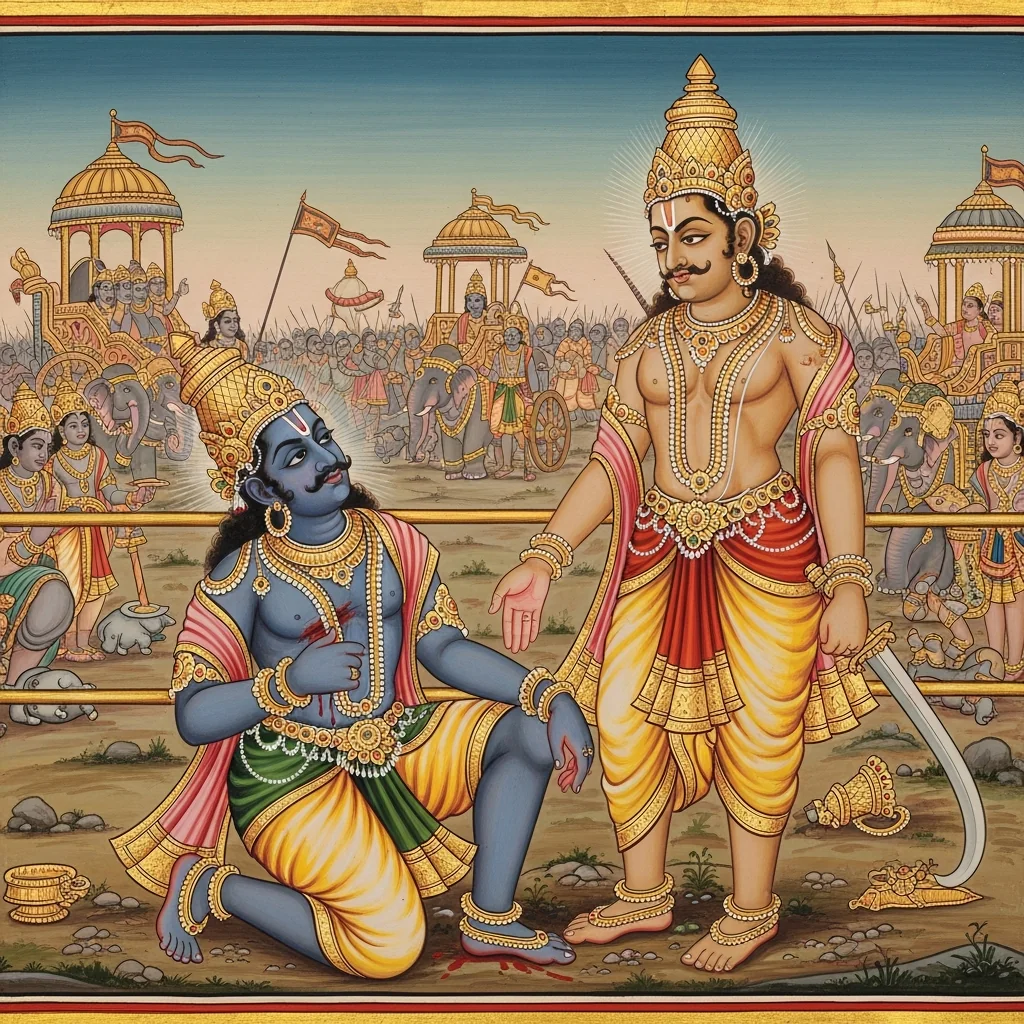
Narrated by Nārada, this chapter unfolds a vast, end-of-age battle between the deva and asura hosts. Their armies collide like a last-time ocean in upheaval, with conches, drums, elephants, horses, and chariots roaring together. A crushing exchange of missiles follows—spears, maces, axes, śaktis, tomaras, hooks, and arrows—so dense that the directions are obscured as if by darkness, and fighters strike in confusion without seeing their foes. The battlefield is strewn with shattered chariots, fallen elephants, and rivers of blood, drawing flesh-eaters and delighting certain liminal beings. The narrative then narrows to a duel: the asura leader Grasana confronts Yama (Kṛtānta), trading storms of arrows, blows of mace and the punitive staff daṇḍa, and grappling at close quarters. Grasana’s fury overwhelms Yama’s kiṅkaras, and Yama is beaten down and taken for lifeless; Grasana roars in triumph and regroups. Through the images of kāla and daṇḍa, the chapter intimates its lesson: martial “pauruṣa” proves fragile when tested against cosmic governance. The devas are shaken, and the very field of battle seems to tremble.
Shlokas
Verse 1
नारद उवाच । ततस्तयोः समायोगः सेनयोरुभयोरभूत् । युगांते समनुप्राप्ते यथा क्षुब्धसमुद्रयोः
Nārada said: Then the two armies met in full encounter, like two oceans heaving and churning when the end of an age (yuga) has arrived.
Verse 2
सुरासुराणां संमर्दे तस्मिन्परमदारुणे । तुमुलं सुमहत्क्रांते सेनयोरुभयोरपि
In that most dreadful crush of gods and asuras, as both armies advanced with mighty force, the battle became a vast and tumultuous uproar.
Verse 3
गर्जतां देवदैत्यानां शंखभेरीरवेण च । तूर्याणां चैव निर्घोषैर्मातंगानां च बृंहितैः
With the roaring of gods and asuras, with the blare of conches and great drums, with the thunder of war-instruments, and with the trumpeting of elephants, the battlefield resounded.
Verse 4
हेषितैर्हयवृंदानां रथनेमिस्वनेन च । घोषेण चैव तूर्याणां युगांत इव चाभवत्
By the neighing of herds of horses, by the rumble of chariot-wheels, and by the clamour of war-instruments, it seemed like the very end of an age (yuga).
Verse 5
रोषेणाबिपरीतांगास्त्यक्तजीवितचेतसः । समसज्जन्त तेन्योन्यं प्रक्रमेणातिलोहिताः
Twisted and driven by wrath, with minds that had cast away concern for life, they closed upon one another—pressing forward, utterly reddened with fury and blood.
Verse 6
रथा रथैः समासक्ता गजाश्चापि महागजैः । पत्तयः पत्तिभिश्चैव हयाश्चापि महाहयैः
Chariots locked with chariots; elephants with mighty elephants; foot-soldiers with foot-soldiers; and horses with great horses—each force met its like in close combat.
Verse 7
ततः प्रासाशनिगदाभिंडिपालपरश्वधैः । शक्तिभिः पट्टिशैः शूलैर्मुद्गरैः कणयैर्गुडैः
Then, with spears, swords, maces, bhindipālas, axes, javelins, battle-axes, tridents, hammers, and heavy missiles, they struck at one another in relentless assault.
Verse 8
चक्रैश्च शक्तिभिश्चैव तोमरैरंकुशैरपि । कर्णिनालीकनाराचवत्सदंतार्द्धचंद्रकैः
With chakra-discs and śakti-weapons, with javelins, with tomaras and goads, and with arrows of many kinds—karṇins, nālīkas, nārācas, vatsadantas, and half-moon-headed shafts—they filled the battle with cutting volleys.
Verse 9
भल्लैर्वेतसपत्रैश्च शुकतुंडैश्च निर्मलैः । वृष्टिभिश्चाद्भुताकारैर्गगनं समपद्यत
With bhalla-arrows, reed-leaf shafts, spotless “parrot-beak” arrows, and wondrously shaped volleys raining down, the sky itself was filled and taken over.
Verse 10
संप्रच्छाद्य दिशः सर्वास्तमोमयमिवाभवत् । प्राज्ञायंत न तेऽन्योन्यं तस्मिंस्तमसि संकुले
Covering all directions, it became as though made of darkness; in that confused gloom they could not recognize one another.
Verse 11
अदृश्यभूतास्तमसि न्यकृंतंत परस्परम् । ततो भुजैर्ध्वजैश्छत्रैः शिरोभिश्च सकुंडलैः
Made unseen in the darkness, they cut one another down; then the field was strewn with arms, standards, parasols, and heads still wearing earrings.
Verse 12
गजैस्तुरंगैः पादातैः पतद्भिः पतितैरपि । आकाशशिरसो भ्रष्टैः पंकजैरिव भूश्चिता
The earth was strewn with elephants, horses, and foot-soldiers—some falling, some already fallen—like a ground carpeted with lotuses dropped from the very “head of the sky”.
Verse 13
भग्नदंता भिन्नकुंभाश्छिन्नदीर्घमहाकराः । गजाः शैलनिभाः पेतुर्धरण्यां रुधिरस्रवाः
Elephants, mountain-like, fell upon the earth—tusks broken, temples split, their long mighty trunks severed, blood streaming forth.
Verse 14
भग्नैषाश्च रथाः पेतुर्भग्नाक्षाः शकलीकृताः । पत्तयः कोटिशः पेतुस्तुरंगाश्च सहस्रशः
Chariots fell with their poles shattered—axles broken, smashed into fragments. Foot-soldiers fell by crores, and horses by the thousands.
Verse 15
ततः शोणितनद्यश्च हर्षदाः पिशिताशिनाम् । वैतालानंददायिन्यो व्यजायंत सहस३शः
Then rivers of blood arose by the thousand—delighting the flesh-eaters and bringing joy to the vetālas.
Verse 16
तस्मिंस्तथाविधे युद्धे सेनानीर्ग्रसनोऽरिहा । बाणवर्षेण महता देवसैन्यमकंपयत्
In that kind of battle, the commander Grasana, destroyer of foes, shook the army of the gods with a mighty rain of arrows.
Verse 17
ततो ग्रसनमालोक्य यमः क्रोधविमूर्छितः । ववर्ष शरवर्षेण विशेषादग्निवर्चसा
Then, seeing Grasana, Yama—faint with wrath—poured down a rain of arrows, blazing especially with fiery splendor.
Verse 18
स विद्धो बहुभिर्षाणैर्ग्रसनोऽतिपराक्रमः । कृतप्रतिकृताकांक्षी धनुरानम्य भैरवम्
Though pierced by many arrows, the exceedingly valiant Grasana—eager to retaliate—bent and drew his dreadful bow.
Verse 19
शरैः सहस्रैश्च पञ्चलक्षैश्चैव व्यताडयत् । ग्रसनेन विमुक्तांस्ताञ्छरान्सोपि निवार्य च
He struck with thousands—indeed with five hundred thousand—arrows, and he also checked and warded off the shafts released by Grasana.
Verse 20
बाणवृष्टिभिरुग्राभिर्यमो ग्रसनमर्दयत् । कृतांतशरवृष्टीनां संततीः प्रतिसर्पतीः । चिच्छेद शरवर्षेण ग्रसनो दानवेश्वरः
With fierce showers of arrows Yama tormented Grasana; but Grasana, lord of the Dānavas, cut down with his own arrow-rain the advancing, unbroken torrents of Death’s shafts.
Verse 21
विफलां तां समालोक्य यमः स्वशरसंततिम्
Seeing that his own unbroken volley of arrows had become futile, Yama…
Verse 22
प्राहिणोन्मुद्गरं दीप्तं ग्रसनस्य रथं प्रति । स तं मुद्गरमायांतमुत्पत्य रथसत्तमात्
He hurled a blazing mallet toward Grasana’s chariot. Seeing that mallet rushing in, Grasana sprang up from his excellent chariot.
Verse 23
जग्राह वामहस्तेन लीलया ग्रसनोऽरिहा । तेनैव मुद्गरेणाथ यमस्य महिषं रुषा
Grasana, the foe-destroyer, playfully caught it with his left hand; and then, with that same mallet, in anger he struck Yama’s buffalo.
Verse 24
ताडयामास वेगेन स पपात महीतले । उत्पत्याथ यमस्तस्मान्महिषान्निपतिष्यतः
He struck it with force, and it fell upon the ground. Then Yama sprang up from that buffalo as it was about to collapse.
Verse 25
प्रासेन ताडयामास ग्रसनं वदने दृढम् । स तु प्राप्तप्रहारेण मूर्छितो न्यपतद्भुवि
With a spear he struck Grasana firmly in the face. Hit by that blow, Grasana fainted and fell upon the earth.
Verse 26
ग्रसनं पतित दृष्ट्वा जंभो भीमपराक्रमः । यमस्य भिंडिपालेन प्रहारमकरोद्धृदि
Seeing Grasana fallen, Jambha—of terrible prowess—struck Yama in the chest with a bhiṇḍipāla (javelin).
Verse 27
यमस्तेन प्रहारेण सुस्राव रुधिरं मुखात् । अतिगाढ प्रहारार्त्तः कृतांतोमूर्छितोऽभवत्
By that blow Yama bled from his mouth. Tormented by the exceedingly heavy strike, Kṛtānta (the Ender) fell into a swoon.
Verse 28
कृतांतमर्दितं दृष्ट्वा गदापाणिर्धनादिपः । वृतो यक्षायुतगणैर्जंभं प्रत्युद्ययौ रुषआ
Seeing Kṛtānta (Yama) crushed, Dhanādhipa (Kubera), mace in hand and encircled by hosts of thousands of Yakṣas, marched out in wrath against Jambha.
Verse 29
जंभो रुषा तमायांतं दानवा नीकसंवृतः । जग्राह वाक्यं राज्ञस्तु यता स्निग्धेन भाषितम्
Jambha, enraged and ringed by the ranks of Dānavas, saw him advancing; yet he heeded the king’s words, spoken with measured kindness.
Verse 30
ग्रसनो लब्धसंज्ञोऽथ यमस्य प्राहिणोद्गदाम् । मणिहेमपरिष्कारां गुर्वी परिघमर्दिनीम्
Then Grasana, regaining consciousness, hurled at Yama a heavy mace—adorned with jewels and gold—mighty enough to crush even an iron bar.
Verse 31
तामापतंतीं संप्रेक्ष्य गदां महिषवाहनः । गदायाः प्रतिघातार्थं जगज्ज्वलनभैरवम्
Seeing that mace rushing toward him, Yama, the buffalo-mounted lord, readied—against its impact—a terrifying blaze, fearsome as the world set aflame.
Verse 32
दंडं मुमोच कोपेन ज्वालामालासमाकुलम् । स गदां वियति प्राप्य ररासांबुधरोद्धतम्
In wrath he hurled his staff, wreathed in garlands of flame. Meeting the mace in mid-sky, it roared like a storm-cloud, swollen and raging.
Verse 33
संवट्टश्चाभवत्ताभ्यां शैलाभ्यामिव दुःसहः । ताभ्यां निष्पेषनिर्ह्राद जडीकृतदिगंतरम्
Between them arose a crushing impact, unbearable—like mountains colliding. By that grinding thunder, the very quarters of space were stunned into stillness.
Verse 34
जगद्व्याकुलतां यातं प्रलयागमशंकया । क्षणात्प्रशांतनिर्ह्रादं ज्वलदुल्कासमाचितम्
The world fell into turmoil, fearing the coming of dissolution. Yet in a moment the thunder subsided, and the sky was strewn with blazing meteors.
Verse 35
निष्पेषणं तयोर्भीमम भूद्गनगोचरम् । निहत्याथ गदां दण्डस्ततो ग्रसनमूर्धनि
Their dreadful crushing clash became a spectacle even for Śiva’s gaṇas. Then the staff struck down the mace, and thereafter fell upon Grasana’s head.
Verse 36
पपात पौरुषं हत्वा यथा दैवं पुरार्जितम् । सतु तेन प्रहारेण दृष्ट्वा सतिमिरादिशः
His manly strength collapsed, as if fate long stored up had struck it down. And by that blow he saw the directions darkened with gloom.
Verse 37
पपात भूमौ निःसंज्ञो भूमिरेणुविभूषितः । ततो हाहारवो घोरः सेनयोरुभयोरभूत्
He fell to the earth, senseless, his body coated with the dust of the ground. Then a terrible cry of ‘Alas!’ rose from both armies.
Verse 38
ततो महूर्तमात्रेण ग्रसनः प्राप्य चेतनाम् । अपश्यत्स्वां तनुं ध्वस्तां विलोलाभरणांबराम्
Then, within the space of a muhūrta, Grasana regained consciousness. He saw his own body shattered—its ornaments and garments disheveled and hanging loose.
Verse 39
स चापि चिंतयामास कृतप्रतिकृतक्रियाम् । धिगस्तु पौरुषं मह्यं प्रभोरग्रेसरः कथम्
He reflected on the deed and its counter-deed. ‘Fie upon my valor! How could I presume to stand before the Lord’s foremost one?’
Verse 40
मय्याश्रितानि सैन्यानि जिते मयि जितानि च । असंभावितरूपो हि सज्जनो मोदते सुखम्
‘The armies that relied on me are defeated when I am defeated. For the good person, whose nature is free from self-importance, rejoices in contentment.’
Verse 41
संभावितस्त्वशक्तश्चेत्तस्य नायं परोऽपि वा । एवं संचिंत्य वेगेन समुत्तस्थौ महाबलः
‘But if one is honored despite being incapable, neither this world nor the next is truly his.’ Thinking thus, that mighty one sprang up swiftly.
Verse 42
मुद्गरं कालदण्डाभं गृहीत्वा गिरिसंनिभम् । ग्रसनो घोरसंकल्पः संदष्टौष्ठपुटच्छदः
Grasana, grim in resolve, seized a mountain-like mace resembling the staff of Death (Kāla). With lips clenched tight, he prepared for a dreadful assault.
Verse 43
रथेन त्वरितोऽगच्छदाससादांतकं रणे । समासाद्य यमं युद्धे ग्रसनो भ्राम्य मुद्गरम्
Swiftly mounting his chariot, he advanced and confronted Antaka in battle. Closing in upon Yama in the fight, Grasana whirled his mace.
Verse 44
वेगेन महता रौद्रं चिक्षेप यममूर्धनि । विलोक्य मुद्गरं दीप्तं यमः संभ्रांतलोचनः
With tremendous speed and fierce wrath, he hurled it toward Yama’s head. Seeing the blazing mace, Yama’s eyes widened in alarm.
Verse 45
वंचयामास दुर्द्धर्षं मुद्गरं तं महाबलः । तस्मिन्नपसृते दूरं चंडानां भीमकर्मणाम्
That mighty one evaded the irresistible mace. When it had passed far away, the fierce warriors of dreadful deeds pressed on.
Verse 46
याम्यानां किंकराणां च अयुतं निष्पिपेष ह । ततस्तदयुतं दृष्ट्वा हतं किंकरवाहिनी
He crushed an ayuta (ten thousand) of Yama’s attendants. Then, seeing those ten thousand slain, the host of attendants faltered.
Verse 47
दशार्बुदमिता क्रुद्धा ग्रसनायान्वधावत । ग्रसनस्तु समालोक्य तां किंकरमयां शुभाम्
Enraged, a force numbering ten arbudas surged against Grasana. Grasana, however, looked upon that splendid host made up of Yama’s attendants.
Verse 48
मेने यमसहस्राणि तादृग्रूपबला हि सा । विगाह्य ग्रसनं सेना ववर्ष शरवृष्टिभिः
That army was of such form and strength that it seemed like thousands of Yamas. Plunging into Grasana, the host rained down showers of arrows.
Verse 49
कल्पांतघोरसंकाशो बभूव स महारणः । केचिच्छैलेन बिभिदुः केचिद्बाणैरजिह्यगैः
That great battle became dreadful, like the terror at the end of an aeon. Some struck by hurling rocks; others pierced with unfaltering arrows.
Verse 50
पिपिषुर्गदया केचित्कोचिन्मुद्गरवृष्टिभिः । केचित्प्रासप्रहारैश्च ताडयामासुरुद्धताः
Some crushed with clubs; others with showers of maces. Others—arrogant in fury—struck with spear-thrusts.
Verse 51
अपरे किंकरास्तस्य ललंबुर्बाहुमंडले । शिलाभिरपरे जघ्नुर्द्रुमैरन्ये महोच्छ्रयैः
Some of his attendants clung to the circle of his arms. Others struck with stones, and still others with lofty, towering trees.
Verse 52
तस्यापरे च गात्रेषु दशनांश्चन्यपातयन् । अपरे मुष्टिभिः पृष्ठं किंकरास्ताडयंति च
Some struck his limbs and made their teeth fall out; others—Yama’s servants—kept pounding his back with their fists.
Verse 53
एवं चाभिद्रुतस्तैः स ग्रसनः क्रोधमूर्छितः । उत्साद्य गात्रं भूपृष्ठे निष्पिपेष सहस्रशः
Thus assailed by them, Grasana—stupefied with rage—cast his body upon the earth and crushed them by the thousand.
Verse 54
कांश्चिदुत्थाय जघ्नेऽसौ मुष्टिभिः किंकरान्रणे । कांश्चित्पादप्रहारेण धावन्नन्यानचूर्णयत्
Rising up, he struck down some of Yama’s servants in battle with his fists; others he smashed while running, with kicks of his feet.
Verse 55
क्षणैकेन स तान्निन्ये यमलोकायभारत । स च किंकरयुद्धेन ववृधेऽग्निरिवैधसा
In a single moment, O Bhārata, he sent them to Yama’s realm; and by fighting the attendants he only grew stronger—like fire fed with fuel.
Verse 56
तमालोक्य यमोऽश्रांतं श्रांतंस्तांश्च हतान्स्वकान् । आजगाम समुद्यम्य दंडं महिषवाहनः
Seeing him unwearied, and his own servants exhausted and slain, Yama—mounted on a buffalo—came forward, raising his staff.
Verse 57
ग्रसनस्तु तमायांतमाजघ्ने गदयोरसि । अचिंतयित्वा तत्कर्म ग्रसनस्यांतकोऽरिहा
But Grasana struck the approaching Yama on the chest with a mace. Unable to endure that deed, Antaka (Yama), the foe-slayer, turned his intent toward Grasana.
Verse 58
व्याघ्रान्दंडेन संजघ्ने स रथान्न्य पतद्भुवि । ततः क्षणेन चोत्थाय संचिंत्यात्मानमुद्धतः
With his staff he struck down the fierce assailants, and the chariots fell upon the earth. Then, in a moment, the arrogant one rose again, steadying himself and gathering his mind.
Verse 59
वायुवेगेन सहसा ययौ यमरथं प्रति । पदातिः स रथं तं च समारुह्य यमं तदा
With the speed of the wind he suddenly rushed toward Yama’s chariot; though on foot, he mounted that chariot and pressed upon Yama then.
Verse 60
योधयामास बाहुभ्यामाकृष्य बलिनां वरः । यमोऽपि शस्त्राण्युत्सृज्च बाहुयुद्धे प्रवर्तते
The foremost of the mighty grappled him with both arms, drawing him close. Yama too, casting aside his weapons, entered into hand-to-hand combat.
Verse 61
ग्रसनं कटिवस्त्रे तु यमं गृह्य बलोत्कटः । भ्रामयामास वेगेन संभ्रमाविष्टचेतसम्
Then Grasana, intoxicated with power, seized Yama by his waist-cloth and whirled him about with force, casting his mind into turmoil.
Verse 62
विमोच्याथ यमः कष्टात्कंठेऽवष्टभ्य चासुरम् । बाहुभ्यां भ्रामयामास सोऽप्यात्मानममोचयत्
Then Yama, freeing himself with difficulty, seized the asura by the throat and whirled him around with both arms; yet the demon too managed to wrench himself free.
Verse 63
ततो जघ्नतुरन्योन्यं मुष्टिभिर्निर्दयौ च तौ । दैत्येंद्रस्यातिवीर्यत्वात्परिश्रांततरो यमः
Then the two, pitiless, struck one another with their fists; and because the Daitya-lord possessed overwhelming strength, Yama became the more exhausted.
Verse 64
स्कंधे निधाय दैत्यस्य मुखं विश्रांतिमैच्छत । तमा लक्ष्य ततो दैत्यः श्रांतमुत्पाट्य चौजसा
Resting the demon’s face upon his shoulder, Yama sought a moment’s respite. Noticing him thus, the daitya, with force, seized the weary one and tore him up.
Verse 65
निष्पिपेष महीपृष्ठे विनिघ्नन्पार्ष्णिपाणिभिः । ततो यमस्य वदनात्सुस्राव रुधिरं बहु
He crushed him upon the earth’s surface, striking with heel and fist; then from Yama’s mouth much blood flowed forth.
Verse 66
निर्जीवमिति तं दृष्ट्वा ततः संत्यज्य दानवः । जयं प्राप्योद्धतं नादं मुक्त्वा संत्रास्य देवताः
Seeing him as though lifeless, the dānava left him. Thinking victory was won, he let out a fierce roar, terrifying the gods.
Verse 67
स्वकं सैन्यं समासाद्य तस्थौ गिरिरिवाचलः
Rejoining his own army, he stood firm—immovable like a mountain.
Verse 68
नादेन तस्य ग्रसनस्य संख्ये महायुधैश्चार्दितसर्वगात्राः । गते कृथांते वसुधां च निष्प्रभे चकंपिरे कांदिशिकाः सुरास्ते
In that battle, shaken by Grasana’s roar and battered in every limb by mighty weapons, and with Kṛtānta (Yama) departed and the earth grown dim, those gods trembled and fled about in bewildered confusion.