Adhyaya 12
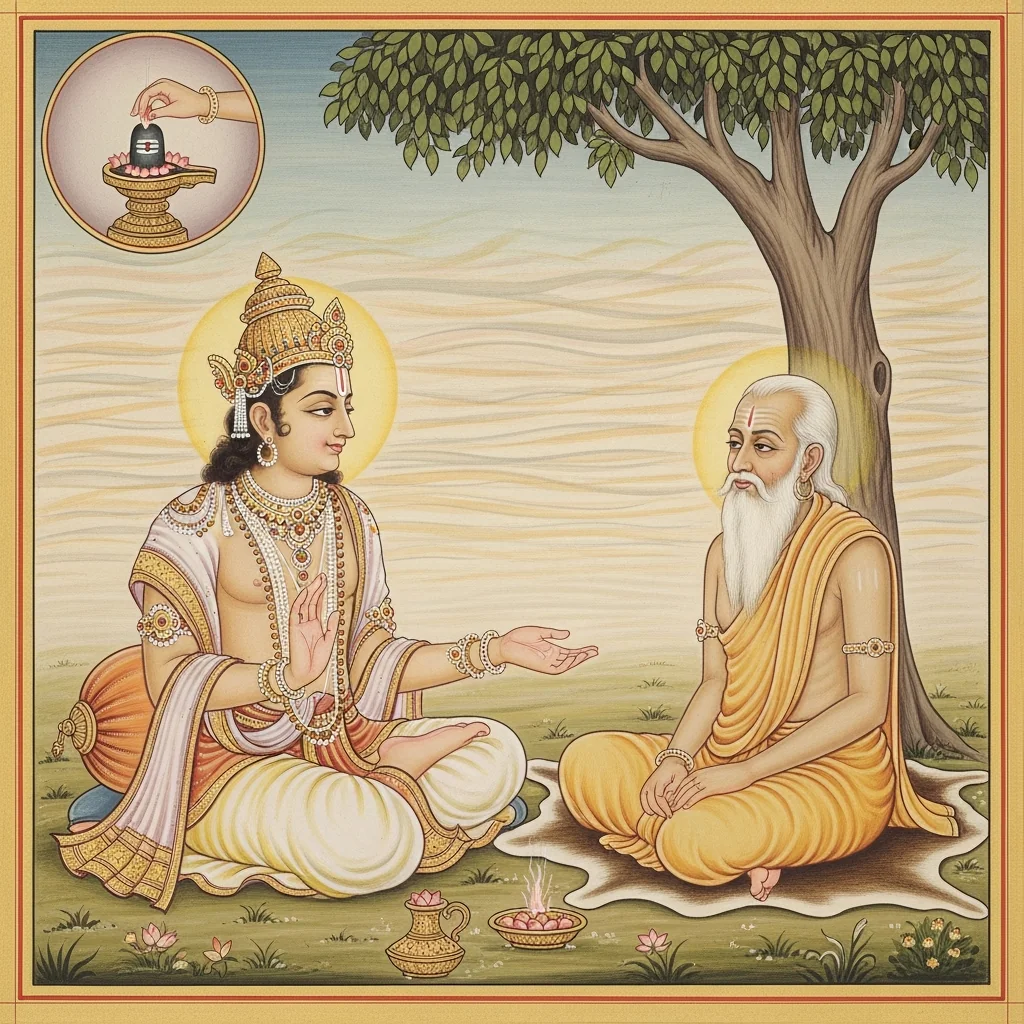
This chapter unfolds as a multi-voiced theological dialogue framed by Nārada’s narration. A party including King Indradyumna meets a great ascetic aligned with the “Maitra” path—non-violence and disciplined speech—whose sanctity commands reverence even from animals. Kūrma introduces Indradyumna as a ruler seeking restored renown and spiritual benefit, not heaven, and asks Lomaśa to guide him as a disciple. Lomaśa replies with an extended meditation on mortality, criticizing worldly building and attachment—house, comfort, youth, wealth—since impermanence makes such pursuits unstable. Indradyumna then asks about Lomaśa’s extraordinary longevity, and Lomaśa recounts a former-life cause: once poor, he performed a single sincere act of bathing the Śiva-liṅga and worshiping with lotuses, leading to rebirth with memory and a life of ascetic devotion. Śiva granted him not absolute immortality but a lifespan extended within cosmic cycles, signaled by periodic loss of body-hair as time draws near. The chapter concludes by affirming the accessibility and purifying power of Śiva worship—lotus pūjā, japa of the praṇava (Om), and bhakti—able to cleanse even grave sins. It also lists “rarities” such as human birth in Bhārata and devotion to Śiva to sharpen ethical urgency. The closing rahasya declares Śiva-pūjā the chief practical teaching and the safest refuge in a transient world.
Shlokas
Verse 1
नारद उवाच । अथ ते ददृशुः पार्थ संयमस्थं महामुनिम् । कूर्माख्यानंनामैकादशोऽध्यायः
Nārada said: “Then they saw the great sage, established in self-restraint, O son of Pṛthā.” (Here ends the eleventh chapter called ‘The Account of Kūrma’.)
Verse 2
जटास्त्रिषवणस्नानकपिलाः शिरसा तदा । धारयन्तं लोमशाख्यमाज्यसिक्तमिवानलम्
At that time they saw Lomaśa—his matted locks, tawny from thrice-daily bathing—borne upon his head, blazing like fire fed with ghee.
Verse 3
सव्यहस्ते तृणौघं च च्छायार्थे विप्रसत्तमम् । दक्षिणे चाक्षमालां च बिभ्रतं मैत्रमार्गगम्
That best of brāhmaṇas held a bundle of grass in his left hand for shade, and in his right an akṣamālā (rosary), moving upon the path of friendliness and benevolence.
Verse 4
अहिंसयन्दुरुक्ताद्यैः प्राणिनो भूमिचारिणः । यः सिद्धिमेति जप्येन स मैत्रो मुनिरुच्यते
He who does not injure earth-moving creatures even by harsh speech and the like, and who attains spiritual accomplishment through mantra-recitation—such a one is called a ‘friendly (maitra) sage’.
Verse 5
बकभूपद्विजोलूकगृध्रकूर्मा विलोक्य च । नेमुः कलापग्रामे तं चिरंतनतपोनिधिम्
Seeing him, the crane, the king of beasts, the bird, the owl, the vulture, and the tortoise bowed down to that ancient treasury of austerity in the village of Kalāpa.
Verse 6
स्वागतासनसत्कारेणामुना तेऽति सत्कृताः । यथोचितं प्रतीतास्तमाहुः कार्यं हृदि स्थितम्
Honored exceedingly by him through welcome, seating, and due hospitality, they felt duly satisfied and then told him the matter that lay in their hearts.
Verse 7
कूर्म उवाच । इन्द्रद्युम्नोऽयमवनीपतिः सत्रिजनाग्रणीः । कीर्तिलोपान्निरस्तोऽयं वेधसा नाकपृष्ठतः
The Tortoise said: ‘This is King Indradyumna, a foremost leader among men and ruler of the earth. Because his fame suffered decline, the Creator, Brahmā (Vedhas), has cast him down from the heights of heaven.’
Verse 8
मार्कंडेयादिभिः प्राप्य कीर्त्युद्धारंच सत्तम । नायं कामयते स्वर्गं पुनःपातादिभीषणम्
O best of the good, having approached Mārkaṇḍeya and others and secured the restoration of his fame, he does not desire heaven, which is dreadful because of the fear of falling again.
Verse 9
भवतानुगृहीतोऽयमिहेच्छति महोदयम् । प्रणोद्यस्तदयं भूपः शिष्यस्ते भगवन्मया । त्वत्सकाशमिहानीतो ब्रूहि साध्वस्य वांछितम्
‘Favored by you, he seeks a great rise here, in this very life. Therefore, O Blessed One, I have urged this king—your disciple—and brought him into your presence. Tell us rightly what he should desire.’
Verse 10
परोपकरणं नाम साधूनां व्रतमाहितम् । विशेषतः प्रणोद्यानां शिष्यवृत्तिमुपेयुषाम्
Service to others is truly the vowed discipline established for the holy; especially so for those fit to be guided, who have taken up the conduct of disciples.
Verse 11
अप्रणोद्येषु पापेषु साधु प्रोक्तमसंशयम् । विद्वेषं मरणं चापि कुरुतेऽन्यतरस्य च
Concerning sinners unfit to be guided, the good have declared without doubt that association with them brings about hatred—and even death—for one side or the other.
Verse 12
अप्रमत्तः प्रणोद्येषु मुनिरेष प्रयच्छति । तदेवेति भवानेवं धर्मं वेत्ति कुतो वयम्
This sage, ever vigilant, extends help to those fit to be guided. Indeed, you know dharma in just this way—how could we know it otherwise?
Verse 13
लोमश उवाच । कूर्म युक्तमिदं सर्वं त्वयाभिहितमद्य नः । धर्मशास्त्रोपनतं तत्स्मारिताः स्म पुरातनम्
Lomaśa said: “O Kūrma, all that you have spoken to us today is fitting. It accords with the Dharmaśāstras and has reminded us of the ancient teaching.”
Verse 14
ब्रूहि राजन्सुविश्रब्धं सन्देहं हृदयस्थितम् । कस्ते किमब्रवीच्छेषं वक्ष्याम्यहं न संशयः
Speak, O king, with full confidence—declare the doubt that rests within your heart. Who said what to you? Tell me the remainder; I shall explain it without any uncertainty.
Verse 15
इन्द्रद्युम्न उवाच । भगवन्प्रथमः प्रश्रस्तावदेव ममोच्यताम् । ग्रीष्मकालेऽपि मध्यस्थै रवौ किं न तवाश्रमः
Indradyumna said: O Blessed One, first answer my initial question. Even in the summer season, when the sun stands overhead, why is there no cool shelter in your hermitage?
Verse 16
कुटीमात्रोऽपि यच्छाया तृणैः शिरसि पाणिगैः
Even a shade no larger than a small hut—made of grass and held by one’s own hands above the head—is deemed sufficient.
Verse 17
लोमश उवाच । मर्तव्यमस्त्यवश्यं च काय एष पतिष्यति । कस्यार्थे क्रियते गेहमनित्यभवमध्यगैः
Lomaśa said: Death is inevitable, and this body will surely fall. For whose sake is a house built by those who stand amid impermanent existence?
Verse 18
यस्य मृत्युर्भवेन्मित्रं पीतं वाऽमृतमुत्तमम् । तस्यैतदुचितं वक्तुमिदं मे श्वो भविष्यति
Only one to whom death has become a friend—or who has drunk the supreme amṛta, the nectar of immortality—may fittingly say, “This will be mine tomorrow.”
Verse 19
इदं युगसहस्रेषु भविष्यमभविद्दिनम् । तदप्यद्यत्वमापन्नं का कथामरणावधेः
This day once seemed to lie in a far-off future, even after thousands of yugas; yet it has arrived as “today.” What, then, can be said of the limit set by death?
Verse 20
कारणानुगतं कार्यमिदं शुक्रादभूद्वपुः । कथं विशुद्धिमायाति क्षालितांगारवद्वद
This effect follows its cause: this body has arisen from semen. Tell me—how can it ever attain purity, like charcoal that is washed yet remains black?
Verse 21
तदस्यापि कृते पापं शत्रुषड्वर्गनिर्जिताः । कथंकारं न लज्जन्ते कुर्वाणा नृपसत्तम
And for its sake, too, sin is committed—by those conquered by the six inner enemies. How do they not feel shame while doing such deeds, O best of kings?
Verse 22
तद्ब्रह्मण इहोत्पन्नः सिकताद्वयसम्भवः । निगमोक्तं पठञ्छृण्वन्निदं जीविष्यते कथम्
Born here from that Brahman, sprung from the union of the two ‘sands’ (male and female), even while reading and hearing what the Vedas declare—how can this being truly live wisely?
Verse 23
तथापि वैष्णवी माया मोहयत्यविवेकिनम् । हृदयस्थं न जानंति ह्यपि मृत्यु शतायुषः
Yet even so, Vaiṣṇavī Māyā deludes the undiscerning. Even those who live a hundred years do not recognize death as dwelling within their own hearts.
Verse 24
दन्ताश्चलाश्चला लक्ष्मीर्यौवनं जीवितं नृप । चलाचलमतीवेदं दानमेवं गृहं नृणाम्
O king, teeth are unsteady, fortune (Lakṣmī) is unsteady, youth and life are unsteady. Knowing well that everything here is wavering and impermanent, a man should practice dāna—charity; so too a household is itself unstable for human beings.
Verse 25
इति विज्ञाय संसारसारं च चलाचलम् । कस्यार्थे क्रियते राजन्कुटजादि परिग्रहः
Thus, having understood that the very essence of worldly life is unstable and ever-shifting, O king—then for whose sake is the hoarding of possessions undertaken, beginning even with small things like the kuṭaja?
Verse 26
इन्द्रद्युम्न उवाच । चिरायुर्भगवानेव श्रूयते भुवनत्रये । तदर्थमहमायातस्तत्किमेवं वचस्तव
Indradyumna said: “Throughout the three worlds it is heard that only the Blessed Lord is long-lived—eternal. For that very purpose I have come; why, then, are your words spoken in this way?”
Verse 27
लोमश उवाच । प्रतिकल्पं मच्छरीरादेकरोमपरिक्षयः । जायते सर्वनाशे च मम भावि प्रमापणम्
Lomaśa said: “In each kalpa, a single hair from my body falls away. When all are exhausted, my destruction—my death—will occur.”
Verse 28
पश्य जानुप्रदेशं मे द्व्यंगुलं रोमवर्जितम् । जातं वपुस्तद्बिभेमि मर्तव्ये सति किं गृहैः
“Look near my knee: for two finger-breadths it has become devoid of hair. Seeing this change in my body, I grow afraid. When death is certain, what use are houses and possessions?”
Verse 29
नारद उवाच । इत्थं निशम्य तद्वाक्यं स प्रहस्यातिविस्मितः । भूपालस्तस्य पप्रच्छ कारणं तादृशायुषः
Nārada said: Hearing those words spoken thus, the king—laughing and greatly astonished—asked him the reason for such a lifespan.
Verse 30
इन्द्रद्युम्न उवाच । पृच्छामि त्वामहं ब्रह्मन्यदायुरिदमीदृशम् । तव दीर्घं प्रभावोऽसौ दानस्य तपसोऽथवा
Indradyumna said: “O brahmin, I ask you—how has your lifespan become such as this? Is this great and enduring power the fruit of charity (dāna), or of austerity (tapas)?”
Verse 31
लोमश उवाच । श्रृणु भूप प्रवक्ष्यामि पूर्वजन्मसमुद्भवाम् । शिवधर्मयुतां पुण्यां कथां पापप्रणाशनीम्
Lomaśa said: “Listen, O king. I shall tell a holy account arising from a former birth—filled with Śiva’s dharma—virtuous and able to destroy sin.”
Verse 32
अहमासं पुरा शूद्रो दरिद्रोऽतीवभूतले । भ्रमामि वसुधापृष्ठे ह्यशनपीडितो भृशम्
“Formerly I was a Śūdra, exceedingly poor upon the earth. I wandered over the face of the land, sorely tormented by hunger.”
Verse 33
ततो मया महल्लिंगं जालिमध्यगतं तदा । मध्याह्नेऽस्य जलाधारो दृष्टश्चैवा विदूरतः
“Then I beheld a great Liṅga, set within a lattice-like enclosure. At midday, from a distance, I also saw its water-reservoir for worship.”
Verse 34
ततः प्रविश्य तद्वारि पीत्वा स्नात्वा च शांभवम् । तल्लिंगं स्नापितं पूजा विहिता कमलैः शुभैः
“Then I entered there, drank that sacred water, and bathed in the Śaiva (Śāmbhava) manner. I bathed that Liṅga and performed worship, offering auspicious lotuses.”
Verse 35
अथ क्षुत्क्षामकंठोऽहं श्रीकंठं तं नमस्य च । पुनः प्रचलितो मार्गे प्रमीतो नृपसत्तम
Then, my throat parched by hunger and exhaustion, I bowed in reverence to that Śrīkaṇṭha. Setting out again upon the road, O best of kings, I died along the way.
Verse 36
ततोऽहं ब्राह्मणगृहे जातो जातिस्मरः सुतः । स्नापनाच्छिवलिंगस्य सकृत्कमलपूजनात्
Thereafter I was born in a brāhmaṇa household as a son who remembered former births—because I had once bathed a Śiva-liṅga and worshipped it with lotuses.
Verse 37
स्मरन्विलसितं मिथ्या सत्याभासमिदं जगत् । अविद्यामयमित्येवं ज्ञात्वा मूकत्वमास्थितः
Remembering my former experience, I understood this world to be a mere play—false, only an appearance of truth, woven of ignorance; knowing thus, I adopted silence.
Verse 38
तेन विप्रेण वार्धक्ये समाराध्य महेश्वरम् । प्राप्तोऽहमिति मे नाम ईशान इति कल्पितम्
When that brāhmaṇa reached old age, having duly worshipped Maheśvara, he said, “I have attained (my goal),” and thus my name was conceived as Īśāna.
Verse 39
ततः स विप्रो वात्सल्यादगदान्सुबहून्मम । चकार व्यपनेष्यामि मूकत्वमिति निश्चयः
Then that brāhmaṇa, out of affection, prepared many medicines for me, resolved: “I shall remove this muteness.”
Verse 40
मंत्रवादान्बहून्वैद्यानुपायानपरानपि । पित्रोस्तथा महामायासंबद्धमनसोस्तथा
He employed many reciters of spells, physicians, and other remedies as well; and my parents too—whose minds were bound by Great Māyā—did the same.
Verse 41
निरीक्ष्य मूढतां हास्यमासीन्मनसि मे तदा । तथा यौवनमासाद्य निशि हित्वा निजं गृहम्
Seeing their foolishness, amusement arose in my mind at that time. Then, upon reaching youth, I left my own home in the night.
Verse 42
संपूज्य कमलैः शंभुं ततः शयनमभ्यगाम् । ततः प्रमीते पितरि मूढैत्यहमुज्झितः
After duly worshipping Śambhu with lotuses, I then lay down to sleep. Then, when my father died, I—deemed foolish—was cast aside.
Verse 43
संबंधिभिः प्रतीतोऽथ फलाहारमवस्थितः । प्रतीतः पूजयामीशमब्जैर्बहुविधैस्तथा
Then, accepted by my relatives, I lived on fruit alone. Content, I continued to worship the Lord with many kinds of lotuses.
Verse 44
अथ वर्षशतस्यांते वरदः शशिशेखरः । प्रत्यक्षो याचितो देहि जरामरणसंक्षयम्
Then, at the end of a hundred years, the boon-giving Lord—Śaśiśekhara, Śiva crowned with the moon—appeared before me in person, and I petitioned: “Grant me the ending of old age and death.”
Verse 45
ईश्वर उवाच । अजरामरता नास्ति नामरूपभृतोयतः । ममापि देहपातः स्यादवधिं कुरु जीविते
Īśvara said: “For embodied beings who bear name and form, there is no state beyond old age and death. Even for me there is the laying aside of the body; therefore, set a fixed limit to your lifespan.”
Verse 46
इति शंभोर्वचः श्रुत्वा मया वृतिमिदं तदा । कल्पांते रोमपातोऽस्तु मरणं सर्वसंक्षये
Hearing Śambhu’s words, I then made this request: “Let my death come only at the end of the aeon—when the dissolution of all things occurs; until then, let there be merely the falling of hairs.”
Verse 47
ततस्तव गणो भूयामिति मेऽभीप्सितो वरः । तथेत्युक्त्वा स भगवान्हरश्चादर्शनं गतः
Then my cherished boon was this: “May I become one of your gaṇas, your attendant hosts.” Saying “So be it,” the Blessed Hara vanished from sight.
Verse 48
अहं तपसिनिष्ठश्च ततः प्रभृति चाभवम् । ब्रह्महत्यादिभिः पापैर्मुच्यते शिवपूजनात्
From that time onward I became firmly devoted to austerity (tapas). By worship of Śiva one is released even from sins such as brahmahatyā and the like.
Verse 49
ब्रध्नाब्जैरितरैर्वपि कमलैर्नात्र संशयः । एवं कुरु महाराज त्वमप्याप्स्यसि वांछितम्
With bradhnābja lotuses—or with other lotuses as well—there is no doubt. Do thus, O great king; you too will obtain what you desire.
Verse 50
हरभक्तस्य लोकस्य त्रिलोक्यां नास्ति दुर्लभम् । बहिःप्रवृत्तिं सगृह्य ज्ञानकर्मेन्द्रियादि च
For those devoted to Hara (Śiva), nothing in the three worlds is hard to attain. Yet when one takes up outward activity—and the senses of knowledge and action and the rest—one should understand their proper place within discipline.
Verse 51
लयः सदाशिवे नित्यमतर्यो गोऽयमुच्यते । दुष्करत्वाद्वहिर्योगं शिव एव स्वयं जगौ
Dissolution into Sadāśiva is eternal; this is called the “deathless path.” Because the outward discipline is difficult, Śiva himself proclaimed and taught it directly.
Verse 52
पंचभिश्चार्चनं भूतैर्विशिष्टफलदं ध्रुवम् । क्लेशकर्मविपाकाद्यैराशयैश्चाप्य संयुतम्
Worship performed with the five elements surely yields distinctive fruits, without doubt; yet it remains connected with latent dispositions—afflictions, karma, the ripening of karma, and the like.
Verse 53
ईशानमाराध्य जपन्प्रणवं मुक्तिपाप्नुयात् । सर्वपापक्षये जाते शिवे भवति भावना
Having worshipped Īśāna and repeating the Praṇava (Oṃ), one may attain liberation. When all sins are exhausted, contemplation becomes firmly established in Śiva.
Verse 54
पापोपहतबुद्धीनां शिवे वार्तापि दुर्लभा । दुर्लभं भारते जन्म दुर्लभं शिवपूजनम्
For those whose understanding is ruined by sin, even hearing a single word about Śiva is hard to obtain. Rare indeed is birth in Bhārata, and rare too is the worship of Śiva.
Verse 55
दुर्लभं जाह्नवीस्नानं शिवे भक्तिः सुदुर्लभा । दुर्लभं ब्राह्मणे दानं दुर्लभं वह्निपूजनम्
Rare is bathing in the Jāhnavī (Gaṅgā); rarer still is devotion to Śiva. Rare is charity given to a brāhmaṇa, and rare is the proper worship of the sacred Fire.
Verse 56
अल्पपुण्यैश्च दुष्प्रापं पुरुषोत्तमपूजनम्
For those of scant merit, the worship of Puruṣottama is difficult to attain.
Verse 57
लक्षेण धनुषां योगस्तदर्धेन हुताशनः । पात्रं शतसहस्रेण रेवा रुद्रश्च षष्टिभिः
A “Yoga” is reckoned by a lakh of bows; by half of that, Hutāśana—the sacred Fire. A worthy recipient (pātra) is found only among a hundred thousand; and Reva (the Narmadā) and Rudra are rarer still—by sixty, as the traditional count declares.
Verse 58
इति दमुक्तमखिलं मया तव महीपते । यथायुरभवद्दीर्घं समाराध्य महेश्वरम्
Thus, O king, I have told you everything in full. By duly propitiating Maheśvara, one’s lifespan becomes long—so it has been declared.
Verse 59
न दुर्लभं न दुष्प्रापं न चासाध्यं महात्मनाम् । शिवभक्तिकृतां पुंसां त्रिलोक्यामिति निश्चितम्
For the great-souled, nothing is rare, nothing is hard to obtain, and nothing is impossible. For those who have cultivated devotion to Śiva, this is certain throughout the three worlds.
Verse 60
नंदीश्वरस्य तेनैव वपुषा शिवपूजनात् । सिद्धिमालोक्य को राजञ्छंकरं न नमस्यति
Seeing the siddhi attained by Nandīśvara—through worship of Śiva with that very body—O king, who would not bow to Śaṅkara?
Verse 61
श्वेतस्य च महीपस्य श्रीकंठं च नमस्यतः । कालोपि प्रलयं यातः कस्तमीशं न पूजयेत्
And for King Śveta, who bowed to Śrīkaṇṭha, even Time itself went to dissolution. Who, then, would not worship that Lord?
Verse 62
यदिच्छया विश्वमिदं जायते व्यवतिष्ठते । तथा संलीयते चांते कस्तं न शरणं व्रजेत्
By whose will this universe is born and sustained, and by whose will it dissolves at the end—who would not go to Him for refuge?
Verse 63
एतद्रहस्यमिदमेव नृणां प्रधानं कर्तव्यमत्र शिवपूजनमेव भूप । यस्यांतरायपदवीमुपयांति लोकाः सद्योः नरः शिवनतः शिवमेव सत्यम्
This indeed is the secret and the foremost duty of people here, O king: Śiva-worship alone. Though beings enter the path of obstacles, one who bows to Śiva attains Śiva at once—Śiva alone is the Truth.