Adhyaya 38
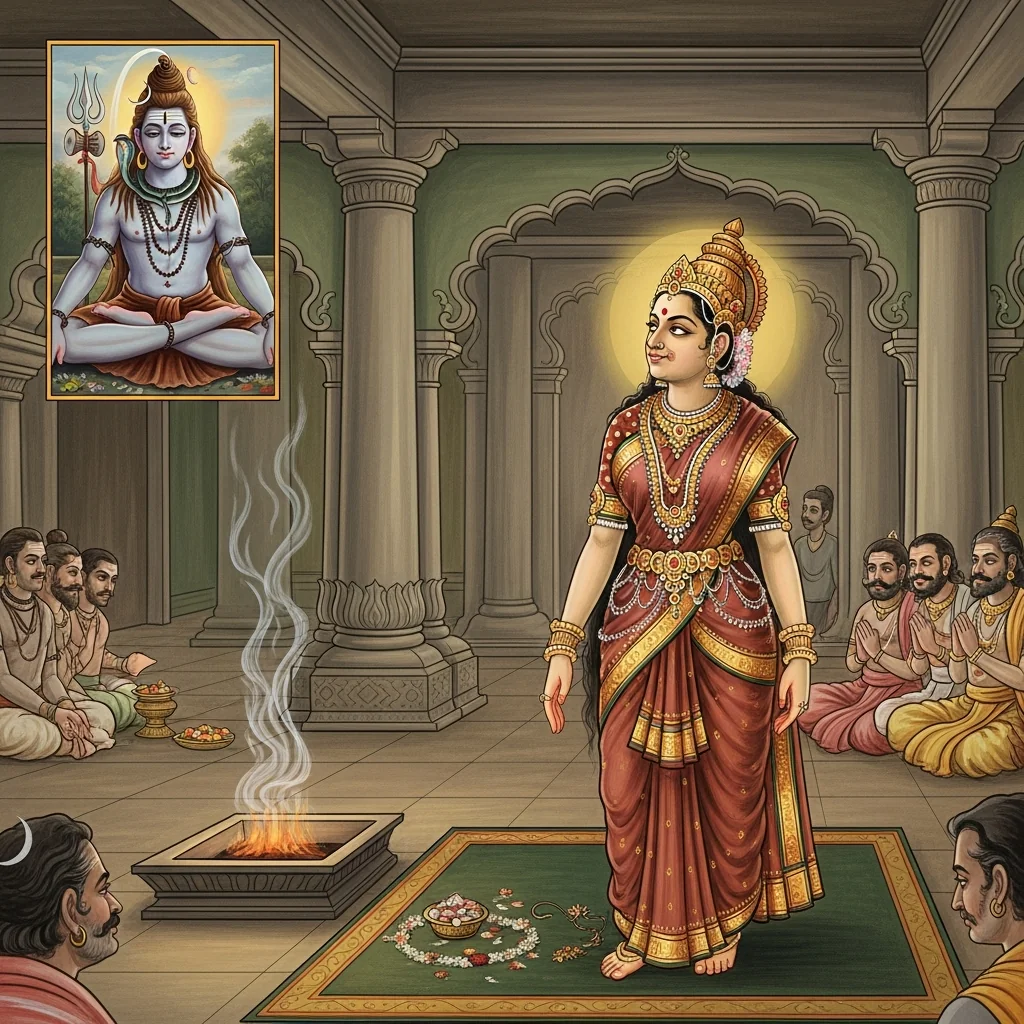
Adhyāya 38 begins with Agastya asking Skanda what the sage Nārada did after reaching Śiva’s realm (Śivaloka/Kailāsa). Skanda describes Nārada’s arrival, his reverent audience before Śiva and Devī, and his witnessing of their cosmic līlā, portrayed through a dice-like symbolic schema mapping calendrical units and cosmic processes. Nārada teaches that Śiva is unmoved by honor or dishonor, transcends the guṇas, and yet remains the impartial regulator of the universe. The narrative then turns to Nārada’s unease after seeing anomalies at Dakṣa’s sacrificial arena, especially the conspicuous absence of the Śiva–Śakti presence, and his inability to fully express what occurred. Satī (Dākṣāyaṇī), hearing this, resolves inwardly and asks Śiva’s permission to go to her father Dakṣa’s yajña. Śiva tries to dissuade her, citing inauspicious astrological signs and warning that leaving without invitation brings irreversible consequences. Satī insists, affirming steadfast devotion while saying she will only witness the rite, not participate; she departs in anger without praṇāma or pradakṣiṇā, a decisive turning point. Śiva, distressed, orders his gaṇas to prepare a magnificent aerial vimāna with elaborate symbolic features, and Satī is escorted to Dakṣa’s assembly. Her uninvited arrival causes astonishment, and Dakṣa disparages Śiva, citing his ascetic and liminal traits to exclude him from ritual honor. Satī replies with ethical and theological critique: if Śiva is truly unknowable, denigration is ignorance; if Dakṣa deemed him unfit, the marriage alliance itself is inconsistent. Overwhelmed by indignation at the verbal offense against her husband, Satī performs self-immolation through yogic resolve, offering her body as fuel; omens and disruptions shake the sacrifice, and Dakṣa continues the yajña only in faltering fashion.
Shlokas
Verse 1
अगस्त्य उवाच । शिवलोकं समासाद्य मुनिना ब्रह्मसूनुना । किं चक्रे ब्रूहि षड्वक्त्र कथां कौतुकशालिनीम्
Agastya said: O Six-faced Lord, tell me—when the sage Nārada, son of Brahmā, reached Śiva’s world, what did he do there? Relate that delightful, wonder-filled account.
Verse 2
स्कंद उवाच । शृणु कुंभज वक्ष्यामि नारदेन महात्मना । यत्कृतं तत्र गत्वाशु कैलासं शंकरालयम्
Skanda said: Listen, O Kumbhaja (Agastya). I shall tell you what the great-souled Nārada did after swiftly going there—to Kailāsa, the abode of Śaṅkara.
Verse 3
मुनिर्गगनमार्गेण प्राप्य तद्धाम शांभवम् । दृष्ट्वा शिवौ प्रणम्याथ शिवेन विहितादरः
The sage, traveling by the path of the sky, reached that Śāmbhava abode. Seeing Śiva together with Devī, he bowed; and Śiva, in turn, received him with due honor.
Verse 4
तदुद्दिष्टासनं भेजे पश्यंस्तत्क्रीडनं परम् । क्रीडंतौ तौ तु चाक्षाभ्यां यदा न च विरमेतुः
He took the seat indicated to him, watching their supreme play. Yet as the two continued playing with dice, they did not cease at all.
Verse 5
तदौत्सुक्येन स मुनिः प्रेर्यमाण उवाच ह । नारद उवाच । देवदेव तव क्रीडाखिलं ब्रह्मांडगोलकम् । मासा द्वादश ये नाथ ते सारिफलके गृहाः
Urged by curiosity, the sage spoke. Nārada said: O God of gods, this whole cosmic sphere is Your divine play. O Lord, the twelve months are like the compartments upon the board of this game.
Verse 6
कृष्णाः कृष्णेतरा या वै तिथयस्ताश्च सारिकाः । द्विपंचदशमासे यास्त्वक्षयुग्मं तथायने
The tithis—the lunar days of the dark and bright fortnights—are the game-pieces. The pair of dice corresponds to the two halves of the month, and likewise to the two solar courses called the ayanas.
Verse 7
सृष्टिप्रलय संज्ञौ द्वौ ग्लहौ जयपराजयौ । देवीजये भवेत्सृष्टिरसृष्टिर्धूर्जटेर्जये
The two stakes in the game, called “creation” and “dissolution,” are victory and defeat. When the Goddess wins, creation arises; when Dhūrjaṭi (Śiva) wins, there is non-creation—withdrawal and reabsorption.
Verse 8
भवतोः खेलसमयो यः सा स्थितिरुदाहृता । इत्थं क्रीडैव सकलमेतद्ब्रह्मांडमीशयोः
The period of Your sport is what is called “maintenance” (sthiti). Thus, this entire universe is nothing but the play of the two Lords.
Verse 9
न देवी जेष्यति पतिं नेशः शक्तिं विजेष्यति । किंचिद्विज्ञप्तुकामोस्मि तन्मातरवधार्यताम्
The Goddess will not truly conquer Her Lord, nor will the Lord conquer His Power (Śakti). Yet I wish to offer a small request—O Mother, please hear it.
Verse 10
देवः सर्वज्ञनाथोपि न किंचिदवबुध्यति । मानापमानयोर्यस्मादसौ दूरे व्यवस्थितः
Though the Lord is omniscient, He knows nothing of this, for He stands far beyond honor and dishonor.
Verse 11
लीलात्मा गुणवानेष विचारादतिनिर्गुणः । कुर्वन्नपि हि कर्माणि बाध्यते नैव कर्मभिः
He is Līlā itself—appearing endowed with qualities, yet, in true discernment, supremely beyond all guṇas. Even while performing actions, He is never bound by actions.
Verse 12
मध्यस्थोपि हि सर्वस्य माध्यस्थ्यमवलंबतै । सर्वत्रायं महेशानो मित्राऽमित्रसमानदृक्
Though abiding in the midst of all, He upholds perfect impartiality. Everywhere this Maheśāna looks upon friend and foe with equal vision.
Verse 13
त्वं शक्तिरस्य देवस्य सर्वेषां मान्यभूः परा । दक्षस्यापि त्वया मानो दत्तो पत्यनिमित्तकः
You are the very Śakti of this God, the supreme one worthy of reverence by all. Even to Dakṣa, honor was granted by you, on account of your husband.
Verse 14
परं त्वं सर्वजगतां जनयित्र्येकिका ध्रुवम् । त्वत्त आविर्भवंत्येव धातृकेशववासवाः
You alone are truly the supreme Mother of all worlds, unfailingly so. From you indeed arise even Dhātṛ (Brahmā), Keśava (Viṣṇu), and Vāsava (Indra).
Verse 15
त्वमात्मानं न जानासि त्र्यक्षमायाविमोहिता । अतएव हि मे चित्तं दुनोत्यतितरां सति
You do not recognize your own true Self, deluded by the māyā of the Three-Eyed Lord. For this very reason, O virtuous one, my heart is tormented all the more.
Verse 16
अन्या अपि हि याः सत्यः पातिव्रत्यपरायणाः । ता भर्तृचरणौ हित्वा किंचिदन्यन्न मन्वते
Other faithful wives too, wholly devoted to the vow of wifely virtue, once they have taken refuge at their husband’s feet, imagine nothing else.
Verse 17
अथवास्तामियं वार्ता प्रस्तुतं प्रब्रवीम्यहम् । अद्य नीलगिरेस्तस्माद्धरिद्वारसमीपतः
But let this matter rest; I shall speak of what is presently relevant. Today, from that Nīlagiri, near Haridvāra,
Verse 18
अपूर्वमिव संवीक्ष्य परिप्राप्तस्तवांतिकम् । अत्याश्चर्यविषादाभ्यां किचिद्वक्तुमिहोत्सुकः
Having beheld something as though unprecedented, he came to your presence—eager to say something here, overcome by intense wonder and sorrow.
Verse 19
आश्चर्यहेतुरेवायं यत्पुंजातं त्रयीतले । तद्दृष्टं सकलत्रं च दक्षस्याध्वरमंडपे
This indeed is the very cause of astonishment: what has come to pass upon the earth. That entire event was witnessed in Dakṣa’s sacrificial arena.
Verse 20
सालंकारं समानं च सानंदमुखपंकजम् । विस्मृताखिलकार्यं च दक्षयज्ञप्रवर्तकम्
Adorned and composed, his lotus-like face radiant with joy; forgetting all other concerns—he was the very initiator of Dakṣa’s yajña.
Verse 21
विषादे कारणं चैतद्यतो जातमिदं जगत् । यस्मिन्प्रवर्तते यत्र लयमेष्यति च ध्रुवम्
This very sorrow has become the cause—out of it this world has arisen; within it it proceeds; and into it, surely, it will at last dissolve.
Verse 22
तदेव तत्र नो दृष्टं भवद्वंद्वं भवापहम् । प्रायो विषादजनकं भवतोर्यददर्शनम्
There we did not behold your sacred pair—the dispellers of worldly becoming; and it is mostly the non-vision of you both that gives rise to this grief.
Verse 23
तदेव नाभवत्तत्र समभूदन्यदेव हि । तच्च वक्तुं न शक्येत तद्वक्ता दक्ष एव सः
That alone did not occur there—indeed, something else entirely took place. And it cannot truly be spoken of; the one fit to recount it is Dakṣa himself.
Verse 24
तानि वाक्यानि चाकर्ण्य द्रुहिणेन ययेततः । महर्षिणा दधीचेन धिक्कृतो नितरां हि सः
Hearing those words, Druhiṇa (Brahmā) departed from there; for he was indeed sharply rebuked by the great seer Dadhīci.
Verse 25
शप्तश्च वीक्षमाणानां देवर्षीणां प्रजापतिः । मया च कर्णौ पिहितौ श्रुत्वा तद्गर्हणा गिरः
Before the divine seers who looked on, Prajāpati too was cursed; and I covered both my ears when I heard those words of censure.
Verse 26
दधीचिना समं केचिद्दुर्वासः प्रमुखा द्विजाः । भवनिंदां समाकर्ण्य कियतोपि विनिर्ययुः
Along with Dadhīci, certain twice-born sages—led by Durvāsas—hearing the disparagement of Bhava (Śiva), departed after a while.
Verse 27
प्रावर्तत महायागो हृष्टपुष्टमहाजनः । तथा द्रष्टुं न शक्नोमि तत आगतवानिह
The great sacrifice went on, with the great crowd delighted and thriving; yet I could not bear to witness it, and so I came away here.
Verse 28
भगिन्योपि च या देवि तव तत्र सभर्तृकाः । तासां गौरवमालोक्य न किंचिद्वक्तुमुत्सहे
And, O Goddess, even your sisters were there with their husbands. Seeing their status and dignity, I do not dare to say anything at all.
Verse 29
इति देवी समाकर्ण्य सती दक्षकुमारिका । करादक्षौ समुत्सृज्य दध्यौ किंचित्क्षणं हृदि
Hearing this, the Goddess Satī, Dakṣa’s daughter, let her eyes fall from her hand (uncovered them) and reflected within her heart for a moment.
Verse 30
उवाच च भवत्वेवं शरणं भव एव मे । संप्रधार्येति मनसि सती दाक्षायणी ततः
Then Satī Dākṣāyaṇī spoke: “So be it. Bhava (Śiva) alone is my refuge,” having thus resolved within her heart.
Verse 31
द्रुतमेव समुत्तस्थौ प्रणनाम च शंकरम् । मौलावंजलिमाधाय देवी देवं व्यजिज्ञपत्
At once the Goddess rose swiftly and bowed to Śaṅkara. With joined palms placed upon her head in reverence, the Devī addressed the Lord with her request.
Verse 32
देव्युवाच । विजयस्वांधकध्वंसिं त्र्यंबक त्रिपुरांतक । चरणौ शरणं ते मे देह्यनुज्ञा सदाशिव
The Devī said: “Be victorious, O destroyer of Andhaka—O Tryambaka, O slayer of Tripura. Your two feet are my refuge; grant me permission, O Sadāśiva.”
Verse 33
मा निषेधीः प्रार्थयामि यास्यमि पितुरंतिकम् । उक्त्वेति मौलिमदधादंधकारि पदांबुजे
“Do not forbid me—I entreat you. I shall go to my father’s presence.” Having spoken thus, she laid her head upon the lotus-feet of the foe of Andhaka (Śiva).
Verse 34
अथोक्ता शंभुना देवी मृडान्युत्तिष्ठ भामिनि । किमपूर्णं तवास्त्यत्र वदसौ भाग्यसुंदरि
Then Śambhu spoke to the Goddess: “O gentle Mṛḍānī, rise, O lovely one. What remains unfulfilled for you here? Tell me, O beauty adorned with good fortune.”
Verse 35
लक्ष्म्या अपि च सौभाग्यं ब्रह्माण्यै कांतिरुत्तमा । शच्यै नित्यनवीनत्वं भवत्या दत्तमीश्वरि
Even Lakṣmī’s good fortune, Brahmāṇī’s supreme radiance, and Śacī’s ever-renewed youth—these, O Goddess, have been bestowed by you, O Sovereign Lady.
Verse 36
त्वया च शक्तिमानस्मि महदैश्वर्यरक्षणे । त्वां च शक्तिं समासाद्य स्वलीलारूपधारिणीम्
Through you I am empowered to safeguard great sovereignty. And having attained you—Śakti herself, who assumes forms by her own divine play—
Verse 37
एतत्सृजामि पाम्यद्मि त्वल्लीलाप्रेरितोंगने । कुतो मां हातुमिच्छेस्त्वं मम वामार्धधारिणि
I create this, I preserve it, I consume it—O beloved—impelled by your divine play. How could you wish to leave me, you who abide as my left half?
Verse 38
शिवा शिवोदितं चेति श्रुत्वाप्याह महेश्वरम् । जीवितेश विहाय त्वां न क्वापि परियाम्यहम्
Hearing the words spoken by Śiva, Śivā (the Goddess) replied to Maheśvara: “O Lord of my life, leaving you behind, I shall not go anywhere at all.”
Verse 39
मनो मे चरणद्वंद्वे तव स्थास्यति निश्चलम् । क्रतुं द्रष्टुं पितुर्यामि नैक्षि यज्ञो मया क्वचित्
My mind shall remain unmoving at your pair of feet. I am going to my father’s place only to see the sacrifice; I am not going there to perform any yajña myself.
Verse 40
शंभुः कात्यायनीवाक्यामिति श्रुत्वा तदाब्रवीत् । क्रतुस्त्वया नेक्षितश्चेदाहरामि ततः क्रतुम्
Hearing the words of Kātyāyanī, the Goddess, Śambhu spoke: “If that sacrifice has not been beheld by you, then I shall bring that kratu—the sacred rite—here.”
Verse 41
मच्छक्ति धारिणी त्वं वा सृजैवान्यां क्रतुक्रियाम् । अन्यो यज्ञपुमानस्तु संत्वन्ये लोकपालकाः
“O bearer of My power—either you yourself undertake and set in motion another kratu, another sacrificial rite; or let there be another ‘sacrificial person,’ the agent of the yajña, and let there be other guardians of the worlds as well.”
Verse 42
अन्यानाशु विधेहि त्वमृषीनार्त्विज्यकर्मणि । पुनर्जगाद देवीति श्रुत्वा शंभोरुदीरितम्
“Quickly appoint other sages, other ṛṣis, for the priestly functions of the sacrifice.” Hearing Śambhu speak thus, the Goddess replied again.
Verse 43
पितुर्यज्ञोत्सवो नाथ द्रष्टव्योऽत्र मया ध्रुवम् । देह्यनुज्ञां गमिष्यामि मा मे कार्षीर्वचोन्यथा
“O Lord, my father’s sacrificial festival must surely be witnessed by me. Grant me permission; I shall go. Do not let my words turn out otherwise.”
Verse 44
कः प्रतीपयितुं शक्तश्चेतो वा जलमेव वा । निम्नायाभ्युद्यतं नाथ माद्य मां प्रतिषेधय
“Who has the power to turn back the mind—or even water itself? O Lord, do not restrain me now, when I am set upon going, like a stream rushing down its slope.”
Verse 45
निशम्येति पुनः प्राह सर्वज्ञो भूतनायकः । मा याहि देवि मां हित्वा गता च न मिलिष्यसि
Hearing this, the all-knowing Lord of beings spoke again: “Do not go, O Goddess, leaving me behind—for once you have gone, you will not meet me again.”
Verse 46
अद्य प्राचीं यियासुं त्वां वारयेत्पंगुवासरः । नक्षत्रं च तथा ज्येष्ठा तिथिश्च नवमी प्रिये
“Today, as you wish to go eastward, the ‘Paṅgu’ weekday would obstruct you; and likewise, beloved, the lunar mansion is Jyeṣṭhā and the tithi is the ninth (Navamī).”
Verse 47
अद्य सप्तदशो योगो वियोगोद्य तनोऽशुभः । धनिष्ठार्ध समुत्पन्ने तव ताराद्य पंचमी
“Today the seventeenth yoga—Viyoga—has arisen, bringing inauspiciousness to the body. And when half of Dhaniṣṭhā has begun, for you it is the fifth (pañcamī) from the tārā (birth-star reckoning).”
Verse 48
मा गा देवि गताद्य त्वं नहि द्रक्ष्यसि मां पुनः । पुनर्देवी बभाषे सा यदि नाम्नाप्यहं सती
“Do not go, O Goddess. If you go today, you will not see me again.” Then the Goddess spoke again: “Even if only by name I am ‘Satī’…”
Verse 49
तदा तन्वंतरेणापि करिष्ये तव दासताम् । ततो भवः पुनः प्राह को वा वारयितुं प्रभुः
“Then, even in another body, I shall continue to serve you.” Thereupon Bhava spoke again: “And who, indeed, has the power to restrain (one so resolved)?”
Verse 50
परिक्षुब्धमनोवृत्तिं स्त्रियं वा पुरुषं तु वा । पुनर्न दर्शनं देवि मया सत्यं ब्रवीम्यहम्
Whether woman or man, one whose mind’s impulses are violently agitated is not seen again as before, O Devī. I speak this truth.
Verse 51
परं न देवि गंतव्यं महामानधनेच्छुभिः । अनाहूत तया कांते मातापितृगृहानपि
O Devī, one should not depart in pursuit of great honor and wealth. O beloved, if she has not invited you, do not go even to the house of your own parents.
Verse 52
यथा सिंधुगता सिंधुर्न पुनः परिवर्तते । तथाद्य गंत्र्या नो जातु तवागमनमिष्यते
Just as a river, having entered the ocean, does not turn back, so too: if you depart today, your return will never be approved.
Verse 53
देव्युवाच । अवश्यं यद्यहं रक्ता तव पादाबुंजद्वये । तथा त्वमेव मे नाथो भविष्यसि भवांतरे
The Devī said: “If it is certain that I am devoted to your two lotus-feet, then you alone will be my Lord—even in another birth.”
Verse 54
इत्युक्त्वा निर्ययौ देवी कोपांधीकृतलोचना । यियासुभिश्च कार्यार्थं यत्कर्तव्यं न तत्कृतम्
Having spoken thus, the Devī went out, her eyes as though blinded by anger. And in the haste to depart for her intended purpose, what ought to have been done was not done.
Verse 55
न ननाम महादेवं न च चक्रे प्रदक्षिणम् । अतएव हि सा देवी न गता पुनरागता
She did not bow to Mahādeva, nor did she perform pradakṣiṇā (ritual circumambulation). For that very reason, though she went, she did not return again.
Verse 56
अप्रणम्य महेशानमकृत्वापि प्रदक्षिणम् । अद्यापि न निवर्तंते गताः प्राग्वासरा इव
Without bowing to Maheśāna and without even performing pradakṣiṇā, those who depart do not return even now—like days that have already passed.
Verse 57
तया चरणचारिण्या राज्ञ्या त्रिभुवनेशितुः । अपि तत्पावनं वर्त्म मेनेति कठिनं बहु
That queen, traveling on foot, deemed even that sanctifying path of the Lord of the three worlds exceedingly difficult.
Verse 58
देवोपि तां सतीं यांतीं दृष्ट्वा चरणचारिणीम् । अतीव विव्यथे चित्ते गणांश्चाथ समाह्वयत्
Even the Lord, seeing that virtuous lady proceeding on foot, was deeply pained at heart—and then he summoned the Gaṇas.
Verse 59
गणा विमानं नयत मनःपवनचक्रिणम् । पंचास्यायुतसंयुक्तं रत्नसानुध्वजोच्छ्रितम्
“O Gaṇas, bring the vimāna that moves with the speed of mind and wind—furnished with ten thousand five-faced ones and raised high with banners upon jeweled peaks.”
Verse 60
महावातपताकं च महाबुद्ध्यक्षलक्षितम् । नर्मदालकनंदा च यत्रेषादंडतांगते
“(Bring that vimāna) with its great banners tossed by the wind, marked with the signs of vast intelligence; and there Narmadā, Alakanandā, and other sacred streams were present, having taken the form of its staff-like fittings.”
Verse 61
छत्रीभूतौ च यत्रस्तः सूर्याचंद्रमसावपि । यस्मिन्मकरतुंडं च वाराहीशक्तिरुत्तमा
There, even the Sun and the Moon stood as though transformed into royal umbrellas; and upon that divine conveyance was set the excellent Vārāhī-Śakti, bearing the emblem of the makara-snouted form.
Verse 62
धूः स्वयं चापि गायत्री रज्जवस्तक्षकादयः । सारथिः प्रणवो यत्र क्रेंकारः प्रणवध्वनिः
There, Dhūḥ herself—and also Gāyatrī—were present; the reins were the Takṣaka-serpents and the like; the charioteer there was the Praṇava (Oṁ), and the sound of the Praṇava resounded as the mantra ‘kreṃ’.
Verse 63
अंगानि रक्षका यत्र वरूथश्छंदसां गणः । इत्याज्ञप्ता गणास्तूर्णं रथं निन्युर्हराज्ञया
There, the (Vedic) Aṅgas served as guardians, and a host of metres (chandas) formed the protective array. Thus commanded, the gaṇas swiftly drew the chariot onward by Hari’s decree.
Verse 64
देव्या सनाथं तं कृत्वा विमानं पार्षदा दिवि । अनुजग्मुर्महादेवीं दिव्यां तेजोविजृंभिणीम्
Having thus furnished the vimāna for the Goddess, the celestial attendants in the sky followed after Mahādevī—radiant, divine, and expanding in splendour.
Verse 65
सा क्षणं त्र्यक्षरमणी वीक्ष्य दक्षसभांगणम् । नभोंऽगणाद्विमानस्थानतो वेगादवातरत्
She—Tryakṣara-maṇī—gazed for a moment upon the courtyard of Dakṣa’s assembly, and then, swiftly descending from the open sky, from her station in the vimāna, she alighted.
Verse 66
अविशद् यज्ञवाटं च चकितंरक्षि वीक्षिता । कृतमंगलनेपथ्यां प्रसूं दृष्ट्वा किरीटिनीम्
She entered the sacrificial enclosure; the guards, startled, looked on. Seeing Prasū, adorned in auspicious ceremonial attire and wearing a crown, she beheld the scene closely.
Verse 67
सभर्तृकाश्च भगिनीर्नवालंकृतिशालिनीः । साश्चर्याश्च सगर्वाश्च सानंदाश्च ससाध्वसाः
Her sisters—each with her husband beside her and radiant with fresh ornaments—stood astonished, proud, delighted, and yet with a slight apprehension.
Verse 68
अचिंतिता त्वनाहूता विमानाद्धरवल्लभा । कथमेषा परिप्राप्ता क्षणमित्थं प्रपश्यतीः
“Unthought of and uninvited—yet the beloved of Hara has come down from a vimāna! How has she arrived here?” Thus, for a moment, they looked on in that manner.
Verse 69
असंभाष्या पिताः सर्वा गता दक्षांतिकं सती । पित्रा पृष्टा तु मात्रापि भद्रं जातं त्वदागमे
Without speaking to all the elders, Satī went to Dakṣa’s side. Then her father questioned her, and her mother too said, “Good fortune has come by your arrival.”
Verse 70
सत्युवाच । यदि भद्रं जनेतर्मे समागमनतो भवेत् । कथं नाहं समाहूता यथैता मे सहोदराः
Satī said: “If, O mother, some true good arises from my coming here, then why was I not invited—just as these my sisters were?”
Verse 71
दक्ष उवाच । अयि कन्ये महाधन्ये ह्यनन्ये सर्वमंगले । अयं ते न मनाग्दोषो दोष एष ममैव हि
Dakṣa said: “O daughter, most fortunate, unwavering in devotion, auspicious in every way—this is not even the slightest fault of yours. This fault is truly mine alone.”
Verse 72
तादृग्विधाय यत्पत्ये मया दत्ताज्ञबुद्धिना । यदहं तं समाज्ञास्यमीश्वरोसौ निरीश्वरः
“Because, with ignorant understanding, I gave you to such a husband—and because I presumed I could command him—I failed to see that he is the Lord, while I am no lord at all.”
Verse 73
तदा कथमदास्यं त्वां तस्मै मायास्वरूपिणं । अहं शिवाख्यया तुष्टो न जाने शिवरूपिणम्
“How, then, could I have given you to him, when I perceived him only through deluding appearances? I was satisfied merely by the name ‘Śiva’, yet I did not recognize the true form of Śiva.”
Verse 74
पितामहेन बहुधा वर्णितोसौ ममाग्रतः । शंकरोयमयं शभुरसौ पशुपतिः शिवः
“Before me, the Grandsire (Brahmā) described him in many ways: ‘This is Śaṅkara; this is Śambhu; he is Paśupati—Śiva himself.’”}]}
Verse 75
श्रीकंठोसौ महेशोऽसौ सर्वज्ञोसौ वृषध्वजः । अस्मै कन्यां प्रयच्छ त्वं महादेवाय धन्विने
He is Śrīkaṇṭha; he is Maheśa; he is all-knowing; he bears the bull as his emblem. Give the maiden to him—to Mahādeva, the wielder of the bow.
Verse 76
वाक्याच्छतधृतेस्तस्मात्तस्मै दत्ता मयानघे । न जाने तं विरूपाक्षमुक्षगं विषभक्षिणम्
O blameless one, because of the words of Śatadhṛti (Brahmā), I gave you to him. Yet I did not understand him—Virūpākṣa, the one with the bull as his companion, the consumer of poison.
Verse 77
पितृकाननसंवासं शूलिनं च कपालिनम् । द्विजिह्वसंगसुभगं जलाधारं कपर्दिनम्
(I did not recognize) him who dwells in the forest of the Fathers (Pitṛs), the trident-bearer, the skull-bearer; the one made resplendent by the company of the two-tongued serpents, the bearer of the waters (Gaṅgā), the matted-haired Lord.
Verse 78
कलंकिकृतमौलिं च धूलिधूसरचर्चितम् । क्वचित्कौपीनवसनं नग्नं वातूलवत्क्वचित्
(I did not know) him whose head is marked with strange signs, whose body is smeared and grey with dust; at times clad only in a loincloth, at times naked—at times appearing like one possessed by the wind.
Verse 79
क्वचिच्च चर्मवसनं क्वचिद्भिक्षाटनप्रियम् । विटंकभूतानुचरं स्थाणुमुग्रं तमोगुणम्
Sometimes clad in skins, sometimes delighting in wandering for alms; attended by uncanny spirits—Sthāṇu, the immovable; Ugra, the fierce; and, to the unknowing, appearing as one of dark, tamasic quality.
Verse 80
रुद्रं रौद्रपरीवारं महाकालवपुर्धरम् । नृकरोटीपरिकरं जातिगोत्रविवर्जितम्
(I did not recognize) Rudra, surrounded by fierce hosts; bearing the form of Mahākāla; adorned with human skulls—standing beyond caste and lineage.
Verse 81
न सम्यग्वेत्ति तं कश्चिज्जानानोपि प्रतारितः । किं बहूक्तेन तनये समस्त नयशालिनि
No one truly knows Him; even those who think they know are deluded. What is the use of saying much, O daughter endowed with every kind of discernment?
Verse 82
क्व पांसुलपटच्छन्नो महाशंखविभूषणः । प्रबद्धसर्पकेयूरः प्रलंबित जटासटः
Where is that One covered in dusty cloth, adorned with great conch-ornaments, wearing armlets of bound serpents, with a heavy mass of matted locks hanging down?
Verse 83
डमड्डमरुकव्यग्र हस्ताग्रः खंडचंद्रभृत् । तांडवाडंबररुचिः सर्वामंगल चेष्टितः
His hand is busily set upon the ḍamaru drum; He bears the crescent moon. Radiant with the splendour of the tāṇḍava’s majestic flourish, His every movement is the source of all auspiciousness.
Verse 84
मृडानि सहरः क्वाऽयमध्वरो मंगलालयः । अतएव समाहूता नेह त्वं सर्वमंगले
O gentle one, where is this fierce, awe-inspiring Rudra, and where is this sacrifice—an abode of auspiciousness? Therefore you have been summoned: you are not to be here, O all-auspicious one.
Verse 85
दुकूलान्यनुकूलानि रत्नालंकृतयः शुभाः । प्रागेव धारितास्तेत्र पश्यागत्य गृहाण च
There are fine garments—pleasing and fitting, auspicious and adorned with jewels—already prepared there. Come, look, and take them.
Verse 86
इह मंगलवेशेषु देवेंद्रेषु स शूलधृक् । कथमर्हो भवेच्चेति मंगले विषमेक्षणः
Here, among the lordly gods clad in auspicious attire, how could that trident-bearer be deemed fit?—so they thought, O Maṅgalā, with crooked judgment.
Verse 87
इत्याकर्ण्य सती साध्वी जनेतुरुदितं तदा । अत्यंतदूनहृदया वक्तुं समुपचक्रमे
Hearing this, the virtuous Satī then—her heart deeply pained by her father’s words—began to speak.
Verse 88
सत्युवाच । नाकर्णितं मया किंचित्त्वयि प्रब्रुवति प्रभो । पदद्वयीं समाकर्ण्य तां च ते कथयाम्यहम्
Satī said: “O Lord, I have heard nothing at all spoken against you. Yet I have heard a couple of words—those I shall tell you.”
Verse 89
न सम्यग्वेत्ति तं कश्चिज्जानानोपि प्रतारितः । एतत्सम्यक्त्वयाख्यायि कस्तं वेत्ति सदाशिवम्
No one truly knows Him; even one who claims knowledge is deceived. This has been rightly declared by you—who indeed can know that Sadāśiva?
Verse 90
त्वं तु प्रतारितः पूर्वमधुनापि प्रतारितः । कृत्वा तेन च संबंधमसंबद्धप्रलापभाक्
You were deceived before, and even now you are deceived. Having forged a bond with Him, you have become one who utters disconnected, incoherent speech.
Verse 91
यादृशं वक्षितं शंभुं तादृशं यद्यमन्यथाः । कुतो मामददास्तस्मै यं च कश्च न वेद न
If you believed Śambhu (Śiva) to be exactly as he has been described, then why did you give me to that one whom no one truly knows?
Verse 92
अथवा तेन संबंधे न हेतुर्भवतो मतिः । तत्र हेतुरभूत्तात मम पुण्यैकगौरवम्
Or perhaps your intention was not the true cause of that connection; in that matter, dear father, the cause was the singular weight of my own merit (puṇya).
Verse 93
अथोक्त्वैवं बहुतरं त्वं जनेतास्य वर्ष्मणः । श्रुतानेन च देहेन पत्युः परिविगर्हणा
Having spoken at length in this way, you will now come to know the greatness of his majesty; and with this very body you shall hear the reproach directed toward your husband.
Verse 94
पुरश्चरणमेवैतद्यदस्यैव विसर्जनम् । सुश्लाघ्यजन्मया तावत्प्राणितव्यं सुयोषिता । यावज्जीवितनाथस्याश्रवणीया विगर्हणा
This alone is the proper observance (puraścaraṇa): the relinquishing of this very body. A virtuous woman, noble by birth, should live only so long as she is not compelled to hear the disgrace of her lord while he yet lives.
Verse 95
इत्युक्त्वा क्रोधदीप्ताग्नौ महादेवस्वरूपिणि । जुहाव देहसमिधं प्राणरोधविधानतः
Having said this, into the fire blazing with wrath—bearing the very form of Mahādeva—she offered her body as fuel, by the method of restraining the life-breath.
Verse 96
ततो विवर्णतां प्राप्ताः सर्वे देवाः सवासवाः । नाग्निर्जज्वाल च तथा यथाज्याहुतिभिः पुरा
Then all the gods, together with Vāsava (Indra), turned pale; and the fire no longer blazed as it once did when fed with oblations of ghee.
Verse 97
मंत्राः कुंठितसामर्थ्यास्तत्क्षणादेव चाभवन् । अहो महानिष्टतरं किमेतत्समुपस्थितम्
In that very instant the mantras became blunted in power. Alas—what great calamity is this that has now arisen?
Verse 98
केचिदूचुर्द्विजवरा मिथः परियियासवः । महाझंझानिलः प्राप्तः पर्वतांदोलनक्षमः
Some excellent brāhmaṇas said to one another, as they moved about: “A mighty, storming wind has arrived, strong enough to shake mountains.”
Verse 99
मखमंडप भूस्तेन क्षणतः स्थपुटीकृता । अकांडं तडिदापातो जातोभूद्भूप्रकपनः
By that wind the ground of the sacrificial pavilion was in an instant shattered and upheaved; unexpectedly lightning struck, and the earth began to quake.
Verse 100
दिवश्चोल्काः प्रपतिताः पिशाचा नृत्यमादधुः । आतापिगृध्रैरुपरि गगने मंडलायितम्
From the sky meteors fell; the piśācas broke into dance; and above, the heavens were ringed and wheeling with scorching vultures.
Verse 106
दक्षोपि वदनग्लानिमवाप्य सपरिच्छदः । पुनर्यथाकथंचिच्च यज्ञं प्रावर्तयन्द्विजाः
Even Dakṣa, together with all his retinue, fell into dejection and shame. Yet, somehow, the twice-born priests set the sacrifice in motion again.