Adhyaya 37
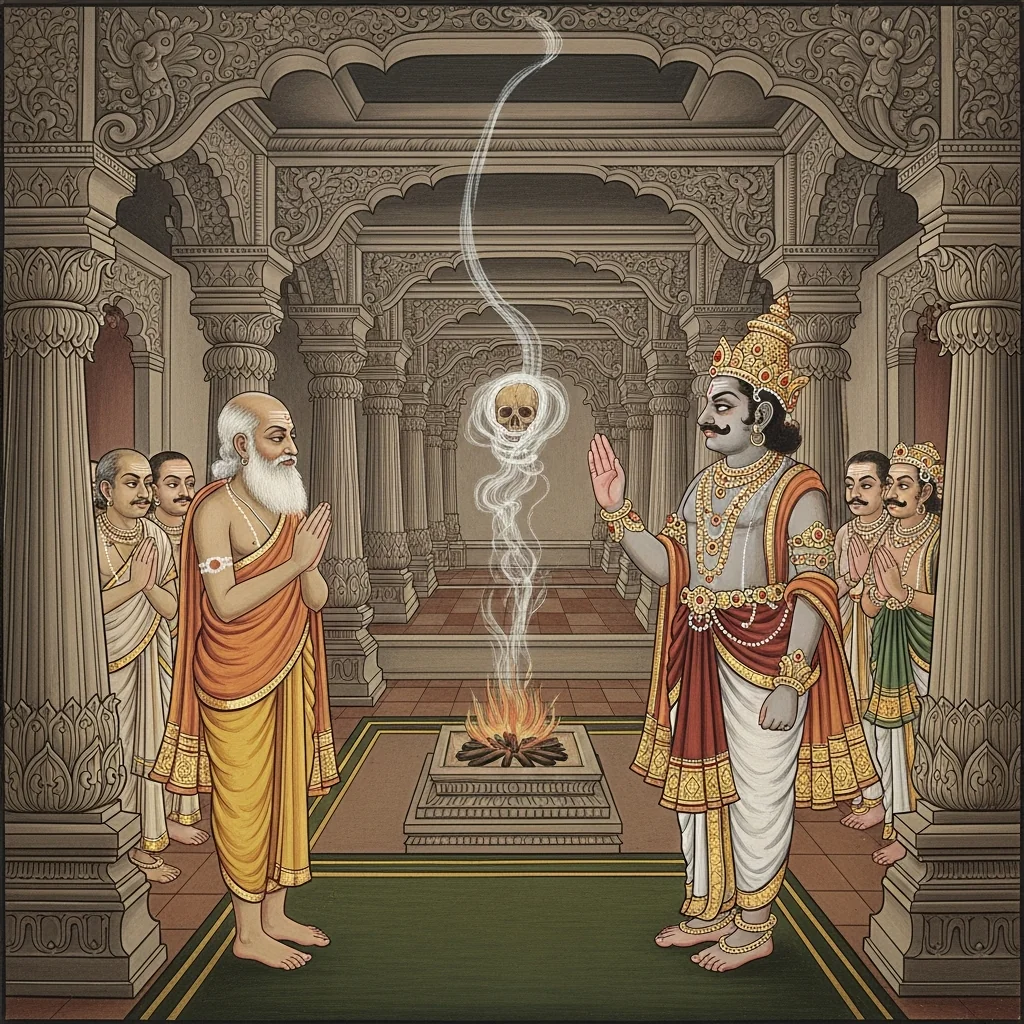
Chapter 37 begins with Agastya addressing Skanda, rejoicing to hear of the liṅgas that bestow liberation, and requesting a full account of the fourteen liṅgas beginning with Dakṣeśvara-liṅga. The narration then turns to Dakṣa’s course: after earlier impropriety he comes to Kāśī to undertake purificatory discipline and atonement. At the same time, a great divine assembly unfolds on Kailāsa, where Śiva inquires into cosmic order and the stability of social and ritual norms. Dakṣa’s resentment swells—he deems Śiva socially unclassifiable and takes offense at what he perceives as insufficient deference—so he arranges a grand sacrifice (mahākratu) that pointedly excludes Śiva. The sage Dadhīci admonishes Dakṣa with doctrine: ritual acts are inert without Śiva; without the Lord, yajña is like a cremation ground and all actions bear no fruit. Dakṣa rejects the counsel, asserts the rite’s autonomous sufficiency, and intensifies his hostility, even ordering Dadhīci’s removal. The chapter closes by noting the sacrifice’s outward splendor and shifting the scene as Nārada proceeds to Kailāsa, setting the stage for Śiva’s response and the vindication of Kāśī’s Śaiva shrines.
Shlokas
Verse 1
अगस्त्य उवाच । सर्वज्ञसूनो षड्वक्त्र सर्वार्थकुशल प्रभो । प्रादुर्भावं निशम्यैषां लिंगानां मुक्तिदायिनाम्
Agastya said: O six-faced Lord, son of the All-knowing, master skilled in every purpose—having heard of the manifestations of these liṅgas that grant liberation, (I seek to know more).
Verse 2
नितरां परितृप्तोस्मि सुधां पीत्वेव निर्जरः । ओंकारप्रमुखैर्लिंगैरिदमानंदकाननम्
I am utterly satisfied—like an immortal who has drunk nectar—by these liṅgas beginning with Oṃkāra; through them this grove becomes Ānandakānana, a forest of bliss.
Verse 3
आनंदमेवजनयेदपि पापजुषामिह । परानंदमहं प्राप्तः श्रुत्वैतल्लिंगकीर्तनम्
Even for those steeped in sin, here the mere telling of this Liṅga brings forth joy. Having heard this praise of the Liṅga, I myself have attained supreme bliss.
Verse 4
जीवन्मुक्तैवासं हि क्षेत्रतत्त्वश्रुतेरहम् । स्कंददक्षेश्वरादीनि लिंगानीह चतुर्दश । यान्युक्तानि समाचक्ष्व तत्प्रभावमशेषतः
By hearing the truth of this sacred kṣetra, I have become as though liberated while still living. Now, concerning the fourteen liṅgas here—beginning with Skanda and Dakṣeśvara—that have been mentioned, please explain their power fully, leaving nothing out.
Verse 5
यो दक्षो गर्हयामास मध्ये देवसभं विभुम् । स कथं लिंगमीशस्य प्रत्यस्थापयदद्भुतम्
That Dakṣa who, in the midst of the gods’ assembly, reviled the Supreme Lord—how did he come to restore, or establish anew, the wondrous liṅga of Īśvara?
Verse 6
इति श्रुत्वा शिखिरथः कुंभयोनेरुदीरितम् । सूत संकथयामास दक्षेश्वर समुद्भवम्
Having thus heard what was spoken by Kumbhayoni (Agastya), Śikhiratha—O Sūta—then narrated in detail the origin of Dakṣeśvara.
Verse 7
स्कंद उवाच । आकर्णय मुने वच्मि कथां कल्मषहारिणीम् । पुरश्चरणकामोसौ दक्षः काशीं समाययौ
Skanda said: “Listen, O sage; I shall tell a tale that removes impurity. Dakṣa, desiring to perform the puraścaraṇa (preparatory devotional observances), came to Kāśī.”
Verse 8
छागवक्त्रो विरूपास्यो दधीचि परिधिक्कृतः । प्रायश्चित्तविधानार्थं सूपदिष्टः स्वयंभुवा
With a goat’s face and a disfigured countenance—made an object of reproach by Dadhīci—he was well instructed by Svayambhū (Brahmā) in the proper method of prāyaścitta (expiation).
Verse 9
एकदा देवदेवस्य सेवार्थं शशिमौलिनः । कैलासमगमद्विष्णुः पद्मयोनिपुरस्कृतः
Once, to serve the God of gods, the moon-crested Lord, Viṣṇu—preceded by Padmayoni (Brahmā)—went to Kailāsa.
Verse 10
इंद्रादयो लोकपाला विश्वेदेवा मरुद्गणाः । आदित्या वसवो रुद्राः साध्या विद्याधरोरगाः
Indra and the other guardians of the worlds, the Viśvedevas and hosts of Maruts; the Ādityas, Vasus, Rudras, Sādhyas, Vidyādharas, and serpent-beings—all were present.
Verse 11
ऋषयोऽप्सरसोयक्षा गंधर्वाः सिद्धचारणाः । तैर्नतो देवदेवेशः परिहृष्टतनूरुहैः
Sages, Apsarases, Yakṣas, Gandharvas, Siddhas, and Cāraṇas bowed to the Lord of gods; their hairs stood on end in rapture as they adored Him.
Verse 12
स्तुतश्च नाना स्तुतिभिः शंभुनापि कृतादराः । विविशुश्चासनश्रेण्यां तन्मुखासक्तदृष्टयः
They praised Śambhu with hymns of many kinds, and Śambhu too received them with honor. Then they entered the rows of seats, their eyes absorbed and fixed upon His face.
Verse 13
अथ तेषूपविष्टेषु शंभुना विष्टरश्रवाः । कृतहस्तपरिस्पर्शमानः पृष्टो महादरम्
When they had all taken their seats, Viṣṭaraśravāḥ—after performing the customary respectful touch of the hands—was questioned by Śambhu with great regard.
Verse 14
श्रीवत्सलांछन हरे दैत्यवंशदवानल । कच्चित्पालयितुं शक्तिस्त्रिलोकीमस्त्यकुंठिता
O Hari, marked with Śrīvatsa—O wildfire to the lineage of the Daityas—does your undiminished power still uphold and protect the three worlds?
Verse 15
दितिजान्दनुजान्दुष्टान्कच्चिच्छासि रणांगणे । अपि कुद्धान्महीदेवान्मामिव प्रतिमन्यसे
Do you still chastise the wicked Diti-born and Danu-born foes on the battlefield? And do you still regard the enraged rulers of the earth as you would regard me—adversaries to be checked?
Verse 16
बाधया रहिता गावः कच्चित्संति महीतले । स्त्रियः संति हि सुश्रीकाः पतिव्रतपरायणाः
Are the cows upon the earth free from affliction? And are there women of good fortune who remain devoted to the vow of fidelity (pativratā) and the dharma of the household?
Verse 17
विधियज्ञाः प्रवर्तंते पृथिव्यां बहुदक्षिणाः । निराबाधं तपः कच्चिदस्ति शश्वत्तपस्विनाम्
Do the rule‑ordained sacrifices proceed upon the earth, abundant in gifts and dākṣiṇā? And do the ever‑practicing ascetics perform their tapas without obstruction?
Verse 18
निष्प्रत्यूहं पठंत्येव सांगान्वेदान्द्विजोत्तमाः । महीपालाः प्रजाः कच्चित्पांति त्वमिवकेशव
Do the foremost of the twice‑born recite the Vedas with their aṅgas, free of hindrance? And do kings protect their subjects, O Keśava, as you yourself protect the worlds?
Verse 19
स्वेषु स्वेषु च धर्मेषु कच्चिद्वर्णाश्रमास्तथा । निष्ठावंतो हि तिष्ठंति प्रहृष्टेंद्रियमानसाः
Do those of the varṇas and āśramas remain steadfast in their own duties, standing firm with senses and mind joyful and uplifted?
Verse 20
धूर्जटिः परिपृछ्येति हृष्टं वैकुंठनायकम् । ब्रह्माणं चापि पप्रच्छ ब्राह्मं तेजः समेधते
Thus Dhūrjaṭi (Śiva), having questioned the delighted Lord of Vaikuṇṭha, questioned Brahmā as well; and Brahmā’s divine radiance grew ever more.
Verse 21
सत्यमस्खलितं कच्चिदस्ति त्रैलोक्यमंडपे । तीर्थावरोधो न क्वापि केनचित्क्रियते विधे
O Vidhi (Brahmā), in the pavilion of the three worlds, does truth remain steady and unswerving? And is no one, anywhere, causing obstruction to the sacred tīrthas?
Verse 22
इंद्रादयः सुराः कच्चित्स्वेषु स्वेषु पुरेष्वहो । राज्यं प्रशासति स्वस्थाः कृष्णदोर्दंडपालिताः
Do Indra and the other gods, in their own cities, rule their realms in well-being—secure beneath the protecting might of Kṛṣṇa’s arm, as a staff of sovereignty?
Verse 23
प्रत्येकं परिपृच्छयेशः सर्वानित्थं कृतादरान् । पृष्ट्वा गमनकार्यं च तेषां कृत्वा मनोरथान्
Thus the Lord, with courtesy, questioned each one in turn, honoring all as was fitting. Having asked the purpose of their departure and fulfilled their wishes, He prepared to send them on their way.
Verse 24
विससर्जाथ तान्सर्वान्देवः सौधं समाविशत् । गतेष्वथ च देवेषु स्वस्व धिष्ण्येषु हृष्टवत्
Then the God dismissed them all and entered His palace. And when the gods had departed—each to his own celestial seat—they went away rejoicing.
Verse 25
मध्ये मार्गं स चिंतोभूद्दक्षः सत्याः पिता तदा । अन्यदेवसमानं स मानं प्राप न चाधिकम्
Midway along the path, Dakṣa—the father of Satī—fell into brooding. He had received honor equal to the other gods, but not any greater honor than theirs.
Verse 26
अतीव क्षुब्धचित्तोभून्मंदराघाततोऽब्धिवत् । उवाच च मनस्येतन्महाक्रोधरयांधदृक्
His mind became violently agitated—like the ocean struck by Mount Mandara. Blinded by the rush of great anger, he spoke these thoughts within himself.
Verse 27
अतीवगर्वितो जातः सती मे प्राप्य कन्यकाम् । कस्यचिन्नाप्यसौ प्रायो न कोस्यापि क्वचित्पुनः
Having obtained my daughter Satī as his bride, he has become exceedingly proud. He scarcely shows deference to anyone—at any time, to anyone at all.
Verse 28
किं वंश्यस्त्वेष किं गोत्रः किं देशीयः किमात्मकः । किं वृत्तिः किं समाचारो विपा दी वृषवाहनः
Of what lineage is he? What is his gotra? From what land does he come—what is his very nature? What is his livelihood, what are his customs—this bull-bannered one, ever surrounded by strange calamities?
Verse 29
न प्रायशस्तपस्व्येष क्व तपः क्वास्त्रधारणम् । न गृहस्थेषु गण्योसौ श्मशाननिलयो यतः
He is hardly an ascetic—where is his austerity, and where the bearing of weapons? Nor is he counted among householders, for his dwelling is the cremation-ground.
Verse 30
असौ न ब्रह्मचारी स्यात्कृतपाणिग्रह स्थितिः । वानप्रस्थ्यं कुतश्चास्मिन्नैश्वर्यमदमोहिते
He cannot be a brahmacārin, for he stands in the state of having taken a wife’s hand in marriage. And how could there be vānaprastha in him—deluded as he is by the intoxication of power?
Verse 31
न ब्राह्मणोभवत्येष यतो वेदो न वेत्त्यमुम् । शस्त्रास्त्रधारणात्प्रायः क्षत्रियः स्यान्न सोप्ययम्
He is not a brāhmaṇa, since he does not (as I claim) know the Veda. By the bearing of weapons one might call a man a kṣatriya, yet he is not even that.
Verse 32
क्षतात्संत्राणनात्क्षत्रं तत्क्वास्मिन्प्रलयप्रिये । वैश्योपि न भवेदेष सदा निर्धनचेष्टनः
“Kṣatra” is so named from protecting the wounded—where is such protection in one who delights in dissolution? Nor can he be a vaiśya, for he ever acts like one bereft of wealth.
Verse 33
शूद्रोपि न भवेत्प्रायो नागयज्ञोपवीतवान् । एवं वर्णाश्रमातीतः कोसौ सम्यङ्नकीर्त्यते
In the usual sense he is not even a Śūdra, nor is he one who bears the sacred thread (yajñopavīta) for the Nāga-sacrifice. Thus, transcending all varṇas and āśramas, who indeed is he, that he may be rightly described?
Verse 34
सर्वः प्रकृत्या ज्ञायेत स्थाणुः प्रकृतिवर्जितः । प्रायशः पुरुषोनासावर्धनारीवपुर्यतः
All are known by some defining nature; but Sthāṇu (Śiva) is devoid of such limiting attributes. And yet he is not merely a man, for he is proclaimed as Ardhanārī—half female in form.
Verse 35
योषापि न भवेदेष यतोसौ श्मश्रुलाननः । नपुंसकोपि न भवेल्लिंगमस्ययतोर्च्यते
He is not a woman either, for his face is bearded. Nor is he neuter, since his liṅga is worshipped.
Verse 36
बालोपि न भवत्येष यतोऽयं बहुवार्षिकः । अनादिवृद्धो लोकेषु गीयते चोग्र एष यत्
He is not a child either, for he is of many years. In the worlds he is sung of as “ancient from beginningless time,” and also as “Ugra,” the fierce one.
Verse 37
अतो युवत्वं संभाव्यं नात्र नूनं चिरंतने । वृद्धोऽपि न भवत्येष जरामरणवर्जितः
Therefore one might imagine youth in him—yet certainly not, O Ancient One. Even old age does not belong to him, for he is free from decay and death.
Verse 38
ब्रह्मादीन्संहरेत्प्रांते तथापि च न पातकी । पुण्यलेशोपि नास्त्यस्मिन्ब्रह्ममौलिच्छिदिक्रुधा
Even if, at the end, he were to withdraw (destroy) Brahmā and the others, still he would not be a sinner. In him there is not even a trace of merit or demerit—he acts with the wrath that split Brahmā’s crown.
Verse 40
अहो धार्ष्ट्यं महद्दृष्टं जटिलस्याद्य चाद्भुतम् । यदासनान्नोत्थितोसौ दृष्ट्वा मां श्वशुरं गुरुम्
Ah! Great insolence—truly astonishing today in that matted-haired ascetic: that, on seeing me—his father-in-law and his elder—he did not rise from his seat.
Verse 41
एवंभूता भवंत्येव मातापितृविवर्जिताः । निर्गुणा अकुलीनाश्च कर्मभ्रष्टा निरंकुशाः
Such people indeed become as though devoid of mother and father—without virtues, of no noble lineage, fallen from proper duties, and unrestrained.
Verse 42
स्वच्छंदचारिणोऽनाथाः सर्वत्र स्वाभिमानिनः । अकिंचना अपिप्रायस्तथापीश्वरमानिनः
They roam as they please, without protector; everywhere they are self-conceited. Though mostly possessing nothing, they still imagine themselves to be lords.
Verse 43
जामातॄणां स्वभावोयं प्रायशो गर्वभाजनम् । किंचिदैश्वयर्मासाद्य भवत्येव न संशयः
This is, for the most part, the nature of sons-in-law: they become vessels of pride; having gained even a little prosperity, it surely arises—there is no doubt.
Verse 44
द्विजराजः स गर्विष्ठो रोहिणीप्रेमनिर्भरः । कृत्तिकादिषु चास्नेही मया शप्तः क्षयीकृतः
That lord of the twice-born (the Moon), swollen with pride—wholly absorbed in love for Rohiṇī and showing no affection for Kṛttikā and the other wives—was cursed by me and thereby made to waste away.
Verse 45
अस्याहं गर्वसर्वस्वं हरिष्याम्येव शूलिनः । यथावमानितश्चाहमनेनास्य गृहं गतः
‘I shall indeed strip away all that constitutes his pride, O Śūlin (Lord bearing the trident), for I was insulted by him when I went to his house.’
Verse 46
तथास्याहं करिष्यामि मानहानिं च सर्वतः । संप्रधार्येति बहुशः स तु दक्षः प्रजापतिः
Thus resolved, he repeatedly deliberated: ‘In every way I shall bring about the loss of his honor.’ Such was Dakṣa, the Prajāpati.
Verse 47
प्राप्य स्वभवनं देवानाजुहाव सवासवान् । अहं यियक्षुर्यूयं मे यज्ञसाहाय्यकारिणः
Having returned to his own abode, he summoned the gods along with Vāsava (Indra) and said: ‘I intend to perform a sacrifice; you must be my assistants in this yajña.’
Verse 48
भवंतु यज्ञसंभारानानयंतु त्वरान्विताः । श्वेतद्वीपमथो गत्वा चक्रे चक्रिणमच्युतम्
“Let them gather the requisites for the yajña and bring them swiftly.” Then, going to Śvetadvīpa, he appointed Acyuta—the bearer of the discus—as the presiding power.
Verse 49
महाक्रतूपद्रष्टारं यज्ञपूरुषमेव च । तस्यर्त्विजोभवन्सर्व ऋषयो ब्रह्मवादिनः
He established the Yajña-Puruṣa as the very overseer of that great rite; and for it, all the seer-sages—expounders of Brahman—became the officiating priests.
Verse 50
प्रावर्तत ततस्तस्य दक्षस्य च महाध्वरः । दृष्ट्वा देवनिकायांश्च तस्मिन्दक्ष महाध्वरे
Then Dakṣa’s great sacrificial session commenced. Seeing the hosts of gods assembled at that mighty sacrifice of Dakṣa—
Verse 51
अनीश्वरांस्ततो वेधा व्याजं कृत्वा गृहं ययौ । दधीचिरथ संवीक्ष्य सर्वांस्त्रैलोक्यवासिनः
Then the Creator (Vedhā), seeing them to be without the Lord (Īśvara), made a pretext and departed for his home. Thereupon Dadhīci, having surveyed all the dwellers in the three worlds—
Verse 52
दक्षयज्ञे समायातान्सतीश्वरविवर्जितान् । प्राप्तसंमानसंभारान्वासोलंकृतिपूर्वकम्
At Dakṣa’s sacrifice, those who had arrived—devoid of Satī and Īśvara—were duly received with honors, gifts, garments, and adornments.
Verse 53
दक्षस्य हि शुभोदर्कमिच्छन्प्रोवाच चेति वै । दधीचिरुवाच । दक्षप्रजापते दक्ष साक्षाद्धातृस्वरूपधृक्
Seeking Dakṣa’s auspicious welfare, he spoke to him indeed. Dadhīci said: “O Dakṣa Prajāpati, O Dakṣa, you bear the very form of Dhātṛ, the Creator.”
Verse 54
न चास्ति तव सामर्थ्यं क्वापि कस्यापि निश्चितम् । यादृशः क्रतुसंभारस्तव चेह समीक्ष्यते
Nor is your competence assured anywhere, in any respect. Yet here one observes in you the kind of grand preparation for a kratu, a Vedic sacrifice, that is being displayed.
Verse 55
न तादृङ्नेदसि प्रायः क्वापि ज्ञातो महामते । क्रतुस्तु नैव कर्तव्यो नास्ति क्रतुसमो रिपुः
O great-minded one, such a proper basis is hardly known anywhere. Therefore a kratu should not be undertaken—there is no enemy equal to a sacrifice when done without the right conditions.
Verse 56
कर्तव्यश्चेत्तदाकार्यः स्याच्चेत्संपत्ति रीदृशी । साक्षादग्निः स्वयं कुंडे साक्षादिंद्रादिदेवताः
If it must be done, then it should be done only if such extraordinary attainments are present: Agni himself manifest in the fire-pit, and Indra and the other deities present in person.
Verse 57
साक्षाच्च सर्वे मंत्रा वै साक्षाद्यज्ञपुमानसौ । आचार्यपदवीमेष देवाचार्यः स्वयं चरेत् । साक्षाद्ब्रह्मा स्वयं चैष भृगुर्वै कर्मकांडवित्
And all the mantras should be present in person; the very Person of the Yajña should be manifest. The office of the ācārya should be carried out by the divine preceptor himself. Brahmā himself should be present, and Bhṛgu—knower of the ritual section (karma-kāṇḍa)—as well.
Verse 58
अयं पूषा भगस्त्वेष इयं देवी सरस्वती । एते च सर्वदिक्पाला यज्ञरक्षाकृतः स्वयम्
Here is Pūṣan, and here is Bhaga; here is the goddess Sarasvatī. And here are all the guardians of the directions themselves, protecting the sacrifice (yajña).
Verse 59
त्वं च दीक्षां शुभां प्राप्तो देव्या च शतरूपया । जामाता त्वेष ते धर्मः पत्नीभिर्दशभिः सह
And you have received an auspicious initiation (dīkṣā) from the goddess Śatarūpā. This one is your son-in-law—Dharma—together with his ten wives.
Verse 60
स्वयमेव हि कुर्वीत धर्मकार्यं प्रयत्नतः । ओषधीनामयं नाथस्तव जामातृषूत्तमः
Indeed, he himself should carry out the work of Dharma with earnest effort. This lord of medicinal herbs is your most excellent son-in-law.
Verse 61
सप्तविंशतिभिः सार्धं पत्नीभिस्तव कार्यकृत् । ओषधीः पूरयेत्सर्वा द्विजराजो महासुधीः
Doing your work together with his twenty-seven wives, the king of the twice-born (dvija-rāja), supremely wise, would fill and provide all the medicinal herbs.
Verse 62
दीक्षितो राजसूयस्य दत्तत्रैलोक्यदक्षिणः । मारीचः कश्यपश्चासौ प्रजापतिषु सत्तमः । त्रयोदशमिताभिश्च भार्याभिस्तव कार्यकृत्
Initiated for the Rājasūya and having offered the three worlds as the sacrificial fee (dakṣiṇā), that Marīci—Kaśyapa, best among the Prajāpatis, accomplishes your work together with his thirteen wives.
Verse 63
हविः कामदुघा सूते कल्पवृक्षः समित्कुशान् । दारुपात्राणि सर्वाणि शकटं मंडपादिकम्
The wish-fulfilling cow brings forth havis, the sacred oblation-material; the boon-giving tree grants the fuel-sticks and kuśa grass; and all wooden vessels, the cart, the pavilion (maṇḍapa), and the rest of the sacrificial implements are supplied.
Verse 64
विश्वकर्माप्यलंकारान्कुरुतेभ्यागतर्त्विजाम् । वसूनि चाऽपि वासांसि वसवोष्टौ ददत्यपि
Even Viśvakarmā fashions ornaments for the priests who have arrived; and the eight Vasus as well bestow wealth and garments.
Verse 65
स्वयंलक्ष्मीरलंकुर्याद्यावै चात्र सुवासिनीः
And Lakṣmī herself would adorn the suvasinī women—those clad in auspicious attire—who are present here.
Verse 66
सर्वे सुखाय मे दक्ष वीक्षमाणस्य सर्वतः । एकं दुःखाकरोत्येव यत्त्वं विस्मृतवानसि
O Dakṣa, all that I behold on every side seems arranged for my happiness; yet one thing alone brings sorrow—that you have forgotten it.
Verse 67
जीवहीनो यथा देहो भूषितोपि न शोभते । तथेश्वरं विना यज्ञः श्मशानमिव लक्ष्यते
As a body without life does not shine even when adorned, so a sacrifice without the Lord appears like a cremation-ground.
Verse 68
इत्थं दधीचिवचनं श्रुत्वा दक्षः प्रजापतिः । भृशं जज्वाल कोपेन हविषा कृष्णवर्त्मवत्
Thus hearing Dadhīci’s words, Dakṣa Prajāpati blazed fiercely with wrath—like the fire of an oblation (havis) rising with a dark trail of smoke.
Verse 69
पूर्वस्तुत्याति संहृष्टो दृष्टो योसौ दधीचिना । स एव चापि कोपाग्निमुद्वमन्वीक्षितो मुखात्
He whom Dadhīci had earlier seen as exceedingly delighted by praise—he now was seen, from his very face, to spew forth the fire of anger.
Verse 70
प्रत्युवाचाथ तं विप्रं वेपमानांगयष्टिकः । दक्षः प्रजापती रोषाज्जिघांसुरिव तं द्विजम्
Then Dakṣa Prajāpati replied to that brāhmaṇa; his limbs trembled with rage, as though he meant to strike down that twice-born.
Verse 71
दक्ष उवाच । ब्राह्मणोसि दधीचे त्वं किं करोमि तवात्र वै । दीक्षामहमहो प्राप्तः कर्तुं नायाति किंचन
Dakṣa said: “Dadhīci, you are a brāhmaṇa—what can I do to you here? Alas, I have undertaken dīkṣā (consecration); now there is nothing else for me to do.”
Verse 72
भवान्केन समाहूतो यदत्रागान्महाजडः । आगतोपि हि केन त्वं पृष्ट इत्थं प्रब्रवीषि यत्
“Who invited you, that you came here, you great fool? And even having come—by whom were you questioned, that you speak in this manner?”
Verse 73
सर्वमंगलमांगल्यो यत्र श्रीमानयं हरिः । स्वयं वै यज्ञपुरुषः स मखः किं श्मशानवत्
How could this sacrifice be like a cremation-ground, when the glorious Hari is here—auspiciousness among all auspicious things—he who is himself the very Yajña-Puruṣa?
Verse 74
यत्र वज्रधरः शक्रः शतयज्ञैकदीक्षितः । त्रयस्त्रिंशतिकोटीनाममराणां पतिः स्वयम्
There, in that sacred place, is Śakra (Indra) himself—the wielder of the thunderbolt—consecrated for a hundred sacrifices, the very lord of the thirty-three crores of immortals.
Verse 75
तं त्वंचोपमिमीषेमुं श्मशानेन महामखम् । धर्मराट्च स्वयं यत्र धर्माधर्मैककोविदः
Yet you compare that great sacrifice to a cremation-ground—though there, Dharma-rāja himself is present, the one uniquely skilled in discerning dharma and adharma.
Verse 76
श्रीदोस्ति यत्र श्रीदाता साक्षाद्यत्राशुशुक्षणिः । तं यज्ञमुपमासि त्वममंगलभुवातया
Where the giver of prosperity is present, and where Āśuśukṣaṇi stands manifest—how can you liken that sacrifice to an inauspicious place?
Verse 77
देवाचार्यः स्वयं यत्र क्रतोराचार्यतागतः । अभिमानवशात्तं त्वमाख्यासि पितृकाननम्
Where the preceptor of the gods himself has come to serve as the sacrifice’s officiating teacher—yet, driven by pride, you call it a ‘forest of the ancestors’ (a mere funerary ground).
Verse 78
यत्रार्त्विज्यं भजंतेऽमी वसिष्ठप्रमुखर्षयः । तमध्वरं समाचक्षे मंगलेतरभूमिवत्
Where the sages, led by Vasiṣṭha, undertake the priestly offices—how could that sacrifice be spoken of as though performed upon inauspicious ground?
Verse 79
निशम्येति मुनिः प्राह दधीचिर्ज्ञानिनां वरः । सर्वमंगलमांगल्यो भवेद्यज्ञपुमान्हरिः
Hearing this, the sage Dadhīci—foremost among the wise—declared: “Hari, the very Person of the sacrifice, is the most auspicious of all that is auspicious.”
Verse 80
तथापि शांभवी शक्तिर्वेदे विष्णुः प्रपठ्यते । वामांगं स्रष्टुराद्यस्य हरिस्तदितरद्विधिः
Even so, in the Veda, Viṣṇu is recited as the Śāmbhavī Power. Hari is the left side of the primordial Creator; the other side is Vidhī (Brahmā).
Verse 81
दीक्षितो योश्वमेधानां शतस्य कुलिशायुधः । दुर्वाससा क्षणेनापि नीतो निःश्रीकतां हि सः
He who, armed with the thunderbolt, was consecrated for a hundred Aśvamedhas—was indeed brought to loss of splendor in a mere moment by Durvāsas.
Verse 82
पुनराराध्य भूतेशं प्रापैकाममरावतीम् । यस्त्वया धर्मराजोत्र कथितः क्रतुरक्षकः
Worshipping Bhūteśa once again, he attained Amarāvatī anew—this is that Dharmarāja whom you have mentioned here as the protector of the sacrifice.
Verse 83
बलं तस्याखिलैर्ज्ञातं श्वेतं पाशयतः पुरा । धनदस्त्र्यंबकसखस्तच्चक्षुश्चाशुशुक्षणिः
His power was long ago known to all, when he beheld Śveta bound by the noose. There stood Dhanada—friend of Tryambaka—and Āśuśukṣaṇi as well, as though his very eyes, witnessing all.
Verse 84
पार्ष्णिग्राह्यभवद्रुद्रो देवाचार्यस्य वै तदा । यदा तारामधार्षीत्स द्विजराजोऽतिसुंदरीम्
At that time Rudra became, as it were, the one who seized the offender by the heel for the gods’ preceptor; for it was then that the Moon—king among the twice-born—violated the exceedingly beautiful Tārā.
Verse 85
तं विदंति वसिष्ठाद्यास्तवार्त्विज्यं भजंति ये । एको रुद्रो न द्वितीयः संविदाना अपीति हि
Those who accept your priestly service—Vasiṣṭha and the other seers—know Him truly; for the realized indeed declare: “Rudra is One—there is no second.”
Verse 86
प्रावर्तंतर्षयोन्येपि गौरवात्तव ते क्रतौ । यदि मे ब्राह्मणस्यैकं शृणोषि वचनं हितम्
Out of respect for you, other sages too proceeded to take part in your sacrifice. If you would listen to one beneficial word from me, a brāhmaṇa—
Verse 87
तदा क्रतुफलाधीशं विश्वेशं त्वं समाह्वय । विना तेन क्रतुरसौ कृतोप्यकृत एव हि
Then you should invoke Viśveśa, the Lord who presides over the fruits of sacrifice. Without Him, that sacrifice—even if performed—truly remains as though unperformed.
Verse 88
सति तस्म्निमहादेवे विश्वकर्मैकसाक्षिणि । तवापि चैषा सर्वेषां फलिष्यंति मनोरथाः
When Mahādeva is present—the sole Witness of all deeds—then your aims, and indeed the wishes of all, will bear fruit.
Verse 89
यथा जडानि बीजानि न फलंति स्वयं तथा । जडानि सर्वकर्माणि न फलंतीश्वरं विना
Just as inert seeds do not bear fruit by themselves, so too all actions, being insentient, do not yield results without the Lord.
Verse 90
अर्थहीना यथा वाणी धर्महीना यथा तनुः । पतिहीना यथा नारी शिवहीना तथा क्रिया
As speech is worthless without meaning, as a body is worthless without dharma, and as a woman is bereft without her husband—so is any rite bereft without Śiva.
Verse 91
गंगाहीना यथा देशाः पुत्रहीना यथा गृहाः । दानहीना यथा संपच्छिवहीना तथा क्रिया
As lands are diminished without the Gaṅgā, as homes are diminished without sons, and as prosperity is diminished without charity—so is every rite diminished without Śiva.
Verse 92
मंत्रिहीनं यथा राज्यं श्रुतिहीना यथा द्विजाः । योषा हीनं यथा सौख्यं शिवहीना तथा क्रिया
As a kingdom is defective without ministers, as the twice-born are defective without sacred learning, and as happiness is defective without a wife—so is any rite defective without Śiva.
Verse 93
दर्भहीना यथा संध्या तिलहीनं च तर्पणम् । हविर्हीनो यथा होमः शिवहीना तथा क्रिया
As sandhyā is incomplete without darbha-grass, as tarpaṇa is incomplete without sesame, and as homa is incomplete without oblation—so is any religious act incomplete without Śiva.
Verse 94
इत्थं दधीचिनाख्यातं जग्राह वचनं न तत् । दक्षो दक्षोपि तत्रैव शंभोर्माया विमोहितः
Though thus instructed by Dadhīci, Dakṣa did not accept that counsel; even the capable Dakṣa, on the very spot, was deluded by Śambhu’s (Śiva’s) māyā.
Verse 95
प्रोवाच च भृशं क्रुद्धः का चिंता तव मे क्रतोः । क्रतुमुख्यानि सर्वाणि यानि कर्माणि सर्वतः
Then, greatly enraged, he said: “What concern is it of yours regarding my sacrifice? All the sacrificial rites—every principal act in every respect—are already in place.”
Verse 96
तानि सिद्ध्यंति नियतं यथार्थकरणादिह । अयथार्थविधानेन सिद्ध्येत्कर्मापि नेशितुः
“Here, those rites certainly succeed when performed in the proper manner. But by an improper procedure, even an act would not attain fulfillment—especially without the Lord who directs.”
Verse 97
स्वकर्मसिद्धये चाथ सर्व एव हि चेश्वरः । ईश्वरः कर्मणां साक्षी यत्त्वयापीति भाषितम्
“Moreover, for the accomplishment of one’s own actions, each person is indeed (in a sense) a ‘lord’ as the agent. Yet it is Īśvara who is the witness of deeds—this too has been stated by you.”
Verse 98
तत्तथास्तु परं साक्षी नार्थं दद्याच्च कुत्रचित्
“So be it: let the Supreme be the witness; yet let him grant the ‘fruit’ nowhere at all.”
Verse 99
जडानि सर्वकर्माणि न फलंतीश्वरं विना । यदुक्तं भवता तत्राप्यहो दृष्टांतयाम्यहम्
“All actions are inert; without Īśvara they bear no fruit. And as to what you have said there, indeed I shall reply with an illustration.”
Verse 100
जडान्यपि च बीजानि कालं संप्राप्यवात्मनः । अंकूरयंति कालाच्च पुष्प्यंति च फलंति च
“Even inert seeds, upon reaching their proper season, sprout of themselves; and in due time they flower and bear fruit.”
Verse 110
आदिदेश समीपस्थानालोक्य परितस्त्विति । ब्राह्मणापसदं चामुं परिदूरयताशु वै
Looking at those standing nearby, he issued an order: “Drive this brāhmaṇa-degenerate away at once, far from here.”
Verse 120
ब्रह्मघोषेण तारेण व्योमशब्दगुणं स्फुटम् । कारितं तेन दक्षेण विप्राणां हृष्टचेतसाम्
By a clear, high Brahma-chant, he made manifest in the sky the very quality of sound; Dakṣa, skilled, had it performed for the delighted brāhmaṇas.
Verse 127
विद्याधरैर्ननंदे च वसुधा ववृधे भृशम् । महाविभवसंभारे तस्मिन्दाक्षे महाक्रतौ । इत्थं प्रवृत्तेऽथ मुनिः कैलासं नारदो ययौ
With the Vidyādharas rejoicing, the earth prospered greatly. As Dakṣa’s great sacrifice proceeded amid vast splendour and preparations, the sage Nārada then went to Kailāsa.