Adhyaya 35
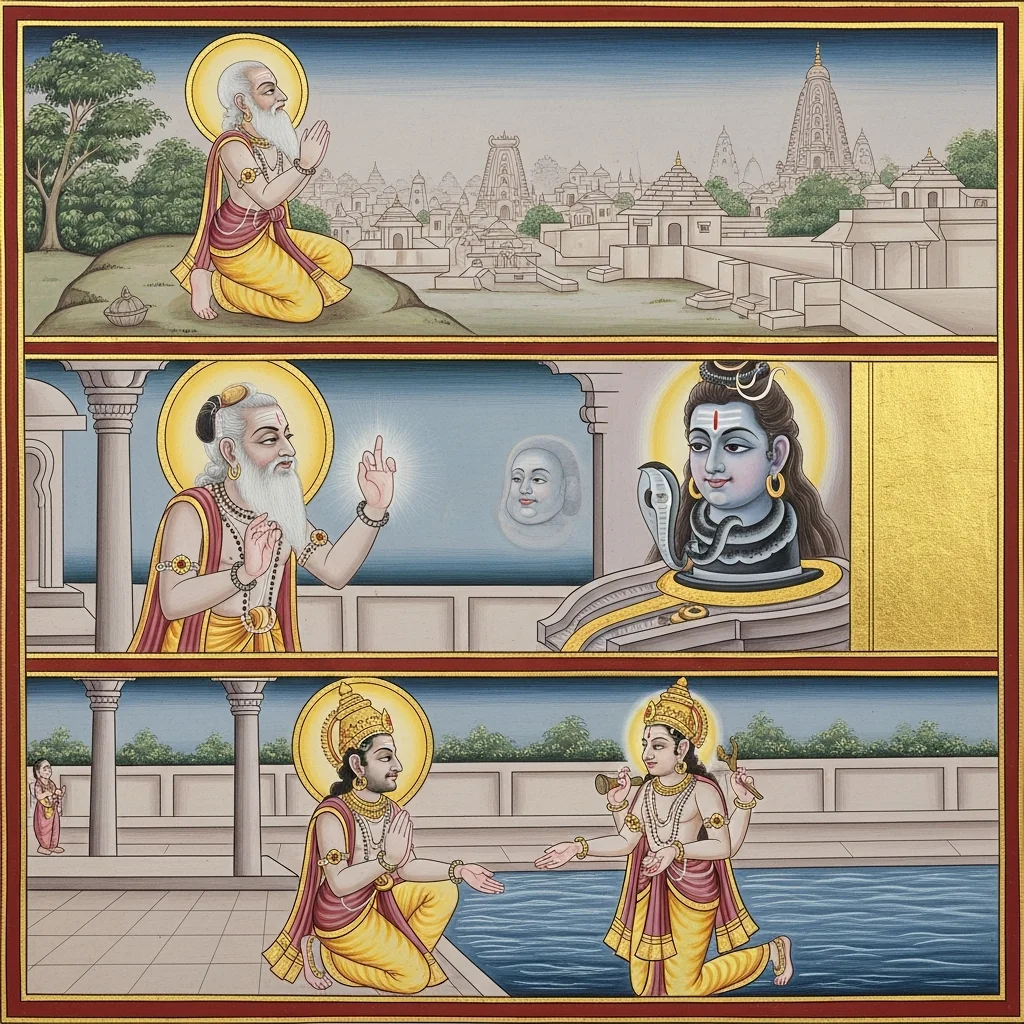
Skanda recounts a Kāśī-centered episode: the sage Durvāsas, after long wandering, arrives and beholds Śiva’s Ānandakānana, vividly portrayed through hermitages, forest retreats, and ascetic communities. Observing the distinctive joy of beings in Kāśī, he praises the city’s unsurpassed spiritual power, deeming it superior even to heavenly realms. A sudden reversal follows: despite his austerities, Durvāsas is seized by anger and appears ready to curse Kāśī. Śiva laughs, and a liṅga associated with the Lord’s divine “laughter” is revealed/recognized as Prahasiteśvara. As Śiva’s gaṇas stir in response, Śiva intervenes so that no curse can obstruct Kāśī’s liberative status. Durvāsas repents, proclaims Kāśī the universal Mother and refuge of all beings, and affirms that any attempt to curse Kāśī recoils upon the curser. Śiva extols Kāśī-stuti as the highest devotion and grants boons: the स्थापना and naming of a wish-fulfilling liṅga as Kāmeśvara (also called Durvāseśvara) and the designation of a pond as Kāmakūṇḍa. The chapter also gives observances: bathing at Kāmakūṇḍa and taking darśana of the liṅga at pradoṣa under a specified calendrical conjunction mitigates faults born of desire and removes accumulated demerit; reciting or hearing this account is likewise said to purify.
Shlokas
Verse 1
स्कंद उवाच । जगज्जनन्याः पार्वत्याः पुरोगस्ते पुरारिणा । यथाख्यायि कथा पुण्या तथा ते कथयाम्यहम्
Skanda said: The meritorious tale once narrated by the Foe of the Three Cities (Śiva) to Agastya, in the presence of Pārvatī, the Mother of the world—just so shall I relate it to you.
Verse 2
पुरा महीमिमां सर्वां ससमुद्राद्रिकाननाम् । ससरित्कां सार्णवां च सग्रामपुरपत्तनाम्
Formerly, a sage wandered across this entire earth—along with its seas, mountains, and forests; with its rivers and waters; with its villages, cities, and towns.
Verse 3
परिभ्रम्य महातेजा महामर्षो महातपाः । दुर्वासाः संपरिप्राप्तः शंभोरानंदकाननम्
After wandering about, the radiant great sage of mighty austerity—Durvāsā—arrived at Śambhu’s Ānandakānana, the Forest of Bliss (Kāśī).
Verse 5
विलोक्याक्रीडमखिलं बहुप्रासादमंडितम् । बहुकुंडतडागं च शंभोस्तोषमुपागमत् । पदेपदे मुनीनां च जितकाल महाभियाम् । दृष्टोटजानि रम्याणि दुर्वासा विस्मितोभवत्
Beholding the entire delightful grove, adorned with many palaces and filled with numerous ponds and tanks, Durvāsā was filled with joy toward Śambhu. At every step he saw the charming hermitages of sages—great souls who had conquered time—and Durvāsā became astonished.
Verse 6
सर्वर्तुकुसुमान्वृक्षान्सुच्छायस्निग्धपल्लवान् । सफलान्सुलताश्लिष्टान्दृष्ट्वा प्रीतिमगान्मुनिः
Seeing trees flowering in every season, with lovely shade and glossy tender shoots—laden with fruits and embraced by fine creepers—the sage was filled with joy.
Verse 7
दुर्वासाश्चातिहृष्टोभू्द्दृष्ट्वा पाशुपतोत्तमान् । भूतिभूषितसर्वांगाञ्जटाजटितमौलिकान्
Durvāsā was exceedingly delighted on beholding the foremost Pāśupatas, their entire bodies adorned with sacred ash and their heads crowned with matted jaṭā locks.
Verse 8
कौपीनमात्र वसनान्स्मरारि ध्यान तत्परान् । कक्षीकृतमहालाबून्हुडुत्कारजितांबुदान्
In Kāśī he beheld ascetics clad only in a loincloth, wholly intent on meditating upon Smarāri (Śiva, the foe of Kāma), bearing great gourds slung at their sides, and whose simple cries seemed to outdo even the rumbling of clouds.
Verse 9
करंडदंडपानीय पात्रमात्रपरिग्रहान् । क्वचित्त्रिदंडिनो दृष्ट्वा निःसंगा निष्परिग्रहान्
In some places he saw tridaṇḍin ascetics, free from attachment and possessions, whose belongings were only a staff, a basket, and a water-vessel.
Verse 10
कालादपि निरातंकान्विश्वेशशरणं गतान् । क्वचिद्वेदरहस्यज्ञानाबाल्यब्रह्मचारिणः
He saw some who were unafraid even of Kāla, Time itself, having taken refuge in Viśveśa, Lord of the Universe; and others who knew the secret purport of the Vedas and had observed brahmacarya from childhood.
Verse 11
विलोक्य काश्यां दुर्वासा ब्राह्मणान्मुमुदेतराम्
Seeing the Brāhmaṇas in Kāśī, Durvāsā rejoiced exceedingly.
Verse 12
पशुष्वपि च या तुष्टिर्मृगेष्वपि च या द्युतिः । तिर्यक्ष्वपि च या हृष्टिः काश्यां नान्यत्र सा स्फुटम्
That contentment found even among cattle, that radiance seen even among wild beasts, and that joy present even among creatures of lower birth—these are clearly found in Kāśī and nowhere else.
Verse 13
इदं सुश्रेयसो व्युष्टिः क्वामरेषु त्रिविष्टपे । यत्रत्येष्वपि तिर्यक्षु परमानंदवर्धिनी
This is the very dawning of the highest good—where could it be found among the gods in heaven?—for here, even among the animals that dwell in this place, supreme bliss is increased.
Verse 14
वरमेतेपि पशव आनंदवनचारिणः । सदानंदाः पुनर्देवाननंदनवनाश्रिताः
Better even are these animals that roam in Ānandavana (Kāśī), for they are ever in bliss; whereas the gods, though dwelling in Nandana-grove, are again (only) ‘delighted’—their joy is not of the same order.
Verse 15
वरं काशीपुरीवासी म्लेच्छोपि हि शुभायतिः । नान्यत्रत्यो दीक्षितोपि स हि मुक्तेरभाजनम्
Better is even a ‘mleccha’ who dwells in the city of Kāśī, for he becomes auspicious; but one initiated elsewhere, even if consecrated, is not truly a fit vessel for liberation (in comparison).
Verse 16
वैश्वेश्वरी पुरी चैषा यथा मे चित्तहारिणी । सर्वापि न तथा क्षोणी न स्वर्गो नैव नागभूः
This city of Vaiśveśvarī (Kāśī, of Viśveśvara) captivates my heart as no other place does—neither the whole earth, nor heaven, nor even the world of the Nāgas compares to it.
Verse 17
स्थैर्यं बबंध न क्वापि भ्रमतो मे मनोगतिः । सर्वस्मिन्नपि भूभागे यथा स्थैर्यमगादिह
My restless mind found stability nowhere while wandering; yet here, in Kāśī, it attained the steadiness it never gained in any other region of the earth.
Verse 18
रम्या पुरी भवेदेषा ब्रह्मांडादखिलादपि । परिष्टुत्येति दुर्वासाश्चेतोवृत्तिमवाप ह
“This city is supremely delightful—more so than the entire universe.” Having thus praised it, the sage Durvāsā attained a transformed state of mind, a new inner disposition.
Verse 19
तप्यमानोपि हि तपः सुचिरं स महातपाः । यदा नाप फलं किंचिच्चुकोप च तदा भृशम्
Though he performed austerities for a very long time, that great ascetic—when he obtained no result at all—then became intensely angry.
Verse 20
धिक्च मां तापसं दुष्टं धिक्च मे दुश्चरं तपः । धिक्च क्षेत्रमिदं शंभोः सर्वेषां च प्रतारकम्
“Shame on me, a wicked ascetic! Shame on my difficult austerity! Shame on this sacred field of Śambhu, which seems to deceive everyone!”
Verse 21
यथा न मुक्तिरत्र स्यात्कस्यापि करवै तथा । इति शप्तुं यदोद्युक्तः संजहास तदा शिवः
“Let it be so that no one here attains liberation!”—when he was about to utter such a curse, Śiva laughed aloud.
Verse 22
तत्र लिंगमभूदेकं ख्यातं प्रहसितेश्वरम् । तल्लिंगदर्शनात्पुंसामानंदः स्यात्पदेपदे
There a single liṅga appeared, renowned as Prahāsiteśvara. By merely beholding that liṅga, people feel joy at every step.
Verse 23
उवाच विस्मयाविष्टो मनस्येव महेशिता । ईदृशेभ्यस्तपस्विभ्यो नमोस्त्विति पुनःपुनः
Overwhelmed with wonder, he spoke—pondering inwardly the sovereignty of Maheśvara—“Salutations, again and again, to such ascetics!”
Verse 24
यत्रैव हि तपस्यंति यत्रैव विहिताश्रमाः । लब्धप्रतिष्ठा यत्रैव तत्रैवामर्षिणो द्विजाः
Wherever they practice austerity, wherever their āśramas are established, and wherever they gain renown—there itself those dvija brāhmaṇas become quick to take offense.
Verse 25
मनाक्चिंतितमात्रं तु चेल्लभंते न तापसाः । क्रुधा तदैव जीयंते हारिण्या तपसां श्रियः
If ascetics do not obtain even what is scarcely thought of, then through anger the splendor born of their austerities is at once diminished and carried away.
Verse 26
तथापि तापसा मान्याः स्वश्रेयोवृद्धिकांक्षिभिः । अक्रोधनाः क्रोधना वा का चिंता हि तपस्विनाम्
Even so, ascetics should be honored by those who seek the increase of their own welfare. Whether they are free from anger or prone to anger—what concern is that to the seeker when dealing with tapasvins?
Verse 27
इति यावन्महेशानो मनस्येव विचिंतयेत् । तावत्तत्क्रोधजो वह्निर्व्यानशे व्योममंडलम्
While Maheśa was still pondering thus within his mind, in that very span the fire born of that wrath spread forth and pervaded the entire circle of the sky.
Verse 28
तत्कोधानलधूमोघैर्व्यापितं यन्नभोंगणम् । तद्दधाति नभोद्यापि नीलिमानं महत्तरम्
The vault of the sky, pervaded by billows of smoke rising from that fire of wrath, even now bears a blueness deeper and more vast.
Verse 29
ततो गणाः परिक्षुब्धाः प्रलयार्णव नीरवत् । आः किमेतत्किमेतद्वै भाषमाणाः परस्परम्
Then the gaṇas were thrown into turmoil, like the waters of the ocean at dissolution, crying to one another, “Ah! What is this—what indeed is this?”
Verse 30
गर्जंतस्तर्जयंतश्च प्रोद्यता युधपाणयः । प्रमथाः परितस्थुस्ते परितो धाम शांभवम्
Roaring and hurling threats, weapons raised in their hands, the pramathas stood on every side, encircling the sacred abode of Śaṃbhu.
Verse 31
को यमः कोथवा कालः को मृत्युः कस्तथांतकः । को वा विधाता के लेखाः कुद्धेष्वस्मासु कः परः
“Who is Yama? Who, then, is Kāla—Time? Who is Death, and who is the Ender? Who is the Ordainer, and what are the decrees of fate—when we are enraged, who could stand above us?”
Verse 32
अग्निं पिबामो जलवच्चूर्णीकुर्मोखिलान्गिरीन् । सप्तापि चार्णवांस्तूर्णं करवाम मरुस्थलीम्
“We can drink fire as though it were water; we can grind all mountains to dust; and we can swiftly turn even the seven oceans into desert land.”
Verse 33
पातालं चानयामोर्ध्वमधो दध्मोथवा दिवम् । एकमेव हि वा ग्रासं गगनं करवामहे
“We can haul Pātāla upward, or else drive heaven down below; indeed, we could make the very sky a single mouthful to be swallowed.”
Verse 34
ब्रह्मांडभांडमथवा स्फोटयामः क्षणेन हि । आस्फालयामो वान्योन्यं कालं मृत्युं च तालवत्
“Or we can shatter the vessel of the cosmos in an instant; and we can strike down even Time and Death—clapping them away like a palm-leaf fan.”
Verse 35
ग्रसामो वाथ भुवनं मुक्त्वा वाराणसीं पुरीम् । यत्र मुक्ता भवंत्येव मृतमात्रेण जंतवः
“We could swallow the worlds as well—yet we would spare the city of Vārāṇasī, for there creatures indeed attain liberation by death alone.”
Verse 36
कुतोऽयं धूमसंभारो ज्वालावल्यः कुतस्त्वमूः । को वा मृत्युंजयं रुद्रं नो विद्यान्मदमोहितः
“Whence comes this massing smoke, and whence these garlands of flame? Who, intoxicated by pride and delusion, would fail to recognize Rudra—the Conqueror of Death?”
Verse 37
इति पारिषदाः शंभोर्महाभय भयप्रदाः जल्पंतः कल्पयामासुः प्राकारं गगनस्पृशम्
Thus spoke the attendants of Śaṃbhu—terrifying in their great dread—and, chattering among themselves, they contrived a rampart that rose to touch the sky.
Verse 38
शकलीकृत्य बहुशः शिलावत्प्रलयानलम् । नंदी च नंदिषेणश्च सोमनंदी महोदरः
Again and again they shattered the fire of dissolution, as if it were mere stone. There were also Nandī, Nandiṣeṇa, Somanandī, and Mahodara—mighty leaders among Śiva’s gaṇas.
Verse 39
महाहनुर्महाग्रीवो महाकालो जितांतकः । मृत्युप्रकंपनो भीमो घंटाकर्णो महाबलः
Mahāhanu, Mahāgrīva, Mahākāla, and Jitāntaka; Mṛtyuprakampana, Bhīma, Ghaṇṭākarṇa, and Mahābala—such formidable gaṇas stood as Śiva’s terrifying guardians.
Verse 40
क्षोभणो द्रावणो जृंभी पचास्यः पंचलोचनः । द्विशिरास्त्रिशिराः सोमः पंचहस्तो दशाननः
There were Kṣobhaṇa, Drāvaṇa, and Jṛmbhī; Pacāsya and Pañcalocana; Dviśiras and Triśiras; Soma; Pañcahasta and Daśānana—gaṇas of wondrous forms, fit to awe all worlds.
Verse 41
चंडो भृंगिरिटिस्तुंडी प्रचंडस्तांडवप्रियः । पिचिंडिलः स्थूलशिराः स्थूलकेशो गभस्तिमान्
There were Caṇḍa, Bhṛṅgiriṭi, Tuṇḍī, and Pracaṇḍa—fond of the Tāṇḍava; also Piciṃḍila, Sthūlaśiras, Sthūlakeśa, and Gabhastimān—gaṇas blazing with fierce energy.
Verse 42
क्षेमकः क्षेमधन्वा च वीरभद्रो रणप्रियः । चंडपाणिः शूलपाणिः पाशपाणिः करोदरः
Kṣemaka and Kṣemadhanvā; Vīrabhadra, who delights in battle; Caṇḍapāṇi, Śūlapāṇi, Pāśapāṇi, and Karodara—weapon-bearing gaṇas who carry out Śiva’s will.
Verse 43
दीर्घग्रीवोथ पिंगाक्षः पिंगलः पिंगमूर्धजः । बहुनेत्रो लंबकर्णः खर्वः पर्वतविग्रहः
Then there were Dīrghagrīva, Piṅgākṣa, Piṅgala, and Piṅgamūrdhaja; Bahunetra, Laṃbakarṇa, Kharva, and Parvatavigraha—gaṇas of striking features and immense presence.
Verse 44
गोकर्णो गजकर्णश्च कोकिलाख्यो गजाननः । अहं वै नैगमेयश्च विकटास्योट्टहासकः
Gokarṇa and Gajakarṇa, Kokilākhya and Gajānana; and I myself—Naigameya—along with Vikaṭāsya and Oṭṭahāsaka: thus were the gaṇas named.
Verse 45
सीरपाणिः शिवारावो वैणिको वेणुवादनः । दुराधर्षो दुःसहश्च गर्जनो रिपुतर्जनः
Sīrapāṇi, Śivārāva, Vaiṇika, and Veṇuvādana; Durādharṣa and Duḥsaha; Garjana and Riputarjana—gaṇas whose very sound and strength were unconquerable.
Verse 46
इत्यादयो गणेशानाः शतकोटि दुरासदाः । काश्यां निवारयामासुरपि प्राभंजनीं गतिम्
Such, and many more besides, were the gaṇa-lords—hundreds of crores, unapproachable. In Kāśī they held back even the storm-swift onrush, stopping its very course.
Verse 47
क्षुब्धेषु तेषु वीरेषु चकंपे भुवनत्रयम् । दुर्वाससश्च कोपाग्नि ज्वालाभिर्व्याकुलीकृतम्
When those heroes surged in fury, the three worlds trembled. And the fire of Durvāsas’ wrath, with its tongues of flame, cast everything into turmoil.
Verse 48
तदा विविशतुः काश्यां सूर्याचंद्रमसावपि । न गणैरकृतानुज्ञौ तत्तेजः शमितप्रभौ
Then even the Sun and the Moon entered Kāśī; yet, since they had not obtained permission from Śiva’s gaṇas, their radiance was subdued and their splendor made calm.
Verse 49
निवार्य प्रमथानीकमतिक्षुब्धमुमाधवः । मदंश एव हि मुनीरानसूये य एष वै
Restraining the greatly agitated host of pramathas, Umā’s Lord said: “O faultless one, this sage is indeed a portion of my own power.”
Verse 50
अथो दुर्वाससे लिंगादाविरासीत्कृपानिधिः । महातेजोमयः शंभुर्मुनिशापात्पुरीमवन्
Then, for Durvāsas, the ocean of compassion appeared from the liṅga. Śambhu, formed of immense radiance, protected the city from the sage’s curse.
Verse 51
माभूच्छापो मुनेः काश्यां निर्वाणप्रतिबंधकः । इत्यनुक्रोशतो देवस्तस्य प्रत्यक्षतां गतः
“Let not the sage’s curse become an obstacle to liberation in Kāśī.” Out of compassion, the Lord thus came into direct manifestation before him.
Verse 52
उवाच च प्रसन्नोस्मि महाक्रोधन तापस । वरयस्व वरः कस्ते मया देयो विशंकितः
And the Lord said: “I am well pleased, O ascetic of mighty wrath. Choose a boon—what gift shall I grant you? Do not hesitate.”
Verse 53
ततो विलज्जितोगस्त्य शापोद्यतकरो मुनिः । अपराद्धं बहु मया क्रोधांधेनेति दुर्धिया
Then the sage—his hand raised to utter a curse—grew ashamed, O Agastya, and confessed: “Blinded by anger and poor judgment, I have greatly offended.”
Verse 54
उवाच चेति बहुशो धिङ्मां क्रोधवशंगतम् । त्रैलोक्याभयदां काशीं शप्तुमुद्यतचेतसम्
And he said again and again: “Shame on me, overcome by anger—my mind even rose to curse Kāśī, the giver of fearlessness to the three worlds.”
Verse 55
दुःखार्णव निमग्नानां यातायातेति खेदिनाम् । कर्मपाशितकंठानां काश्येका मुक्तिसाधनम्
For those sunk in the ocean of sorrow, weary of the endless round of coming and going, and choked by the noose of karma—Kāśī alone is the means to liberation.
Verse 56
सर्वेषां जंतुजातानां जनन्येकैक्काशिका । महामृतस्तन्यदात्री नेत्री च परमं पदम्
For all classes of living beings, Kāśikā alone is the unique Mother—she gives the milk of the great amṛta and leads them to the supreme state.
Verse 57
जनन्या सह नो काशी लभेदुपमितिं क्वचित् । धारयेज्जननी गर्भे काशी गर्भाद्विमोचयेत्
Kāśī can never be compared, not even with one’s own mother. A mother bears a child in the womb, but Kāśī releases the being from the womb of repeated birth.
Verse 58
एवंभूतां तु यः काशीमन्योपि हि शपिष्यति । तस्यैव शापो भविता न तु काश्याः कथंचन
Even if anyone were to curse Kāśī, that curse would fall back upon the curser alone; Kāśī can never be harmed in any way.
Verse 59
इति दुर्वाससो वाक्यं श्रुत्वा देवस्त्रिलोचनः । अतीव तुषितो जातः काशीस्तवन लब्धमुत्
Hearing these words of Durvāsas, the three-eyed Lord became exceedingly pleased, having obtained the hymn of praise to Kāśī.
Verse 60
यः काशीं स्तौति मेधावी यः काशीं हृदि धारयेत् । तेन तप्तं तपस्तीव्रं तेनेष्टं क्रतुकोटिभिः
The wise person who praises Kāśī and holds Kāśī within the heart—by that very act, intense austerity is as though performed, and sacrifices by crores are as though offered.
Verse 61
जिह्वाग्रे वर्तते यस्य काशीत्यक्षरयुग्मकम् । न तस्य गर्भवासः स्यात्क्वचिदेव सुमेधसः
For the truly discerning one upon whose tongue’s tip abides the two-syllabled word “Kāśī,” there will never again be residence in the womb—at any time.
Verse 62
यो मंत्रं जपति प्रातः काशी वर्णद्वयात्मकम् । स तु लोकद्वयं जित्वा लोकातीतं व्रजेत्पदम्
Whoever at dawn repeats the two-letter mantra “Kāśī” conquers both worlds and attains the state beyond the worlds.
Verse 63
आनुसूयेय ते ज्ञानं काशीस्तवन पुण्यतः । यथेदानीं समुत्पन्नं तथा न तपसः पुरा
O son of Anasūyā, from the merit of praising Kāśī such knowledge has arisen in you as now appears; never before did it arise from austerity alone.
Verse 64
मुने न मे प्रियस्तद्वद्दीक्षितो मम पूजकः । यादृक्प्रियतरः सत्यं काशीस्तवन लालसः
O sage, neither an initiated devotee nor a worshipper of mine is as dear to me as—truly—one who longs to praise Kāśī.
Verse 65
तादृक्तुष्टिर्न मे दानैस्तादृक्तुष्टिर्न मे मखैः । न तुष्टिस्तपसा तादृग्यादृशी काशिसंस्तवैः
Neither gifts nor sacrifices please me in that way; nor does austerity please me so—like the pleasure I gain from hymns in praise of Kāśī.
Verse 66
आनंदकाननं येन स्तुतमेतत्सुचेतसा । तेनाहं संस्तुतः सम्यक्सर्वैः सूक्तैः श्रुतीरितैः
By the pure-minded one through whom this Ānandakānana has been praised, I myself have been rightly praised with all the well-spoken hymns proclaimed in the Vedas.
Verse 67
तव कामाः समृद्धाः स्युरानुसूयेय तापस । ज्ञानं ते परमं भावि महामोहविनाशनम्
O ascetic, son of Anasūyā: may your desires be fully fulfilled. And may supreme knowledge arise in you—knowledge that destroys great delusion.
Verse 68
अपरं च वरं ब्रूहि किं दातव्यं तवानघ । त्वादृशा एव मुनयः श्लाघनीया यतः सताम्
“Speak, moreover, of another boon: what should be granted to you, O sinless one? For sages like you alone are worthy of praise among the righteous.”
Verse 69
यस्यास्त्वेव हि सामर्थ्यं तपसः क्रुद्ध्यतीहसः । कुपितोप्यसमर्थस्तु किं कर्ता क्षीणवृत्तिवत्
“For one whose austerity truly has power, even anger can be effective. But if, though enraged, one lacks that power—what can he accomplish, like a livelihood that has dwindled away?”
Verse 70
इति श्रुत्वा परिष्टुत्य दुर्वासाः कृत्तिवाससम् । वरं च प्रार्थयामास परिहृष्ट तनूरुहः
Hearing this, Durvāsā praised Kṛttivāsa (Śiva) on every side; and with the hairs of his body thrilled in delight, he sought a boon.
Verse 71
दुर्वासा उवाच । देवदेव जगन्नाथ करुणाकर शंकर । महापराधविध्वंसिन्नंधकारे स्मरांतक
Durvāsā said: “O God of gods, Lord of the world, compassionate Śaṅkara—destroyer of great offences; slayer of Andhakāra; ender of Smara (Kāma)!”
Verse 72
मृत्युंजयोग्रभूतेश मृडानीश त्रिलोचन । यदि प्रसन्नो मे नाथ यदि देयो वरो मम
O Conqueror of death, O mighty Lord of beings, Lord of Mṛḍānī, Three-eyed One—if you are pleased with me, O Master, if a boon is to be granted to me…
Verse 73
तदिदं कामदं नाम लिगमस्त्विह धूर्जटे । इदं च पल्वलं मेत्र कामकुंडाख्यमस्तु वै
Therefore, O Dhūrjaṭi, let this liṅga here be named “Kāmada” (the Giver of desired aims). And let this pond, O Friend, indeed be called by the name “Kāmakūṇḍa”.
Verse 74
देवदेव उवाच । एवमस्तु महातेजो मुने परमकोपन । यत्त्वया स्थापितं लिंगं दुर्वासेश्वरसंज्ञितम्
The Lord of gods said: “So be it, O great-splendored sage, O exceedingly fierce one. The liṅga established by you shall be known as Durvāseśvara.”
Verse 75
तदेव कामकृन्नृणां कामेश्वरमिहास्त्विति । यः प्रदोषे त्रयोदश्यां शनिवासरसंयुजि
“Let that very (liṅga) here be ‘Kāmeśvara’, the fulfiller of human desires. And whoever—at pradoṣa, on the thirteenth lunar day, when it coincides with a Saturday…”
Verse 76
संस्नास्यति नरो धीमान्कामकुंडे त्वदास्पदे । त्वत्स्थापितं च कामेशं लिंगं द्रक्ष्यति मानवः
“That wise man who bathes in Kāmakūṇḍa—your own sacred abode—and who beholds the Kāmeśa liṅga established by you…”
Verse 77
स वै कामकृताद्दोषाद्यामीं नाप्स्यति यातनाम् । बहवोपि हि पाप्मानो बहुभिर्जन्मभिः कृताः
Truly, on account of faults born of desire, he will not fall into Yama’s torment. Even though many sins have been committed through many births…
Verse 78
कामतीर्थांबु संस्नानाद्यास्यंति विलयं क्षणात् । कामाः समृद्धिमाप्स्यंति कामेश्वर निषेवणात्
By bathing in the waters of Kāmatīrtha, afflictions are dissolved in an instant. And by devoted attendance upon Lord Kāmeśvara, one’s cherished aims and desires attain full prosperity.
Verse 79
इति दत्त्वा वराञ्शंभुस्तल्लिंगे लयमाययौ । स्कंद उवाच । तल्लिंगाराधनात्कामाः प्राप्ता दुर्वाससा भृशम्
Thus, having granted the boons, Śambhu (Śiva) merged into that very liṅga. Skanda said: “By worship of that liṅga, Durvāsas obtained his desired ends in great measure.”
Verse 80
तस्मात्सर्वप्रयत्नेन काश्यां कामेश्वरः सदा । पूजनीयः प्रयत्नेन महाकामाभिलाषुकैः
Therefore, with every effort, Kāmeśvara in Kāśī should always be worshipped—earnestly—by those who seek great fulfillments.
Verse 81
कामकुंडकृतस्नानैर्महापातकशांतये । इदं कामेश्वराख्यानं यः पठिष्यति पुण्यवान् । यः श्रोष्यति च मेधावी तौ निष्पापौ भविष्यतः
By bathing in Kāma-kuṇḍa, great sins are pacified. Whoever, being meritorious, recites this account of Kāmeśvara—and whoever, being wise, listens to it—both shall become free from sin.
Verse 85
इति श्रीस्कांदे महापुराण एकाशीतिसाहस्र्यां सहितायां चतुर्थे काशीखंड उत्तरार्धे दुर्वाससो वरप्रदानं नाम पंचाशीतितमोऽध्यायः
Thus ends the eighty-fifth chapter, entitled “The Granting of a Boon to Durvāsas,” in the Uttarārdha of the Kāśī Khaṇḍa, within the fourth section of the Śrī Skanda Mahāpurāṇa, in the Saṃhitā of eighty-one thousand verses.