Adhyaya 33
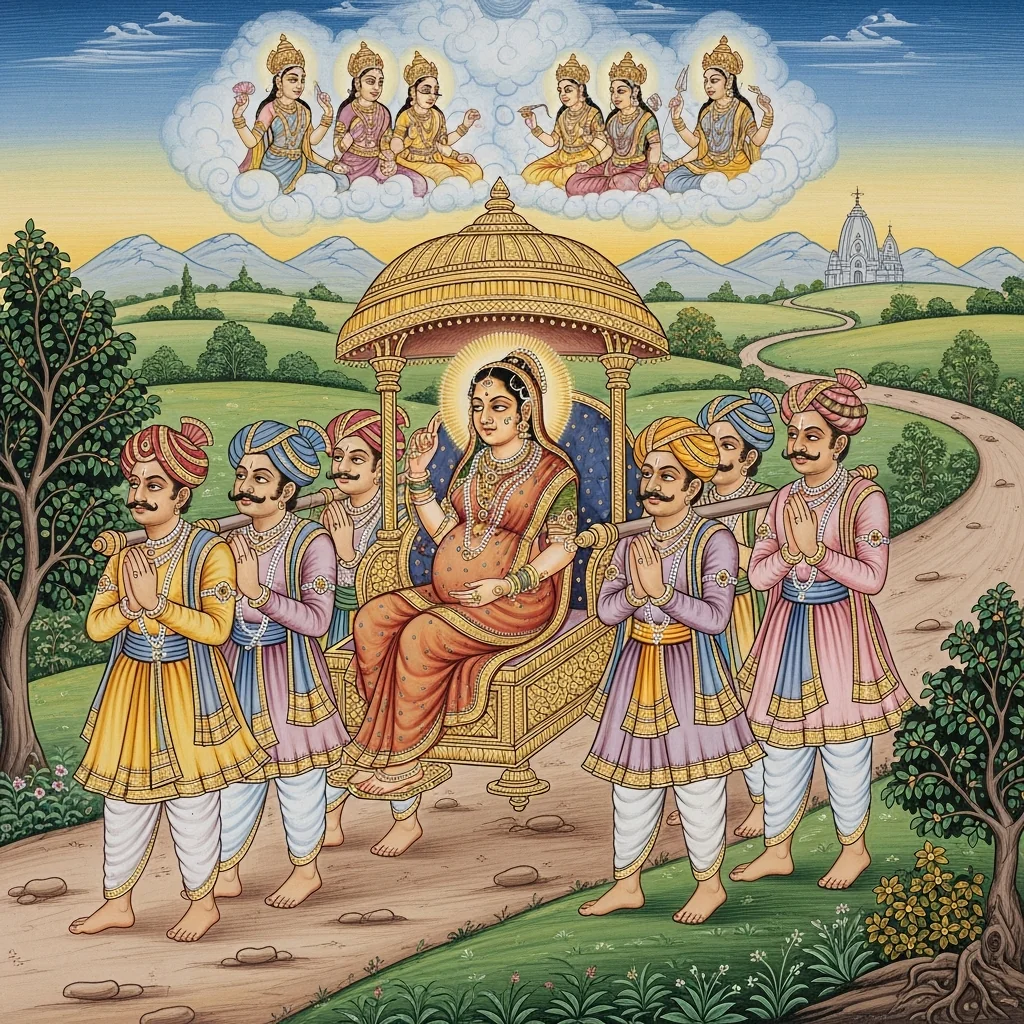
Adhyāya 33 unfolds a layered instruction. First, the queen sets forth a precise putra-prāpti vrata for progeny, said to have been earlier revealed by Nārada and proven effective in precedents such as the birth of Nalakūbara. The rite prescribes installing Gaurī with a nursing child, observing it on Mārgaśīrṣa śukla tṛtīyā, arranging kalaśas, cloth, lotus and gold elements, fragrances and naivedya, keeping a night vigil, and performing a small fire-offering with Vedic ṛc; it concludes with guru-honoring gifts (including a newly calved kapilā cow), feeding brāhmaṇas, and pāraṇa with a mantra seeking a lineage-sustaining son. Next, the queen conceives, and the child’s destiny appears unusual: fearing an inauspicious birth-star, ministers relocate him for protection to the Pañcamudrā Mahāpīṭha under the goddess Vikaṭā and the yoginīs, where the Mātṛkā-gaṇa judges him fit for kingship and returns him safely. The prince then performs intense tapas in Ānandakānana; Śiva manifests as a radiant liṅga and grants a boon. The prince asks that Śiva abide perpetually in that liṅga and that devotees’ aims be fulfilled by mere sight, touch, and reverence—without complex preliminaries; Śiva assents, names it Vīravīreśvara, and affirms enduring siddhi for its worshippers. Finally, Śiva begins an extended discourse ranking Kāśī’s tīrthas along the Gaṅgā, enumerating and comparatively praising many sacred sites (such as Hayagrīva, Gaja, Kokāvarāha, Dilīpeśvara/Dilīpa-tīrtha, Sagara, Saptasāgara, Mahodadhi, Cauratīrtha, Haṃsatīrtha, Tribhuvana-Keśava, Govyāghreśvara, Māndhātu, Mucukunda, Pṛthu, Paraśurāma, Balarāma/Kṛṣṇāgraja, Divodāsa, Bhāgīrathī-tīrtha, Niṣpāpeśvara-liṅga, Daśāśvamedha, Bandī-tīrtha, Kṣoṇīvarāha, Kāleśvara, Bhavānī, Garuḍa, Brahma, Nṛsiṃha, Citraratha), and closes by indicating that further tīrthas will be described next.
Shlokas
Verse 1
राज्ञ्युवाच । अवधेहि धरानाथ कथयामि यथातथम् । व्रतस्यास्य विधानं च फलं चाभीष्टदेवताम्
The queen said: “Listen, O lord of the earth; I shall declare it just as it truly is—the proper ordinance of this sacred vow and its fruit, leading one to the desired deity.”
Verse 2
पुरा पुरः श्रीदपत्न्याः श्रीमुख्या ब्रह्मसूनुना । नारदेन सुतार्थिन्या व्रतमेतदुदीरितम्
In former times, this observance was taught by Nārada—the son of Brahmā—to Śrī, the foremost consort of Śrī (Viṣṇu), when she sought the boon of a son.
Verse 3
चीर्णं चाथ तया देव्या पुत्रोभून्नलकूबरः । अन्याभिरपि बह्वीभिः पुत्राः प्राप्ता व्रतादितः
When that goddess performed it, her son was born as Nalakūbara. Likewise, many other women too obtained sons through this very observance.
Verse 4
विधिनाप्यत्र संपूज्या गौरी सर्वविधानवित् । स्तनंधयेन सहिता धयता स्तनमुन्मुखम्
Here, Gaurī—knower of every rite—should be worshipped according to rule, depicted together with a nursing infant, the child turned upward toward the breast as it suckles.
Verse 5
मार्गशीर्ष तृतीयायां शुक्लायां कलशोपरि । ताम्रपात्रं निधायैकं तंडुलैः परिपूरितम्
On the third lunar day of the bright fortnight in Mārgaśīrṣa, one should place a copper vessel upon a kalaśa and fill it completely with grains of rice.
Verse 6
अविच्छिन्नं नवीनं च रजनीरागरंजितम् । वासः पात्रोपरि न्यस्य सूक्ष्मात्सूक्ष्मतरं परम्
Placing upon the vessel a fresh, unbroken cloth—dyed with turmeric and red pigment—one should employ a fabric of the finest kind, exceedingly delicate.
Verse 7
तस्योपरि शुभं पद्मं रविरश्मिविकासितम् । तत्कर्णिकाया उपरि चतुःस्वर्णविनिर्मितम्
Upon that, one should place an auspicious lotus, as though opened by the sun’s rays; and upon its pericarp, an ornament fashioned of four kinds of gold.
Verse 8
विधिं संपूजयेद्भक्त्या रत्नपट्टाबंरादिभिः । पुष्पैर्नानाविधै रम्यैः फलैर्नारंगमुख्यकैः
With devotion one should duly worship (the deity/rite) with jeweled ornaments, silk garments and the like—using many kinds of lovely flowers and fruits, with oranges among the principal offerings.
Verse 9
सुगंधैश्चंदनाद्यैश्च कर्पूर मृगनाभिभिः । परमान्नादि नैवेद्यैः पक्वान्नैर्बहुभंगिभिः
One should also honor the worship with fragrant substances such as sandal and the like, with camphor and musk, and with offerings of supreme foods—sweet rice and other naivedyas—together with many varieties of cooked dishes.
Verse 10
धूपैरगुरुमुख्यैश्च रम्ये कुसुममंडपे । रात्रौ जागरणं कार्यं विनिंद्रैः परमोत्सवैः
With incense—chiefly aguru—in a delightful pavilion of flowers, one should keep vigil through the night, without sleep, celebrating with excellent festivities.
Verse 11
हस्तमात्रमिते कुंडे जातवेदस इत्यृचा । घृतेन मधुनाप्लुत्य जुहुयान्मंत्रविद्द्विजः
In a fire-pit measured to a hand’s span, the mantra-knowing brāhmaṇa should offer oblations, reciting the Ṛgvedic verse beginning “Jātavedasa…”, with ghee and honey poured upon the offering.
Verse 12
सहस्रकमलानां च स्मेराणां स्वयमेव हि । नवप्रसूतां कपिलां सुशीलां च पयस्विनीम्
Of his own accord he should offer a tawny kapilā cow—newly calved, gentle by nature, well-mannered, and rich in milk—together with a thousand fresh and pleasing lotuses.
Verse 13
दद्यादाचार्यवर्याय सालंकारां सलक्षणाम् । उपोष्य दंपती भक्त्या नवांबरविभूषितौ
After fasting, the husband and wife—devout and adorned in fresh garments—should present her to the most excellent teacher, decorated and bearing auspicious marks.
Verse 14
प्रातःस्नात्वा चतुर्थ्यां च संपूज्याचार्यमादृतः । वस्त्रैराभरणैर्माल्यैर्दक्षिणाभिर्मुदान्वितौ
On the Caturthī day, having bathed at dawn, they should reverently worship the teacher, joyfully honoring him with garments, ornaments, garlands, and dakṣiṇā (monetary gifts).
Verse 15
सोपस्करां च तां मृर्तिमाचार्याय निवेदयेत् । समुच्चरन्निमं मंत्रं व्रतकृन्मिथुनं मुदा
The vow-observing couple should joyfully present that mūrti (sacred icon), complete with its requisite accessories, to the teacher, while reciting this mantra aloud.
Verse 16
नमो विश्वविधानज्ञे विधे विविधकारिणि । सुतं वंशकरं देहि तुष्टामुष्माद्व्रताच्छुभात्
Homage to You who know the ordering of the universe—O Ordainer, O doer of manifold works. Pleased by this auspicious vow of ours, grant us a son who will continue the lineage.
Verse 17
सहसं भोजयित्वाथ द्विजानां भक्तिपूर्वकम् । भुक्तशेषेण चान्नेन कुर्याद्वै पारणं ततः
Then, after feeding the twice-born with devotion, one should perform the pāraṇa, the vow’s concluding meal, using the remaining food from what has been served.
Verse 18
इत्थमेतद्व्रतं राजंश्चिकीर्षामि त्वया सह । कुरु चैतत्प्रियं मह्यमभीष्टफललब्धये
“Thus is this vow, O King. I wish to perform it together with you. Do this, as a favor to me, so that the desired fruit may be obtained.”
Verse 19
इति भूपालवर्येण श्रुत्वा संहृष्टचेतसा । मुनेव तं समाचीर्णं सांतर्वत्नी बभूव ह
Hearing this, the excellent king—his mind delighted—had it carried out exactly as the sage had prescribed; and indeed, the queen became pregnant.
Verse 20
तयाथ प्रार्थिता गौरी गर्भिण्या भक्तितोषिता । पुत्रं देहि महामाये साक्षाद्विष्ण्वंशसंभवम्
Then that pregnant woman prayed to Gaurī; pleased by her devotion, the Goddess was implored: “O Great Mahāmāyā, grant me a son, born directly of Viṣṇu’s lineage.”
Verse 21
जातमात्रो व्रजेत्स्वर्गं पुनगयाति चात्र वै । भक्तः सदाशिवेऽत्यर्थं प्रसिद्धः सर्वभूतले
From the very moment of birth he would go to heaven, and again return here to the world. Intensely devoted to Sadāśiva, he would become renowned across the whole earth.
Verse 22
विनैव स्तन्यपानेन षोडशाब्दाकृतिः क्षणात् । एवंभूतः सुतो गौरि यथा मे स्यात्तथाकुरु
“Without even drinking mother’s milk, let him in an instant assume the form of a sixteen-year-old. O Gaurī, grant that such a son may be mine—do so in that very way.”
Verse 23
मृडान्यापि तथेत्युक्ता राज्ञी भक्त्यातितुष्टया । अथ कालेन तनयं मूलर्क्षे साप्यजीजनत्
Pleased beyond measure by the queen’s devotion, Mṛḍānī (Pārvatī) replied, “So be it.” In due course, the queen gave birth to a son—under the lunar mansion Mūla.
Verse 24
हितैरमात्यैरथ सा विज्ञप्तारिष्टसंस्थिता । देवि राजार्थिनी चेत्त्वं त्यज दुष्टर्क्षजं सुतम्
Then, well-meaning ministers informed the queen—now gripped by foreboding: “O Devī, if you seek the welfare of the king and kingdom, abandon this son born under an inauspicious constellation.”
Verse 25
सा मंत्रिवाक्यमाकर्ण्य केवलं पतिदेवता । अत्याक्षीत्तं तथा प्राप्तं तनयं नयकोविदा
Hearing the ministers’ words, she—whose sole deity was her husband—rejected that counsel; wise in conduct, she accepted and kept the son who had thus come to her.
Verse 26
धात्रेयिकां समाकार्य प्राहेदं सा नृपांगना । पंचमुद्रे महापीठे विकटा नाम मातृका
Summoning the nurse, the royal lady said: “At Pañcamudrā, upon the great sacred seat, there is a Mother-goddess named Vikaṭā.”
Verse 27
तदग्रे स्थापयित्वामुं बालं धात्रेयिके वद । गौर्यादत्तः शिशुरसौ तवाग्रे विनिवेदितः
“Place this child before her and say, O nurse: ‘This infant—granted by Gaurī—has been entrusted and presented before you.’”
Verse 28
राज्ञ्या पत्युः प्रियेषिण्या मंत्रिविज्ञप्तिनुन्नया । सापि राज्ञ्युदितं श्रुत्वा शिशुं लास्य शशिप्रभम्
Urged by the ministers’ petition, the queen—seeking what was dear to her husband—spoke. Hearing her words, the nurse lifted the infant, radiant as moonlight.
Verse 29
विकटायाः पुरः स्थाप्य गृहं धात्रेयिका गता । अथ सा विकटा देवी समाहूय च योगिनीः
Having placed the child before Vikaṭā, the nurse returned home. Then the Goddess Vikaṭā summoned the Yoginīs.
Verse 30
उवाच नयत क्षिप्रं शिशुं मातृगणाग्रतः । तासामाज्ञां च कुरुत रक्षतामुं प्रयत्नतः
She said: “Quickly take the infant before the host of Mothers. Obey their command, and protect this child with utmost effort.”
Verse 31
योगिन्यो विकटावाक्यात्खेचर्यस्ताः क्षणेन तम् । निन्युर्गगनमार्गेण ब्राह्म्याद्या यत्र मातरः
At Vikaṭā’s command, those Yoginīs who move through the sky at once bore him along the aerial path to the abode of the Mothers, beginning with Brāhmī.
Verse 32
प्रणम्य योगिनीवृंदं तं शिशुं सूर्यवर्चसम् । पुरो निधाय मातॄणां प्रोवाच विकटोदितम्
Having bowed to the circle of Yoginīs, Vikaṭa set before the Mothers that child, radiant like the sun, and spoke the words that were fitting.
Verse 33
ब्रह्माणी वैष्णवी रौद्री वाराही नारसिंहिका । कौमारी चापि माहेंद्री चामुंडा चैव चंडिका
Brahmāṇī, Vaiṣṇavī, Raudrī, Vārāhī, Nārasiṃhikā; and also Kaumārī, Māhendrī, Cāmuṇḍā, and Caṇḍikā—these were the Mothers.
Verse 34
दृष्ट्वा तं बालकं रम्यं विकटाप्रेषितं ततः । पप्रच्छुर्युगपड्डिंभं कस्ते तातः प्रसूश्च कः
Seeing that lovely child sent by Vikaṭa, they questioned the boy at once: “Who is your father, dear one, and who is your mother?”
Verse 35
मातृभिश्चेति पुष्टः स यदा किंचिन्न वक्ति च । तदा तद्योगिनीचक्रं प्राह मातृगणस्त्विति
Though nurtured by the Mothers, when the child still spoke nothing at all, then that circle of Yoginīs declared: “He belongs to the company of the Mothers.”
Verse 36
राज्ययोग्यो भवत्येष महालक्षणलक्षितः । पुनस्तत्रैव नेतव्यो योगिन्यस्त्वविलंबितम्
This one is fit for kingship, marked by great auspicious signs. Therefore, O Yoginīs, take him back there at once, without delay.
Verse 37
पंचमुद्रा महादेवी तिष्ठते यत्र काम्यदा । यस्याः संसेवनान्नृणां निर्वाणश्रीरदूरतः
Where the great Goddess Pañcamudrā abides, bestowing the desired boons—by devoted attendance upon her, the splendor of nirvāṇa draws near to people.
Verse 38
सर्वत्रशुभजन्मिन्यां काश्यां मुक्तिः पदेपदे । तथापि सविशेषं हि तत्पीठं सर्वसिद्धिकृत्
In Kāśī—where auspiciousness is born everywhere—liberation is found at every step. Even so, that particular sacred seat is exceptional indeed, for it bestows every attainment.
Verse 39
तत्पीठसेवनादस्य षोडशाब्दाकृतेः शिशोः । सिद्धिर्भवित्री परमा विश्वेशानुग्रहात्परात्
By serving that sacred seat, this child—though only sixteen years of age—will attain the highest perfection, through the supreme grace of Viśveśa.
Verse 40
एवं मातृगणाशीर्भिर्योगिनीभिः क्षणेन हि । प्रापितो मातृवाक्येन पंचमुद्रांकितं पुनः
Thus, by the blessings of the host of Mothers and by the Yoginīs—indeed, in a mere moment—he was brought, by the Mothers’ command, once again to the place marked by Pañcamudrā.
Verse 41
संप्राप्य तन्महापीठं स्वर्गलोकादिहागतः । आनंदकानने दिव्यं तताप विपुलं तपः
Having reached that great sacred seat—he who had come here from the heavenly realm—he performed abundant, divine austerity in the holy Ānandakānana.
Verse 42
तपसातीव तीव्रेण निश्चलेंद्रियचेतसः । तस्य राजकुमारस्य प्रसन्नोभूदुमाधवः
By exceedingly intense austerity, with senses and mind held unwavering, that prince pleased Umā’s Lord, Śiva.
Verse 43
आविर्बभूव पुरतो लिंगरूपेण शंकरः । प्रोवाच च प्रसन्नोस्मि वरं ब्रूहि नृपांगज
Śaṅkara manifested before him in the form of the Liṅga and said: “I am pleased—O prince, speak the boon you desire.”
Verse 44
स्कंद उवाच । सर्वज्योतिर्मयं लिंगं पुरतो वीक्ष्य वाङ्मयम् । सप्तपातालमुद्भिद्य स्थितं बृहदनुग्रहात
Skanda said: Seeing before him the Liṅga made of all light—beyond the grasp of speech—standing forth as though it had pierced up through the seven netherworlds, by mighty grace.
Verse 45
प्रणम्य दंडवद्भूमौ परितुष्टाव धूर्जटिम् । सूक्तैर्जन्मांतराभ्यस्तैः सुहृष्टो रुद्रदेवतैः
Bowing full-length upon the ground, he praised Dhūrjaṭi (Śiva) with hymns practiced across former births, rejoicing in devotion to Rudra as his chosen deity.
Verse 46
ततः प्रसन्नो भगवान्देवदेवो महेश्वरः । संतुष्टस्तपसा तस्य प्रोवाच वृषभध्वजः
Then the Blessed Lord—Maheśvara, God of gods—pleased by his austerity, spoke; He whose banner is the Bull (Vṛṣabhadhvaja).
Verse 47
देवदेव उवाच । वरं वरय संतप्त तपसा क्लेशितं वपुः । त्वयेदं बालवपुषा वशीकृतं मनो मम
Devadeva said: “Choose a boon, O one scorched by austerity, whose body has been worn by tapas. By you—though in a youthful body—my very mind has been won over.”
Verse 48
शिवोक्तं च समाकर्ण्य वरदानं पुनःपुनः । वरं च प्रार्थयांचक्रे परिहृष्टतनूरुहः
Hearing Śiva’s words of repeated boon-giving, he then began to request a boon—his body-hairs standing on end with joy.
Verse 49
कुमार उवाच । देवदेवमहादेव यदि देयो वरो मम । तदत्र भवता स्थेयं भवतापहृता सदा
The Prince said: “O God of gods, Mahādeva—if a boon is to be granted to me, then may You remain established here, ever present and never taken away.”
Verse 50
अस्मिंल्लिंगे स्थितः शंभो कुरु भक्तसमीहितम् । विना मुद्रादिकरणं मंत्रेणापि विना विभो
“O Śambhu, abiding in this Liṅga, fulfill the devotee’s desired aim—even without the performance of mudrās and other rites, even without mantra, O Lord.”
Verse 51
दिश सिद्धिं परामत्र दर्शनात्स्पर्शनान्नतेः । अस्य लिंगस्य ये भक्ता मनोवाक्कायकर्मभिः
Here, supreme attainment is granted through the very seeing, touching, and bowing (to this Liṅga). And those devotees of this Liṅga who serve with mind, speech, and bodily deeds…
Verse 52
सदैवानुग्रहस्तेषु कर्तव्यो वर एष मे । इति तद्व्रतमाकर्ण्य लिंगरूपोवदत्प्रभुः
“This is my boon: I shall ever bestow my grace upon them.” Hearing of that vow, the Lord—present in the form of the Liṅga—spoke thus.
Verse 53
एवमस्तु यदुक्तं ते वीरवैष्णव सूनुना । जनेतुर्विष्णुभक्ताच्च राज्ञोऽमित्रज्जितो भवान्
“So be it, as the son of the heroic Vaiṣṇava has spoken to you. You shall be born from a king devoted to Viṣṇu, and you shall become a conqueror of enemies.”
Verse 54
विष्ण्वंश एवमुत्पन्नो मम भक्तिपरांगज । वीरवीरेश्वरं नाम लिंगमेतत्त्वदाख्यया
“Thus you are born as a portion of Viṣṇu, O child devoted to me. This Liṅga shall be named Vīra-Vīreśvara—bearing your very name.”
Verse 55
काश्यां दास्यत्यभीष्टानि भक्तानां चिंतितान्यहो । अस्मिंल्लिंगे सदा वीर स्थास्याम्यद्यदिनावधि
“In Kāśī, it shall grant devotees their desired boons—even the aims they cherish within their hearts. And in this Liṅga, O hero, I shall abide forever from this day onward.”
Verse 56
दास्यामि च परां सिद्धिमाश्रितेभ्यो न संशयः । परं न महिमानं मे कलौ कश्चिच्च वेत्स्यति
I shall grant the supreme attainment to those who take refuge in Me—of this there is no doubt. Yet in the age of Kali, scarcely anyone will truly know the full measure of My greatness.
Verse 57
यस्तु वेत्स्यति भाग्येन स परां सिद्धिमाप्स्यति । अत्र जप्तं हुतं दत्तं स्तुतमर्चितमेव वा
But whoever, by good fortune, comes to know this greatness shall attain the supreme siddhi. Here, whatever is done—japa, homa, dāna, praise, or worship—becomes especially fruitful.
Verse 58
जीर्णोद्धारादिकरणमक्षय्यफलहेतुकम् । त्वं तु राज्यं परं प्राप्य सर्वभूपालदुर्लभम्
Undertakings such as restoring what has fallen into ruin in the sacred domain become causes of imperishable merit. And you, attaining a supreme kingship—rare even among all rulers—shall prosper.
Verse 59
भुक्त्वा भोगांश्च विपुलानंते सिद्धिमवाप्स्यसि । पुरी वाराणसी रम्या सर्वस्मिञ्जगतीतले
Having enjoyed abundant worldly prosperities, in the end you shall attain siddhi. The city of Vārāṇasī is delightful upon the whole face of the earth.
Verse 60
पुण्यस्तत्रापि संभेदः सरितोरसि गंगयोः । ततोऽपि च हयग्रीवं तीर्थं चैवाति पुण्यदम्
Even there, the confluence within the river’s broad expanse—of the waters of the Gaṅgā—is especially meritorious. Yet beyond that, the Hayagrīva Tīrtha bestows merit still more supremely.
Verse 61
यत्र विष्णुर्हयग्रीवो भक्तचिंतितमर्पयेत् । हयग्रीवाच्च वै तीर्थाद्गजतीर्थं विशिष्यते
Where Viṣṇu, as Hayagrīva, bestows upon devotees what their hearts have desired—there lies that holy place. And beyond the Hayagrīva Tīrtha, the Gaja Tīrtha is proclaimed still more excellent.
Verse 62
यत्र वै स्नानमात्रेण गजदानफलं लभेत् । कोकावराहतीर्थं च पुण्यदं गजतीर्थतः
That sacred ford where, by bathing alone, one gains the merit of gifting an elephant—this is the Kokāvarāha Tīrtha, a bestower of great merit, surpassing even the famed Gaja-tīrtha.
Verse 63
कोकावराहमभ्यर्च्य तत्र नो जन्मभाग्जनः । अपि कोकावराहाच्च दिलीपेश्वरसन्निधौ
Having worshipped Kokāvarāha there, a person is not born again. And then, from Kokāvarāha, one proceeds to the presence of Dilīpeśvara.
Verse 64
दिलीपतीर्थं सुश्रेष्ठं सद्यः पापहरं परम् । ततः सगरतीर्थं च सगरेश समीपतः
Dilīpa Tīrtha is most excellent—supreme, and instantly destroys sin. Thereafter is Sagara Tīrtha, situated near Sagareśa.
Verse 65
यत्र मज्जन्नरो मज्जेन्न भूयो दुःखसागरे । सप्तसागरतीर्थं च शुभं सगरतीर्थतः
Where a man, immersing himself in the sacred waters, does not sink again into the ocean of sorrow—there too is the auspicious Sapta-sāgara Tīrtha, beyond the region of Sagara Tīrtha.
Verse 66
सप्ताब्धिस्नानजं पुण्यं यत्र स्नात्वा नरो लभेत् । महोदधीति विख्यातं तीर्थं सप्ताब्धितीर्थतः
Where, having bathed, a man gains the merit born of bathing in the seven seas—this is the tīrtha renowned as Mahodadhi, beyond the Sapta-ābdhi Tīrtha.
Verse 67
सकृद्यत्राप्लुतो धीमान्दहेदघमहोदधिम् । चौरतीर्थं ततः पुण्यं कपिलेश्वर सन्निधौ
Where a wise person, bathing even once, burns away a vast ocean of sin—thereafter is the meritorious Caura Tīrtha, in the vicinity of Kapileśvara.
Verse 68
पापं सुवर्णचौर्यादि यत्र स्नात्वा क्षयं व्रजेत् । हंसतीर्थ ततोपीड्यं केदारेश्वर सन्निधौ
Where, having bathed, sins such as gold-theft are brought to destruction—then one reaches Haṃsa Tīrtha, a revered spot, in the vicinity of Kedāreśvara.
Verse 69
हंस स्वरूपी यत्राहं नयामि ब्रह्मदेहिनः
There I, assuming the form of the Haṃsa, lead onward those who are embodied in Brahman—the knowers of Brahman.
Verse 70
ततस्त्रिभुवनाख्यस्य केशवस्याति पुण्यदम् । तीर्थं यत्राप्लुता मर्त्या मर्त्यलोकं विशंति न
Thereafter is the exceedingly merit-giving tīrtha of Keśava, known as Tribhuvana. Mortals who bathe there do not enter the mortal world again.
Verse 71
गोव्याघ्रे श्वर तीर्थं च ततोप्यधिकमेव हि । स्वभाववैरमुत्सृज्य यत्रोभौ सिद्धिमापतुः
Then comes Govyāghreśvara Tīrtha—truly even more excellent than the former. There, casting aside their natural enmity, both attained spiritual fulfillment.
Verse 72
ततोपि हि वरं वीर तीर्थं मांधातुसंज्ञितम् । चक्रवर्तिपदं यत्र प्राप्तं तेन महीभुजा
Greater still, O hero, is the sacred ford known as Māndhātu. Here the earth-protecting king attained the rank of a universal sovereign (cakravartin).
Verse 73
ततोपि मुचुकुंदाख्यं तीर्थं चातीव पुण्यदम् । यत्र स्नातो नरो जातु रिपुभिर्नाभिभूयते
Beyond even that is the tīrtha called Mucukunda, exceedingly bestowing merit. One who bathes there is never overcome by enemies.
Verse 74
पृथु तीर्थं ततोप्युच्चैः श्रेयसां साधनं परम् । पृथ्वीश्वरं यत्र दृष्ट्वा नरः पृथ्वीपतिर्भवेत्
Higher still is Pṛthu Tīrtha, a supreme means to attain auspicious welfare. Having beheld the Lord of the Earth there, a man may become a ruler of the earth.
Verse 75
ततः परशुरामस्य तीर्थं चातीव सिद्धिदम् । यत्र क्षत्रवधात्पापाज्जामदग्न्यो विमुक्तवान्
Then comes Paraśurāma’s tīrtha, exceedingly bestowing accomplishment (siddhi). There Jāmadagnya was freed from the sin arising from the slaying of kṣatriyas.
Verse 76
अद्यापि क्षत्रवधजं पापं तत्र प्रणश्यति । एकेन स्नानमात्रेण ज्ञानाज्ञानकृतेन च
Even today, the sin born of slaying a kṣatriya is destroyed there—by a single act of bathing alone, whether done knowingly or unknowingly.
Verse 77
ततोपि श्रेयसां कर्तृ तीर्थं कृष्णाग्रजस्य हि । यत्र सूतवधात्पापाद्बलदेवो विमुक्तवान्
Greater still is the tīrtha of Kṛṣṇa’s elder brother, a maker of auspicious welfare. There Baladeva was freed from the sin incurred by killing a sūta.
Verse 78
दिवोदासस्य वै तीर्थं तत्र राज्ञोऽतिमेधसः । तत्र स्नातो नरो जातु न ज्ञानाच्च्यवतेंऽततः
There too is the tīrtha of King Divodāsa, the exceedingly wise. One who bathes there never falls away from true knowledge thereafter.
Verse 79
ततोपि हि महातीर्थं सर्वपापप्रणाशनम् । यत्र भागीरथी साक्षान्मूर्तिरूपेण तिष्ठति
Greater still is that great tīrtha which destroys all sins—where Bhāgīrathī (Gaṅgā) herself abides directly in embodied form.
Verse 80
स्नात्वा भागीरथी तीर्थे कृत्वा श्राद्धं विधानवित् । दत्त्वा दानं च पात्रेभ्यो न भूयो गर्भभाग्भवेत्
Having bathed at Bhāgīrathī Tīrtha, having performed śrāddha according to rule, and having given charity to worthy recipients—one does not again become subject to rebirth in the womb.
Verse 81
हरपापं च भो वीर तीर्थं भागीरथीतटे । तत्र स्नात्वा क्षयं यांति महापापकुलान्यपि
On the bank of the Bhāgīrathī is the tīrtha called Harapāpa, O hero. Bathing there, even lineages burdened with great sins have their sin exhausted and brought to an end.
Verse 82
यो निष्पापेश्वरं लिंगं तत्र पश्यति मानवः । निष्पापो जायते वीर स तल्लिंगेक्षणात्क्षणात्
O hero, whoever beholds there the liṅga of Niṣpāpeśvara becomes sinless at once—purified in that very moment merely by the sight of that liṅga.
Verse 83
दशाश्वमेधतीर्थं च ततोपि प्रवरं मतम् । दशानामश्वमेधानां यत्र स्नात्वा फलं लभेत्
And the Daśāśvamedha Tīrtha is regarded as even more excellent; bathing there bestows the fruit of ten Aśvamedha sacrifices.
Verse 84
ततोपि शुभदं वीर बंदीतीर्थं प्रचक्षते । यत्र स्नातो नरो मुच्येदपि संसारबंधनात्
O hero, they declare Bandī Tīrtha to be even more auspicious; for one who bathes there is released—even from the bondage of saṃsāra, worldly existence.
Verse 85
हिरण्याक्षेण दैत्येन बहुशो देवताः पुरा । बंदीकृता निगडिता स्तुष्टुवुर्जगदंबिकाम्
Formerly, the gods were many times captured and fettered by the demon Hiraṇyākṣa; bound in chains, they praised Jagadambikā, the Mother of the world.
Verse 86
ततो विशृंखलीभूतैर्वंदिता यज्जगज्जनिः । तदा प्रभृति बंदीति गीयतेद्यापि मानवैः
Then, freed from their chains, they worshipped the Mother of the World; from that time onward, even to this day, people sing of Her as “Bandī,” the Liberator from bondage.
Verse 87
बंदीतीर्थस्तु तत्रैव महानिगडखंडनम् । तत्र स्नातो विमुच्येत सर्वस्मात्कर्मपाशतः
Right there is Bandī Tīrtha, the great breaker of shackles; one who bathes in it is wholly released from every snare of karma.
Verse 88
बंदीतीर्थं महाश्रेष्ठं काशिपुर्यां विशांपते । तत्र स्नातो नरो यायाद्विमुक्तिं देव्यनुग्रहात्
O lord of men, in the city of Kāśī Bandī Tīrtha is supremely excellent; bathing there, a person attains liberation through the Goddess’s grace.
Verse 89
ततोपि हि श्रेष्ठतरं प्रयागमिति विश्रुतम् । प्रयागमाधवो यत्र सर्वयागफलप्रदः
And even superior to that is what is famed as “Prayāga”; for there is Prayāga-Mādhava, who bestows the fruits of all sacrifices.
Verse 90
क्षोणीवराहतीर्थं च ततोपि शुभदं परम् । तत्र स्नातो नरो जातु तिर्यग्योनिं न गच्छति
And the Kṣoṇīvarāha Tīrtha is even more supremely beneficent; one who bathes there never at any time goes to an animal womb, a lower birth.
Verse 91
ततः कालेश्वरं तीर्थं वीरश्रेष्ठतरं परम् । कलिकालौ न बाधेते यत्र स्नातं नरोत्तमम्
Next is the sacred Kāleśvara Tīrtha, O best of heroes, supremely excellent; where, having bathed, the best of men is afflicted neither by Kali nor by Time.
Verse 92
अशोकतीर्थं तत्रैव ततोप्यतितरां शुभम् । यत्र स्नातो नरो जातु नापतेच्छोकसागरे
There itself is Aśoka-tīrtha, even more exceedingly auspicious. Having bathed there, a man never at any time falls into the ocean of sorrow.
Verse 93
ततोति निर्मलतरं शक्रतीर्थं नृपांगज । शुक्रद्वारा न जायेत यत्र स्नातो नरोत्तमः
Then comes the even purer Śakra-tīrtha, O prince. The best of men who bathes there is not born again through the “gateway of Śukra”.
Verse 94
ततोऽपि पुण्यदं राजन्भवानीतीर्थमुत्तमम् । यत्र स्नात्वा भवानीशौ दृष्ट्वा नैव पुनर्भवेत्
Even more merit-giving, O king, is the supreme Bhavānī-tīrtha. Bathing there and beholding Bhavānī and Īśa, one is never born again.
Verse 95
प्रभासतीर्थं विख्यातं ततोपि शुभदं नृणाम् । सोमेश्वरस्य पुरतस्तत्र स्नातो न गर्भभाक्
Then is the renowned Prabhāsa-tīrtha, even more auspicious for people. Before Someśvara, one who bathes there does not become a “womb-bearer” again (is not reborn).
Verse 96
ततो गरुडतीर्थं च संसारविषनाशनम् । गरुडेशं समभ्यर्च्य तत्र स्नात्वा न शोचति
Then one comes to Garuḍa-tīrtha, which destroys the poison of saṃsāra. Having worshipped Garuḍeśa and bathed there, one does not grieve.
Verse 97
ब्रह्मतीर्थं ततः पुण्यं वीरब्रह्मेश्वरात्पुरः । ब्रह्मविद्यामवाप्नोति तत्र स्नानेन मानवः
Thereafter is the holy Brahma-tīrtha, in front of Vīra-brahmeśvara. By bathing there, a person attains brahma-vidyā, the knowledge of Brahman.
Verse 98
ततो वृद्धार्कतीर्थं च विधितीर्थं ततः परम् । तत्राप्लुतो नरो याति रविलोकं सुनिर्मलम्
Then comes Vṛddhārka-tīrtha, and after that the Vidhī-tīrtha. One who bathes there goes to the stainless, most pure world of Ravi, the Sun.
Verse 99
ततो नृसिंहतीर्थं च महाभयनिवारणम् । कालादपि कुतस्तत्र स्नात्वा परिबिभेति च
Then comes Nṛsiṃha-tīrtha, which removes great fear. After bathing there, how could one be afraid—even of Kāla, Time and Death itself, let alone anything else?
Verse 100
ततोपि पुण्यदं नृणां तीर्थं चित्ररथेश्वरम् । यत्र स्नात्वा च दत्त्वा च चित्रगुप्तं न पश्यति
Even more merit-giving for people is the tīrtha of Citrarath-eśvara. Bathing there and giving dāna (charity), one does not behold Citragupta, the recorder of deeds.
Verse 110
तत्राल्पमपि यच्छेद्यत्कल्पांतेप्यक्षयं हि तत् । एतेभ्योपि हि तीर्थेभ्यो लिंगकोटित्रयादपि
There, even a little that one gives becomes truly inexhaustible—even at the end of a kalpa. Indeed, the merit of that place surpasses even these tīrthas, and even three koṭis of liṅgas.
Verse 120
अप्येकं यो महारुद्रं जपेद्वीरेश सन्निधौ । जापयेद्वा भवेत्तस्य कोटिरुद्रफलं ध्रुवम्
Even if one recites the Mahārudra mantra just once in the presence of Vīreśa, or causes it to be recited by others, the fruit for him is certainly equal to that of a Koṭi-Rudra.
Verse 128
इति श्रुत्वा महेशानो महीप तनयोदितम् । पुनस्तीर्थानि गंगायां वक्तुं समुपचक्रमे
Having thus heard what was spoken by the king’s son, Maheśāna (Śiva) again set about describing the sacred tīrthas upon the Gaṅgā.