Adhyaya 31
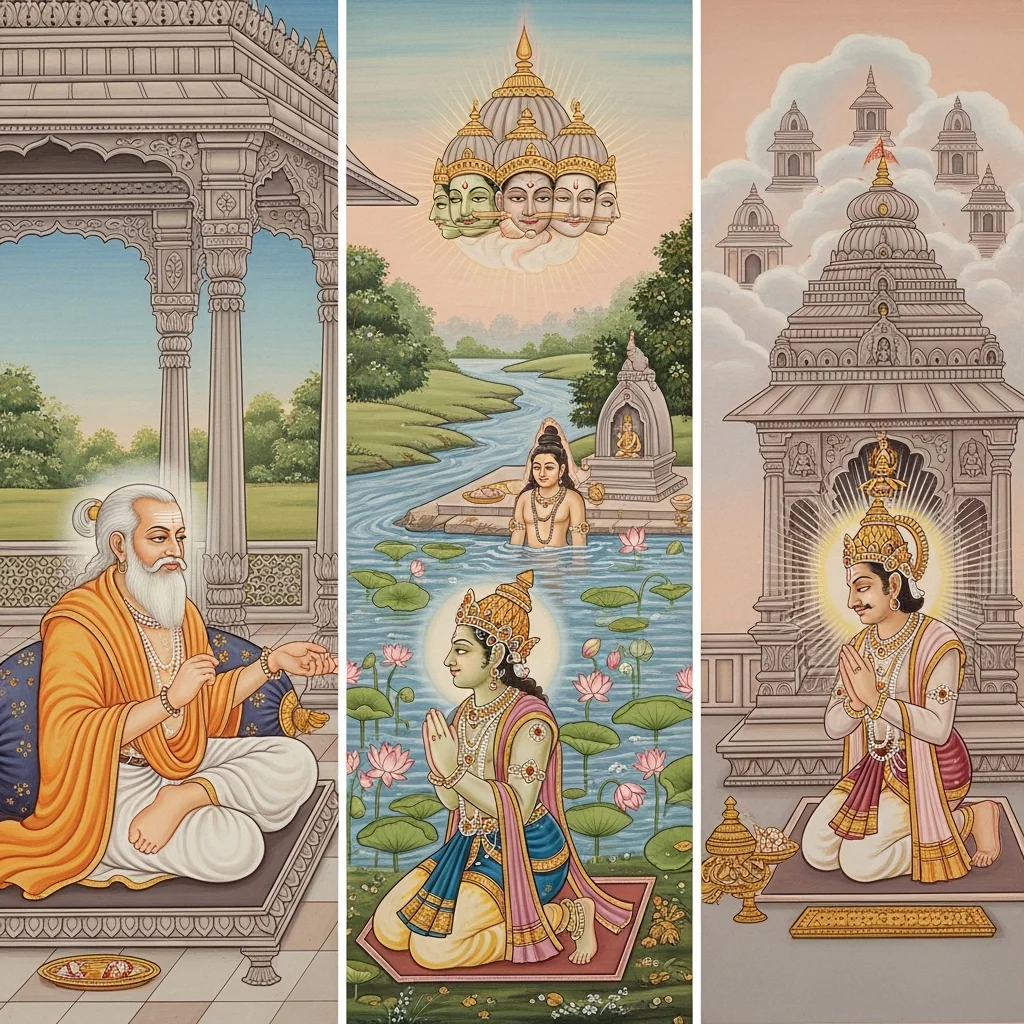
Agastya asks Skanda to recount the māhātmya of Dharma-tīrtha, as Śambhu once taught it to Devī. Skanda relates that Indra, after slaying Vṛtra and incurring brahmahatyā-doṣa, seeks expiation; Bṛhaspati directs him to Kāśī, guarded by Viśveśvara, where even grave impurities are said to flee upon entering Ānandavana. Indra worships near the north-flowing channel, and by Śiva’s grace a tīrtha is founded with the command, “Bathe here, O Indra,” through which Indra’s condition is ritually transformed. Sages such as Nārada adopt the spot for bathing, śrāddha, and offerings; it becomes renowned as Dharmāndhu/Dharma-tīrtha and is proclaimed superior in fruit to many pilgrimage waters across India. The chapter then emphasizes pitṛ-centered rites: bathing and even the smallest gift at the Dharma-pīṭha yield enduring results, and feeding ascetics and brāhmaṇas is praised as equal to Vedic sacrifices. Indra later establishes the Indreśvara liṅga west of Tārakeśa, while related shrines (Śacīśa, Rambheśa, Lokapāleśvara, Dharaṇīśa, Tattveśa, Vairāgyeśa, Jñāneśvara, Aiśvaryeśa) are set around Dharmēśa by direction and read as “forms” tied to Pañcavaktra theology. A moral exemplum follows: King Durdama, ethically astray, enters Ānandavana by chance, is inwardly reversed upon seeing Dharmēśvara, reforms his rule, renounces attachments, returns to Kāśī for worship, and attains a liberation-oriented end. The phalaśruti declares that hearing this Dharmēśvara account—especially during śrāddha—removes accumulated wrongdoing, satisfies the ancestors, and supports devotion’s progress toward Śiva’s abode.
Shlokas
Verse 1
अगस्त्य उवाच । धर्मतीर्थस्य माहात्म्यं कीदृग्देवेन शंभुना । स्कंद देव्यै समाख्यातं तदाख्याहि कृपां कुरु
Agastya said: O Skanda, in compassion tell me what greatness of Dharmatīrtha Lord Śambhu described to the Goddess. Relate that account; show your grace.
Verse 2
स्कंद उवाच । विंध्योन्नतिहृदाख्यामि धर्मतीर्थसमुद्भवम् । आकर्णय महाप्राज्ञ यथा देवेन भाषितम्
Skanda said: O great sage, listen. I shall relate the origin of Dharmatīrtha, as set forth in the account called ‘Vindhyonnati-hṛd’, exactly as it was spoken by the Lord.
Verse 3
वृत्रं निहत्य वृत्रारिर्ब्रह्महत्यामवाप्तवान् । अनुतप्तोथ पप्रच्छ प्रायश्चित्तं पुरोहितम्
Having slain Vṛtra, Indra—the foe of Vṛtra—incurred the sin of brahmin-slaying. Stricken with remorse, he then asked his priest about the means of expiation.
Verse 4
बृहस्पतिरुवाच । यदि त्वं देवराजेमां ब्रह्महत्यां सुदुस्त्यजाम् । अपानुनुत्सुस्तद्याहि काशीं विश्वेशपालिताम्
Bṛhaspati said: O king of the gods, if you wish to drive away this grievous and hard-to-cast-off sin of brahmin-slaying, then go to Kāśī, protected by Lord Viśveśa.
Verse 5
नान्यत्किंचित्क्वचिद्दृष्टं ब्रह्महत्यामहौषधम् । राजधानीं परित्यज्य शक्र विश्वेशितुः पराम्
Nowhere has any other great medicine for the sin of brahmin-slaying been seen. Therefore, O Śakra, abandon your capital and go to the supreme city of Viśveśa.
Verse 6
भैरवस्यापिहस्ताग्रादपतद्वैधसं शिरः । यत्रानंदवने तत्र वृत्रशत्रो व्रज द्रुतम्
At Ānandavana, from the very tip of Bhairava’s hand, fell the head of Vaidhasa (Brahmā). O enemy of Vṛtra, go swiftly to that very place.
Verse 7
सीमानमपि संप्राप्य शक्रानंदवनस्य हि । ब्रह्महत्या पलायेत वेपमाना निराश्रया
O Śakra, even upon reaching the very boundary of Ānandavana, the sin of brahmin-slaying would flee—trembling and without refuge.
Verse 8
अन्येषामपि पापानां महापापजुषामपि । नाशयित्री परा काशी विश्वेश समधिष्ठिता
Even for other sins—and even for those long steeped in great sins—supreme Kāśī is the destroyer, for it is presided over by Viśveśa.
Verse 9
महापातकतो मुक्तिः काश्यामे व शतक्रतो । महासंसारतो मुक्तिः काश्यामेव न चान्यतः
Release from great crimes is in Kāśī alone, O Śatakratu; release from the vast cycle of saṃsāra is in Kāśī alone—and nowhere else.
Verse 10
निर्वाणनगरी काशी काशी सर्वाघसंघहृत् । विश्वेशितुः प्रिया काशी द्यौः काशी सदृशी नहि
Kāśī is the city of nirvāṇa; Kāśī removes the entire multitude of sins. Kāśī is dear to Viśveśa; even heaven has no likeness to Kāśī.
Verse 11
ब्रह्महत्याभयं यस्य यस्य संसारतो भयम् । जातुचित्तेन न त्याज्या काशिका मुक्तिकाशिका
Whoever fears the sin of brahmin-slaying, whoever fears saṃsāra—Kāśikā, the Kāśī that grants liberation, should never be abandoned in one’s heart.
Verse 12
जंतूनां कर्मबीजानां यत्र देहविसर्जने । न जातुचित्प्ररोहोस्ति हरदृष्ट्याप्तशुष्मणाम्
In that place, when beings cast off the body, the seeds of karma never sprout again—for those whose vital force has been dried up by Hara’s glance.
Verse 13
तां काशीं प्राप्य वृत्रारे वृत्रहत्यापनुत्तये । समाराधय विश्वेशं विश्वमुक्तिप्रदायकम्
Having reached that sacred Kāśī, O foe of Vṛtra, to remove the sin of slaying Vṛtra, duly worship Viśveśa, the bestower of liberation upon the world.
Verse 14
बृहस्पतेरिति वचो निशम्य स सहस्रदृक् । आयाद्द्रुततरं काशीं महापातकघातुकाम्
Hearing Bṛhaspati’s words, the thousand‑eyed lord (Indra) hastened at once to Kāśī, the destroyer of even the greatest sins.
Verse 15
स्नात्वोत्तरवहायां च धर्मेशं परितः स्थितः । आराधयन्महादेवं ब्रह्मद्वत्याप नुत्तये
Having bathed in the Uttaravāhinī, the north‑flowing stream, he stood around Dharmaśvara and worshipped Mahādeva, seeking the removal of the sin of brahma‑slaying.
Verse 16
महारुद्रजपासक्तः सुत्रामाथ त्रिलोचनम् । ददर्श लिंगमध्यस्थं स्वभासा दीपितांबरम्
Absorbed in the japa of the Mahārudra mantra, Indra then beheld the Three‑eyed Lord, manifest within the liṅga, His radiance illuminating all directions.
Verse 17
पुनस्तुष्टाव वेदोक्तै रुद्रसूक्तैरनेकधा । विनिष्क्रम्य ततो लिंगादाविर्भूय भवोवदत्
Again he praised Him in many ways with the Veda‑proclaimed Rudra hymns; then Bhava emerged from the liṅga, manifest openly, and spoke.
Verse 18
शचीपते प्रसन्नोस्मि वरं वरय सुव्रत । किं देयं द्रुतमाख्याहि धर्मपीठकृतास्पद
“O lord of Śacī, I am pleased. Choose a boon, O steadfast in holy vows. Quickly tell me what is to be granted—you who have taken refuge at Dharmapīṭha.”
Verse 19
श्रुत्वेति देवदेवस्य स प्रेमवचनं हरिः । सर्वज्ञ किंतेऽविदितं तमुवाचेति वृत्रहा
Hearing those affectionate words of the God of gods, Indra—the slayer of Vṛtra—replied, “O All-knowing One, what could ever be unknown to You?”
Verse 20
ततस्तत्कृपयानुन्नो धर्मपीठनिषेवणात् । निष्पाद्य तीर्थं तत्रेशोऽत्र स्नाहींद्रेति चाब्रवीत्
Then, urged by his compassion and by Indra’s service at Dharmapīṭha, the Lord established a tīrtha there and declared, “Indra—bathe here.”
Verse 21
तत्रेंद्रः स्नानमात्रेण दिव्यगंधोऽभवत्क्षणात् । अवाप च रुचिं चारुं प्राक्तनीं शातयाज्ञिकीम्
There, by bathing alone, Indra instantly became fragrant with a divine scent, and he regained a lovely radiance—the former splendor born of his ancient sacrifices.
Verse 22
तदाश्चर्यमथो दृष्ट्वा मुनयो नारदादयः । परिसस्नुर्मुदायुक्ता धर्मतीर्थेऽघहारिणि
Seeing that marvel, sages such as Nārada joyfully bathed there as well, in the Dharma-tīrtha that removes sin.
Verse 23
अतर्पयन्पितॄन्दिव्यान्व्यधुः श्राद्धानि श्रद्धया । धर्मेशं स्नापयामासुस्तत्तीर्थाम्बुभृतैर्घटैः
They satisfied the divine Pitṛs and, with faith, performed the śrāddha rites; and they bathed Dharmaśvara with abhiṣeka, using pots filled with the waters of that tīrtha.
Verse 24
तदा प्रभृति तत्तीर्थं धर्मांधुरिति विश्रुतम् । ब्रह्महत्यादि पापानामक्लेशं क्षालनं परम्
From that time onward, that tīrtha became renowned as “Dharmāṃdhu.” It is the supreme purifier that washes away, without hardship, sins such as brahmahatyā and the like.
Verse 25
यत्फलं तीर्थराजस्य स्नानेन परिकीर्त्यते । सहस्रगुणितं तत्स्याद्धर्मांधु स्नानमात्रतः
Whatever merit is proclaimed from bathing at the King of Tīrthas, that very merit becomes a thousandfold by merely bathing at Dharmāṃdhu.
Verse 26
गंगाद्वारे कुरुक्षेत्रे गंगासागरसंगमे । यत्फलं लभते मर्त्यो धर्मतीर्थे तदाप्नुयात्
Whatever merit a mortal gains at Gaṅgādvāra, at Kurukṣetra, or at the confluence of the Gaṅgā with the ocean—he attains that very merit at Dharma-tīrtha.
Verse 27
नर्मदायां सरस्वत्यां गौतम्यां सिंहगे गुरौ । स्नात्वा यत्फलमाप्येत धर्मकूपे तदाप्नुयात्
Whatever merit one would obtain by bathing in the Narmadā, the Sarasvatī, the Gautamī, at Siṃhage, or at Guru—one attains that same merit at Dharma-kūpa.
Verse 28
मानसे पुष्करे चैव द्वारिके सागरे तथा । तीर्थे स्नात्वा फलं यत्स्यात्तत्स्याद्धर्मजलाशये
Whatever merit arises from bathing at the Mānasa lake, at Puṣkara, at Dvārakā, and at the ocean-tīrtha— that very merit is obtained at the Dharma-jalāśaya, the reservoir of Dharma, as well.
Verse 29
कार्तिक्यां सूकरक्षेत्रे चैत्र्यां गौरीमहाह्रदे । शंखोद्धारे हरिदिने यत्फलं तत्फलं त्विह
Whatever merit is gained in Kārtika at Sūkara-kṣetra, in Caitra at the great lake of Gaurī, at Śaṅkhoddhāra, and on Hari’s sacred day—here, that very merit is obtained.
Verse 30
तीर्थद्वयं प्रतीक्षंते सिस्नासून्पितरो नरान् । गंगायां धर्मकूपे च पिंडनिर्वपणाशया
The ancestors await men who wish to bathe at two tīrthas—at the Gaṅgā and at Dharma-kūpa—hoping for the offering of piṇḍas.
Verse 31
पितामहसमीपे वा धर्मेशस्याग्रतोथ वा । फल्गौ च धर्मकूपे च माद्यंति प्रपितामहाः
Whether near Pitāmaha or before Dharmeśa, and likewise at Phalgū and at Dharma-kūpa, the forefathers rejoice and are gladdened.
Verse 32
धर्मकूपे नरः स्नात्वा परितर्प्य पितामहान् । गयां गत्वा किमधिकं कर्ता पितृमुदावहम्
Having bathed at Dharma-kūpa and duly satisfied the ancestors, what greater pitr̥-benefit would a man achieve by going to Gayā?
Verse 33
यथा गयायां तृप्ताः स्युः पिंडदाने पितामहाः । धर्मतीर्थे तथैव स्युर्न न्यूनं नैव चाधिकम्
Just as at Gayā the ancestors are satisfied by the offering of piṇḍas, so too at Dharma-tīrtha they are satisfied—neither less nor more; the fruit is the same.
Verse 34
ते धन्याः पितृभक्तास्ते प्रीणितास्तैः पितामहाः । पैत्रादृणाद्धर्मतीर्थे निष्कृतिर्यैः कृता सुतैः
Blessed are those sons devoted to the Pitṛs; through them the grandfathers are fully satisfied. Truly fortunate are those who, at Dharma-tīrtha, perform expiation and thereby free themselves from the ancestral debt (pitṛ-ṛṇa).
Verse 35
तत्तीर्थस्य प्रभावेण निष्पापोभूत्क्षणेन च । प्रणम्य देवदेवेशमिंद्रोऽगादमरावतीम्
By the power of that sacred tīrtha, he became sinless in an instant. Then Indra, bowing to the Lord of the gods, departed for Amarāvatī.
Verse 36
अपारो महिमा तस्य धर्मतीर्थस्य कुंभज । तत्कूपे स्वं निरीक्ष्यापि श्राद्धदानफलं लभेत्
O Kumbhaja (Agastya), boundless is the greatness of that Dharma-tīrtha. Even by merely beholding one’s reflection in its well, one gains the merit of śrāddha and of charitable giving.
Verse 37
तत्रापि काकिणी मात्रं यच्छेत्पितृमुदे नरः । अक्षयं फलमाप्नोति धर्मपीठप्रभावतः
Even there, if a man gives only a single kākīṇī coin for the joy of the Pitṛs, he attains imperishable merit—by the power of Dharmapīṭha.
Verse 38
तत्र यो भोजयेद्विप्रान्यतिनोथ तपस्विनः । सिक्थे सिक्थे लभेत्सोथ वाजपेयफलं स्फुटम्
There, whoever feeds brāhmaṇas, renunciants, or ascetics—at each morsel offered—surely gains the manifest fruit of the Vājapeya sacrifice.
Verse 39
प्राप्यामरावतीं शक्रस्ततो दिविषदां पुरः । धर्मपीठस्य माहात्म्यं महत्काश्यामवर्णयत्
Having reached Amarāvatī, Śakra (Indra) then, before the assembly of the gods, described the great glory of Dharmapīṭha in Kāśī.
Verse 40
आगत्य पुनरप्यत्र शंभोरानंदकानने । मुनिवृंदारकैः सार्धं लिंगमस्थापयद्धरिः
Returning again to this place—Śambhu’s Ānandakānana—Hari, together with hosts of venerable sages, established a liṅga.
Verse 41
तारकेशात्पश्चिमत इंद्रेश्वरमितीरितम् । तस्य संदर्शनात्पुंसामैंद्रलोको न दूरतः
To the west of Tārakeśa is proclaimed the shrine called Indreśvara. By merely beholding it, for men the world of Indra is not far away.
Verse 42
तद्दक्षिणे शचीशश्च स्वयं शच्या प्रतिष्ठितः । शचीशार्चनतः स्त्रीणां सौभाग्यमतुलं भवेत्
To its south is Śacīśa, installed by Śacī herself. By worship of Śacīśa, women obtain incomparable good fortune and marital prosperity.
Verse 43
तत्समीपेस्ति रंभेशो बहुसौख्यसमृद्धिदः । इंद्रेश्वरस्य परितो लोकपालेश्वरो परः
Nearby is Rambheśa, the bestower of abundant joy and prosperity. And around Indreśvara stands the supreme Lokapāleśvara.
Verse 44
तदर्चनात्प्रसीदंति लोकपालाः समृद्धिदाः । धर्मेशात्पश्चिमाशायां धरणीशः प्रकीर्तितः । तद्दर्शनेन धैर्यं स्याद्राज्ये राजकुलादिषु
By worshipping Him, the Lokapālas—the guardians of the worlds—are pleased and grant prosperity. To the west of Dharmeśa is proclaimed the liṅga named Dharaṇīśa; by merely beholding it, steadfast courage arises, supporting one’s rule, royal lineage, and public life.
Verse 45
धर्मेशाद्दक्षिणे पूज्यं तत्त्वेशाख्यं परं नरैः । तत्त्वज्ञानं प्रवर्तेत तल्लिंगस्य समर्चनात्
To the south of Dharmeśa, people should worship the supreme liṅga called Tattveśa. From devoted worship of that liṅga, true knowledge of reality (tattva-jñāna) is set in motion within one’s life.
Verse 46
धर्मेशात्पूर्वदिग्भागे वैराग्येशं समर्चयेत् । निवृत्तिश्चेतसस्तस्य लिंगस्य स्पर्शनादपि
In the eastern quarter from Dharmeśa, one should worship Vairāgyeśa. Even by touching that liṅga, the mind turns back (nivṛtti) from worldly entanglement, moving toward renunciation and inner restraint.
Verse 47
ज्ञानेश्वरं तथैशान्यां ज्ञानदं सर्वदेहिनाम् । ऐश्वर्येशमुदीच्यां च लिंगाद्धर्मेश्वराच्छुभात्
In the north-east direction is Jñāneśvara, the giver of knowledge to all embodied beings. And in the northern direction is Aiśvaryeśa—both arising in auspicious relation to the liṅga of Dharmeśvara.
Verse 48
तद्दर्शनाद्भवेन्नृणामैश्वर्यं मनसेप्सितम् । पंचवक्त्रस्य रूपाणि लिंगान्येतानि कुंभज
By their mere sight, people gain the sovereignty and prosperity their hearts desire. These liṅgas, O Kumbhaja (Agastya), are forms of the Five-Faced Lord, Pañcavaktra Śiva.
Verse 49
एतान्यवश्यं संसेव्य नरः प्राप्नोति शाश्वतम् । अन्यत्तत्रैव यद्वृत्तं तदाख्यामि मुने शृणु
By faithfully resorting to these (liṅgas), a person surely attains what is everlasting. Now listen, O sage: I shall relate another event that occurred in that very place.
Verse 50
यच्छ्रुत्वापि नरो घोरे संसाराब्धौ न मज्जति । कदंबशिखरो नाम विंध्यपादो महानिह
Hearing this, a person does not sink into the dreadful ocean of saṃsāra. Here there was a great one named Kadaṃbaśikhara, the mighty Viṃdhyapāda.
Verse 51
दमस्य पुत्रस्तत्रासीद्दुर्दमो नाम पार्थिवः । पितर्युपरते राज्यं संप्राप्याविजितेंद्रियः
There was a king there named Durdama, the son of Dama. When his father passed away and he obtained the kingdom, his senses remained unconquered.
Verse 52
हरेत्पुरंध्रीः प्रसभं पौराणां काममोहितः । असाधवः प्रियास्तस्य साधवोऽप्रियतां ययुः
Deluded by lust, he forcibly abducted the women of the townspeople. The wicked became dear to him, while the virtuous fell into his disfavor.
Verse 53
अदंड्यान्दंडयांचक्रे दंड्येष्वासीत्पराङमुखः । सदैव मृगयाशीलः सोऽभून्मृगयु संगतः
He punished those who should not be punished, and turned away from punishing the punishable. Ever devoted to hunting, he came to keep company with hunters.
Verse 54
विवासिताः स्वविषयात्तेन सन्मतिदायिनः । धर्माधिकारिणः शूद्रा ब्राह्मणाः करदीकृताः
By him the wise counsellors were driven out from their own domains; the Śūdras were made arbiters of religious authority, and the Brāhmaṇas were reduced to tribute-paying subjects.
Verse 55
परदारेषुसंतुष्टः स्वदारेषु पराङ्मुखः । आनर्च जातुचिन्नैव देवौ दुःखांतकारिणौ
Delighting in others’ wives and turning away from his own, he never—at any time—worshipped the two Gods who bring all sorrow to an end.
Verse 56
हारिणौ सर्वपापानां सर्ववांछितदायिनौ । सर्वेषां जगतीसारौ श्रीकंठश्रीपतीपती
They are the removers of all sins, the givers of every desired boon—the very essence of the world for all beings: Śrīkaṇṭha (Śiva) and Śrīpati (Viṣṇu), the two Lords.
Verse 57
स्वप्रजास्वेक उदितो धूमकेतुरिवापरः । दुर्दमो नाम भूपालः क्षयाया कांड एव हि
Among his own subjects there arose a king named Durdama, like a second comet—indeed, a very portent of ruin.
Verse 58
स कदाचिन्मृगयुभिः पापर्धि व्यसनातुरः । सार्धं विवेशारण्यानि गृष्टिपृष्ठानुगो हयी
Once, afflicted by the sinful vice of hunting and its distress, he entered the forests with the hunters, mounted on a horse that followed close behind the herd.
Verse 59
एकाकी दैवयोगेन दुर्दमः सोऽवनीपतिः । धन्वी तुरंगमारुढोऽविशदानंदकाननम्
Then, by a turn of fate, King Durdama found himself alone; bow in hand and mounted on his horse, he entered Ānandakānana—the Forest of Bliss.
Verse 60
स विलोक्याथ सर्वत्र पादपा नवकेशिनः । सुच्छायांश्च सुविस्तारान्गतश्रम इवाभवत्
Looking all around, he saw trees everywhere, fresh with new foliage, spreading wide with lovely shade—and he felt as though his weariness had vanished.
Verse 62
केवलं मृगया जातस्तत्खेदो न व्यपाव्रजत् । आजन्मजनितः खेदो निरगात्तद्वनेक्षणात्
The fatigue born merely of the hunt did not subside; but the sorrow that had arisen from birth after birth departed when he beheld that forest.
Verse 63
सुगंधेन सुशीतेन सुमदेन सुवायुना । क्षणं संवीजितो राजा पल्लवव्यजनैः कुजैः
With fragrant, cool, delighting breezes, the king was fanned for a while by the trees, as though with leaf-made fans.
Verse 64
अथावरुह्य तुरगात्स भूपालोतिविस्मितः । धर्मेशमंडपं प्राप्य स्वात्मानं प्रशशंस ह
Then, dismounting from his horse, the king—greatly astonished—reached the pavilion of Dharmeśa, and there he began to praise himself.
Verse 65
धन्योस्म्यहं प्रसन्नोस्मि धन्ये मेद्य विलोचने । धन्यमद्यतनं चाहर्यदपश्यमिमां भुवम्
Blessed am I; my heart is filled with joy. Blessed are these eyes of mine. Blessed is this very day—the day on which I beheld this sacred earth of Kāśī.
Verse 66
पुनर्निनिंद चात्मानं धर्मपीठ प्रभावतः । धिङ्मां दुर्जनसंसर्गं त्यक्तसज्जनसंगमम्
Then, under the transforming influence of that Seat of Dharma, he again reproached himself: “Fie upon me—for I kept company with the wicked and abandoned the fellowship of the good.”
Verse 67
जंतूद्वेगकरं मूढं प्रजापीडनपंडितम् । परदारपरद्रव्यापहृत्यासुखमानिनम्
“I was a fool who caused distress to living beings; a ‘clever man’ only in oppressing my subjects; one who imagined happiness in seizing another’s wife and another’s wealth.”
Verse 68
अद्ययावन्मम गतं वृथाजन्माल्पमेधस । धर्मस्थानानीदृशानि यद्दृष्टानि न कुत्रचित्
“So long as I lived until today, my birth was wasted—so small was my understanding. For nowhere did I behold such sanctuaries of Dharma as these.”
Verse 69
एवं बहु विनिंद्य स्वं नत्वा धर्मेश्वरं विभुम् । आरुह्याश्वं ययौ राजा दुर्दमो विषयं स्वकम्
Thus, having reproached himself at length and bowing to the mighty Dharmēśvara, King Durdama mounted his horse and returned to his own realm.
Verse 70
ततोमात्यान्समाहूय क्रमायातांश्चिरंतनान् । नवीनान्परिनिर्वास्य पौरांश्चापि समाह्वयत्
Then he summoned his ministers—those long-established and proven by time. He dismissed the newly appointed ones and also convened the citizens of the city.
Verse 71
ब्राह्मणांश्चनमस्कृत्य तेभ्यो वृत्तीः प्रदाय च । पुत्रे राज्यं समारोप्य प्रजाधर्मे निवेश्य च
He bowed to the brāhmaṇas and granted them proper means of livelihood. He installed his son upon the throne and established the people firmly in the ways of Dharma.
Verse 72
परिदंड्य च दंडार्हान्साधूंश्च परितोष्य च । दारानपि परित्यज्य विषयेषु पराङ्मुखः
He punished those deserving punishment and satisfied the righteous. Renouncing even household ties, he turned away from sense-pleasures and worldly objects.
Verse 73
समागच्छदथैकाकी काशीं श्रेयोविकासिनीम् । धर्मेश्वरं समाराध्य कालान्निर्वाणमाप्तवान्
Then, alone, he came to Kāśī—the revealer of the highest good. Worshipping Dharmēśvara with devotion, in due course he attained nirvāṇa, final liberation.
Verse 74
धर्मेशदर्शनान्नित्यं तथाभूतः स दुर्दमः । बभूव दमिनां श्रेष्ठः प्रांते मोक्षं च लब्धवान्
Through the continual vision of Dharmēśa (Dharmēśvara), Durdama was transformed. He became foremost among the self-controlled, and in the end attained mokṣa as well.
Verse 76
इदं धर्मेश्वराख्यानं यः श्रोष्यति नरोत्तमः । आजन्मसंचितात्पापात्स मुक्तो भवति क्षणात्
That best of men who listens to this sacred account of Dharmēśvara is instantly freed from sins accumulated across lifetimes.
Verse 77
श्राद्धकाले विशेषेण धर्मेशाख्यानमुत्तमम् । श्रावयेद्ब्राह्मणान्धीमान्पितॄणां तृप्तिकारणम्
Especially at the time of Śrāddha, the wise should have Brahmins hear this excellent account of Dharmēśa, for it becomes a cause of satisfaction to the Pitṛs (ancestors).
Verse 78
धर्माख्यानमिदं शृण्वन्नपि दूरस्थितः सुधीः । सर्वपापर्विनिर्मुक्तो गंतांते शिवमंदिरम्
Even if far away, the discerning person who hears this sacred narrative becomes free of all sins and, at life’s end, goes to Śiva’s abode/temple.
Verse 79
इत्थं धर्मेश माहात्म्यं मया स्वल्पं निरूपितम् । धर्मपीठस्य माहात्म्यं सम्यक्को वेद कुंभज
Thus have I described, in brief, the greatness of Dharmēśa. But who, O Kumbhaja, can fully know the true greatness of Dharma-pīṭha, the sacred seat of Dharma?
Verse 81
इति श्रीस्कांदे महापुराणे एकाशीतिसाहस्र्यां संहितायां चतुर्थे काशीखंडे उत्तरार्धे धर्मेश्वराख्याननामैकाशीतितमोध्यायः
Thus ends the eighty-first chapter, called “The Narrative of Dharmeśvara,” in the Uttarārdha of the Kāśī Khaṇḍa, within the fourth division of the Śrī Skanda Mahāpurāṇa (Ekāśīti-sāhasrī Saṃhitā).