Adhyaya 16
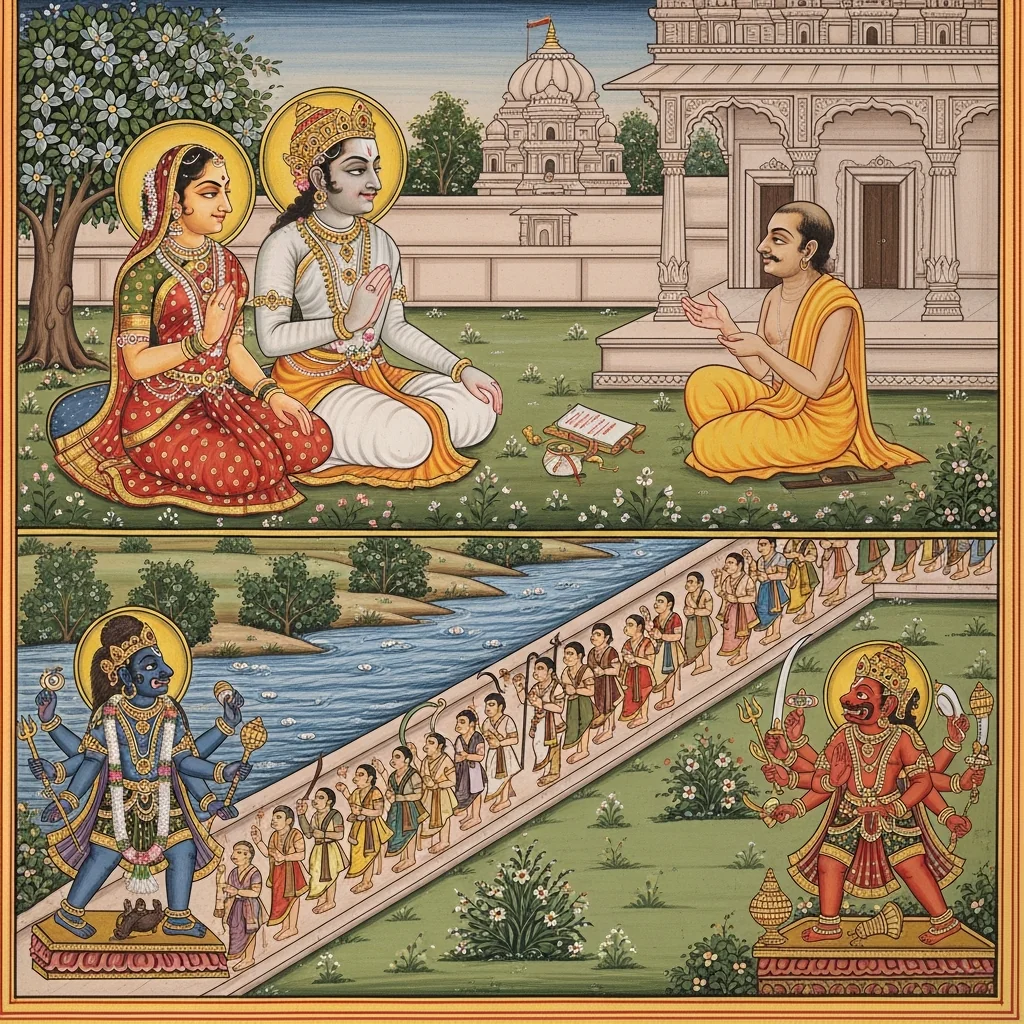
The chapter begins with Skanda listing the subsidiary liṅgas around Jyeṣṭheśvara, arranged by direction and nearness, thereby laying out a workable pilgrimage route. Apsaraseśvara and the Apsaras-kūpa (Soubhāgya-udaka) are praised, where ritual bathing and darśana are said to avert misfortune. Kukkuteśa near a vāpī is then taught as bestowing increase in household prosperity; Pitāmaheśvara on the bank of the Jyeṣṭha-vāpī is marked as a śrāddha site for the joy of the pitṛ, followed by Gadādhareśvara as granting ancestral satisfaction. The narrative turns to Nāga-linked shrines: Vāsukīśvara with Vāsukī-kuṇḍ prescribes snāna and dāna, and highlights Nāga-pañcamī as a calendrical observance for protection from serpent-fear and poison; Takṣakeśvara and Takṣaka-kuṇḍ continue this protective current. Next comes a Bhairava precinct: Kapālī Bhairava removes fear for devotees and is said to grant vidyā-siddhi within six months; Caṇḍī Mahāmuṇḍā is worshiped with bali and offerings, and Mahāṣṭamī pilgrimage promises fame and prosperity. Returning to sacred waters, the text describes Catuḥsāgara-vāpikā and four liṅgas set by the oceans; Vṛṣabheśvara (installed by Hara’s vṛṣabha) promises liberation within six months through darśana. Gandharveśvara and its kuṇḍ are linked to offerings and enjoyment “with Gandharvas,” while Karkoteśvara and Karkota-vāpī confer honor in Nāga-loka and immunity from poison. Further liṅgas—Dhuṃdhumāriśvara, Purūraveśvara, and Supratīkeśvara—extend the itinerary with boons of fearlessness, the four aims, fame, and strength. Protective powers are appended: Vijayabhairavī at the northern gate, and the Gaṇas Huṇḍana and Muṇḍana as obstacle-stoppers, whose darśana brings well-being. The chapter then shifts into an embedded legend on Varaṇā’s bank involving Menā, Himavān, and a mendicant’s report of Viśveśvara’s presence and a splendid construction by Viśvakarman, concluding with a phalaśruti that hearing this greatness leads toward Śiva’s realm and washes away sin.
Shlokas
Verse 1
स्कन्द उवाच । ज्येष्ठेश्वरस्य परितो लिंगान्यन्यानि यानि तु । तानि ते कथयिष्यामि शृणु वातापितापन
Skanda said: “O Vātāpitāpana, listen. I shall now recount to you the other sacred liṅgas that are situated all around Jyeṣṭheśvara.”
Verse 2
ज्येष्ठेशाद्दक्षिणे भागे लिंगमप्सरसां शुभम् । तत्रैवाप्सरसः कूपः सौभाग्योदकसंज्ञकः
To the south of Jyeṣṭheśvara is an auspicious liṅga known as Apsaraseśvara, the Lord of the Apsarases. Right there is also the Apsaras-well, famed by the name Saubhāgyodaka—“the water of good fortune.”
Verse 3
तत्कूपजलसुस्नातो विलोक्याप्सरसेश्वरम् । न दौर्भाग्यमवाप्नोति नारी वा पुरुषोथवा
Whoever bathes well in the water of that well and beholds Apsaraseśvara does not fall into misfortune—whether woman or man.
Verse 4
तत्रैव कुक्कुटेशाख्यं लिंगं वापीसमीपगम् । तस्य पूजनतः पुंसां कुटुंबं परिवर्धते
There itself, near the pond, is a liṅga called Kukkuṭeśa. By worshipping it, a person’s household and family line prosper and grow.
Verse 5
पितामहेश्वरं लिंगं ज्येष्ठवापीतटे शुभम् । तत्र श्राद्धं नरः कृत्वा पितॄणां मुदमर्पयेत्
On the auspicious bank of the Jyeṣṭha pond stands the liṅga called Pitāmaheśvara. Having performed śrāddha there, a man bestows joy and satisfaction upon his ancestors.
Verse 6
पितामहेशान्नैरृत्यां पूजनीयं प्रयत्नतः । गदाधरेश्वरं लिंगं पितॄणां परितृप्तिदम्
To the southwest of Pitāmaheśvara, one should worship with care the liṅga called Gadādhareśvara, which grants full contentment to the ancestors.
Verse 7
दिशि पुण्यजनाख्यायां लिंगाज्ज्येष्ठेश्वरान्मुने । वासुकीश्वरसंज्ञं च लिंगमर्च्यं समंततः
O sage, in the direction known as Puṇyajana, from Jyeṣṭheśvara’s liṅga there is also a liṅga called Vāsukīśvara, worthy of worship by all on every side.
Verse 8
तत्र वासुकिकुंडे च स्नानदानादिकाः क्रियाः । सर्पभीतिहराः पुंसां वासुकीशप्रभावतः
There, at the Vāsuki pool, acts such as bathing and charitable giving remove people’s fear of serpents—by the power of Vāsukīśvara.
Verse 9
यः स्नातो नागपंचम्यां कुंडे वासुकिसंज्ञिते । न तस्य विषसंसर्गो भवेत्सर्पसमुद्भवः
Whoever bathes on Nāgapañcamī in the pool known as Vāsuki will not come into contact with snake-born poison.
Verse 10
कर्तव्या नागपञ्चम्यां यात्रा वर्षासु तत्र वै । नागाः प्रसन्ना जायंते कुले तस्यापि सर्वदा
In the rainy season, one should indeed undertake a pilgrimage there on Nāgapañcamī. The Nāgas ever remain pleased with that person’s lineage.
Verse 11
तत्कुण्डात्पश्चिमे भागे लिंगं वै तक्षकेश्वरम् । पूजनीयं प्रयत्नेन भक्तानां सर्वसिद्धिदम्
To the west of that sacred pond stands the liṅga known as Takṣakeśvara. It should be worshipped with earnest effort, for it grants devotees every attainment.
Verse 12
मुनेस्तस्योत्तरे भागे कुण्डं तक्षकसंज्ञितम् । कृतोदकक्रियस्तत्र न सर्पैरभिभूयते
To the north of that sage and that place is a pond called Takṣaka. One who performs the water-rites there is not overcome by serpents.
Verse 13
तत्कुण्डादुत्तरे भागे क्षेत्रं क्षेमकरः सदा । भक्तानां साध्वसध्वंसी कपाली नाम भैरवः
To the north of that pond is a sacred precinct, ever a source of well-being. There dwells Bhairava named Kapālī, who destroys the fears of devotees.
Verse 14
भैरवस्य महाक्षेत्रं तद्वै साधकसिद्धिदम् । तत्र संसाधिता विद्याः षण्मासातत्सिद्धिमाप्नुयुः
That is Bhairava’s great sacred precinct, truly granting siddhi to practitioners. The vidyās undertaken and perfected there yield their attainments within six months.
Verse 15
तत्र चण्डी महामुण्डा भक्तविघ्नोपशांतिदा । बलिपूजोपहाराद्यैः पूज्या स्वाभीष्टसिद्धये
There dwells Caṇḍī Mahāmuṇḍā, the one who pacifies the obstacles that trouble devotees. She should be worshipped with offerings—such as bali and other acts of pūjā—so that one may attain the desired accomplishments.
Verse 16
तस्या यात्रां तु यः कुर्यान्महाष्टम्यां नरोत्तमः । यशस्वी पुत्रपौत्राढ्यो लक्ष्मीवांश्चापि जायते
But the best of men who undertakes her yātrā on Mahāṣṭamī becomes renowned, blessed with sons and grandsons, and endowed with prosperity as well.
Verse 17
महामुण्डा प्रतीच्यां तु चतुःसागरवापिका । तस्यां स्नातो भवेत्स्नातः सागरेषु चतुर्ष्वपि
To the west of Mahāmuṇḍā is the pond called Catuḥsāgara. One who bathes in it is deemed to have bathed in all four oceans.
Verse 18
महाप्रसिद्धं तत्स्थानं चतुःसागरसंज्ञितम् । चत्वारि तत्र लिंगानि सागरैः स्थापितानि च
That place is widely renowned by the name Catuḥsāgara. There are also four liṅgas there, established by the Oceans.
Verse 19
तस्या वाप्याश्चतुर्दिक्षु पूजितानि दहंत्यघम् । तदुत्तरे महालिंगं वृषभेश्वरसंज्ञितम्
When worshipped in the four directions around that pond, they burn away sin. To its north is a great liṅga known as Vṛṣabheśvara.
Verse 20
हरस्य वृषभेणैव स्थापितं तत्स्वभक्तितः । तस्य दर्शनतः पुंसां षण्मासान्मुक्तिरुद्भवेत्
Established by Hara’s own bull, Nandin, out of devotion, that shrine bestows a great fruit: by merely beholding it, liberation arises for people within six months.
Verse 21
वृषेश्वरादुदीच्यां तु गंधर्वेश्वरसंज्ञितम् । गंधर्वकुण्डं तत्प्राच्यां तत्र स्नात्वा नरोत्तमः
To the north of Vṛṣeśvara is the sacred spot known as Gandharveśvara; to its east lies the Gandharva-kuṇḍa. By bathing there, an excellent man is purified and becomes fit for the praised fruits of that holy place.
Verse 22
गंधर्वेश्वरमभ्यर्च्य दत्त्वा दानानि शक्तितः । सन्तर्प्य पितॄदेवांश्च गंधर्वैः सह मोदते
Having duly worshipped Gandharveśvara, giving gifts according to one’s capacity, and satisfying the ancestors and the gods, one rejoices in the company of the Gandharvas.
Verse 23
कर्कोटनामा नागोस्ति गन्धर्वेश्वरपूर्वतः । तत्र कर्कोटवापी च लिंगं कर्कोटकेश्वरम्
To the east of Gandharveśvara there is a Nāga named Karkoṭa. There also are the Karkoṭa pond and the liṅga known as Karkoṭakeśvara.
Verse 24
तस्यां वाप्यां नरः स्नात्वा कर्कोटेशं समर्च्य च । कर्कोटनागमाराध्य नागलोके महीयते
After bathing in that pond and duly worshipping Karkoṭeśa, and after propitiating the Nāga Karkoṭa, a person is honored in the realm of the Nāgas.
Verse 25
कर्कोट नागो यैर्दृष्टस्तद्वाप्यां विहितोदकैः । क्रमते न विषं तेषां देहे स्थावरजंगमम्
For those who behold the Nāga Karkoṭa and make use of the sanctified water of that pond, no poison—whether from immobile or moving creatures—can take effect in their bodies.
Verse 26
कर्कोटेशात्प्रतीच्यां तु धुंधुमारीश्वराभिधम् । तल्लिंगाभ्यर्चनात्पुंसां न भवेद्वैरिजं भयम्
To the west of Karkoṭeśa is the shrine called Dhuṃdhumārīśvara. By worshipping that liṅga, men are freed from fear arising from enemies.
Verse 27
पुरूरवेश्वरं लिंगं तदुदीच्यां व्यवस्थितम् । द्रष्टव्यं तत्प्रयत्नेन चतुर्वर्गफलप्रदम्
To the north stands the liṅga of Purūraveśvara. It should be visited with earnest effort, for it bestows the fruits of the fourfold aims of life—dharma, artha, kāma, and mokṣa.
Verse 28
दिग्गजेनार्चितं लिंगं सुप्रतीकेन तत्पुरः । सुप्रतीकेश्वरं नाम्ना यशोबलविवर्धनम्
In front of it is a liṅga worshipped by the directional elephant Supratīka. It is named Supratīkeśvara, and it increases fame and strength.
Verse 29
सरश्च सुप्रतीकाख्यं तत्पुरो भासते महत् । तत्र स्नात्वा च तल्लिंगं दृष्ट्वा दिक्पतितां लभेत्
Before it shines a great lake named Supratīka. By bathing there and beholding that liṅga, one attains the status of a lord of a direction (dikpati).
Verse 30
तत्रास्त्येका महागौरी नाम्ना विजयभैरवी । रक्षार्थमुत्तराद्वारि स्थिता पूज्येष्टसिद्धये
There abides a single form of Mahāgaurī, named Vijayabhairavī. Stationed at the northern gate for protection, she is to be worshipped for the fulfillment of one’s cherished aims.
Verse 31
वरणायास्तटे रम्ये गणौ हुंडनमुंडनौ । क्षेत्ररक्षां विधत्तस्तौ विघ्नस्तंभन कारकौ
On the lovely bank of the Varaṇā are two Gaṇas, Huṃḍana and Muṃḍana. They guard the sacred kṣetra and are the agents who arrest and immobilize obstacles.
Verse 32
तौ द्रष्टव्यौ प्रयत्नेन क्षेत्रनिर्विघ्न हेतवे । हुंडनेशं मुंडनेशं तत्र दृष्ट्वा सुखी भवेत्
For the sake of making the sacred kṣetra free from hindrances, one should earnestly seek the sight of those two—Huṃḍaneśa and Muṃḍaneśa. Having beheld them there, a person becomes happy and at ease.
Verse 33
स्कंद उवाच । इल्वलारे कथामेकां शृणुष्वावहितो भव । वरणायास्तटे रम्ये यद्वृत्त पूर्वमुत्तमम्
Skanda said: O Ilvalāra, listen to a certain account—be attentive. On the lovely bank of the Varaṇā, an excellent event occurred in former times; hear of it.
Verse 34
एकदाद्रींद्रमालोक्य मेना संहृष्टमानसम् । उमां संस्मृत्य निःश्वस्य प्रोवाचेति पतिव्रता
Once, beholding the Lord of Mountains (Himālaya), Menā’s heart was filled with delight. Remembering Umā, she sighed, and then spoke—she, the faithful wife.
Verse 35
मेनोवाच । आर्यपुत्र न जानामि प्रवृत्तिमपि कांचन । विवाहसमयादूर्ध्वं तस्या गौर्या गिरीश्वर
Menā said: O noble son—O Lord of the Mountains—I know nothing at all of the course of events concerning that Gaurī, from the time of her marriage onward.
Verse 36
स वृषेंद्रगतिर्देवो भस्मोरग विभूषणः । महापितृवनावासो दिग्वासाः क्वास्ति संप्रति
That God—whose mount is the lordly Bull, adorned with ash and serpents, dwelling in the great forest of the Fathers and clad in the directions (sky-robed)—where is he now?
Verse 37
अष्टौ या मातरो दृष्टा ब्राह्मी प्रभृतयः प्रिय । स्वस्वरूपास्ता मन्येऽहं बालिकाः कष्टहेतवः
Those eight Mothers that were seen—beginning with Brāhmī, dear one—each in her own form: I think they are causing hardship for the young maiden.
Verse 38
तस्यैकस्य न कोप्यन्योस्त्यद्वितीयस्य शूलिनः । तदुदंतप्रवृत्त्यै च क्रियतामुद्यमो विभो
For that One—Śūlin, the matchless and without a second—there is none other. Therefore, O mighty one, let an effort be made to learn the true matter and its course.
Verse 39
तस्याः प्रियाया वाक्येन तदपत्यप्रियो गिरिः । उवाच वचनं सास्रमुमा वात्सल्यसन्नगीः
Moved by the words of his beloved, the Mountain—fond of his child—spoke with tears, his voice choked with affection for Umā.
Verse 40
गिरिराज उवाच । अहमेव गमिष्यामि तस्या मेने गवेषणे । नितरां बाधते प्रेम तददृष्ट्यग्निदूषितम्
The King of Mountains said: “I myself will go, O Menā, to search for her. Love torments me intensely, scorched by the fire of not seeing her.”
Verse 41
यदा प्रभृति सा गौरी निर्गता मम सद्मतः । मन्ये मेने तदारभ्य पद्मसद्मा विनिर्ययौ
From the very moment that Gaurī departed from my dwelling, I have felt that, from then onward, the lotus-abode of my heart and happiness has itself gone forth, emptied by her absence.
Verse 42
तदालापामृतधयौ न मे शब्दग्रहौ प्रिये । प्राणेश्वरि तदारभ्य स्यातां शब्दांतरग्रहौ
Beloved—O mistress of my very life—since I have been deprived of the nectar of her conversation, my ears no longer truly receive sound; from that time onward they grasp only ‘other sounds’, empty of her voice.
Verse 43
जैवातृकी यतोह्नः स्याद्दूरीभूता दृशोर्मम । अहो जैवातृकी ज्योत्स्ना ततोह्नोति दुनोति माम्
When the moonlight (jaivātṛkī) withdraws from my eyes, it is as though day has come. Alas—this very moonlit glow, by its going, makes the day burn and torment me.
Verse 44
इत्युक्त्वादाय रत्नानि वासांसि विविधानि च । धराधरेंद्रो निर्यातः शुभलग्नबलोदये
Having spoken thus, the lord among mountain-bearers took jewels and various garments and set out, at a propitious moment when auspicious omens were strong.
Verse 45
अगस्त्य उवाच । कानि कानि च रत्नानि कियंत्यपि च षण्मुख । यान्यादाय प्रतस्थे स तानि मे ब्रूहि पृच्छतः
Agastya said: “O Ṣaṇmukha, what jewels were they, and how many? Tell me, as I ask, what he took with him when he set out.”
Verse 46
स्कंद उवाच । तुला मुक्ताफलानां तु कोटिद्वय परीमिताः । तथा वारितराणां च हीरकाणां तुला शतम्
Skanda said: “Two crores by weight of pearls; and likewise, a hundred tulās by weight of diamonds and other excellent gems.”
Verse 47
नवलक्षाधिकं विप्र षडस्राणां सुतेजसाम् । लक्षद्वयं विदूराणां तुलाविमलवर्चसाम
“O Brāhmaṇa, a little more than nine lakhs of radiant hexagonal gems; and two lakhs of vidūra (cat’s-eye) stones, of pure and shining luster, by tulā-weight.”
Verse 48
कोटयः पद्मरागाणां पंचावैहि तुला मुने । पुष्पराग तुलालक्षं गुणितं नवसंख्यया
“O sage, know that there were five crores of padmarāga (rubies) by measure/weight; and puṣparāga (yellow sapphires)—one lakh tulās, multiplied ninefold.”
Verse 49
तथा गोमेद रत्नानां तुलालक्षमिता मुनै । इंद्रनीलमणीनां च तुलाः कोट्यर्ध संमिताः
“Likewise, O sage, there were one lakh tulās of gomeda gems; and of indranīla (blue sapphire) jewels, tulās amounting to half a crore.”
Verse 50
गरुडोद्गाररत्नानां तुलाः प्रयुतसंमिताः । शुद्धविद्रुमरत्नानां तुलाश्च नवकोटयः
Of the garuḍodgāra gems, the tulās were measured in tens of thousands; and of pure coral-gems, the tulās amounted to nine crores.
Verse 51
अष्टांगाभरणानां च संख्या कर्तुं न शक्यते । वाससां च विचित्राणां कोमलानां तथा मुने
O sage, the number of ornaments adorning every limb cannot be counted; likewise, the delicate garments—variegated and beautiful—are beyond reckoning.
Verse 52
चामराणि च भूयांसि द्रव्याण्यामोदवंति च । सुवर्णदासदास्यादीन्यसंख्यातानि वै मुने
There are many fly-whisks and countless fragrant, delightful articles; and, O sage, innumerable golden attendants—male and female—are present as well.
Verse 53
सर्वाण्यपि समादाय प्रतस्थे भूधरेश्वरः । आगत्य वरणातीरं दूरात्काशीमलोकयत्
Gathering all of these, the lord of the mountain set out. Reaching the bank of the Varaṇā, he beheld Kāśī from afar.
Verse 54
अनेकरत्ननिचयैः खचिताऽखिलभूमिकाम् । नानाप्रासादमाणिक्यज्योतिस्ततततांबराम्
He saw the entire ground inlaid with heaps of many gems, and the sky suffused with the radiance of rubies from countless palaces.
Verse 55
सौधाग्रविविधस्वर्णकलशोज्वलदिङ्मुखाम् । जयंतीवैजयंतीनां निकरैस्त्रिदिवस्थलीम्
Its horizons shone with many golden kalashas crowning lofty mansions; and with hosts of jayantī and vaijayantī garlands, it seemed the very realm of the Devas.
Verse 56
महासिद्ध्यष्टकस्यापि क्रीडाभवनमद्भुतम् । जितकल्पदुमवनां वनैः सर्वफलावनैः
There too was the wondrous pleasure-abode of the eight great Siddhis—forests surpassing the groves of kalpadruma wish-trees, bearing every kind of fruit.
Verse 57
इति काशीसमृद्धिं स विलोक्याभूद्विलज्जितः । उवाच च मनस्येव भूधरेंद्र इदं वचः
Thus, beholding the prosperity of Kāśī, he became abashed; and the lord of the mountains spoke these words, as though within his own mind.
Verse 58
प्रासादेषु प्रतोलीषु प्राकारेषु गृहेषु च । गोपुरेषु विचित्रेषु कपाटेषु तटेष्वपि
In the palaces, in the gateways and ramparts, in the houses; in the wondrous towers, in the doors, and even along the embankments—everywhere—
Verse 59
मणिमाणिक्यरत्नानामुच्छलच्चारुरोचिषाम् । ज्योतिर्जालैर्जटिलितं ययेदमवलोक्यते
…it was seen as intricately interwoven with nets of light, sprung from pearls, rubies, and jewels whose lovely radiance flashed forth.
Verse 60
द्यावाभूम्योरंतरालं तथेति समवैम्यहम् । ईदृक्संपत्तिसंभारः कुवेरस्यापि नो गृहे
“I deem this to be the very space between heaven and earth. Such a store of prosperity is not found even in Kubera’s own house.”
Verse 61
अपि वैकुंठभुवने नेतरस्येह का कथा । इति यावद्गिरींद्रोसौ संभावयति चेतसि
“Even in Vaikuṇṭha there is nothing comparable—then what need to speak of anywhere else here?” Thus, while the lord of mountains pondered this within his mind…
Verse 62
तावत्कार्पटिकः कश्चित्तल्लोचनपथं गतः । आहूय बहुमानं तमपृच्छच्चाचलेश्वरः
Just then, a certain wandering mendicant came within his range of sight. Calling him nearer with respect, the Lord of the Mountain questioned him.
Verse 63
हिमवानुवाच । हंहो कार्पटिक श्रेष्ठ अध्यास्वैतदिहासनम् । स्वपुरोदंतमाख्याहि किमपूर्वमिहाध्वग
Himavān said: “Ho, best of mendicants—sit here upon this seat. Tell me the news of your own region; what unprecedented matter has occurred here, O traveler?”
Verse 64
कोत्र संप्रत्यधिष्ठाता किमधिष्ठातृ चेष्टितम् । यदि जानासि तत्सर्वमिहाचक्ष्व ममाग्रतः
“Who is now the presiding ruler here, and what are the deeds of that presiding Lord? If you know, then declare all of it here before me.”
Verse 65
सोपि कार्पटिकस्तस्य गिरिराजस्य भाषितम् । समाकर्ण्य समाचष्टुं मुने समुपचक्रमे
That mendicant too, having heard the words of the King of Mountains, began—O sage—to recount the whole account.
Verse 66
कार्पटिक उवाच । आचक्षे शृणु राजेंद्र यत्पृष्टोस्मि त्वयाखिलम् । अहानि पंचषाण्येव व्यतिक्रांतानि मानद
The mendicant said: “I shall explain—listen, O lord of kings—everything you have asked me. Only five or six days have passed, O bestower of honor.”
Verse 67
समायाते जगन्नाथे पर्वतेंद्र सुतापतौ । सुंदरान्मंदरादद्रेर्दिवोदासे गते दिवि
When Jagannātha, the Lord of the universe—the husband of the Mountain-king’s daughter—arrived, after Divodāsa had gone to heaven from the beautiful Mount Mandara…
Verse 68
यो वै जगदधिष्ठाता सोधिष्ठातात्र सर्वगः । सर्वदृक्सर्वदः शर्वः कथं न ज्ञायते विभो
He who is the presiding Lord of the universe is the presiding Lord here as well, all-pervading. All-seeing, all-bestowing Śarva—how is He not recognized, O mighty one?
Verse 69
मन्ये दृषत्स्वरूपोसि दृषदोपि कठोरधीः । यतो विश्वेश्वरं काश्यां न वेत्सि गिरिजापतिम्
I think you are stone-bodied—indeed, your mind is harder than stone—since in Kāśī you do not recognize Viśveśvara, the Lord of Girijā (Pārvatī).
Verse 70
स्वभावकठिनात्मापि स वरं हिमवान्गिरिः । प्राणाधिक सुता दानाद्यो धिनोद्विश्वनायकम्
Though by nature firm and unyielding, that excellent mountain Himavān attained preeminence, for he gave in marriage to the Leader of the universe his daughter dearer than life.
Verse 71
बिभ्रत्सहज काठिन्यं जातो गौरीगुरुर्गुरुः । शंभुं प्रपूज्य सुतया स्रजा विश्वगुरोरपि
Bearing an innate sternness, he became a venerable teacher—indeed, a preceptor even to Gaurī. Having duly worshipped Śambhu, he offered Him, through his daughter, a garland, though Śambhu is Himself the Guru of the universe.
Verse 72
चेष्टितं तस्य को वेद वेदवेद्यस्य चेशितुः । मनागिति च जानेहं तच्चेष्टितमिदं जगत्
Who can truly know the workings of that Lord—the Ruler knowable through the Vedas? I understand only this much: this entire world is but the play of His activity.
Verse 73
अधिष्ठाता मया ख्यातस्तथाधिष्ठातृ चेष्टितम् । अपूर्वं यत्त्वयापृष्टं तदाख्यामि च तच्छृणु
I have already described the Presiding Lord, and likewise the manner of the Presider’s workings. What you have asked is extraordinary; I shall explain it—listen carefully.
Verse 74
शुभे ज्येष्ठेश्वरस्थाने सांप्रतं स उमापतिः । काशीं प्राप्य मुदा तिष्ठेद्गिरिराजांगजा सखः
Now, at the auspicious place of Jyeṣṭheśvara, that Lord—the Consort of Umā—having reached Kāśī, dwells there joyfully, together with the Daughter of the Mountain-King.
Verse 75
स्कंद उवाच । यदा यदा स गिरिजा मृदुनामाक्षरामृतम् । आविष्करोति पथिकोऽद्रींद्रो हृष्येत्तदातदा
Skanda said: Whenever that pilgrim reveals the nectar of gentle syllables—the sweet Name of Girijā—then and again does Himavān, lord of mountains, rejoice.
Verse 76
उमानामामृतं पीतं येनेह जगतीतले । न जातु जननीस्तन्यं स पिबेत्कुंभसंभव
O Kumbha-sambhava (Agastya), one who has drunk here on earth the nectar of Umā’s Name should never again drink a mother’s milk.
Verse 77
उमेतिद्व्यक्षरं मंत्रं योऽहर्निशमनुस्मरेत् । न स्मरेच्चित्रगुप्तस्तं कृतपापमपि द्विज
O Brāhmaṇa, whoever day and night remembers the two-syllabled mantra ‘U-mā’—Citragupta will not take note of him, even if he has committed sins.
Verse 78
पुनः शुश्राव हिमवान्हृष्टः कार्पटिकोदितम् । कार्पटिक उवाच । राजन्विश्वेश्वरार्थेयः प्रासादो विश्वकर्मणा
Again, the delighted Himavān heard what the mendicant (kārpaṭika) proclaimed. The kārpaṭika said: “O King, for the sake of Viśveśvara, a palace-temple is being built by Viśvakarman…”
Verse 79
निर्मीयते सुनिर्माणो जन्मि निर्वाणदायिनः । तदपूर्वं न कर्णाभ्यामप्याकर्णितवानहम्
A splendidly fashioned edifice is being built for the One who grants nirvāṇa to embodied beings. Such a marvel—never before have I heard of it, even with my own ears.
Verse 80
यत्रातिमित्रतेजोभिः शलाकाभिः समंततः । मणिमाणिक्यरत्नानां प्रासादेभित्तयः कृताः
There, on every side, with rod-like inlays blazing with radiance surpassing the sun, the very walls of the palace-temple are fashioned of gems—rubies and other precious jewels.
Verse 81
यत्र संति शतं स्तंभा भास्वंतो द्वादशोत्तराः । एकैकं भुवनं धर्तुमष्टाष्टाविति कल्पिताः
There stand a hundred radiant pillars, each surpassing twelve in measure and splendor. Each pillar is conceived with the strength of eight-and-eight, as though fit to uphold an entire world by itself.
Verse 82
चतुर्दशसु या शोभा विष्टपेषु समंततः । तस्मिन्विमाने सास्तीह शतकोटिगुणोत्तरा
Whatever splendor pervades the fourteen worlds—here, in that vimāna, it is present a hundred million times greater.
Verse 83
चंद्रकांतमणीनां च स्तंभाधार शिलाश्च याः । चित्ररत्नमयैस्तंभैः स्तंभितास्तत्प्रभाभराः
And the pedestal-stones that bear the pillars are made of moonstone gems; upheld by pillars of variegated jewels, they are laden with an overflowing mass of radiance.
Verse 84
पद्मरागेंद्रनीलानां शालीनाः शालभंजिकाः । नीराजयंत्यहोरात्रं यत्र रजप्रदीपकैः
There, graceful śālabhañjikā figures fashioned of ruby and sapphire perform ārati day and night with lamps of gleaming light.
Verse 85
स्फुरत्स्फटिकनिर्माण श्लक्ष्ण पद्मशिलातले । अनेकरत्नरूपाणि विचित्राणि समंततः
Upon smooth lotus-like stone flooring, fashioned of sparkling crystal, countless jewel-forms—wondrous and varied—appeared on every side.
Verse 86
आरक्तपीतमंजिष्ठ नीलकिर्मीरवर्णकैः । विन्यस्तानीव भासंते चित्रे चित्रकृतायतः
With hues of deep red, golden-yellow, madder, blue, and speckled tones, they shone as though deliberately inlaid—like an extended painting wrought with artistry.
Verse 87
दृक्पिच्छिला विलोक्यंते माणिक्यस्तंभराजयः । यतोऽविमुक्ते स्वक्षेत्रे मोक्षलक्ष्म्यंकुरा इव
Rows of ruby pillars seemed almost ‘sticky to the gaze,’ so captivating were they—like sprouts of the very prosperity of liberation rising in Avimukta, Śiva’s own domain.
Verse 88
रत्नाकरेभ्यः सर्वेभ्यो गणा रत्नोच्चयान्बहून् । राशींश्चक्रुः समानीय यत्राद्रिशिखरोपमान्
From every mine of jewels, the gaṇas gathered many heaps of gems and, bringing them together there, made piles resembling mountain-peaks.
Verse 89
यत्र पातालतलतो नागानां कोशवेश्मतः । गणैर्मणिगणाः सर्वे समाहृत्य गिरीकृताः
There, from the depths of Pātāla—from the treasury-houses of the Nāgas—the gaṇas collected every kind of jewel and fashioned them into mountain-like masses.
Verse 90
शिवभक्तः स्वयं यत्र पौलस्त्यः स्वद्रिकूटतः । कोटिहाटककूटानि आनयामास राक्षसैः
There, Paulastya himself—a devotee of Śiva—had the Rākṣasas bring from his own mountain-peak heaps of gold, by the crore.
Verse 91
प्रासादनिर्मितिं श्रुत्वा भक्ता द्वीपांतरस्थिताः । माणिक्यानि समाजह्रुर्यथासंख्यान्यहो नृप
Hearing of the construction of the temple-palace, devotees dwelling in distant islands gathered rubies in quantities befitting their means—marvelous indeed, O King.
Verse 92
चिंतामणिः स्वयं यत्र कमर्णे विश्वकर्मणे । विश्राणयेदहोरात्रं विचित्रांश्चिं तितान्मणीन्
Where the wish-fulfilling gem itself grants—day and night—to Viśvakarman, the divine artisan, wondrous jewels exactly as desired.
Verse 93
नानावर्णपताकाश्च यत्र कल्पमहीरुहः । अनल्पाः कल्पयंत्येव नित्यभक्तिसमन्विताः
Where trees like wish-fulfilling kalpa-trees continually provide abundant banners of many colors, ever accompanied by steadfast devotion.
Verse 94
अब्धयो यत्र सततं दधिक्षीरेक्षुसर्पिषाम् । पंचामृतानां कलशैः स्नपयंति दिनेदिने
Where oceans of curd, milk, sugarcane-juice, and ghee are ever present, and day after day they bathe the Lord with pots of pañcāmṛta.
Verse 95
यत्र कामदुघा नित्यं स्नपयेन्मधुधारया । स्वदुग्धया स्वयं भक्त्या विश्वेशं लिंगरूपिणम्
There the wish-granting cow daily bathes Viśveśvara—manifest as the Liṅga—with streams of honey and her own milk, in pure devotion.
Verse 96
गंधसाररसैर्यं च सेवते मलयाचलः । कर्पूररंभा कर्पूरपूरैर्भक्त्या निषेवते
Him the Malaya mountain serves with the finest fragrant essences; and Karpūra-Rambhā worships in devotion with heaps of camphor.
Verse 97
इत्याद्य पूर्वं यत्रास्ति प्रत्यहं शंकरालये । कथं तं त्वमुमाकातं न वेत्सि कठिनाशय
Such things, and more besides, have long been present there each day in Śaṅkara’s abode—how do you not know that Lord, Umā’s beloved, O hard-hearted one?
Verse 98
इति तस्य समृद्धिं तां दृष्ट्वा जामातुरद्रिराट । त्रपया परिभूतोभून्नितरां कुंभसंभव
Seeing that prosperity of his son-in-law, the mountain-king was overwhelmed with shame; and Kumbhasambhava (Agastya) felt all the more humbled.
Verse 99
तस्मै कार्पटिकायाथ स दत्त्वा पारितोषिकम् । पुनश्चिंतापरोजातोऽद्रिराट्कार्पटिके गते
Then, having given a gratuity to that mendicant, the mountain-king again became full of worry when the mendicant had departed.
Verse 100
उवाचेति मनस्येव विस्मयोत्फुल्ललोचनः । अहो भद्रमिदं जातं यत्त्वया श्रावि शर्मभाक्
He spoke within his own mind, his eyes blossoming wide with wonder: “Ah, how auspicious this has become—through you I have heard it and attained relief.”
Verse 110
यस्य देशो न विदितो यस्तु वृत्तिपराङ्मुखः । आचारहीनमिव यं पुराऽपश्यं कठोरधीः
He whose homeland was unknown, who had turned away from proper livelihood and right conduct—him I once saw, as though bereft of true observance, with a hard and uncompromising mind.
Verse 120
सुपर्वणि सुपात्राय सुताथ श्रद्धयाधिकम् । येन स्ववित्तमानेन धर्मोपार्जित वित्ततः
On an auspicious festival day, to a worthy recipient, and with abundant faith, he gave—according to his own means—from wealth earned through dharma.
Verse 130
प्रणम्य दंडवद्भूमौ कृतांजलिपुटौ गणौ । कृताभ्यनुज्ञो भ्रूक्षेपाद्विज्ञप्तिमथ चक्रतुः
After bowing to the ground like a staff and joining their hands in reverence, the two gaṇas—having received permission through a mere glance of the brow—then made their petition.
Verse 140
उमा श्रुत्येति संहृष्टा कदंबकुसुमश्रियम् । आनंदांकुरलक्ष्मीवदंगेषु परिबिभ्रती
Hearing those words, Umā rejoiced, bearing upon her limbs the splendor of kadamba blossoms—like the very fortune of joy sprouting forth.
Verse 149
श्रुत्वा शैलेश माहात्म्यं श्रद्धया परया नरः । पापकंचुकमुत्सृज्य शिवलोकमवाप्नुयात्
A man who hears, with supreme faith, the greatness of Śaileśa casts off the garment of sin and attains the world of Śiva.