Adhyaya 15
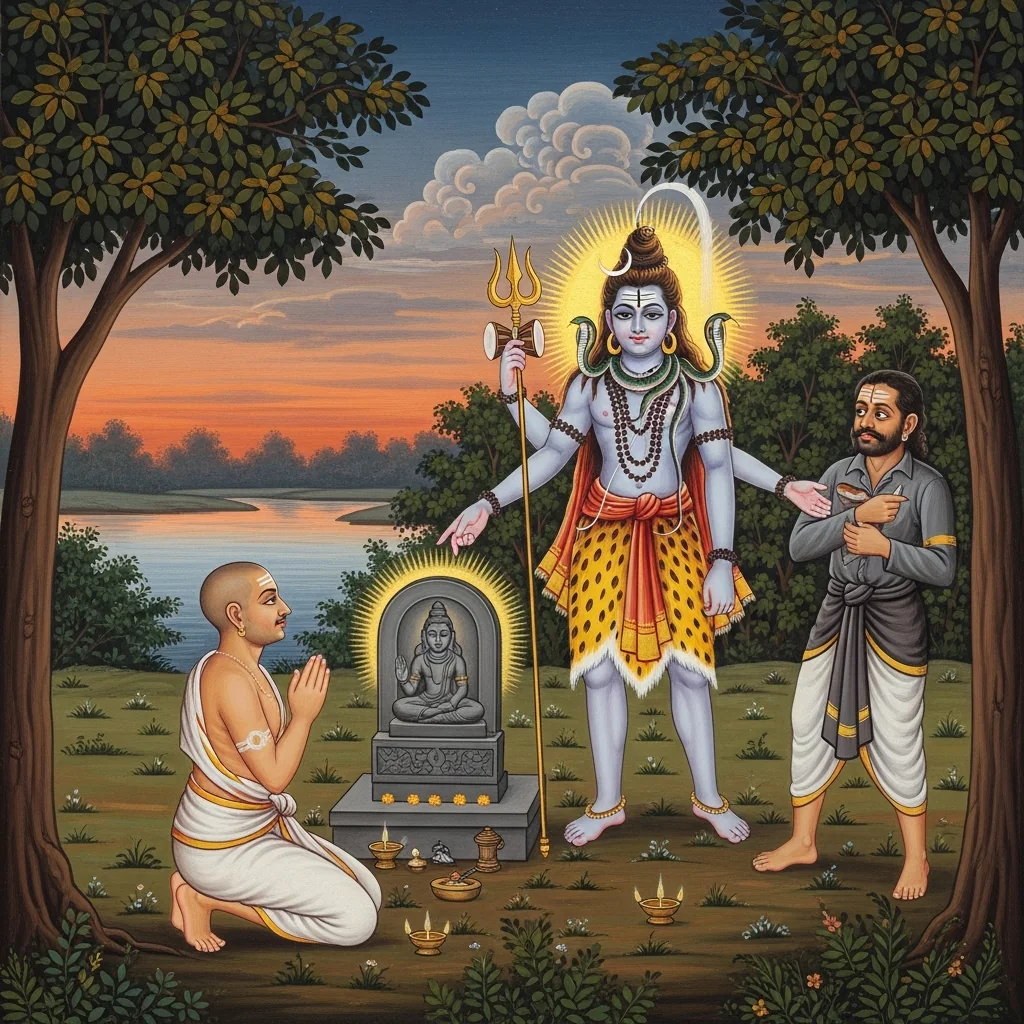
The chapter opens with Skanda speaking to Kumbhaja, listing a great cluster of liṅgas around Jyeṣṭheśvara at Jyeṣṭhasthāna and praising them as sacred forms that purify and bestow siddhi. Specific fruits are named: mere darśana of Parāśareśvara grants “pure knowledge”; Māṇḍavyeśvara averts intellectual confusion; Jābālīśvara prevents durgati; and an Āditya established by Sumantu relieves kuṣṭha (skin disease) upon sight. In general, remembrance, sight, touch, worship, salutation, and praise of these liṅgas are said to prevent the arising of kaluṣa, the moral-spiritual “stain.” A first origin-legend follows: as Śivā/Devī plays with a ball (kaṇḍuka) near Jyeṣṭhasthāna, two hostile beings approach to seize her; known to the omniscient Goddess, they are struck down by that very ball, which then becomes the liṅga called Kaṇḍukeśvara—remover of afflictions and a locus of Devī’s abiding presence for devotees. A second legend is told at Daṇḍakhāta tīrtha: a wicked one plots to weaken the devas by killing brāhmaṇas, since Veda-yajña sustains divine strength. Disguised and predatory, he attacks ascetics until, on Śivarātri, a faithful worshiper remains protected; Śiva manifests in a tiger-associated form, and the Vyāghreśvara liṅga is established. The phala stresses protection from dangers (thieves, beasts), victory in crisis when the liṅga is remembered, and fearlessness for worshipers. The chapter closes by noting Uṭajeśvara to the west of Vyāghreśvara, likewise arisen for the protection of devotees.
Shlokas
Verse 1
स्कंद उवाच । ज्येष्ठेश्वरस्य परितो यानि लिंगानि कुंभज । तानि पंचसहस्राणि मुनीनां सिद्धिदान्यलम्
Skanda said: O Kumbhaja (Agastya), the liṅgas situated all around Jyeṣṭheśvara are five thousand in number, fully able to grant siddhis to sages.
Verse 2
पराशरेश्वरं लिंगं ज्येष्ठेशादुत्तरे महत् । तस्य दर्शनमात्रेण निर्मलं ज्ञानमाप्यते
To the north of Jyeṣṭheśvara stands the great liṅga called Parāśareśvara; by its mere darśana (holy sight), one attains stainless, purified knowledge.
Verse 3
तत्रैव सिद्धिदं लिंगं मांडव्येश्वरसंज्ञितम् । न तस्य दर्शनाज्जातु दुर्बुद्धिं प्राप्नुयान्नरः
There itself is the siddhi-bestowing liṅga known as Māṇḍavyeśvara; by beholding it, a person never falls into evil understanding or perverse intellect.
Verse 4
लिंगं च शंकरेशाख्यं तत्रैव शुभदं सदा । भृगुनारायणस्तत्र भक्तानां सर्वसिद्धिदः
There also is the liṅga named Śaṅkareśa, ever bestowing auspiciousness. There, too, Bhṛgunārāyaṇa grants all attainments to devotees.
Verse 5
जाबालीश्वर संज्ञं च लिंगं तत्रातिसिद्धिदम् । तस्य संदर्शनाज्जातु न जंतुर्दुर्गतिं व्रजेत्
There too is the Liṅga called Jābālīśvara, exceedingly potent in bestowing attainment; by merely beholding it, no being ever goes to an evil destiny.
Verse 6
सुमंतु मुनिना श्रेष्ठस्तत्रादित्यः प्रतिष्ठितः । तस्य संदर्शनादेव कुष्ठव्याधिः प्रशाम्यति
There the excellent sage Sumaṃtu established Āditya (the Sun). By merely beholding him, the disease of leprosy is calmed and subsides.
Verse 7
भैरेवी भीषणा नाम तत्र भीषणरूपिणी । क्षेत्रस्य भीषणं सर्वं नाशयेद्भावतोर्चिता
There is the Goddess Bhairevī, named Bhīṣaṇā, of fearsome form. When worshipped with sincere devotion, she destroys every terror and dread connected with the sacred field of Kāśī.
Verse 8
तत्रोपजंघने लिंगं कर्मबंधविमोक्षणम् । नृभिः संसेवितं भक्त्या षण्मासात्सिद्धिदं परम्
There, at Upajaṃghana, is a Liṅga that releases one from the bondage of karma. When people serve it with devotion, it grants supreme attainment within six months.
Verse 9
भारद्वाजेश्वरं लिंगं लिंगं माद्रीश्वरं वरम् । एकत्र संस्थिते द्वे तु द्रष्टव्ये सुकृतात्मना
The Bhāradvājeśvara Liṅga and the excellent Mādrīśvara Liṅga—these two stand together in one place and are to be beheld by one whose soul is rich in merit.
Verse 10
अरुणि स्थापितं लिंगं तत्रैव कलशोद्भव । तस्य लिंगस्य सेवातः सर्वामृद्धिमवाप्नुयात्
O Kalaśodbhava (Agastya), there too is a Liṅga established by Aruṇi. By serving that Liṅga, one attains every kind of prosperity and flourishing.
Verse 11
लिंगं वाजसनेयाख्यं तत्रास्त्यतिमनोहृरम् । तस्य संदर्शनात्पुंसां वाजपेयफलं भवेत्
There is a most enchanting Liṅga there, called Vājasaneya. By its mere darśana, people obtain the fruit of the Vājapeya sacrifice.
Verse 12
कण्वेश्वरं शुभं लिंगं लिंगं कात्यायनेश्वरम् । वामदेवेश्वरं लिंगमौतथ्येश्वरमेव च
There are found there the auspicious Kaṇveśvara Liṅga, the Kātyāyaneśvara Liṅga, the Vāmadeveśvara Liṅga, and also the Autathyeśvara Liṅga.
Verse 13
हारीतेश्वरसंज्ञं च लिंगं वै गालवेश्वरम् । कुंभेर्लिंगं महापुण्यं तथा वै कौसुमेश्वरम्
Also there are the Liṅga called Hārīteśvara and the Gālaveśvara Liṅga; the highly meritorious Liṅga of Kuṃbha; and likewise the Kausumeśvara Liṅga.
Verse 14
अग्निवर्णेश्वरं चैव नैध्रुवेश्वरमेव च । वत्सेश्वरं महालिंगं पर्णादेश्वरमेव च
And there too are Agnivarṇeśvara and Naidhruveśvara; the great Liṅga called Vatseśvara; and also Parṇādeśvara.
Verse 15
सक्तुप्रस्थेश्वरं लिंगं कणादेशं तथैव च । अन्यत्तत्र महालिंगं मांडूकाय निरूपितम्
There is the liṅga of Saktuprastheśvara, and likewise Kaṇādeśa; and there is yet another great liṅga there, appointed for Māṃḍūka.
Verse 16
वाभ्रवेयेश्वरं लिंगं शिलावृत्तीश्वरं तथा । च्यवनेश्वर लिंगं च शालंकायनकेश्वरम्
In that sacred region are the liṅgas named Vābhraveyeśvara, Śilāvṛttīśvara, Cyavaneśvara, and Śālaṃkāyanakeśvara.
Verse 17
कलिंदमेश्वरं लिंगं लिंगमक्रोधनेश्वरम् । लिंगं कपोतवृत्तीशं कंकेशं कुंतलेश्वरम
There too are the liṅgas called Kaliṃdameśvara, Akrodhaneśvara, Kapotavṛttīśvara, Kaṅkeśa, and Kuṃtaleśvara.
Verse 18
कंठेश्वरं कहोलेशं लिंगं तुंबुरुपूजितम् । मतगेशं मरुत्तेशं मगधेयेश्वरं तथा
Also present are Kaṃṭheśvara, Kaholeśa, the liṅga worshipped by Tuṃburu, and the liṅgas named Matageśa, Marutteśa, and Magadheyeśvara.
Verse 19
जातूकर्णेश्वरं लिंगं जंबूकेश्वरमेव च । जारुधीशं जलेशं च जाल्मेशं जालकेश्वरम्
The liṅgas known as Jātūkarṇeśvara and Jaṃbūkeśvara are there, as well as Jārudhīśa, Jaleśa, Jālmeśa, and Jālakeśvara.
Verse 20
एवमादीनि लिंगानि अयुतार्धानि कुंभज । स्मरणाद्दर्शनात्स्पर्शादर्चनान्नमनात्स्तुतेः
“O Kuṃbhaja (Agastya),” thus and in many other ways there are countless liṅgas; by remembering them, beholding them, touching them, worshipping them, bowing down, and praising them, one gains auspicious merit.
Verse 21
न जातु जायते जंतोः कलुषस्य समुद्भवः । एतेषां शुभलिंगानां ज्येष्ठस्थानेति पावने
Impurity never arises in a person; for these auspicious liṅgas abide in the supremely purifying place called Jyeṣṭhasthāna.
Verse 22
स्कंद उवाच । एकदा तत्र यद्वृत्तं ज्येष्ठस्थाने महामुने । तदहं ते प्रवक्ष्यामि शृणुष्वाघविनाशनम्
Skanda said: O great sage, I shall tell you what once occurred there at Jyeṣṭhasthāna. Listen—this account destroys sin.
Verse 23
स्वैरं विहरतस्तत्र ज्येष्ठस्थाने महेशितुः । कौतुकेनैव चिक्रीड शिवा कंदुकलीलया
There, at Jyeṣṭhasthāna, while Maheśa roamed freely, Śivā, out of playful curiosity, began to sport with a ball-game.
Verse 24
उदंच न्न्यंचदंगानां लाघवं परितन्वती । निःश्वासामोदमुदित भ्रमराकुलितेक्षणा
Raising and lowering her limbs, she displayed graceful lightness; delighted by the fragrance of her own breath, her eyes were filled with hovering bees.
Verse 25
भ्रश्यद्ध म्मिल्लसन्माल्य स्थपुटीकृत भूमिका । स्विद्यत्कपोलपत्राली स्रवदंबुकणोज्ज्वला
Her hair-knot and flower-garland were slipping loose; the earth was pressed down by her stamping steps. The leaf-like ornaments upon her cheeks glittered with sweat, shining with trickling drops of moisture.
Verse 26
स्फुटच्चोलांशुकपथनिर्यदंगप्रभावृता । उल्लसत्कंदुकास्फालातिशोणितकरांबुजा
Through the openings of her garment the radiance of her limbs flashed forth; and from the vigorous striking of the ball, her lotus-like hands shone with a deep crimson glow.
Verse 27
कंदुकानुग सदृष्टि नर्तित भ्रूचलतांचला । मृडानी किल खेलंती ददृशे जगदंबिका
With her gaze following the ball, her brows dancing and the ends of her garments swaying, Mṛḍānī—Jagadambikā, the Mother of the world—was indeed seen at play.
Verse 28
अंतरिक्षचराभ्यां च दितिजाभ्यां मनोहरा । कटाक्षिताभ्यामिव वै समुपस्थितमृत्युना
Two charming demons, born of Diti and moving through the mid-sky, approached; yet it was as though Death itself had arrived, merely by being caught in her sidelong glance.
Verse 29
विदलोत्पल संज्ञाभ्यां दृप्ताभ्यां वरतो विधेः । तृणीकृतत्रिजगती पुरुषाभ्यां स्वदोर्बलात्
Those two proud beings—named Vidala and Utpala—had gained boons from Brahmā, and by the strength of their own arms they treated the three worlds as mere straw.
Verse 30
देवीं परिजिहीर्षू तौ विषमेषु प्रपीडितौ । दिवोवतेरतुः क्षिप्रं मायां स्वीकृत्य शांबरीम्
Intent on abducting the Goddess, the two—hard-pressed in their perilous designs—quickly descended from heaven, adopting the deceptive māyā of Śambara.
Verse 31
धृत्वा पारषदीं मूर्तिमायातावंबिकांतिकम् । तावत्यंतं सुदुर्वृत्तावतिचंचलमानसा
Assuming the form of attendants, they came near Ambikā—those two utterly wicked ones, their minds violently restless.
Verse 32
सर्वज्ञेन परिज्ञातौ चांचल्याल्लोचनोद्भवात् । कटाक्षिताथ देवेन दुर्गादुर्गारिघातिनी
They were at once known to the all-knowing Lord—by the unsteady movement that arose in their eyes—and then Durgā, slayer of the foes of Dharma’s fortress, cast her glance upon them.
Verse 33
विज्ञाय नेत्रसंज्ञां तु सर्वज्ञार्ध शरीरिणी । तेनैव कंदुकेनाथ युगपन्निजघान तौ
Understanding the signal conveyed by the eyes, the Goddess—who is the other half of the all-knowing One—then struck down those two at once with that very ball.
Verse 34
महाबलौ महादेव्या कंदुकेन समाहतौ । परिभ्रम्य परिभ्रम्य तौ दुष्टौ विनिपेततुः
Those two mighty wicked ones, struck by the Great Goddess with the ball, whirled round and round and then fell down.
Verse 35
वृंतादिव फले पक्वे तालादनिललोलिते । दंभोलिना परिहते शृंगेइव महागिरेः
They fell like ripe fruits shaken from their stalks by the wind in a palm tree; or like a mountain peak struck down by a thunderbolt.
Verse 36
तौ निपात्य महादैत्यावकार्यकरणोद्यतौ । ततः परिणतिं यातो लिंगरूपेण कंदुकः
Having struck down those two mighty demons intent on unrighteous deeds, Kanduka then underwent a wondrous transformation and became established in the form of a Śiva-liṅga.
Verse 37
कंदुकेश्वरसंज्ञं च तल्लिंगमभवत्तदा । ज्येष्ठेश्वर समीपे तु सर्वदुष्टनिवारणम्
At that time, that liṅga came to be known as “Kandukeśvara”; situated near Jyeṣṭheśvara, it is renowned as a supreme warder-off of every evil.
Verse 38
कंदुकेश समुत्पत्तिं यः श्रोष्यति मुदान्वितः । पूजयिष्यति यो भक्तस्तस्य दुःखभयं कुतः
Whoever, filled with joy, listens to the account of Kandukeśa’s manifestation—and whoever, as a devotee, worships him—how could sorrow or fear ever arise for such a one?
Verse 39
कंदुकेश्वर भक्तानां मानवानां निरेनसाम् । योगक्षेमं सदा कुर्याद्भवानी भयनाशिनी
For the sinless devotees of Kandukeśvara, Bhavānī—the destroyer of fear—ever ensures their yoga-kṣema: both attainment and protection of their welfare.
Verse 40
मृडानी तस्य लिंगस्य पूजां कुर्यात्सदैव हि । तत्रैव देव्या सान्निध्यं पार्वत्या भक्तसिद्धिदम्
Indeed, Mṛḍānī (Pārvatī) ever worships that liṅga; and right there abides the Goddess’s presence, granting fulfillment to devotees.
Verse 41
कंदुकेशं महालिंगं काश्यां यैर्न समर्चितम् । कथं तेषां भवनीशौ स्यातां सर्वेप्सितप्रदौ
Those who have not duly worshipped the great liṅga Kandukeśa in Kāśī—how could Bhavānī and Īśa become for them bestowers of all desired boons?
Verse 42
द्रष्टव्यं च प्रयत्नेन तल्लिंगं कंदुकेश्वरम् । सर्वोपसर्गसंघातविघातकरणं परम्
With earnest effort one should behold that liṅga—Kandukeśvara—for it is supremely able to shatter the massed onslaught of all calamities.
Verse 43
कंदुकेश्वर नामापि श्रुत्वा वृजिनसंततिः । क्षिप्रं क्षयमवाप्नोति तमः प्राप्योष्णगुं यथा
Even upon merely hearing the name “Kandukeśvara”, the unbroken chain of sin quickly perishes—just as darkness vanishes on reaching heat and light.
Verse 44
स्कंद उवाच । संशृणुष्व महाभाग ज्येष्ठेश्वर समीपतः । यद्वृत्तांतमभूद्विप्र परमाश्चर्यकृद्ध्रुवम्
Skanda said: O greatly fortunate brāhmaṇa, listen closely to the wondrous and truly astonishing event that occurred near Jyeṣṭheśvara.
Verse 45
दंडखाते महातीर्थे देवर्षिपितृतृप्तिदे । तप्यमानेषु विप्रेषु निष्कामं परमं तपः
At the great tīrtha called Daṇḍakhāta—granting satisfaction to gods, seers, and ancestors—while the brāhmaṇas were engaged in austerities, the highest, desireless tapas was being performed.
Verse 46
दैत्यो दुंदुभिनिर्ह्रादो दुष्टः प्रह्लादमातुलः । देवाः कथं सुजेयाः स्युरित्युपायमचिंतयत्
The wicked Daitya Duṃdubhinirhrāda, Prahlāda’s maternal uncle, pondered a stratagem, thinking, “How might the gods be made easy to conquer?”
Verse 47
किं बलाश्च किमाहाराः किमाधारा हि देवताः । विचार्य बहुशो दैत्यस्तत्त्वं विज्ञाय निश्चितम्
“What is their strength? What is their sustenance? Upon what do the gods truly depend?”—thus the Daitya reflected again and again, and, knowing the real principle, became firmly resolved.
Verse 48
अवश्यमग्रजन्मानो हेतवोत्र विचारतः । ब्राह्मणान्हंतुमसकृत्कृतवानुद्यमं ततः
Reasoning thus, he concluded that the foremost-born—the Brāhmaṇas—are indeed the decisive causes here; therefore he repeatedly undertook efforts to slay the Brāhmaṇas.
Verse 49
यतः क्रतुभुजो देवाः क्रतवो वेदसंभवाः । ते वेदा ब्राह्मणाधीनास्ततो देवबलं द्विजाः
For the gods feed upon sacrificial rites; sacrifices arise from the Vedas; and those Vedas depend upon Brāhmaṇas—therefore, O twice-born, the very strength of the gods rests upon Brāhmaṇas.
Verse 50
निश्चितं ब्राह्मणाधाराः सर्वे वेदाः सवासवाः । गीर्वाणा ब्राह्मणबला नात्र कार्या विचारणा
It is certain: all the Vedas, together with Indra and the gods, rest upon the Brāhmaṇas. The celestial ones are strengthened by the Brāhmaṇas—here there is no need for further deliberation.
Verse 51
ब्राह्मणा यदि नष्टाः स्युर्वेदा नष्टास्ततः स्वयम् । आम्नायेषु प्रणष्टेषु विनष्टाः शततंतवः
If the Brāhmaṇas were to perish, the Vedas would themselves perish thereafter. And when the sacred transmissions (āmnāyas) are destroyed, the hundredfold continuities of tradition are ruined.
Verse 52
यज्ञेषु नाशं गच्छत्सु हृताहारास्ततः सुराः । निर्बलाः सुखजेयाः स्युर्जितेषु त्रिदशेष्वथ
When sacrifices (yajñas) fall into ruin, the Devas are deprived of their sustenance; then they become powerless and easily conquered. And once the thirty gods are defeated, the order of the world is overturned.
Verse 53
अहमेव भविष्यामि मान्यस्त्रिजगतीपतिः । आहरिष्यामि देवानामक्षयाः सर्वसंपदः
“I alone shall become the honored lord of the three worlds. I shall seize from the gods all their inexhaustible wealth and prosperities.”
Verse 54
निर्वेक्ष्यामि सुखान्येव राज्ये निहतकंटके । इति निश्चित्य दुर्बुद्धिः पुनश्चिंतितवान्मुने
“I shall enjoy only pleasures in a kingdom whose thorns—its obstacles—have been cut down.” Having decided thus, that evil-minded one reflected again, O sage.
Verse 55
द्विजाः क्व संति भूयांसो ब्रह्मतेजोतिबृंहिताः । श्रुत्यध्ययन संपन्नास्तपोबल समन्विताः
Where are the many twice-born—those increased in the radiance of Brahman, accomplished in the study of Śruti, and endowed with the strength of austerity?
Verse 56
भूयसां ब्राह्मणानां तु स्थानं वाराणसी भवेत् । तानादावुपसंहृत्य यामि तीर्थांतरं ततः
Vārāṇasī is indeed the chief abode of many Brāhmaṇas. First I shall destroy them there, and then I will proceed onward to other sacred tīrthas.
Verse 57
यत्रयत्र हि तीर्थेषु यत्रयत्राश्रमेषु च । संति सर्वेऽग्रजन्मानस्ते मयाद्याः समंततः
Wherever there are sacred tīrthas, wherever there are āśramas—there dwell the elder twice-born; on every side they are to be struck down by me.
Verse 58
इति दुंदुभिनिर्ह्रादो मतिं कृत्वा कुलोचिताम् । प्राप्यापि काशीं दुर्वृत्तो मायावी न्यवधीद्द्विजान्
Thus Duṃdubhi-nirhrāda, having formed a resolve befitting his (demonic) lineage, reached Kāśī; and that wicked, deceitful one slew the twice-born.
Verse 60
यथा कोपि न वेत्त्येव तथाच्छन्नोऽभवत्पुनः । वने वनेचरो भूत्वा यादोरूपी जलाशये
So that no one might know him at all, he again became concealed—roaming as a forest-dweller in the woods, and taking the form of a water-creature in the lakes.
Verse 61
अदृश्यरूपी मायावी देवानामप्यगोचरः । दिवाध्यानपरस्तिष्ठेन्मुनिवन्मुनिमध्यगः
An illusionist of unseen form, beyond even the gods’ perception, by day he stood intent on dhyāna—like a sage, moving among sages.
Verse 62
प्रवेशमुटजानां च निर्गमं च विलोकयन् । यामिन्यां व्याघ्ररूपेण ब्राह्मणान्भक्षयेद्बहून्
Watching the entry into the leaf-huts and the coming out from them, at night he would, in the form of a tiger, devour many Brāhmaṇas.
Verse 63
निःशब्दमेव नयति नत्यजेदपि कीकसम् । इत्थं निपातिता विप्रास्तेन दुष्टेन भूरिशः
He would carry them off in utter silence, not leaving behind even a corpse. In this manner many Brāhmaṇas were struck down by that wicked one.
Verse 64
एकदा शिवरात्रौ तु भक्तस्त्वेको निजोटजे । सपर्यां देवदेवस्य कृत्वा ध्यानस्थितोभवत्
Once, on Śivarātri, a certain devotee, alone in his own hut, performed worship of the God of gods and entered a steady state of meditation.
Verse 65
स च दुंदुभिनिर्ह्राद दैत्येंद्रो बलदर्पितः । व्याघ्र रूपं समास्थाय तमादातुं मतिं दधे
And that Duṃdubhi-nirhrāda, lord of the Daityas, intoxicated with strength, assumed a tiger’s form and resolved to seize him (the devotee).
Verse 66
तं भक्तं ध्यानमापन्नं दृढचित्तं शिवेक्षणे । कृतास्त्रमंत्रविन्यासं तं क्रांतुमशकन्न सः
But that devotee—absorbed in meditation, steadfast in the vision of Śiva, and fortified by the ordered placing of sacred mantras and protective rites—him he could not overpower.
Verse 67
अथ सर्वगतः शंभुर्ज्ञात्वा तस्याशयं हरः । दैत्यस्य दुष्टरूपस्य वधाय विदधे धियम्
Then Śambhu, all-pervading Hara, discerning his intent, set His mind upon a plan to slay that wicked-formed Daitya, that the holy realm might be safeguarded.
Verse 68
यावदादित्सति व्याघ्रस्तावदाविरभूद्धरः । जगद्रक्षामणिस्त्र्यक्षो भक्तरक्षण दक्षधीः
Just as the tiger was about to strike, the Bearer (Śiva) instantly manifested—three-eyed, the jewel of the world’s protection, whose keen resolve is ever skilled in guarding His devotees.
Verse 69
रुद्रमायांतमालोक्य तद्भक्तार्चित लिंगतः । दैत्यस्तेनैव रूपेण ववृधे भूधरोपमः
Seeing Rudra approaching from that liṅga worshipped by His devotee, the Daitya swelled in that very form, growing vast like a mountain, out of hostile pride.
Verse 70
सावज्ञमथसर्वज्ञं यावत्पश्यति दानवः । तावदायांतमादाय कक्षायंत्रे न्यपीडयत्
Then the demon, looking with contempt upon the All-knowing Lord, seized Him as He approached and crushed Him in a constricting hold, like a binding vice at the waist.
Verse 71
पंचास्यस्त्वथ पंचास्यं मुष्ट्या मूर्धन्यताडयत् । स च तेनैव रूपेण कक्षानिष्पेषणेन च
Then the Five-Faced Lord struck the five-faced foe upon the crown with His fist; and in that very form—by the crushing constriction at His side as well—He checked the demon’s assault.
Verse 72
अत्यार्तमरटद्व्याघ्रो रोदसी परिपूरयन् । तेन नादेन सहसा सं प्रवेपितमानसाः
The tiger roared in extreme agony, filling heaven and earth with its sound; and by that sudden roar, minds were instantly shaken with alarm.
Verse 73
तपोधनाः समाजग्मुर्निशि शब्दानुसारतः । तत्रेश्वरं समालोक्य कक्षीकृत मृगेश्वरम्
Those rich in austerity came there at night, following the sound; and there they beheld the Lord, holding the king of beasts tucked at His side.
Verse 74
तुष्टुवुः प्रणता सर्वे शर्वं जयजयाक्षरैः । परित्राता जगत्त्रातः प्रत्यूहाद्दारुणादितः
All of them, bowing down, praised Śarva with cries of “Victory! Victory!”—for He is the rescuer, the protector of the world, who saves from dreadful obstacles.
Verse 75
अनुग्रहं कुरुध्वेश तिष्ठात्रैव जगद्गुरो । अनेनैव हि रूपेण व्याघ्रेश इति नामतः
Show favor, O Lord; remain here itself, O Guru of the world—indeed, in this very form, and by the name “Vyāghreśa” (Lord of the Tiger).
Verse 76
कुरु रक्षां महादेव ज्येष्ठस्थानस्य सर्वदा । अन्येभ्योप्युपसर्गेभ्यो रक्ष नस्तीर्थवासिनः
Grant protection, O Mahādeva, to this most ancient sacred seat at all times; and protect us, the dwellers at this tīrtha, from other afflictions as well.
Verse 77
इति श्रुत्वा वचस्तेषां देवश्चंद्रविभूषणः । तथेत्युक्त्वा पुनः प्राह शृणुध्वं द्विजपुंगवाः
Hearing their words, the Lord—adorned with the moon—said, “So be it.” Then, speaking again, he addressed them: “Listen, O best of the twice-born.”
Verse 78
यो मामनेन रूपेण द्रक्ष्यति श्रद्धयात्र वै । तस्योपसर्गसंघातं घातयिष्याम्यसंशयम्
Whoever, here, beholds me in this very form with faith—upon him I shall surely strike down the multitude of afflictions, without doubt.
Verse 79
एतल्लिंगं समभ्यर्च्य यो याति पथि मानवः । चौरव्याघ्रादिसंभूत भयं तस्य कुतो भवेत्
Any person who duly worships this Liṅga and then travels on the road—how could fear arising from thieves, tigers, and the like ever befall him?
Verse 80
मच्चरित्रमिदं श्रुत्वा स्मृत्वा लिंगमिदं हृदि । संग्रामे प्रविशन्मर्त्यो जयमाप्नोति नान्यथा
Having heard this account of me, and holding this Liṅga in remembrance within the heart, a mortal who enters battle attains victory—indeed, in no other way.
Verse 81
इत्युक्त्वा देवदेवशस्तस्मिंल्लिंगे लयं ययौ । सविस्मयास्ततो विप्राः प्रातर्याता यथागतम्
Having spoken thus, the God of gods dissolved into that very Liṅga. Then the Brāhmaṇas, filled with wonder, departed at dawn, returning as they had come.
Verse 82
स्कन्द उवाच । तदा प्रभृति कुंभोत्थ लिंगं व्याघ्रेश्वराभिधम् । ज्येष्ठेशादुत्तरेभागे दृष्टं स्पृष्टं भयापहम्
Skanda said: From that time onward, O Agastya-born-from-the-pot, that Liṅga has been known as Vyāghreśvara. To the north of Jyeṣṭheśa, merely seeing it—or touching it—removes fear.
Verse 83
व्याघ्रेश्वरस्य ये भक्तास्तेभ्यो बिभ्यति किंकराः । यामा अपि महाक्रूरा जयजीवेति वादिनः
Those who are devotees of Vyāghreśvara—before them even the servants of Yama tremble; even the exceedingly cruel agents of Death cry out, “Victory! Live on!”
Verse 84
पराशरेश्वरादीनां लिंगानामिह संभवम् । श्रुत्वा नरो न लिप्येत महापातककर्दमैः
Hearing of the manifestation here of Liṅgas such as Parāśareśvara and others, a man is not sullied by the mire of great sins.
Verse 85
कंदुकेश समुत्पत्तिं व्याघ्रे शाविर्भवं तथा । समाकर्ण्य नरो जातु नोपसर्गैः प्रदूयते
By hearing of the origin of Kaṇḍukeśa and likewise of the manifestation in the tiger, a man is never afflicted by calamities.
Verse 86
उटजेश्वर लिंगं तु व्याघ्रेशात्पश्चिमे स्थितम् । भक्तरक्षार्थमुद्भूतं स्यात्समभ्यर्च्य निर्भयः
The Liṅga called Uṭajeśvara stands to the west of Vyāghreśvara. It arose for the protection of devotees; worshipping it, one becomes fearless.