Adhyaya 9
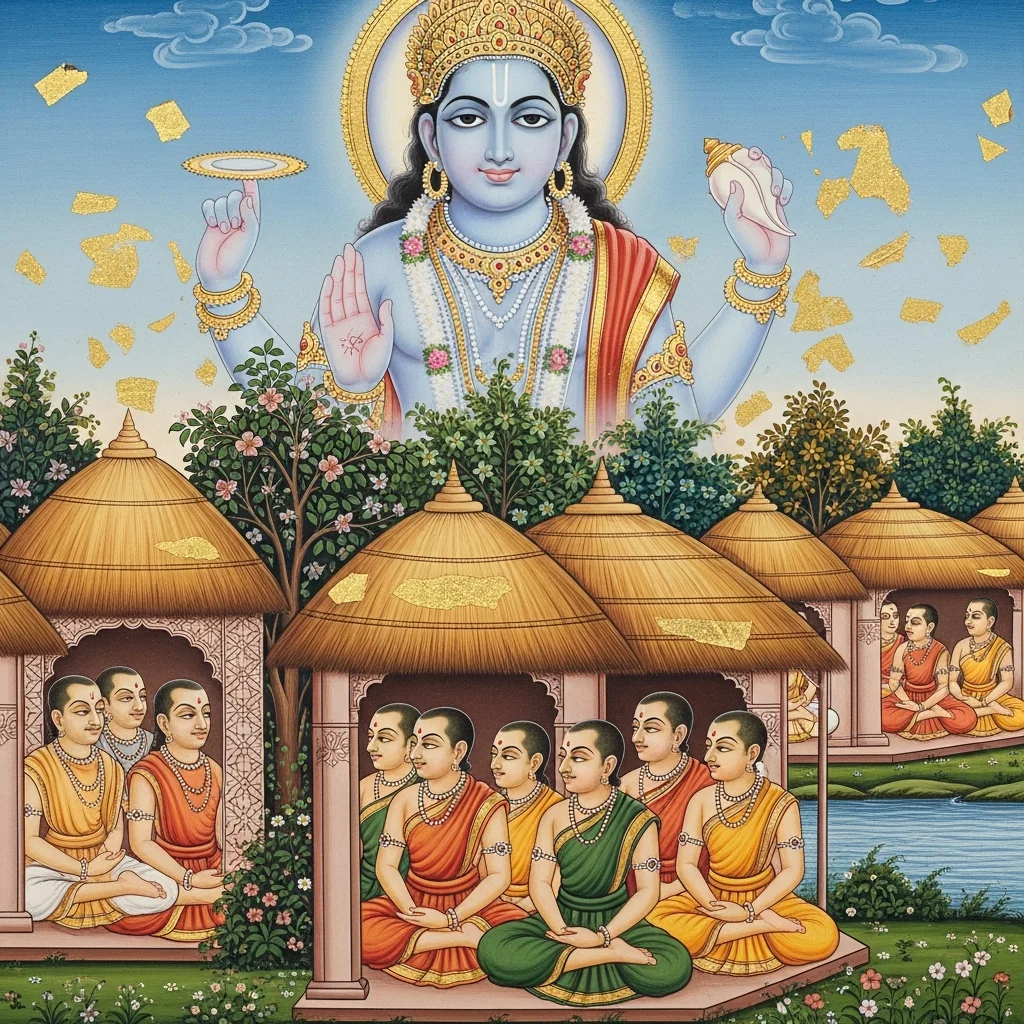
Chapter 9 unfolds as a narrated chain of dialogues. Vyāsa introduces a meritorious account in which Viṣṇu asks why Brahmā and the devas have arrived; Brahmā replies that there is no fear in the three worlds and that their purpose is to behold an ancient tīrtha established in dharma. Viṣṇu agrees and swiftly journeys on Garuḍa, with the devas accompanying him. In Dharmāraṇya, Dharmarāja (Yama) receives the divine party with formal hospitality and individualized pūjā. He praises Viṣṇu, declaring that the kṣetra’s tīrtha-status arises from divine grace and from proper worship that truly satisfies the deity. When Viṣṇu offers a boon, Yama requests that many ṛṣi-āśramas be founded in this supremely meritorious forest, so the tīrtha will not be harassed and the land will continually resound with Vedic recitation and yajñas. Viṣṇu assumes a vast form and, with divine assistance, installs numerous learned brāhmaṇa-ṛṣis—set forth through extensive gotra and pravara catalogues—together with their lineages and fitting locations. The narrative then turns to Yudhiṣṭhira’s inquiry into the origins, names, and places of these established groups, continuing with detailed listings. Later verses also allude to divine feminine names and to Brahmā’s summoning of Kāmadhenu, underscoring the sustaining of sacred order through providential support.
Shlokas
Verse 1
व्यास उवाच । श्रूयतां राजशार्दूल पुण्यमाख्यानमुत्तमम् । स्तूयमानो । जगन्नाथ इदं वचनमब्रवीत्
Vyāsa said: “O tiger among kings, listen to this supremely excellent and meritorious account. While being praised, Jagannātha spoke these words.”
Verse 2
विष्णुरुवाच । किमर्थमागताः सर्वे ब्रह्माद्याः सुरसत्तमाः । पृथिव्यां कुशलं कच्चित्कुतो वो भयमागतम्
Viṣṇu said: “For what purpose have you all come—Brahmā and the foremost of the gods? Is all well upon the earth? From where has fear come to you?”
Verse 3
ततः प्रोवाच वै हृष्टो ब्रह्मा तं केशवं वचः । न भयं विद्यतेऽस्माकं त्रैलोक्ये सचराचरे
Then Brahmā, delighted, spoke these words to Keśava: “For us there is no fear anywhere in the three worlds, with all that moves and all that does not.”
Verse 4
एकविज्ञापनार्थाय आगतोऽहं तवांतिके । तदहं संप्रवक्ष्यामि तदेतच्छृणु मे वचः
“I have come near you for a single request. I shall state it fully—listen to these words of mine.”
Verse 5
परं तु पूर्वं धर्मेण स्थापितं तीर्थमुत्तमम् । तद्द्रष्टुकामोऽहं देव त्वत्प्रसादाज्जनार्दन
“But formerly, through Dharma, a most excellent tīrtha was established. O Lord Janārdana, by your grace I desire to behold that sacred ford.”
Verse 6
तत्र त्वं देवदेवेश गमने कुरु मानसम् । यथा सत्तीर्थतां याति धर्मारण्यमनुत्तमम्
“Therefore, O Lord of the lords of the gods, set your mind on going there, so that the unsurpassed Dharmāraṇya may attain the status of a true and renowned tīrtha.”
Verse 7
विष्णुरुवाच । साधुसाधु महाभाग त्वर्यतां तत्र मा चिरम् । ममापि चित्तं तत्रैव तद्दर्शनेस्ति लालसम्
Viṣṇu said: “Well said, well said, O fortunate one—let us hasten there without delay. My own mind too longs to behold that place.”
Verse 8
व्यास उवाच । तार्क्ष्यमारुह्य गोविंद स्तत्रागाच्छीघ्रमेव हि । ततो धर्मेण ते देवाः सेंद्राः सर्षिगणास्तथा
Vyāsa said: “Mounting Tārkṣya (Garuḍa), Govinda swiftly went there. Then, in due order, those gods—along with Indra and the hosts of sages—also proceeded.”
Verse 9
ब्रह्मविष्णुमहेशाद्या दृष्टा दूरान्मुमोद च । धर्मराजोपि तान्दृष्ट्वा देवा न्विष्णुपुरोगमान्
Seeing from afar Brahmā, Viṣṇu, Maheśa, and the others, he rejoiced. Dharmarāja too, on seeing those gods with Viṣṇu at their head, was gladdened.
Verse 10
आगतः स्वाश्रमात्तत्र पूजां प्रगृह्य तत्पुरः । आसनादुत्थितः शीघ्रं सपर्याद्यं प्रगृह्य च । एकैकस्य चकाराथ पूजां चैव पृथक्पृथक्
Coming there from his own hermitage with offerings for worship, he went before them. Rising quickly from his seat and taking the requisites of hospitality and service, he then performed worship for each one—individually and in due honor.
Verse 11
चकार पूजां विधिवत्तेषां तत्रार्कनंदनः । आसनेषूपवेश्याथ पूजां कृत्वा गरीयसीम्
There, the son of Arka (Dharmarāja) performed worship for them according to proper rite. Then, seating them upon their seats of honor, he completed that most weighty and excellent pūjā.
Verse 12
यम उवाच । तीर्थरूपमिदं क्षेत्रं प्रसादाद्देवकीसुत । त्वत्तोषविधिना चाद्य कृपया च शिवस्य च
Yama said: O son of Devakī, by your gracious favor this region has become a true tīrtha. Today, by the rite that has pleased you—and by the compassion of Śiva as well—its sanctity has been fully revealed.
Verse 13
अद्य मे सफलं जन्म अद्य मे सफलं तपः । अद्य मे सफलं स्थानं काजेशानां समागमात्
Today my birth has borne fruit; today my austerity has borne fruit. Today even my very presence here is fulfilled, because of the auspicious assembly of the lordly divinities.
Verse 14
व्यास उवाच । एवं स्तुतस्तदा विष्णुः प्रोवाच मधुरं वचः । तुष्टोऽस्मि धर्म राजेंद्र अहं स्तोत्रेण ते विभो
Vyāsa said: Thus praised, Viṣṇu then spoke sweet words: “O king of Dharma, O mighty one, I am pleased by your hymn of praise.”
Verse 15
किंचित्प्रार्थय मत्तोऽहं करोमि तव वांछितम् । यत्तेऽस्त्यभीप्सितं तुभ्यं तद्ददामि न संशयः
“Ask something of me; I shall do what you desire. Whatever you truly wish for, I will grant it to you—of this there is no doubt.”
Verse 16
यम उवाच । यदि तुष्टोऽसि देवेश वांछितं कुरुषे यदि । धर्मारण्ये महापुण्ये ऋषीणामाश्रमान्कुरु
Yama said: If you are pleased, O Lord of gods, and if you will fulfill my desire—then in the supremely meritorious Dharmāraṇya, establish hermitages (āśramas) for the sages (ṛṣis).
Verse 17
वसंति वाडवा यत्र यजंति चैव याज्ञिकाः । वेदनिर्घोषसंयुक्तं भाति तत्तीर्थमुत्तमम्
Where the Vāḍavas dwell and the sacrificers ceaselessly perform yajñas—where the resonance of the Vedas is heard—there that tīrtha shines as the supreme holy ford.
Verse 18
अब्राह्मणमिदं तीर्थं पीडयिष्यंति जन्तवः । तस्मात्त्वं वाडवाञ्छौरे समानय ऋषी न्बहून् । धर्मारण्यं यथा भाति त्रैलोक्ये सचराचरे
This tīrtha, lacking brāhmaṇas, will be oppressed by beings. Therefore, O Śauri, bring many Vāḍavas and gather many ṛṣis, so that Dharmāraṇya may shine throughout the three worlds—moving and unmoving.
Verse 19
ततो विष्णुः सहस्राक्षः सहस्रशीर्षः सहस्रपात् । सहस्रशस्तदा रूपं कृतवान्धर्मवत्सलः । यस्मिन्स्थाने च ये विप्राः सदाचाराः शुभव्रताः
Then Viṣṇu—of a thousand eyes, a thousand heads, and a thousand feet—assumed manifold forms, ever affectionate to dharma. And in that place were established brāhmaṇas of good conduct and auspicious vows.
Verse 20
अशेषधर्मकुशलाः सर्वशास्त्रविशारदाः । तपोज्ञाने महाख्याता ब्रह्मयज्ञपरायणाः । स्थापिता ऋषयः सर्वे सहस्राण्यष्टादशैव तु
All those sages were established there—skilled in every aspect of dharma, learned in all śāstras, renowned for austerity and knowledge, and devoted to the Brahma-yajña. Indeed, they were eighteen thousand in number.
Verse 21
नानादेशात्समानीय स्थापितास्तत्र तैः सुरैः । आश्रमांश्च बहूंस्तत्र काजेशैरपि निर्मितान्
Gathered from many lands, they were settled there by those gods. And many hermitages (āśramas) were also built there, constructed as well by the Kājeśas.
Verse 22
धर्मोपदेशात्कृष्णेन ब्रह्मणा च शिवेन च । स्वेस्वे स्थाने यथायोग्ये स्थापयामास केशवः
In accordance with the teaching of dharma given by Kṛṣṇa, by Brahmā, and by Śiva, Keśava duly established each group in its proper place, as befitted rule and fitness.
Verse 23
युधिष्ठिर उवाच । कस्मिन्वंशे समुत्पन्ना ब्राह्मणा वेदपारगाः । स्थापिताः सपरीवाराः पुत्रपौत्रसमावृताः । शिष्यैश्च बहुभिर्युक्ता अग्निहोत्रपरायणाः । तेषां स्थानानि नामानि यथावच्च वदस्व मे
Yudhiṣṭhira said: “From what lineage were those Brāhmaṇas born—those who have reached the far shore of the Vedas—who were settled here with their households, surrounded by sons and grandsons, attended by many disciples, and devoted to the Agnihotra? Tell me rightly their places and their names.”
Verse 24
व्यास उवाच । श्रूयतां नृपशार्दूल धर्म्मारण्यनिवासिनाम्
Vyāsa said: “Listen, O tiger among kings, to the account of those who dwell in Dharmāraṇya.”
Verse 25
महात्मनां ब्राह्मणानामृषीणामूर्ध्वरेतसाम् । तेषां वै पुत्रपौत्राणां नामानि च वदाम्यहम्
“I shall now declare the names of the sons and grandsons of those great-souled Brāhmaṇa sages, steadfast in disciplined continence.”
Verse 26
चतुर्विशतिगोत्राणि द्विजानां पांडवर्षभ । तेषां शाखाः प्रशाखाश्च पुत्रपौत्रादयस्तथा
O bull among the Pāṇḍavas, among the twice-born there are twenty-four gotras; and for them there are branches and sub-branches, as well as the lines of sons, grandsons, and the rest.
Verse 27
जज्ञिरे बहवः पुत्राः शतशोऽथ सहस्रशः । चतुर्विशतिमुख्यानां नामानि प्रवदामि ते । द्विजानामृषयः प्रोक्ताः प्रवराणि तथा शृणु
Many sons were born—by the hundreds and even by the thousands. I shall declare to you the names of the twenty-four principal gotras; and hear also the proclaimed ṛṣi-seers and the pravaras of the twice-born.
Verse 28
भारद्वाजस्तथा वत्सः कौशिकः कुश एव च । शांडिल्यः काश्यपश्चैव गौतमश्छांधनस्तथा
Bhāradvāja, Vatsa, Kauśika, and Kuśa; Śāṇḍilya, Kāśyapa, Gautama, and Chāṃdhana—these are among the named lineages.
Verse 29
जातूकर्ण्यस्तथा वत्सो वसिष्ठो धारणस्तथा । आत्रेयो भांडिलश्चैव लौकिकाश्च इतः परम्
Jātūkarṇya and Vatsa; Vasiṣṭha and Dhāraṇa; Ātreya and Bhāṇḍila; and thereafter, the Laukikas as well.
Verse 30
कृष्णायनोपमन्युश्च गार्ग्यमुद्गलमौषकाः । पुण्यासनः पराशरः कौंडिन्यश्च ततः परम्
Kṛṣṇāyana and Upamanyu; the Gārgyas, Mudgalas, and Mauṣakas; Puṇyāsana, Parāśara, and thereafter Kauṇḍinya.
Verse 31
तथा गान्यासनश्चैव प्रवराणि चतुर्विंशतिः । जामदग्न्यस्य गोत्रस्य प्रवराः पंच एव हि
Likewise there is Gānyāsana as well—thus the pravaras are twenty-four in this enumeration. But for the Jāmadagnya gotra, the pravaras are indeed five.
Verse 32
भार्गवश्च्यवनाप्नुवानौर्वश्च जमदग्निकः । पंचैते प्रवरा राजन्विख्याता लोकविश्रुताः
O King, these five—Bhārgava, Cyavana, Āpnuvāna, Urva, and Jāmadagnya—are the renowned Pravaras, celebrated and widely famed in the world.
Verse 33
एवं गोत्रसमुत्पन्ना वाडवा वेदपारगाः । द्विजपूजाक्रियायुक्ता नानाक्रतुक्रियापराः
Thus, those born in that gotra—the Vāḍavas—were masters of the Vedas, engaged in honoring the twice-born, and devoted to performing many kinds of sacrificial rites.
Verse 34
गुणेन संहिता आसन् षट्कर्मनिरताश्च ये । एवंविधा महाभागा नानादेशभवा द्विजाः
They were endowed with virtues and devoted to the six traditional duties; such fortunate twice-born men, of this kind, arose from many different regions.
Verse 35
भामेवसं तृतीयं च प्रवराः पंच एव हि । भार्गवच्यावनाप्नुवानौर्वजामदग्न्यसंयुताः । आत्रेयोऽर्चनानसश्च श्यावास्येति तृतीयकः
Indeed, there are five Pravaras, with Bhāmevasa as the third. They are connected with Bhārgava, Cyavana, Āpnuvāna, Urva, and Jāmadagnya; and the third set is stated as Ātreya, Arcanānasa, and Śyāvāsya.
Verse 36
अस्मिन्गोत्रे भवा विप्रा दुष्टाः कुटिलगामिनः । धनिनो धर्मनिष्ठाश्च वेदवेदांगपारगाः
In this gotra are found brāhmaṇas who are wicked and crooked in conduct; yet also wealthy, steadfast in dharma, and accomplished in the Vedas and their auxiliaries (Vedāṅgas).
Verse 37
दानभोगरताः सर्वे श्रौतस्मार्तेषु संमताः । मांडव्यगोत्रे विज्ञेयाः प्रवरैः पंचभिर्युताः
All of them delight in dāna (sacred giving) and in rightful enjoyment, and are approved in the Śrauta and Smārta traditions. They are to be known as belonging to the Māṇḍavya gotra, endowed with five Pravaras.
Verse 38
भार्गवश्च्यावनो ऽत्रिश्चाप्नुवानौर्वस्तथैव च । अस्मिन्गोत्रे भवा विप्राः श्रुतिस्मृतिपरायणाः
Bhārgava, Cyāvana, Atri, Āpnuvāna, and Urva as well—brāhmaṇas born in this gotra are devoted to Śruti and Smṛti.
Verse 39
रोगिणो लोभिनो दुष्टा यजने याजने रताः । ब्रह्मक्रिया पराः सर्वे मांडव्याः कुरुसत्तम
O best of the Kurus, the Māṇḍavyas are all described as sickly, greedy, and ill-natured—yet devoted to performing yajñas and officiating at sacrifices, intent upon priestly rites (brahma-kriyā).
Verse 40
गार्ग्यस्य गोत्रे ये जातास्तेषां तु प्रवरास्त्रयः । अंगिराश्चांबरीषश्च यौवनाश्वस्तृतीयकः
Those born in Gārgya’s gotra have three Pravaras: Aṅgiras, Āṃbarīṣa, and as the third, Yauvanāśva.
Verse 41
अस्मिन्गोत्रे समुत्पन्नाः सद्वृत्ताः सत्यभाषिणः । शांताश्च भिन्नवर्णाश्च निर्द्धनाश्च कुचैलिनः
Those born in this gotra are well-conducted and speak truth; they are peaceful, of varied appearance, and often poor, clothed in worn garments.
Verse 42
संगवात्सल्ययुक्ताश्च वेदशास्त्रेषु निश्चलाः । वत्सगोत्रे द्विजा भूप प्रवराः पंच एव हि
O King, the twice-born of the Vatsa gotra are endowed with fellowship and affectionate goodwill, steadfast in the Vedas and the śāstras; and in that lineage there are indeed precisely five renowned pravaras (ancestral seer-lines).
Verse 43
भार्गवश्च्यवनाप्नुवानौर्वश्च जमदग्निकः । एभिस्तु पंच विख्याता द्विजा ब्रह्मस्वरूपिणः
Bhārgava, Cyavana, Āpnuvāna, Aurva, and Jamadagnika—by these five the pravaras are famed; and the twice-born associated with them are celebrated as bearers of the very form of Brahman, the sacred Vedic power.
Verse 44
शांता दांताः सुशीलाश्च धर्मपुत्रैः सुसंयुता । वेदाध्ययनहीनाश्च कुशलाः सर्वकर्मसु
They are peaceful, self-restrained, and of noble conduct, well accompanied by righteous sons; though lacking in Vedic study, they are competent in every kind of work.
Verse 45
सुरूपाश्च सदाचाराः सर्वधर्मेषु निष्ठिताः । दानधर्म रताः सर्वे अन्नदा जलदा द्विजाः
They are comely, of good conduct, and firmly established in all dharmas. All of them delight in the dharma of giving—twice-born who bestow food and provide water.
Verse 46
दयालवः सुशीलाश्च सर्वभूतहिते रताः । काश्यपा ब्राह्मणा राजन्प्रवरत्रयसंयुताः
O King, the Kāśyapa brāhmaṇas are compassionate and well-natured, devoted to the welfare of all beings, and they are furnished with a triad of pravaras.
Verse 47
काश्यपश्चापवत्सारो नैध्रुवश्च तृतीयकः । वेदज्ञा गौरवर्णाश्च नैष्ठिका यज्ञकारकाः
Kāśyapa, Āpavatsāra, and Naidhruva are the third set of pravaras. They are knowers of the Veda, fair in hue, steadfast in vows, and performers of yajña.
Verse 48
प्रियवासा महादक्षा गुरुभक्तिरताः सदा । प्रतिष्ठामानव न्तश्च सर्वभूतहिते रताः
They dwell in beloved abodes, are greatly capable, ever devoted to reverence for the guru, endowed with honor and standing, and engaged in the welfare of all beings.
Verse 49
यजंते च महायज्ञान्काश्यपेया द्विजातयः । धारीणसगोत्रजाश्च प्रवरैस्त्रिभिरन्विताः
The Kāśyapeya twice-born perform great mahāyajñas. Those born in the Dhārīṇa-sa gotra as well are endowed with three pravaras.
Verse 50
अगस्तिदर्विश्वेताश्व दध्यवाहनसंज्ञकाः । अस्मिन्गोत्रे च ये जाता धर्मकर्मसमाश्रिताः
Known as Agasti, Darviśvetaśva, and Dadhyavāhana—those born in this gotra take refuge in dharma and in righteous action.
Verse 51
कर्मक्रूराश्च ते सर्वे तथैवोदरिणस्तु ते । लंबकर्णा महादंष्ट्रा द्विजा धनपरायणाः
All of them are harsh in their deeds; likewise they are pot-bellied. With long ears and great tusks, those twice-born are wholly devoted to wealth.
Verse 52
क्रोधिनो द्वेषिणश्चैव सर्वसत्त्वभयंकराः । लौगाक्षसोद्भवा ये वै वाडवाः सत्यसंश्रिताः
The Vāḍavas who arose from Laugākṣa are indeed wrathful and hate-filled, bringing fear to all beings—yet they are spoken of as abiding in truth.
Verse 53
प्रवराश्च त्रयस्तेषां तत्त्वज्ञानस्वरूपकाः । कश्यपश्चैव वत्सश्च वसिष्ठश्च तृतीयकः
Their three principal pravaras, embodying the very form of true knowledge, are Kaśyapa, Vatsa, and as the third, Vasiṣṭha.
Verse 54
सदाचारास्तु विख्याता वैष्णवा बहुवृ त्तयः । रोमभिर्बहुभिर्व्याप्ताः कृष्णवर्णास्तु वाडवाः
They are renowned for good conduct, devoted to Viṣṇu, and engaged in many worthy livelihoods; the Vāḍavas are said to be covered with abundant hair and of dark complexion.
Verse 55
शांता दाताः सुशीलाश्च स्वदारनिरताः सदा । कुशिकसगोत्रे ये जाताः प्रवरैस्त्रिभिरन्विताः
Those born in the Kuśika lineage, endowed with three pravaras, are peaceful, generous, well-mannered, and always devoted to their own spouses.
Verse 56
विश्वामित्रो देवरात औदलश्च त्रयश्च ये । अस्मिन्गोत्रे तु ये जाता दुर्बला दीनमानसाः
Viśvāmitra, Devarāta, and Audala—these three are the pravaras; yet those born in this gotra at times become weak and of downcast mind.
Verse 57
असत्यभाषिणो विप्राः सुरूपा नृपसत्तमाः । सर्व्वविद्याकुशलिनो ब्राह्मणा ब्रह्मसत्तमाः
There are brāhmaṇas who speak untruth; there are noble kings of fair form; and there are brāhmaṇas skilled in every branch of knowledge—foremost among those devoted to Brahman.
Verse 58
उपमन्युसगोत्रेयाः प्रवरत्रयसंयुताः । वसिष्ठश्च भरद्वाजस्त्विंद्रप्रमद एव वा
Those belonging to the Upamanyu gotra possess a triad of pravaras—Vasiṣṭha, Bharadvāja, and Indrapramada as well.
Verse 59
अस्मिन्गोत्रे तु ये विप्राः क्रूराः कुटिलगामिनः । दूषणा द्वेषिणस्तुच्छाः सर्वसंग्रहतत्पराः
But those brāhmaṇas born in this gotra who are cruel, who move by crooked ways, who are fault-finders and hateful, petty in spirit, and intent only on hoarding all they can—such conduct is condemned.
Verse 60
कलहोत्पादने दक्षा धनिनो मानिनस्तथा । सर्वदैव प्रदुष्टाश्च दुष्टसंगरतास्तथा
They are skilled at stirring up quarrels, wealthy yet arrogant; ever corrupt, and given to the company and attachment of the wicked.
Verse 61
रोगिणो दुर्बलाश्चैव वृत्त्युपकल्पवर्जिताः । वात्स्यगोत्रे भवा विप्राः प्रवरैः पंचभिर्युताः
The brāhmaṇas born in the Vātsya gotra, endowed with five pravaras, are described as sickly and weak, lacking proper means of livelihood and support.
Verse 62
भार्गवच्यावनाप्नुवानौर्वश्च जमदग्निकः । अस्मिन्गोत्रे भवा विप्राः स्थूलाश्च बहुबुद्धयः
In this lineage abide the revered ancestral seers—Bhārgava, Cyāvana, Āpnuvāna, Aurva, and Jamadagni. In this gotra are born brāhmaṇas, robust of frame and rich in understanding.
Verse 63
सर्वकर्मरता श्चैव सर्वधर्मेषु निश्चलाः । वेदशास्त्रार्थनिपुणा यजने याजने रताः
They are devoted to every rightful duty and unwavering in all dharmas; skilled in the meanings of Veda and śāstra, they delight in performing sacrifices and in officiating sacrifices for others.
Verse 64
सदाचाराः सुरूपाश्च बुद्धितो दीर्घदर्शिनः । वात्स्यायनसगोत्रेयाः प्रवरैः पंचभिर्युताः
They are of good conduct and fair form, and by intellect are far-sighted. They belong to the Vātsyāyana gotra and are endowed with five pravaras.
Verse 65
भार्गवच्यावनाप्नुवानौर्वश्च जमदग्निकः । पूर्वोक्ताः प्रवराश्चास्य कथितास्तव भारत
Bhārgava, Cyāvana, Āpnuvāna, Aurva, and Jamadagni—these are the previously stated pravaras of this lineage, O Bhārata, and they have been declared to you.
Verse 66
अस्मिन्गोत्रे तु ये जाता पाकयज्ञरताः सदा । लोभिनः क्रोधिनश्चैव प्रजायन्ते बहुप्रजाः
Yet among those born in this gotra, some are ever attached to the pākayajñas, the domestic rites; greedy and prone to anger, they become people of many offspring.
Verse 67
स्नानदानादिनिरताः सर्वदाश्च जितेंद्रियाः । वापीकूपतडागानां कर्तारश्च सहस्रशः । व्रतशीला गुणज्ञाश्च मूर्खा वेदविवर्जिताः
They are devoted to ritual bathing (snāna), sacred giving (dāna), and the like, and are ever self-controlled. By the thousands they build stepwells (vāpī), wells (kūpa), and ponds (taḍāga). They keep vows and discern virtues—yet (some are) foolish, bereft of Vedic learning.
Verse 68
कौशिकवंशे ये जाताः प्रवरत्रयसंयुताः । विश्वामित्रोऽघर्मषी च कौशिकश्च तृतीयकः
Those born in the Kauśika lineage are endowed with a triad of pravaras: Viśvāmitra, Aghamarṣaṇa, and Kauśika as the third.
Verse 69
अस्मिन्गोत्रे च ये जाता ब्राह्मणा ब्रह्मवेदिनः । शांता दांताः सुशीलाश्च सर्वधर्मपरायणाः
And in this gotra are born brāhmaṇas who know Brahman—peaceful, self-restrained, well-mannered, and devoted to the whole of dharma.
Verse 70
अपुत्रिण स्तथा रूक्षास्तेजोहीना द्विजोत्तमाः । भारद्वाजसगोत्रेयाः प्रवरैः पंचभिर्युताः
Likewise, among the best of the twice-born (dvija), some are without sons, harsh in disposition, and lacking in spiritual luster. They belong to the Bhāradvāja gotra and are associated with five pravaras.
Verse 71
अंगिरसो बार्हस्पत्यो भारद्वाजस्तु सैन्यसः । गार्ग्यश्चै वेति विज्ञेयाः प्रवराः पंच एव च
Aṅgiras, Bārhaspatya, Bhāradvāja, Sainya, and Gārgya—these should be known as the five pravaras.
Verse 72
अस्मिन्गोत्रे च ये जाता वाडवा धनिनः शुभाः । वस्त्रालंकरणोपेता द्विजभक्तिपरायणाः
Those Vāḍavas born in this lineage are prosperous and auspicious—adorned with fine garments and ornaments, and devoted to honoring the twice-born (brāhmaṇas).
Verse 73
ब्रह्मभोज्यपराः सर्वे सर्वधर्मपरायणाः । काश्यपगोत्रे यै जाताः प्रवरत्रयसंयुताः
All of them are devoted to the brahma-bhojya, the proper brāhmaṇa-feast, steadfast in every form of dharma; and those born in the Kāśyapa gotra are endowed with the three pravaras.
Verse 74
काश्यपश्चापवत्सारो रैभ्येति विश्रुतास्त्रयः । अस्मिन्गोत्रे भवा विप्रा रक्ताक्षाः क्रूरदृष्टयः
Kāśyapa, Āpavatsāra, and Raibhya—these three are renowned as the pravaras. In this very gotra are brāhmaṇas who are red-eyed and harsh in their gaze.
Verse 75
जिह्वालौल्यरताः सर्वे सर्वे ते पारमार्थिनः । निर्धना रोगिणश्चैते तस्करानृतभाषिणः
All of them delight in the fickleness of the tongue—taste and speech—yet they speak of lofty ‘ultimate’ aims. They are poor and sickly: thieves and speakers of untruth.
Verse 76
शास्त्रार्थावेदिनः सर्वे वेदस्मृतिविवर्जिताः । शुनकेषु च ये जाता विप्रा ध्यानपरायणाः
All of them know the meanings of the śāstras, yet are devoid of Veda and Smṛti. And those brāhmaṇas born among the Śunakas are devoted to dhyāna, sacred meditation.
Verse 77
तपस्विनो योगिनश्च वेदवेदांगपारगाः । साधवश्च सदाचारा विष्णुभक्तिपरायणाः
They are ascetics and yogins, well-versed in the Vedas and the Vedāṅgas; saintly, of righteous conduct, and wholly devoted to Viṣṇu.
Verse 78
ह्रस्वकाया भिन्नवर्णा बहुरामा द्विजोत्तमाः । दयालाः सरलाः शांता ब्रह्मभोज्यपरायणाः
The best of the twice-born are short of stature and of varied complexion, many with pleasing demeanor; compassionate, straightforward, peaceful, and devoted to the sacred hospitality and proper feast for brāhmaṇas.
Verse 79
शौनकसेषु ये जाताः प्रवरत्रयसंयुताः । भार्गवशौनहोत्रेति गार्त्स्यप्रमद इति त्रयः
Those born among the Śaunakās, endowed with the triad of pravaras—Bhārgava, Śaunahotra, and Gārtsyapramada—these are the three.
Verse 80
अस्मिन्देशे समुत्पन्ना वाडवा दुःसहा नृप । महोत्कटा महाकायाः प्रलंबाश्च मदोद्धताः
O King, the Vāḍavas who have arisen in this land are hard to endure—very fierce, huge-bodied, tall of stature, and swollen with pride.
Verse 81
क्लेशरूपाः कृष्णवर्णाः सर्वशास्त्रविशारदाः । बहुभुजो मानिनो दक्षा राग द्वेषोपवर्जिताः
They are embodiments of distress, dark in complexion, yet skilled in every śāstra; powerful as though many-armed, self-important, capable—and free from passion and hatred.
Verse 82
सुवस्त्रभूषारूपा वै ब्राह्मणा ब्रह्मवादिनः । वसिष्ठगोत्रे ये जाताः प्रवरत्रयसंयुताः
Those Brahmins—well-clad, well-adorned, and fair in form—are truly speakers of Brahman. Those born in the Vasiṣṭha gotra are endowed with the three pravaras, the ancestral seers.
Verse 83
वसिष्ठो भारद्वाजश्च इन्द्रप्रमद एव च । अस्मिन्गोत्रे भवा विप्रा वेदवेदांगपारगाः
Vasiṣṭha, Bhāradvāja, and Indrapramada—these indeed are the pravaras. The Brahmins born in this gotra are masters of the Vedas and the Vedāṅgas.
Verse 84
याज्ञिका यज्ञशीलाश्च सुस्वराः सुखिनस्तथा । द्वेषिणो धनवंतश्च पुत्रिणो गुणिनस्तथा
They perform yajñas and are devoted to sacrificial rites; sweet-voiced and contented. Yet they are also described as hostile, wealthy, blessed with sons, and endowed with abilities.
Verse 85
विशालहृदया राजञ्छूराः शत्रुनिबर्हणाः । गौतमसगोत्रे ये जाताः प्रवराः पंच एव हि
O King, they are large-hearted—valiant, and destroyers of enemies. Those born in the Gautama gotra have, indeed, five pravaras.
Verse 86
कौत्सगार्ग्योमवाहाश्च असितो देवलस्तथा । अस्मिन्गोत्रे च ये जाता विप्राः परमपावनाः
Kautsa, Gārgya, Omavāha, and also Asita and Devala—Brahmins born in this gotra are supremely purifying.
Verse 87
परोपकारिणः सर्वे श्रुतिस्मृति परायणाः । बकासनाश्च कुटिलाश्छद्मवृत्तिपरास्तथा
All are benefactors of others and devoted to Śruti and Smṛti; yet some are crane-like—hypocritical, crooked, and intent on deceptive conduct.
Verse 88
नानाशास्त्रार्थनिपुणा नानाभरणभूषिताः । वृक्षादिकर्मकुशला दीर्घरोषाश्च रोगिणः
Skilled in the meanings of many śāstras and adorned with various ornaments, they are adept in works such as dealing with trees and the like; yet they are prone to long-lasting anger and to illness.
Verse 89
आंगिरसगोत्रे ये जाताः प्रवरत्रयसंयुताः । आंगिरसोंबरीषश्च यौवनाश्वस्तृतीयकः
Those born in the Āṅgirasa gotra are endowed with three pravaras: Āṅgirasa, Ambarīṣa, and as the third, Yauvanāśva.
Verse 90
अस्मिन्गोत्रे च ये जाताः सत्य संभाषिणस्तथा । जितेंद्रियाः सुरूपाश्च अल्पाहाराः शुभाननाः
And those born in this gotra speak truth; they are self-controlled, pleasing in appearance, moderate in food, and radiant-faced.
Verse 91
महाव्रताः पुराणज्ञा महादानपरायणाः । निर्द्वेषिणो लोभयुता वेदाध्य यनतत्पराः
They undertake great vows, know the Purāṇas, and are devoted to great dāna (charitable giving). They are free from hatred—yet also possessed of greed—and are intent on the study of the Vedas.
Verse 92
दीर्घदर्शिमहातेजो महामायाविमोहिताः । शांडिलसगोत्रेये प्रवरत्रयसंयुताः
Endowed with far-sightedness and great radiance—yet deluded by mighty Māyā—those born in the Śāṇḍila gotra are said to be joined with a triad of pravaras.
Verse 93
असितो देवलश्चैव शांडिलस्तु तृतीयकः । अस्मिन्गोत्रे महाभागाः कुब्जाश्च द्विजसत्तमाः
Asita and Devala, and Śāṇḍila as the third—these are named in this gotra; within it are fortunate ones, and also hunchbacked men who are nonetheless excellent among the twice-born.
Verse 94
नेत्ररोगी महादुष्टा महात्यागा अनायुषः । कलहोत्पादने दक्षाः सर्वसंग्रह तत्पराः
Afflicted with ailments of the eyes, greatly wicked, excessively given to renunciation, short-lived—skilled at stirring up quarrels, and intent on amassing everything.
Verse 95
मलिना मानिनश्चैव ज्योतिःशास्त्रविशारदाः । आत्रेयसगोत्रे ये जाताः पंचप्रवरसंयुताः
Impure in habit, yet proud—and well-versed in jyotiḥśāstra, the sacred science of the stars—those born in the Ātreya gotra are said to be associated with five pravaras.
Verse 96
आत्रेयोऽर्चनानसश्यावाश्वोंगिर सोऽत्रिश्च । अस्मिन्वंशे च ये जाता द्विजास्ते सूर्यवर्चसः
Ātreya, Arcanānasa, Śyāvāśva, Aṅgiras, and Atri—these are the pravara-sages; and the twice-born who are born in this lineage possess a radiance like the sun.
Verse 97
चंद्रवच्छीतलाः सर्वे धर्मारण्ये व्यवस्थिताः । सदाचारा महादक्षाः श्रुतिशास्त्र परायणाः
All of them—cool and soothing like the moon—dwell firmly established in Dharmāraṇya; of good conduct, highly capable, and devoted to the Veda and the śāstras.
Verse 98
याज्ञिकाश्च शुभाचाराः सत्यशौचपरायणाः । धर्मज्ञा दानशीलाश्च निर्मलाश्च महोत्सुकाः
They are performers of sacrifices, of auspicious conduct, devoted to truth and purity; knowers of dharma, inclined to charity, spotless in life, and full of noble zeal.
Verse 99
तपःस्वाध्यायनिरता न्यायधर्मपरायणाः
They are devoted to austerity and self-study, and wholly committed to justice and dharma.
Verse 100
युधिष्ठिर उवाच । कथयस्व महाबाहो धर्मारण्यकथामृतम् । यच्छ्रुत्वा मुच्यते पापाद्घोराद्ब्रह्मवधादपि
Yudhiṣṭhira said: “O mighty-armed one, narrate the nectar-like account of Dharmāraṇya—hearing which one is freed from dreadful sins, even from the sin of brahmin-slaying.”
Verse 110
मातंगी च महादेवी वाणी च मुकुटेश्वरी । भद्री चैव महाशक्तिः संहारी च महाबला
Mātaṅgī, the Great Goddess; Vāṇī, the crowned sovereign; Bhadrī, the great Power; and Saṃhārī, the immensely strong—these are her revered forms.
Verse 120
भोभो ब्रह्मन्द्विजातीनां शुश्रूषार्थं प्रकल्पय । सृष्टिर्हि शाश्वतीवाद्य द्विजोघोपि सुखी भवेत् । विष्णोर्वाक्यमभिश्रुत्य ब्रह्मा लोकपितामहः
“O Brahmā! Arrange this for the service of the twice-born. For the order of creation is indeed everlasting; thus even the multitude of brāhmaṇas may dwell in happiness.” Having heard Viṣṇu’s words, Brahmā—the grandsire of the worlds—acted accordingly.
Verse 121
संस्मरन्कामधेनुं वै स्मरणेनैव तत्क्षणे । आगता तत्र सा धेनुर्धर्मारण्ये पवित्रके
Remembering Kāmadhenu, by that very act of remembrance she arrived at once—there, in the sacred and purifying Dharmāraṇya.