Adhyaya 22
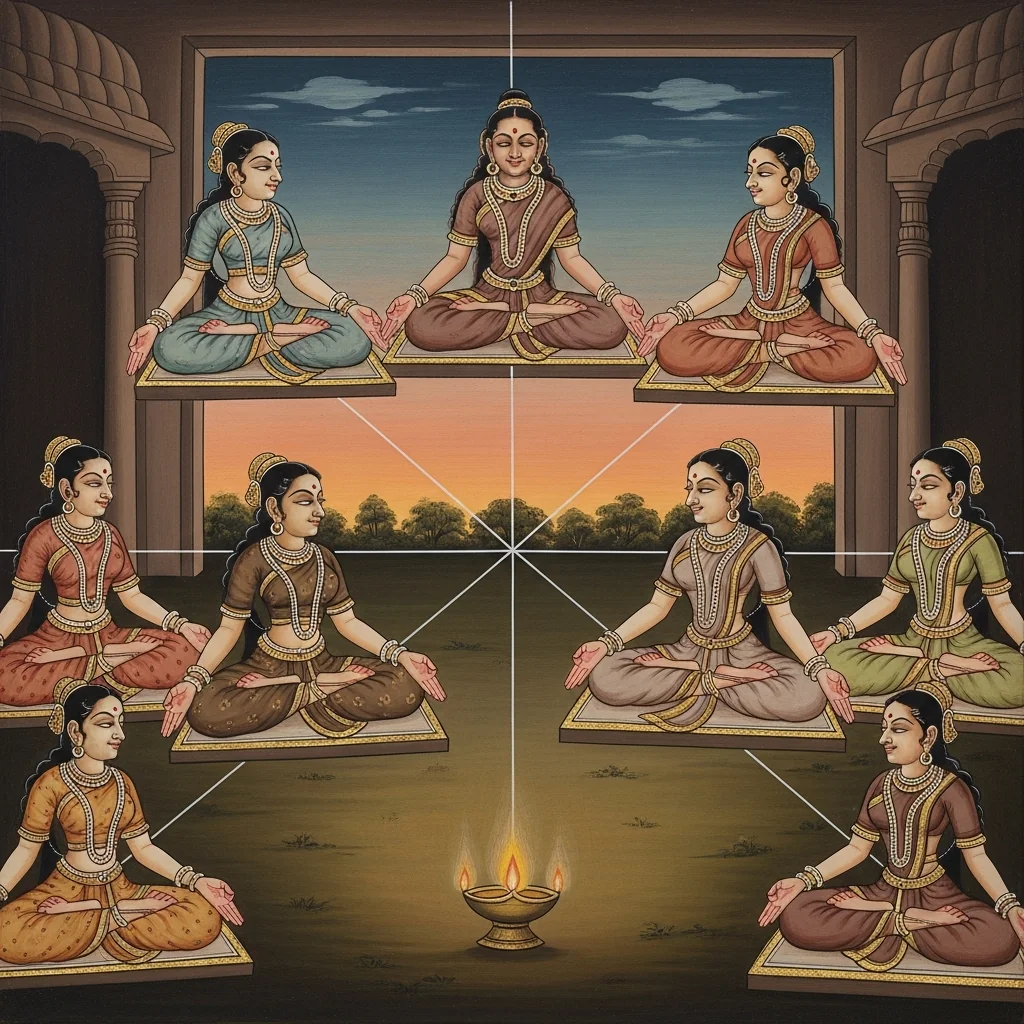
The chapter unfolds as a question-and-answer dialogue: Yudhiṣṭhira asks Vyāsa to identify the yoginīs said to have been established by Kājeśa—who they are, what they are like, and where they dwell. Vyāsa replies with a descriptive catalogue: the yoginīs are adorned with diverse ornaments, garments, vehicles, and sounds, and their stated role is protective, removing fear for vipras (ritual specialists) and devotees. The narration then becomes a sacred spatial register, placing these divinities in the four cardinal directions and the intermediate quarters (Agni, Nairṛta, Vāyu, Īśāna). Many names are recited—Āśāpurī, Chatrā, Jñānajā, Pippalāmbā, Śāntā, Siddhā, Bhaṭṭārikā, Kadambā, Vikaṭā, Supaṇā, Vasujā, Mātaṅgī, Vārāhī, Mukuṭeśvarī, Bhadrā, Mahāśakti, Siṃhārā—while noting that countless others exist beyond enumeration. Further details specify locations and worship: some are near Āśāpūrṇā; particular goddesses are assigned to east/north/south/west; offerings such as water-libations and bali are mentioned. One śakti is lion-seated and four-armed, granting boons; another bestows siddhi when contemplated; another grants bhukti and mukti; and certain forms are said to be perceptible at the three sandhyā times. The chapter closes by indicating additional groups (such as Brahmāṇī and the ‘jala-mātaraḥ’) in the Nairṛta quarter, confirming its purpose as a sacred-geographical index of protective feminine powers.
Shlokas
Verse 1
युधिष्ठिर उवाच । स्थानवासिन्यो योगिन्यः काजेशेन विनिर्मिताः । कस्मिन्स्थाने हि का देव्यः कीदृश्यस्ता वदस्व मे
Yudhiṣṭhira said: “The Yoginīs who abide in sacred stations are said to have been fashioned by Kājeśa. In what places does each Goddess dwell, and what is her form? Tell me.”
Verse 2
व्यास उवाच । सर्वज्ञोसि कुलीनोसि साधु पृष्टं त्वयानघ । कथयिष्याम्यहं सर्वमखिलेन युधिष्ठिर
Vyāsa said: “You are discerning and of noble conduct; you have asked well, O sinless one. I shall tell you everything fully, O Yudhiṣṭhira.”
Verse 3
नानाभरणभूषाढ्या नानारत्नोपशोभिताः । नानावसनसंवीता नानायुवसमन्विताः
They were richly adorned with many ornaments, beautified by many kinds of jewels, clothed in varied garments, and accompanied by diverse youthful attendants.
Verse 4
नानावाहनसंयुक्ता नानास्वरनिनादिनीः । भयनाशाय विप्राणां काजेशेन विनिर्मिताः
They were furnished with varied vehicles and resounded with many kinds of sounds; they were fashioned by Kājeśa for the removal of fear from the brāhmaṇas.
Verse 5
प्राच्यां याम्यामुदीच्यां च प्रतीच्यां स्थापिता हि ताः । आग्नेया नैरृते देशे वायव्येशानयोस्तथा
They were indeed stationed in the east, the south, the north, and the west; likewise in the south-east and south-west regions, and also in the north-west and north-east.
Verse 6
आशापुरी च गात्राई छत्राई ज्ञानजा तथा । पिप्पलांबा तथा शांता सिद्धा भट्टारिका तथा
There, in Dharmāraṇya, are goddesses known as Āśāpurī, Gātrāī, Chatrāī, and Jñānajā; likewise Pippalāmbā, Śāntā, Siddhā, and Bhaṭṭārikā.
Verse 7
कदंबा विकटा मीठा सुपर्णा वसुजा तथा । मातंगी च महादेवी वाराही मुकुटेश्वरी
Also present there are Kadambā, Vikaṭā, Mīṭhā, Suparṇā, and Vasujā; and Mātaṅgī, Mahādevī, Vārāhī, and Mukuṭeśvarī.
Verse 8
भद्रा चैव महाशक्तिः सिंहारा च महाबला । एताश्चान्याश्च बहवः कथितुं नैव शक्यते
Bhadrā too is there, as well as Mahāśakti, and Siṃhārā of great might. These and many other goddesses abide there—indeed, it is not possible to recount them all.
Verse 9
नानारूपधरा देव्यो नानावेषसमाश्रिताः । स्थानादुत्तरदिग्भागे आशापूर्णासमीपतः
The goddesses assume many forms and take on many appearances. To the north of that sacred place, near Āśāpūrṇā, they are found.
Verse 10
पूर्वे तु विद्यते देवी आनंदानंददायिनी । वसंती चोत्तरे देव्यो नानारूपधरा मुदा
To the east is the Goddess Ānandā, the giver of joy and bliss. And to the north resides Vasantī, while other goddesses—bearing many forms—abide there in delight.
Verse 11
इष्टान्कामान्ददात्येता जलदानेन तर्पिताः । स्थाने नैरृतिदिग्भागे शांता शांतिप्रदायिनी
When satisfied by the offering of water, these (goddesses) bestow the desired wishes. In that sacred region, in the south‑western quarter, abides Śāntā, the giver of peace.
Verse 12
सिंहोपरि समासीना चतुर्हस्ता वरप्रदा । भट्टारी च महाशक्तिः पुनस्तत्रैव तिष्ठति
Seated upon a lion, four‑armed and bestowing boons—Bhaṭṭārī, the Great Power (Śakti), abides there again.
Verse 13
संस्तुता पूजिता भक्त्या भक्तानां भयनाशिनी । स्थानात्तु सप्तमे क्रोशे क्षेमलाभा व्यव स्थिता
Praised and worshipped with devotion, she destroys the fears of devotees. And from that holy place, at a distance of seven krośas, Kṣemalābhā is established.
Verse 14
सा विलेपमयी पूज्या चिंतिता सिद्धिदायिनी । पूर्वस्यां दिशि लोकैस्तु बलिदानेन तर्पिता । परिवारेण संयुक्ता भुक्तिमुक्ति प्रदायिनी
She is to be worshipped with unguents and sacred anointing; when remembered, she grants accomplishment. In the eastern direction, people satisfy her with offerings (bali). Surrounded by her retinue, she bestows both worldly enjoyment and liberation.
Verse 15
अचिंत्यरूपचरिता सर्वशत्रुविनाशनी । संध्यायास्त्रिषु कालेषु प्रत्यक्षैव हि दृश्यते
Her form and deeds are inconceivable; she destroys all enemies. Indeed, at the three twilight times of the day, she is seen as though directly present.
Verse 16
स्थानात्तु सप्तमे क्रोशे दक्षिणा विन्ध्यवासिनी । सायुधा रूपसंपन्ना भक्तानां भयहारिणी
Seven krośas to the south of that sacred place dwells Vindhyavāsinī—radiant, fully adorned, bearing her weapons—who dispels the fears of her devotees.
Verse 17
पश्चिमे निंबजा देवी तावद्भूमिसमाश्रिता । महाबला सा दृष्टापि नयनानन्द दायिनी
To the west, upon that very stretch of land, abides the Goddess Niṃbajā; mighty in power, even her mere sight bestows delight upon the eyes.
Verse 18
स्थानादुत्तरदिग्भागे तावद्भूमिसमाश्रिता । शक्तिर्बहुसुवर्णाक्षा पूजिता सासुवर्णदा
To the north of that place, upon that same tract of land, dwells Śakti of many golden-eyed splendors; when worshipped, she bestows gold and prosperity.
Verse 19
स्थानाद्वायव्यकोणे च क्रोशमात्र मिते श्रिता । क्षेत्रधरा महादेवी समये च्छागधारिणी
In the northwestern corner from that place, at a distance of one krośa, resides the great Goddess Kṣetradharā; at the appointed time she bears the goat as her emblem.
Verse 20
पुरादुत्तरदिग्भागे क्रोशमात्रे तु कर्णिका । सर्वोपकारनिरता स्थानोपद्रवनाशनी
To the north of the city, at a distance of one krośa, is Karṇikā—ever intent on every kind of beneficence, and the destroyer of calamities that afflict the holy place.
Verse 21
स्थानान्निरृतिदिग्भागे ब्रह्माणीप्रमुखास्तथा । नानारूपधरा देव्यो विद्यंते जलमातरः
In the southwestern quarter from that place are found the Water-Mothers—goddesses of many forms—foremost among them Brahmāṇī and the rest.