Adhyaya 78
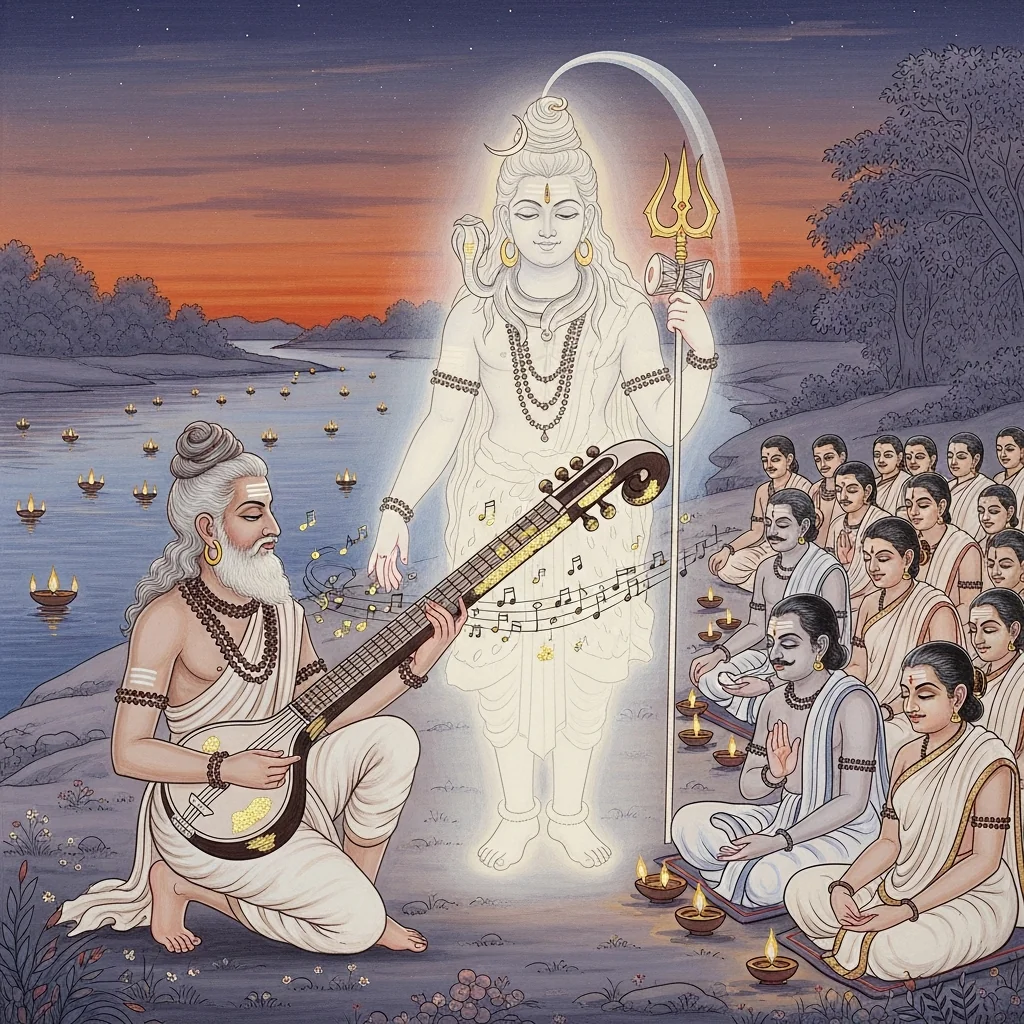
Chapter 78 unfolds as a dialogue. Mārkaṇḍeya points out a supreme tīrtha said to have been founded by Nārada, and Yudhiṣṭhira asks how it came to be. The account turns to Nārada’s austerities on the northern bank of the Revā, ending in a divine audience where Īśvara grants boons: success in yoga, unwavering devotion, free movement across the worlds, knowledge of past, present, and future, and mastery of musical systems (svara, grāma, mūrcchanā). He also declares that Nārada’s tīrtha will become world-renowned and destroy sins. After Śiva vanishes, Nārada installs Śūlin (a form of Śiva) for the welfare of all beings and thus establishes the tīrtha. The chapter then lays down pilgrimage conduct and rites: self-control, fasting and night-vigil on Bhādrapada kṛṣṇa caturdaśī, gifts such as an umbrella to a worthy brāhmaṇa, śrāddha for those slain by weapons, gifting a kapilā cow for the ancestors, donations and feeding of brāhmaṇas, lamp-offering, and devotional music and dance in the temple. It further links homa and worship of Havyavāhana/Agni (with deities led by Citrabhānu) to relief from poverty and the gaining of prosperity, concluding by reaffirming this Revā north-bank tīrtha as a remover of great sins.
Shlokas
Verse 1
श्रीमार्कण्डेय उवाच । ततो गच्छेत्तु राजेन्द्र नरदेश्वरमुत्तमम् । तीर्थानां परमं तीर्थं निर्मितं नारदेन तु
Śrī Mārkaṇḍeya said: “Then, O best of kings, one should go to the excellent Naradeśvara—supreme among tīrthas—a holy place established by Nārada.”
Verse 2
युधिष्ठिर उवाच । नारदेन मुनिश्रेष्ठ कस्मात्तीर्थं विनिर्मितम् । एतदाख्याहि मे सर्वं प्रसन्नो यदि सत्तम
Yudhiṣṭhira said: “O best of sages, for what reason was this sacred ford established by Nārada? If you are gracious, O most excellent one, tell me the entire account.”
Verse 3
श्रीमार्कण्डेय उवाच । परमेष्ठिसुतः पार्थ नारदो मुनिसत्तमः । रेवायाश्चोत्तरे कूले तपस्तेन पुरा कृतम्
Śrī Mārkaṇḍeya said: “O Pārtha, Nārada—son of Parameṣṭhin (Brahmā) and the best of sages—once performed austerities on the northern bank of the Revā.”
Verse 4
नवनाडीनिरोधेन काष्ठावत्यां गतेन च । तोषितः पशुभर्ता वै नारदेन युधिष्ठिर
“By restraining the nine nāḍīs and by entering the state called Kāṣṭhāvatī, Nārada pleased the Lord, the Sustainer of all beings, O Yudhiṣṭhira.”
Verse 5
ईश्वर उवाच । तुष्टोऽहं तव विप्रेन्द्र योगिनाथ अयोनिज । वरं प्रार्थय मे वत्स यस्ते मनसि वर्तते
Īśvara said: “O foremost of brahmins, O lord of yogins, O Unborn One—I am pleased with you. Beloved child, ask of Me the boon that dwells within your heart.”
Verse 6
नारद उवाच । त्वत्प्रसादेन मे शम्भो योगश्चैव प्रसिध्यतु । अचला ते भवेद्भक्तिः सर्वकालं ममैव तु
Nārada said: “By Your grace, O Śambhu, may my yoga attain perfection. And may unwavering devotion to You be mine at all times.”
Verse 7
स्वेच्छाचारी भवे देव वेदवेदाङ्गपारगः । त्रिकालज्ञो जगन्नाथ गीतज्ञोऽहं सदा भवे
“O God, may I move freely as I wish; may I master the Vedas and the Vedāṅgas. O Lord of the world, may I know the three times, and may I always be skilled in sacred song.”
Verse 8
दिने दिने यथा युद्धं देवदानवमानुषैः । पाताले मर्त्यलोके वा स्वर्गे वापि महेश्वर
“O Maheśvara, wherever battles arise day after day—among devas, dānavas, and humans—whether in Pātāla, in the mortal realm, or even in Svarga…”
Verse 9
पश्येयं त्वत्प्रसादेन भवन्तं पार्वतीं तथा । तीर्थं लोकेषु विख्यातं सर्वपापक्षयंकरम्
“By Your grace, may I behold You—and Pārvatī as well—and may there be a sacred tīrtha renowned in all the worlds, a destroyer of every sin.”
Verse 10
ईश्वर उवाच । एवं नारद सर्वं तु भविष्यति न संशयः । चिन्तितं मत्प्रसादेन सिध्यते नात्र संशयः
Īśvara said: “So it shall be, Nārada—everything will indeed come to pass, without doubt. What is desired is accomplished by My grace; of this there is no doubt.”
Verse 11
स्वेच्छाचारो भवेर्वत्स स्वर्गे पातालगोचरे । मर्त्ये वा भ्रम वै योगिन्न केनापि निवार्यसे
“Dear child, you shall act as you wish, moving in heaven and in the regions of Pātāla. Wander also in the mortal world, O yogin—none shall obstruct you.”
Verse 12
सप्त स्वरास्त्रयो ग्रामा मूर्च्छनाश्चैकविंशतिः । ताना एकोनपञ्चाशत्प्रसादान्मे तव ध्रुवम्
There are seven svaras (notes), three grāmas (tonal registers), and twenty-one mūrcchanās (melodic progressions); and there are forty-nine tānas. By My grace, these shall surely become established through you.
Verse 13
मम प्रियंकरं दिव्यं नृत्यगीतं भविष्यति । कलिं च पश्यसे नित्यं देवदानवकिन्नरैः
“Divine dance and song—dear and pleasing to Me—shall come to be. And you shall ever behold Kali (the personified age of strife), amid gods, demons, and Kinnaras.”
Verse 14
त्वत्तीर्थं भूतले पुण्यं मत्प्रसादाद्भविष्यति । वेदवेदाङ्गतत्त्वज्ञो ह्यशेषज्ञानकोविदः । एकस्त्वमसि निःसङ्गो मत्प्रसादेन नारद
“By My grace, your tīrtha upon the earth shall become holy. You are a knower of the true purport of the Vedas and Vedāṅgas, skilled in all knowledge; and by My grace, O Nārada, you stand alone—unattached.”
Verse 15
इत्युक्त्वान्तर्दधे देवो नारदस्तत्र शूलिनम् । स्थापयामास राजेन्द्र सर्वसत्त्वोपकारकम्
Having spoken thus, the God disappeared. Then Nārada, O best of kings, established the Śūlin (Śiva) there—beneficent to all beings.
Verse 16
पृथिव्यामुत्तमं तीर्थं निर्मितं नारदेन तु । तत्र तीर्थे नृपश्रेष्ठ यो गच्छेद्विजितेन्द्रियः
Indeed, an excellent tīrtha upon the earth was founded by Nārada. O best of kings, whoever goes to that tīrtha with senses restrained—
Verse 17
मासि भाद्रपदे पार्थ कृष्णपक्षे चतुर्दशी । उपोष्य परया भक्त्या रात्रौ कुर्वीत जागरम्
In the month of Bhādrapada, O son of Pṛthā, on the fourteenth day of the dark fortnight—having fasted with supreme devotion—one should keep vigil through the night.
Verse 18
छत्रं तत्र प्रदातव्यं ब्राह्मणे शुभलक्षणे । शस्त्रेण तु हता ये वै तेषां श्राद्धं प्रदापयेत् । ते यान्ति परमं लोकं पिण्डदानप्रभावतः
There one should donate an umbrella to a worthy Brāhmaṇa of auspicious marks. And for those who have been slain by weapons, one should have śrāddha performed. By the power of offering piṇḍas, they attain the highest world.
Verse 19
कपिला तत्र दातव्या पित्ःनुद्दिश्य भारत । इत्युच्चार्य द्विजे देया यान्तु ते परमां गतिम्
There one should give a kapilā, a tawny cow, dedicating it to the Pitṛs, O Bhārata. Uttering thus, it should be given to a Brāhmaṇa: ‘May they attain the highest state.’
Verse 20
अस्य श्राद्धस्य भावेन ब्राह्मणस्य प्रसादतः । नर्मदातोयभावेन न्यायार्जितधनस्य च । तेषां चैव प्रभावेन प्रेता यान्तु परां गतिम्
By the true intent of this śrāddha, by the favor of the Brāhmaṇa, by the sanctity of Narmadā’s waters, and by wealth earned righteously—by the power of all these—may the departed spirits attain the supreme goal.
Verse 21
इत्युच्चार्य द्विजे देया दक्षिणा च स्वशक्तितः । हविष्यान्नं विशालाक्ष द्विजानां चैव दापयेत्
Having spoken thus, one should give dakṣiṇā to the Brāhmaṇas according to one’s capacity; and, O wide-eyed one, one should also have havisyānna, pure sacrificial food, served to the twice-born.
Verse 22
दीपं भक्त्या प्रदातव्यं नृत्यं गीतं च कारयेत् । अवाप्तं तेन वै सर्वं यः करोतीश्वरालये
One should offer a lamp with devotion, and arrange singing and dancing as well. Truly, whoever does this in the Lord’s temple obtains all desired attainments.
Verse 23
स याति रुद्रसांनिध्यमिति रुद्रः स्वयं जगौ । विद्यादानेन चैकेन अक्षयां गतिमाप्नुयात्
“He reaches the very presence of Rudra”—thus did Rudra Himself proclaim. And by a single act of gifting knowledge, one attains an imperishable state.
Verse 24
धूर्वहास्तत्र दातव्या भूमिः सस्यवती नृप । चित्रभानुं शुभैर्मन्त्रैः प्रीणयेत्तत्र भक्तितः
O king, there one should give gifts fit for worship and donate fertile, crop-bearing land. There, with devotion, one should please Citrabhānu by auspicious mantras.
Verse 25
आज्येन सुप्रभूतेन होमद्रव्येण भारत । ये यजन्ति सदा भक्त्या त्रिकालं नृत्यमेव च
O Bhārata, those who ever worship with devotion—using abundant ghee and proper oblations for the homa—and who perform worship at the three times of day, together with sacred dance,
Verse 26
तीर्थे नारदनामाख्ये रेवायाश्चोत्तरे तटे । चित्रभानुमुखा देवाः सर्वदेवमय ऋषिः
At the tīrtha known as “Nārada,” on the northern bank of the Revā, the gods headed by Citrabhānu are present; and the ṛṣi there is one who embodies all the gods.
Verse 27
ऋषिणा प्रीणिताः सर्वे तस्मात्प्रीत्यो हुताशनः । पूजिते हव्यवाहे तु दारिद्र्यं नैव जायते
All were satisfied by the sage; therefore Hutāśana, the Fire, became pleased. And when Havyavāha, the Fire-god, is worshipped, poverty never arises.
Verse 28
धनेन विपुला प्रीतिर्जायते प्रतिजन्मनि । कुलीनाश्च सुवेषाश्च सर्वकालं धनेन तु
Through wealth, abundant satisfaction arises in every birth; and by wealth indeed, one remains of good lineage and well-adorned at all times.
Verse 29
प्लवो नदीनां पतिरङ्गनानां राजा च सद्वृत्तरतः प्रजानाम् । धनं नराणामृतवस्तरूणां गतं गतं यौवनमानयन्ति
A boat is the “lord” of rivers; a husband is the lord of women; and a king devoted to righteous conduct is the lord of his subjects. Likewise, wealth is the support of men, and for those who pass through life’s seasons—especially the young—it seems to bring back youth again and again.
Verse 30
धनदत्वं धनेशेन तस्मिंस्तीर्थे ह्युपार्जितम् । यमेन च यमत्वं हि इन्द्रत्वं चैव वज्रिणा
At that tīrtha, Dhaneśa (Kubera) attained the state of Dhanada; Yama indeed attained Yama-hood; and Indra, wielder of the thunderbolt, attained Indra-hood.
Verse 31
अन्यैरपि महीपालैः पार्थिवत्वमुपार्जितम् । नारदेश्वरमाहात्म्याद्ध्रुवो निश्चलतां गतः
Other earthly rulers too attained sovereignty upon the earth. And through the greatness of Nāradeśvara, Dhruva reached the steadfast state of immovability.
Verse 32
सर्वतीर्थवरं तीर्थं निर्मितं नारदेन तु । पृथिव्यां सागरान्तायां रेवायाश्चोत्तरे तटे । तद्वरं सर्वतीर्थानां महापातकनाशनम्
This tīrtha, the best of all sacred fords, was established by Nārada on this earth girdled by the ocean, upon the northern bank of the Revā. That supremely excellent tīrtha, foremost among all holy places, destroys even the gravest sins (mahāpātakas).
Verse 78
। अध्याय
“Chapter.” (a division marker/colophon)