Adhyaya 76
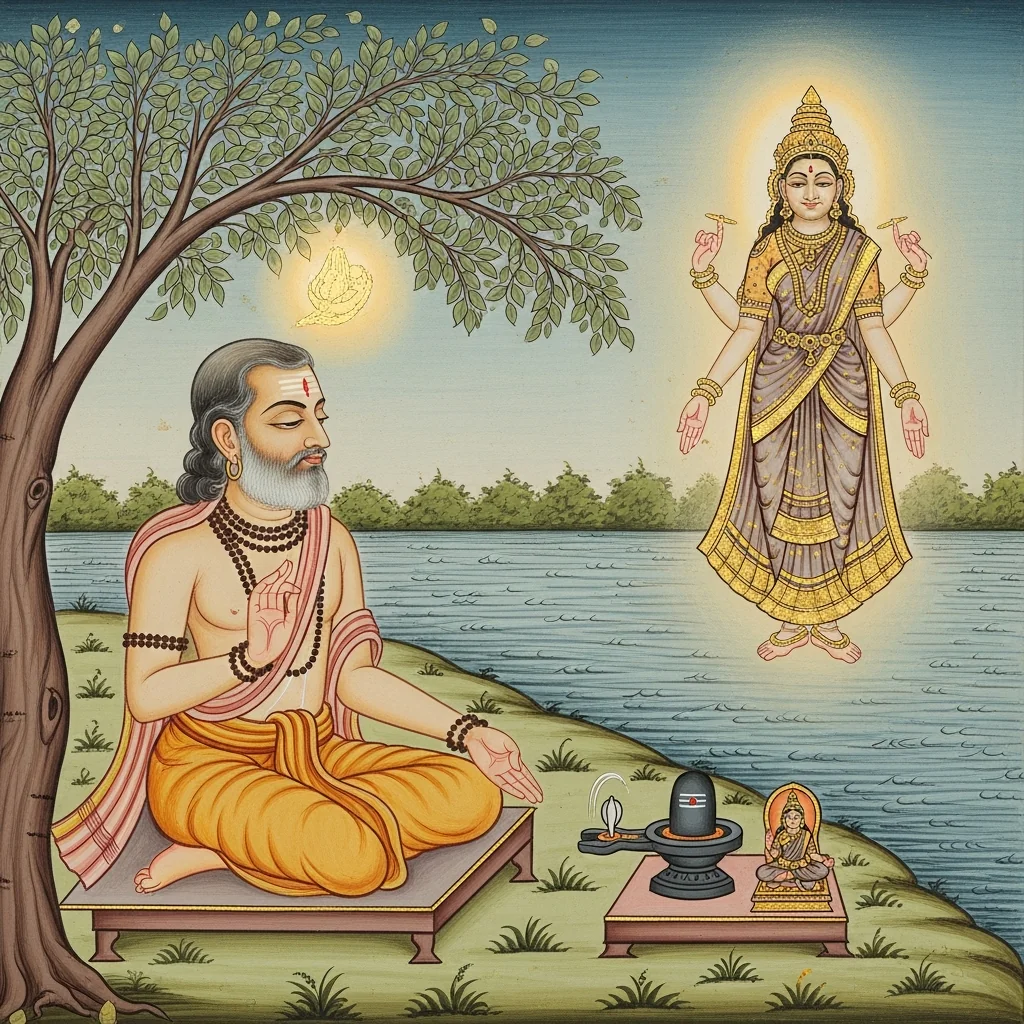
Mārkaṇḍeya relates that the sage Parāśara performs severe austerities on the auspicious bank of the Narmadā, seeking a worthy son. The Goddess—known as Gaurī Nārāyaṇī, the consort of Śaṅkara—appears, praises his devotion, and grants a boon: a son endowed with truthfulness and purity, devoted to Vedic study and skilled in the śāstras. Parāśara further prays that the Goddess remain at that spot for the welfare of all people; she agrees and becomes unmanifest there. He then establishes Pārvatī and also installs Śaṅkara, declaring the deity inviolable and difficult to approach even for the gods. The chapter prescribes a tīrtha-based observance for devotees—women or men—who are pure, disciplined in mind, and free from desire and anger. It names auspicious months and the bright fortnight as preferred times, and details fasting, night vigil, lamp-offering, and customary devotional arts. It also instructs honoring brāhmaṇas with gifts (wealth, gold, cloth, umbrella, bedding, betel, food) and gives guidance for śrāddha, including distinctions for women and śūdras (āmā-śrāddha) and directional seating rules, concluding with a phalaśruti promising release from grave sins to faithful listeners.
Shlokas
Verse 1
श्रीमार्कण्डेय उवाच । ततो गच्छेत्तु राजेन्द्र पारेश्वरमनुत्तमम् । पराशरो महात्मा वै नर्मदायास्तटे शुभे
Śrī Mārkaṇḍeya said: “Then, O best of kings, one should go to the unsurpassed Pāreśvara. There, on the auspicious bank of the Narmadā, the great-souled sage Parāśara performed sacred acts.”
Verse 2
तपश्चचार विपुलं पुत्रार्थं पाण्डुनन्दन । हिमवद्दुहिता तेन गौरी नारायणी नृप
O son of Pāṇḍu, he performed abundant austerity (tapas) for the sake of obtaining a son. O king, by that austerity Gaurī Nārāyaṇī—the daughter of Himavat—was pleased and invoked.
Verse 3
तोषिता परया भक्त्या नर्मदोत्तरके तटे । तस्य तुष्टा महादेवी शङ्करार्धाङ्गधारिणी
On the northern bank of the Narmadā, she was pleased by his supreme devotion; and the Mahādevī—she who bears half of Śaṅkara’s body—became satisfied with him.
Verse 4
भोभो ऋषिवर श्रेष्ठ तुष्टाहं तव भक्तितः । वरं याचय मे विप्र पराशर महामते
(The Goddess said:) “O best of excellent sages! I am pleased by your devotion. Ask a boon of me, O brāhmaṇa—O wise Parāśara.”
Verse 5
पराशर उवाच । परितुष्टासि मे देवि यदि देयो वरो मम । देहि पुत्रं भगवति सत्यशौचगुणान्वितम्
Parāśara said: “O Goddess, if you are pleased with me and a boon is to be granted, then, O Blessed One, grant me a son endowed with the virtues of truthfulness and purity.”
Verse 6
वेदाभ्यसनशीलं हि सर्वशास्त्रविशारदम् । तीर्थे चात्र भवेद्देवि सन्निधानवरेण तु
“Indeed, (grant me a son) devoted to the study of the Vedas, skilled in all śāstras; and, O Goddess, by the boon of your sacred presence, let there also be (your) abiding manifestation at this tīrtha.”
Verse 7
लोकोपकारहेतोश्च स्थीयतां गिरिनन्दिनि । पराशराभिधानेन नर्मदादक्षिणे तटे
“And for the welfare of the world, O Daughter of the Mountain, remain (here) on the southern bank of the Narmadā, under the name ‘Parāśarā’ (associated with Parāśara).”
Verse 8
श्रीदेव्युवाच । एवं भवतु ते विप्र तत्रैवान्तरधीयत । पराशरो महात्मा वै स्थापयामास पार्वतीम्
The Blessed Goddess said: “So be it for you, O brāhmaṇa; right here I shall become unmanifest.” Then the great-souled Parāśara indeed established Pārvatī there.
Verse 9
शङ्करं स्थापयामास सुरासुरनमस्कृतम् । अच्छेद्यमप्रतर्क्यं च देवानां तु दुरासदम्
He established Śaṅkara, revered by devas and asuras—invincible, beyond the reach of mere reasoning, and difficult even for the gods to approach in His majesty.
Verse 10
पराशरो महात्मा वै कृतार्थो ह्यभवन्नृप
O King, the great-souled Parāśara indeed became fulfilled in his purpose.
Verse 11
तत्र तीर्थे तु यो भक्त्या शुचिः प्रयतमानसः । स्त्र्यथवा पुरुषो वापि कामक्रोधविवर्जितः
At that tīrtha, whoever goes with devotion—pure, self-restrained in mind—whether woman or man, and free from desire and anger,
Verse 12
माघे चैत्रेऽथ वैशाखे श्रावणे नृपनन्दन । मासि मार्गशिरे चैव शुक्लपक्षे तु सर्वदा
O Prince, in Māgha, Caitra, Vaiśākha, and Śrāvaṇa—and also in the month of Mārgaśīrṣa—always, especially in the bright fortnight,
Verse 13
तत्र गत्वा शुभे स्थाने नर्मदादक्षिणे तटे
Having gone there, to that auspicious place on the southern bank of the Narmadā,
Verse 14
उपोष्य परया भक्त्या व्रतमेतत्समाचरेत् । रात्रौ जागरणं कृत्वा दीपदानं स्वशक्तितः
Fasting with supreme devotion, one should perform this vow; and, having kept vigil at night, one should offer the gift of lamps according to one’s capacity.
Verse 15
गीतं नृत्यं तथा वाद्यं कामक्रोधविवर्जितः । प्रभाते विमले प्राप्ते द्विजाः पूज्याः स्वशक्तितः
Free from desire and anger, with singing, dancing, and instrumental music, when the pure morning arrives one should worship the twice-born (Brāhmaṇas) according to one’s capacity.
Verse 16
सम्पूज्य ब्राह्मणान् पार्थ धनदानहिरण्यतः । वस्त्रेण छत्रदानेन शय्याताम्बूलभोजनैः
O Pārtha, having duly honored the Brāhmaṇas, one should give gifts—wealth and gold, garments, the gift of an umbrella, a bed, betel, and food.
Verse 17
प्रीणयेन्नर्मदातीरे ब्राह्मणाञ्छंसितव्रतान् । श्राद्धं कार्यं नृपश्रेष्ठ आमैः पक्वैर्जलेन च
On the bank of the Narmadā, O best of kings, one should satisfy Brāhmaṇas devoted to praised vows; and śrāddha should be performed with uncooked and cooked offerings, and with water as well.
Verse 18
स्त्रीणां चैव तु शूद्राणामामश्राद्धं प्रशस्यते । आमं चतुर्गुणं देयं ब्राह्मणानां युधिष्ठिर
For women and for Śūdras, the offering of an uncooked śrāddha is especially praised. But for Brāhmaṇas, O Yudhiṣṭhira, the uncooked offering should be given fourfold.
Verse 19
वेदोक्तेन विधानेन द्विजाः पूज्याः प्रयत्नतः । हस्तमात्रैः कुशैश्चैव तिलैश्चैवाक्षतैर्नृप
By the procedure taught in the Veda, the twice-born should be honored with care, O king—even with only a handful of kuśa-grass, sesame, and unbroken rice-grains (akṣata).
Verse 20
विप्रा उदङ्मुखाः कार्याः स्वयं वै दक्षिणामुखः । दर्भेषु निक्षिपेदन्नमित्युच्चार्य द्विजाग्रतः
The Brāhmaṇas should be seated facing north, while the performer himself should face south. Before the twice-born, he should place the food upon darbha-grass, uttering, “I place the food.”
Verse 21
प्रेता यान्तु परे लोके तीर्थस्यास्य प्रभावतः । पापं मे प्रशमं यातु एतु वृद्धिं शुभं सदा
“By the power of this sacred tīrtha, may the departed go to the higher world. May my sin be pacified, and may auspicious prosperity ever increase.”
Verse 22
वृद्धिं यातु सदा वंशो ज्ञातिवर्गो द्विजोत्तम । एवमुच्चार्य विप्राय दानं देयं स्वशक्तितः
“May our lineage and our circle of relatives ever flourish, O best of Brāhmaṇas.” Having spoken thus, one should give a gift to the Brāhmaṇa according to one’s capacity.
Verse 23
गोभूतिसहिरण्यादि चान्नं वस्त्रं स्वशक्तितः । दातव्यं पाण्डवश्रेष्ठ पारेश्वरवराश्रमे
Cows, land, gold and the like—as well as food and clothing—should be given according to one’s capacity, O best of the Pāṇḍavas, at the excellent hermitage of Pāreśvara.
Verse 24
ये शृण्वन्ति परं भक्त्या मुच्यन्ते सर्वपातकैः
Those who listen to this with supreme devotion are freed from all sins.
Verse 76
। अध्याय
Chapter (colophon/heading marker).