Adhyaya 54
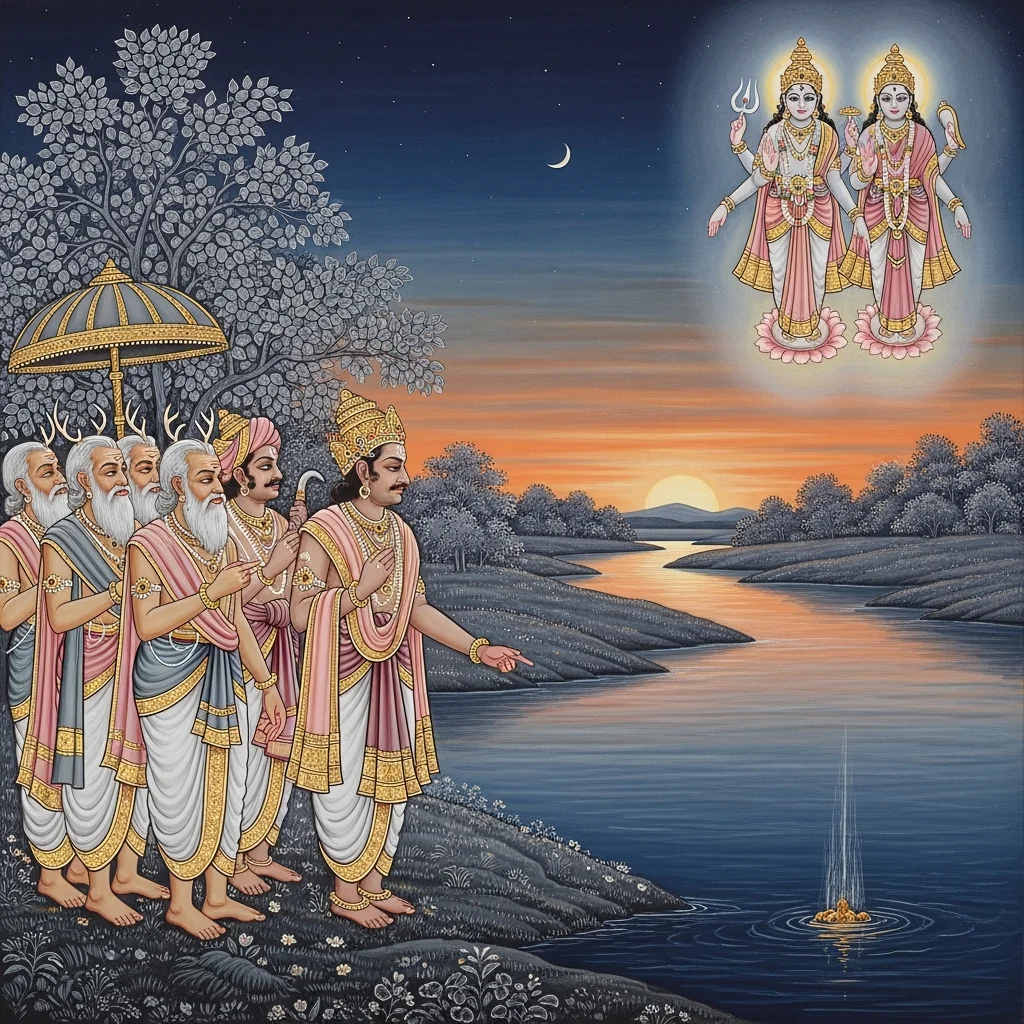
The chapter presents a moral crisis and its ritual remedy. After a grievous error likened to brahmahatyā, King Citraseṇa approaches the ascetic Dīrghatapā and confesses that, deluded while hunting, he killed the sage’s son Ṛkṣaśṛṅga. The household collapses in grief: the mother laments, faints, and dies, and the sons and daughters-in-law also perish, revealing the social and karmic weight of violence against ascetic life. Dīrghatapā first condemns the king, then teaches that people act under the impulse of prior karma, yet consequences still unfold. He prescribes a definite expiation: cremate the entire family and immerse the bones at the famed Śūlabheda tīrtha on the southern bank of the Narmadā, renowned for removing sin and suffering. Citraseṇa performs the cremations and undertakes an austere southward pilgrimage—walking, eating little, bathing repeatedly—seeking guidance from resident sages until he reaches the tīrtha amid intense ascetic practice. A visionary sign confirms the site’s power. He deposits the remains, bathes, offers tarpaṇa with sesame-mixed water, and immerses the bones; the departed appear in divine forms with celestial vehicles. Dīrghatapā, now exalted, blesses the king, declares the rite exemplary, and promises purification and the attainment of desired fruits.
Shlokas
Verse 1
ईश्वर उवाच । ततश्चानन्तरं राजा जगामोद्वेगमुत्तमम् । कथं यामि गृहं त्वद्य वाराणस्यामहं पुनः
Īśvara said: “Immediately thereafter the king fell into profound agitation: ‘How can I go home today? How can I return again to Vārāṇasī?’”
Verse 2
ब्रह्महत्यासमाविष्टो जुहोम्यग्नौ कलेवरम् । अथवा तस्य वाक्येन तं गच्छाम्याश्रमं प्रति
“Possessed by the sin of brahmahatyā, should I cast my body into the fire? Or else, following his instruction, shall I go to that hermitage?”
Verse 3
कथयामि यथावृत्तं गत्वा तस्य महामुनेः । एवं संचिन्त्य राजासौ जगामाश्रमसन्निधौ
“I shall relate what truly happened after going to that great sage.” Thus reflecting, the king went near the hermitage.
Verse 4
ऋक्षशृङ्गस्य चास्थीनि गृहीत्वा स नृपोत्तमः । दृष्टिमार्गे स्थितस्तस्य महर्षेर्भावितात्मनः
Taking with him the bones of Ṛkṣaśṛṅga, that excellent king stood within the line of sight of that great seer whose self was disciplined and purified.
Verse 5
दीर्घतपा उवाच । आगच्छ स्वागतं तेऽस्तु आसनेऽत्रोपविश्यताम् । अर्घं ददाम्यहं येन मधुपर्कं सविष्टरम्
Dīrghatapā said: “Come—welcome to you. Please sit here on this seat. I shall offer you arghya, and with it the madhuparka along with the proper rites of hospitality.”
Verse 6
चित्रसेन उवाच । अर्घस्यास्य न योग्योऽहं महर्षे नास्मि भाषणे । मृगमध्यस्थितो विप्रस्तव पुत्रो मया हतः
Citrasena said: “O great sage, I am not worthy of this arghya, nor am I fit to speak. Your son, O brāhmaṇa, standing among the deer, was slain by me.”
Verse 7
पुत्रघ्नं विद्धि मां विप्र तीव्रदण्डेन दण्डय । मृगभ्रान्त्या हतो विप्र ऋक्षशृङ्गो महातपाः
“Know me, O brāhmaṇa, as a slayer of a son; punish me with a severe penalty. Mistaking him for a deer, O brāhmaṇa, I killed Ṛkṣaśṛṅga, that great ascetic.”
Verse 8
इति मत्वा मुनिश्रेष्ठ कुरु मे त्वं यथोचितम् । माता तद्वचनं श्रुत्वा गृहान्निष्क्रम्य विह्वला
“Therefore, O best of sages, do for me what is fitting.” Hearing those words, the mother, distraught, came out of the house.
Verse 9
हा हतास्मीत्युवाचेदं पपात धरणीतले । विललाप सुदुःखार्ता पुत्रशोकेन पीडिता
Crying, “Alas, I am slain!”, she fell upon the ground. Tormented by her son’s loss, she lamented in intense sorrow.
Verse 10
हा हता पुत्र पुत्रेति करुणं कुररी यथा । विललापातुरा माता क्व गतो मां विहाय वै । मुखं दर्शय चात्मीयं मातरं मां हि मानय
“Alas, I am slain—my son, my son!” she cried piteously like a curlew. The anguished mother wailed: “Where have you gone, leaving me behind? Show me your own face—honor me, for I am your mother.”
Verse 11
श्रुताध्ययनसम्पन्नं जपहोमपरायणम् । आगतं त्वां गृहद्वारे कदा द्रक्ष्यामि पुत्रक
When shall I behold you again, my child—accomplished in sacred study, devoted to japa and fire-offerings—arriving at the doorway of our home?
Verse 12
लोकोक्त्या श्रूयते चैतच्चन्दनं किल शीतलम् । पुत्रगात्रपरिष्वङ्गश्चन्दनादपि शीतलः
Common saying declares sandalwood cool to the touch; yet the embrace of a son’s body is cooler even than sandalwood.
Verse 13
किं चन्दनेन पीयूपबिन्दुना किं किमिन्दुना
What use is sandal-paste now? What use is even a drop of amṛta? What indeed is the moon to me any longer?
Verse 14
पुत्रगात्रपरिष्वङ्गपात्रं गात्रं भवेद्यदि
If only this body could become a vessel fit to embrace my son’s limbs!
Verse 15
परिष्वजितुमिच्छामि त्वामहं पुत्र सुप्रिय । पञ्चत्वमनुयास्यामि त्वद्विहीनाद्य दुःखिता
I long to embrace you, my son, my beloved. Bereft of you and afflicted with sorrow today, I shall follow the path to death, returning to the five elements.
Verse 16
एवं विलपती दीना पुत्रशोकेन पीडिता । मूर्छिता विह्वला दीना निपपात महीतले
Lamenting thus—wretched and crushed by grief for her son—she fainted, bewildered and helpless, and fell upon the ground.
Verse 17
भार्यां च पतितां दृष्ट्वा पुत्रशोकेन पीडिताम् । चुकोप स मुनिस्तत्र चित्रसेनाय भूभृते
Seeing his wife fallen down, tormented by grief for their son, the sage there became enraged at King Citrasena, the ruler of the land.
Verse 18
दीर्घतपा उवाच । याहि याहि महापाप मा मुखं दर्शयस्व मे । किं त्वया घातितो विप्रो ह्यकामाच्च सुतो मम
Dīrghatapā said: “Go away, go away, great sinner—do not show me your face! Why have you slain my son, a brāhmaṇa, though he bore you no enmity?”
Verse 19
ब्रह्महत्या भविष्यन्ति बह्व्यस्ते वसुधाधिप । सकुटुम्बस्य मे त्वं हि मृत्युरेष उपस्थितः
O lord of the earth, many brahmahatyā-sins will fall upon you; for my whole family, you have indeed appeared here as Death itself.
Verse 20
एवमुक्त्वा ततो विप्रो विचिन्त्य च पुनःपुनः । परित्यज्य तदा क्रोधं मुनिभावाज्जगाद ह
Having spoken thus, the brāhmaṇa reflected again and again; then, abandoning anger, he spoke once more in the true spirit of a sage.
Verse 21
दीर्घतपा उवाच । उद्वेगं त्यज भो वत्स दुरुक्तं गदितो मया । पुत्रशोकाभिभूतेन दुःखतप्तेन मानद
Dīrghatapā said: “Cast off your agitation, dear child. Harsh words were spoken by me, for I was overcome by grief for my son and scorched by sorrow, O giver of honor.”
Verse 22
किं करोति नरः प्राज्ञः प्रेर्यमाणः स्वकर्मभिः । प्रागेव हि मनुष्याणां बुद्धिः कर्मानुसारिणी
What can even a wise person do when driven onward by his own past actions? For indeed, in human beings, the mind and understanding follow the course of karma.
Verse 23
अनेनैव विधानेन पञ्चत्वं विहितं मम । हत्यास्तव भविष्यन्ति पूर्वमुक्ता न संशयः
“By this very ordinance my own death has been ordained. And for you, the killings I spoke of earlier will surely come to pass—of this there is no doubt.”
Verse 24
ब्रह्मक्षत्रविशां मध्ये शूद्रचण्डालजातिषु । कस्त्वं कथय सत्यं मे कस्माच्च निहतो द्विजः
“Among Brāhmaṇas, Kṣatriyas, and Vaiśyas—and among Śūdras and Caṇḍāla communities—who are you? Tell me the truth: for what reason was the twice-born man slain?”
Verse 25
चित्रसेन उवाच । विज्ञापयामि विप्रर्षे क्षन्तव्यं ते ममोपरि । नाहं विप्रोऽस्मि वै तात न वैश्यो न च शूद्रजः
Citrasena said: “O brahmin-sage, I submit this to you—please forgive me. Truly, sir, I am not a brāhmaṇa, nor a vaiśya, nor one born of a śūdra.”
Verse 26
न व्याधश्चान्त्यजातो वा क्षत्रियोऽहं महामुने । काशीराजो मृगान् हन्तुमागतो वनमुत्तमम्
“I am neither a hunter nor of low birth, O great sage. I am a Kṣatriya—the king of Kāśī—who has come to this excellent forest to slay deer.”
Verse 27
भ्रान्त्या निपातितो ह्येष मृगरूपधरो मुनिः । इदानीं तव पादान्ते संश्रितः पातकान्वितः
“Through delusion I struck down this sage who had assumed the form of a deer. Now, burdened with sin, I have taken refuge at your feet.”
Verse 28
किं कर्तव्यं मया विप्र उपायं कथयस्व मे
“O brāhmaṇa, what should I do? Tell me a means of atonement.”
Verse 29
दीर्घतपा उवाच । ब्रह्महत्या न शक्येताप्येका निस्तरितुं प्रभो । दशैका च कथं शक्यास्ताः शृणुष्व नरेश्वर
Dīrghatapā said: “O lord, even a single brahmahatyā is scarcely possible to overcome. How then could ten such sins be crossed beyond? Listen, O king.”
Verse 30
चत्वारो मे सुता राजन् सभार्या मातृपूर्वकाः । मया सह न जीवन्ति ऋक्षशृङ्गस्य कारणे
“O king, I have four sons—together with their wives, and with their mother as well—who do not live with me, because of the matter concerning Ṛkṣaśṛṅga.”
Verse 31
उपायं शोभनं तात कथयिष्ये शृणुष्व तम् । शक्रोऽपि यदि तं कर्तुं सुखोपायं नरेश्वर
Dear one, I shall tell you an excellent remedy—listen to it. Even Śakra (Indra), if he were to undertake it, would find it an easy means, O king.
Verse 32
सकुटुम्बं समस्तं मां दाहयित्वानले नृप । अस्थीनि नर्मदातोये शूलभेदे विनिक्षिप
O king, burn me—together with my entire household—in fire. Then cast my bones into the waters of the Narmadā, at Śūlabheda.
Verse 33
नर्मदादक्षिणे कूले शूलभेदं हि विश्रुतम् । सर्वपापहरं तीर्थं सर्वदुःखघ्नमुत्तमम्
On the southern bank of the Narmadā there is a renowned sacred ford called Śūlabheda—an excellent tīrtha that removes all sins and destroys every sorrow.
Verse 34
शुचिर्भूत्वा ममास्थीनि तत्र तीर्थे विनिक्षिप । मोक्ष्यसे सर्वपापैस्त्वं मम वाक्यान्न संशयः
Having become purified, place my bones in that tīrtha. By my word, you will be freed from all sins—of this there is no doubt.
Verse 35
राजोवाच । आदेशो दीयतां तात करिष्यामि न संशयः । समस्तं मेऽस्ति यत्किंचिद्राज्यं कोशः सुहृत्सुताः
The king said: “Father, give the command—I shall do it without doubt. Whatever I possess in full—my kingdom, my treasury, my friends, and my sons—(all are at your disposal).”
Verse 36
तवाधीनं महाविप्र प्रयच्छामि प्रसीद मे । परस्परं विवदतोर्विप्र राज्ञोस्तदा नृप
“O great brāhmaṇa, I place myself under your authority—be gracious to me.” Then, O king, as the brāhmaṇa and the king disputed with one another in their exchange…
Verse 37
स्फुटित्वा हृदयं शीघ्रं मुनिभार्या मृता तदा । पुत्रशोकसमाविष्टा निर्जीवा पतिता क्षितौ
Then the sage’s wife—overwhelmed by grief for her son—quickly died as her heart burst, and she fell lifeless upon the ground.
Verse 38
पुत्राश्च मातृशोकेन सर्वे पञ्चत्वमागताः । स्नुषाश्चैव तदा सर्वा मृताश्च सह भर्तृभिः
And the sons too, from grief over their mother, all met death. Likewise, at that time all the daughters-in-law also died, along with their husbands.
Verse 39
पञ्चत्वं च गताः सर्वे मुनिमुख्या नृपोत्तम । विप्रानाह्वापयामास ये तत्राश्रमवासिनः
O best of kings, when all had met death, the foremost of sages summoned the brāhmaṇas who dwelt in that hermitage.
Verse 40
तेभ्यो निवेदयामास यथावृत्तं नृपोत्तमः । स तैस्तदाभ्यनुज्ञातः काष्ठान्यादाय यत्नतः
The best of kings reported to them everything that had occurred. With their permission, he then carefully gathered firewood with diligence.
Verse 41
दाहं संचयनं चक्रे चित्रसेनो महीपतिः । ऋक्षशृङ्गादिसर्वेषां गृहीत्वास्थीनि यत्नतः
King Citrasena performed the cremation and the gathering of the remains; then, with careful effort, he took up the bones of all—beginning with those of Ṛkṣaśṛṅga and the others.
Verse 42
याम्याशां प्रस्थितो राजा पादचारी महीपते । न शक्नोति यदा गन्तुं छायामाश्रित्य तिष्ठति
O lord of the earth, the king set out on foot toward the southern quarter. When he could go no farther, he stopped and rested in the shade.
Verse 43
विश्रम्य च पुनर्गच्छेद्भाराक्रान्तो महीपतिः । सचैलं कुरुते स्नानं मुक्त्वास्थीनि पदे पदे
Having rested, the king—pressed down by the burden of toil and austerity—would proceed again. Still clad in his garments, he performed ritual bathing, and at every step he cast away bones along the way.
Verse 44
पिबेज्जलं निराहारः स गच्छन् दक्षिणामुखः । अचिरेणैव कालेन संगतो नर्मदातटम्
Taking no food, he drank only water and went on facing south. Before long, he reached the bank of the Narmadā.
Verse 45
आश्रमस्थान् द्विजान् दृष्ट्वा पप्रच्छ पृथिवीपतिः
Seeing the twice-born sages dwelling in an āśrama, the king questioned them.
Verse 46
चित्रसेन उवाच । कथ्यतां शूलभेदस्य मार्गं मे द्विजसत्तमाः । येन यामि महाभागाः स्वकार्यार्थस्य सिद्धये
Citrasena said: “O best among the twice-born, tell me the way to Śūlabheda. By what path may I go, O blessed ones, so that my own purpose may be fulfilled?”
Verse 47
मुनय ऊचुः । इतः क्रोशान्तरादर्वाक्तीर्थं परमशोभनम् । नर्मदादक्षिणे कूले ततो द्रक्ष्यसि नान्यथा
The sages said: “From here, within a krośa’s distance, there is a supremely beautiful sacred ford called Arvāk-tīrtha. On the southern bank of the Narmadā you will surely see it.”
Verse 48
ऋषिवाक्येन राजासौ शीघ्रं गत्वा नरेश्वरः । स ददर्श ततः शीघ्रं बहुद्विजसमाकुलम्
Following the sages’ words, that king—lord among men—went swiftly; and soon he beheld a place thronged with many twice-born.
Verse 49
बहुद्रुमलताकीर्णं बहुपुष्पोपशोभितम् । ऋक्षसिंहसमाकीर्णं नानाव्रतधरैः शुभैः
It was filled with many trees and creepers, adorned with abundant flowers; frequented by bears and lions, and also by auspicious ascetics observing many kinds of vows.
Verse 50
एकपादास्थिताः केचिदपरे सूर्यदृष्टयः । एकाङ्गुष्ठ स्थिताः केचिदूर्ध्वबाहुस्थिताः परे
Some stood on one foot; others kept their gaze fixed upon the sun. Some remained balanced upon a single toe; others stood with arms held aloft.
Verse 51
दिनैकभोजनाः केचित्केचित्कन्दफलाशनाः । त्रिरात्रभोजनाः केचित्पराकव्रतिनोऽपरे
Some ate only once a day; some lived on roots and fruits. Some ate once every three nights, while others undertook the sacred Parāka vow.
Verse 52
चान्द्रायणरताः केचित्केचित्पक्षोपवासिनः । मासोपवासिनः केचित्केचिदृत्वन्तपारणाः
Some were devoted to the Cāndrāyaṇa observance; some fasted for a fortnight. Some fasted for an entire month, and some broke their fast only at the end of a season.
Verse 53
योगाभ्यासरताः केचित्केचिद्ध्यायन्ति तत्पदम् । शीर्णपर्णाशिनः केचित्केचिच्च कटुकाशनाः
Some were absorbed in the constant practice of yoga; some meditated upon that Supreme Abode. Some lived on withered leaves, and others sustained themselves on bitter fare—thus dwelling in disciplined austerity in the sacred region.
Verse 54
। अध्याय
“Adhyāya”: a chapter marker, indicating an end or transition in the manuscript tradition.
Verse 55
एवंविधान् द्विजान् दृष्ट्वा जानुभ्यामवनिं गतः । प्रणम्य शिरसा राजन्राजा वचनमब्रवीत्
Seeing such brāhmaṇas, the king went down to the earth upon his knees. Bowing with his head, O King, the king then spoke these words.
Verse 56
चित्रसेन उवाच । कस्मिन्देशे च तत्तीर्थं सत्यं कथयत द्विजाः । येनाभिवाञ्छिता सिद्धिः सफला मे भविष्यति
Citrasena said: “In what region is that sacred ford, that tīrtha? Tell me truthfully, O brāhmaṇas, so that the attainment I long for may bear fruit.”
Verse 57
ऋषय ऊचुः । धन्वन्तरशतं गच्छ भृगुतुङ्गस्य मूर्धनि । कुण्डं द्रक्ष्यसि तत्पूर्णं विस्तीर्णं पयसा शिवम्
The sages said: “Go a hundred dhanvantaras to the summit of Bhṛgutunga. There you will behold a sacred pond—full, broad, and auspicious—brimming with holy waters.”
Verse 58
तेषां तद्वचनं श्रुत्वा गतः कुण्डस्य सन्निधौ । दृष्ट्वा चैव तु तत्तीर्थं भ्रान्तिर्जाता नृपस्य वै
Hearing their words, he went to the pond’s vicinity. Yet upon seeing that holy tīrtha, confusion truly arose in the king.
Verse 59
ततो विस्मयमापन्नश्चिन्तयन्वै मुहुर्मुहुः । आकाशस्थं ददर्शासौ सामिषं कुररं नृपः
Then, seized by wonder and pondering again and again, the king saw in the sky a kurara—an osprey—bearing flesh.
Verse 60
भ्रममाणं गृहीताहिं वध्यमानं निरामिषैः । परस्परं च युयुधुः सर्वेऽप्यामिषकाङ्क्षया
Wheeling about with a serpent in its grasp, it was struck by other birds that had no flesh. And all of them fought one another, driven by craving for meat.
Verse 61
हतश्चञ्चुप्रहारेण स ततः पतितोऽंभसि । शूलेन शूलिना यत्र भूभागो भेदितः पुरा
Struck down by a blow of the beak, it then fell into the waters—into that very place where, in ancient times, Śiva the Trident-bearer had pierced and split the ground with His trident.
Verse 62
तत्तीर्थस्य प्रभावेण स सद्यः पुरुषोऽभवत् । विमानस्थं ददर्शासौ पुमांसं दिव्यरूपिणम्
By the power of that tīrtha, he instantly became a man. And the king beheld him seated in a celestial chariot—of divine and radiant form.
Verse 63
गन्धर्वाप्सरसो यक्षास्तं यान्तं तुष्टुवुर्दिवि । अप्सरोगीयमाने तु गते सूर्यस्य मूर्धनि । चित्रसेनस्ततस्तस्मिन्नाश्चर्यं परमं गतः
As he was departing, Gandharvas, Apsarases, and Yakṣas praised him in the heavens. While the Apsarases sang and the sun stood at its zenith, King Citrasena was filled with the greatest wonder at what he beheld.
Verse 64
ऋषिणा कथितं यद्वत्तद्वत्तीर्थं न संशयः । हृष्टरोमाभवद्दृष्ट्वा प्रभावं तीर्थसम्भवम्
‘Just as the ṛṣi declared, so indeed is this sacred ford—there is no doubt.’ Seeing the mighty efficacy born of the tīrtha, he became thrilled with hairs standing on end.
Verse 65
ममाद्य दिवसो धन्यो यस्मादत्र समागतः । अस्थीनि भूमौ निक्षिप्य स्नानं कृत्वा यथाविधि
‘Blessed is this day of mine, for I have come here.’ Placing the bones upon the ground, he then performed the ritual bath in the proper manner.
Verse 66
तिलमिश्रेण तोयेनातर्पयत्पितृदेवताः । गृह्यास्थीनि ततो राजा चिक्षेपान्तर्जले तदा
With water mingled with sesame, he offered tarpaṇa-libations and satisfied the Pitṛ-deities. Then the king gathered the bones and cast them into the waters.
Verse 67
क्षणमेकं ततो वीक्ष्य राजोर्द्ध्ववदनः स्थितः । तान् ददर्श पुनः सर्वान् दिव्यरूपधराञ्छुभान्
After gazing for a moment, the king stood with his face lifted upward. Again he beheld them all—radiant, assuming auspicious divine forms.
Verse 68
दिव्यवस्त्रैश्च संवीतान् दिव्याभरणभूषितान् । विमानैर्विविधैर्दिव्यैरप्सरोगणसेवितैः
They were clad in celestial garments and adorned with heavenly ornaments, seated in many kinds of divine vimānas, attended by hosts of Apsarases.
Verse 69
पृथग्भूतांश्च तान् सर्वान् विमानेषु व्यवस्थितान् । उत्पत्तिवत्समालोक्य राजा संहर्षी सोऽभवत्
Seeing them all, distinct and stationed in their respective vimānas, as though newly manifested, the king was filled with joyous exhilaration.
Verse 70
ऋषिर्विमानमारूढश्चित्रसेनमथाब्रवीत् । भोभोः साधो महाराज चित्रसेन महीपते
Then the ṛṣi, having ascended the vimāna, spoke to Citrasena: “O noble one! O great king Citrasena, lord of the earth!”
Verse 71
त्वत्प्रसादान्नृपश्रेष्ठ गतिर्दिव्या ममेदृषी । जातेयं यत्त्वया कार्यं कृतं परमशोभनम्
“O best of kings, by your grace such a divine passage has come to me. For the deed you have done is supremely beautiful and worthy.”
Verse 72
स्वसुतोऽपि न शक्नोति पित्ःणां कर्तुमीदृशम् । मदीयवचनात्तात निष्पापस्त्वं भविष्यसि
“Even one’s own son may not be able to do such a service for the ancestors. But by my word, dear one, you shall become free from sin.”
Verse 73
फलं प्राप्स्यसि राजेन्द्र कामिकं मनसेप्सितम् । आशीर्वादांस्ततो दत्त्वा चित्रसेनाय धीमते । स्वर्गं जगाम ससुतस्ततो दीर्घतपा मुनिः
“O best of kings, you shall obtain the desired fruit—whatever you long for in your heart.” Having thus bestowed blessings upon the wise Citrasena, the long-austere sage then departed for heaven, together with his son.