Adhyaya 53
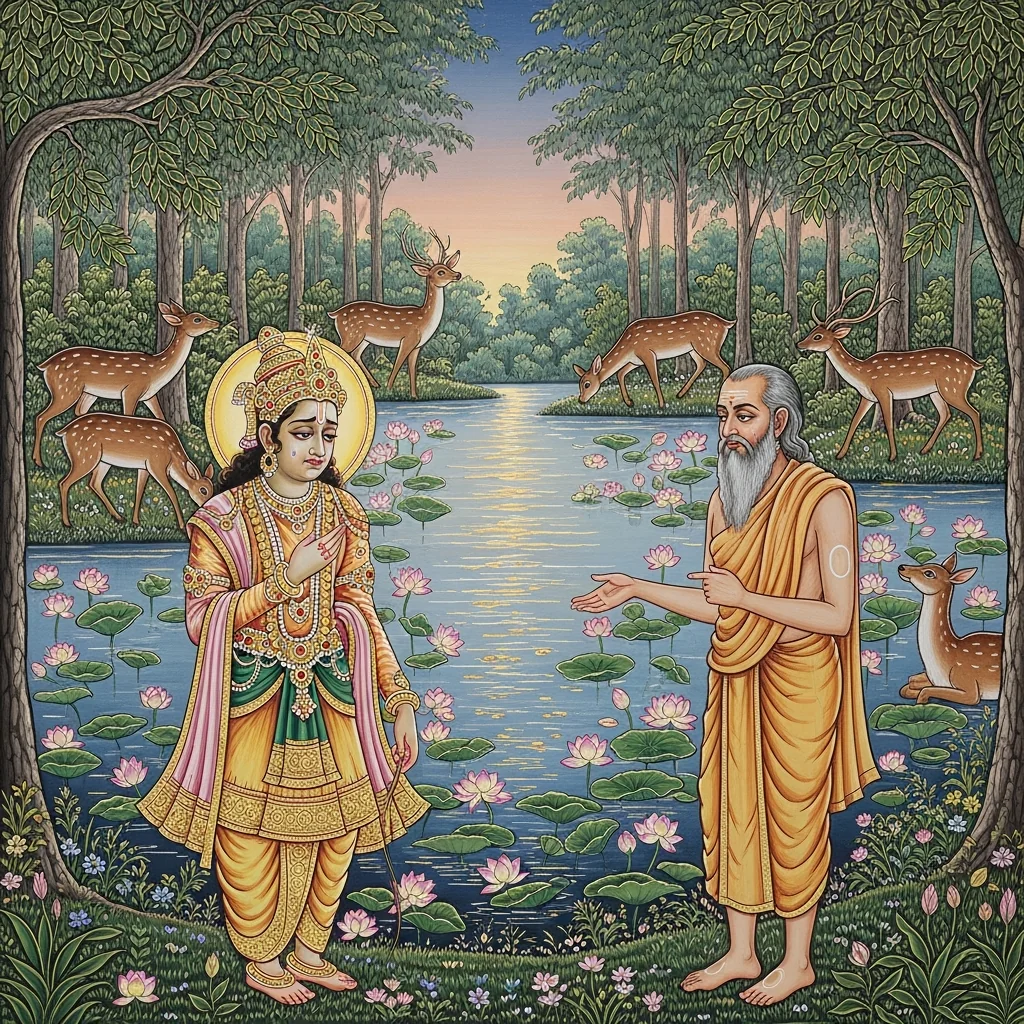
The chapter is cast as a didactic tale spoken by Īśvara to Uttānapāda, declaring that attentive hearing itself purifies wrongdoing. Citrasena, the righteous and mighty king of Kāśī, goes hunting with allied rulers; amid dust and turmoil in the forest he becomes separated from his retinue. Famished and thirsty, he reaches a divine lake, bathes, offers tarpaṇa to pitṛs and devas, and worships Śaṅkara with lotus flowers. He then sees many deer set in varied positions, with the great ascetic Ṛkṣaśṛṅga seated among them. Mistaking the scene for a hunting chance, the king looses an arrow and unintentionally wounds the sage. When the sage speaks in a human voice, the king is shaken, confesses the accident, and offers self-immolation as expiation, knowing brahmahatyā to be uniquely grave. Ṛkṣaśṛṅga refuses, warning that such a remedy would only multiply deaths within the dependent family network, and instructs the king instead to carry him to his parents’ āśrama and confess before the mother as a “son-slayer,” so they may prescribe a path to peace. The king bears him onward, but during repeated halts Ṛkṣaśṛṅga dies through yogic concentration. Citrasena performs the funeral rites according to rule and laments, setting the stage for further teaching on remediation and moral responsibility.
Shlokas
Verse 1
उत्तानपाद उवाच । आश्रमे वसतस्तस्य स दीर्घतपसो मुनेः । कनीयांस्तनयो देव कथं मृत्युमुपागतः
Uttānapāda said: O Lord, while dwelling in the hermitage (āśrama) of that sage Dīrghatapas, long in austerities, how did his youngest son come to meet death?
Verse 2
ईश्वर उवाच । शृणुष्वैकमना भूत्वा कथां दिव्यां महीपते । श्रवणादेव यस्यास्तु मुच्यते सर्वकिल्बिषैः
Īśvara said: O king, listen with single-pointed mind to this divine account; by merely hearing it, one is freed from all sins.
Verse 3
काशीराजो महावीर्यो महाबलपराक्रमः । चित्रसेन इति ख्यातां धरण्यां स नराधिप
There was a king of Kāśī, great in heroism, mighty in strength and valor. On earth he was renowned by the name Citrasena, a lord among men.
Verse 4
तस्य राज्ये सदा धर्मो नाधर्मो विद्यते क्वचित् । वेदधर्मरतो नित्यं प्रजा धर्मेण पालयन्
In his kingdom, dharma ever prevailed; nowhere was adharma found. Always devoted to Vedic righteousness, he protected his subjects through dharma.
Verse 5
स्वधर्मनिरतश्चैव युद्धातिथ्यप्रियः सदा । क्षत्रधर्मं समाश्रित्य भोगान्भुङ्क्ते स कामतः
Steadfast in his own duty, and ever fond of battle and hospitality, he—taking refuge in the dharma of a kṣatriya—enjoyed rightful pleasures according to his desire.
Verse 6
कोशस्यान्तो न विद्येत हस्त्यश्वरथपत्तिमान् । इतिहासपुराणज्ञैः पण्डितैः सह संकथाम्
His treasury knew no limit, and he possessed elephants, horses, chariots, and foot-soldiers. He held discourse with learned scholars, knowers of the Itihāsas and Purāṇas.
Verse 7
कथयन्राजते राजा कैलास इव शङ्करः । एवं स पालयन्राज्यं राजा मन्त्रिणमब्रवीत्
As he conversed, the king shone like Śaṅkara upon Kailāsa. Thus, while governing the kingdom, the king spoke to his minister.
Verse 8
मृगयायां गमिष्यामि तिष्ठध्वं राज्यपालने । गम्यतां सचिवैः प्रोक्ते गतोऽसौ वसुधाधिपः
“I shall go on a hunt; you remain in charge of protecting the kingdom.” When the ministers replied, “So be it; go,” that lord of the earth set out.
Verse 9
अश्वारूढाश्च धावन्तो राजानो मण्डलाधिपाः । छत्रैश्छत्राणि घृष्यन्तोऽनुजग्मुः काननं प्रति
Mounted on horses and rushing along, kings—lords of their realms—followed him toward the forest, their royal parasols brushing against one another.
Verse 10
रजस्तत्रोत्थितं भौमं गजवाजिपदाहतम् । तेनैतच्छादितं सर्वं सदिङ्मार्तण्डमंलम्
There, dust rose from the ground, struck up by the feet of elephants and horses. By that, everything was covered—along with the directions and even the circle of the sun.
Verse 11
न तत्र दृश्यते सूर्यो न काष्ठा न च चन्द्रमाः । पादपाश्च न दृश्यन्ते गिरिशृङ्गाणि सर्वतः
There the sun was not seen, nor the quarters, nor even the moon. Neither the trees nor the mountain-peaks were visible on any side.
Verse 12
परस्परं न पश्यन्ति निशार्द्धे वार्षिके यथा । तत्रासौ सुमहद्यूथं मृगाणां समलक्ष्यत
They could not see one another, as in the middle of a rainy night. There, he then noticed a very large herd of deer.
Verse 13
अधावत्सहितः सर्वैः स राजा राजपुत्रकैः । वृन्दास्फोटोऽभवत्तेषां शीघ्रं जग्मुर्दिशो दश
That king, accompanied by all the princes, ran on; but their company scattered in confusion, and swiftly they dispersed to the ten directions.
Verse 14
एकमार्गगतो राजा चित्रसेनो महीपतिः । एकाकी स गतस्तत्र यत्र यत्र च ते मृगाः
King Citrasena, lord of the earth, took a single path; and he went on alone, wherever those deer had gone.
Verse 15
प्रविष्टोऽसौ ततो दुर्गं काननं गिरिगह्वरम् । वल्लीगुल्मसमाकीर्णं स्थितो यत्र न लक्ष्यते
Then he entered a hard-to-cross wilderness—mountain ravines and dense forest—choked with creepers and thickets, a place where one standing is not easily seen.
Verse 16
अदृश्यांस्तु मृगान्मत्वा दिशो राजा व्यलोकयत् । कां दिशं नु गमिष्यामि क्व मे सैन्यसमागमः
Thinking the deer had vanished from sight, the king looked around in all directions: “Which way shall I go now? Where shall I rejoin my army?”
Verse 17
एवं कष्टं गतो राजा चित्रसेनो नराधिपः । वृक्षच्छायां समाश्रित्य विश्राममकरोन्नृपः
Thus brought into distress, King Citrasena, ruler among men, took shelter in the shade of a tree and rested.
Verse 18
क्षुत्तृषार्तो भ्रमन्दुर्गे कानने गिरिगह्वरे । ततोऽपश्यत्सरो दिव्यं पद्मिनीखण्डमण्डितम्
Wandering in that difficult forest of mountain ravines, tormented by hunger and thirst, he then beheld a divine lake adorned with clusters of lotus-plants.
Verse 19
हंसकारण्डवाकीर्णं चक्रवाकोपशोभितम् । ततो दृष्ट्वा स राजेन्द्रः सम्प्रहृष्टतनूरुहः
It was filled with swans and kāraṇḍava ducks, beautified by cakravāka birds; seeing it, the lord of kings felt his hair stand on end in delight.
Verse 20
कमलानि गृहीत्वा तु ततः स्नानं समाचरत् । तर्पयित्वा पितृदेवान्मनुष्यांश्च यथाविधि
Taking lotus-flowers, he then performed the ritual bathing; and, according to proper rule, he offered libations to satisfy the Pitṛs, the gods (Devas), and also human beings.
Verse 21
आच्छाद्य शतपत्रैश्च पूजयामास शङ्करम् । ययौ पानीयममलं यथावत्स समाहितः
Covering the place of worship with hundred-petalled lotuses, he adored Śaṅkara; then, composed and attentive, he went to pure water and drank in due manner.
Verse 22
उत्तीर्य सलिलात्तीरे दृष्ट्वा वृक्षं समीपगम् । उत्तरीयमधः कृत्वोपविष्टो धरणीतले
Having come up from the water onto the bank and seeing a tree nearby, he spread his upper garment beneath him and sat down upon the ground.
Verse 23
चिन्तयन्नुपविष्टोऽसौ किमद्य प्रकरोम्यहम् । तत्रासीनो ददर्शाथ वनोद्देशे मृगान्बहून्
Seated there, he pondered, “What shall I do today?” While sitting thus, he then saw many deer in a tract of the forest.
Verse 24
केचित्पूर्वमुखास्तत्र चापरे दक्षिणामुखाः । वारुण्यमिमुखाः केचित्केचित्कौबेरदिङ्मुखाः
Some there faced the east, others faced the south; some faced the western quarter of Varuṇa, and some faced the northern direction of Kubera.
Verse 25
केचिन्निद्रापराः केचिदूर्ध्वकर्णाः स्थिताः परे । मृगमध्ये स्थितो योगी ऋक्षशृङ्गो महातपाः
Some were overcome by sleep; others stood with ears pricked up. In the midst of the deer stood the yogin Ṛkṣaśṛṅga, a great ascetic.
Verse 26
मृगान्दृष्ट्वा ततो राजा आहारार्थमचिन्तयत् । हत्वैतेषु मृगं कंचिद्भक्षयामि यदृच्छया
Seeing the deer, the king turned his mind to food: “Let me slay one deer from among these and eat it, as chance may allow.”
Verse 27
स्वस्थावस्थो भविष्यामि मृगमांसस्य भक्षणात् । काशीं प्रति गमिष्यामि मार्गमन्विष्य यत्नतः
“By eating deer-meat I shall regain my strength; then I will go toward Kāśī, carefully seeking the route with diligence.”
Verse 28
विचिन्त्यैवं ततो राजा वृक्षमूलमुपाश्रितः । चापं गृह्य कराग्रेण स शरं संदधे ततः
Having thus resolved, the king took shelter at the root of a tree. Taking his bow in hand, he then set an arrow upon it.
Verse 29
विचिक्षेप शरं तत्र यत्र ते बहवो मृगाः । तेषां मध्ये स वै विद्ध ऋक्षशृङ्गो महातपाः
He loosed an arrow where the many deer were gathered; yet in their midst it was Ṛkṣaśṛṅga, the great ascetic, who was struck.
Verse 30
जग्मुस्त्रस्तास्तु ते सर्वे शब्दं कृत्वा वनौकसः । स ऋषिः पतितस्तत्र कृष्ण कृष्णेति चाब्रवीत्
Frightened, all those dwellers of the forest fled with a great clamor. The rishi fell there and cried out, “Kṛṣṇa! Kṛṣṇa!”
Verse 31
हाहा कष्टं कृतं तेन येनाहं घातितोऽधुना । कस्यैषा दुर्मतिर्जाता पापबुद्धेर्ममोपरि
“Alas, alas! A grievous deed has been done by him through whom I have now been struck down. Whose wicked intent—whose sinful mind—has turned against me?”
Verse 32
मृगमध्ये स्थितश्चाहं न कंचिदुपरोधये । तां वाचं मानुषीं श्रुत्वा स राजा विस्मयान्वितः
“I was standing among the deer and troubled no one.” Hearing that human speech, the king was filled with astonishment.
Verse 33
शीघ्रं गत्वा ततोऽपश्यद्ब्राह्मणं ब्रह्मतेजसा । हाहा कष्टं कृतं मेऽद्य येनासौ घातितो द्विजः
Hurrying there, he then beheld a brāhmaṇa radiant with brahmanic splendor. “Alas! What a grievous deed has been done by me today—by which that twice-born has been struck down!”
Verse 34
चित्रसेन उवाच । अकामाद्घातितस्त्वं तु मृगभ्रान्त्या मयानघ । गृहीत्वा बहुदारूणि स्वतनुं दाहयाम्यहम्
Citrasena said: “O sinless one, you have been slain by me unintentionally, through mistaking you for a deer. Gathering much firewood, I shall burn my own body.”
Verse 35
दृष्टादृष्टं तु यत्किंचिन्न समं ब्रह्महत्यया । अन्यथा ब्रह्महत्यायाः शुद्धिर्मे न भविष्यति
Nothing whatsoever—whether seen in this world or spoken of beyond—equals the sin of killing a brāhmaṇa. Otherwise, I will not attain purification from brahmahatyā.
Verse 36
ऋक्षशृङ्ग उवाच । न ते सिद्धिर्भवेत्काचिन्मयि पञ्चत्वमागते । बह्व्यो हत्या भविष्यन्ति विनाशे मम साम्प्रतम्
Ṛkṣaśṛṅga said: "No true attainment will come to you if I pass into the state of the five elements. For at my destruction, many killings will occur right now."
Verse 37
जननी मे पिता वृद्धो भ्रातरश्च तपस्विनः । भ्रातृजाया मरिष्यन्ति मयि पञ्चत्वमागते
"My mother, my aged father, and my ascetic brothers—and my brothers’ wives—will die when I go to death."
Verse 38
एता हत्या भविष्यन्ति कथं शुद्धिर्भवेत्तव । उपायं कथयिष्यामि तं कर्तुं यदि मन्यसे
"If these deaths occur, how could you be purified? I shall tell you a means—if you consider it fit to carry out."
Verse 39
चित्रसेन उवाच । उपायः कथ्यतां मेऽद्य यस्ते मनसि वर्तते । करिष्ये तमहं सर्वं यत्नेनापि महामुने
Citrasena said: "Let the means that is in your mind be told to me today. O great sage, I shall do all of it—carefully and with full effort."
Verse 40
ऋक्षशृङ्ग उवाच । पृच्छामि त्वां कथं को वा कुतस्त्वमिह चागतः । ब्रह्मक्षत्रविशां मध्ये को भवानुत शूद्रजः
Ṛkṣaśṛṅga said: "I ask you—how (are you here), who are you, and from where have you come? Among brāhmaṇas, kṣatriyas, and vaiśyas, who are you—or are you born of a śūdra?"
Verse 41
चित्रसेन उवाच । नाहं शूद्रोऽस्मि भोस्तात न वैश्यो ब्राह्मणो न वा । न चान्त्यजोऽस्मि विप्रेन्द्र क्षत्रियोऽस्मि महामुने
Citraseṇa said: “Sir, revered elder—I am not a śūdra, nor a vaiśya, nor a brāhmaṇa. Nor am I of the lowest outcaste; O best of brāhmaṇas, O great sage, I am a kṣatriya.”
Verse 42
धर्मज्ञश्च कृतज्ञश्च सर्वसत्त्वहिते रतः । अकामात्पातकं जातं कथं शुद्धिर्भविष्यति
“I know dharma, I am grateful, and I delight in the welfare of all beings. Yet a sin has arisen from me unintentionally—how shall purification be attained?”
Verse 43
ऋक्षशृङ्ग उवाच । मां गृहीत्वा आश्रमं गच्छ यत्र तौ पितरौ मम । आवेदयस्व चात्मानं पुत्रघातिनमातुरम्
R̥kṣaśṛṅga said: “Take me with you and go to the hermitage where my two parents dwell. There, disclose yourself—distressed and bearing the guilt of slaying a son—so that the way of pacification may be shown.”
Verse 44
ते दृष्ट्वा मां करिष्यन्ति कारुण्यं च तवोपरि । उपायं कथयिष्यन्ति येन शान्तिर्भविष्यति
“Seeing me, they will surely show compassion toward you. They will tell you the means by which peace and appeasement will arise within.”
Verse 45
तस्य तद्वचनं श्रुत्वा चित्रसेनो नृपोत्तम । स्कन्धे कृत्वा तु तं विप्रं जगामाश्रमसन्निधौ
Hearing these words, King Citraseṇa—best of rulers—lifted that brāhmaṇa onto his shoulder and went toward the vicinity of the hermitage.
Verse 46
न शक्नोति यदा वोढुं विश्राम्यति पुनःपुनः । तावत्पश्यति तं विप्रं मूर्छितं विकलेन्द्रियम्
When he could no longer bear the burden and kept resting again and again, he then saw that brāhmaṇa had fainted, his senses failing.
Verse 47
मुमोच चित्रसेनस्तं छायायां वटभूरुहः । वस्त्रं चतुर्गुणं कृत्वा चक्रे वातं मुहुर्मुहुः
Citraseṇa set him down in the shade of a banyan tree, and folding his cloth four times, he fanned him again and again.
Verse 48
पश्यतस्तस्य राजेन्द्र ऋक्षशृङ्गो महातपाः । पञ्चत्वमगमच्छीघ्रं ध्यानयोगेन योगवित्
O king, as he looked on, the great ascetic R̥kṣaśṛṅga—knower of yoga—quickly attained ‘the state of the five’ (death), by the yoga of meditation.
Verse 49
दाहयामास तं विप्रं विधिदृष्टेन कर्मणा । स्नानं कृत्वा स शोकार्तो विललाप मुहुर्मुहुः
He cremated that brāhmaṇa according to the rites enjoined by rule; then, after bathing, grief-stricken, he lamented again and again.
Verse 53
। अध्याय
End of the chapter (adhyāya marker).