Adhyaya 5
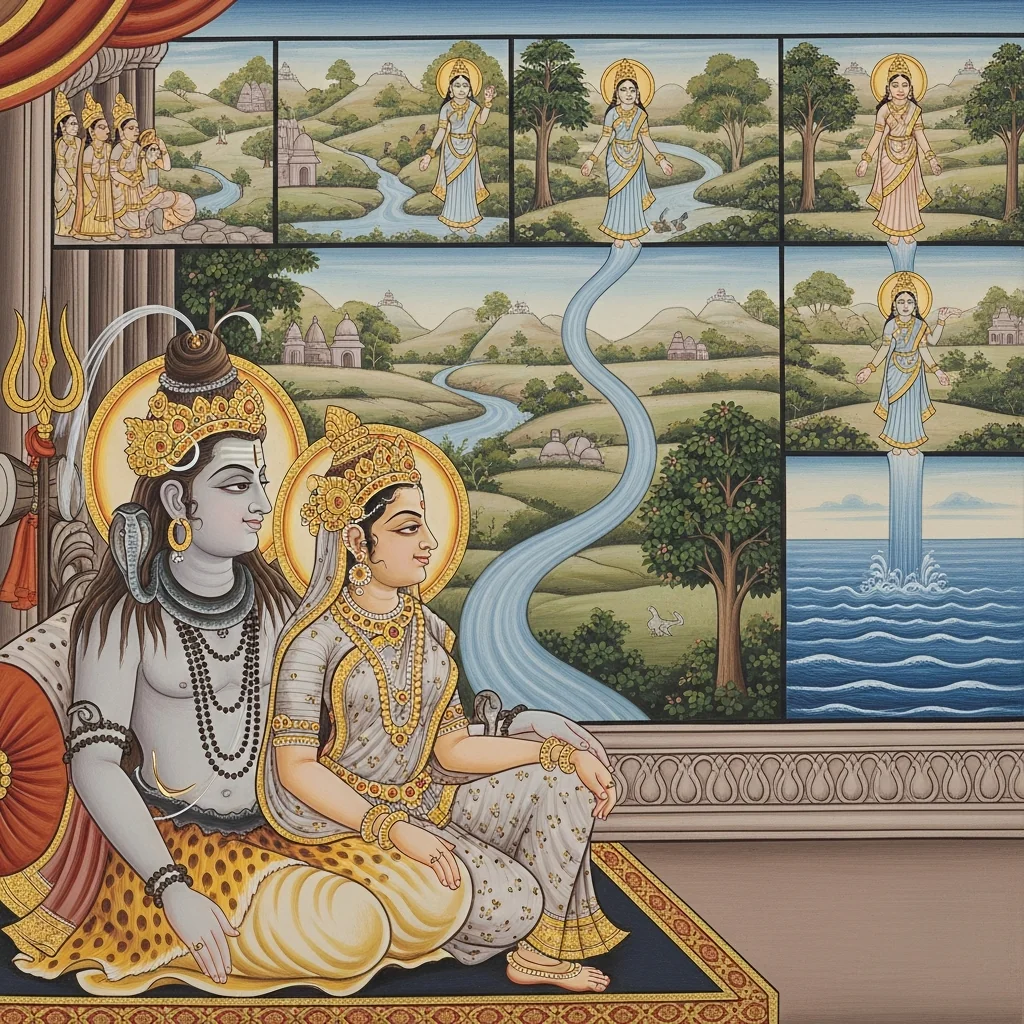
This chapter unfolds as a question-led theological inquiry. Yudhiṣṭhira, with an assembly of sages, marvels at the sanctity of the goddess-river Narmadā and asks why she does not perish even when seven kalpas are exhausted. He also seeks doctrinal clarity on cosmic processes—how the world is withdrawn, abides in an oceanic state, is recreated, and sustained—and on the meanings and ritual grounds of her many names such as Narmadā, Revā, and other epithets, including her traditional classification and the Purāṇa-scholars’ usage of “Vaiṣṇavī.” Mārkaṇḍeya replies by placing the teaching within a lineage of transmission from Maheśvara through Vāyu, then outlines a taxonomy of kalpas. He sketches cosmogony: from primordial darkness the cosmic principle arises, the golden egg comes forth, and Brahmā manifests. The narrative then turns to the river’s mythic origin—a radiant daughter linked with Umā and Rudra whose beauty bewilders gods and asuras; Śiva institutes a test, she vanishes and reappears at far distances, and at last Śiva names her “Narmadā,” connecting it with “narma” (laughter) and divine play. The chapter closes with her being entrusted to the great ocean, entering it from a mountain setting, and with notes on her manifestation within a specific kalpa frame (with Brāhma and Matsya references).
Shlokas
Verse 1
युधिष्ठिर उवाच । आश्चर्यमेतदखिलं कथितं भो द्विजोत्तम । विस्मयं परमापन्ना ऋषिसंघा मया सह
Yudhiṣṭhira said: “This entire account you have told is wondrous indeed, O best of the twice-born. The assemblies of sages along with me have been filled with the greatest amazement.”
Verse 2
अहो भगवती पुण्या नर्मदेयमयोनिजा । रुद्रदेहाद्विनिष्क्रान्ता महापापक्षयंकरी
Ah! Blessed and holy is this Narmadā—unborn of any womb—who emerged from Rudra’s very body, the destroyer of even great sins.
Verse 3
सप्तकल्पक्षये प्राप्ते त्वयेयं सह सुव्रत । न मृता च महाभागा किमतः पुण्यमुत्तमम्
Even when the destruction of seven kalpas arrived, she remained with you, O man of excellent vows; this greatly blessed one did not perish—what greater holiness than this could there be?
Verse 4
के ते कल्पाः समुद्दिष्टाः सप्त कल्पक्षयंकराः । न मृता चेदियं देवी त्वं चैव ऋषिपुंगव
Which are those Kalpas you have enumerated—those seven that bring about the dissolution of the Kalpa? If this Goddess has not perished, then you too, O bull among sages, must explain how this is so.
Verse 5
अध्याय
“Chapter” — a scribal or section marker rather than a metrical verse.
Verse 6
कथं संहरते विश्वं कथं चास्ते महार्णवे । कथं च सृजते विश्वं कथं धारयते प्रजाः
How does the Divine withdraw the universe, and how does it abide in the great ocean? How does it create the universe, and how does it uphold the beings?
Verse 7
कीदृग्रूपा भवेद्देवी सरिदेकार्णवीकृते । किमर्थं नर्मदा प्रोक्ता रेवती च कथं स्मृता
What form does the Goddess assume when the rivers become one ocean? Why is she called Narmadā, and how is she remembered as Revatī?
Verse 8
अञ्जनेति किमर्थं वा किमर्थं सुरसेति च । मन्दाकिनी किमर्थं च शोणश्चेति कथं भवेत्
Why is she called Añjanā, and why Surasā? Why is she called Mandākinī, and how does she become known as Śoṇa?
Verse 9
त्रिकूटेति किमर्थं वा किमर्थं वालुवाहिनी । कोटिकोट्यो हि तीर्थानां प्रविष्टा या महार्णवम्
Why is she called Trikūṭā, and why Vāluvāhinī, the bearer of sand? Into her enter crores upon crores of tīrthas, and she has merged into the great ocean—explain this.
Verse 10
कियत्यः सरितां कोट्यो नर्मदां समुपासते । यज्ञोपवीतैरृषिभिर्देवताभिस्तथैव च
How many crores of rivers revere Narmadā? And how is she worshipped by sages wearing the sacred thread, and likewise by the deities?
Verse 11
विभक्तेयं किमर्थं च श्रूयते मुनिसत्तम । वैष्णवीति पुराणज्ञैः किमर्थमिह चोच्यते
Why is it heard, O best of sages, that she is ‘divided’ (into sections)? And why do the knowers of the Purāṇas here call her ‘Vaiṣṇavī’?
Verse 12
केषु स्थानेषु तीर्थेषु पूजनीया सरिद्वरा । तीर्थानि च पृथग्ब्रूहि यत्र संनिहितो हरः
At which places and tīrthas is that best of rivers to be worshipped? Tell me distinctly the tīrthas where Hara (Śiva) is especially present.
Verse 13
यत्प्रमाणा च सा देवी या रुद्रेण विनिर्मिता । कीदृशानि च कर्माणि रुद्रेण कथितानि ते
What is the measure (extent) of that Goddess who was fashioned by Rudra? And what kinds of rites and acts were taught by Rudra to you?
Verse 14
कथं म्लेच्छसमाकीर्णो देशोऽयं द्विजसत्तम । एतदाचक्ष्व मां ब्रह्मन्मार्कण्डेय महामते
How has this land become overrun with mlecchas (foreign, non-Vedic peoples), O best of the twice-born? Explain this to me, O venerable brāhmaṇa—O great-souled Mārkaṇḍeya.
Verse 15
श्रीमार्कण्डेय उवाच । शृण्वन्तु ऋषयः सर्वे त्वं च तात युधिष्ठिर । पुराणं नर्मदायां तु कथितं च त्रिशूलिना
Śrī Mārkaṇḍeya said: Let all the sages listen—and you too, dear Yudhiṣṭhira. This Purāṇa was proclaimed on the banks of the Narmadā by the Trident-bearer (Śiva).
Verse 16
वायोः सकाशाच्च मया तेनापि च महेश्वरात् । अशक्यत्वान्मनुष्याणां संक्षिप्तमृषिभिः पुरा
I received it from Vāyu; and he, in turn, from Maheśvara (Śiva). Since it was too vast for human capacity, the sages of old condensed it.
Verse 17
मायूरं प्रथमं तात कौर्म्यं च तदनन्तरम् । पुरं तथा कौशिकं च मात्स्यं द्विरदमेव च
First, dear one, (came) the Māyūra; next the Kaurmya. Then followed the Pura, the Kauśika, the Mātsya, and also the Dvirada recensions.
Verse 18
वाराहं यन्मया दृष्टं वैष्णवं चाष्टमं परम् । न्यग्रोधाख्यमतः चासीदाकाङ्क्षं पुनरुत्तमम्
I also beheld the Vārāha, and the supreme Vaiṣṇava as the eighth. There was also the one called Nyagrodha; and again the excellent Ākāṅkṣa.
Verse 19
पद्मं च तामसं चैव संवर्तोद्वर्तमेव च । महाप्रलयमित्याहुः पुराणे वेदचिन्तकाः
They also speak of the Padma and the Tāmasa, and likewise the Saṃvarta and Udvarta; and of a recension called Mahāpralaya—so declare the Veda-contemplating authorities in the Purāṇic tradition.
Verse 20
एतत्संक्षेपतः सर्वं संक्षिप्तं तैर्महात्मभिः । विभक्तं च चतुर्भागैर्ब्रह्माद्यैश्च महर्षिभिः
All this, in brief, was condensed by those great souls, and it was also divided into four parts by the great sages beginning with Brahmā.
Verse 21
तदहं सम्प्रवक्ष्यामि पुराणार्थविशारद । सप्त कल्पा महाघोरा यैरियं न मृता सरित्
Therefore I shall now explain it, O knower of Purāṇic meaning. Through seven exceedingly dreadful kalpas, this river (Revā/Narmadā) did not perish.
Verse 22
आ जङ्गमं तमोभूतमप्रज्ञातमलक्षणम् । नष्टचन्द्रार्ककिरणमासीद्भूतविवर्जितम्
Everything, even the moving creatures, became darkness—indistinguishable and without defining marks; the rays of moon and sun were lost, and existence stood bereft of beings.
Verse 23
तमसोऽतो महानाम्ना पुरुषः स जगद्गुरुः । चचार तस्मिन्नेकाकी व्यक्ताव्यक्तः सनातनः
Then, out of that darkness, the great-named Puruṣa—the Guru of the world—moved there alone: eternal, both manifest and unmanifest.
Verse 24
स चौंकारमयोऽतीतो गायत्रीमसृजद्द्विजः । स तया सार्द्धमीशानश्चिक्रीड पुरुषो विराट्
That transcendent Lord, whose essence is the sacred syllable Oṃ, brought forth Gāyatrī. Then Īśāna—the Cosmic Person called Virāṭ—sportively played together with her.
Verse 25
स्वदेहादसृजद्विश्वं पञ्चभूतात्मसंज्ञितम् । क्रीडन्समसृजद्विश्वं पञ्चभूतात्मसंज्ञितम्
From His own being He manifested the universe, known as the embodiment of the five great elements. Sporting in divine play, He again brought forth the cosmos, identified with those very five elements.
Verse 26
क्रीडन् सृजद्विराट्संज्ञः सबीजं च हिरण्मयम् । तच्चाण्डमभवद्दिव्यं द्वादशादित्यसन्निभम्
Sporting, the One known as Virāṭ brought forth the golden, seed-bearing principle. From it arose a divine cosmic Egg, radiant like twelve suns.
Verse 27
तद्भित्त्वा पुरुषो जज्ञे चतुर्वक्त्रः पितामहः । सोऽसृजद्विश्वमेवं तु सदेवासुरमानुषम्
Splitting that Egg, the Puruṣa was born as the Four-Faced Grandsire, Brahmā. Thereafter he fashioned the universe in due order, together with gods, asuras, and humankind.
Verse 28
सतिर्यक्पशुपक्षीकं स्वेदाण्डजजरायुजम् । एतदण्डं पुराणेषु प्रथमं परिकीर्तितम्
From that creation arose beasts and birds, and all beings of diverse births—those born of sweat, of eggs, and of wombs. This cosmic Egg is proclaimed in the Purāṇas as the first.
Verse 29
पूर्वकल्पे नृपश्रेष्ठ क्रीडन्त्या परमेष्ठिना । उमया सह रुद्रस्य क्रीडतश्चार्णवीकृतः
O best of kings, in a former kalpa, as the Supreme Lord sported with Umā, the universe—through Rudra’s play—became as though a vast oceanic expanse.
Verse 30
हर्षाज्जज्ञे शुभा कन्या उमायाः स्वेदसंभवा । शर्वस्योरःस्थलाज्जज्ञे उमा कुचविमर्दनात्
From joy there was born an auspicious maiden, arising from Umā’s perspiration. And Umā (again) was born from Śarva’s chest, through the press of her breasts.
Verse 31
स्वेदाद्विजज्ञे महती कन्या राजीवलोचना । द्वितीयः संभवो यस्या रुद्रदेहाद्युधिष्ठिर
From perspiration a great maiden was born, lotus-eyed. Her second origin, O Yudhiṣṭhira, was from Rudra’s very body.
Verse 32
सा परिभ्रमते लोकान् सदेवासुरमानवान् । त्रैलोक्योन्मादजननी रूपेणऽप्रतिमा तदा
She wandered through the worlds—among Devas, Asuras, and men—and then, unmatched in beauty, she became the very cause of the three worlds’ infatuation.
Verse 33
तां दृष्ट्वा देवदैत्येन्द्रा मोहिता लभते कथम् । मृगयन्ति स्म तां कन्यामितश्चेतश्च भारत
Seeing her, the lords of gods and Daityas were bewildered, thinking, “How may she be obtained?” O Bhārata, they sought that maiden, searching here and there.
Verse 34
हावभावविलासैश्च मोहयत्यखिलं जगत् । भ्रमते दिव्यरूपा सा विद्युत्सौदामिनी यथा
With her playful gestures, expressions, and graceful allure, she bewilders the entire world. Of divine form, she moves about like a streak of lightning flashing in the clouds.
Verse 35
मेघमध्ये स्थिता भाभिः सर्वयोषिदनुत्तमा । ततो रुद्रं सुराः सर्वे दैत्याश्च सह दानवैः
Standing amid the clouds, radiant with splendor, she was the unsurpassed one among all women. Then all the gods—and the Daityas along with the Dānavas—turned their attention toward Rudra.
Verse 36
वरयन्ति स्म तां कन्यां कामेनाकुलिता भृशम् । ततोऽब्रवीन्महादेवो देवदानवयोर्द्वयोः
Greatly agitated by desire, they sought the maiden’s hand. Then Mahādeva spoke to both parties—the Devas and the Dānavas.
Verse 37
बलेन तेजसा चैव ह्यधिको यो भविष्यति । स इमां प्राप्स्यते कन्यां नान्यथा वै सुरोत्तमाः
Whoever proves superior in strength and in splendor (tejas) shall obtain this maiden—never otherwise, O best among the gods.
Verse 38
ततो देवासुराः सर्वे कन्यां वै समुपागमन् । अहमेनां ग्रहीष्यामि अहमेनामिति ब्रुवन्
Then all the Devas and Asuras approached the maiden, each proclaiming, ‘I shall take her—yes, I shall take her!’
Verse 39
पश्यतामेव सर्वेषां सा कन्यान्तरधीयत । पुनस्तां ददृशुः सर्वे योजनान्तरधिष्ठिताम्
Even as all were watching, the maiden vanished. Then they all saw her again, stationed at a distance of another yojana.
Verse 40
जग्मुस्ते त्वरिताः सर्वे यत्र सा समदृश्यत । त्रिभिश्चतुर्भिश्च तथा योजनैर्दशभिः पुनः
All of them hurried to the place where she was seen; and again (she appeared) at distances of three, four, and then ten yojanas.
Verse 41
धिष्ठितां समपश्यंस्ते सर्वे मातंगगामिनीम् । योजनानां शतैर्भूयः सहस्रैश्चाप्यधिष्ठिताम्
They all beheld her standing there, moving with the gait of a noble elephant. Yet again she was seen stationed hundreds—and even thousands—of yojanas away.
Verse 42
तथा शतसहस्रेण लघुत्वात्समदृश्यत । अग्रतः पृष्ठतश्चैव दिशासु विदिशासु च
Likewise, by reason of her swiftness, she was seen even a hundred thousand yojanas away—appearing before and behind, in the quarters and in the intermediate directions.
Verse 43
तां पश्यन्ति वरारोहामेकधा बहुधा पुनः । दिव्यवर्षसहस्रं तु भ्रामितास्ते तया पुरा
They kept beholding that fair-limbed maiden—now as one, now again as many. Indeed, she had already led them astray for a thousand divine years.
Verse 44
न चावाप्ता तु सा कन्या महादेवाङ्गसंभवा । सहोमया ततो देवो जहासोच्चैः पुनःपुनः
But that maiden—born from the very body of Mahādeva—had not yet been obtained by the one destined for her. Then the Lord, together with Umā, repeatedly laughed aloud.
Verse 45
गणास्तालकसंपातैर्नृत्यन्ति च मुदान्विताः । अकस्माद्दृश्यते कन्या शंकरस्य समीपगा
Śiva’s gaṇas, filled with joy, danced to the beating and clashing of time-keeping instruments. Suddenly, the maiden was seen standing near Śaṅkara.
Verse 46
तां दृष्ट्वा विस्मयापन्ना देवा यान्ति पराङ्मुखाः । तस्याश्चक्रे ततो नाम स्वयमेव पिनाकधृक्
Seeing her, the gods were struck with wonder and turned away in awe and modesty. Then the Bearer of the Pināka bow himself bestowed a name upon her.
Verse 47
नर्म चैभ्यो ददे यस्मात्तत्कृतैश्चेष्टितैः पृथक् । भविष्यसि वरारोहे सरिच्छ्रेष्ठा तु नर्मदा
Because she bestowed delight upon them through her distinctive, playful deeds, O fair-hipped one, you shall become the foremost of rivers; therefore you are called Narmadā.
Verse 48
स्वरूपमास्थितो देवः प्राप हास्यं यतो भुवि । नर्मदा तेन चोक्तेयं सुशीतलजला शिवा
Since the Lord, abiding in his own true form, brought forth laughter upon the earth, she is therefore called Narmadā—auspicious (Śivā) and possessed of exceedingly cool waters.
Verse 49
सप्तकल्पक्षये जाते यदुक्तं शंभुना पुरा । न मृता तेन राजेन्द्र नर्मदा ख्यातिमागता
When the destruction of seven kalpas had come to pass, what Śambhu had spoken long ago proved true; therefore, O best of kings, Narmadā did not perish and thus attained renowned fame.
Verse 50
ततस्तामददात्कन्यां शीलवतीं सुशोभनाम् । महार्णवाय देवेशः सर्वभूतपतिः प्रभुः
Then the Lord of the gods—the sovereign master of all beings—gave that virtuous and splendid maiden to the Great Ocean.
Verse 51
ततः सा ऋक्षशैलेन्द्रात्फेनपुञ्जाट्टहासिनी । विवेश नर्मदा देवी समुद्रं सरितां पतिम्
Then the goddess Narmadā—laughing loudly like a mass of foaming spray—descended from the lordly Ṛkṣa mountain and entered the Ocean, the sovereign of rivers.
Verse 52
एवं ब्राह्मे पुरा कल्पे समुद्भूतेयमीश्वरात् । मात्स्ये कल्पे मया दृष्टा समाख्याता मया शृणु
Thus, in the ancient Brāhma kalpa, she arose from the Lord. In the Mātsya kalpa I beheld her; now I have narrated it—listen and understand.