Adhyaya 45
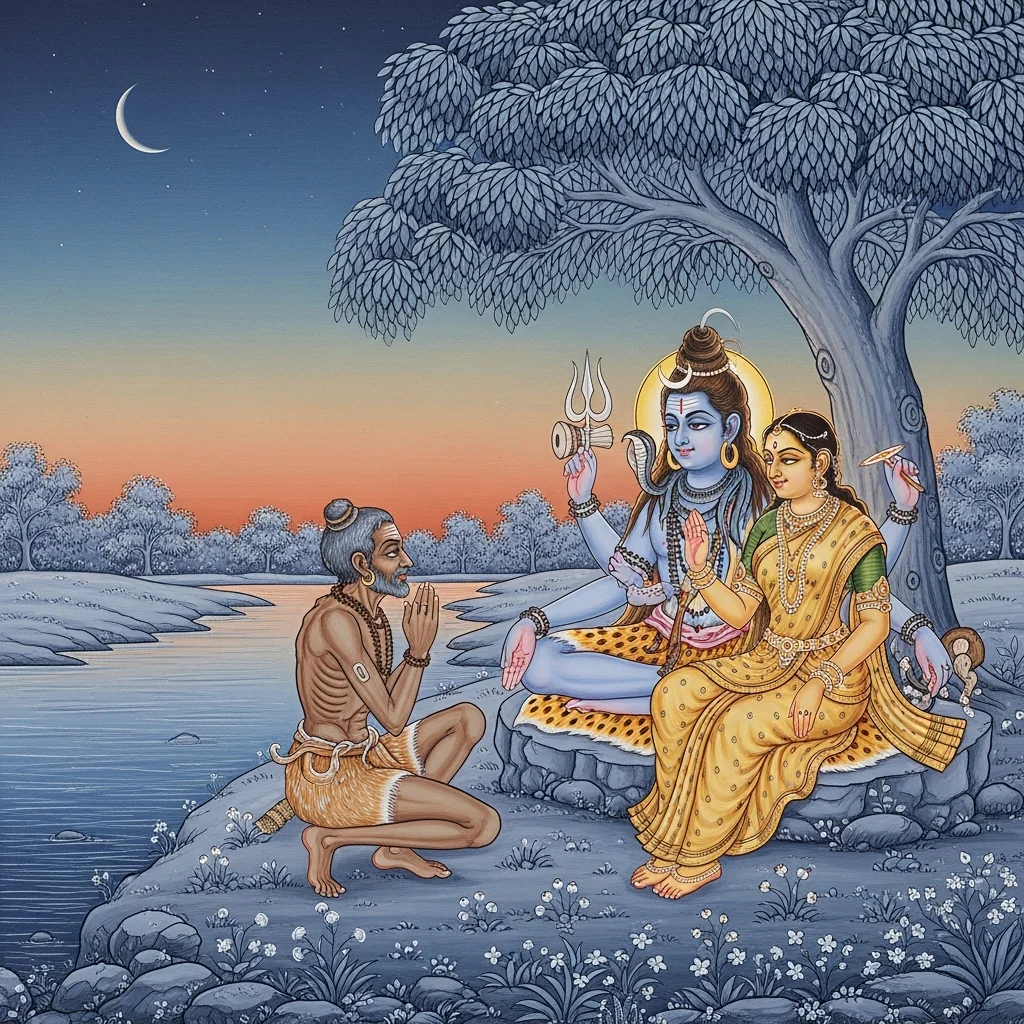
Markaṇḍeya recalls an earlier question King Uttānapāda asked Maheśvara before an assembly of sages and gods: about a supremely meritorious yet highly secret tīrtha, the origin of “Śūlabheda,” and the greatness of that sacred site. Īśvara replies by speaking of the daitya Andhaka—immensely powerful, arrogant, and ruling without challenge. Seeking to win Mahādeva’s favor, Andhaka goes to the bank of the Revā and performs tapas in four escalating stages over successive millennia: fasting, living on water alone, feeding on smoke, and sustained yogic discipline, until he is reduced to bone and skin. The heat of his austerity becomes cosmically evident and reaches Kailāsa; Umā marvels at its unprecedented severity and questions the propriety of granting boons too quickly. Śiva and Umā visit the ascetic, and Śiva offers a boon. Andhaka asks for victory over all devas; Śiva refuses as improper and urges another request. Andhaka collapses in despair, and Umā warns that neglecting a devotee would harm Śiva’s renown as protector of bhakti. A compromise boon is set: Andhaka may conquer the devas except Viṣṇu, and he cannot overcome Śiva. Restored to life and strength, Andhaka accepts, and Śiva returns to Kailāsa, closing the tīrtha-linked lesson on tapas, desire, and the rightful regulation of boons.
Shlokas
Verse 1
श्रीमार्कण्डेय उवाच । एष एव पुरा प्रश्नः परिपृष्टो महेश्वरम् । राज्ञा चोत्तानपादेन ऋषिदेवसमागमे
Śrī Mārkaṇḍeya said: This very question was once asked of Maheśvara by King Uttānapāda, at a great assembly of sages and gods.
Verse 2
उत्तानपाद उवाच । इदं तीर्थं महापुण्यं सर्वदेवमयं परम् । गुह्याद्गुह्यतरं स्थानं न दृष्टं न श्रुतं हर
Uttānapāda said: This tīrtha is immensely meritorious, supreme, and filled with all the gods. O Hara, this place is more secret than secret—never have I seen it, nor even heard of it.
Verse 3
शूलभेदं कथं जातं केनैवोत्पादितं पुरा । माहात्म्यं तस्य तीर्थस्य विस्तराच्छंस मे प्रभो
How did Śūlabheda arise, and by whom was it brought into being in ancient times? O Lord, please describe in detail the greatness of that sacred ford (tīrtha) to me.
Verse 4
ईश्वर उवाच । आसीत्पुरा महावीर्यो दानवो बलदर्पितः । मर्त्ये न तादृशः कश्चिद्विक्रमेण बलेन वा
Īśvara said: Long ago there was a mighty Daṇava, swollen with pride in his strength. Among mortals there was none like him—whether in prowess or in power.
Verse 5
सूनुर्ब्रह्मसुतस्यायमन्धको नाम दुर्मदः । निजस्थाने वसन् पापः कुर्वन् राज्यमकण्टकम्
This one—Andhaka by name, arrogant and deluded—was the son of Brahmā’s son. Dwelling in his own realm, that sinful one ruled without any obstacle.
Verse 6
हृष्टपुष्टो वसन्मर्त्ये स सुरैर्नाभिभूयते । भवनं तस्य पापस्य वह्नेरुपवनं यथा
Dwelling in the mortal world, flourishing and strong, he could not be overcome even by the gods. The dwelling of that sinful one was like a grove of fire—unapproachable and dreadful.
Verse 7
एतस्मिन्नन्धकः काले चिन्तयामास भारत । तोषयामि महादेवं येन सानुग्रहो भवेत्
At that time, O Bhārata, Andhaka reflected: “I shall propitiate Mahādeva, so that he may become gracious to me.”
Verse 8
प्रार्थयामि वरं दिव्यं यो मे मनसि वर्तते । परं स निश्चयं कृत्वा सोऽन्धको निर्गतो गृहात्
“I shall ask for the divine boon that abides in my mind.” Having formed that firm resolve, Andhaka departed from his home.
Verse 9
रेवातटं समासाद्य दानवस्तपसि स्थितः । उग्रं तपश्चचारासौ दारुणं लोमहर्षणम्
Reaching the bank of the Revā, the Dānava took his stand in austerity. He performed fierce tapas—harsh and hair-raising in its severity.
Verse 10
दिव्यं वर्षसहस्रं स निराहारोऽभवत्ततः । द्वितीयं तु सहस्रं स न्यवसद्वारिभोजनः
For a thousand divine years he remained without food. Then for a second thousand, he subsisted only on water.
Verse 11
तृतीयं तु सहस्रं स धूमपानरतोऽभवत् । चतुर्थं वर्षसाहस्रं योगाभ्यासेन संस्थितः
For the third thousand he became devoted to “smoke-drinking”; for the fourth thousand years he remained firmly established in the discipline of yogic practice.
Verse 12
कोपीह नेदृश चक्रे तपः परमदारुणम् । अस्थिचर्मावशेषोऽसौ यावत्तिष्ठति भारत
None anywhere performed such supremely dreadful austerity. He became nothing but bone and skin, as long as he stood firm—O Bhārata.
Verse 13
तस्य मूर्ध्नि ततो राजन् धूमवार्त्तिर्विनिःसृता । देवलोकमतीत्यासौ कैलासं व्याप्य संस्थिता
Then, O King, from the crown of his head a billowing plume of smoke burst forth; passing beyond the realms of the gods, it spread over Kailāsa and remained there.
Verse 14
तावद्देवसमीपस्था उमा वचनमब्रवीत् । कोऽस्त्ययं मानुषे लोके तपसोग्रेण संस्थितः
Just then, standing near the Lord, Umā spoke: “Who is this in the human world, established in such fierce austerity?”
Verse 15
चतुर्वर्षसहस्राणि व्यतीयुः परमेश्वर । न केनापीदृशं तप्तं तपो दृष्टं श्रुतं तथा
“Four thousand years have passed, O Parameśvara; never has such austerity been seen or even heard of—so fiercely performed by anyone.”
Verse 16
अवज्ञां कुरुषे देव किमत्र नियमान्विते । सर्वस्य दत्से शीघ्रं त्वमल्पेन तपसा विभो
“O God, why do you show disregard here, though he is steadfast in sacred observances? O Mighty One, you swiftly grant boons to all, even for a little austerity.”
Verse 17
नाक्षक्रीडां करिष्येऽद्य त्वया सह महेश्वर । यावन्नोत्थाप्यते ह्येष दानवो भक्तवत्सल
“O Maheśvara, today I will not play dice with you, O lover of devotees, until this Dānava is raised up and answered.”
Verse 18
ईश्वर उवाच । साधु साधु महादेवि सर्वलक्षणलक्षिते । अहं तं न विजानामि क्लिश्यन्तं दानवेश्वरम्
Īśvara said: “Well spoken, well spoken, O Mahādevī, adorned with every auspicious mark. I do not yet recognize that lord of the Dānavas who is undergoing such hardship.”
Verse 19
योगाभ्यासे स्थितो भद्रे ध्यायंस्तत्परमं पदम् । तत्रागच्छ मया सार्द्धं यत्र तप्यत्यसौ तपः
“O gentle one, I am established in yogic practice, meditating on that supreme state. Come with me there—to the place where he is performing his tapas (austerity).”
Verse 20
उमया सहितो देवो गतस्तत्र महेश्वरः । अस्थिचर्मावशेषस्तु दृष्टो देवेन शम्भुना
Then the Lord Maheśvara, accompanied by Umā, went to that place; and Śambhu beheld there one reduced to mere remnants of bone and skin.
Verse 21
प्रत्युवाच प्रसन्नोऽसौ देवदेवो महेश्वरः । भोभोः कष्टं कृतं भीमं दारुणं लोमहर्षणम्
Pleased, the God of gods—Maheśvara—addressed him: “Alas, alas! You have undertaken a hardship—terrible, severe, and hair-raising.”
Verse 22
ईदृशं च तपो घोरं कस्माद्वत्स त्वया कृतम् । वरं दास्याम्यहं वत्स यस्ते मनसि वर्तते
“Why, dear one, have you performed such dreadful austerity? Tell me—whatever boon abides in your mind, that boon I shall grant you.”
Verse 23
अन्धक उवाच । यदि तुष्टोऽसि मे देव वरदो यदि शङ्कर । सुरान् सर्वान् विजेष्यामि त्वत्प्रसादान्महेश्वर
Andhaka said: “O God—if you are pleased with me, if you are indeed the giver of boons, O Śaṅkara—then by your grace, O Maheśvara, I shall conquer all the gods.”
Verse 24
ईश्वर उवाच । स्वप्नेऽपि त्रिदशाः सर्वे न योद्धव्याः कदाचन । असंभाव्यं न वक्तव्यं मनसो यन्न रोचते
Īśvara said: “Never—not even in a dream—should one wage war against all the thirty-three gods. One should not utter what is impossible, nor speak what the mind itself does not approve.”
Verse 25
अन्यं किमपि याचस्व यस्ते मनसि वर्तते । स्वर्गे वा यदि वा मर्त्ये पातालेषु च संस्थितान्
“Ask for something else—whatever abides in your mind—whether it pertains to those established in heaven, or on earth, or in the netherworlds.”
Verse 26
मर्त्येषु विविधान् भोगान् भोक्ष्यसि त्वं यथेप्सितान् । कुरु निष्कण्टकं राज्यं स्वर्गे देवपतिर्यथा
Among mortals you shall enjoy manifold pleasures as you desire. Establish a thornless, untroubled kingdom—like the lord of the gods in heaven.
Verse 27
देवस्य वचनं श्रुत्वा सोऽन्धको विमनाः स्थितः । वृथा क्लेशश्च मे जातो न किंचित्साधितं मया
Hearing the Lord’s words, Andhaka stood dejected: “My hardship has been in vain; I have achieved nothing at all.”
Verse 28
निश्वासं परमं मुक्त्वा निपपात धरातले । मूलच्छिन्नो यथा वृक्षो निरुच्छ्वासस्तदाभवत्
Letting out a deep sigh, he fell upon the ground. Like a tree cut off at the root, he then became breathless and inert.
Verse 29
मूर्च्छापन्नं ततो दृष्ट्वा देवी वचनमब्रवीत् । यं कामं कामयत्येष तमस्मै देहि शङ्कर
Seeing him fallen into a faint, the Goddess spoke: “O Śaṅkara, grant him that desire which he longs for.”
Verse 30
भक्तानुपेक्षमाणस्य तवाकीर्तिर्भविष्यति
“If you disregard a devotee, ill-fame will come to you.”
Verse 31
ईश्वर उवाच । यदि दास्ये वरं देवि इच्छाभूतं कदाचन । ततो न मंस्यते विष्णुं न ब्रह्माणं न मामपि
Īśvara said: “O Goddess, if ever I grant him a boon that merely follows his desire, then afterward he will honor neither Viṣṇu, nor Brahmā, nor even me.”
Verse 32
उच्चत्वमाप्तो देवेशि अन्यानपि सुरासुरान्
“O Goddess of the gods, having attained exalted power, he would look down upon even the other devas and asuras.”
Verse 33
देव्युवाच । कमप्युपायमाश्रित्य उत्थापय महेश्वर । विष्णुवर्जं सुरान्सर्वाञ्जयस्वेति वरं वद
Devī said: “O Maheśvara, resorting to some fitting means, raise him up (restore him). Grant him this boon: ‘May you conquer all the gods—except Viṣṇu.’”
Verse 34
ईश्वर उवाच । उपायः शोभनो देवि यो मे मनसि वर्तते । तमेवास्मै प्रदास्यामि यस्त्वया कथितो वरः
Īśvara said: “O Devī, a fine means has arisen in my mind. I shall grant him that very boon which you have spoken.”
Verse 35
ततोऽमृतेन संसिक्तः स्वस्थोऽभूत्तत्क्षणादयम् । तथा पुनर्नवो जातः सर्वावयवशोभितः
Then, sprinkled with amṛta (nectar), he became whole that very instant. Indeed, it was as though he were newly born again—adorned with the beauty of all his limbs.
Verse 36
शृणुष्वैकमना भूत्वा गृहाण वरमुत्तमम् । विष्णुवर्जं प्रदास्यामि यत्तवाभिमतं प्रियम्
Listen with a single-pointed mind and accept this supreme boon. Excluding Viṣṇu, I shall grant you what is dear and desired by you.
Verse 37
सर्वं च सफलं तुभ्यं मा धर्मस्तेऽन्यथा भवेत् । ददामीति वरं तुभ्यं मन्यसे यदि चासुर
May everything be fruitful for you; may your dharma not turn aside from its intended course. If you accept it thus, O Asura, I grant you this boon.
Verse 38
विष्णुवर्जं सुरान् सर्वाञ्जेष्यसि त्वं च मां विना
Excluding Viṣṇu, you will conquer all the gods—and that too without me, without any further aid from me.
Verse 39
अन्धक उवाच । भवत्वेवमिति प्राह बलमास्थाय केवलम् । विष्णुवर्जं विजेष्येऽहं स्वबलेन महेश्वर
Andhaka said, “So be it,” and, relying only on his own strength, he declared: “O Maheśvara, excluding Viṣṇu, I shall conquer all by my own power.”
Verse 40
कृतार्थोऽहं हि संजात इत्युक्त्वा प्रणतिं गतः । गच्छ देवोमयासार्द्धं कैलासशिखरं वरम्
Saying, “Indeed, I have attained my purpose,” he bowed in reverence. (Then the Lord said:) “Come, O one of divine nature; go with me to the excellent peak of Kailāsa.”
Verse 41
वृषपुंगवमारुह्य देवोऽसावुमया सह । वरं दत्त्वा स तस्यैवं तत्रैवान्तरधीयत
Mounting the bull, that Lord—together with Umā—having granted him the boon, vanished there itself.
Verse 45
। अध्याय
“Chapter”—a fragmentary colophon or section marker.