Adhyaya 37
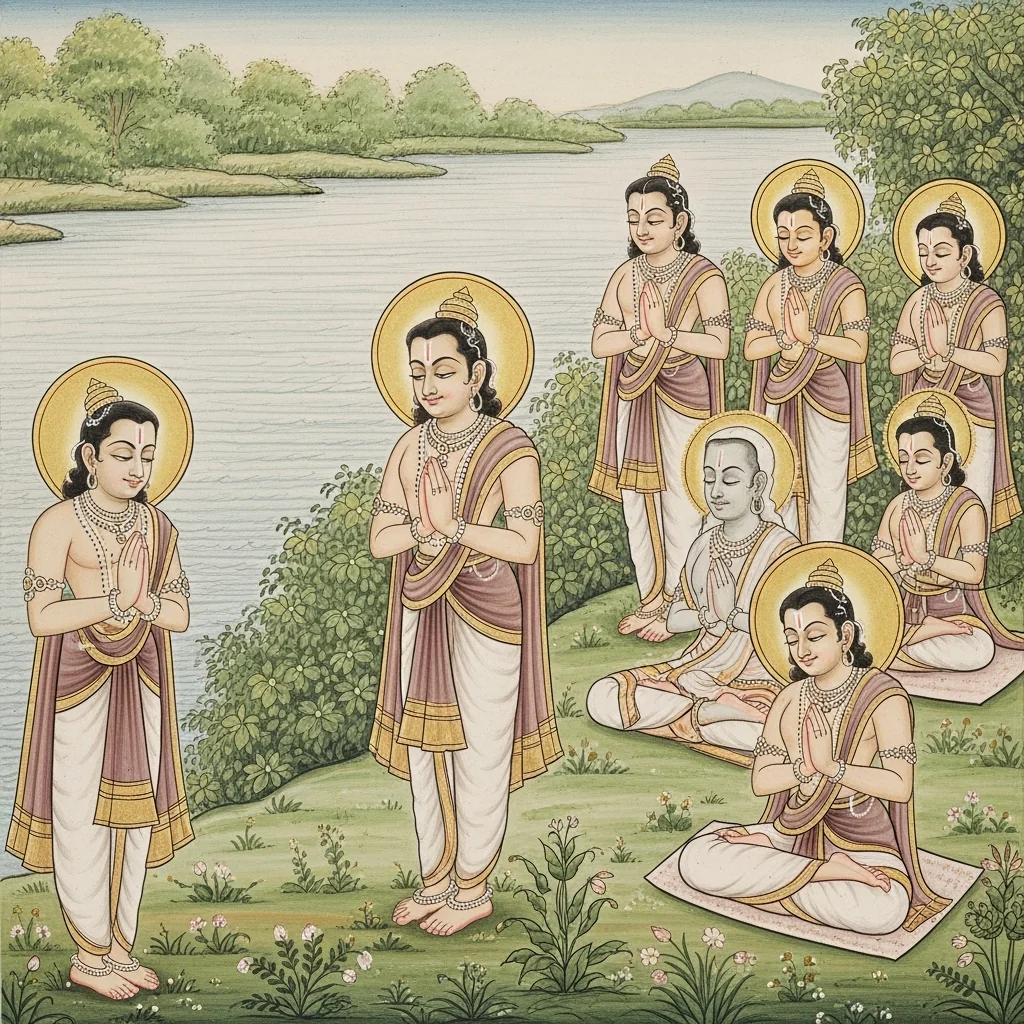
Chapter 37 is a theological dialogue in which the sage Mārkaṇḍeya explains to King Yudhiṣṭhira the origin and ritual power of Devatīrtha, an “unsurpassed” tīrtha on the Narmadā (Revā). The chapter opens by urging a visit to Devatīrtha, declaring that the thirty-three gods attained supreme success after bathing there. Yudhiṣṭhira asks how the devas, once defeated by stronger daityas, could regain success through a bath at that spot. Mārkaṇḍeya recounts that Indra and the devas were routed in battle, sorrowful and separated from their families, and sought refuge with Brahmā. Brahmā teaches that the remedy against the daityas is tapas on the Narmadā’s bank: tapas is the highest strength, and no mantra or deed equals the sin-destroying purity of Revā’s waters. Led by Agni, the devas go to the Narmadā, perform great austerities, and attain siddhi; from then on the place is famed in the three worlds as Devatīrtha, the destroyer of all sins. The chapter then sets out conduct and results: a restrained person who bathes there with devotion gains a “pearl-like” fruit; feeding Brahmins multiplies merit; the presence of a sacred stone (devaśilā) increases puṇya. Certain death-related observances (renunciation-death, fire-entry) are linked to lasting or exalted destinies. At this tīrtha, bathing, japa, homa, svādhyāya, and worship yield “imperishable” results. The closing phalaśruti says that those who recite or hear this sin-removing account are freed from suffering and proceed to the divine world.
Shlokas
Verse 1
श्रीमार्कण्डेय उवाच । ततो गच्छेत राजेन्द्र देवतीर्थमनुत्तमम् । येन देवास्त्रयस्त्रिंशत्स्नात्वा सिद्धिं परां गताः
Śrī Mārkaṇḍeya said: “Then, O king of kings, one should go to the unsurpassed sacred ford called Devatīrtha—where the thirty-three gods, having bathed, attained the highest perfection.”
Verse 2
युधिष्ठिर उवाच । कथं तात सुराः सर्वे दानवैर्बलवत्तरैः । निर्जितास्तत्र तीर्थे च स्नात्वा सिद्धिं परां गताः
Yudhiṣṭhira said: “How, revered sir, were all the gods defeated by the stronger Dānavas—and yet, by bathing at that very tīrtha, attained the supreme perfection?”
Verse 3
मार्कण्डेय उवाच । पुरा दैत्यगणैरुग्रैर्युद्धेऽतिबलवत्तरैः । इन्द्रो देवगणैः सार्द्धं स्वराज्याच्च्यावितो नृप
Mārkaṇḍeya said: “Formerly, O king, in a war against fierce hosts of Daityas of overpowering strength, Indra—together with the companies of gods—was driven out from his own sovereignty.”
Verse 4
हस्त्यश्वरथयानौघैर्मर्दयित्वा वरूथिनीम् । विध्वस्ता भेजिरे मार्गं प्रहारैर्जर्जरीकृताः
Crushed by torrents of elephants, horses, chariots, and vehicles that battered their host, they—shattered and broken by blows—took to the road in flight.
Verse 5
जम्भशुम्भैश्च कूष्माण्डकुहकादिभिः । वेपमानार्दिताः सर्वे ब्रह्माणमुपतस्थिरे
Afflicted and trembling because of Jambha, Śumbha, and others such as Kūṣmāṇḍa and Kuhaka, they all approached Brahmā for refuge and aid.
Verse 6
प्रणम्य शिरसा देवं ब्रह्माणं परमेष्ठिनम् । तदा विज्ञापयामासुर्देवा वह्निपुरोगमाः
Bowing their heads to the divine Brahmā, the Parameṣṭhin, the gods—led by Agni—then submitted their plea.
Verse 7
पश्य पश्य महाभाग दानवैः शकलीकृताः । वियोजिताः पुत्रदारैस्त्वामेव शरणं गताः
“See, see, O greatly fortunate one! The Dānavas have shattered us; separated from our sons and wives, we have come to you alone for refuge.”
Verse 8
परित्रायस्व देवेश सर्वलोकपितामह । नान्या गतिः सुरेशान त्वां मुक्त्वा परमेश्वर
“Protect us, O Lord of gods, O grandsire of all worlds! There is no other refuge, O ruler of the gods—apart from you, O supreme Lord.”
Verse 9
ब्रह्मोवाच । दानवानां विघातार्थं नर्मदातटमास्थिताः । तपः कुरुध्वं स्वस्थाः स्थ तपो हि परमं बलम्
Brahmā said: “For the destruction of the Dānavas, take your stand upon the bank of the Narmadā. Perform tapas; remain steadfast—for tapas indeed is the highest power.”
Verse 10
नान्योपायो न वै मन्त्रो विद्यते न च मे क्रिया । विना रेवाजलं पुण्यं सर्वपापक्षयंकरम्
“There is no other means—no mantra and no rite at my disposal—apart from the holy water of Revā, which brings about the destruction of all sins.”
Verse 11
दारिद्र्यव्याधिमरणबन्धनव्यसनानि च । एतानि चैव पापस्य फलानीति मतिर्मम
Poverty, disease, death, bondage, and various calamities—these indeed are the fruits of sin; such is my firm understanding.
Verse 12
एवं ज्ञात्वा ततश्चैव तपः कुरुत दुष्करम् । तथा चैव सुराः सर्वे देवा ह्यग्निपुरोगमाः
Knowing this, then undertake arduous tapas. And so indeed all the gods—led by Agni—did the same.
Verse 13
तच्छ्रुत्वा वचनं तथ्यं ब्रह्मणः परमेष्ठिनः । नर्मदामागताः सर्वे देवा ह्यग्निपुरोगमाः
Hearing the truthful command of Brahmā, the Supreme Lord (Parameṣṭhin), all the gods—led by Agni—came to the Narmadā.
Verse 14
चेरुर्वै तत्र विपुलं तपः सिद्धिमवाप्नुवन् । तदाप्रभृति तत्तीर्थं देवतीर्थमनुत्तमम्
There they performed abundant tapas and attained spiritual accomplishment. From that time onward, that ford became renowned as ‘Devatīrtha’, the unsurpassed sacred bathing-place.
Verse 15
गीयते त्रिषु लोकेषु सर्वपापक्षयंकरम् । तत्र गत्वा च यो मर्त्यो विधिना संयतेन्द्रियः
It is sung of in the three worlds as that which brings about the destruction of all sins. And whatever mortal goes there, restraining the senses and following due rite—
Verse 16
स्नानं समाचरेद्भक्त्या स लभेन्मौक्तिकं फलम् । यस्तु भोजयते विप्रांस्तस्मिंस्तीर्थे नराधिप
Should he perform bathing there with devotion, he obtains a ‘pearl-like’ reward, most precious. And he who feeds Brahmins at that very tīrtha, O lord of men—
Verse 17
स लभेन्मुख्यविप्राणां फलं साहस्रिकं नृप । तत्र देवशिला रम्या महापुण्यविवर्धिनी
He gains, O king, a thousandfold reward, equal to the merit of serving eminent Brahmins. There also is a delightful Deva-śilā, a sacred divine stone, which greatly increases merit.
Verse 18
संन्यासेन मृता ये तु तेषां स्यादक्षया गतिः । अग्निप्रवेशं यः कुर्यात्तस्मिंस्तीर्थे नराधिप
But those who die in the state of renunciation (saṃnyāsa) attain an imperishable destiny. And he who would enter fire at that tīrtha, O lord of men—
Verse 19
रुद्रलोके वसेत्तावद्यावदाभूतसंप्लवम् । एवं स्नानं जपो होमः स्वाध्यायो देवतार्चनम्
He would dwell in Rudra’s world until the cosmic dissolution. Thus there are: sacred bathing, mantra-recitation, fire-offering, Vedic self-study, and worship of the deity—
Verse 20
सुकृतं दुष्कृतं वाऽपि तत्र तीर्थेऽक्षयं भवेत् । एष ते विधिरुद्दिष्ट उत्पत्तिश्चैव भारत
Whether merit or demerit, whatever is done at that tīrtha becomes imperishable in its result. This rule has been explained to you, O Bhārata, along with the account of its origin.
Verse 21
देवतीर्थस्य निखिला यथा वै शङ्कराच्छ्रुता । पठन्ति ये पापहरं सर्वदुःखविमोचनम्
Whoever recites in full the account of Devatīrtha—just as it was heard from Śaṅkara—that recitation becomes a destroyer of sins and a liberator from every sorrow.
Verse 22
देवतीर्थस्य चरितं देवलोकं व्रजन्ति ते
Those who hear or recite the sacred narrative of Devatīrtha attain the world of the gods.
Verse 37
। अध्याय
“Chapter” — a colophon marker indicating the end or heading of an adhyāya.