Adhyaya 26
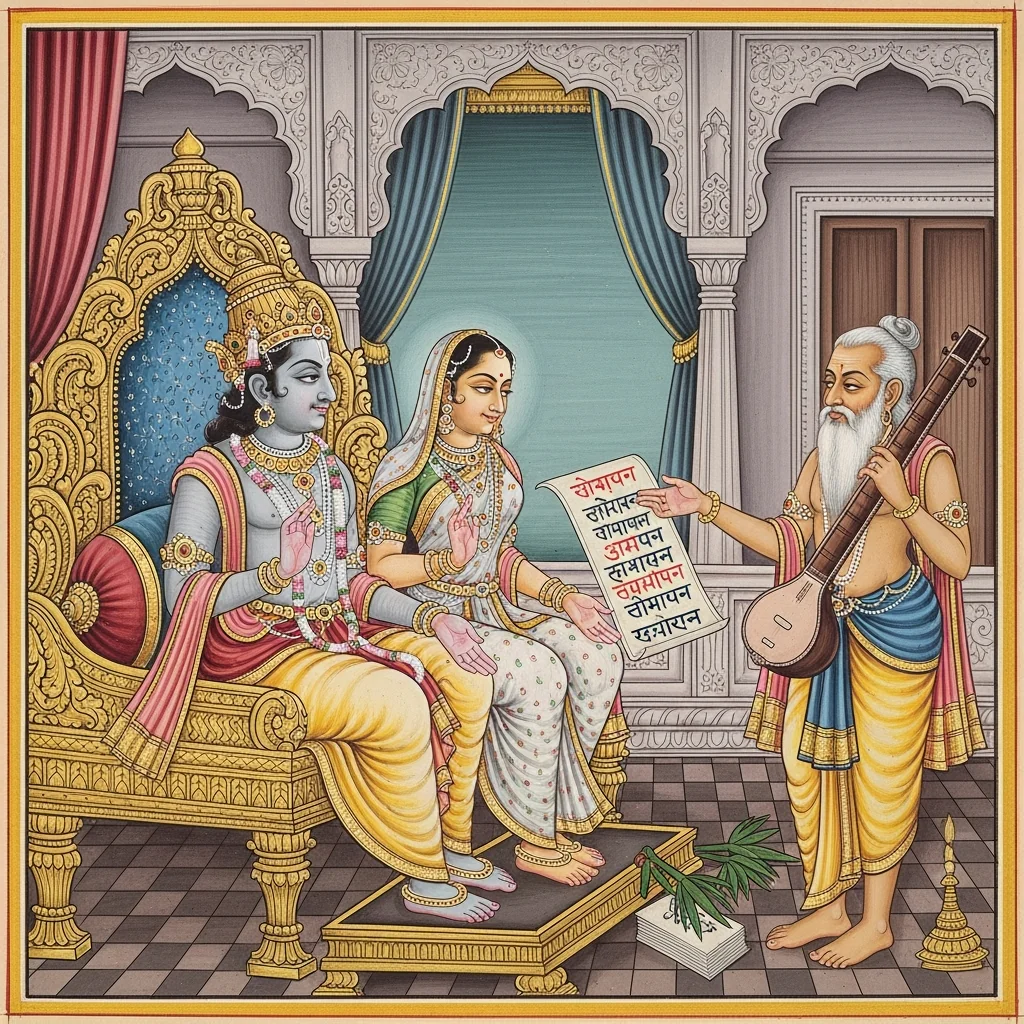
Chapter 26 presents a layered theological teaching. Yudhiṣṭhira asks Mārkaṇḍeya why the Jāleśvara tīrtha grants extraordinary merit and is revered by siddhas and rishis. Mārkaṇḍeya praises Jāleśvara as an unsurpassed sacred ford and explains a cosmic backdrop: devas and rishis are harassed by Bāṇa and allied asuras connected with the formidable, mobile Tripura. They first seek refuge with Brahmā, who admits Bāṇa’s near-invulnerability except through Śiva, and then approach Mahādeva with hymns highlighting Śiva’s many forms (pañcākṣara, pañcavaktra, aṣṭamūrti themes). Śiva promises relief and summons Nārada as a key instrument. Sent to Tripura to create internal differentiation through “many dharmas,” Nārada reaches Bāṇa’s splendid city, is honored, and converses with Bāṇa and the queen. The narrative then turns to practical instruction: Nārada teaches women’s vrata and dāna observances tied to lunar tithis, listing gifts (food, garments, salt, ghee, and more) and their fruits (health, auspiciousness, continuity of the family line). A major section details the Madhūkā/Lalitā vow beginning on Caitra śukla tṛtīyā: installing and worshiping an image of the madhuka tree with Śiva–Umā, mantra-linked limb worship, arghya and karaka-dāna formulas, a monthly regimen, and an annual udyāpana with offerings to the guru/ācārya. The chapter closes with promised results—removal of misfortune, growth of marital harmony and prosperity, and auspicious rebirth—framed within ethical and ritual discipline.
Shlokas
Verse 1
युधिष्ठिर उवाच । जालेश्वरेऽपि यत्प्रोक्तं त्वया पूर्वं द्विजोत्तम । तत्कथं तु भवेत्पुण्यमृषिसिद्धनिषेवितम्
Yudhiṣṭhira said: O best of the twice-born, what you previously declared about Jāleśvara—how does that sacred merit arise, at that tīrtha resorted to by sages and siddhas?
Verse 2
श्रीमार्कण्डेय उवाच । जालेश्वरात्परं तीर्थं न भूतं न भविष्यति । तस्योत्पत्तिं कथयतः शृणु त्वं पाण्डुनन्दन
Śrī Mārkaṇḍeya said: No tīrtha superior to Jāleśvara has existed, nor will it ever exist. Hear, O son of Pāṇḍu, as I relate its origin.
Verse 3
पुरा ऋषिगणाः सर्वे सेन्द्राश्चैव मरुद्गणाः । तापिता असुरैः सर्वैः क्षयं नीता ह्यनेकशः
In ancient times, all the companies of sages—together with Indra and the hosts of Maruts—were tormented by the asuras, and repeatedly brought to ruin in many ways.
Verse 4
बाणासुरप्रभृतिभिर्जम्भशुम्भपुरोगमैः । वध्यमाना ह्यनेकैश्च ब्रह्माणं शरणं गताः
Harried and struck down by many—led by Bāṇāsura and accompanied by Jambha and Śumbha—the gods sought refuge in Brahmā.
Verse 5
विमानैः पर्वताकारैर्हयैश्चैव गजोपमैः । स्यन्दनैर्नगराकारैः सिंहशार्दूलयोजितैः
They came with aerial cars vast as mountains, with horses like elephants, and with chariots shaped like cities—yoked with lions and tigers.
Verse 6
कच्छपैर्मकरैश्चान्ये जग्मुरन्ये पदातयः । प्राप्य ते परमं स्थानमशक्यं यदधार्मिकैः
Some went upon turtles and makaras, while others went on foot. Thus they reached the supreme abode—one unattainable to the unrighteous.
Verse 7
दृष्ट्वा पद्मोद्भवं देवं सर्वलोकस्य शङ्करम् । ते सर्वे तत्र गत्वा तु स्तुतिं चक्रुः समाहिताः
Beholding the lotus-born god, Śaṅkara, benefactor of all worlds, they all went there and, with composed minds, offered hymns of praise.
Verse 8
देवा ऊचुः । जयामेय जयाभेद जय सम्भूतिकारक । पद्मयोने सुरश्रेष्ठ त्वां वयं शरणं गताः
The gods said: “Victory to you, O invincible one—victory, source of all manifestation! O lotus-wombed one, best among the gods, we have come to you for refuge.”
Verse 9
तच्छ्रुत्वा तु वचो देवो देवानां भावितात्मनाम् । मेघगम्भीरया वाचा प्रत्युवाच पितामहः
Hearing those words of the gods, whose minds were disciplined, Pitāmaha replied in a voice deep as thunderclouds.
Verse 10
किं वो ह्यागमनं देवाः सर्वेषां च विवर्णता । केनावमानिताः सर्वे शीघ्रं कथयतामराः
“Why have you come, O gods—and why do you all appear so pallid? By whom have you all been dishonored? Tell me quickly, O immortals.”
Verse 11
देवा ऊचुः । बाणो नाम महावीर्यो दानवो बलदर्पितः । तेनास्माकं हृतं सर्वं धनरत्नैर्वियोजिताः
The gods said: “There is a dānava named Bāṇa, a great hero, intoxicated with the pride of strength. He has taken all that is ours, stripping us of wealth and jewels.”
Verse 12
देवानां वचनं श्रुत्वा ब्रह्मा लोकपितामहः । चिन्तयामास देवेशस्तस्य नाशाय या क्रिया
Hearing the gods’ words, Brahmā—the grandsire of the worlds—pondered what course of action could bring about his destruction.
Verse 13
अवध्यो दानवः पापः सर्वेषां वै दिवौकसाम् । मुक्त्वा तु शङ्करं देवं न मया न च विष्णुना
“That sinful dānava is invulnerable to all the dwellers of heaven; except for Śaṅkara, he cannot be slain—neither by me nor by Viṣṇu.”
Verse 14
तत्रैव सर्वे गच्छामो यत्र देवो महेश्वरः । स गतिश्चैव सर्वेषां विद्यतेऽन्यो न कश्चन
Let us all go there—where the Lord Maheśvara abides. He indeed is the sole refuge and final course for all; apart from Him, there is no other destination.
Verse 15
एवमुक्त्वा सुरैः सर्वैर्ब्रह्मा वेदविदांवरः । ब्राह्मणैः सह विद्वद्भिरतो यत्र महेश्वरः
Having thus addressed all the Devas, Brahmā—the foremost among the knowers of the Vedas—set out with learned Brāhmaṇas to that place where Maheśvara is present.
Verse 16
स्तुतिभिश्च सुपुष्टाभिस्तुष्टाव परमेश्वरम्
And with well-formed, powerful hymns, they praised Parameśvara.
Verse 17
देवा ऊचुः । जय त्वं देवदेवेश जयोमार्धशरीरधृक् । वृषासन महाबाहो शशाङ्ककृतभूषण
The Devas said: Victory to You, O God of gods, Lord of the Lords! Victory to You who bear Umā as half Your body. O Rider of the Bull, mighty-armed One, whose ornament is the moon!
Verse 18
नमः शूलाग्रहस्ताय नमः खट्वाङ्गधारिणे । जय भूतपते देव दक्षयज्ञविनाशन
Salutations to Him whose hand holds the trident’s point; salutations to the bearer of the khaṭvāṅga. Victory to You, Lord of beings—O Deva, destroyer of Dakṣa’s sacrifice!
Verse 19
पञ्चाक्षर नमो देव पञ्चभूतात्मविग्रह । पञ्चवक्त्रमयेशान वेदैस्त्वं तु प्रगीयसे
Homage to You through the five-syllabled mantra, O Deva—You whose form is the very Self of the five great elements. O Īśāna, manifest as the Five-Faced One, You are indeed sung of in the Vedas.
Verse 20
सृष्टिपालनसंहारांस्त्वं सदा कुरुषे नमः । अष्टमूर्ते स्मरहर स्मर सत्यं यथा स्तुतः
Homage to You who ever perform creation, preservation, and dissolution. O Eight-Formed One, destroyer of Kāma, remember our prayer as true, even as You are praised.
Verse 21
पञ्चात्मिका तनुर्देव ब्राह्मणैस्ते प्रगीयते । सद्यो वामे तथाघोरे ईशो तत्पुरुषे तथा
O Deva, the Brāhmaṇas sing of Your body as fivefold in essence: Sadyojāta, Vāma, Aghora, Īśa, and likewise Tatpuruṣa.
Verse 22
हेमजाले सुविस्तीर्णे हंसवत्कूजसे हर । एवं स्तुतो मुनिगणैर्ब्रह्माद्यैश्च सुरासुरैः
O Hara, in the widely spread golden expanse You sound forth like a swan. Thus You were praised by hosts of sages, by Brahmā and the other gods, and by Devas and Asuras alike.
Verse 23
प्रहृष्टः सुमना भूत्वा सुरसङ्घानुवाच ह
Delighted and gracious at heart, He then spoke to the assembled hosts of Devas.
Verse 24
ईश्वर उवाच । स्वागतं देवविप्राणां सुप्रभाताद्य शर्वरी । किं कुर्मो वदत क्षिप्रं कोऽन्यः सेव्यः सुरासुरैः
Īśvara said: “Welcome, O gods and brahmin-sages. This night has now turned to an auspicious dawn. Tell me quickly—what shall we do? Who else is there that is worthy to be sought for refuge and service by both devas and asuras?”
Verse 25
किं दुःखं को नु सन्तापः कुतो वो भयमागतम् । कथयध्वं महाभागाः कारणं यन्मनोगतम्
“What sorrow is this? What affliction has arisen? From where has your fear come? Tell me, O greatly fortunate ones, the cause that weighs upon your hearts.”
Verse 26
एवमुक्तास्तु रुद्रेण प्रत्यवोचन्सुरर्षभाः । स्वान्स्वान्देहान्दर्शयन्तो लज्जमाना अधोमुखाः
Thus addressed by Rudra, the best among the gods replied—showing their own bodies, ashamed, with faces cast downward.
Verse 27
अस्ति घोरो महावीर्यो दानवो बलदर्पितः । बाणो नामेति विख्यातो यस्य तत्त्रिपुरं महत्
There is a dreadful Dānava of mighty valor, intoxicated with strength and pride, famed by the name Bāṇa. His is that vast city called Tripura.
Verse 28
तेन वै सुतपस्तप्तं दशवर्षशतानि हि । तस्य तुष्टोऽभवद्ब्रह्मा नियमेन दमेन च
He performed severe austerities for a full thousand years. Pleased by his vows, discipline, and self-restraint, Brahmā became satisfied with him.
Verse 29
पुराणि तान्यभेद्यानि ददौ कामगमानि वै । आयसं राजतं चैव सौवर्णं च तथापरम्
He granted him those cities—unbreakable and able to move at will: one of iron, one of silver, and another of gold.
Verse 30
त्रिपुरं ब्रह्मणा सृष्टं भ्रमत्तत्कामगामि च । तस्यैव तु बलोत्कृष्टास्त्रिपुरे दानवाः स्थिताः
Tripura was fashioned by Brahmā—roaming and moving as desired. Within Tripura dwelt Dānavas of extraordinary strength, belonging to him.
Verse 31
त्रैलोक्यं सकलं देव पीडयन्ति महासुराः । दण्डपाशासिशस्त्राणि अविकारे विकुर्वते । त्रिपुरं दानवैर्जुष्टं भ्रमत्तच्चक्रसंनिभम्
O Deva, the great asuras oppress the entire three worlds. With clubs, nooses, swords, and weapons they wreak havoc without restraint. Tripura, thronged with Dānavas, roams about like a spinning wheel.
Verse 32
क्वचिद्दृश्यमदृश्यं वा मृगतृष्णैव लक्ष्यते
At times it is seen, and at times it is not—appearing like a mirage.
Verse 33
यस्मिन्पतति तद्दिव्यं दृप्तस्य त्रिपुरं महत् । न तत्र ब्राह्मणा देवा गावो नैव तु जन्तवः
Wherever that wondrous, vast Tripura of the arrogant one descends, there are no brāhmaṇas, no gods, no cows—indeed, no living beings remain there.
Verse 34
न तत्र दृश्यते किंचित्पतेद्यत्र पुरत्रयम् । नद्यो ग्रामाश्च देशाश्च बहवो भस्मसात्कृताः
Wherever that Triple City (Tripura) descends, nothing whatsoever is seen remaining there; many rivers, villages, and whole regions are reduced to ashes.
Verse 35
सुवर्णं रजतं चैव मणिमौक्तिकमेव च । स्त्रीरत्नं शोभनं यच्च तत्सर्वं कर्षते बलात्
Gold and silver, jewels and pearls, and even the precious treasure of women—whatever is splendid—he drags all of it away by sheer force.
Verse 36
न शस्त्रेण न चास्त्रेण न दिवा निशि वा हर । शक्यते देवसङ्घैश्च निहन्तुं स कथंचन
Neither by hand-weapons nor by missiles—neither by day nor by night, O Hara—can he be slain by the hosts of gods in any manner at all.
Verse 37
तद्दहस्व महादेव त्वं हि नः परमा गतिः । एवं प्रसादं देवेश सर्वेषां कर्तुमर्हसि
Therefore, burn it away, O Mahādeva, for You are our highest refuge. O Lord of the gods, deign to bestow such grace upon all.
Verse 38
येन देवाश्च गन्धर्वा ऋषयश्च तपोधनाः । परां धृतिं समायान्ति तत्प्रभो कर्तुमर्हसि
O Lord, do that by which the gods, the Gandharvas, and the sages rich in tapas may regain the highest steadiness and courage.
Verse 39
ईश्वर उवाच । एतत्सर्वं करिष्यामि मा विषादं गमिष्यथ । अचिरेणैव कालेन कुर्यां युष्मत्सुखावहम्
Īśvara said: “I shall do all this—do not sink into despair. In a very short time I will bring about what leads to your welfare and happiness.”
Verse 40
आश्वासयित्वा तान्देवान्सर्वानिन्द्रपुरोगमान् । चिन्तयामास देवेशस्त्रिपुरस्य वधं प्रति
Having reassured all those gods, with Indra at their head, the Lord of the gods began to contemplate the slaying of Tripura.
Verse 41
कथं केन प्रकारेण हन्तव्यं त्रिपुरं मया । तमेकं नारदं मुक्त्वा नान्योपायो विधीयते
“How, and by what method, am I to slay Tripura? Apart from that one—Nārada—no other means can be found.”
Verse 42
एवं संस्तभ्य चात्मानं ततो ध्यातः स नारदः । तत्क्षणादेव सम्प्राप्तो वायुभूतो महातपाः
Thus, steadying himself, he then meditated upon Nārada; and in that very instant the great ascetic arrived—swift as the wind.
Verse 43
कमण्डलुधरो देवस्त्रिदण्डी ज्ञानकोविदः । योगपट्टाक्षसूत्रेण छत्रेणैव विराजितः
That divine sage, bearing a water-pot, carrying the triple staff, skilled in sacred knowledge, and adorned with a yogic girdle, rosary, and parasol, shone resplendently.
Verse 44
जटाजूटाबद्धशिरा ज्वलनार्कसमप्रभः । त्रिधा प्रदक्षिणीकृत्य दण्डवत्पतितो भुवि
With his head bound in matted locks, radiant like blazing fire and the sun, he circumambulated (the Lord) three times and then fell to the earth in full prostration.
Verse 45
कृताञ्जलिपुटो भूत्वा नारदो भगवान्मुनिः । स्तोत्रेण महता शर्वः स्तुतो भक्त्या महामनाः
Then the blessed sage Nārada, joining his palms in reverence, praised Śarva (Śiva) with a great hymn, his heart filled with devotion.
Verse 46
नारद उवाच । जय शम्भो विरूपाक्ष जय देव त्रिलोचन । जय शङ्कर ईशान रुद्रेश्वर नमोऽस्तु ते
Nārada said: Victory to you, Śambhu, the Odd-eyed; victory to you, divine Three-eyed One. Victory to you, Śaṅkara, Īśāna, Rudreśvara—salutations to you!
Verse 47
त्वं पतिस्त्वं जगत्कर्ता त्वमेव लयकृद्विभो । त्वमेव जगतां नाथो दुष्टातकनिषूदनः
You are the Lord; you are the creator of the world, and you alone bring about its dissolution, O all-pervading One. You alone are the master of beings, the destroyer of the wicked and of sin.
Verse 48
त्वं नः पाहि सुरेशान त्रयीमूर्ते सनातन । भवमूर्ते भवारे त्वं भजतामभयो भव
Protect us, O Lord of the gods, O eternal One whose form is the three Vedas. O Bhava—whose very form is existence, and who removes worldly becoming—be a bestower of fearlessness to those who worship you.
Verse 49
भवभावविनाशार्थं भव त्वां शरणं भजे । किमर्थं चिन्तितो देव आज्ञा मे दीयतां प्रभो
For the destruction of worldly becoming, O Bhava, I take refuge in you. For what purpose have you been remembered, O God? Grant me your command, O Lord.
Verse 50
कस्य संक्षोभये चित्तं को वाद्य पततु क्षितौ । कमद्य कलहेनाहं योजये जयतांवर
Whose mind shall I agitate? Who should be cast down to the earth? Whom today shall I set into conflict by quarrel, O best of the victorious?
Verse 51
नारदस्य वचः श्रुत्वा देवदेवो महेश्वरः । उत्फुल्लनयनो भूत्वा इदं वचनमब्रवीत्
Hearing Nārada’s words, Maheśvara—the God of gods—his eyes bright with delight, spoke these words.
Verse 52
स्वागतं ते मुनिश्रेष्ठ सदैव कलहप्रिय । वीणावादनतत्त्वज्ञ ब्रह्मपुत्र सनातन
Welcome to you, best of sages—ever fond of stirring up disputes; knower of the true art of vīṇā-playing; eternal son of Brahmā.
Verse 53
गच्छ नारद शीघ्रं त्वं यत्र तत्त्रिपुरं महत् । बाणस्य दानवेन्द्रस्य सर्वलोकभयावहम्
Go quickly, Nārada, to where that great Tripura is—belonging to Bāṇa, the lord of the Dānavas—bringing fear to all the worlds.
Verse 54
भर्तारो देवतातुल्याः स्त्रियस्तत्राप्सरःसमाः । तासां वै तेजसा चैव भ्रमते त्रिपुरं महत्
In that city, the husbands are like the gods themselves, and the women are equal to celestial apsarases. Indeed, by the radiance of those women, the great Tripura itself seems to whirl and shimmer.
Verse 55
न शक्यते कथं भेत्तुं सर्वोपायैर्द्विजोत्तम । गत्वा त्वं मोहय क्षिप्रं पृथग्धर्मैरनेकधा
It cannot be broken by any means, O best of the twice-born. Therefore go—swiftly bewilder them, dividing them in many ways through differing codes of conduct.
Verse 56
नारद उवाच । तव वाक्येन देवेश भेदयामि पुरोत्तमम् । अभेद्यं बहुधोपायैर्यत्तु देवैः सवासवैः
Nārada said: “By your command, O Lord of the Devas, I shall divide that supreme city—though it was deemed unbreakable, even by the gods together with Indra, despite many methods.”
Verse 57
एवमुक्त्वा गतो भूप शतयोजनमायतम् । बाणस्य तत्पुरश्रेष्ठमृद्धिवृद्धिसमायुतम्
Having spoken thus, O king, he went to Bāṇa’s city, stretching a hundred yojanas—an excellent metropolis endowed with prosperity and ever-increasing magnificence.
Verse 58
कृतकौतुकसम्बाधं नानाधातुविचित्रितम् । अनेकहर्म्यसंछन्नमनेकायतनोज्ज्वलम्
It was crowded with crafted marvels, variegated with many minerals and metals; covered with countless mansions, and radiant with many shrines and halls.
Verse 59
द्वारतोरणसंयुक्तं कपाटार्गलभूषितम् । बहुयन्त्रसमोपेतं प्राकारपरिखोज्ज्वलम्
It was furnished with gateways and archways, adorned with doors and bolts; equipped with many mechanisms, and resplendent with ramparts and moats.
Verse 60
वापीकृपतडागैश्च देवतायतनैर्युतम् । हंसकारण्डवाकीर्णं पद्मिनीखण्डमण्डितम्
It was graced with wells, ponds, and tanks, and accompanied by temples and sanctuaries. It was filled with swans and kāraṇḍava birds, and adorned with stretches of lotus-groves.
Verse 61
अनेकवनशोभाढ्यं नानाविहगमण्डितम् । एवं गुणगणाकीर्णं बाणस्य पुरमुत्तमम्
Rich with the beauty of many forests and adorned with diverse birds—thus was Bāṇa’s excellent city, overflowing with multitudes of fine qualities.
Verse 62
तस्य मध्ये महाकायं सप्तकक्षं सुशोभितम् । बाणस्य भवनं दिव्यं सर्वं काञ्चनभूषितम्
At its center stood Bāṇa’s divine palace—vast in form, beautifully arranged with seven chambers, and wholly adorned with gold.
Verse 63
मौक्तिकादामशोभाढ्यं वज्रवैडूर्यभूषितम् । रुक्मपट्टतलाकीर्णं रत्नभूम्या सुशोभितम्
It was splendid with the beauty of pearl-garlands, ornamented with diamonds and vaidūrya gems. Its floors were inlaid with golden panels, and its ground shone with jeweled pavements.
Verse 64
मत्तमातङ्गनिःश्वासैः स्यन्दनैः संकुलीकृतम् । हयहेषितशब्दैश्च नारीणां नूपुरस्वनैः
It was thronged with chariots and filled with the hot breath of rutting elephants, resounding with the neighing of horses and the jingling of women’s anklets.
Verse 65
खड्गतोमरहस्तैश्च वज्राङ्कुशशरायुधैः । रक्षितं घोररूपैश्च दानवैर्बलदर्पितैः
It was guarded by fearsome Dānavas, proud of their strength, bearing swords and javelins in their hands, and armed with thunderbolt-weapons, goads, and arrows.
Verse 66
एवं गुणगणाकीर्णं बाणस्य भवनोत्तमम् । कैलासशिखरप्रख्यं महेन्द्रभवनोपमम्
Thus was Bāṇa’s most excellent palace, filled with hosts of splendid features—like the peak of Kailāsa, comparable to the mansion of Mahendra (Indra).
Verse 67
नारदो गगने शीघ्रमगमत्पुरसंमुखः । द्वारदेशं समासाद्य क्षत्तारं वाक्यमब्रवीत्
Nārada swiftly moved through the sky toward the city. Reaching the gate-area, he spoke these words to the chamberlain, the gate-attendant.
Verse 68
भोभोः क्षत्तर्महाबुद्धे राजकार्यविशारद । शीघ्रं बाणाय चाचक्ष्व नारदो द्वारि तिष्ठति
“Ho, ho! O chamberlain, great-minded and skilled in royal duties—quickly inform Bāṇa that Nārada is standing at the gate.”
Verse 69
स वन्दयित्वा चरणौ नारदस्य त्वरान्वितः । सभामध्यगतं बाणं विज्ञप्तुमुपचक्रमे
Having bowed to Nārada’s feet, and hastening, he began to report the matter to Bāṇa, who was in the midst of the assembly hall.
Verse 70
वेपमानाङ्गयष्टिस्तु करेणापिहिताननः । शृण्वतां सर्वयोधानामिदं वचनमब्रवीत्
Trembling in his limbs, and covering his face with his hand, he spoke these words while all the warriors listened.
Verse 71
वन्दितो देवगन्धर्वैर्यक्षकिन्नरदानवैः । कलिप्रियो दुराराध्यो नारदो द्वारि तिष्ठति
“Nārada—revered by Devas and Gandharvas, by Yakṣas, Kinnaras, and Dānavas—fond of stirring contention and hard to appease, is standing at the gate.”
Verse 72
द्वारपालस्य तद्वाक्यं श्रुत्वा बाणस्त्वरान्वितः । द्वाःस्थमाह महादैत्यः सविस्मयमिदं तदा
Hearing the gatekeeper’s words, Bāṇa spoke in haste; then and there the great Daitya, in astonishment, addressed the doorkeeper.
Verse 73
बाण उवाच । ब्रह्मपुत्रं सतेजस्कं दुःसहं दुरतिक्रमम् । प्रवेशय महाभागं किमर्थं वारितो बहिः
Bāṇa said: “Admit the son of Brahmā—radiant, formidable, and not to be obstructed. O fortunate one, why has he been kept waiting outside?”
Verse 74
श्रुत्वा प्रभोर्वचस्तस्य प्रावेशयदुदीरितम् । गत्वा वेगेन महता नारदं गृहमागतम्
Hearing his lord’s command to admit the guest, he hastened with great speed and brought Nārada into the palace residence.
Verse 75
दृष्ट्वा देवर्षिमायान्तं नारदं सुरपूजितम् । साहसोत्थाय संहृष्टो ववन्दे चरणौ मुनेः
Seeing Devarṣi Nārada approaching—one revered even by the gods—he rose at once in delight and bowed at the sage’s feet.
Verse 76
ददौ चासनमर्घ्यं च पाद्यं पूजां यथाविधि । न्यवेदयच्च तद्राज्यमात्मानं बान्धवैः सह
He offered a seat, arghya, water for washing the feet, and worship according to proper rule; and he also placed his kingdom—and himself, together with his kinsmen—at the sage’s disposal.
Verse 77
पप्रच्छ कुशलं चापि मुनिं बाणासुरः स्वयम्
Then Bāṇāsura himself asked the sage about his well-being.
Verse 78
नारद उवाच । साधु साधु महाबाहो दनोर्वंशविवर्द्धन । कोऽन्यस्त्रिभुवने श्लाघ्यस्त्वां मुक्त्वा दनुपुंगव
Nārada said: “Well done, well done, mighty-armed one—enhancer of Danu’s lineage! Who else in the three worlds is praiseworthy, apart from you, O foremost among the Dānavas?”
Verse 79
पूजितोऽहं दनुश्रेष्ठ धनरत्नैः सुशोभनैः । राज्येन चात्मना वापि ह्येवं कः पूजयेत्परः
“O best of Danu’s race, I have been honored with splendid wealth and jewels—and even with your kingdom and your very self. Who else would honor another in such a way?”
Verse 80
न मे कार्यं हि भोगेन भुङ्क्ष्व राज्यमनामयम् । त्वद्दर्शनोत्सुकः प्राप्तो दृष्ट्वा देवं महेश्वरम्
“I have no need of enjoyments; you may rule your kingdom in health and peace. Eager to see you, I have come—after having had the vision of the Lord, Maheśvara.”
Verse 81
भ्रमते त्रिपुरं लोके स्त्रीसतीत्वान्मया श्रुतम् । तान्द्रष्टुकामः सम्प्राप्तस्त्वद्दारान्दानवेश्वर
“It is said in the world that Tripurā roams about because of her wifely chastity—so I have heard. Desiring to see them, I have come to your wives, O lord of the Dānavas.”
Verse 82
मन्यसे यदि मे शीघ्रं दर्शयस्व च माचिरम् । नारदस्य वचः श्रुत्वा कञ्चुकिं समुदीक्ष्य वै
“If you so wish, show them to me quickly—do not delay.” Hearing Nārada’s words, the king then looked toward the chamberlain.
Verse 83
अन्तःपुरचरं वृद्धं दण्डपाणिं गुणान्वितम् । उवाच राजा हृष्टात्मा शब्देनापूरयन्दिशः
The delighted king spoke to the aged, virtuous elder who moved within the inner palace—staff in hand—filling the directions with his voice.
Verse 84
नारदाय महादेवीं दर्शयस्वेह कञ्चुकिन् । अन्तःपुरचरैः सर्वैः समेतामविशङ्कितः
“O chamberlain, show the great Queen, Mahādevī, to Nārada here. Let her come accompanied by all the attendants of the inner palace, without any fear or suspicion.”
Verse 85
नाथस्याज्ञां पुरस्कृत्य गृहीत्वा नारदं करे । प्रविश्याकथयद्देव्यै नारदोऽयं समागतः
Honouring the Lord’s command, the chamberlain took Nārada by the hand, entered within, and announced to the Queen, “This is Nārada—he has arrived.”
Verse 86
दृष्ट्वा देवी मुनिश्रेष्ठं कृत्वा पादाभिवन्दनम् । आसनं काञ्चनं शुभ्रमर्घ्यपाद्यादिकं ददौ
Seeing the foremost of sages, the Queen bowed at his feet and offered him a pure, auspicious golden seat, along with arghya, water for the feet, and other rites of welcome.
Verse 87
तस्यै स भगवांस्तुष्टो ह्याशीर्वादमदात्परम् । नान्या देवि त्रिलोकेऽपि त्वत्समा दृश्यतेऽङ्गना
Pleased with her, the blessed sage bestowed a supreme blessing: “O Devī, in all the three worlds no other woman is seen equal to you.”
Verse 88
पतिव्रता शुभाचारा सत्यशौचसमन्विता । यस्याः प्रभावात्त्रिपुरं भ्रमते चक्रवत्सदा
“A devoted wife, of noble conduct, endowed with truthfulness and purity—by whose spiritual power Tripura itself continually revolves like a wheel.”
Verse 89
तच्छ्रुत्वा वचनं देवी नारदस्य सुदान्वितम् । पर्यपृच्छदृषिं भक्त्या धर्मं धर्मभृतांवरा
Hearing Nārada’s gracious words, the Queen—foremost among upholders of dharma—devoutly questioned the sage about righteous duty.
Verse 90
राज्ञ्युवाच । भगवन्मानुषे लोके देवास्तुष्यन्ति कैर्व्रतैः । कानि दानानि दीयन्ते येषां च स्यान्महत्फलम्
The Queen said: “O venerable one, in the human world, by which vows are the gods pleased? And what charities should be given—those that yield great fruit?”
Verse 91
उपवासाश्च ये केचित्स्त्रीधर्मे कथिता बुधैः । यैः कृतैः स्वर्गमायान्ति सुकृतिन्यः स्त्रियो यथा
“And whatever fasts are taught by the wise as part of women’s dharma—by performing which, virtuous women attain heaven—tell me of those as well.”
Verse 92
यत्तत्सर्वं महाभाग कथयस्व यथातथम् । श्रोतुमिच्छाम्यहं सर्वं कथयस्वाविशङ्कितः
O great one, tell all of that exactly as it is. I wish to hear everything—speak without hesitation.
Verse 93
नारद उवाच । साधु साधु महाभागे प्रश्नोऽयं वेदितस्त्वया । यं श्रुत्वा सर्वनारीणां धर्मवृद्धिस्तु जायते
Nārada said: “Well said, well said, O noble lady. This question has been rightly understood and asked by you; on hearing its answer, the growth of dharma among all women indeed arises.”
Verse 94
उपवासैश्च दानैश्च पतिपुत्रौ वशानुगौ । बान्धवैः पूज्यते नित्यं यैः कृतैः कथयामि ते
By fasts and by charitable gifts, one’s husband and sons become devoted and compliant; and one is honored daily by one’s relatives. I shall tell you the rites by performing which these results arise.
Verse 95
दुर्भगा सुभगा यैस्तु सुभगा दुर्भगा भवेत् । पुत्रिणी पुत्ररहिता ह्यपुत्रा पुत्रिणी तथा
By these (rites), an unfortunate woman becomes fortunate, and even the fortunate may become unfortunate (when they are neglected). A mother may become bereft of sons, and the sonless may likewise obtain sons.
Verse 96
भर्तारं लभते कन्या तथान्या भर्तृवर्जिता । कृताकृतैश्च जायन्ते तन्निबोधस्व सुन्दरि
A maiden obtains a husband, while another remains without a husband. Such results arise from deeds done and not done—understand this well, O fair one.
Verse 97
तिलधेनुं सुवर्णं च रूप्यं गा वाससी तथा । पानीयं भूमिदानं च गन्धधूपानुलेपनम्
The offering of a “sesame-cow,” and gifts of gold and silver, cows and garments; likewise the giving of drinking water and land, and offerings of fragrance, incense, and unguents—these are the charities that are praised.
Verse 98
पादुकोपानहौ छत्रं पुण्यानि व्यञ्जनानि च । पादाभ्यङ्गं शिरोऽभ्यङ्गं स्नानं शय्यासनानि च
Sandals and shoes, an umbrella, and wholesome foods; the anointing and massage of feet and head, bathing, and gifts of beds and seats—these too are meritorious offerings.
Verse 99
एतानि ये प्रयच्छन्ति नोपसर्पन्ति ते यमम् । मधु माषं पयः सर्पिर्लवणं गुडमौषधम्
Those who bestow these gifts do not draw near to Yama, the Lord of Death. Further commendable gifts are honey, black gram, milk, ghee, salt, jaggery, and medicines.
Verse 100
पानीयं भूमिदानं च शालीनिक्षुरसांस्तथा । आरक्तवाससी श्लक्ष्णे दम्पत्योर्ललितादिने
Gifts of drinking water and land, and also rice and sugarcane-juice; and soft garments of a reddish hue—these are to be offered to the couple on the auspicious day of Lalitā.
Verse 101
सौभाग्यं जायते चैव इह लोके परत्र च । ब्राह्मणे वृत्तसम्पन्ने सुरूपे च गुणान्विते
From this, good fortune arises—both in this world and in the next—especially when the gift is offered to a brāhmaṇa of good conduct, pleasing appearance, and endowed with virtues.
Verse 102
तिथौ यस्यामिदं देयं तत्ते राज्ञि वदाम्यहम् । प्रतिपत्सु च या नारी पूर्वाह्णे च शुचिव्रता
I shall tell you, O queen, on which tithi (lunar day) this is to be given. On Pratipat, the woman who, in the forenoon, undertakes a pure observance…
Verse 103
इन्धनं ब्राह्मणे दद्यात्प्रीयतां मे हुताशनः । तस्या जन्मानि षट्त्रिंशदङ्गप्रत्यङ्गसन्धिषु
She should give firewood to a brāhmaṇa, thinking, “May Agni be pleased with me.” For her there are thirty-six (effects) in the joints of the major and minor limbs…
Verse 104
न रजो नैव सन्तापो जायते राजवल्लभे । द्वितीयायां तु या नारी नवनीतमुदान्विता
O beloved of the king, for that woman there arises neither menstrual affliction nor bodily heat. Indeed, the woman who on Dvitīyā (the second lunar day) gives fresh butter in charity attains this merit.
Verse 105
ददाति द्विजमुख्याय सुकुमारतनुर्भवेत् । लवणं विप्रवर्याय तृतीयायां प्रयच्छति
By giving in charity to a foremost brāhmaṇa, one becomes possessed of a delicate and graceful body; and she who on Tṛtīyā (the third lunar day) offers salt to an excellent brāhmaṇa gains such merit.
Verse 106
गौरी मे प्रीयतां देवी तस्याः पुण्यफलं शृणु । कौमारिका पतिं प्राप्य तेन सार्द्धमुमा यथा
“May the goddess Gaurī be pleased with me.” Hear the meritorious fruit of that observance: a maiden attains a husband and, like Umā, dwells with him in auspicious union.
Verse 107
क्रीडत्यविधवा चापि लभते सा महद्यशः । नक्तं कृत्वा चतुर्थ्यां वै दद्याद्विप्राय मोदकान्
She dwells in joy and is not widowed; she also attains great renown. Having observed the night-fast (nakta), on the fourth lunar day (Caturthī) one should offer sweet modakas to a Brāhmaṇa.
Verse 108
प्रीयतां मम देवेशो गणनाथो विनायकः । तस्यास्तेन फलेनाशु सर्वकर्मसु भामिनि
“May my Lord of gods—Gaṇanātha, Vināyaka—be pleased.” By the fruit of that merit, O fair lady, she swiftly attains success in all undertakings.
Verse 109
विघ्नं न जायते क्वापि एवमाह पितामहः । पञ्चमीं तु ततः प्राप्य ब्राह्मणे तिलदा तु या
No obstacle arises anywhere—so said Pitāmaha (Brahmā). Then, upon reaching the fifth lunar day (Pañcamī), she who gives sesame to a Brāhmaṇa earns the stated merit.
Verse 110
सा भवेद्रूपसम्पन्ना यथा चैव तिलोत्तमा । षष्ठ्यां तु या मधूकस्य फलदा तु भवेत्सदा
She becomes endowed with beauty, like Tilottamā herself. And she who, on the sixth lunar day (Ṣaṣṭhī), offers the fruit of the madhūka tree is ever a bestower of fruitful results, enjoying lasting prosperity.
Verse 111
उद्दिश्य चाग्निजं देवं ब्राह्मणे वेदपारगे । तस्याः पुत्रो यथा स्कन्दो देवसङ्घेषु चोत्तमः
Dedicating the gift to the fire-born god, Agni’s son, and giving it to a Brāhmaṇa learned in the Vedas, her son becomes like Skanda, foremost among the hosts of the gods.
Verse 112
उत्पद्यते महाराजः सर्वलोकेषु पूजितः । सप्तम्यां या द्विजश्रेष्ठं सुवर्णेन प्रपूजयेत्
A great king is born, honored in all worlds. She who, on Saptamī (the seventh lunar day), devoutly honors an excellent Brāhmaṇa with gold attains this merit.
Verse 113
उद्दिश्य जगतो नाथं देवदेवं दिवाकरम् । तस्य पुण्यफलं यद्वै कथितं द्विजसत्तमैः
When the act is dedicated to the Lord of the world—the God of gods, the Sun, Divākara—the meritorious fruit of it has indeed been declared by the best of Brāhmaṇas.
Verse 114
तत्ते राज्ञि प्रवक्ष्यामि शृणुष्वैकमनाः सति । दद्रूचित्रककुष्ठानि मण्डलानि विचर्चिका
O queen, I shall explain this to you—listen with single-pointed attention, O virtuous lady: ringworm, spotted leprosy, patch-forming skin diseases, and scabies (are removed by the prescribed sacred observances and gifts).
Verse 115
न भवन्तीह चाङ्गेषु पूर्वकर्मार्जितान्यपि । कृष्णां धेनुं तथाष्टम्यां या प्रयच्छति भामिनी
Even ailments acquired from deeds of former karma do not arise upon her body here, O noble lady—she who, on Aṣṭamī (the eighth lunar day), gives a black cow in charity.
Verse 116
ब्राह्मणे वृत्तसम्पन्ने प्रीयतां मे महेश्वरः । तस्या जन्मार्जितं पापं नश्यते विभवान्विता
When the gift is offered to a Brāhmaṇa endowed with righteous conduct, may my Maheśvara be pleased. For that woman, endowed with prosperity, sin accumulated across births is destroyed.
Verse 117
जायते नात्र सन्देहो यस्माद्दानमनुत्तमम् । गन्धधूपं तु या नारी भक्त्या विप्राय दापयेत्
There is no doubt of it, for this gift is unsurpassed: the woman who, with devotion, offers perfumes and incense to a Brāhmaṇa as an act of reverent homage.
Verse 118
कात्यायनीं समुद्दिश्य नवम्यां शृणु यत्फलम् । तस्या भ्राता पिता पुत्रः पतिर्वा रणमुत्तमम्
Hear the fruit of the rite performed on Navamī, dedicated to Kātyāyanī: her brother, father, son, or husband attains excellence in battle.
Verse 119
प्राप्यते नैव सीदन्ति तेन दानेन रक्षिताः । इक्षुदण्डरसं देवि दशम्यां या प्रयच्छति
They attain their aim and do not fall into distress, being protected by that gift. O Goddess, she who gives sugarcane juice on Daśamī—
Verse 120
लोकपालान्समुद्दिश्य ब्राह्मणे व्यङ्गवर्जिते । तेन दानेन सा नित्यं सर्वलोकस्य वल्लभा
Dedicating it to the Guardians of the Worlds and giving it to a Brāhmaṇa free from bodily defect, by that charity she becomes ever dear to all people.
Verse 121
जायते नात्र सन्देह इत्येवं शङ्करोऽब्रवीत् । एकादश्यामुपोष्याथ द्वादश्यामुदकप्रदा
“It surely comes to pass—there is no doubt,” thus Śaṅkara spoke. “Fasting on Ekādaśī, and then on Dvādaśī giving water as a gift—”
Verse 122
नारायणं समुद्दिश्य ब्राह्मणे विष्णुतत्परे । सा सदा स्पर्शसम्भाषैर्द्रावयेद्भावयेज्जनम्
Dedicating the gift to Nārāyaṇa and offering it to a Brāhmaṇa devoted to Viṣṇu, she ever wins people over and uplifts them—by her touch and by her speech.
Verse 123
यस्माद्दानं महर्लोके ह्यनन्तमुदके भवेत् । पादाभ्यङ्गं शिरोऽभ्यङ्गं काममुद्दिश्य वै द्विजे
For the gift of water becomes endless in merit, reaching even Maharloka. Likewise, foot-massage and anointing of the head, when offered to a twice-born with proper intention, bear great fruit.
Verse 124
ददाति च त्रयोदश्यां भक्त्या परमयाङ्गना । यस्यां यस्यां मृता जायेद्भूयो योन्यां तु जन्मनि
A devoted woman should give in charity on the thirteenth lunar day, with supreme faith. In whatever womb she may die, in that very womb she is born again in a later birth.
Verse 125
तस्यां तस्यां तु सा भर्तुर्न वियुज्येत कर्हिचित् । तथाप्येवं चतुर्दश्यां दद्यात्पात्रमुपानहौ
In each such birth she is never separated from her husband. Even so, in this manner, on the fourteenth lunar day one should give in charity a vessel and a pair of sandals.
Verse 126
ब्रह्मणे धर्ममुद्दिश्य तस्या लोका ह्यनामयाः । एवं च पक्षपक्षान्ते श्राद्धे तर्पेद्द्विजोत्तमान्
Dedicating the act to Brahman and to Dharma, her worlds become free from affliction. Likewise, at the close of each fortnight, during śrāddha, one should offer tarpaṇa to the best of the twice-born.
Verse 127
अव्युच्छिन्ना सदा राज्ञि सन्ततिर्जायते भुवि । एवं ते तिथिमाहात्म्यं दानयोगेन भाषितम्
O Queen, upon the earth an unbroken line of progeny is ever born. Thus have I explained to you the greatness of the tithis through the discipline of charitable giving.
Verse 128
तथा वनस्पतीनां तु आराधनविधिं शृणु । जम्बूं निम्बतरुं चैव तिन्दुकं मधुकं तथा
Now hear as well the method of worship for sacred trees—jambū, the nimba (neem) tree, and also tinduka and madhūka.
Verse 129
आम्रं चामलकं चैव शाल्मलिं वटपिप्पलौ । शमीबिल्वामलीवृक्षं कदलीं पाटलीं तथा
Also the mango and the āmalaka, the śālmali, the banyan and the pippala; the śamī, bilva, and āmalī trees; and likewise the banana plant and the pāṭalī.
Verse 130
अन्यान्पुण्यतमान्वृक्षानुपेत्य स्वर्गमाप्नुयात्
By approaching and honoring other supremely meritorious trees as well, one attains heaven.
Verse 131
नारद उवाच । चैत्रे मासे तु या नारी कुर्याद्व्रतमनुत्तमम् । तस्य व्रतस्य चान्यानि कलां नार्हन्ति षोडशीम्
Nārada said: In the month of Caitra, whatever woman undertakes the unsurpassed vow—no other observances equal even a sixteenth part of that vow’s merit.
Verse 132
श्रुतेन येन सुभगे दुर्भगत्वं न पश्यति । यथा हिमं रविं प्राप्य विलयं याति भूतले
O fortunate one, by hearing it, misfortune is no longer seen—just as frost, upon meeting the sun, melts away upon the earth.
Verse 133
तथा दुःखं च दौर्भाग्यं व्रतादस्माद्विलीयते । मधुकाख्यां तु ललितामाराधयति येन वै
So too, sorrow and ill-fortune melt away because of this vow—by which one worships Lalitā known as ‘Madhukā’.
Verse 134
विधिं तं शृणु सुभगे कथ्यमानं सुखावहम् । चैत्रे शुक्लतृतीयायां सुस्नाता शुद्धमानसा
O fortunate lady, listen to that procedure now being taught, which brings well-being and happiness. On the bright third lunar day of Caitra, having bathed well and with a purified mind, one should begin the observance.
Verse 135
प्रतिमां मधुवृक्षस्य शाङ्करीमुमया सह । कारयित्वा द्विजवरैः प्रतिष्ठाप्य यथाविधि
Having a sacred image made—of Śaṅkara together with Umā, fashioned in connection with the madhūka tree—one should have the excellent brāhmaṇas establish it according to the proper ritual rules.
Verse 136
सुगन्धिकुसुमैर्धूपैस्तथा कर्पूरकुङ्कुमैः । पूजयेद्विधिना देवं मन्त्रयुक्तेन भामिनी
With fragrant flowers, incense, and also camphor and saffron, O lovely lady, one should worship the Lord according to the rite, accompanied by the appropriate mantras.
Verse 137
पादौ नमः शिवायेति मेढ्रे वै मन्मथाय च । कालोदरायेत्युदरं नीलकंठाय कण्ठकम्
One should worship the feet with the mantra “Namaḥ Śivāya”; the generative organ with “(Salutation) to Manmatha”; the belly with “(Salutation) to Kālodara”; and the throat with “(Salutation) to Nīlakaṇṭha.”
Verse 138
शिरः सर्वात्मने पूज्य उमां पश्चात्प्रपूजयेत् । क्षामोदरायैह्युदरं सुकण्ठायै च कण्ठकम्
Having worshipped the head with (salutation) to the “All-Souled One” (Sarvātman), one should thereafter duly worship Umā—(adoring) her belly as “Kṣāmodarā” and her throat as “Sukaṇṭhā.”
Verse 139
शिरः सौभाग्यदायिन्यै पश्चादर्घ्यं प्रदापयेत्
At the head, worshipping her as the “Bestower of good fortune,” one should thereafter offer arghya.
Verse 140
नमस्ते देवदेवेश उमावर जगत्पते । अर्घ्येणानेन मे सर्वं दौर्भाग्यं नाशय प्रभो । इति अर्घ्यमन्त्रः
Salutations to You, O Lord of lords, O Consort of Umā, O Master of the worlds. By this arghya, O Lord, destroy all my ill-fortune—this is the arghya-mantra.
Verse 141
अर्घ्यं दत्त्वा ततः पश्चात्करकं वारिपूरितम् । मधूकपात्रोपभृतं सहिरण्यं तु शक्तितः
After giving arghya, one should then present a water-filled karaka (vessel), set in a madhūka-wood container, and—according to one’s capacity—together with gold.
Verse 142
करकं वारिसम्पूर्णं सौभाग्येन तु संयुतम् । दत्तं तु ललिते तुभ्यं सौभाग्यादिविवर्धनम् । इति करकदानमन्त्रः
“This karaka, filled with water and endowed with auspicious fortune, is given to you, O Lalitā, for the increase of good fortune and the like”—thus is the karaka-dāna mantra.
Verse 143
मन्त्रेणानेन विप्राय दद्यात्करकमुत्तमम् । लवणं वर्जयेच्छुक्लां यावदन्यां तृतीयिकाम्
With this mantra, one should give the excellent karaka to a brāhmaṇa. One should avoid salt throughout the bright fortnight until the next third lunar day (tṛtīyā).
Verse 144
क्षमाप्य देवीं देवेशां नक्तमद्यात्स्वयं हविः । अनेन विधिना सार्धं मासि मासि ह्यपक्रमेत्
Having sought forgiveness from the Goddess—the supreme Lady of the gods—one should eat only at night, taking simple sacrificial food (havis) oneself. Following this very procedure, one should continue the observance month after month in due order.
Verse 145
फाल्गुनस्य तृतीयायां शुक्लायां तु समाप्यते । वैशाखे लवणं देयं ज्येष्ठे चाज्यं प्रदीयते
It is concluded on the third day of the bright fortnight of Phālguna. In Vaiśākha, salt should be given in charity; and in Jyeṣṭha, ghee is to be offered as a gift.
Verse 146
आषाढे मासि निष्पावाः पयो देयं तु श्रावणे । मुद्गा देया नभस्ये तु शालिमाश्वयुजे तथा
In the month of Āṣāḍha, niṣpāva beans should be given; in Śrāvaṇa, milk should be donated. In Nabhasya (Bhādrapada), mung beans (mudga) are to be given; and likewise in Āśvayuja, śāli rice should be offered.
Verse 147
कार्त्तिके शर्करापात्रं करकं रससंभृतम् । मार्गशीर्षे तु कार्पासं करकं घृतसंयुतम्
In Kārttika, one should offer a vessel of sugar and a water-pot filled with sweet juice. In Mārgaśīrṣa, one should offer a water-pot filled with cotton, together with ghee.
Verse 148
पौषे तु कुङ्कुमं देयं माघे पात्रं तिलैर्भृतम् । फाल्गुने मासि सम्प्राप्ते पात्रं मोदकसंभृतम्
In Pauṣa, kuṅkuma should be given. In Māgha, one should donate a vessel filled with sesame. When Phālguna arrives, one should offer a vessel filled with modakas, sweet offerings.
Verse 149
पश्चात्तृतीयादेयं यत्तत्पूर्वस्यां विवर्जयेत् । विधानमासां सर्वासां सामान्यं मनसः प्रिये
Whatever is prescribed to be given after the third day should not be given on the earlier day. This is the common rule for the procedure of all the months, O beloved of my heart.
Verse 150
प्रतिमां मधुवृक्षस्य तामेव प्रतिपूजयेत् । तस्मै सर्वं तु विप्राय आचार्याय प्रदीयते
One should fashion an image of the Madhu-tree and worship that very image with due reverence. Then all of it should be given to a brāhmaṇa—one’s ācārya—as the concluding gift.
Verse 151
ततः संवत्सरस्यान्ते उद्यापनविधिं शृणु । मधुवृक्षं ततो गत्वा बहुसम्भारसंवृतः
Then, at the end of the year, listen to the procedure for the concluding rite (udyāpana). Thereafter, having gone to the Madhu-tree, one should be equipped with abundant ritual requisites.
Verse 152
निखनेत्प्रतिमां मध्ये माधूकीं मधुकस्य च । तत्रस्थं पूजयेत्सर्वमुमादेहार्द्धधारिणम्
In the midst of the site one should set in place an image of Mādhūkī (Madhūka) and of the Madhu-tree. There, with all rites in full, one should worship the Lord who bears Umā as his half-body—Śiva in the Ardhanārī form.
Verse 153
पूजोपहारैर्विपुलैः कुङ्कुमेन पुनःपुनः । श्लक्ष्णाभिः पुष्पमालाभिः कौसुम्भैः केसरेण च
With abundant offerings of worship—again and again with kuṅkuma—adorn him with soft garlands of flowers, with kausumbha (safflower) blossoms, and with filaments of kesara (saffron) as well.
Verse 154
कौसुम्भे वाससी शुभ्रे अतसीपुष्पसन्निभे । परिधाप्य तां प्रतिमां दम्पती रविसंख्यया
Clothing that divine image in auspicious, bright kausumbha garments, resembling the blossoms of atasi (flax), the couple should duly adorn the icon, observing the prescribed count as taught in the tradition.
Verse 155
उपानद्युगलैश्छत्रैः कण्ठसूत्रैः सकण्ठिकैः । कटकैरङ्गुलीयैश्च शयनीयैः शुभास्तृतैः
With pairs of sandals, parasols, neck-threads with pendants, bracelets and rings, and with beds furnished with auspicious coverings—by such offerings one should honor the divine couple/the sacred icon.
Verse 156
कुङ्कुमेन विलिप्ताङ्गौ बहुपुष्पैश्च पूजितौ । भोजयेद्विविधै रत्नैर्मधूकावासके स्थितौ
Anointing their limbs with kuṅkuma and worshipping them with many flowers, one should then offer them food and present varied precious gifts, while the rite is performed in the madhūka sanctuary, their sacred dwelling.
Verse 157
भुक्तोत्थितौ तु विश्राम्य शय्यासु च क्षमापयेत् । गुरुमूलं यतः सर्वं गुरुर्ज्ञेयो महेश्वरः
After they have eaten and risen, letting them rest upon beds, one should seek their pardon; for all dharma has the guru as its root—indeed, the guru is to be known as Maheśvara himself.
Verse 158
प्रीते गुरौ ततः सर्वं जगत्प्रीतं सुरासुरम् । यद्यदिष्टतमं लोके यत्किंचिद्दयितं गृहे
When the guru is pleased, then the whole world—gods and asuras alike—becomes pleased. Whatever is most cherished in the world, and whatever dear possession is in one’s home—
Verse 159
तत्सर्वं गुरवे देयमात्मनः श्रेय इच्छता । इदं तु धनिभिर्देयमन्यैर्देयं यथोच्यते
All that should be given to the guru by one who seeks one’s own highest good. Yet this is to be given by the wealthy; for others, giving should be done according to what is appropriate and as prescribed.
Verse 160
दाम्पत्यमेकं विधिवत्प्रतिपूज्य शुभव्रतैः । द्वितीयं गुरुदाम्पत्यं वित्तशाठ्यं विवर्जयेत्
Having duly worshipped one divine ‘couple’ according to rule through auspicious vows, (one should next worship) the ‘guru-couple’ as the second; and one must avoid deceit or miserliness concerning wealth in these offerings.
Verse 161
ततः क्षमापयेद्देवीं देवं च ब्राह्मणं गुरुम् । यथा त्वं देवि ललिते न वियुक्तासि शम्भुना
Thereafter one should seek pardon from the Goddess, the God, and the brāhmaṇa-guru, praying: ‘O Goddess Lalitā, just as you are never separated from Śambhu—’
Verse 162
तथा मे पतिपुत्राणामवियोगः प्रदीयताम् । अनेन विधिना कृत्वा तृतीयां मधुसंज्ञिकाम्
“So too, may I be granted non-separation from my husband and sons.” Having performed, by this very procedure, the third observance known as “Madhu”—
Verse 163
इन्द्राणी चेन्द्रपत्नीत्वमवाप सुतमुत्तमम् । सौभाग्यं सर्वलोकेषु सर्वर्द्धिसुखमुत्तमम्
Indrāṇī attained the status of Indra’s consort and obtained an excellent son—along with good fortune in all worlds and supreme happiness born of every prosperity.
Verse 164
अनेन विधिना या तु कुमारी व्रतमाचरेत् । शोभनं पतिमाप्नोति यथेन्द्राण्या शतक्रतुः
A maiden who observes this vow according to this very procedure attains an excellent husband—just as Indrāṇī attained Śatakratu (Indra).
Verse 165
दुर्भगा सुभगत्वं च सुभगा पुत्रिणी भवेत् । पुत्रिण्यक्षयमाप्नोति न शोकं पश्यति क्वचित्
An unfortunate woman attains good fortune, and a fortunate woman becomes blessed with children. A mother attains unfailing prosperity and does not behold sorrow anywhere.
Verse 166
अनेकजन्मजनितं दौर्भाग्यं नश्यति ध्रुवम् । मृता तु त्रिदिवं प्राप्य उमया सह मोदते
Misfortune born of many births is certainly destroyed. And when she dies, attaining heaven, she rejoices together with Umā.
Verse 167
कल्पकोटिशतं साग्रं भुक्त्वा भोगान् यथेप्सितान् । पुनस्तु सम्भवे लोके पार्थिवं पतिमाप्नुयात्
After enjoying the desired pleasures for more than a hundred crores of kalpas, she is born again in the world and obtains a kingly husband.
Verse 168
सुभगा रूपसम्पन्ना पार्थिवं जनयेत्सुतम्
She becomes fortunate and endowed with beauty, and she gives birth to a royal son.
Verse 169
एतत्ते कथितं सर्वं व्रतानामुत्तमं व्रतम् । अन्यत्पृच्छस्व सुभगे वाञ्छितं यद्धृदि स्थितम्
All this has been told to you—this vow is the best among vows. Now ask something else, O auspicious lady, whatever desire is held within your heart.