Adhyaya 207
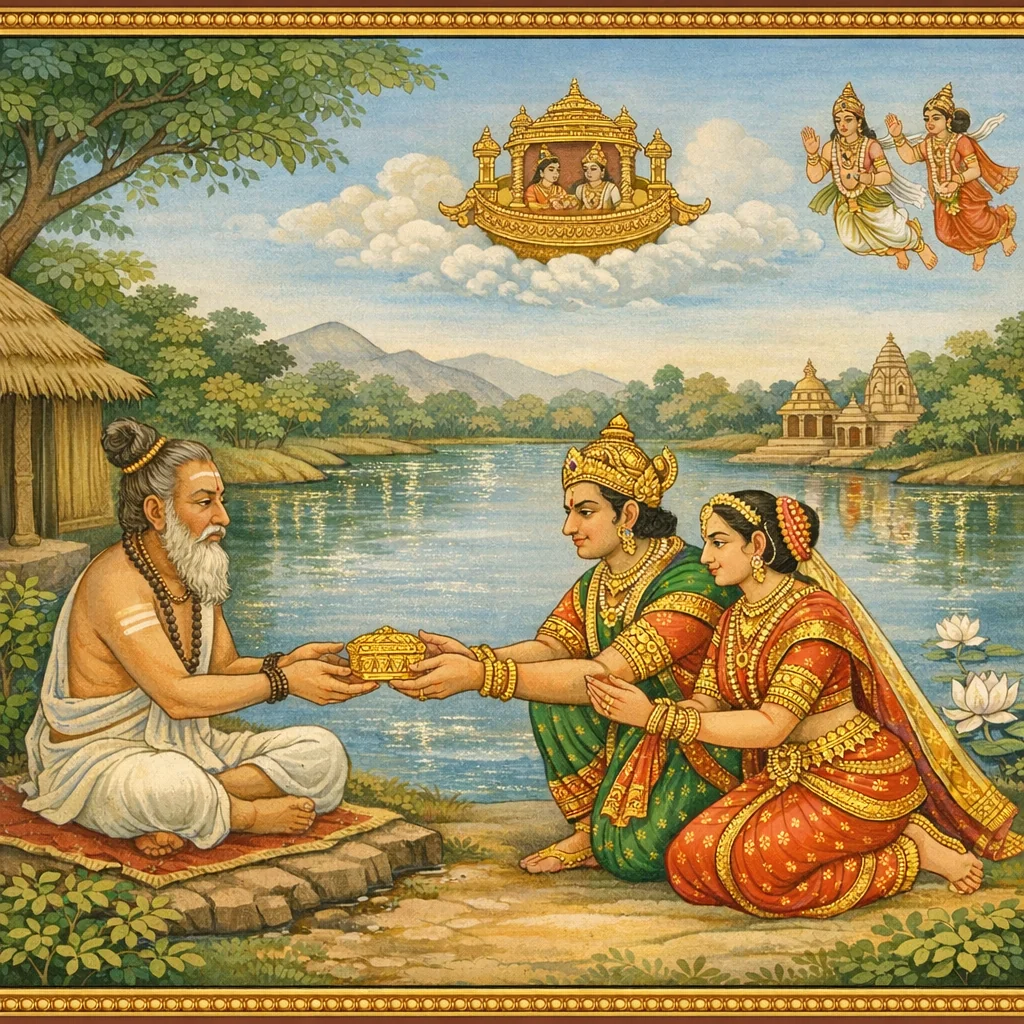
Mārkaṇḍeya points out a purifying pilgrimage site called Svarṇabindu (“Golden Drop”) and explains its ritual practice and promised rewards. The chapter centers on snāna (sacred bathing) at this tīrtha and on gifting gold (kāñcana) as dāna to a brāhmaṇa recipient, praised as an act of supreme merit. Gold is taught to be the śreṣṭha ratna, the highest gem, born from the radiance of fire and therefore uniquely powerful as a gift. It declares that even the smallest offering of gold—no more than the tip of a hair—when made in connection with this tīrtha, grants ascent to heaven if one dies there. The phalaśruti goes beyond heaven: the devotee is honored among Vidyādharas and Siddhas, dwells in an excellent aerial vehicle until cosmic dissolution, and then returns to an outstanding human birth as a dvija in a wealthy household. The ethical thrust is karmic cleansing, for wrongs of mind, speech, and body are said to be swiftly destroyed through gold-giving performed ritually at this sacred ford.
Shlokas
Verse 1
श्रीमार्कण्डेय उवाच । तस्याग्रे पावनं तीर्थं स्वर्णबिन्द्विति विश्रुतम् । यत्र स्नात्वा दिवं यान्ति मृताश्च न पुनर्भवम्
Śrī Mārkaṇḍeya said: In front of that place is a purifying sacred ford renowned as Svarṇabindu. Bathing there, the dead go to heaven and do not return again to rebirth.
Verse 2
तत्र तीर्थे तु यः स्नात्वा दत्ते विप्राय काञ्चनम् । तेन यत्तु फलं प्रोक्तं तच्छृणुष्व महीपते
O king, whoever bathes at that sacred ford and then gives gold to a Brāhmaṇa—listen to the fruit that has been declared for that act.
Verse 3
सर्वेषामेव रत्नानां काञ्चनं रत्नमुत्तमम् । अग्नितेजःसमुद्भूतं तेन तत्परमं भुवि
Among all precious gems, gold is the finest jewel. Born from the radiance of fire, therefore it is supreme upon the earth.
Verse 4
तेनैव दत्ता पृथिवी सशैलवनकानना । सपत्तनपुरा सर्वा काञ्चनं यः प्रयच्छति
By that very act, the whole earth is as though gifted—together with its mountains, forests, and groves, with all its towns and cities—by the one who bestows gold.
Verse 5
मानसं वाचिकं पापं कर्मणा यत्पुरा कृतम् । तत्सर्वं नश्यति क्षिप्रं स्वर्णदानेन भारत
O Bhārata, all sin formerly committed—by mind, by speech, or by deed—quickly perishes through the gift of gold.
Verse 6
स्वर्णदानं तु यो दत्त्वा ह्यपि वालाग्रमात्रकम् । तत्र तीर्थे मृतो याति दिवं नास्त्यत्र संशयः
Indeed, whoever gives gold—even as little as the tip of a hair—and then dies at that tīrtha, goes to heaven; of this there is no doubt.
Verse 7
तत्र विद्याधरैः सिद्धैर्विमानवरमास्थितः । पूज्यमानो वसेत्तावद्यावदाभूतसम्प्लवम्
There, seated in an excellent celestial car and honored by Vidyādharas and Siddhas, he dwells for so long—until the dissolution of beings.
Verse 8
पूर्णे तत्र ततः काले प्राप्य मानुष्यमुत्तमम् । सुवर्णकोटिसहिते गृहे वै जायते द्विजः
When his appointed time there is completed, attaining an excellent human birth, he is indeed born as a twice-born in a house endowed with crores of gold.
Verse 9
सर्वव्याधिविनिर्मुक्तः सर्वलोकेषु पूजितः । जीवेद्वर्षशतं साग्रं राजसं सत्सु विश्रुतः
Free from every disease, honored in all circles of society, he lives for a full hundred years and more—royal in splendor and renowned among the good.
Verse 207
अध्यायः
End of the chapter (colophon marker).