Adhyaya 2
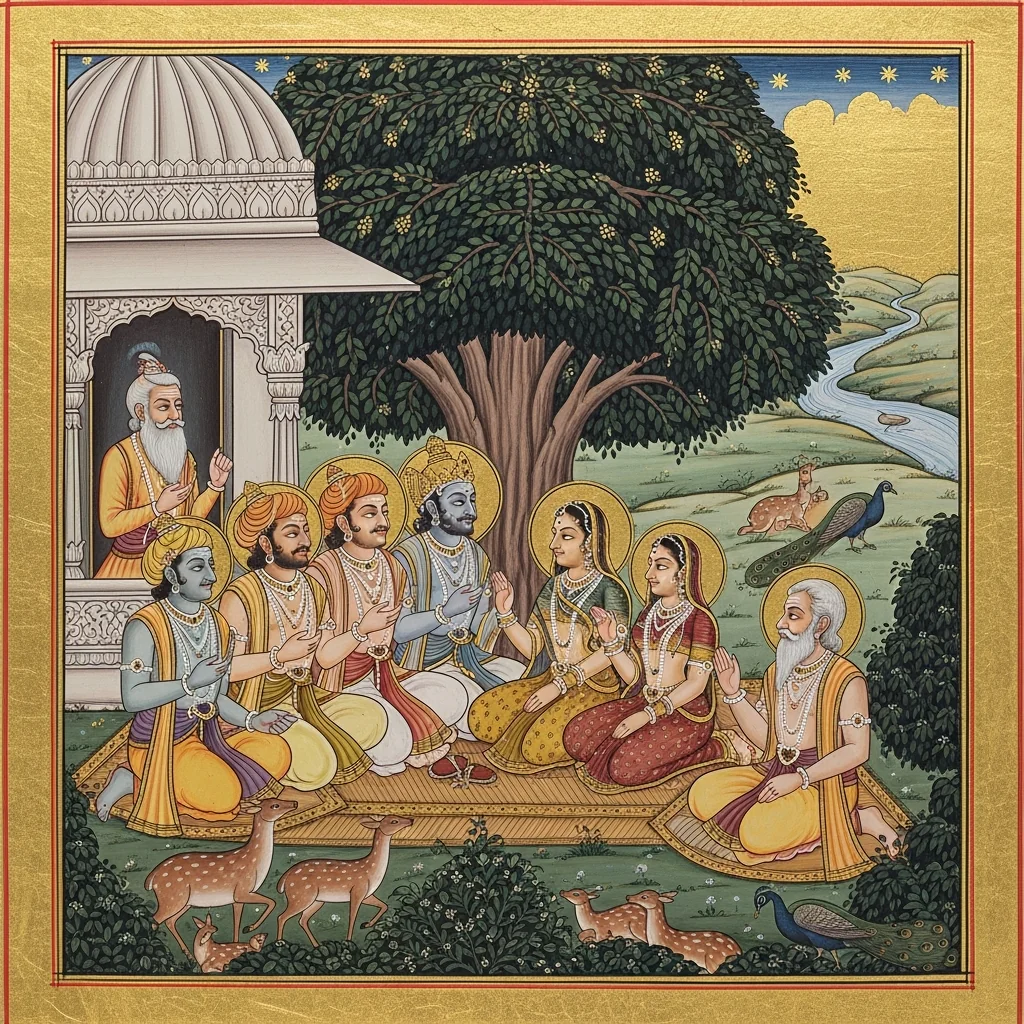
Chapter 2 begins with Sūta introducing a vast account of the Narmadā’s tīrthas, admitting how difficult it is to describe them in full. The narrative then recalls an earlier precedent: amid a grand sacrificial assembly, King Janamejaya asks the sage Vaiśampāyana, disciple of Dvaipāyana/Vyāsa, about the Pāṇḍavas’ tīrtha-sevana after their defeat at gambling and their exile. Vaiśampāyana agrees to narrate, first offering reverence to Virūpākṣa (Śiva) and to Vyāsa. He describes the Pāṇḍavas, with Draupadī and Brahmin companions, reaching the Vindhya region after bathing at many sacred fords. An ideal forest-āśrama is portrayed in rich ecological detail, a harmonized place for ascetic practice where even the animals are non-hostile. There the Pāṇḍavas meet the sage Mārkaṇḍeya, surrounded by disciplined ṛṣis performing varied austerities. Yudhiṣṭhira respectfully asks about Mārkaṇḍeya’s extraordinary longevity through cosmic dissolutions (pralaya) and about which rivers endure or perish at pralaya. Mārkaṇḍeya replies by praising a Rudra-bhāṣita Purāṇa, declaring strong fruits for devotional listening, listing major rivers, and asserting that while oceans and rivers decline in cycles, Narmadā uniquely persists through seven kalpa-endings—preparing the way for further explanation.
Shlokas
Verse 1
सूत उवाच
Sūta said:
Verse 2
। अध्याय
(Chapter heading:) Adhyāya (Chapter).
Verse 3
विस्तरं नर्मदायास्तु तीर्थानां मुनिसत्तम । कोऽन्यः शक्तोऽस्ति वै वक्तुमृते ब्रह्माणमीश्वरम्
“O best of sages, who indeed is capable of describing in full the sacred tīrthas of the Narmadā? None other can do so—except Brahmā and Īśvara (Śiva).”
Verse 4
एतमेव पुरा प्रश्नं पृष्टवाञ्जनमेजयः । वैशंपायनसंज्ञं तु शिष्यं द्वैपायनस्य ह
“This very question was once asked by Janamejaya of the one known as Vaiśaṃpāyana—the disciple of Dvaipāyana (Vyāsa).”
Verse 5
रेवातीर्थाश्रितं पुण्यं तत्ते वक्ष्यामि शौनक । पुरा पारीक्षितो राजा यज्ञादीक्षासु दीक्षितः
“O Śaunaka, I shall tell you the sacred merit that abides in the tīrthas of Revā (Narmadā). Long ago, King Pārīkṣit had been consecrated for the initiatory rites of yajña.”
Verse 6
संभृते तु हविर्द्रव्ये वर्तमानेषु कर्मसु । आसीनेषु द्विजाग्र्येषु हूयमाने हुताशने
When the oblation-materials had been gathered and the rites were proceeding; when the foremost of the twice-born were seated, and offerings were being duly cast into the sacred Fire—
Verse 7
वर्तमानासु सर्वत्र तथा धर्मकथासु च । श्रूयमाणे तथा शब्दे जनैरुक्ते त्वहर्निशम्
And while Dharma-discourses were taking place everywhere; while such words were being heard—uttered by people day and night—
Verse 8
यज्ञभूमौ कुलपते दीयतां भुज्यतामिति । विविधांश्च विनोदान्वै कुर्वाणेषु विनोदिषु
On the sacrificial ground, O lord of the lineage, the call arose: “Let gifts be given; let food be enjoyed!” And as the celebrants rejoiced, they arranged many kinds of festive entertainments.
Verse 9
एवंविधे वर्तमाने यज्ञे स्वर्गसदःसमे । वैशंपायनमासीनं पप्रच्छ जनमेजयः
While such a sacrifice was in progress—like an assembly-hall of heaven—Janamejaya questioned Vaiśaṃpāyana as he sat there.
Verse 10
जनमेजय उवाच । द्वैपायनप्रसादेन ज्ञानवानसि मे मतः । वैशंपायन तस्मात्त्वां पृच्छामि ऋषिसन्निधौ
Janamejaya said: “By the grace of Dvaipāyana (Vyāsa), you are regarded by me as one endowed with true knowledge. Therefore, O Vaiśaṃpāyana, I ask you—here in the presence of the sages.”
Verse 11
ब्रूहि मे त्वं पुरावृत्तं पितृणां तीर्थसेवनम् । चिरं नानाविधान्क्लेशान् प्राप्तास्त इति मे श्रुतम्
Tell me the ancient account of my forefathers’ resort to the tīrthas, the sacred fords. I have heard that for a long time they endured many kinds of hardships.
Verse 12
कथं द्यूतजिताः पार्था मम पूर्वपितामहाः । आसमुद्रां महीं विप्र भ्रमन्तस्तीर्थलोभतः
How did the Pārthas—my ancestors, defeated at dice—wander, O brāhmaṇa, over the earth up to the encircling seas, driven by longing for holy places?
Verse 13
केन ते सहितास्तात भूमिभागाननेकशः । चेरुः कथय तत्सर्वं सर्वज्ञोऽसि मतो मम
With whom did they travel, dear sir, traversing many regions of the earth? Tell me all of that—for to me you are regarded as one who knows it all.
Verse 14
वैशंपायन उवाच
Vaiśaṃpāyana said:
Verse 15
कथयिष्यामि भूनाथ यत्पृष्टं तु त्वयाऽनघ । नमस्कृत्य विरूपाक्षं वेदव्यासं महाकविम्
I shall relate, O lord of the earth, what you have asked, O sinless one—having first bowed to Virūpākṣa, the three-eyed Lord, and to Vedavyāsa, the great poet.
Verse 16
पितामहास्तु ते पञ्च पाण्डवाः सह कृष्णया । उषित्वा ब्राह्मणैः सार्धं काम्यके वन उत्तमे
“Your grandfathers—the five Pāṇḍavas—together with Kṛṣṇā (Draupadī), after dwelling with the brāhmaṇas in the excellent Kāmyaka forest…”
Verse 17
प्रधानोद्दालके तत्र कश्यपोऽथ महामतिः । विभाण्डकश्च राजेन्द्र मुरुश्चैव महामुनिः
“There, foremost among them was Uddālaka; also the great-minded Kaśyapa; and, O best of kings, Vibhāṇḍaka, and Muru as well—the great sage.”
Verse 18
पुलस्त्यो लोमशश्चैव तथान्ये पुत्रपौत्रिणः । स्नात्वा निःशेषतीर्थेषु गतास्ते विन्ध्यपर्वतम्
Pulastya and Lomaśa, along with other sages accompanied by their sons and grandsons, having bathed at every holy tīrtha, proceeded to the Vindhya mountain.
Verse 19
ते च तत्राश्रमं पुण्यं सर्वैर्वृक्षैः समाकुलम् । चम्पकैः कर्णकारैश्च पुन्नागैर्नागकेसरैः
There they beheld a holy hermitage, densely filled with every kind of tree—adorned with campaka, karṇakāra, punnāga, and nāgakesara.
Verse 20
बकुलैः कोविदारैश्च दाडिमैरुपशोभितम् । पुष्पितैरर्जुनैश्चैव बिल्वपाटलकेतकैः
It was further beautified by bakula, kovidāra, and pomegranate trees, and by flowering arjuna, bilva, pāṭala, and ketaka.
Verse 21
कदम्बाम्रमधूकैश्च निम्बजम्बीरतिन्दुकैः । नालिकेरैः कपित्थैश्च खर्जूरपनसैस्तथा
It was also filled with kadamba, mango, and madhūka trees, with neem, citron, and tinduka, and likewise with coconut, kapittha, date-palm, and jackfruit.
Verse 22
नानाद्रुमलताकीर्णं नानावल्लीभिरावृतम् । सपुष्पं फलितं कान्तं वनं चैत्ररथं यथा
That delightful forest—strewn with many kinds of trees and creepers, covered with varied vines, blossoming and fruit-laden—resembled the famed Caitraratha grove.
Verse 23
जलाश्रयैस्तु विपुलैः पद्मिनीखण्डमण्डितम् । सितोत्पलैश्च संछन्नं नीलपीतैः सितारुणैः
It was adorned with spacious bodies of water and stretches of lotus-ponds, covered over with white water-lilies and with lotuses of blue, yellow, white, and rosy hues.
Verse 24
हंसकारण्डवाकीर्णं चक्रवाकोपशोभितम् । आडीकाकबलाकाभिः सेवितं कोकिलादिभिः
It was thronged with swans and kāraṇḍava ducks, beautified by cakravāka birds, and frequented by other birds—such as herons and the cuckoo.
Verse 25
सिंहैर्व्याघ्रैर्वराहैश्च गजैश्चैव महोत्कटैः । महिषैश्च महाकायैः कुरङ्गैश्चित्रकैः शशैः
It was inhabited by lions, tigers, and boars, and by mighty elephants; by huge buffaloes; and also by antelopes, spotted deer, and hares.
Verse 26
गण्डकैश्चैव खड्गैश्च गोमायुसुरभी युतम् । सारङ्गैर्मल्लकैश्चैव द्विपदैश्च चतुष्पदैः
It was also filled with gaṇḍaka and khaḍga beasts, with jackals and fragrant creatures, with sāraṅga and mallaka deer, and with beings both two-footed and four-footed.
Verse 27
तथाच कोकिलाकीर्णं मनःकान्तं सुशोभितम् । जीवंजीवकसंघैश्च नानापक्षिसमायुतम्
So too it was filled with cuckoos—mind-delighting and splendid—thronged with flocks of jīvaṃjīvaka birds and joined by many kinds of winged creatures.
Verse 28
दुःखशोकविनिर्मुक्तं सत्त्वोत्कटमनोरमम् । क्षुत्तृषारहितं कान्तं सर्वव्याधिविवर्जितम्
It was free from sorrow and lamentation—exceedingly pure in its sāttvika charm and delightful to the mind; without hunger or thirst, radiant in beauty, and untouched by any disease.
Verse 29
सिंहीस्तनं पिबन्त्यत्र कुरंगाः स्नेहसंयुतम् । मार्जारमूषकौ चोभाववलेहत उन्मुखौ
There, deer drank milk from a lioness’s teats, rich with affection; and even cat and mouse, together, turned upward and licked food without enmity.
Verse 30
पञ्चास्याः पोतकेभाश्च भोगिनस्तु कलापिनः । दृष्ट्वा तद्विपिनं रम्यं प्रविष्टाः पाण्डुनन्दनाः
Seeing that enchanting forest—where even lions, young elephants, serpents, and peacocks dwelt—the sons of Pāṇḍu entered into it.
Verse 31
मार्कण्डं दृष्टवांस्तत्र तरुणादित्यसन्निभम् । ऋषिभिः सेव्यमानं तु नानाशास्त्रविशारदैः
There they beheld Mārkaṇḍeya, radiant like the young sun, attended by ṛṣis accomplished in many branches of sacred śāstra.
Verse 32
कुलीनैः सत्त्वसम्पन्नैः शौचाचारसमन्वितैः । धीसंगतैः क्षमायुक्तैस्त्रिसंध्यं जपतत्परैः
It was frequented by the noble—endowed with purity, established in cleanliness and right conduct; disciplined in mind, rich in forbearance, and devoted to japa at the three daily sandhyās.
Verse 33
ऋग्यजुःसामविहितैर्मन्त्रैर्होमपरायणैः । केचित्पञ्चाग्निमध्यस्थाः केचिदेकान्तसंस्थिताः
Some were devoted to fire-offerings with mantras prescribed in the Ṛg, Yajus, and Sāman; some practiced austerity amid the five fires, while others remained established in solitude.
Verse 34
ऊर्ध्वबाहुनिरालम्बा आदित्यभ्रमणाः परे । सायंप्रातर्भुजश्चान्ये एकाहारास्तथा परे
Some stood with arms uplifted, without support; others performed the sun-circling discipline. Some ate only at evening and morning, and others maintained the vow of a single daily meal.
Verse 35
द्वादशाहात्तथा चान्ये अन्ये मासार्धभोजनाः । दर्शे दर्शे तथा चान्ये अन्ये शैवालभोजनाः
Some ate only after twelve days; others only after half a month. Some ate at each new-moon observance, and others subsisted on algae and water-plants.
Verse 36
पिण्याकमपरेऽभुजन् केचित्पालाशभोजनाः । अपरे नियताहारा वायुभक्ष्याम्बुभोजनाः
Some ate oil-cake; some lived on palāśa leaves. Others, with strictly regulated intake, subsisted on air as their ‘food’ or on water alone.
Verse 37
एवंभूतैस्तथा वृद्धैः सेव्यते मुनिपुंगवैः । ततो धर्मसुतः श्रीमानाश्रमं तं प्रविश्य सः
Attended by such sages and venerable elders, foremost among the munis, the illustrious son of Dharma then entered that hermitage.
Verse 38
दृष्ट्वा मुनिवरं शान्तं ध्यायमानं परं पदम् । प्रादक्षिण्येन सहसा दण्डवत्पतितोऽग्रतः
Seeing the foremost sage—peaceful and absorbed in meditation on the supreme state—he quickly circumambulated him in pradakṣiṇā and then fell full-length in reverence at his feet.
Verse 39
भक्त्यानुपतितं दृष्ट्वा चिरादादाय लोचनम् । को भवानित्युवाचेदं धर्मं धीमानपृच्छत
Seeing him fallen in devotion, the wise sage, after a long while, lifted his gaze and asked, “Who are you?”—thus questioning him in accordance with dharma.
Verse 40
तस्य तद्वचनं श्रुत्वा दारकस्तत्समीपगः । आहायं धर्मराजस्ते दर्शनार्थं समागतः
Hearing those words, the attendant boy nearby said, “This is Dharmarāja; he has come seeking your darśana (audience).”
Verse 41
तच्छ्रुत्वादारकेणोक्तं वचनं प्राह सादरः । एह्येहि वत्सवत्सेति किंचित्स्थानाच्चलन्मुनिः । तं तु स्नेहादुपाघ्राय आसने उपवेशयत्
Hearing the boy’s words, the sage spoke with kindness: “Come, come, dear child.” Rising slightly from his place, he affectionately inhaled the fragrance of the boy’s head in welcome and seated him upon a seat.
Verse 42
उपविष्टे सभायां तु पूजां कृत्वा यथाविधि । वन्यैर्धान्यैः फलैर्मूलै रसैश्चैव पृथग्विधैः
When he was seated in the assembly, they performed worship according to proper rule, offering forest grains, fruits, roots, and various kinds of juices.
Verse 43
पाण्डवा ब्राह्मणैः सार्द्धं यथायोग्यं प्रपूजिताः । मुहूर्तादथ विश्रम्य धर्मपुत्रो युधिष्ठिरः
The Pāṇḍavas, together with the brāhmaṇas, were honored in a fitting manner. After resting for a short while, Dharmaputra Yudhiṣṭhira…
Verse 44
पृच्छति स्म मुनिश्रेष्ठं कौतूहलसमन्वितः । भगवन्सर्वलोकानां दीर्घायुस्त्वं मतो मम
Filled with curiosity, he questioned the best of sages: “O venerable one, in my understanding you are long-lived beyond all worlds.”
Verse 45
सप्तकल्पानशेषेण कथयस्व ममानघ । कल्पक्षयेऽपि लोकस्य स्थावरस्येतरस्य च
“O sinless one, tell me in full about seven kalpas—how, even at the end of a kalpa, the worlds and their beings, both immovable and moving, meet their destined end.”
Verse 46
न विनष्टोऽसि विप्रेन्द्र कथं वा केन हेतुना । गङ्गाद्याः सरितः सर्वाः समुद्रान्ताश्च या मुने
O best of brāhmaṇas, how is it that you have not perished—by what cause? And, O sage, what has become of all the rivers beginning with the Gaṅgā that flow to the ocean?
Verse 47
तासां मध्ये स्थिताः काः स्वित्काश्चैव प्रलयं गताः । का नु पुण्यजला नित्यं कानु न क्षयमागता
Among those rivers, which remain established, and which have gone into dissolution? Which one is ever of holy waters, and which one does not come to decline?
Verse 48
एतत्कथय मे तात प्रसन्नेनान्तरात्मना । श्रोतुमिच्छाम्यशेषेण ऋषिभिः सह बान्धवैः
O dear father, tell me this with a serene and gracious heart. I wish to hear it in full, together with the ṛṣis and my kinsmen.
Verse 49
श्रीमार्कण्डेय उवाच । साधुसाधु महाप्राज्ञ धर्मपुत्र युधिष्ठिर । कथयामि यथा न्यायं यत्पृच्छसि ममानघ
Śrī Mārkaṇḍeya said: “Well spoken, well spoken, O greatly wise Yudhiṣṭhira, son of Dharma. O sinless one, I shall explain—according to proper tradition—exactly what you ask.”
Verse 50
सर्वपापहरं पुण्यं पुराणं रुद्रभाषितम् । यः शृणोति नरो भक्त्या तस्य पुण्यफलं शृणु
This holy Purāṇa, spoken by Rudra, destroys all sins. Hear now the meritorious fruit gained by the person who listens to it with devotion.
Verse 51
अश्वमेध सहस्रेण वाजपेयशतेन च । तत्फलं समवाप्नोति राजन्नास्त्यत्र संशयः
O King, he attains that very fruit of merit, equal to a thousand Aśvamedha sacrifices and a hundred Vājapeya rites—of this there is no doubt.
Verse 52
ब्रह्मघ्नश्च सुरापी च स्तेयी गोघ्नश्च यो नरः । मुच्यते सर्वपापेभ्यो रुद्रस्य वचनं यथा
Even one who has slain a brāhmaṇa, who drinks intoxicants, who steals, or who kills a cow, is freed from all sins, according to Rudra’s declaration.
Verse 53
गङ्गा तु सरितां श्रेष्ठा तथा चैव सरस्वती । कावेरी देविका चैव सिन्धुः सालकुटी तथा
Among rivers, the Gaṅgā is supreme; likewise holy are the Sarasvatī, the Kāverī, the Devikā, the Sindhu, and also the Sālakuṭī.
Verse 54
सरयूः शतरुद्रा च मही चर्मिलया सह । गोदावरी तथा पुण्या तथैव यमुना नदी
So too are sacred the Sarayū, the Śatarudrā, the Mahī along with the Carmilā, the holy Godāvarī, and likewise the river Yamunā.
Verse 55
पयोष्णी च शतद्रुश्च तथा धर्मनदी शुभा । एताश्चान्याश्च सरितः सर्वपापहराः स्मृताः
Also sacred are the Payoṣṇī, the Śatadru, and the auspicious Dharmanadī. These and other rivers are remembered as destroyers of all sins.
Verse 56
किं तु ते कारणं तात वक्ष्यामि नृपसत्तम । समुद्राः सरितः सर्वाः कल्पे कल्पे क्षयं गताः
But I shall tell you the reason for this, O dear one, O best of kings: in every kalpa, all oceans and all rivers pass into dissolution.
Verse 57
सप्तकल्पक्षये क्षीणे न मृता तेन नर्मदा । नर्मदैकैव राजेन्द्र परं तिष्ठेत्सरिद्वरा
Even when the destruction of seven kalpas is complete, the Narmadā does not perish. Therefore, O lord of kings, Narmadā alone endures supremely—the best of rivers.
Verse 58
तोयपूर्णा महाभाग मुनिसंघैरभिष्टुता । गंगाद्याः सरितश्चान्याः कल्पे कल्पे क्षयं गताः
O greatly fortunate one, though filled with waters and praised by hosts of sages, the Gaṅgā and other rivers again and again meet their end at the close of each kalpa.
Verse 59
एषा देवी पुरा दृष्टा तेन वक्ष्यामि तेऽनघ
This Goddess was seen long ago; therefore, O sinless one, I shall tell you her account.