Adhyaya 183
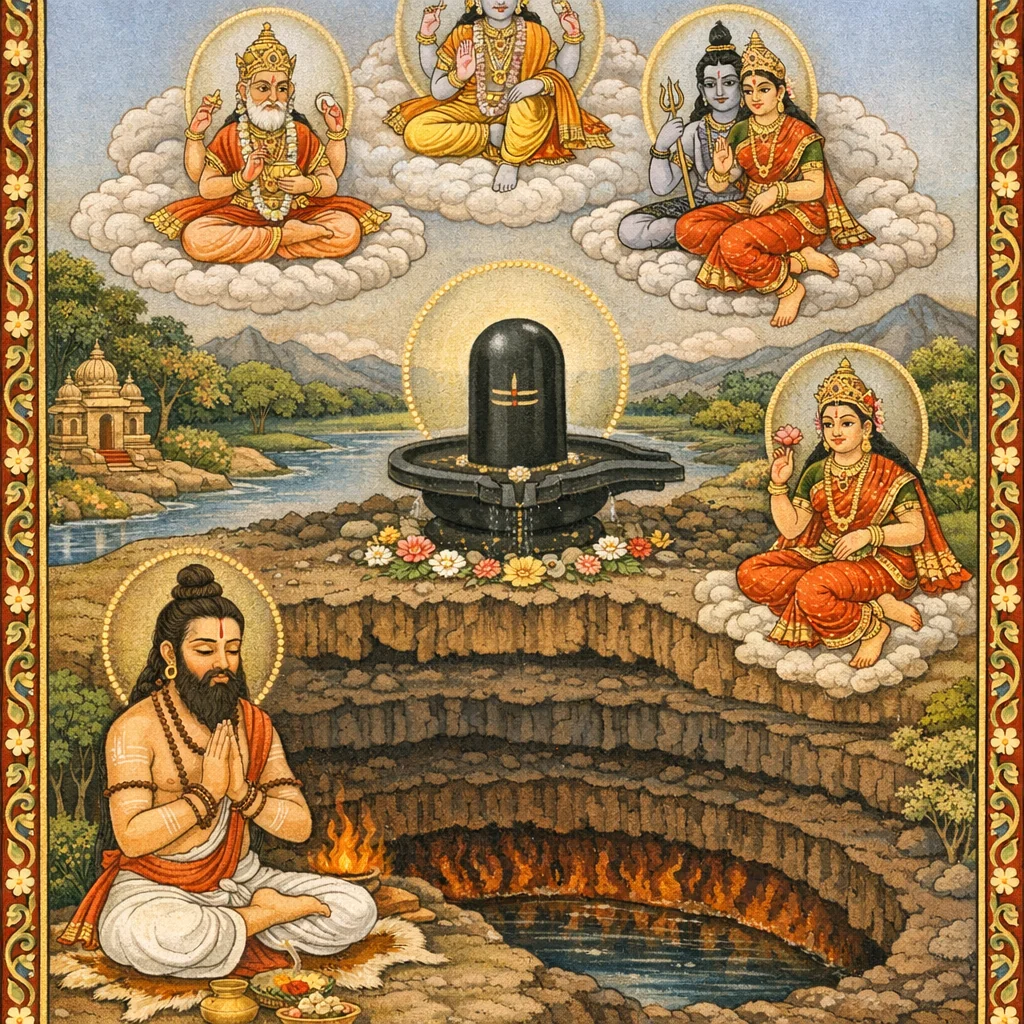
This chapter unfolds as a dialogue in which the sage Mārkaṇḍeya instructs Yudhiṣṭhira about the Kedāra tīrtha on the northern bank of the Narmadā. It first sets out the pilgrimage order: one should go to Kedāra, perform śrāddha, drink the tīrtha water, and worship the Lord, Devadeveśa, thereby gaining merit born of Kedāra. Asked how Kedāra came to be established there, Mārkaṇḍeya recounts an origin legend from early Kṛtayuga. Through a curse connected with Padmā/Śrī, Bhṛgu’s region becomes impure, as though “deprived of the Vedas.” Bhṛgu undertakes austerities for a thousand years, and Śiva manifests as a liṅga rising up through the strata of the netherworld. Bhṛgu praises Śiva as Sthāṇu and Tryambaka and petitions for the kṣetra’s purity to be restored. Śiva proclaims the स्थापना of an ādi-liṅga named Kedāra, followed by ten further liṅgas, with an eleventh, invisible presence at the center that purifies the entire field. The chapter also describes a protective sacred retinue abiding there: twelve Ādityas, eighteen Durgās, sixteen Kṣetrapālas, and Mothers associated with Vīrabhadra. It concludes with phala: disciplined morning bathing in the month of Nāgha, worship of Kedāra, and properly performed śrāddha at the tīrtha gladden the ancestors and bestow sin-removing, sorrow-destroying benefit.
Shlokas
Verse 1
श्रीमार्कण्डेय उवाच । अतः परं महाराज गच्छेत्केदारसंज्ञकम् । यत्र गत्वा महाराज श्राद्धं कृत्वा पिबेज्जलम् । सम्पूज्य देवदेवेशं केदारोत्थं फलं लभेत्
Śrī Mārkaṇḍeya said: Thereafter, O great king, one should go to the place called Kedāra. Having gone there, O king, after performing śrāddha and drinking the sacred water, and after duly worshipping the Lord of lords, one attains the fruit that arises from the tīrtha of Kedāra.
Verse 2
युधिष्ठिर उवाच । कथमत्र सुरश्रेष्ठ केदाराख्यः स्थितः स्वयम् । उत्तरे नर्मदाकूले एतद्विस्तरतो वद
Yudhiṣṭhira said: O best among the divine ones, how is the Lord Himself established here under the name “Kedāra” on the northern bank of the Narmadā? Tell this in detail.
Verse 3
श्रीमार्कण्डेय उवाच । पुरा कृतयुगस्यादौ शङ्करस्तु महेश्वरः । भृगुणाराधितः शप्तः श्रिया च भृगुकच्छके
Śrī Mārkaṇḍeya said: Long ago, at the beginning of the Kṛta Yuga, Śaṅkara—Maheśvara—was worshipped by Bhṛgu; and in Bhṛgukaccha He was also cursed by Śrī, the goddess of fortune.
Verse 4
अपवित्रमिदं क्षेत्रं सर्ववेदविवर्जितम् । भविष्यति नृपश्रेष्ठ गतेत्युक्त्वा हरिप्रिया
“This sacred region will become impure, bereft of all Vedic presence, O best of kings.” Having spoken thus, Haripriyā (Śrī/Lakṣmī), beloved of Hari, departed.
Verse 5
तपश्चचार विपुलं भृगुर्वर्षसहस्रकम् । वायुभक्षो निराहारश्चिरं धमनिसंततः
Bhṛgu then undertook immense austerities for a thousand years—living on air, fasting without food, and long remaining in sustained discipline with the bodily channels held taut.
Verse 6
ततः प्रत्यक्षतामागाल्लिङ्गीभूतो महेश्वरः । प्रादुर्भूतस्तु सहसा भित्त्वा पातालसप्तकम्
Then Maheśvara, having assumed the form of a Liṅga, became directly manifest—suddenly appearing after piercing through the seven netherworlds.
Verse 7
ददर्शाथ भृगुर्देवमौत्पलीं केलिकामिव । स्तुतिं चक्रे स देवाय स्थाणवे त्र्यम्बकेति च
Then Bhṛgu beheld the God—like a playful blossoming lotus-vine—and he offered hymns of praise to that Deity, addressing Him as Sthāṇu and as Tryambaka.
Verse 8
एवं स्तुतः स भगवान् प्रोवाच प्रहसन्निव । पुनः पुनर्भृगुं मत्तः किंतु प्रार्थयसे मुने
Thus praised, the Blessed Lord spoke, smiling as it were: “O sage, again and again—what is it that you seek to ask of Me, Bhṛgu?”
Verse 9
भृगुरुवाच । पञ्चक्रोशमिदं क्षेत्रं पद्मया शापितं विभो । उपवित्रमिदं क्षेत्रं सर्ववेदविवर्जितम् । भविष्यतीति च प्रोच्य गता देवी विदं प्रति
Bhṛgu said: “O Lord, this sacred region extending for five krośas has been cursed by Padmā. Declaring, ‘This place will become impure, devoid of the Vedas,’ the Goddess spoke so regarding this area and departed.”
Verse 10
पुनः पवित्रतां याति यथेदं क्षेत्रमुत्तमम् । तथा कुरु महेशान प्रसन्नो यदि शङ्कर
“O Maheśāna—if you are pleased, O Śaṅkara—then act so that this excellent sacred region may once again attain purity.”
Verse 11
ईश्वर उवाच । केदाराख्यमिदं ब्रह्मंल्लिङ्गमाद्यं भविष्यति । कृत्वेदमादिलिङ्गानि भविष्यन्ति दशैव हि
Īśvara said: “O Brahman-sage, this liṅga shall become the primordial one, known as ‘Kedāra’. Once it is established, ten more primordial liṅgas indeed will come into being.”
Verse 12
एकादशमदृश्यं हि क्षेत्रमध्ये भविष्यति । पावयिष्यति तत्क्षेत्रमेकादशः स्वयं विभुः
“An eleventh (liṅga) will be invisible, arising in the very midst of the sacred region. That eleventh—Vibhu Himself—will purify the entire kṣetra.”
Verse 13
तथा वै द्वादशादित्या मत्प्रसादात्तु मूर्तितः । वसिष्यन्ति भृगुक्षेत्रे रोगदुःखनिबर्हणाः
“Likewise, by My grace, the Twelve Ādityas will dwell there in embodied forms within Bhṛgu-kṣetra, removing disease and sorrow.”
Verse 14
दुर्गाः ह्यष्टादश तथा क्षेत्रपालास्तु षोडश । भृगुक्षेत्रे भविष्यन्ति वीरभद्राश्च मातरः
“Eighteen Durgās, and sixteen Kṣetrapālas (guardians of the holy field), will arise in Bhṛgu-kṣetra; and so too will Vīrabhadra and the Mothers (Mātṛkās).”
Verse 15
पवित्रीकृतमेतद्धि नित्यं क्षेत्रं भविष्यति । नाघमासे ह्युषःकाले स्नात्वा मासं जितेन्द्रियः
“This place, once purified, will remain a sacred kṣetra forever. And in the month of Nāgha, one who bathes at dawn and lives for the month with senses restrained…”
Verse 16
यः पूजयति केदारं स गच्छेच्छिवमन्दिरम् । तस्मिंस्तीर्थे नरः स्नात्वा पित्ःनुद्दिश्य भारत । श्राद्धं ददाति विधिवत्तस्य प्रीताः पितामहाः
Whoever worships Kedāra attains the abode of Śiva. O Bhārata, a man who bathes at that tīrtha and, dedicating it to the Pitṛs, duly offers śrāddha—his forefathers become pleased.
Verse 17
इति ते कथितं सम्यक्केदाराख्यं सविस्तरम् । सर्वपापहरं पुण्यं सर्वदुःखप्रणाशनम्
Thus I have properly told you in detail about that which is called Kedāra—holy, removing all sins and destroying all sorrow.
Verse 183
अध्याय
Chapter (Adhyāya).