मन्त्रसिद्धिः, प्रतिबन्धनिरासः, श्रद्धा-नियमाः (Mantra Efficacy, Removal of Obstacles, and the Role of Faith/Discipline)
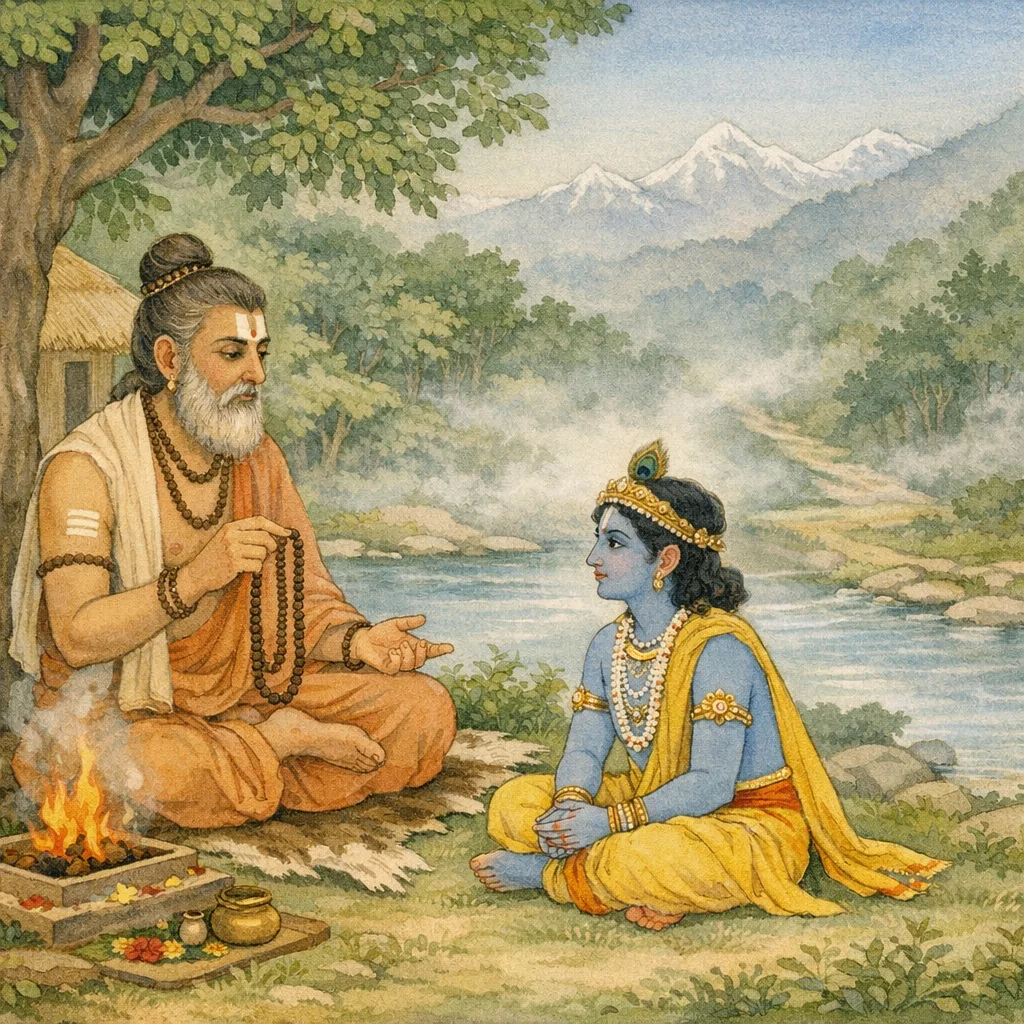
Adhyāya 32 opens with Upamanyu addressing Kṛṣṇa, moving from a general account of practice that brings success “here and hereafter” to a focused teaching on Śaiva fruits attainable in this very life through a combined discipline of pūjā, homa, japa, dhyāna, tapas, and dāna. It lays down a procedural order: one who truly understands the mantra and its meaning should first accomplish the mantra through mantra-saṃsādhana, for ritual acts bear fruit only on that foundation. The chapter then raises the issue of pratibandha—powerful unseen impediments (adṛṣṭa) that can obstruct results even when a mantra is otherwise siddha. When signs of obstruction appear, the wise should not act rashly, but examine omens and indicators (śakuna-ādi) and perform remedial expiation. It warns that rites done wrongly or in delusion yield no result and invite social ridicule; likewise, undertaking dṛṣṭa-phala rites without confidence shows absence of śraddhā, and the faithless do not obtain fruits. Failure is not the deity’s “fault,” for those who act as prescribed do witness results. Finally, it notes enabling conditions: the accomplished sādhaka, with obstacles removed, proceeds with trust and faith; and, if desired, may observe brahmacarya and a regulated diet (nightly haviṣya, pāyasa, fruits) to secure attainment.
Shlokas
Verse 1
उपमन्युरुवाच । एतत्ते कथितं कृष्ण कर्मेहामुत्र सिद्धिदम् । क्रियातपोजपध्यानसमुच्चयमयं परम्
Upamanyu said: “O Kṛṣṇa, I have thus explained to you that supreme discipline—an integrated practice of sacred rites, austerity, mantra-recitation, and meditation—which grants success both in this world and in the next.”
Verse 2
अथ वक्ष्यामि शैवानामिहैव फलदं नृणाम् । पूजाहोमजपध्यानतपोदानमयं महत्
Now I shall declare, for Śaiva devotees, what truly grants fruit here itself to human beings: that great discipline consisting of worship, fire-offering (homa), mantra-repetition, meditation, austerity, and sacred giving.
Verse 3
तत्र संसाधयेत्पूर्वं मन्त्रं मन्त्रार्थवित्तमः । दृष्टसिद्धिकरं कर्म नान्यथा फलदं यतः
There, the one who knows the mantra’s true meaning should first properly accomplish the mantra. For only through that does ritual action become a giver of visible success; otherwise it does not yield its fruit.
Verse 4
सिद्धमन्त्रो ऽप्यदृष्टेन प्रबलेन तु केनचित् । प्रतिबन्धफलं कर्म न कुर्यात्सहसा बुधः
Even when a mantra is accomplished and effective, the wise should not act in sudden haste in deeds whose fruit is obstruction, for some unseen yet powerful force may be at work.
Verse 5
तस्य तु प्रतिबन्धस्य कर्तुं शक्येह निष्कृतिः । परीक्ष्य शकुनाद्यैस्तदादौ निष्कृतिमाचरेत्
For that obstruction, an expiatory remedy (niṣkṛti) can indeed be performed here. After first examining omens and related signs, one should then undertake at the outset the prescribed rite of expiation.
Verse 6
यो ऽन्यथा कुरुते मोहात्कर्मैहिकफलं नरः । न तेन फलभाक्स स्यात्प्राप्नुयाच्चोपहास्यताम्
If, out of delusion, a person performs actions improperly, seeking worldly results, he does not become a true recipient of that fruit; instead, he only incurs ridicule.
Verse 7
अबिस्रब्धो न कुर्वीत कर्म दृष्टफलं क्वचित् । स खल्वश्रद्धधानः स्यान्नाश्रद्धः फलमृच्छति
One should not perform any action in anxious haste, seeking an immediately visible reward. Such a person is indeed without śraddhā (faithful reverence), and one who lacks śraddhā does not attain the true fruit.
Verse 8
नापराधोस्ति देवस्य कर्मण्यपि तु निष्फले । यथोक्तकारिणां पुंसामिहैव फलदर्शनात्
There is no fault in the Lord (Deva), even when an action appears to yield no result; for those who act exactly as enjoined, the fruit is seen here itself, in this very life.
Verse 9
साधकः सिद्धमंत्रश्च निरस्तप्रतिबंधकः । विश्वस्तः श्रद्धधानश्च कुर्वन्नाप्नोति तत्फलम्
A sincere practitioner—whose mantra has become effective, whose obstacles are removed, who is steady and trusting, and who is endowed with faith—by performing the practice surely attains its very fruit.
Verse 10
अथवा तत्फलावाप्त्यै ब्रह्मचर्यरतो भवेत् । रात्रौ हविष्यमश्नीयात्पायसं वा फलानि वा
Or, to attain that very fruit, one should remain devoted to brahmacarya (continence). At night one should eat only havis (pure sacrificial food), or milk-rice, or fruits.
Verse 11
हिंसादि यन्निषिद्धं स्यान्न कुर्यान्मनसापि तत् । सदा भस्मानुलिप्तां गस्सुवेषश्च शुचिर्भवेत्
Whatever is prohibited—such as violence—one should not do, not even in the mind. One should always keep the body anointed with sacred ash (bhasma), be properly attired in the marks of Śiva’s discipline, and remain pure.
Verse 12
इत्थमाचारवान्भूत्वा स्वानुकूले शुभे ऽहनि । पूर्वोक्तलक्षणे देशे पुष्पदामाद्यलंकृते
Thus, having become disciplined in right conduct, on an auspicious day favorable to oneself, in a place possessing the characteristics described earlier and adorned with garlands of flowers and other decorations, one should proceed with the worship in the proper manner.
Verse 13
आलिप्य शकृता १ भूमिं हस्तमानावरां यथा । विलिखेत्कमले भद्रे दीप्यमानं स्वतेजसा
After smearing the ground with cow-dung, O auspicious Kamalā, one should draw upon it a lotus of the measure of a hand, radiant with its own splendour.
Verse 14
तप्तजांबूनदमयमष्टपत्रं सकेसरम् । मध्ये कर्णिकया युक्तं सर्वरत्नैरलंकृतम्
It was fashioned of heated Jāmbūnada-gold: an eight-petalled lotus with its stamens; in the center it was furnished with a karṇikā (pericarp), and it was adorned with every kind of jewel.
Verse 15
स्वाकारसदृशेनैव नालेन च समन्वितम् । तादृशे स्वर्णनिर्माणे कंदे सम्यग्विधानतः
It should be furnished with a stalk (nāla) matching its own form; and likewise, a bulb (kanda) fashioned of gold should be properly made according to the prescribed rule.
Verse 16
तत्राणिमादिकं सर्वं संकल्प्य मनसा पुनः । रत्नजं वाथ सौवर्णं स्फटिकं वा सलक्षणम्
There, again, he should mentally resolve upon all the yogic attainments beginning with aṇimā; and then he should fashion or conceive a well-marked emblem—made of gems, or else of gold, or of pure crystal (sphaṭika).
Verse 17
तत्र माहेश्वरी कल्प्या मूर्तिर्मूर्तिमतः प्रभोः । चतुर्भुजा चतुर्वक्त्रा सर्वाभरणभूषिता
There, one should contemplate the Maheśvarī form—the manifest icon of the manifest Lord Maheśvara. She is to be envisioned with four arms and four faces, adorned with every ornament.
Verse 18
शार्दूलचर्मवसना किंचिद्विहसितानना । वरदाभयहस्ता च मृगटंकधरा तथा
She wore a tiger-skin garment, her face graced with a gentle, faint smile. With one hand she bestowed boons, with another she granted fearlessness, and she also bore the emblem of the deer.
Verse 19
अथ वाष्टभुजा चिंत्या चिंतकस्य यथारुचि । तदा त्रिशूलपरशुखड्गवज्राणि दक्षिणे
Then, according to the meditator’s own intention and delight, she is to be contemplated as eight-armed; and on her right side she bears the trident, the axe, the sword, and the thunderbolt (vajra).
Verse 20
वामे पाशांकुशौ तद्वत्खेटं नागं च बिभ्रती । बालार्कसदृशप्रख्या प्रतिवक्त्रं त्रिलोचना
In her left hands she likewise bears the noose and the goad, and also a shield and a serpent. Radiant like the rising sun, she is three-eyed, with a face turned toward each direction—an awe-inspiring saguna form, fit for concentrated worship.
Verse 21
तस्याः पूर्वमुखं सौम्यं स्वाकारसदृशप्रभम् । दक्षिणं नीलजीमूतसदृशं घोरदर्शनम्
Her eastern face was gentle and auspicious, radiant with a luster befitting her own divine nature; but her southern face resembled a dark-blue raincloud, terrifying to behold.
Verse 22
उत्तरं विद्रुमप्रख्यं नीलालकविभूषितम् । पश्चिमं पूर्णचंद्राभं सौम्यमिंदुकलाधरम्
Her northern aspect shone like coral, adorned with dark-blue curling locks; her western aspect was gentle and radiant like the full moon, bearing the crescent of the Moon.
Verse 23
तदंकमंडलारूढा शक्तिर्माहेश्वरी परा । महालक्ष्मीरिति ख्याता श्यामा सर्वमनोहरा
Seated upon the circle of His lap was the supreme Māheśvarī Śakti. She was famed as Mahālakṣmī—dark-hued (śyāmā) and wholly enchanting to every mind.
Verse 24
मूर्तिं कृत्वैवमाकारां सकलीकृत्य च क्रमात् । मूर्तिमंतमथावाह्य यजेत्परमकारणम्
Having fashioned an image in that very form and then, step by step, consecrating it into a complete sacred embodiment, one should invoke the Lord who possesses form and worship Him—the Supreme Cause of all.
Verse 25
स्नानार्थे कल्पयेत्तत्र पञ्चगव्यं तु कापिलम् । पञ्चामृतं च पूर्णानि बीजानि च विशेषतः
For the ritual bathing (abhiṣeka), one should prepare there pañcagavya made from the produce of a tawny Kapilā cow; and also pañcāmṛta, along with full, unbroken grains and, in particular, seeds.
Verse 26
पुरस्तान्मण्डलं कृत्वा रत्नचूर्णाद्यलंकृतम् । कर्णिकायां प्रविन्यस्येदीशानकलशं पुनः
In front of the worship-seat, one should make a sacred maṇḍala, adorning it with gem-powder and the like. Then, placing it upon the central pericarp (karṇikā), one should again set down the Īśāna kalaśa, the consecration pot of Śiva’s Īśāna aspect.
Verse 27
सद्यादिकलशान्पश्चात्परितस्तस्य कल्पयेत् । ततो विद्येशकलशानष्टौ पूर्वादिवत्क्रमात्
After that, one should arrange the pitchers beginning with Sadyā, placing them all around it. Then, in due order—starting from the eastern direction and proceeding as before—one should set up the eight pitchers of Vidyeśvara.
Verse 28
तीर्थाम्बुपूरितान्कृत्वा सूत्रेणावेष्ट्य पूर्ववत् । पुण्यद्रव्याणि निक्षिप्य समन्त्रं सविधानकम्
Having filled them with sacred tīrtha-water and bound them with a thread as prescribed earlier, one should place the auspicious substances within—accompanied by mantra-recitation and in full accordance with the proper ritual procedure.
Verse 29
दुकूलाद्येन वस्त्रेण समाच्छाद्य समंततः । सर्वत्र मंत्रं विन्यस्य तत्तन्मंत्रपुरस्सरम्
Covering it completely on all sides with a cloth such as fine silk, one should then install the mantras everywhere—performing each placement with its own specific mantra as the preliminary invocation.
Verse 30
स्नानकाले तु संप्राप्ते सर्वमङ्गलनिस्वनैः । पञ्चगव्यादिभिश्चैव स्नापयेत्परमेश्वरम्
When the time for the sacred bath arrives, one should bathe Parameśvara (Lord Śiva) amid the sounds of auspicious benedictions, using pañcagavya and other sanctifying substances.
Verse 31
ततः कुशोदकाद्यानि स्वर्णरत्नोदकान्यपि । गंधपुष्पादिसिद्धानि मन्त्रसिद्धानि च क्रमात्
Thereafter, in due order, one should employ waters beginning with kuśa-infused water, and also water sanctified with gold and gems—along with those rendered efficacious by fragrances, flowers, and the like, and those perfected through mantra.
Verse 32
उद्धृत्योद्धृत्य मन्त्रेण तैस्तैस्स्नाप्य महेश्वरम् । गंधं पुष्पादिदीपांश्च पूजाकर्म समाचरेत्
Lifting it up again and again with the prescribed mantra, one should bathe Mahādeva with the respective offerings; and then, offering fragrance, flowers, and lamps, one should duly perform the worship-rite.
Verse 33
पलावरः स्यादालेप एकादशपलोत्तरः । सुवर्णरत्नपुष्पाणि शुभानि सुरभीणि च
Let the unguent for anointing the sacred emblem (Liṅga) be in the measure called palāvara, increased by eleven palas; and offer gold, gems, and flowers—auspicious and fragrant as well.
Verse 34
नीलोत्पलाद्युत्पलानि बिल्वपत्राण्यनेकशः । कमलानि च रक्तानि श्वेतान्यपि च शंभवे
Offer blue lotuses and other lotus-flowers, many bilva leaves, and lotus blooms—red as well as white—unto Śambhu, Lord Śiva.
Verse 35
कृष्णागुरूद्भवो धूपः सकर्पूराज्यगुग्गुलः । कपिलाघृतसंसिद्धा दीपाः कर्पूरवर्तिजाः
Offer incense prepared from dark agaru-wood, blended with camphor, ghee, and guggulu resin; and in Śiva’s worship light lamps made ready with the ghee of a tawny cow, with wicks of camphor.
Verse 36
पञ्चब्रह्मषडंगानि पूज्यान्यावरणानि च । नैवेद्यः पयसा सिद्धः स गुडाज्यो महाचरुः
Worship the six auxiliaries of the Pañcabrahman, along with the sacred surrounding enclosures (āvaraṇas). As the food-offering (naivedya), present the great oblation (mahācaru) prepared in milk, enriched with jaggery and ghee.
Verse 37
पाटलोत्पलपद्माद्यैः पानीयं च सुगन्धितम् । पञ्चसौगंधिकोपेतं तांबूलं च सुसंस्कृतम्
They offered fragrant drinking water, perfumed with pāṭala blossoms, blue lotuses, and lotus-flowers; and they also presented well-prepared tāmbūla (betel), endowed with the fivefold aromatics.
Verse 38
सुवर्णरत्नसिद्धानि भूषणानि विशेषतः । वासांसि च विचित्राणि सूक्ष्माणि च नवानि च
They offered, in particular, ornaments fashioned with gold and precious gems, and also garments—variegated in design, fine in texture, and freshly new.
Verse 39
दर्शनीयानि देयानि गानवाद्यादिभिस्सह । जपश्च मूलमंत्रस्य लक्षः परमसंख्यया
Auspicious offerings, worthy to be beheld, should be presented along with singing, musical instruments, and the like. And the japa of the root-mantra should be performed to the supreme count—one lakh (100,000) recitations.
Verse 40
एकावरा त्र्युत्तरा च पूजा फलवशादिह । दशसंख्यावरो होमः प्रतिद्रव्यं शतोत्तरः
Here, according to the fruit desired, worship may be performed once, or else thrice with one additional repetition. The homa is prescribed in multiples of ten; and for each offering-substance, it is to be performed a hundred and one times.
Verse 41
घोररूपश्शिवश्चिंत्यो मारणोच्चाटनादिषु । शिवलिंगे शिवाग्नौ च ह्यन्यासु प्रतिमासु च
In rites such as slaying, driving away, and the like, one should contemplate Śiva in His terrible form—whether in the Śiva-liṅga, in the sacred Śiva-fire, or likewise in other consecrated images.
Verse 42
चिंत्यस्सौम्यतनुश्शंभुः कार्ये शांतिकपौष्टिके । आयसौ स्रुक्स्रुवौ कार्यौ मारणादिषु कर्मसु
For rites intended for pacification (śānti) and for increase and prosperity (pauṣṭika), one should contemplate Śambhu in a gentle and auspicious form. But in actions such as slaying and other fierce rites, the offering-ladle and spoon (sruk, sruva) should be made of iron.
Verse 43
तदन्यत्र तु सौवर्णौ शांतिकाद्येषु कृत्स्नशः । दूर्वया घृतगोक्षीरमिश्रया मधुना तथा
But in other rites—such as śānti rites for pacification and related purposes—one should employ the complete set of golden offerings or implements. They are to be used along with dūrvā grass, with ghee and cow’s milk mixed together, and also with honey.
Verse 44
चरुणा सघृतेनैव केवलं पयसापि वा । जुहुयान्मृत्युविजये तिलै रोगोपशांतये
For the conquest of death, one should offer oblations into the sacred fire with cooked sacrificial rice mixed with ghee, or even with milk alone. For the pacification of diseases, one should perform the fire-offering with sesame seeds.
Verse 45
घृतेन पयसा चैव कमलैर्वाथ केवलैः । समृद्धिकामो जुहुयान्महादारिद्र्यशांतये
For the pacification of great poverty, one who longs for prosperity should offer oblations into the sacred fire using ghee and milk; and one may also offer lotus flowers alone as offerings.
Verse 46
जातीपुष्पेण वश्यार्थी जुहुयात्सघृतेन तु । घृतेन करवीरैश्च कुर्यादाकर्षणं द्विजः
A seeker who desires to bring another under influence should offer oblations with jasmine flowers along with ghee. And with oleander flowers offered in ghee, a twice-born practitioner may perform the rite of attraction.
Verse 47
तैलेनोच्चाटनं कुर्यात्स्तंभनं मधुना पुनः । स्तंभनं सर्षपेणापि लशुनेन तु पातनम्
With oil one may perform the rite of driving away (uccāṭana); with honey, again, the rite of immobilization (stambhana). Immobilization may also be done with mustard; and with garlic, the rite of bringing down the obstructing influence (pātana) is performed.
Verse 48
ताडनं रुधिरेण स्यात्खरस्योष्ट्रस्य चोभयोः । मारणोच्चाटने कुर्याद्रोहिबीजैस्तिलान्वितैः
For the rite of tāḍana (striking), one should use the blood of a donkey or a camel, or of both together. For māraṇa (destruction) and uccāṭana (driving away), the operation should be performed with rohī-seeds mixed with sesame.
Verse 49
विद्वेषणं च तैलेन कुर्याल्लांगलकस्य तु । बंधनं रोहिबीजेन सेनास्तंभनमेव च
With the oil (prepared for such rites) one may perform vidveṣaṇa (causing enmity); with the rite of the ploughman one may effect restraint; by the seed called rohī one may accomplish bandhana (binding); and likewise one may bring about senā-stambhana (the immobilizing of an army).
Verse 50
रक्तसर्षपसंमिश्रैर्होमद्रव्यैरशेषतः । हस्तयंत्रोद्भवैस्तैलैर्जुहुयादाभिचारिके
In ābhicārika rites (for subjugation or harmful sorcery), one should perform the oblation wholly with sacrificial materials mixed with red mustard-seed, and offer into the fire oils extracted by a hand-press.
Verse 51
कटुकीतुषसंयुक्तैः कार्पासास्थिभिरेव च । सर्षपैस्तैलसंमिश्रैर्जुहुयादाभिचारिके
In ābhicāra rites (hostile sorcery), one should offer oblations into the fire using pungent husks together with cotton-seeds, and mustard seeds mixed with oil.
Verse 52
ज्वरोपशांतिदं क्षीरं सौभाग्यफलदं तथा । सर्वसिद्धिकरो होमः क्षौद्राज्यदधिभिर्युतैः
Milk is said to bestow the pacification of fever, and likewise to yield the fruit of good fortune. A fire-offering performed with honey, ghee, and curd—combined as oblations—becomes a rite that brings about every accomplishment.
Verse 53
क्षीरेण तंदुलैश्चैव चरुणा केवलेन वा । शांतिकं पौष्टिकं वापि सप्तभिः समिदादिभिः
With milk and rice—or even with plain caru, a simple cooked oblation—one should perform the homa for śānti (pacification) or for pauṣṭika (nourishment and increase), employing the seven ritual requisites beginning with the samidh, the sacred fuel-sticks.
Verse 54
द्रव्यैर्विशेषतो होमे वश्यमाकर्षणं तथा । वश्यमाकर्षणं चैव श्रीपदं च विशेषतः
In homa, when the fire-offering is performed with specially prescribed substances, rites of vaśya (gaining influence) and ākarṣaṇa (drawing beings toward oneself) are said to arise; indeed, such influence and attraction are especially connected with attaining śrīpada—prosperity and auspicious eminence.
Verse 55
बिल्वपत्रैस्तु हवनं शत्रोर्विजयदं तथा । समिधः शांतिकार्येषु पालाशखदिरादिकाः
A homa offered with bilva leaves bestows victory over one’s adversary. And for śānti rites of pacification, the proper samidh fuel-sticks are those of palāśa, khadira, and the like.
Verse 56
करवीरार्कजाः क्रौर्ये कण्टकिन्यश्च विग्रहे । प्रशांतः शांतिकं कुर्यात्पौष्टिकं च विशेषतः
When cruelty and harshness arise, one should employ the remedial rites connected with Karavīra and Arka; and when conflict and contention arise, thorny protective measures are prescribed. Yet the tranquil devotee should especially perform śānti rites of pacification, and also pauṣṭika rites that foster nourishment and well-being.
Verse 57
निर्घृणः क्रुद्धचित्तस्तु प्रकुर्यादाभिचारिकम् । अतीवदुरवस्थायां प्रतीकारांतरं न चेत्
A merciless man, whose mind is inflamed with anger, may resort to abhicāra—hostile sorcery—if he has fallen into an exceedingly grievous condition and finds no other remedy.
Verse 58
आततायिनमुद्दिश्य प्रकुर्यादाभिचारिकम् । स्वराष्ट्रपतिमुद्दिश्य न कुर्यादाभिचारिकम्
A hostile rite of sorcery (abhicāra) may be performed with a violent assailant (ātatāyin) in view; but it must not be performed against the ruler of one’s own realm.
Verse 59
यद्यास्तिकस्सुधर्मिष्ठो मान्यो वा यो ऽपि कोपि वा । तमुद्दिश्यापि नो कुर्यादाततायिनमप्युत
Even if someone is a believer (āstika), most righteous and worthy of honor—whoever he may be—one should not, even with him in mind, commit the deed of an ātatāyin (violent aggressor), nor incite such wrongdoing.
Verse 60
मनसा कर्मणा वाचा यो ऽपि कोपि शिवाश्रितः । स्वराष्ट्रपतिमुद्दिश्य शिवा श्रितमथापि वा
Whoever—anyone at all—takes refuge in Śiva in thought, deed, and speech, whether with intention directed toward the ruler of one’s own realm or even toward another devotee of Śiva, is regarded as sheltered by Śiva.
Verse 61
कृत्वाभिचारिकं कर्म सद्यो विनिपतेन्नरः । स्वराष्ट्रपालकं तस्माच्छिवभक्तं च कञ्चन
Having performed a harmful act of sorcery (abhicāra), a man falls down at once. Therefore one should never, by such rites, attack any protector of one’s own kingdom, nor any devotee of Śiva whatsoever.
Verse 62
न हिंस्यादभिचाराद्यैर्यदीच्छेत्सुखमात्मनः । अन्यं कमपि चोद्दिश्य कृत्वा वै मारणादिकम्
If one desires one’s own well-being, one should not harm anyone through abhicāra and related rites. Indeed, one should never perform acts such as killing and the like, targeting any other person whatsoever.
Verse 63
पश्चात्तापेन संयुक्तः प्रायश्चित्तं समाचरेत् । बाणलिंगे ऽपि वा कुर्यान्निर्धनो धनवानपि
Joined with sincere remorse, one should duly perform prāyaścitta, the rite of expiation. Whether poor or wealthy, one may do it even before a Bāṇa-liṅga, the portable emblem of Śiva, for Śiva’s grace is reached through humble and proper worship.
Verse 64
स्वयंभूते ऽथ वा लिंगे आर्षके वैदिके ऽपि वा । अभावे हेमरत्नानामशक्तौ च तदर्जने
Whether the Liṅga is self-manifest (svayambhū), or established in the seers’ tradition, or even according to Vedic injunctions—if gold and gems are lacking, or one is unable to procure them, the worship should still be performed with whatever is possible.
Verse 65
मनसैवाचरेदेतद्द्रव्यैर्वा प्रतिरूपकैः । क्वचिदंशे तु यः शक्तस्त्वशक्तः क्वचिदंशके
One should perform this worship even by the mind alone, or with actual offerings, or with fitting substitutes. For a person may be able in one part of the rite and unable in another; therefore, let it be done according to one’s capacity in each respect.
Verse 66
सो ऽपि शक्त्यनुसारेण कुर्वंश्चेत्फलमृच्छति । कर्मण्यनुष्ठिते ऽप्यस्मिन्फलं यत्र न दृश्यते
Even such a person—acting in accordance with his capacity—indeed attains the fruit. Yet, even when this rite is properly performed, there are times when its result is not seen at once.
Verse 67
द्विस्त्रिर्वावर्तयेत्तत्र सर्वथा दृश्यते फलम् । पूजोपयुक्तं यद्द्रव्यं हेमरत्नाद्यनुत्तमम्
If, in that rite, one repeats it twice or thrice, the fruit is invariably seen. Whatever substance is used in worship—such as excellent gold, jewels, and the like—is supremely efficacious when offered in Śiva-pūjā.
Verse 68
तत्सर्वं गुरवे दद्याद्दक्षिणां च ततः पृथक् । स चेन्नेच्छति तत्सर्वं शिवाय विनिवेदयेत्
One should offer all of that to the Guru, and then separately present the dakṣiṇā. If he does not wish to accept it, then one should dedicate all of it to Lord Śiva.
Verse 69
अथवा शिवभक्तेभ्यो नान्येभ्यस्तु प्रदीयते । यः स्वयं साधयेच्छक्त्या गुर्वादिनिरपेक्षया
Or else, it should be given only to devotees of Śiva, and not to others. But one who, relying on his own capacity, undertakes sādhana independently—without regard for the guru and other guiding authorities—acts improperly.
Verse 70
सो ऽप्येवमाचरेदत्र न गृह्णीयात्स्वयं पुनः । स्वयं गृह्णाति यो लोभात्पूजांगद्रव्यमुत्तमम्
He too should act in this manner here and should not take anything for himself again. Whoever, out of greed, takes for himself the finest articles meant as the proper requisites of worship acts contrary to dharma.
Verse 71
कांक्षितं न लभेन्मूढो नात्र कार्या विचारणा । अर्चितं यत्तु तल्लिंगं गृह्णीयाद्वा नवा स्वयम्
The deluded person does not obtain what he desires—there is no need for further deliberation. Therefore, one should take up that very Liṅga which has been duly worshipped, or else worship a new one oneself.
Verse 72
गृह्णीयाद्यदि तन्नित्यं स्वयं वान्यो ऽपि वार्चयेत् । यथोक्तमेव कर्मैतदाचरेद्यो ऽनपायतः
If one accepts that observance and maintains it daily—whether performing the worship oneself or having another do it—one should carry out this rite exactly as prescribed, without deviation.
Verse 73
फलं व्यभिचरेन्नैवमित्यतः किं प्ररोचकम् । तथाप्युद्देशतो वक्ष्ये कर्मणः सिद्धिमुत्तमम्
If the fruit of action does not deviate in this way, what need is there for further persuasion? Still, I shall state in brief the supreme accomplishment of the rite, so that it may be rightly understood and duly fulfilled.
Verse 74
अपि शत्रुभिराक्रांतो व्याधिभिर्वाप्यनेकशः । मृत्योरास्यगतश्चापि मुच्यते निरपायतः
Even if one is assailed by enemies, afflicted by many diseases, or has entered the very mouth of Death, he is still released—surely and without danger—by the Lord’s saving grace when he takes refuge in Śiva.
Verse 75
पूजायते ऽतिकृपणो रिक्तो वैश्रवणायते । कामायते विरूपो ऽपि वृद्धो ऽपि तरुणायते
By the Lord’s grace through Śiva-worship, even the extremely miserly becomes worthy of honor; even the destitute becomes like Vaiśravaṇa (Kubera). Even the unattractive becomes desirable; even the aged becomes as though youthful.
Verse 76
शत्रुर्मित्रायते सद्यो विरोधी किंकरायते । विषायते यदमृतं विषमप्यमृतायते
Through the transforming power of Śiva-knowledge and devotion, an enemy at once becomes a friend, and even an opponent turns into a servant. Nectar may become poison, and even poison may become nectar—according to one’s state of consciousness and karmic bondage or release.
Verse 77
स्थलायते समुद्रो ऽपि स्थलमप्यर्णवायते । महीधरायते श्वभ्रं स च श्वभ्रायते गिरिः
Even the ocean appears as dry land, and even dry land seems like an ocean. A pit looks like a mountain, and that very mountain appears like a pit—such is the deceptive reversal produced by māyā over the bound soul (paśu).
Verse 78
पद्माकरायते वह्निः सरो वैश्वानरायते । वनायते यदुद्यानं तदुद्यानायते वनम्
In that state of spiritual inversion, fire seems like a lotus-lake, and a lake seems like blazing fire. What is a garden appears as a forest, and what is a forest appears as a garden.
Verse 79
सिंहायते मृगः क्षुद्रः सिंहः क्रीडामृगायते । स्त्रियो ऽभिसारिकायन्ते लक्ष्मीः सुचरितायते
In the upheaval of the age, even a petty deer plays the lion, while the lion is reduced to a mere play-animal. Women become like clandestine wanderers in desire, and Lakṣmī—prosperity—comes to rest only with good conduct and noble character.
Verse 80
स्वैरप्रेष्यायते वाणी कीर्तिस्तु गणिकायते । स्वैराचारायते मेधा वज्रसूचीयते मनः
When one falls into unrestrained conduct, speech becomes like a hired servant; fame becomes like a courtesan. Intelligence turns toward licentious ways, and the mind becomes like a diamond-needle—hard, sharp, and piercing.
Verse 81
महावातायते शक्तिर्बलं मत्तगजायते । स्तम्भायते समुद्योगैः शत्रुपक्षे स्थिता क्रिया
When one’s energy turns into a great tempest and one’s strength becomes like an intoxicated elephant, action—once it has taken its stand on the enemy’s side—gets arrested and immobilized by overexertion and frantic striving.
Verse 82
शत्रुपक्षायते ऽरीणां सर्व एव सुहृज्जनः । शत्रवः कुणपायन्ते जीवन्तोपि सबांधवाः
For one seized by enmity, even every well-wisher appears to belong to the enemy’s side; and the enemies—though living, even along with their kinsmen—seem as worthless as a corpse. Thus does bondage through hatred distort discernment and bind the soul away from Śiva’s grace.
Verse 83
आपन्नो ऽपि गतारिष्टः स्वयं खल्वमृतायते । रसाय नायते नित्यमपथ्यमपि सेवितम्
Even when one falls into distress, one is freed from peril; of itself it becomes nectar, like amṛta. But what is unwholesome, though taken continually, never becomes a rasāyana, a life-giving elixir.
Verse 84
अनिशं क्रियमाणापि रतिस्त्वभिनवायते । अनागतादिकं सर्वं करस्थामलकायते
Even when practiced unceasingly, that loving devotion ever remains fresh and new; and everything—future and all else—becomes clearly known, like an āmalaka fruit held in one’s hand.
Verse 85
यादृच्छिकफलायन्ते सिद्धयो ऽप्यणिमादयः । बहुनात्र किमुक्तेन सर्वकामार्थसिद्धिषु
Even the yogic perfections beginning with aṇimā arise only as incidental, chance-like fruits. What need is there to say much? In the fulfillment of every desired aim and object, Śiva’s grace and worship alone are the sure attainment.
Verse 86
अस्मिन्कर्मणि निर्वृत्ते त्वनवाप्यं न विद्यते
When this sacred observance is duly completed, nothing remains unattainable for you.
Frequently Asked Questions
In the sampled opening, the chapter is primarily instructional rather than event-driven: it frames a didactic dialogue where Upamanyu teaches Kṛṣṇa about Śaiva practice, mantra preparation, and obstacle-removal.
Pratibandha denotes subtle, unseen impediments (adṛṣṭa) that can block ritual/mantric fruition even when external procedure seems correct; the chapter treats diagnosis (omens) and expiation (niṣkṛti) as essential safeguards.
Mantra-competence (including meaning), removal of impediments, acting according to prescription, and inner confidence/śraddhā; supportive vows like brahmacarya and regulated diet are recommended for attainment.
Read Shiva Purana in the Vedapath app
Scan the QR code to open this directly in the app, with audio, word-by-word meanings, and more.