Sukta 182
Sukta 10.182
Narāśaṃsa
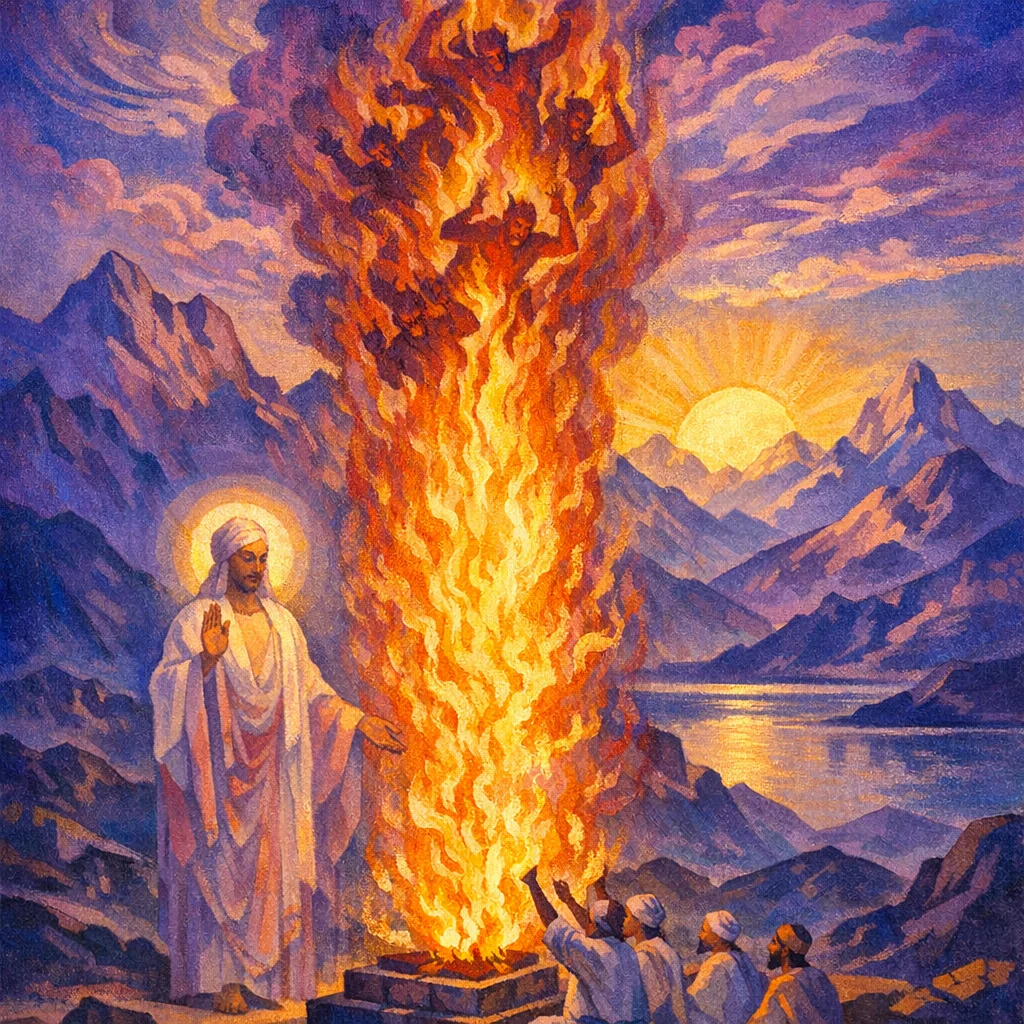
This brief hymn invokes Narāśaṃsa to protect the sacrificer specifically during the fore-offerings (prayāja) and after-offerings (anuyāja), ensuring peace and well-being in the rite. It asks that harmful speech (aśasti) and evil intention (durmati) be cast away, and that hostile forces—especially the Rakṣasas who oppose brahman (sacred formulation)—be burned and destroyed by a fiery protective power.
Mantras
Mantra 2
नराशंसो नोऽवतु प्रयाजे शं नो अस्त्वनुयाजो हवेषु । क्षिपदशस्तिमप दुर्मतिं हन्नथा करद्यजमानाय शं योः ॥
May Narāśaṃsa guard us in the fore-offerings; may the after-offering be for our peace in the invocations. Casting away the ill-praise and slaying the evil thought, then may he make for the sacrificer the good and the well-being.
Mantra 3
तपुर्मूर्धा तपतु रक्षसो ये ब्रह्मद्विषः शरवे हन्तवा उ । क्षिपदशस्तिमप दुर्मतिं हन्नथा करद्यजमानाय शं योः ॥
May Tapur-mūrdhā burn the Rakṣasas—those haters of the sacred Word—so they may be slain by the arrow of will. Casting away ill-formulation and slaying the evil thought, then may he make for the sacrificer peace and well-being.
Frequently Asked Questions
Narāśaṃsa is invoked as an auspicious protective power who guards the sacrifice and helps the worshipper gain peace and well-being through correct invocation.
They are the “fore-offerings” and “after-offerings” in a Vedic fire ritual—sets of oblations performed before and after the main offering to frame and secure the rite.
In Vedic ritual language, Rakṣasas symbolize forces that obstruct worship. “Haters of brahman” are those opposed to sacred speech and right formulation, so the hymn asks for them to be burned away and removed from the rite.