Adhyaya 80
Somārcana — Worship and Pacification of Soma (Moon) within Graha-Rites
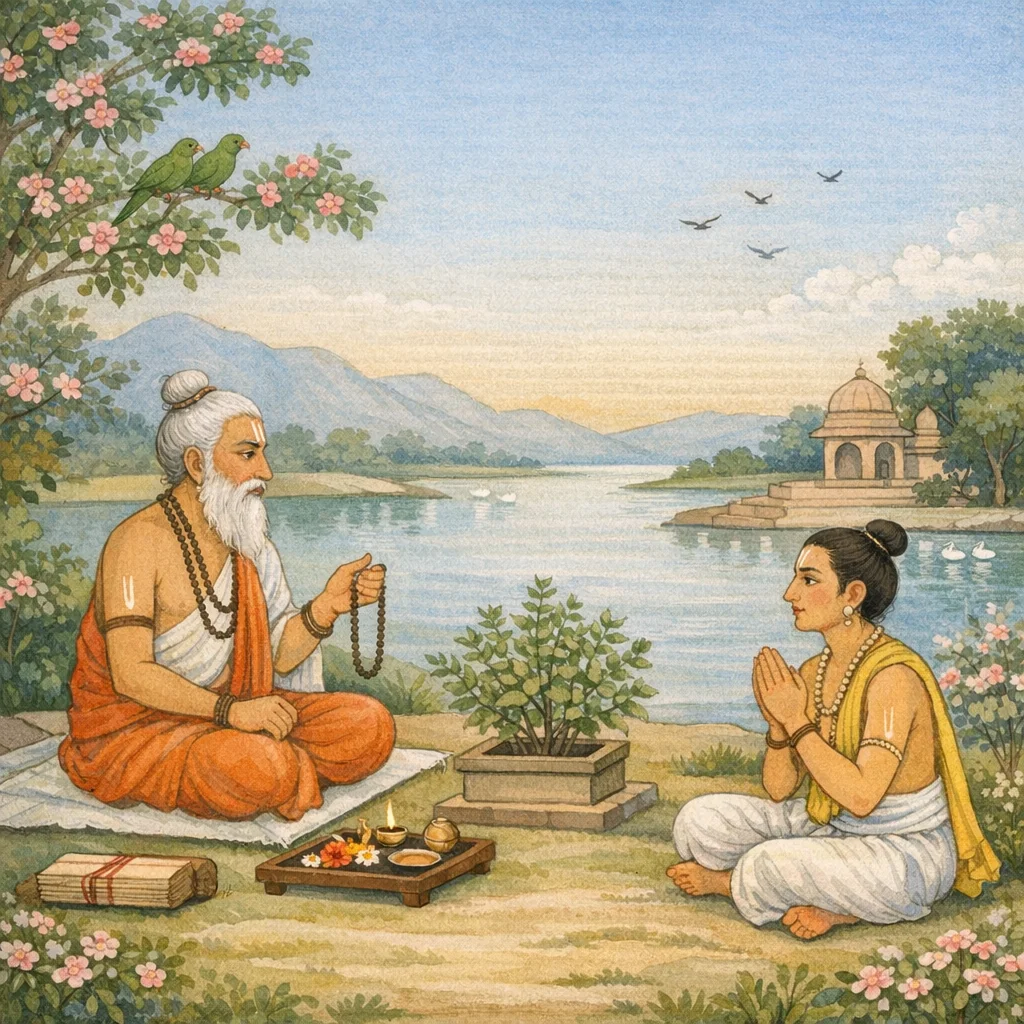
Chapter 80 begins with a request for remedial and pacificatory rites for the grahas, starting with Sūrya. The text explains that beings undergo the fruits of merit and sin through the agency of the planets, thereby exhausting stored karma; Sūrya is praised as Kāla (Time) and as a sovereign power that is both fierce and gracious. It then gives practical injunctions: homa oblations using specified leaves and ghee, along with a cited mantra for śānti. Measured offerings are prescribed for relief from disease and for release from killing/bondage, with timing by weekday and tithi—such as Sunday rites for Sūrya and bright-fortnight 7th/15th observances for recovery. The focus shifts to Soma (the Moon): metaphysical praise of his cosmic pervasion and governance from creation to dissolution, and subtle-body imagery of amṛta and the lunar station at the crown. Devotional salutations and a Soma mantra for dawn recitation follow, concluding with clear dāna procedures—gifting vessels and curd with ghee to brāhmaṇas respectfully—promising beauty, prosperity, and steady auspiciousness.
Shlokas
Verse 1
वैशंपायन उवाच । श्रुतो ग्रहेश्वरस्यैष प्रभावस्त्वत्प्रसादतः । रव्यादीनां ग्रहाणां च साधनं नो वद द्विज
Vaiśaṃpāyana said: “By your grace we have heard of the greatness of the lord of the planets. Now, O twice-born one, tell us the means—rites and remedies—concerning the planets beginning with the Sun.”
Verse 2
के ते रव्यादयस्तेषां कथं तोषः कथं प्रियम् । काले देशे तु संप्राप्ते दर्शनं तच्छिवाशिवम्
Who are those beings beginning with the Sun? How are they satisfied, and what is dear to them? And when the proper time and place are attained, that vision becomes auspicious—or inauspicious.
Verse 3
व्यास उवाच । ग्रहादयो ये लोके तु भुंजंति पुण्यपातकम् । शिवाशिवं च कुर्वंति विश्वकर्मक्षयाय वै
Vyāsa said: “The planets and other celestial influences in this world cause beings to experience the results of merit and sin; they bring about what is auspicious and inauspicious, indeed for the working out and exhaustion of one’s accumulated deeds.”
Verse 4
सूरः कालोंतको ज्ञेयो जनेषु च ग्रहेषु च । तिग्मसौम्याच्च योगात्स निग्रहानुग्रहे प्रभुः
Sūrya is to be known as Time itself and as the ender of all, among people and among the planets. From the union of his fierce and gentle aspects, he is the sovereign who restrains and who bestows grace.
Verse 5
ग्रहभावाच्च तस्यैव संतोषं निगदाम्यहम् । उदुम्बरपलाशाभ्यां पल्लवाभ्यां जुहोति यः
Now I shall declare the very satisfaction of that planet-deity, according to its disposition: whoever offers oblations with tender leaves of the udumbara and palāśa trees thereby pleases it.
Verse 6
आकृष्णेनेति मंत्रेण मूलकेनाथ शांतये । जुहुयादाज्ययुक्ताभ्यामभीष्टफलहेतवे
For pacification and peace, one should offer oblations with the mantra “ākṛṣṇeneti,” employing the mūlaka (root-mantra); and one should make the offerings together with ghee, as the means to obtain the desired result.
Verse 7
शांतये सर्वरोगाणां वधबंधविमोचने । एकैकेन तु मंत्रेण होतव्यं च शतंशतम्
For the pacification of all diseases and for release from killing and bondage, one should perform oblations—one hundred offerings for each individual mantra.
Verse 8
शितं चच्छागलं दद्यात्सूरायादित्यवासरे । भोजयेद्ब्राह्मणान्शक्त्या हव्यकव्यैर्मनोहरैः
On Sunday, one should offer a white goat to Sūrya, and according to one’s capacity feed brāhmaṇas with pleasing offerings—both those meant for the gods and those meant for the ancestors.
Verse 9
सप्तम्यां च सिते पक्षे पंचदश्यां तथैव च । रोगाद्विमुच्यते रोगी न रोगात्कृच्छ्रमेष्यति
On the seventh lunar day of the bright fortnight, and likewise on the fifteenth, the sick person is released from illness and will not again fall into distress because of disease.
Verse 10
परमं चामरं सत्वमाब्रह्मस्तंबमात्रके । ब्रह्मांडे चाणुमात्रे च सूरः संभावयिष्यते
The supreme and deathless Reality—extending from Brahmā down to a blade of grass—is contemplated by the wise, whether in the vast cosmic egg or even within the subtlest atom.
Verse 11
संहारांतं क्रमात्सर्वमुत्पत्तिस्थितिकारणात् । प्राणसर्गे जनानां स पाता विश्वचरस्तनौ
From the cause of creation and maintenance, he brings everything, step by step, up to its final dissolution. In the emanation of living beings, he is their protector—moving through the universe in embodied form.
Verse 12
मृत्युकाले तनोर्मध्यात्प्राणेन सह गच्छति । शीर्षान्तस्थः सदा चंद्रो द्विरष्टकलया युतः
At the time of death, it departs from the middle of the body together with the vital breath. Ever stationed at the crown of the head is the moon, endowed with sixteen phases.
Verse 13
अहर्निशं सुधावृष्टिं देहे वर्षत्यधोमुखः । जंतवस्तेन जीवंति महासत्वानुमात्रकाः
Day and night, the downward-facing one rains a shower of nectar upon its body; by that, living beings survive—only in proportion to their own measure of great vitality.
Verse 14
उर्व्यां सस्यानि पुष्णाति तथा स्थावरजंगमान् । एताभ्यां पुष्पवद्भ्यां च धारितं जनितं जगत्
Upon the earth, crops are nourished, as are the immovable and the moving beings. By these two—flower-like in their beneficence—the world is sustained and brought forth.
Verse 15
तयोराराधनात्पुष्टिः सदा पुण्यापरार्धिका । साधयेत्सर्वकार्याणि साधकः सर्वदा शुचिः
By worshipping those two, one gains nourishment and prosperity, and an ever-increasing store of merit. The practitioner—always pure—accomplishes all undertakings.
Verse 16
न पूजयति यो मोहात्सुधांशुं मानवाधमः । आयुस्तस्य क्षयं याति नरकं चाधिगच्छति
That lowest of men who, out of delusion, does not worship the Moon (Sudhāṃśu)—his lifespan dwindles away, and he goes to hell.
Verse 17
निष्कलंक कलाधार गंगाधर शिरोमणे । द्वितीयायां जगन्नाथ तुभ्यं चंद्र नमोस्तु ते
O stainless Moon, bearer of the lunar phases; crest-jewel of Gaṅgādhara (Śiva). On the second lunar day—O Lord of the universe—obeisance to you, O Candra.
Verse 18
तिथिमन्यामनुप्राप्य नमस्कारं विधोरपि । प्रकरोति नरो यस्तु सोभीष्टं फलमाप्नुयात्
Having reached another lunar day (tithi), the person who offers salutations even to the Moon attains the desired reward.
Verse 19
अत्रिनेत्रोद्भव श्रीमन्क्षीरोद मथनोद्भव । महेशमुकटावास तुभ्यं चंद्र नमोस्तुते
O illustrious Moon—born from Atri’s eye, arisen from the churning of the Ocean of Milk, and dwelling upon Mahesha’s crown—unto you, O Candra, I offer my reverent salutations.
Verse 20
दिव्यरूप नमस्तुभ्यं सुधाकर जगत्पते । शुक्लपक्षे तथा कृष्णे त्रियामायां विदुर्बुधाः
O you of divine form—salutations to you, O Moon, Lord of the world. In the bright fortnight as well as in the dark fortnight, the wise know your influence in the three watches of the night.
Verse 21
ऊं ह्रां ह्रीं सोमाय नमः इति जप्यमंत्रः । प्रभाते जपनीयः । एवं यः पूजयेत्सोमं श्रावयेच्च शृणोति वा । स पीयूषसमो लोके भवेज्जन्मनि जन्मनि
“Ūṁ hrāṁ hrīṁ—obeisance to Soma”: this is the mantra to be repeated; it should be recited at dawn. Thus, whoever worships Soma—whether he causes it to be recited for others or even merely hears it—becomes, in the world, like nectar itself, birth after birth.
Verse 22
एवं सहस्रनाम्ना यः स्तौति पूजयते भुवि । सोऽक्षयं लभते स्वर्गं पुनरावृत्तिदुर्लभम्
Thus, whoever on earth praises and worships with the thousand names attains the imperishable heaven—one that is hard to lose through return to rebirth.
Verse 23
इति सोमपूजा । पित्तले भाजने कांस्ये दधिपूर्णे घृते शिवे । न्यूनोऽधिकस्तु विभवाच्छ्रुत्वा कर्मविमत्सरः
Thus is the worship of Soma. In a brass vessel and in a kāṃsya (bell-metal) bowl, one should offer curd filled with ghee as an auspicious oblation. Whether the offering is less or more depends on one’s means; having heard this, one should perform the rite without envy or resentment.
Verse 24
स्वर्णे वा राजते वारे सौम्ये कृष्णभवे बुधम् । संस्थाप्य सर्वसंस्थाने दद्याद्बहुसुताय च
On a Wednesday in the bright fortnight, one should install in a duly consecrated place an image of Budha (Mercury) made of gold or silver, and then give it as dāna—seeking the blessing of many sons.
Verse 25
परं भवति सौभाग्यं पीयूषादधिकं भृशम् । स्त्रीणां च पुरुषाणां च न दौर्भाग्यं कदाचन
Supreme good fortune arises, far surpassing even nectar in excellence; for women and for men alike, misfortune never occurs thereafter.
Verse 26
रूपसौभाग्यकामोहं दधिपूर्णं च भाजनम् । ददामि कांस्यपात्रस्थं देहि सौभाग्यरूपकम्
Desiring beauty and good fortune, I offer this vessel filled with curd, set within a bronze bowl—grant me beauty and auspicious fortune.
Verse 27
द्विजाय वाक्यपूर्वेण दद्याद्विमत्सरो नरः । शक्तितो दक्षिणा देया तथा वस्त्रादिकं नवम्
A man free from envy should give to a twice-born (brāhmaṇa) after first speaking respectfully. According to his means, he should offer dakṣiṇā, and likewise new clothing and similar items.
Verse 28
भोज्यान्नं सर्वसम्पूर्णं तांबूलं सुमनोहरम् । पुष्पमालादिकं दद्याद्रूपसौभाग्यहेतवे
One should offer fully prepared food, delightful tāmbūla (betel), and garlands of flowers and the like—so as to become a cause of beauty and good fortune.
Verse 29
एवं यः कुरुते दानं सोमोद्दिष्टं द्विजातये । स्वर्लोके नरलोके वा रूपसौभाग्यभुग्भवेत्
Thus, whoever offers the donation prescribed for Soma to a twice-born (brāhmaṇa) enjoys beauty and good fortune—whether in heaven or in the human world.
Verse 80
इति श्रीपाद्मपुराणे प्रथमे सृष्टिखंडे सोमार्चनं । नामाशीतितमोऽध्यायः
Thus, in the revered Padma Purāṇa—within the First Book, the Sṛṣṭi-khaṇḍa—ends the eightieth chapter called “Somārcana (Worship of Soma).”