Adhyaya 7
The Jyeṣṭha Full-Moon Vow, the Birth of the Maruts, and the Outline of Secondary Creation (Manvantaras)
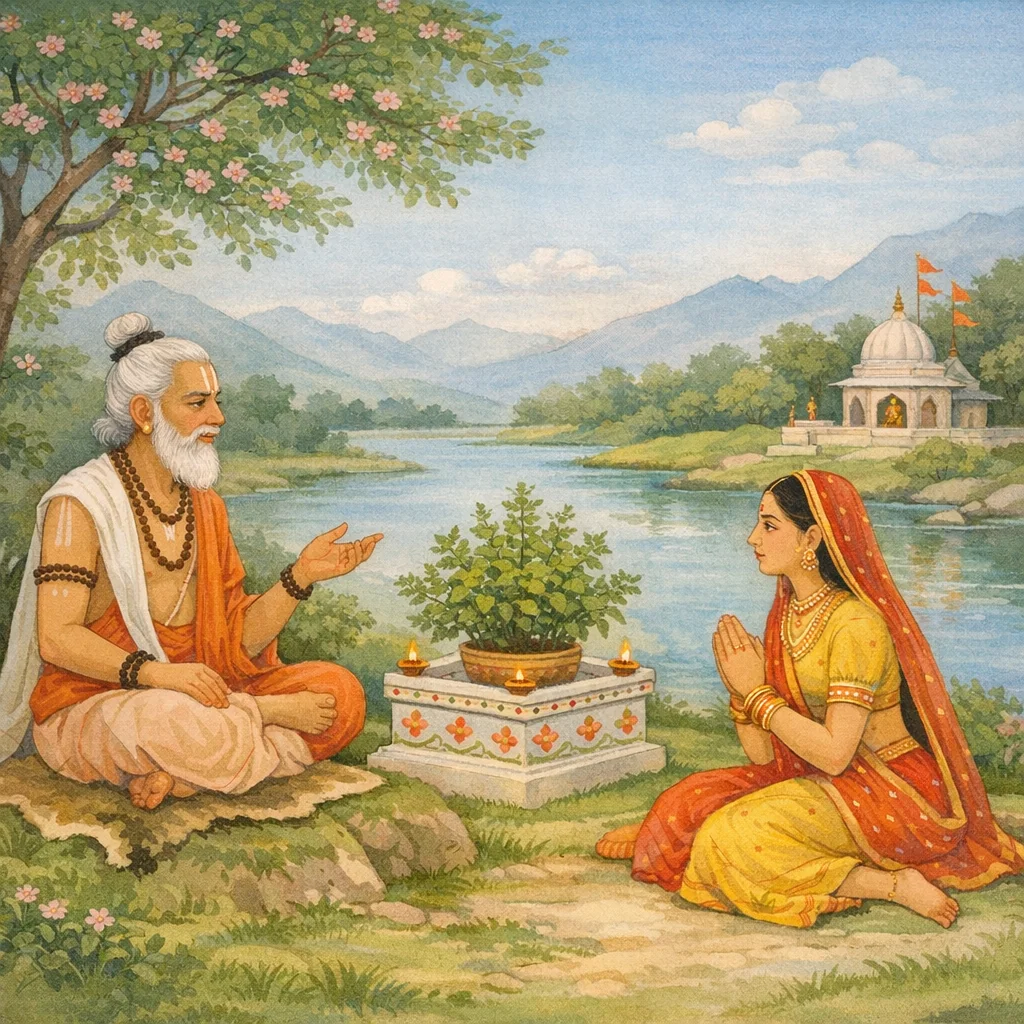
Bhīṣma asks Pulastya how the Maruts—born from Diti—came to be beloved of the gods. Pulastya recounts Diti’s austerities at Puṣkara on the Sarasvatī and her approach to Vasiṣṭha, who prescribes the Jyeṣṭha Full-Moon vow (Jyeṣṭha Pūrṇimā vrata). The rite is set out in detail: establishing the kalaśa, offering white substances, installing images of Brahmā and Sāvitrī, reciting mantra, repeating the observance monthly, and completing it with final dāna—promising sin-removal, prosperity, and union with Brahman. After the vow, Kaśyapa performs a conception-rite meant to produce an Indra-slayer and teaches disciplines for pregnancy. Indra exploits a lapse, splits the embryo into forty-nine, and Brahmā names them “Maruts,” granting them deva-status and shares in sacrifice. The chapter then turns to pratisarga (secondary creation): Pṛthu’s appointment of cosmic overlords and an outline of the Manvantaras and their sages.
Shlokas
Verse 1
भीष्म उवाच । दितेः पुत्राः कथं जाता मरुतो देववल्लभाः । देवैर्जग्मुश्च सापत्नैः कस्मात्सख्यमनुत्तमम्
Bhīṣma said: How were the Maruts—sons of Diti—born, and yet beloved of the gods? And why did they, though rivals of the gods, go together with them, possessing an unsurpassed friendship?
Verse 2
पुलस्त्य उवाच । पुरा दैवासुरे युद्धे हतेषु हरिणा सुरैः । पुत्रपौत्रेषु शोकार्ता गता भूलोकमुत्तमम्
Pulastya said: Long ago, in the war between the gods and the demons, when the gods were slain by Hari, she—stricken with grief for her sons and grandsons—went to the excellent realm of the earth.
Verse 3
पुष्करेषु महातीर्थे सरस्वत्यास्तटे शुभे । भर्त्तुराराधनपरा तप उग्रं चचार ह
At Puṣkara, that great sacred ford, on the auspicious bank of the Sarasvatī, she—devoted to the worship of her husband—performed intense austerities.
Verse 4
दितिर्वै दैत्यमाता तु ऋषिकार्येण सुव्रता । फलाहारा तपस्तेपे कृच्छ्रचांद्रायणादिभिः
Diti indeed—the mother of the Daityas—being virtuous and acting for the sake of the sage’s purpose, undertook austerities; living on fruits, she performed penances such as the Kṛcchra and Cāndrāyaṇa vows and the like.
Verse 5
यावद्वर्षशतं साग्रं जराशोकसमाकुला । ततः सा तपसा तप्ता वसिष्ठादीनपृच्छत
For a full hundred years and more, she remained overwhelmed by old age and sorrow. Then, scorched by austerity, she questioned Vasiṣṭha and the other sages.
Verse 6
कथयंतु भवंतो मे पुत्रशोकविनाशनम् । व्रतं सौभाग्यफलदमिहलोके परत्र च
Please tell me of a sacred vow that destroys the grief of losing a son and bestows the fruit of good fortune—both in this world and in the next.
Verse 7
ऊचुर्वसिष्ठप्रमुखा ज्येष्ठस्य पूर्णिमाव्रतम् । यस्य प्रसादादभवत्सुतशोकविवर्जिता
Vasiṣṭha and the other foremost sages said, “(She should observe) the Pūrṇimā vow of the month Jyeṣṭha; by its grace she became free from grief caused by her son.”
Verse 8
भीष्म उवाच । श्रोतुमिच्छाम्यहं ब्रह्मन्ज्येष्ठस्य पूर्णिमाव्रतम् । सुतानेकोनपंचाशद्येन लेभे पुनर्दितिः
Bhīṣma said: O Brahman, I wish to hear about the Jyeṣṭha full-moon vow, by which Diti again obtained forty-nine sons.
Verse 9
पुलस्त्य उवाच । यद्वसिष्ठादिभिः पूर्वं दित्यै संकथितं व्रतम् । विस्तरेण तदेवेदं मत्सकाशान्निशामय
Pulastya said: “Listen from me, in full detail, to that very vow which was formerly narrated to Diti by Vasiṣṭha and the other sages.”
Verse 10
ज्येष्ठे मासि सिते पक्षे पौर्णमास्यां यतव्रता । स्थापयेदव्रणं कुंभं सिततण्डुलपूरितम्
In the month of Jyeṣṭha, during the bright fortnight, on the full-moon day, one disciplined in vows should set up an unblemished water-pot, filled with white rice.
Verse 11
नानाफलयुतं तद्वदिक्षुदंडसमन्वितम् । सितवस्त्रयुगच्छन्नंसितचंदनचर्चितम्
Likewise, it was furnished with many kinds of fruits and accompanied by sugarcane stalks; it was covered with a pair of white cloths and anointed with white sandal paste.
Verse 12
नानाभक्ष्यसमोपेतं सहिरण्यं तु शक्तितः । ताम्रपात्रं गुडोपेतं तस्योपरि निवेशयेत्
As one is able, one should provide various kinds of foods along with gold; and one should place a copper vessel filled with jaggery on top of that offering.
Verse 13
तस्मादुपरि ब्रह्माणं सौवर्णं पद्मकोटरे । कुर्यात्शर्करयोपेतां सावित्रीं तस्य वामतः
Above that, within the hollow of the lotus, one should fashion Brahmā in gold; and on his left side one should make Sāvitrī, adorned with sugar-crystals.
Verse 14
गंधंधूपं तयोर्दद्याद्गीतं वाद्यं च कारयेत् । तदभावे कथं कुर्याद्यथा पद्मे पितामहः
One should offer fragrance and incense to them, and have singing and instrumental music performed. If these are unavailable, how should one proceed—just as the Grandsire (Brahmā) did in the Padma (Purāṇa)?
Verse 15
ब्रह्माह्वयां च प्रतिमां कृत्वा गुडमयीं शुभाम् । शुक्लपुष्पाक्षततिलैरर्चयेत्पद्मसंभवम्
One should prepare an auspicious image (pratimā) invoking Brahmā, made of jaggery, and worship Padma-sambhava (Brahmā, ‘born of the lotus’) with white flowers, unbroken rice, and sesame seeds.
Verse 16
ब्राह्माय पादौ संपूज्य जंघे सौभाग्यदाय च । विरिंचायोरुयुग्मं च मन्मथायेति वै कटिम्
Having duly worshipped the feet for Brahmā, and the shanks for the Giver of good fortune, one should also worship the pair of thighs for Viriñci (Brahmā); and indeed the waist for Manmatha (Kāma).
Verse 17
स्वच्छोदरायेत्युदरमतंद्रायेत्युरो विधेः । मुखं पद्ममुखायेति बाहू वै वेदपाणये
Brahmā’s belly is praised as “the pure-bellied,” his chest as “the untiring one.” His face is praised as “lotus-faced,” and his arms indeed as “the one whose hands hold the Vedas.”
Verse 18
नमः सर्वात्मने मौलिमर्च्चयेच्चापि पंकजम् । ततः प्रभाते तत्कुंभं ब्राह्मणाय निवेदयेत्
One should say, “Salutations to the Universal Self,” and worship Him by offering a lotus. Then, at dawn, one should present that water-pot to a brāhmaṇa.
Verse 19
ब्राह्मणं भोजयेद्भक्त्या स्वयं तु लवणं विना । भक्त्या प्रदक्षिणं दद्यादिमं मंत्रमुदीरयेत्
With devotion, one should feed a brāhmaṇa, and oneself should eat without salt. With devotion, one should offer pradakṣiṇā (reverent circumambulation) and recite this mantra.
Verse 20
प्रीयतामत्र भगवान्सर्वलोकपितामहः । हृदये सर्वलोकानां यस्त्वानंदोभिधीयते
May the Blessed Lord—the Pitāmaha, Grandfather of all worlds—be pleased here; He who is called “Bliss” dwells in the hearts of all beings.
Verse 21
अनेन विधिना सर्वं मासिमासि समाचरेत् । उपवासी पौर्णमास्यामर्चयेद्ब्राह्ममव्ययम्
By this method, one should perform all observances regularly, month after month. Fasting, one should worship the imperishable Brahman on the full-moon day.
Verse 22
फलमेकं च संप्राश्य शर्वर्यां भूतले स्वपेत् । ततस्त्रयोदशे मासि घृतधेनुसमन्विताम्
Having eaten only a single fruit, one should sleep at night upon the bare ground. Then, in the thirteenth month, one should make a gift accompanied by a ghee-cow.
Verse 23
शय्यां दद्याद्विरिंचाय सर्वोपस्करसंयुताम् । ब्रह्माणं कांचनं कृत्वा सावित्रीं रजतैस्तथा
One should offer a bed to Viriñci (Brahmā), furnished with all accessories; and, having fashioned Brahmā in gold, one should likewise fashion Sāvitrī in silver.
Verse 24
पद्मात्मकः सृष्टिकर्त्ता सावित्रीमुपलभ्यतु । वस्त्रैर्द्विजं सपत्नीकं पूज्य भक्त्या विभूषणैः
May the lotus-natured Creator of the universe obtain Sāvitrī. With devotion, one should honor a brāhmaṇa together with his wife by offering garments and ornaments.
Verse 25
शक्त्या गवादिकं दद्यात्प्रीयतामित्युदीरयेत् । होमं शुक्लैस्तिलैः कुर्याद्ब्रह्मनामानि कीर्तयेत्
According to one’s capacity, one should gift cows and the like, saying, “May (Brahmā) be pleased.” One should perform a fire-offering with white sesame seeds and recite the names of Brahmā.
Verse 26
गव्येन सर्पिषा तद्वत्पायसेन च धर्मवित् । विप्रेभ्योथ धनं दद्यात्पुष्पमालां च शक्तितः
Knowing dharma, one should likewise offer cow-ghee and sweet milk-rice; then, according to one’s capacity, give wealth and flower-garlands to the Brahmins.
Verse 27
यः कुर्याद्विधिनानेन पौर्णमास्यां स्त्रियोपि वा । सर्वपापविनिर्मुक्तः प्राप्नोति ब्रह्मसात्म्यताम्
Whoever performs this rite according to the prescribed procedure on the full-moon day—even women as well—becomes freed from all sins and attains oneness with Brahman.
Verse 28
इहलोके वरान्पुत्रान्सौभाग्यं ध्रुवमश्नुते । यो ब्रह्मा स स्मृतो विष्णुरानंदात्मा महेश्वरः
In this very world, one surely attains excellent sons and enduring good fortune. For the One who is Brahmā is remembered as Viṣṇu, and as Maheśvara, whose very nature is bliss.
Verse 29
सुखार्थी कामरूपेण स्मरेद्देवं पितामहम् । एवं श्रुत्वा चकारासौ दितिः सर्वमशेषतः
One who seeks happiness should remember the divine Grandfather (Brahmā) in whatever form is desired. Hearing this, Diti did everything accordingly, leaving nothing undone.
Verse 30
कश्यपो व्रतमाहात्म्यादागत्य परया मुदा । चकार कर्कशां भूयो रूपलावण्यसंयुताम्
Kashyapa, arriving with great joy at the glory of the vow, made the harsh one again endowed with form, beauty, and loveliness.
Verse 31
वरैराछंदयामास सा तु वव्रे वरंवरम् । पुत्रं शक्रवधार्थाय समर्थं च महौजसम्
She then sought to please him with boons, and chose the choicest boon: a son—capable and of great splendor—meant for the slaying of Śakra (Indra).
Verse 32
वरयामि महात्मानं सर्वामरनिषूदनम् । उवाच कश्यपो वाक्यमिंद्रहंतारमूर्जितम्
“I choose that great-souled one, the slayer of all the gods.” Thus Kaśyapa spoke these forceful words, choosing the mighty Indra-slayer.
Verse 33
प्रदास्याम्यहमेतेन किन्त्वेतत्क्रियतां शुभे । आपस्तंबीं तु कृत्वेष्टिं पुत्रीयामद्य सुस्तनि
“I will grant it by means of this; but, O auspicious one, let this be done: perform today the Āpastamba rite—an iṣṭi for obtaining offspring—O fair-breasted one.”
Verse 34
विधास्यामि ततो गर्भं स्पृष्ट्वाहं ते स्तनौ शुभे । भविष्यति शुभो गर्भो देवि शक्रनिषूदनः
“Then I shall cause conception; having touched your auspicious breasts, O fair one. A blessed child will be born, O Goddess—one who will be the slayer of Śakra (Indra).”
Verse 35
आपस्तंबीं ततश्चक्रे पुत्रेष्टिं द्रविणाधिकाम् । इंद्रशत्रोभवस्वेति जुहाव च हविस्त्वरन्
Then he performed the Āpastambī rite—a putreṣṭi (son-producing sacrifice) rich in gifts; and, hastening with the oblation, he offered it into the fire, saying, “O enemy of Indra, come into being!”
Verse 36
देवाश्च मुमुर्हुर्दैत्या विमुखाश्चैव दानवाः । दित्यां गर्भमथाधत्त कश्यपः प्राह तां पुनः
The gods were confounded, and the Daityas and Dānavas too grew disheartened. Then Kaśyapa implanted conception in Diti and spoke to her again.
Verse 37
मुखं ते चंद्रप्रतिमं स्तनौ बिल्वफलोपमौ । अधरौ विद्रुमाकारौ वर्णश्चातीव शोभनः
Your face is like the moon; your breasts are like bilva fruits. Your lips resemble coral, and your complexion is exceedingly beautiful.
Verse 38
त्वां दृष्ट्वाहं विशालाक्षि विस्मरामि स्विकां तनुम् । तदेवं गर्भः सुश्रोणि हस्तेनोप्तस्तनौ तव
Seeing you, O large-eyed one, I forget my own body. And so, O fair-hipped one, this seed has been placed by the hand upon your breasts.
Verse 39
त्वया यत्ने विधातव्यो ह्यस्मिन्गर्भे वरानने । संवत्सरशतं त्वेकमस्मिन्नेव तपोवने
O fair-faced one, you must apply yourself with effort to this pregnancy; and you should remain for a full hundred years in this very forest of austerities.
Verse 40
संध्यायां नैव भोक्तव्यं गर्भिण्या वरवर्णिनि । न स्थातव्यं न गंतव्यं वृक्षमूलेषु सर्वदा
O fair lady, a pregnant woman should not eat at twilight (sandhyā); and at no time should she stand still or go near the roots of trees.
Verse 41
नोपस्करेषु निविशेन्मुसलोलूखलादिषु । जलं च नावगाहेत शून्यागारं च वर्जयेत्
One should not sit or recline upon household implements such as pestles and mortars; one should not enter the water for bathing in an improper manner; and one should avoid dwelling in an empty, deserted house.
Verse 42
वल्मीकेषु न तिष्ठेत न चोद्विग्नमना भवेत् । न नखेन लिखेद्भूमौ नांगारे न च भस्मनि
One should not stand upon anthills, nor let the mind become agitated. One should not scratch or write on the ground with one’s nails, nor do so upon live embers or in ashes.
Verse 43
न शयालुः सदा तिष्ठेद्व्यायामं च विवर्जयेत् । न तुषांगारभस्मास्थि कपालेषु समाविशेत्
One should not remain ever asleep, nor abandon bodily discipline. One should also not come into contact with husks, charcoal, ash, bones, or skulls.
Verse 44
वर्जयेत्कलहं लोके गात्राभ्यंगं तथैव च । न मुक्तकेशी तिष्ठेत नाशुचिः स्यात्कथंचन
One should avoid quarrelling in the world, and likewise avoid anointing the body with oil. One should not remain with hair left loose, and one should never be impure in any way.
Verse 45
न शयीतोत्तरशिराः न चैवाधः शिराः क्वचित् । न वस्त्रहीना नोद्विग्ना न चार्द्रचरणा सती
A virtuous wife should not sleep with her head to the north, nor ever with her head to the south; she should not be without clothing, not be distressed, and should not have wet feet.
Verse 46
नामंगल्यां वदेद्वाचं न च हास्याधिकाभवेत् । कुर्याच्च गुरुभिर्नित्यं पूजां मांगल्यतत्परा
One should not speak inauspicious words, nor indulge in excessive laughter. Intent on auspiciousness, one should ever perform worship, together with the gurus and in accordance with their guidance.
Verse 48
सर्वौषधीभिः सृष्टेन वारिणा स्नानमाचरेत् । तिष्ठेत्प्रसन्नवदना भर्तृप्रियहिते रता । न गर्हयेच्च भर्ता रंसर्वावस्थमपि क्वचित्
She should bathe with water infused with all medicinal herbs. With a cheerful countenance, devoted to what is pleasing and beneficial to her husband, she should never reproach him—whatever his condition may be—at any time.
Verse 49
कृशाहं दुर्बला चैव वार्द्धक्यं मम चागतम् । स्तनौ मे चलितौ स्थानान्मुखं च वलिभंगुरम्
I have grown emaciated and weak; old age has come upon me. My breasts have slipped from their place, and my face has become wrinkled and fragile.
Verse 50
एवंविधा त्वया चाहं कृतेति न वदेत्क्वचित् । स्वस्त्यस्तुते गमिष्यामि तथेत्युक्तस्तया पुनः
“Never at any time should you say, ‘I have been made such by you.’ May auspiciousness attend you; I shall depart.” Thus she addressed him again, and he replied, “So be it.”
Verse 51
पश्यतां सर्वभूतानां तत्रैवांतरधीयत । ततः सा भर्तृवाचोक्तविधिना समतिष्ठत
While all beings looked on, she vanished right there. Thereafter, she proceeded in accordance with the rite and procedure spoken by her husband.
Verse 52
अथ ज्ञात्वा तथेंद्रोपि दितेः पार्श्वमुपागतः । विहाय देवसदनं तां शुश्रूषुरवस्थितः
Then, having understood this, Indra too approached Diti’s side; leaving the abode of the gods, he remained there, intent on serving her.
Verse 53
दितेश्छिद्रांतरप्रेप्सुरभवत्पाकशासनः । विपरीतोंतरव्यग्रः प्रसन्नवदतो बहिः
Pākaśāsana (Indra), seeking an opening in Diti’s vulnerable interval, was the reverse of what he appeared—outwardly speaking with a pleasant face, yet inwardly anxious and intent.
Verse 54
अजानन्निव तत्त्कार्यमात्मनश्शुभमाचरन् । ततो वर्षशतांते सा न्यूने तु दिवसैस्त्रिभिः
Acting as though unaware, he performed that auspicious duty for his own good. Then, at the end of a hundred years—short by three days—she reached that point.
Verse 55
मेने कृतार्थमात्मानं प्रीत्या विस्मितमानसा । अकृत्वा पादयोः शौचं शयाना मुक्तमूर्धजा
Delighted and astonished at heart, she considered herself fulfilled; yet, lying down with her hair loosened, she did not perform the cleansing of her feet.
Verse 56
निद्राभरसमाक्रांता दिवा परशिराः क्वचित् । ततस्तदंतरं लब्ध्वा प्रविश्यांतः शचीपतिः
Overcome by the heaviness of sleep, she lay down at times even in the daytime, with her head turned aside. Then Śacī’s lord (Indra), finding an opening, entered inside.
Verse 57
वज्रेण सप्तधा चक्रे तं गर्भं त्रिदशाधिपः । ततः सप्त च ते जाताः कुमाराः सूर्यवर्चसः
With his thunderbolt, the Lord of the gods split that womb into seven parts; from it were born seven youths, radiant with the splendor of the sun.
Verse 58
रुदंतः सप्त ते बाला निषिद्धा दानवारिणा । भूयोपि रुदमानांस्तानेकैकान्सप्तधा हरिः
Those seven children wept, and the foe of the Dānavas forbade them; yet as they continued to cry, Hari divided each one of them again into seven parts.
Verse 59
चिच्छेद वज्रहस्तो वै पुनः स्तूदरसंस्थितान् । एवमेकोनपंचाशद्भूत्वा तेरुरुदुर्भृशम्
Then the wielder of the thunderbolt again cut down those stationed upon the stout-bellied one; thus, becoming forty-nine in number, they roared exceedingly loud.
Verse 60
इंद्रो निवारयामास मा रुदध्वं पुनःपुनः । ततः स चिंतयामास वितर्कमिति वृत्रहा
Indra kept restraining them, saying again and again, “Do not weep.” Then Vṛtra’s slayer, Indra, began to reflect, turning the matter over in his mind.
Verse 61
कर्मणः कस्य माहात्म्यात्पुनः संजीवितास्त्वमी । विदित्वा पुण्ययोगेन पौर्णमासीफलं त्विदम्
“By the greatness of whose deed have you been brought back to life again? Having understood this through the bond of merit, tell me the fruit of the Pūrṇamāsī observance, the full-moon vow.”
Verse 62
नूनमेतत्परिणतमथवा ब्रह्मपूजनात् । वज्रेणाभिहताः संतो न विनाशमुपाययुः
Surely this is the fruit of ripened merit—or else it is due to the worship of Brahmā: though struck by the thunderbolt, these righteous ones did not meet destruction.
Verse 63
एकोप्यनेकतामाप यस्मादुदरगोपनम् । अवध्या नूनमेते वै तस्माद्देवा भवंत्विति
Because even one being assumed many forms to conceal himself within the womb, these indeed must be inviolable; therefore, let them become gods.
Verse 64
यस्मान्मा रुद इत्युक्ता रुदंतो गर्भसंभवाः । मरुतो नाम ते नाम्ना भवंतु सुखभागिनः
Since they were told, “Do not cry,” and yet were born from the womb crying, let them be known by the name Maruts, and may they be sharers in happiness.
Verse 65
ततः प्रसाद्य देवेशः क्षमस्वेति दितिं पुनः । अर्थशास्त्रं समास्थाय मयैतद्दुष्कृतं कृतम्
Then, having propitiated the Lord of the gods, he again said to Diti, “Forgive me.” Relying on the counsel of statecraft, I committed this wrongdoing.
Verse 66
कृत्वा मरुद्गणं देवैः समानममराधिपः । दितिं विमानमारोप्य ससुतामगमद्दिवम्
Having made the troop of Maruts equal in status to the gods, the lord of the immortals placed Diti—together with her son—upon a celestial chariot and went to heaven.
Verse 67
यज्ञभागभुजः सर्वे मरुतस्ते ततोभवन् । न जग्मुरैक्यमसुरैरतस्ते सुरवल्लभाः
All of them became Maruts, entitled to a share in the offerings of the yajña. They did not unite with the Asuras; therefore they became beloved of the Devas.
Verse 68
भीष्म उवाच । आदिसर्गस्त्वया ब्रह्मन्कथितो विस्तरेण मे । प्रतिसर्गश्च यो येषामधिपांस्तान्वदस्व मे
Bhīṣma said: “O Brahmin, you have explained to me in detail the primordial creation (ādi-sarga). Now tell me also about the secondary creation (prati-sarga), and about the presiding lords of those created orders.”
Verse 69
पुलस्त्य उवाच । यदाभिषिक्तः सकलेपि राज्ये पृथुर्द्धरित्र्यामधिपो बभूव । तथौषधीनामधिपं चकार यज्ञव्रतानां तपसां च सोमम्
Pulastya said: When Pṛthu was consecrated and became the sovereign lord over the whole kingdom upon the earth, he likewise appointed Soma as the overlord of medicinal herbs, of sacrificial observances, and of austerities.
Verse 70
नक्षत्रताराद्विजवृक्षगुल्मलतावितानस्य च रुक्मगर्भम् । अपामधीशं वरुणं धनानां राज्ञां प्रभुं वैश्रवणं च तद्वत्
Likewise, he appointed a ruler for the canopy of constellations and stars, for birds, trees, shrubs, creepers, and spreading vines; and he established Varuṇa as the lord of the waters, and Vaiśravaṇa (Kubera) as the master of wealth and the sovereign among kings.
Verse 71
विष्णुं रवीणामधिपं वसूनामग्निं च लोकाधिपतिं चकार । प्रजापतीनामधिपं च दक्षं चकार शक्रं मरुतामधीशम्
He appointed Viṣṇu as the lord of the Ādityas (solar deities), and Agni as the lord of the Vasus and as the ruler of the worlds. He also appointed Dakṣa as the chief of the Prajāpatis, and made Śakra (Indra) the overlord of the Maruts.
Verse 72
दैत्याधिपानामथ दानवानां प्रह्लादमीशं च यमं पितॄणाम् । पिशाचरक्षःपशुभूतयक्षवेतालराजं ह्यथ शूलपाणिम्
Then he praised Prahlāda as the lord of the Daityas and Dānavas; Yama as the ruler of the Pitṛs (manes); and also Śūlapāṇi as the king of Piśācas, Rākṣasas, beasts, Bhūtas, Yakṣas, and Vetālas.
Verse 73
प्रालेयशैलं च पतिं गिरीणामीशं समुद्रं सरितामधीशम् । गंधर्वविद्याधरकिन्नराणामीशं पुनश्चित्ररथं चकार
He made Prāleyśaila the lord of mountains; the ocean the sovereign of rivers; and again he appointed Citraratha as the ruler of the Gandharvas, Vidyādharas, and Kinnaras.
Verse 74
नागाधिपं वासुकिमुग्रवीर्यं सर्पाधिपं तक्षकमादिदेश । दिग्वारणानामधिपं चकार गजेंद्रमैरावणनामधेयम्
He appointed the mighty Vāsuki as lord of the Nāgas; he designated Takṣaka as lord of the serpents; and he made the elephant-king named Airāvata the ruler over the directional elephants.
Verse 75
सुपर्णमीशं पततामथार्वतां राजानमुच्चैःश्रवसं चकार । सिंहं मृगाणां वृषभं गवां च प्लक्षं पुनः सर्ववनस्पतीनाम्
He made Suparṇa (Garuḍa) the lord of birds; among horses he made Uccaiḥśravas the king. Among wild beasts he made the lion supreme; among cattle the bull; and among all trees he again made the plakṣa (holy fig) foremost.
Verse 76
पितामहः पूर्वमथाभ्यषिंचदेतान्पुनः सर्वदिशाधिनाथान् । पूर्वेश दिक्पालमथाभ्यषिंचन्नाम्ना सुवर्माणमरातिकेतुं
Then the Grandsire (Brahmā) again consecrated these lords presiding over all the directions; and he anointed the guardian of the eastern quarter—named Suvarmā and Arātiketu—as the ruler of the East.
Verse 77
ततोधिपं दक्षिणतश्चकार सर्वेश्वरं शंखपदाभिधानम् । सकेतुमंतं दिगधीशमीशं चकार पश्चाद्भुवनांडगर्भः
Then the Lord who abides within the cosmic egg (Brahmā) appointed to the southern quarter the ocean-lord, Sarveśvara, famed by the name Śaṅkhapada; and to the western quarter he appointed the ruler of that direction, the lord named Saketumān.
Verse 78
हिरण्यरोमाणमुदग्दिगीशं प्रजापतिं मेघसुतं चकार । अद्यापि कुर्वंति दिशामधीशाः सदा वहंतस्तु भुवोभिरक्षाम्
He appointed Hiraṇyaromā as lord of the northern direction, a Prajāpati and the son of Megha. Even today the rulers of the directions continue their charge, ever bearing the burden of the worlds as their protection.
Verse 79
चतुर्भिरेतैः पृथुनामधेयो नृपोभिषिक्तः प्रथमः पृथिव्याम् । गतेंतरे चाक्षुषनामधेये वैवस्वतं चक्रुरिमं पृथिव्यां
By these four the king named Pṛthu was anointed—the first consecrated sovereign upon the earth. And when the Manvantara called Cākṣuṣa had passed, they made Vaivasvata (Manu) the ruler over this earth.
Verse 80
गतेंतरे चाक्षुषनामधेये वैवस्वताख्ये च पुनः प्रवृत्ते । प्रजापतिः सोस्य चराचरस्य बभूव सूर्यान्वयजः सचिह्नः
When the interval had passed and the period called Cākṣuṣa had ended, and the Vaivasvata (Manvantara) began again, there arose as Prajāpati of this entire moving-and-nonmoving creation one born in the lineage of the Sun, distinguished by his marks.
Verse 81
पुलस्त्य उवाच । मन्वंतराणि सर्वाणि मनूनां चरितानि यत् । प्रमाणं चैव कल्पस्य तत्सृष्टिं च समासतः
Pulastya said: “I shall relate all the Manvantaras, the accounts of the Manus, the measure of the kalpa, and, in brief, the creation belonging to it.”
Verse 82
एकचित्तः प्रसन्नात्मा शृणु कौरवनंदन । यामा नाम पुरा देवा आसन्स्वायंभुवांतरे
With a single-pointed mind and a tranquil heart, listen, O joy of the Kuru line. In ancient times there were deities called the Yāmas, who dwelt in the Manvantara of Svāyambhuva.
Verse 83
सप्तैव ऋषयः पूर्वं ये मरीच्यादयः स्मृताः । आग्नीध्रश्चाग्निबाहुश्च विभुः सवन एव च
The seven sages of old—remembered as Marīci and the others—were Āgnīdhra, Agnibāhu, Vibhu, and Savana as well.
Verse 84
ज्योतिष्मान्द्युतिमान्भव्यो मेधा मेधातिथिर्वसुः । स्वायंभुवस्यास्य मनोर्दशैते वंशवर्द्धनाः
Jyotiṣmān, Dyutimān, Bhavya, Medhā, Medhātithi, and Vasu—these ten are the increasers of the lineage of this Svāyambhuva Manu.
Verse 85
प्रतिसर्गममी कृत्वा जग्मुस्ते परमं पदम् । एवं स्वायंभुवं प्रोक्तं स्वारोचिषमतः परम्
Having carried out this secondary creation, they went to the supreme abode. Thus the account of Svāyambhuva has been told; next comes that of Svārociṣa.
Verse 86
स्वारोचिषस्य तनयाश्चत्वारो देववर्चसः । नभोनभस्य प्रभृतिर्भावनः कीर्तिवर्द्धनः
Svārociṣa had four sons, radiant like the gods: Nabhonabhasya, Prabhṛti, Bhāvana, and Kīrtivarddhana.
Verse 87
दत्तोग्निश्च्यवनस्तंभः प्राणः कश्यप एव च । अर्वा बृहस्पतिश्चैव सप्त सप्तर्षयोभवन्
Dattāgni, Cyavana, Stambha, Prāṇa, and Kaśyapa; and also Arvā and Bṛhaspati—these seven became the Seven Sages (Saptarṣis).
Verse 88
तदा देवाश्च तुषिताः स्मृता स्वारोचिषेंतरे । हवींद्रसुःकृतो मूर्तिरापो ज्योतिरथः स्मृतः
Then, in the Svārociṣa Manvantara, the gods are remembered as the Tuṣitas; Havīndra and Suḥkṛta are spoken of there, and Mūrti is remembered as the divine consort; Āpa and Jyotiratha are also recalled in that age.
Verse 89
वसिष्ठस्य सुताः सप्त ये प्रजापतयस्तदा । द्वितीयमेतत्कथितं मन्वंतरमतः परं
Then there were seven sons of Vasiṣṭha, who in that time became the Prajāpatis. Thus the second Manvantara has been described; thereafter the account continues onward.
Verse 90
अन्यच्चैव प्रवक्ष्यामि तथा मन्वंतरं शुभं । मनुर्नामौत्तमिस्तत्र दश पुत्रानजीजनत्
And I shall also relate another auspicious Manvantara: there, a Manu named Uttama begot ten sons.
Verse 91
इषऊर्जस्तनूजश्च शुचिः शुक्रस्तथैव च । मधुश्च माधवश्चैव नभस्योथ नभस्तथा
Iṣa, Ūrja’s son, Śuci, and Śukra; also Madhu and Mādhava; Nabhasya, and likewise Nabhas.
Verse 92
सहः सहस्य एतेषामुत्तमः कीर्तिवर्द्धनः । भानवस्तत्र देवाः स्युरूर्जाः सप्तर्षयः स्मृताः
Among them, Saha—born of Sahas—is the foremost, an increaser of renown. In this order, the Bhānavas are said to be the gods, and the Ūrjās are remembered as the Seven Ṛṣis.
Verse 93
कौकभिण्डिः कुतुण्डश्च दाल्भ्यः शंखः प्रवाहितः । मितिश्च संमितिश्चैव सप्तैते योगवर्द्धनाः
Kaukabhiṇḍi, Kutuṇḍa, Dālbhya, Śaṅkha, Pravāhita, Miti, and Saṃmiti—these seven are the enhancers of yoga, the sacred discipline of the spirit.
Verse 94
मन्वंतरं चतुर्थं तु तामसं नाम विश्रुतं । कपिः पृथुस्तथैवाग्निरकपिः कविरेव च
The fourth Manvantara is famed by the name Tāmasa; and in it are mentioned Kapi, Pṛthu, Agni, Akapi, and Kavi.
Verse 95
तथैव जन्यधामानौ मुनयः सप्त नामतः । साध्या देवगणा ये च कथितास्तामसेंतरे
Likewise, the seven Ṛṣis are known by name as progenitors of created beings; and the Sādhyas—those companies of gods—have also been described in the Tāmasa Manvantara.
Verse 96
अकल्मषस्तपोधन्वी तपोमूलस्तपोधनः । तपोराशिस्तपस्यश्च सुतपस्यः परंतपः
He is stainless, rich in the wealth of tapas; rooted in austerity and himself a treasure of penance. He is a very heap of ascetic power, ever engaged in sacred discipline—excellent in austerities, a supreme performer of tapas.
Verse 97
तामसस्य सुताः सर्वे दशवंशविवर्द्धनाः । पंचमस्य मनोस्तद्वद्रैवतस्यांतरं शृणु
All the sons of Tāmasa were enhancers of the ten lineages. Likewise, now listen to the Manvantara of Raivata, the fifth Manu.
Verse 98
देवबाहुः सुबाहुश्च पर्ज्यन्यः समयोमुनिः । हिरण्यरोमा सप्ताश्वः सप्तैते ऋषयः स्मृताः
Devabāhu, Subāhu, Parjanya, Samayomuni, Hiraṇyaromā, and Saptāśva—these, in all, are remembered as the seven Ṛṣis.
Verse 99
देवाश्च भूतरजसस्तथा प्रकृतयः स्मृताः । अवशस्तत्वदर्शी च वीतिमान्हव्यपः कपिः
The gods, the elemental ‘rajas’ (energies), and the constituent natures (prakṛtis) are thus remembered. Also mentioned are Avaśa, the Tattvadarśī (seer of reality), and Vītimān—along with Havyapa and Kapi.
Verse 100
मुक्तो निरुत्सुकः सत्वो निर्मोहोथ प्रकाशकः । धर्मवीर्यबलोपेता दशैते रेवतात्मजाः
Liberated; free from craving; endowed with purity (sattva); free from delusion; and radiant—these ten sons of Revata were possessed of dharma, valor, and strength.
Verse 101
भृगुः सुधामा विरजः सहिष्णुर्नारदस्तथा । विवस्वान्कृतिनामा च सप्त सप्तर्षयोपरे
Bhṛgu, Sudhāmā, Viraja, Sahiṣṇu, and likewise Nārada; as well as Vivasvān and one named Kṛtin—these are the other seven sages (Saptarṣis).
Verse 102
चाक्षुषस्यांतरे देवा लेखानामपरिश्रुताः । विभवोथ पृथक्चानु कीर्तितास्त्रिदिवौकसः
In the Cākṣuṣa Manvantara, the gods—whose names are recorded without omission—have been enumerated separately and in due succession, they being the dwellers of heaven.
Verse 103
चाक्षुषस्यांतरे प्राप्ते देवानां पंचमो जनः । रुरुप्रभृतयस्तद्वच्चाक्षुषस्य सुता दश
When the Manvantara of Cākṣuṣa arrived, the fifth generation of the gods came into being. Likewise, beginning with Ruru, there were ten sons of Cākṣuṣa.
Verse 104
प्रोक्ताः स्वायंभुवे वंशे ये मया पूर्वमेव ते । अन्तरं चाक्षुषं चैव मया ते परिकीर्तितं
Those (kings/sages) in the lineage of Svāyambhuva whom I had already spoken of earlier—I have also recounted to you the Antarā and Cākṣuṣa periods as well.
Verse 105
सप्तमं च प्रवक्ष्यामि यद्वैवस्वतमुच्यते । अत्रिश्चैव वसिष्ठश्च कश्यपो गौतमस्तथा
Now I shall explain the seventh Manvantara, which is called Vaivasvata. In it are the sages Atri, Vasiṣṭha, Kaśyapa, and likewise Gautama.
Verse 106
भारद्वाजस्तथा योगी विश्वामित्रः प्रतापवान् । जमदग्निश्च सप्तैते सांप्रतं ते महर्षयः
Also Bharadvāja, the yogin; the mighty Viśvāmitra; and Jamadagni—these seven are, at present, your great sages (mahārṣis).
Verse 107
कृत्वा धर्मव्यवस्थानं प्रयान्ति परमं पदं । सावर्ण्यस्य प्रवक्ष्यामि मनोर्भावि तथांतरं
Having established the proper order of dharma, they attain the supreme state. Now I shall expound the Manvantara of Sāvarṇya, and also the future Manvantara of Manu.
Verse 108
अश्वत्थामा शरद्वांश्च कौशिको गालवस्तथा । शतानंदः काश्यपश्च रामश्च ऋषय स्मृताः
Aśvatthāmā, Śaradvān, Kauśika, and likewise Gālava; also Śatānanda, Kāśyapa, and Rāma—these are remembered as sages (ṛṣis).
Verse 109
धृतिर्वरीयान्यवसुः सुवर्णो धृतिरेव च । वरिष्णुवीर्यः सुमतिर्वसुश्शुक्रश्च वीर्यवान्
Dhṛti, Varīyān, Yavasu, Suvarṇa, and again Dhṛti; also Variṣṇu-vīrya, Sumati, Vasu, Śukra, and the mighty Vīryavān—(these names are being enumerated).
Verse 110
भविष्यस्यार्कसावर्णेर्मनोः पुत्राः प्रकीर्तिताः । रौच्यादयस्तथान्येपि मनवः संप्रकीर्तिताः
The sons of Bhaviṣya—the Manu named Ārkasāvarṇi—have been proclaimed; likewise, the Manus beginning with Raucya and others too have been duly enumerated.
Verse 111
रुचेः प्रजापतेः पुत्रो रौच्यो नाम भविष्यति । मनुर्भूतिसुतस्तद्वद्भौत्यो नाम भविष्यति
From the Prajāpati Ruci a son will be born named Raucya; likewise, the Manu who is the son of Bhūti will be known as Bhautya.
Verse 112
ततस्तु मेरुसावर्णिर्ब्रह्मसुनुर्मनुः स्मृतः । ऋभुश्च ॠतुधामा च विष्वक्सेनो मनुस्तथा
Then Merusāvarṇi is remembered as Manu, the son of Brahmā; and after him Ṛbhu and Ṛtudhāmā, and likewise Viṣvaksena, are remembered as Manus.
Verse 113
अतीतानागताश्चैव मनवः परिकीर्तिताः । वर्षाणां युगसाहस्रमेभिर्व्याप्तं नराधिप
The Manus of the past and those yet to come have indeed been recounted. By these thousands of yugas the succession of years is fully encompassed, O king.
Verse 114
स्वेस्वेन्तरे सर्वमिदं समुत्पाद्य चराचरं । कल्पक्षये निवृत्ते तु मुच्यंते ब्रह्मणा सह
In each of their own cycles, having brought forth all this—both the moving and the unmoving—when dissolution at the end of a kalpa occurs, they are liberated along with Brahmā.
Verse 115
अमीयुगसहस्रान्ते विनश्यन्ति पुनःपुनः । ब्रह्माद्या विष्णुसायुज्यं ततो यास्यंति वै नृप
At the end of thousands of yugas they perish again and again; then Brahmā and the others attain union with Viṣṇu—indeed, O king.