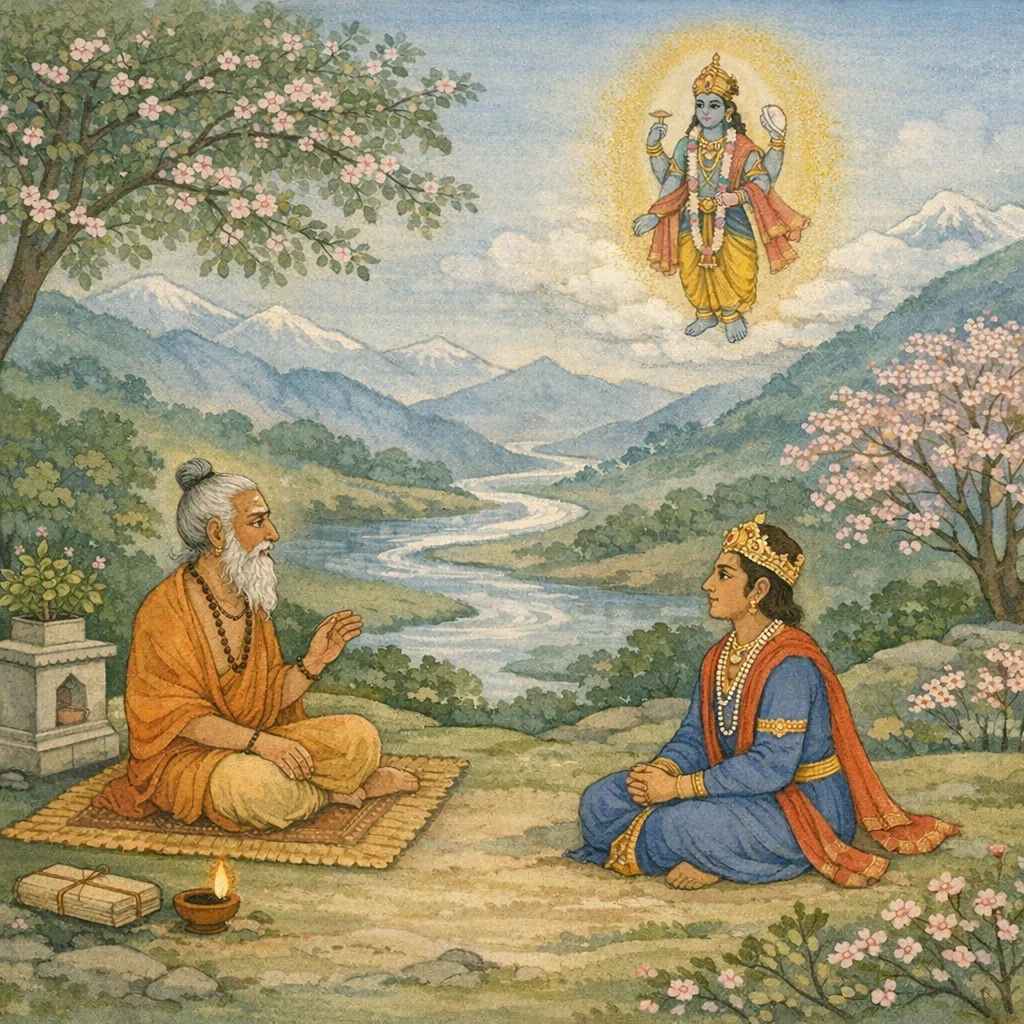
Adhyaya 60
The Glory of Dhātrī (Āmalakī) and Tulasī: Ekādaśī Observance and Protection from Preta States
Skanda asks Śiva about the sanctifying purity found in sacred plants and fruits. The chapter first proclaims Dhātrī/Āmalakī as supremely purifying: to plant it, behold it, touch it, utter its name, eat it, bathe with its juice, and offer it to Viṣṇu destroys sins, bestows prosperity, and leads toward liberation. It also emphasizes Ekādaśī-related disciplines of bathing and fasting, and notes prohibitions for certain weekdays and tithis (especially Sunday/Saptamī and other specified days). An embedded tale tells of a hunter/outcaste who eats āmalakī, dies, and becomes untouchable even to Yama’s servants, revealing the fruit’s saving power. This turns into instruction: deeds that cause preta/piśāca states are listed, along with remedies such as Vedic recitation, worship, vows, and recourse to āmalakī. The chapter then extols Tulasī as the supreme leaf and flower for Hari’s worship; where it is present, inauspicious beings are driven away, sins are destroyed, and both bhukti and mokṣa are granted.
Shlokas
Verse 1
स्कंदौवाच । अपरस्यापि पृच्छामि फलस्य पूततां तरोः । सर्वलोकहितार्थाय वद नो जगदीश्वर
Skanda said: I ask also about another matter—the sanctifying purity of a tree’s fruit. For the welfare of all worlds, tell us, O Lord of the universe.
Verse 2
ईश्वर उवाच । धात्रीफलं परं पूतं सर्वलोकेषु विश्रुतम् । यस्य रोपान्नरो नारी मुच्यते जन्मबंधनात्
Īśvara said: The fruit of the dhātrī (āmalakī/Indian gooseberry) is supremely purifying and renowned in all the worlds. By planting it, whether a man or a woman, one is freed from the bondage of repeated birth.
Verse 3
पावनं वासुदेवस्य फलं प्रीतिकरं शुभम् । अस्य भक्षणमात्रेण मुच्यते सर्वकल्मषात्
Sacred is this fruit of Vāsudeva—pleasant, auspicious, and delight-giving. By merely eating it, one is freed from all impurities and sins.
Verse 4
भक्षणे च भवेदायुः पाने वै धर्मसंचयः । अलक्ष्मीनाशनं स्नाने सर्वैश्वर्यमवाप्नुयात्
By eating, one gains longevity; by drinking, one accumulates merit (dharma). By bathing, misfortune (Alakṣmī) is destroyed, and one attains every kind of prosperity.
Verse 5
यस्मिन्गृहे महासेन धात्री तिष्ठति सर्वदा । तस्मिन्गृहे न गच्छंति प्रेता दैतेय राक्षसाः
O Mahāsena, in whatever house Dhātrī abides constantly, to that house neither ghosts, nor Daityas, nor Rākṣasas ever come.
Verse 6
न गंगा न गया चैव न काशी न च पुष्करम् । एकैव हि नृणां धात्री संप्राप्ते हरिवासरे
Neither the Gaṅgā, nor Gayā, nor Kāśī, nor Puṣkara—on the day sacred to Hari, a single observance alone becomes the true sustainer and support of people.
Verse 7
एकादश्यां पक्षयुगे धात्रीस्नानं करोति यः । सर्वपापक्षयं यांति विष्णुलोके महीयते
Whoever performs the Dhātrī (āmalakī) ritual bath on the Ekādaśī that falls at the junction of the fortnights attains the destruction of all sins and is honored in the world of Viṣṇu.
Verse 8
धात्रीफलं सदा सेव्यं भक्षणे स्नान एव च । नियतं पारणे विष्णोः स्नानमात्रे हरेर्दिने
The dhātrī (āmalakī) fruit should always be used—both for eating and for bathing. At the prescribed parāṇa (breaking of the fast) for Viṣṇu, and on Hari’s day, one should at least perform bathing as a rule.
Verse 9
संयते पारणे चैव धात्र्येकस्पर्शने नरः । भुक्त्वा तु लंघयेद्यस्तु एकादश्यां सितासिते
A man who is restrained at the time of parāṇa (breaking the fast) and then touches only a single dhātrī fruit—if, after eating, he transgresses the Ekādaśī observance, whether in the bright or dark fortnight, he incurs fault.
Verse 10
एकेनैवोपवासेन कृतेन तु षडानन । सप्तजन्मकृतात्पापान्मुच्यते नात्र संशयः
O Ṣaḍānana, by performing just a single fast, one is freed from sins accumulated over seven births—of this there is no doubt.
Verse 11
अक्षयं लभते स्वर्गं विष्णुसायुज्यमाव्रजेत् । तस्मात्सर्वप्रयत्नेन धात्रीव्रतं समाचर
One attains an imperishable heaven and reaches union with Viṣṇu. Therefore, with every effort, practice the sacred Dhātrī-vrata.
Verse 12
धात्रीद्रवेण सततं यस्य केशाः सुरंजिताः । न पिबेत्स पुनर्मातुः स्तनं कश्चित्षडानन
O Ṣaḍānana, one whose hair is continually dyed with a wet-nurse’s cosmetic liquid should never again drink his mother’s breast-milk.
Verse 13
धात्रीदर्शनसंस्पर्शान्नाम्न उच्चारणेपि वा । वरदः संमुखो विष्णुः संतुष्टो भवति प्रियः
By merely seeing or touching the Dhātrī (Āmalakī) tree, or even by uttering its name, the boon-giving Lord Viṣṇu becomes present before one and is lovingly pleased.
Verse 14
धात्रीफलं च यत्रास्ते तत्र तिष्ठति केशवः । तत्र ब्रह्मा स्थिरा पद्मा तस्मात्तां तु गृहे न्यसेत्
Where an āmalakī fruit is kept, Keśava abides there. There too are Brahmā and the steadfast Padmā (Lakṣmī); therefore, one should place it in one’s home.
Verse 15
अलक्ष्मीर्नश्यते तत्र यत्र धात्री प्रतिष्ठति । संतुष्टास्सर्वदेवाश्च न त्यजंति क्षणं मुदा
Misfortune (Alakṣmī) is destroyed wherever Dhātrī is firmly established; and all the gods, being pleased, do not abandon that place even for a moment, remaining there with joy.
Verse 16
धात्रीफलेन नैवेद्यं यो ददाति महाधनम् । तस्य तुष्टो भवेद्विष्णुर्नान्यैः क्रतुशतैरपि
Whoever offers as naivedya the dhātrī (āmalakī) fruit is deemed greatly wealthy; Viṣṇu becomes pleased with that person—something not attained even by hundreds of Vedic sacrifices.
Verse 17
स्नात्वा धात्रीद्रवेणैव पूजयेद्यस्तु माधवम् । सोभीष्टफलमाप्नोति यद्वा मनसि वर्तते
Whoever, having bathed with the liquid of dhātrī (āmalakī), worships Mādhava attains the desired fruit—whatever wish abides in the mind.
Verse 18
तथैव लक्षणं स्मृत्वा पूजयित्वा फलेन तु । सुवर्णशतसाहस्रं फलमेति नरोत्तमः
Likewise, remembering the prescribed marks and duly worshipping with a fruit, the best of men attains the reward of a hundred thousand pieces of gold.
Verse 19
या गतिर्ज्ञानिनां स्कंद मुनीनां योगसेविनाम् । गतिं तां समवाप्नोति धात्रीसेवा रतो नरः
O Skanda, the state attained by the wise—by sages devoted to the practice of yoga—that very state is attained by a person devoted to serving the Dhātrī (Āmalakī) tree.
Verse 20
तीर्थसेवाभिगमने व्रतैश्च विविधैस्तथा । सा गतिर्लभ्यते पुंसां धात्रीफलसुसेवया
By visiting and serving sacred tīrthas and by observing various vows, people attain that lofty goal; the same goal is attained through devoted practice with the dhātrī (āmalakī) fruit.
Verse 21
प्रीतिश्च सर्वदेवानां देवीनां नो गणस्य च । संमुखा वरदा स्नाने धात्रीफलनिषेवणे
At the time of sacred bathing and of partaking of the dhātrī (āmalakī) fruit, the joy of all the gods, the goddesses, and our gaṇas stands present, face to face, and becomes a bestower of boons.
Verse 22
ग्रहा दुष्टाश्च ये केचिदुग्राश्च दैत्यराक्षसाः । सर्वे न दुष्टतां यांतिधात्रीफल सुसेवनात्
Even malefic grahas, and any fierce daityas and rākṣasas—none of them remain harmful when the dhātrī (āmalakī) fruit is well and regularly consumed.
Verse 23
सर्वयज्ञेषु कार्येषु शस्तं चामलकीफलम् । सर्वदेवस्य पूजायां वर्जयित्वा रविं सुत
In all yajñas and ritual undertakings, the āmalakī fruit is praised as excellent. In the worship of all the gods—excepting the Sun—it should be employed, O son of Ravi.
Verse 24
तस्माद्रविदिने तात सप्तम्यां च विशेषतः । धात्रीफलानि सततं दूरतः परिवर्जयेत्
Therefore, dear one, on Ravi’s day (Sunday)—and especially on the seventh lunar day, Saptamī—one should always avoid the fruits of dhātrī and keep far away from them.
Verse 25
यस्तु स्नाति तथाश्नाति धात्रीं च रविवासरे । आयुर्वित्तं कलत्रं च सर्वं तस्य विनश्यति
But whoever bathes there and likewise eats there, and also partakes of dhātrī (āmalakī) on a Sunday—his lifespan, wealth, wife, indeed everything that is his, is destroyed.
Verse 26
संक्रान्तौ च भृगोर्वारे षष्ठ्यां प्रतिपिदि ध्रुवम् । नवम्यां चाप्यमायां च धात्रीं दूरात्परित्यजेत्
On the day of saṅkrānti, on Friday, on the sixth tithi, on pratipadā, and surely on the ninth tithi as well as on the new-moon day—one should avoid the dhātrī (āmalakī), even from afar.
Verse 27
नासिकाकर्णतुंडेषु मृतस्य चिकुरेषु वा । तिष्ठेद्धात्रीफलं यस्य स याति विष्णुमंदिरम्
If, at the time of death, a dhātrī (āmalakī) fruit is placed at the nostrils, ears, mouth, or even upon the hair of the deceased, that person attains the abode of Viṣṇu.
Verse 28
धात्रीसंपर्कमात्रेण मृतो यात्यच्युतालयम् । सर्वपापक्षयस्तस्य स्वर्गं याति रथेन तु
By mere contact with Dhātrī, even one who dies attains the abode of Acyuta (Viṣṇu). All that person’s sins are destroyed, and he goes to heaven, borne in a chariot.
Verse 29
धात्रीद्रवं नरो लिप्त्वा यस्तु स्नानं समाचरेत् । पदेपदेश्वमेधस्य फलं प्राप्नोति धार्मिकः
A righteous person who anoints himself with dhātrī-juice and then performs a bath attains, at every step, the merit of the Aśvamedha sacrifice.
Verse 30
अस्य दर्शनमात्रेण ये वै पापिष्ठजंतवः । सर्वे ते प्रपलायंते ग्रहा दुष्टाश्च दारुणाः
By the mere sight of this, those creatures who are exceedingly sinful—all of them—flee away, as do the malevolent and dreadful grahas, the planetary afflictions.
Verse 31
पुरैकः पुल्कसः स्कंद मृगयार्थं वनं गतः । मृगपक्षिगणान्हत्वा तृषया परिपीडितः
O Skanda, once a Pulkaśa man went into the forest to hunt. After slaying herds of deer and flocks of birds, he was tormented by thirst.
Verse 32
क्षुधयामलकीवृक्षं पुरः पीनफलान्वितम् । दृष्ट्वा संरुह्य सहसा चखाद फलमुत्तमम्
Tormented by hunger, he saw before him an āmalakī tree laden with plump fruits; swiftly climbing it, he at once ate an excellent fruit.
Verse 33
ततो दैवात्सवृक्षाग्रान्निपपात महीतले । वेदनागाढसंविद्धः पंचत्वमगमत्तदा
Then, by fate, he fell from the top of the tree to the ground; pierced by intense pain, he met his end, returning to the five elements.
Verse 34
ततः प्रेतगणाः सर्वे रक्षोभूतगणास्तथा । तनुं वोढुं मुदा सर्वे ये वै शमनसेवकाः
Then all the hosts of pretas, and likewise the bands of rākṣasas and bhūtas—true attendants of Śamana (Yama)—gladly set about carrying the body.
Verse 35
न शक्नुवंति चांडालं मृतं द्रष्टुं महाबलाः । अन्योन्यं विग्रहस्तेषां ममायमिति भाषताम्
Yet those mighty ones could not bear to look upon the dead Caṇḍāla. Quarrels arose among them, each declaring, “He is mine.”
Verse 36
ग्रहीतुं चापि नेतुं च न शक्तास्ते परस्परम् । ततस्ते तु समालोक्य गता मुनिगणान्प्रति
They were unable to seize one another, nor to lead one another away. Then, after looking about, they went to the assembly of sages.
Verse 37
प्रेता ऊचुः । किमर्थं मुनयो धीराश्चांडालं पापकारिणम् । प्रेक्षितुं न वयं शक्ता न चापि यमसेवकाः
The pretas said: “For what reason do the steadfast and courageous sages wish to behold that sinful caṇḍāla? Neither we nor even the servants of Yama are able to look upon him.”
Verse 38
म्रियंते पातिता ये च स्थिरैर्युद्धपराङ्मुखाः । साहसैः पातिता भीता वज्राग्निकाष्ठपीडिताः
Those who are struck down perish—those who, though steadfast, turn away from battle; those felled by rash assaults, terrified, and tormented by thunderbolt, fire, and blows of wood.
Verse 39
सिंहव्याघ्रहता मर्त्या व्याघ्रैर्वा जलजंतुभिः । जलस्थलस्थिताः प्रेताः वृक्षपर्वतपातिताः
Those mortals who are killed by lions or tigers, or by tigers or aquatic creatures—those pretas who remain in water or on land, and those who have fallen from trees or mountains—are being referred to.
Verse 40
पशुपक्षिहता ये च कारागारे गरे मृताः । आत्मघातमृता ये च श्राद्धादिकर्मवर्जिताः
Those who have been slain by beasts or birds, those who died in prison, those who died by poison; those who died by self-destruction, and those deprived of rites such as śrāddha—these are the ones being spoken of.
Verse 41
गूढकर्ममृता धूर्ता गुरुविप्रनृपद्विषः । पाषंडाः कौलिकाः क्रूरा गरदाः कूटसाक्षिणः
Deceitful people—steeped in secret wrongdoing—cunning, hostile to gurus, brahmins, and kings; heretics and fraudulent sectarians; cruel men, poisoners, and false witnesses.
Verse 42
आशौचान्नस्य भोक्तारः प्रेतभोग्या न संशयः । ममायमिति भाषंतो नेतुं तं च न शक्नुमः
Those who eat food obtained through impurity become, without doubt, objects of enjoyment for the pretas, the departed spirits. Even while saying, “This is mine,” they are unable to carry it away with them.
Verse 43
आदित्य इव दुष्प्रेक्ष्यः किंवा कस्य प्रभावतः । मुनय ऊचुः । अनेन भक्षितं प्रेताः पक्वं चामलकीफलम्
He is difficult to look upon, like the sun—by whose power, or due to whose influence, is this so? The sages said: “By him the pretas have eaten a ripe āmalakī fruit.”
Verse 44
तत्संगं यांति तस्यैव फलानि प्रचुराणि च । तेनैव कारणेनायं दुष्प्रेक्ष्यो भवतां ध्रुवम्
They attain that very association, and from it abundant fruits indeed arise. For that very reason, this being is certainly difficult for you to look upon.
Verse 45
वृक्षाग्रपतितस्याथ प्राणः स्नेहान्न च त्यजेत् । नायं चारेण सूर्यस्य न चान्ये पापकारिणः
Even if one has fallen from the top of a tree, one should not abandon life out of attachment. This is not due to the course of the Sun, nor is it caused by any other sinners.
Verse 46
धात्रीभक्षणमात्रेण पापात्पूतो व्रजेद्दिवम् । प्रेता ऊचुः । पृच्छामो वो ह्यविज्ञानान्न वयं निंदकाः क्वचित्
By merely eating dhātrī (the āmalakī fruit), one is purified of sin and goes to heaven. The pretas said: “We ask because we do not understand; we are never revilers.”
Verse 47
विष्णुलोकाद्विमानं तु यावन्नैवात्र गच्छति । उच्यतां मुनिशार्दूला वो द्रुतं मनसि स्थितम्
Until the vimāna from Viṣṇu’s realm arrives here, O tiger-like sages, quickly tell what is firmly fixed in your minds.
Verse 48
यावद्द्विजा न घोषंति वेदमंत्रादिकल्पितम् । घोष्यंते यत्र वेदाश्च मंत्राणि विविधानि च
So long as the twice-born do not make the Veda resound—together with the rites and mantras fashioned from it—that place remains wanting. But where the Vedas are chanted aloud, and diverse mantras as well, that place becomes sanctified.
Verse 49
पुराणस्मृतयो यत्र क्षणं स्थातुं न शक्नुमः । यज्ञहोमजपस्थानदेवतार्चनकर्मणाम्
Where the Purāṇas and Smṛtis cannot remain even for a moment—such is the decline there—in the duties of sacrifice (yajña), fire-offering (homa), recitation (japa), sacred places, and the worship of deities.
Verse 50
पुरतो वै न तिष्ठामस्तस्माद्वृत्तं समुच्यताम् । किं वै कृत्वा प्रेतयोनिं लभंते हि नरा द्विजाः
“We cannot remain standing before you; therefore, tell us what has happened. By what deeds, O brāhmaṇa, do people indeed obtain the state of becoming a preta?”
Verse 51
श्रोतुमिच्छामहे सम्यक्कथं वै विकृतं वपुः । द्विजा ऊचुः । शीतवातातपक्लेशैः क्षुत्पिपासाविशेषकैः
“We wish to hear clearly how, indeed, the body became deformed.” The Brahmins said: “It was through the afflictions of cold, wind, and heat, and through the particular hardships of hunger and thirst.”
Verse 52
अन्यैरपि च दुःखैर्ये पीडिताः कूटसाक्षिणः । वधबंधप्रमीताश्च प्रेतास्ते निरयं गताः
Those false witnesses, afflicted by other sufferings as well—who perished through execution or imprisonment—those departed spirits, as pretas, have gone to hell.
Verse 53
छिद्रान्वेषपरा ये च द्विजानां कर्मघातिनः । तथैव च गुरूणां च ते प्रेताश्चापुनर्भवाः
Those who are intent on finding faults, who obstruct the duties of Brahmins, and likewise those who harm their teachers—such people become pretas and do not attain rebirth.
Verse 54
दीयमाने द्विजाग्र्ये तु दातारं प्रतिविध्यति । चिरं प्रेतत्वमाश्रित्य नरकान्न निवर्तते
But if, while a gift is being given to an excellent Brahmin, one harms the donor, he assumes the state of a preta for a long time and does not return from hell.
Verse 55
परस्य वाऽत्मनो वा गां कृत्वा पीडनवाहने । न पालयंति ये मूढास्ते प्रेताः कर्मजा भुवि
Those foolish people who, whether it belongs to another or to themselves, yoke a cow as a beast of burden for painful hauling and do not protect it—such beings become pretas on earth, born of their own deeds.
Verse 56
हीनप्रतिज्ञाश्चासत्यास्तथा भग्नव्रता नराः । नलिनीदलभुक्ताश्च ते प्रेताः कर्मजा भुवि
Men who are false, who fall short of their pledged word, and who break their vows—these, feeding on lotus-leaves, become wandering pretas upon the earth, born of the karma of their own deeds.
Verse 57
विक्रीणन्ति सुतां शुद्धां स्त्रियं साध्वीमकंटकाम् । पितृव्यमातुलादेश्च ते प्रेताः कर्मजा भुवि
Those who sell their own pure daughter—a chaste woman, blameless and without fault—such people, together with paternal uncles, maternal uncles, and the like, become wandering pretas on earth, born of their own deeds.
Verse 58
एते चान्ये च बहवः प्रेता जाताः स्वकर्मभिः । प्रेता ऊचुः । न भवंति कथं प्रेताः कर्मणा केन वा द्विजाः
“These and many others have become pretas by their own actions.” The pretas said: “O twice-born ones, how does one become a preta? By what kind of karma does this come to pass?”
Verse 59
हिताय वदनस्तूर्णं सर्वलोकहितं परम् । द्विजा ऊचुः । येन चैव कृतं स्नानं जले तीर्थस्य धीमता
Speaking swiftly for the welfare of all, he uttered the supreme teaching that brings good to every world. The twice-born brāhmaṇas said: “By which wise one was bathing performed in the waters of this sacred tīrtha?”
Verse 60
इति श्रीपाद्मपुराणे प्रथमे सृष्टिखंडे तुलसीमाहात्म्यं नाम षष्टितमोऽध्यायः
Thus ends the sixtieth chapter, called “The Glory of Tulasī,” in the first section, the Sṛṣṭikhaṇḍa, of the sacred Padma Purāṇa.
Verse 61
पूजयित्वा हरिं मर्त्याः प्रेतत्वं न व्रजंति वै । वेदाक्षरप्रसूतैश्च स्तोत्रमंत्रादिभिस्तथा
Having worshiped Hari, mortals truly do not fall into the state of a preta (a restless departed spirit), especially when the worship is performed with hymns, mantras, and the like that arise from the syllables of the Veda.
Verse 62
देवानां पूजने रक्ता न वै प्रेता भवंति ते । श्रुत्वा पौराणिकं वाक्यं दिव्यं च धर्मसंहितम्
Those who are devoted to the worship of the gods do not, indeed, become pretas (restless spirits). Having heard the Purāṇic teaching—divine and set forth as a compendium of dharma—they are freed from such a fate.
Verse 63
पाठयित्वा पठित्वा च पिशाचत्वं न गच्छति । व्रतैश्च विविधैः पूताः पद्माक्षधारणैस्तथा
By having (this text) recited and by reciting it oneself, one does not fall into a piśāca-state (a demonic/ghostly condition). Purified by various vows, and likewise by wearing the lotus-eyed Lord’s emblems, one is protected.
Verse 64
जप्त्वा पद्माक्षमालायां प्रेतत्वं नैव गच्छति । धात्रीफलद्रवैः स्नात्वा नित्यं तद्भक्षणे रताः
Having recited (mantras) as japa on a lotus-seed rosary, one does not at all go to the state of a preta (restless spirit). Bathing with the liquid of āmalakī fruits and constantly devoutly eating them brings auspicious results.
Verse 65
तेन विष्णुं सुसंपूज्य न गछंति पिशाचताम् । प्रेता ऊचुः । सतां संदर्शनात्पुण्यमिति पौराणिका विदुः
By that act, having duly worshiped Viṣṇu, they do not fall into the state of becoming piśācas. The departed spirits said: “The Purāṇic authorities know that the very sight of the virtuous brings merit (puṇya).”
Verse 66
तस्माद्वो दर्शनं जातं हितं नः कर्तुमर्हथ । प्रेतभावाद्यथामुक्तिः सर्वेषां नो भविष्यति
Therefore, since we have now obtained your sacred audience, you ought to do what is beneficial for us—so that all of us may be freed from the state of being pretas and attain liberation.
Verse 67
व्रतोपदेशकं धीरा युष्माकं शरणागताः । ततो दयालवः सर्वे तानूचुर्द्विजसत्तमाः
“O steadfast ones, we have come to you for refuge, seeking instruction in sacred vows.” Then, moved by compassion, all those best of twice-born Brahmins spoke to them.
Verse 68
धात्रीणां भक्षणं शीघ्रं कुर्वतां मुक्तिहेतवे । प्रेता ऊचुः । धात्रीणां दर्शने विप्रा वयं स्थातुं न शक्नुमः
“Let those who seek liberation quickly partake of the dhātrī fruit as a means to emancipation.” The pretas said: “O brāhmaṇas, at the very sight of the dhātrī we are unable to remain nearby.”
Verse 69
कथं तेषां फलानां च शक्ता वै भक्षणेधुना । द्विजा ऊचुः । अस्माकं वचनेनात्र धात्रीणां भक्षणं शिवम्
“How are you able, even now, to eat those fruits?” The Brahmins said: “By our word here, the eating of dhātrī (āmalakī) fruits becomes auspicious.”
Verse 70
फलिष्यति परं लोकं तस्माद्गंतुं समर्हथ । अथ तेभ्यो वरं लब्ध्वा धात्रीवृक्षं पिशाचकैः
It will bear the fruit of the highest world; therefore you ought to depart for it. Then, having obtained a boon from them, he went to the dhātrī tree, amid the piśācas.
Verse 71
समारुह्य फलं प्राप्य भक्षितं लीलया तदा । ततो देवालयात्तूर्णं रथं पीनसुशोभनम्
Climbing up, he obtained the fruit and then ate it playfully. Thereupon, from the temple, a splendid and richly adorned chariot swiftly came forth.
Verse 72
आगतं तं समारुह्य सचांडालपिशाचकाः । गतास्ते त्रिदिवं पुत्र व्रतैर्यज्ञैः सुदुर्लभम्
Mounting the chariot that had arrived, those beings—together with outcastes and piśācas—went to heaven, my son, a realm exceedingly difficult to attain even through vows and sacrifices.
Verse 73
स्कंद उवाच । धात्रीभक्षणमात्रेण पुण्यं लब्ध्वा दिवं गताः । तद्भक्षिणः कथं स्वर्गं न गच्छंति नरादयः
Skanda said: “By merely eating dhātrī (āmala), they obtained merit and went to heaven. Then why do men and others who eat it not go to heaven?”
Verse 74
ईश्वर उवाच । पूर्वं ते ज्ञानलोपाच्च न जानंति हिताहितम् । उच्छिष्टं श्वभिरुत्स्पृष्टं श्लेष्ममूत्रं शकृत्तु वा
Īśvara said: Formerly, because their knowledge had been obscured, they did not discern what is wholesome and what is unwholesome—treating as acceptable even leftovers touched by dogs, phlegm, urine, or even excrement.
Verse 75
मत्वा च मोहिताः श्रेष्ठं प्रेतादंति सदैव हि । शकृच्छौचजलं वांतं बलिसूकरकुक्कुटैः
Deluded, they always deem it the best and continually eat like pretas—excrement, the water used for cleansing after it, and vomit—like pigs and fowls that feed on offerings.
Verse 76
मृतके सूतके जप्यं न त्यक्तं येन केनचित् । तस्यान्नं च जलं प्रेताः खादंति तु सदैव हि
If, during a period of impurity caused by death or birth, one does not suspend the recitation as prescribed, the departed spirits indeed forever consume that person's food and water.
Verse 77
दुर्दांता गृहिणी यस्य शुचिसंयमवर्जिता । गुरुनिःसारिता दुष्टा संति प्रेताश्च तत्र वै
In the household where the wife is unrestrained, devoid of purity and self-control, wicked, and has driven out the elders, there indeed dwell the restless spirits.
Verse 78
अपुङ्गवाः कुलैर्जात्या बलोत्साहविवर्जिताः । बधिराश्च कृशा दीनाः पिशाचाः कर्मजातयः
Born of lowly lineages, lacking strength and enterprise, deaf, emaciated, and wretched—such are the Piśācas, beings born as the fruit of their karma.
Verse 79
क्षणं च मंगलं नास्ति दुःखैर्देहयुता भृशम् । तेनैव विकृताकाराः सर्वभोगविवर्जिताः
Not even for a moment is there any auspiciousness; they are heavily burdened with suffering. Because of that very misery, they become disfigured in form and deprived of every enjoyment.
Verse 80
नग्नका रोगसंतप्ता मृता रूक्षा मलीमसाः । एते चान्ये च दुःखार्ताः सदैव प्रेतजातयः
Naked, tormented by disease, appearing as if dead, dry, and grimy—these and other beings afflicted by pain are forever of the class of pretas.
Verse 81
तेन कर्मविपाकेन जायंते काममीदृशाः । पितृमातृगुरूणां च देवनिंदापराश्च ये
By the ripening of that karma, such persons are born as desire impels—those intent on reviling the devas, and who also disparage their father, mother, and teachers.
Verse 82
पाषंडाः कौलिकाः पापास्ते प्रेताः कर्मजा भुवि । गलपाशैर्जलैः शस्त्रैर्गरलैरात्मघातकाः
Heretics and Kāpālika/Kaula practitioners—sinful beings—are born on earth as wandering spirits (pretas) by the force of their deeds; they destroy themselves by hanging, drowning, weapons, or poison.
Verse 83
इहलोके च ते प्रेताश्चांडालादिषु संभवाः । अंत्यजाः पतिताश्चैव पापरोगमृताश्च ये
And in this very world, those pretas who take birth among Caṇḍālas and other outcast groups—those deemed ‘untouchable,’ those fallen from right conduct, and those who die of sinful diseases—are what is meant here.
Verse 84
अंत्यजैर्घातिता युद्धे ते प्रेता निश्चिता भुवि । महापातकसंयुक्ता विवाहे च बहिष्कृताः
Those who are slain in battle by outcastes are certainly deemed wandering spirits (pretas) upon the earth; they are tainted with great sins and are also excluded from marriage rites.
Verse 85
शौर्यात्साहसिका ये च ते प्रेताः कर्मजा भुवि । राजद्रोहकरा ये च पितॄणां द्रोहचिंतकाः
Those who, out of so-called valor, commit rash and violent deeds become pretas on earth as a result of their actions; likewise those who commit treason against the king, and those who harbor thoughts of betraying their ancestors.
Verse 86
ध्यानाध्ययनहीनाश्च व्रतैर्देवार्चनादिभिः । अमंत्राः स्नानहीनाश्च गुरुस्त्रीगमने रताः
Devoid of meditation and study of the sacred scriptures, they perform vows, worship of the gods, and the like; they are without mantras, without proper bathing rites, and addicted to consorting with their teacher’s wife.
Verse 87
तथैव चांत्यजस्त्रीषु दुर्गतासु च संगताः । मृताः क्रूरोपवासेन म्लेच्छदेशस्थिता मृताः
Likewise, those who consorted with outcaste women and with women fallen into misery—those who died through harsh fasting, and those dwelling in mleccha lands—are said to have died in a grievous condition.
Verse 88
म्लेच्छभाषायुताशुद्धास्तथाम्लेच्छोपजीविनः । अनुवर्तंति ये म्लेच्छान्स्त्रीधनैरुपजीवकाः
Impure are those who adopt the speech of the mlecchas, and likewise those who make their living through mlecchas—those who follow the mlecchas and live by means of women’s wealth.
Verse 89
स्त्रियो यैश्च न रक्ष्यंते ते प्रेता नात्र संशयः । क्षुधासंतप्तदेहं तु श्रांतं विप्रं गृहागतम्
Those by whom women are not protected become pretas (restless departed spirits)—of this there is no doubt. Likewise, a brāhmaṇa who arrives at one’s house, his body scorched by hunger and worn out with fatigue…
Verse 90
गुणपुण्यातिथिं त्यक्त्वा पिशाचत्वं व्रजंति ते । विक्रीणंति च वै गाश्च म्लेच्छेषु च गवाशिषु
Abandoning the virtuous and meritorious duty of honoring a guest, they fall into the state of piśācas (ghoulish beings). They even sell cows—selling them to mlecchas and to those who live by cattle (cow-herders).
Verse 91
प्रेतलोके सुखं स्थित्वा ते च यांत्यपुनर्भवम् । अशौचाभ्यंतरे ये च जाताश्च पशवो मृताः
Having dwelt happily in the realm of the departed (Preta-loka), they too attain the state of no return (apunarbhava). This applies also to animals that are born and die within a period of ritual impurity (aśauca).
Verse 92
चिरं प्रेताः पिशाचाश्च मृता जाताः पुनः पुनः । जातकर्ममुखैश्चैव संस्कारैर्ये विविर्जिताः
Those deprived of the sacraments beginning with the birth-rite (jātakarma) repeatedly die again and again, and for a long time exist as pretas and piśācas.
Verse 93
एकैकस्मिश्च संस्कारे प्रेतत्वं परिहीयते । स्नानसंध्यासुरार्चाभिर्वेदयज्ञव्रताक्षरैः
With each successive rite (saṃskāra), the condition of being a preta is diminished—through bathing, the twilight prayers (saṃdhyā), worship of the gods, Vedic recitation, sacrifices (yajña), vows, and the sacred syllables.
Verse 94
आजन्मवर्जिताः पापास्ते प्रेताश्चापुनर्भवाः । भोजनोच्छिष्टपात्राणि यानि देहमलानि च
Those sinners who are deprived of proper rites from birth become pretas, cut off from rebirth; they subsist on vessels smeared with leftover food, and on the impure filth of bodies as well.
Verse 95
निपातयंति ये तीर्थे ते प्रेता नात्र संशयः । दानमानार्चनैर्नैव यैर्विप्रा भुवि तर्पिताः
Those who cast the dead into a sacred ford (tīrtha) without having satisfied the brāhmaṇas on earth through gifts (dāna), honor, and worship—such people become pretas; of this there is no doubt.
Verse 96
पितरो गुरवश्चैव प्रेतास्ते कर्मजा भृशम् । पतिं त्यक्त्वा च या नार्यो वसंति चेतरैर्जनैः
The Pitṛs, the ancestral Fathers, and one’s teachers as well become pretas—restless spirits, grievously born of their own karma—in the case of those women who forsake their husband and dwell with other men.
Verse 97
प्रेतलोके चिरं स्थित्वा जायंते चांत्ययोनिषु । पतिं च वंचयित्वा या विषयेंद्रियमोहिताः
After dwelling long in Preta-loka, the realm of the departed, those women who, deluded by sense-objects and the pleasures of the senses, deceive their husbands are born again in the lowest wombs, in degraded births.
Verse 98
मिष्टं चादंति याः पापास्तास्तु प्रेताश्चिरं भुवि । विण्मूत्रभक्षका ये च ब्रह्मस्व भक्षणे रताः
Those sinful women who eat sweet delicacies become pretas for a long time upon the earth; and those who feed on excrement and urine are they who delight in consuming the property of Brahmins.
Verse 99
अभक्ष्यभक्षकाश्चान्ये ते प्रेताश्चापुनर्भवाः । बलाद्ये परवस्तूनि गृह्णंति न ददत्यपि
Others, who eat what is forbidden, become pretas and are denied rebirth. Those who by force seize the belongings of others and give nothing in return likewise meet that fate.
Verse 100
अतिथीनवमन्यंते प्रेता निरयमास्थिताः । तस्मादामलकीं भुक्त्वा स्नात्वा तस्य द्रवेण च
Those who disrespect guests become pretas and dwell in hell. Therefore one should eat āmalakī (Indian gooseberry) and bathe as well with its expressed juice.
Verse 101
सर्वपापाद्विनिर्मुक्तो विष्णुलोके महीयते । तस्मात्सर्वप्रयत्नेन सेवयामलकीं शिवाम्
Freed from all sins, one is honored in the world of Viṣṇu. Therefore, with every effort, one should worship the auspicious āmalakī.
Verse 102
य इदं शृणुयान्नित्यं पुण्याख्यानमिदं शुभम् । सर्वपाप प्रपूतात्मा विष्णुलोके महीयते
Whoever regularly listens to this auspicious, meritorious sacred account becomes thoroughly purified of all sins, and is honored in the realm of Viṣṇu.
Verse 103
श्रावयेत्सततं लोके वैष्णवेषु विशेषतः । स याति विष्णुसायुज्यमिति पौराणिका विदुः
One should continually have it recited in the world—especially among Vaiṣṇavas. Such a person attains union with Viṣṇu; thus the Purāṇic authorities know.
Verse 104
स्कंद उवाच । महीरुह फलं ज्ञातं प्रपूतं द्विविधं प्रभो । इदानीं श्रोतुमिच्छामि पत्रं पुष्पं सुमोक्षदम्
Skanda said: “O Lord, I have understood the fruit of the sacred tree, which is of two kinds. Now I wish to hear about the leaf and the flower, which grant excellent liberation.”
Verse 105
ईश्वर उवाच । सर्वेभ्यः पत्रपुष्पेभ्यः सत्तमा तुलसी शिवा । सर्वकामप्रदा शुद्धा वैष्णवी विष्णुसुप्रिया
Īśvara said: Among all leaves and flowers, the most excellent is the auspicious Tulasi. She grants all desired aims, is pure, is devoted to Viṣṇu, and is especially dear to Viṣṇu.
Verse 106
भुक्तिमुक्तिप्रदा मुख्या सर्वलोकपरा शुभा । यामाश्रित्य गताः स्वर्गमक्षयं मुनिसत्तमाः
She is foremost—granting both worldly enjoyment and liberation—auspicious, and devoted to the welfare of all worlds. Taking refuge in her, the best of sages have attained the imperishable heaven.
Verse 107
हितार्थं सर्वलोकानां विष्णुनारोपिता पुरा । तुलसीपत्रपुष्पं च सर्वधर्मप्रतिष्ठितम्
For the welfare of all worlds, it was long ago planted by Viṣṇu; and the leaf and flower of Tulasī are established as the very foundation of all dharma.
Verse 108
यथा विष्णोः प्रियालक्ष्मीर्यथाहं प्रिय एव च । तथेयं तुलसीदेवी चतुर्थो नोपपद्यते
Just as Lakṣmī is dear to Viṣṇu, and just as I too am dear to him, so also this goddess Tulasī is dear; a fourth beloved does not arise.
Verse 109
तुलसीपत्रमेकं तु शतहेमफलप्रदम् । नान्यैः पुष्पैस्तथापत्रैर्नान्यैर्गंधानुलेपनैः
A single tulasī leaf bestows the fruit of a hundred gold offerings; such a result is not gained by other flowers, other leaves, or by other fragrant ointments.
Verse 110
तुष्यते दैत्यहा विष्णुस्तुलस्याश्च दलैर्विना । अनेन पूजितो येन हरिर्नित्यं पराशया
Viṣṇu, the slayer of demons, is not pleased without the leaves of tulasī. By this offering, Hari is worshipped always with supreme devotion.
Verse 111
तेन दत्तं हुतं ज्ञातं कृतं यज्ञव्रतादिकम् । जन्मजन्मनि भासित्वं सुखं भाग्यं यशः श्रियं
By that merit, whatever has been given in charity, offered in sacrifice, learned, and performed—sacrifices, vows, and the like—shines forth birth after birth, bestowing happiness, good fortune, fame, and prosperity.
Verse 112
कुलं शीलं कलत्रं च पुत्रं दुहितरं तथा । धनं राज्यमरोगत्वं ज्ञानं विज्ञानमेव च
Family lineage, good conduct, a spouse, a son and likewise a daughter; wealth, sovereignty, freedom from disease, and also knowledge and realized wisdom—these are all spoken of.
Verse 113
वेदवेदांगशास्त्रं च पुराणागमसंहिताः । सर्वं करगतं मन्ये तुलस्याभ्यर्चने हरेः
I deem the Vedas, the Vedāṅgas, the śāstras, and the compendia of the Purāṇas and Āgamas to be as good as already in one’s hand, when one worships Hari with Tulasī.
Verse 114
यथा गंगा पवित्रांगी सुरलोके विमोक्षदा । यथा भागीरथी पुण्या तथैवं तुलसी शिवा
Just as the Gaṅgā—pure-limbed—grants liberation in the world of the gods, and just as Bhāgīrathī is holy, so too is Tulasī auspicious and sacred.
Verse 115
किं च गंगाजले नैव किंच पुष्करसेवया । तुलसीदलमिश्रेण जलेनैव प्रमोद्यते
He is not delighted merely by the water of the Gaṅgā, nor by service at Puṣkara; he is truly pleased only by water in which Tulasī leaves have been mixed.
Verse 116
माधवः संमुखो यस्य जन्मजन्मसुधीमतः । तस्य श्रद्धा भवेछ्रुत्वा तुलस्या हरिमर्चितुम्
For that wise one, birth after birth, to whom Mādhava (Viṣṇu) is ever present and gracious—upon hearing this teaching, faith arises to worship Hari with tulasī.
Verse 117
यो मंजरीदलैरेव तुलस्या विष्णुमर्चयेत् । तस्य पुण्यफलं स्कन्द कथितुं नैव शक्यते
O Skanda, the fruit of merit gained by one who worships Viṣṇu with even only the buds and leaves of tulasī cannot truly be described.
Verse 118
तत्र केशवसान्निध्यं यत्रास्ति तुलसीवनम् । तत्र ब्रह्मा च कमला सर्वदेवगणैः सह
Wherever there is a grove of tulasī, there indeed is the close presence of Keśava (Viṣṇu). There too are Brahmā and Kamalā (Lakṣmī), along with all the hosts of gods.
Verse 119
तस्मात्तां संनिकृष्टे तु सदा देवीं प्रपूजयेत् । स्तोत्रमंत्रादिकं यद्वा सर्वमानंत्यमश्नुते
Therefore, when that Goddess is near at hand, one should always worship her; whether through hymns, mantras, or other such means, one attains complete, endless merit and eternal blessedness.
Verse 120
ये च प्रेताश्च कूश्मांडाः पिशाचा ब्रह्मराक्षसाः । भूतदैत्यादयस्तत्र पलायंते सदैव हि
And there, the pretas, the kūṣmāṇḍas, the piśācas, the brahma-rākṣasas, and the bhūtas, daityas, and others always flee away.
Verse 121
अलक्ष्मीर्नाशिनी घूर्णा या डाकिन्यादि मातरः । सर्वाः संकोचितां यांति दृष्ट्वा तु तुलसीदलं
Alakṣmī (misfortune), the destroyer Nāśinī, Ghūrṇā, and the mother-spirits such as the ḍākinīs—all of them shrink and withdraw upon merely seeing a tulasī leaf.
Verse 122
ब्रह्महत्यादयः पापव्याधयः पापसंभवाः । कुमंत्रिणा कृता ये च सर्वे नश्यंति तत्र वै
Sins such as brahma-hatyā and other sinful afflictions—born of wrongdoing—along with those caused by an evil counsellor: all of them are indeed destroyed there.
Verse 123
भूतले वापि तं येन हर्यर्थं तुलसीवनम् । कृतं क्रतुशतं तेन विधिवत्प्रियदक्षिणम्
Whoever, even on this earth, establishes a grove of tulasī for the sake of Hari—by that person a hundred sacrifices have been duly performed, complete with the cherished (proper) sacrificial fees.
Verse 124
हरिलिंगेषु चान्येषु सालग्रामशिलासु च । तुलसीग्रहणं कृत्वा विष्णोः सायुज्यमाव्रजेत्
By offering tulasī in worship of Hari-liṅgas, other sacred emblems, and also the śālagrāma stones, one attains sāyujya—union with Viṣṇu.
Verse 125
नंदंति पुरुषास्तस्य माधवार्थे क्षितौ तु यः । तुलसीं रोपयेद्धीरः स याति माधवालयम्
Men rejoice in the merit of that steadfast person who, for the sake of Mādhava, plants tulasī in the earth; such a wise devotee goes to the abode of Mādhava.
Verse 126
पूजयित्वा हरिं देवं निर्माल्यं तुलसीदलम् । धारयेद्यः स्वशीर्षे तु पापात्पूतो दिवं व्रजेत्
Having worshipped Lord Hari, whoever places upon his own head a consecrated Tulasī leaf offered as prasāda is purified of sin and goes to heaven.
Verse 127
पूजने कीर्त्तने ध्याने रोपणे धारणे कलौ । तुलसी दहते पापं र्स्वर्गं मोक्षं ददाति च
In the Kali age, through worship, devotional singing, meditation, planting, and wearing or keeping her, Tulasī burns away sin and bestows both heaven and liberation (mokṣa).
Verse 128
उपदेशं दिशेदस्याः स्वयमाचरते पुनः
He should give instruction concerning her, and then himself again practice what he teaches.
Verse 129
स याति परमं स्थानं माधवस्य निकेतनम् । हरेः प्रियकरं यच्च तन्मे प्रियतरं भवेत्
He attains the supreme abode—the dwelling of Mādhava. And whatever is dear to Hari, may that become still dearer to me.
Verse 130
सर्वेषामपि देवानां देवीनां च समंततः । श्राद्धेषु यज्ञकार्येषु पर्णमेकं षडानन
O six-faced one, for all the gods and goddesses alike, in śrāddha rites for the ancestors and in sacrificial acts (yajña), a single leaf is prescribed as an offering and ritual requisite.
Verse 131
तस्मात्सर्वप्रयत्नेन तुलसीसेवनं कुरु । तुलसी सेविता येन तेन सर्वं तु सेवितम्
Therefore, with every effort, render service to Tulasī. By the one who serves Tulasī—indeed, by that person everything has been served.
Verse 132
गुरुं विप्रं देवतीर्थं तस्मात्सेवय षण्मुख । शिखायां तुलसीं कृत्वा यस्तु प्राणान्परित्यजेत्
Therefore, O Ṣaṇmukha, serve the guru, the learned brāhmaṇa, and the divine tīrtha. Whoever, having placed Tulasī upon the śikhā (topknot), then gives up his life-breaths—
Verse 133
दुष्कृतौघाद्विनिर्मुक्तः स्वर्गमेति निरामयम् । राजसूयादिभिर्यज्ञैर्व्रतैश्च विविधैर्यमैः
Freed from the mass of sinful deeds, one attains the sorrowless, unailing heaven—through sacrifices such as the Rājasūya, through vows, and through diverse disciplines of self-restraint.
Verse 134
या गतिः प्राप्यते धीरैः तुलसीसेविनां भवेत् । तुलसीदलेन चैकेन पूजयित्वा हरिं नरः
The exalted state attained by the wise—such is the destiny of those who serve Tulasī. Indeed, a person who worships Hari even with a single Tulasī leaf attains that goal.
Verse 135
वैष्णवत्वमवाप्नोति किमन्यैः शास्त्रविस्तरैः । न पिबेत्स पयो मातुस्तुलस्याः कोटिसंख्यकैः
One attains the state of being a Vaiṣṇava—what need is there for other extensive scriptural elaborations? Such a person would not drink the milk of Mother Tulasī, even in quantities numbering in crores.
Verse 136
अर्चितः केशवो येन शाखामृदुलपल्लवैः । भावयेत्पुरुषान्मर्त्यः शतशोथ सहस्रशः
A mortal who worships Keśava with tender sprouts and soft leaves from branches can spiritually uplift people—by the hundreds, and even by the thousands.
Verse 137
पूजयित्वा हरिं नित्यं कोमलैस्तुलसीदलैः । प्रधानतो गुणास्तात तुलस्या गदिता मया
Having worshiped Hari daily with tender tulasī leaves, I have now told you, dear one, the principal virtues of tulasī.
Verse 138
निखिलं पुरुकालेन गुणं वक्तुं न शक्नुमः । यस्त्विदं शृणुयान्नित्यमाख्यानं पुण्यसंचयम्
Even with a very long time, we are not able to describe its merits in full. But whoever regularly listens to this sacred narrative becomes a storehouse of accumulated merit.
Verse 139
पूर्वजन्मकृतात्पापान्मुच्यते जन्मबंधनात् । सकृत्पठनमात्रेण वह्निष्टोमफलं लभेत्
By this, one is freed from the sins committed in a former birth and released from the bondage of rebirth; by the mere act of reading it once, one obtains the merit equal to that of the Agniṣṭoma sacrifice.
Verse 140
न तस्य व्याधयः पुत्र मूर्खत्वं न कदाचन । सर्वदा जयमाप्नोति न गच्छेत्स पराजयं
O son, he is never afflicted by diseases, nor does foolishness ever befall him. He always attains victory and never meets with defeat.
Verse 141
लेखस्तिष्ठेद्गृहे यस्य तस्य लक्ष्मीः प्रवर्तते । न चाधयो न च प्रेता न शोको नावमानना
In the home where a sacred written text is kept, Lakṣmī—auspicious prosperity—becomes established. There are then no anxieties, no haunting by spirits, no sorrow, and no humiliation.
Verse 142
न तिष्ठंति क्षणं तत्र यत्रेयं वर्तते लिपिः
They do not remain there even for a moment—wherever this sacred script is found.