Adhyaya 56
The Five Narratives (Pañcākhyāna): Desire, Forbearance, Devotion, and Merit of Hearing
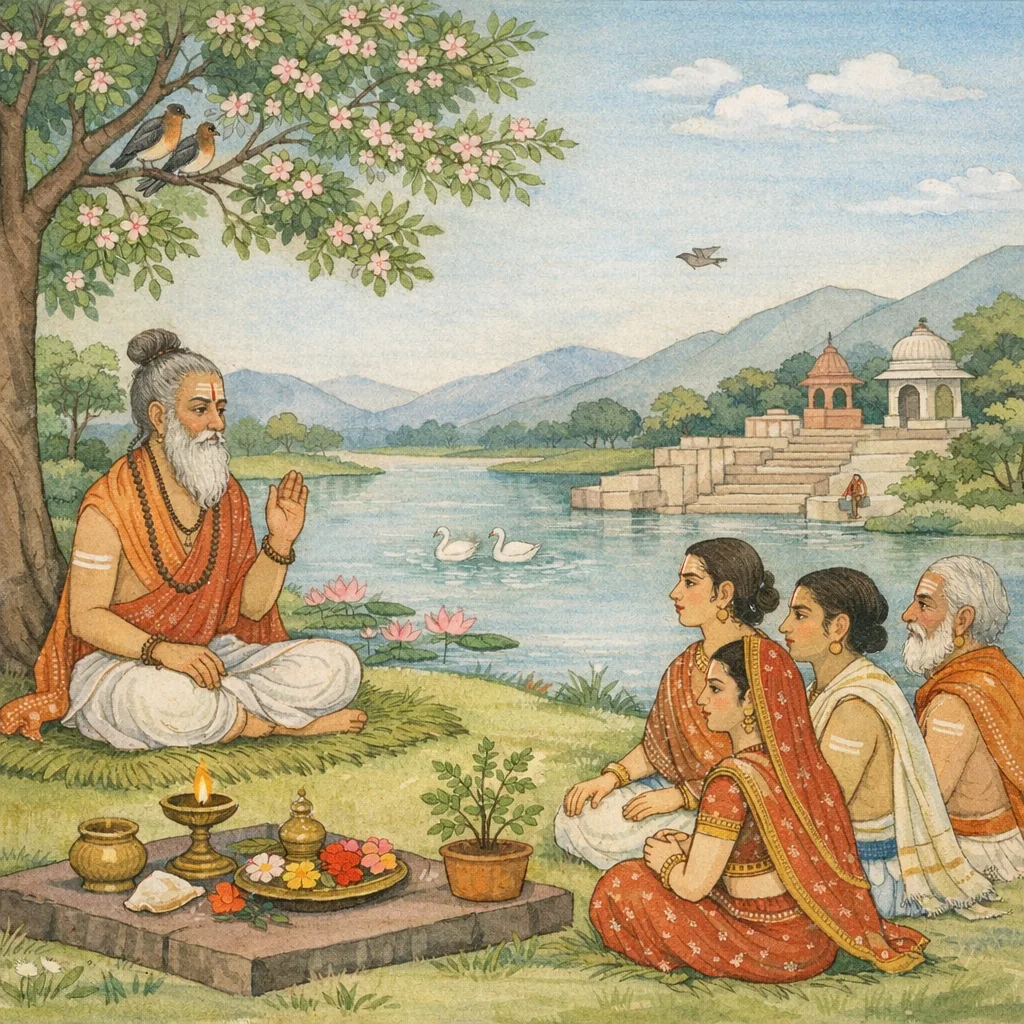
Chapter 56 (Pañcākhyāna) weaves several didactic mini-narratives into a single, merit-bearing whole. It opens with a striking Śaiva episode: Śiva’s passion and sport with women, perceived by Gaurī/Umā through yogic insight; in wrath she enters as Kṣemaṅkarī, and a curse is pronounced that seals the women’s fate and social displacement. The chapter then turns to devotional and ethical teaching. The force of kāma (desire) is acknowledged even among great deities, while kṣamā (forbearance) is praised as a lord-making virtue. A Vaiṣṇava-centered passage follows, stressing Hari/Janārdana’s accessibility in a devotee’s home and the primacy of serving one’s parents and worship offered with sincerity. In the concluding phalaśruti, hearing or reciting this fivefold narrative is said to ward off misfortune and bestow merits equal to major gifts and pilgrimages to sacred tīrthas.
Shlokas
Verse 1
श्रीभगवानुवाच । पुरा शर्वः स्त्रियो दृष्ट्वा युवती रूपशालिनीः । गंधर्वकिन्नराणां च मनुष्याणां च सर्वतः
The Blessed Lord said: In former times, Śarva (Śiva), seeing women—young and beautiful in form—among the Gandharvas and Kinnaras, and among human beings everywhere,
Verse 2
मंत्रेण ताः समाकृष्य त्वतिदूरे विहायसि । तपोव्याजपरो देवस्तासु संगतमानसः
Having drawn them near by a mantra, he then abandons them far away in the sky; that god, using austerity only as a pretext, keeps his mind bound to those women.
Verse 3
अतिरम्यां कुटीं कृत्वा ताभिः सह महेश्वरः । क्रीडां चकार सहसा मनोभव पराभवः
Having made an exceedingly beautiful cottage, Maheśvara—he who had subdued Manobhava (Kāma)—suddenly began to sport there with them in divine play.
Verse 4
एतस्मिन्नंतरे गौर्याश्चित्तमुद्भ्रांततां गतम् । अपश्यद्ध्यानयोगेन क्रीडंतं जगदीश्वरम्
Meanwhile, Gaurī’s mind became bewildered; and through the yoga of meditation she beheld the Lord of the universe, sporting in sacred play.
Verse 5
स्त्रीभिरंतर्गतं ज्ञात्वा रोषस्य वशगाभवत् । ततः क्षेमंकरी रूपा भूत्वा च प्रविवेश सा
Knowing that he had gone inside among the women, she fell under the sway of anger. Then, assuming the form of Kṣemaṅkarī, she entered as well.
Verse 6
व्योमैकांतेतिदूरे च कामदेव समप्रभम् । वामातिमध्यगं शुभ्रं पुरुषं पुरुषोत्तमम्
In the solitary expanse of the sky, far away, he beheld Puruṣottama—the Supreme Person—radiant like Kāma-deva, pure and resplendent, standing slightly to the left of the center.
Verse 7
स्त्रीभिः सह समालिग्य प्रक्रीडंतं मुहुर्मुहुः । चुंबंतं निर्भरं देवं हरं रागप्रपीडितम्
Embracing him along with the women, they sported with him again and again—kissing the god Hara ardently, as he was oppressed by passion.
Verse 8
वृत्तं क्षेमंकरी दृष्ट्वा निपपाताग्रतस्तदा । तासां केशेषु चाकृष्य चकार चरणाहतिम्
Then, seeing Vṛtta and Kṣemaṅkarī, he fell upon them from the front; seizing them by their hair, he struck them with his foot.
Verse 9
त्रपया पीडितश्शर्वः पराङ्मुखमवस्थितः । केशेष्वाकृष्य रोषात्ताः पातयामास भूतले
Tormented by shame, Śarva (Śiva) stood with his face turned away; then, in anger, seizing them by the hair, he hurled them down onto the ground.
Verse 10
स्त्रियः सर्वाधरां प्राप्य सहसा विकृताननाः । उमाशापप्रदग्धांगा म्लेच्छानां वशमागताः
Having reached Sarvādhara, the women suddenly became disfigured in face; their limbs scorched by Umā’s curse, they fell under the control of the Mlecchas.
Verse 11
ताश्चांडालस्त्रियः ख्याता अधवा धवसंयुताः । अद्याप्युमाकृतं शापं सर्वास्ताश्च समश्नुयुः
They are known as the women of the Caṇḍālas, or else as those joined to husbands; and even to this day, all of them undergo the curse pronounced by Umā.
Verse 12
अथोमा शतधा रूपं कृत्वेशं संगता तदा । एवं प्रभावं जानीहि कामस्य सततं द्विज
Then Umā, assuming a hundred forms, approached the Lord. Know thus, O twice-born, the constant power of Kāma (desire).
Verse 13
ततश्चिरात्तया सार्द्धं गतः कैलासमंदिरं । अतः क्षेमंकरीं दृष्ट्वा येभिनंदंति मानवाः
Then, after a long time, he went together with her to the mansion of Kailāsa. Therefore, having beheld Kṣemaṅkarī, people rejoice.
Verse 14
तेषां वित्तर्द्धि विभवा भवंतीह परत्र च । कुंकुमारक्तसर्वांगि कुंदेन्दुधवलानने
For them, prosperity, wealth, and splendor arise—both here in this world and in the next. O you whose whole body is tinged with vermilion, O you whose face is as radiant and white as jasmine and the moon.
Verse 15
सर्वमंगलदे देवि क्षेमंकरि नमोस्तु ते । योगिनीसाम्यं तेनैव संमुखा विमुखापि वा
O Goddess, bestower of all auspiciousness, Kṣemaṅkarī, salutations to you. By that very power, one attains the same state as the Yoginīs, whether facing you directly or even turned away.
Verse 16
दृष्ट्वा तां नाभिवंदेद्यस्तस्य युद्धे पराजयः । राजगृहेषु विद्यायां नमस्काराज्जयो भवेत्
Whoever, on seeing her, does not bow in reverence meets defeat in battle; but in royal courts and in the pursuit of learning, victory arises from paying respectful obeisance.
Verse 17
एवं कामस्य माहात्म्यं भवो मोहवशं गतः । अयं देवासुराणां च क्षमया प्रभुतां गतः
Thus is the greatness of Kāma (Desire): even Bhava (Śiva) fell under the sway of delusion. And this one attained lordship over both gods and demons through kṣamā, sacred forbearance.
Verse 18
अस्यैव सदृशो लोके न भूतो न भविष्यति । रामामङ्कस्थितां रम्यां क्षमातल्पगतेन च
In this world none like her has existed before, nor will any arise in the future. She is lovely, seated upon Rāmā’s lap, and also resting upon the bed of the Earth.
Verse 19
त्यक्त्वैव साधिता लोकास्सुरासुरसुदुर्लभाः । एवं वैष्णवमुख्यश्च सुरासुरगणार्चितः
By renunciation alone, worlds exceedingly hard to attain even for gods and demons are accomplished. Thus the foremost of Vaiṣṇavas is worshipped by the hosts of both gods and demons.
Verse 20
यो नो ददाति भुक्त्यग्र्यं शेषं च स्वयमश्नुते । एवमभ्यासधैर्येण दीर्घकाले सुखंगते
One who does not give us the choicest portion of the meal, and instead eats the remainder himself—by such persistent practice and stubbornness, in the long course of time, he comes to a state of happiness.
Verse 21
प्राक्संगमात्स्वभार्यां च दृष्ट्वा मां प्रददौ मुदा । द्वादशाब्दं प्रसंकल्प्य प्राग्भोगो मयि वेशितः
Before our union, he joyfully gave me to his own wife; resolving upon twelve years, the enjoyment that was due beforehand was imposed upon me.
Verse 22
तेन तस्य गृहे नित्यं तिष्ठामि गृहरक्षणात् । तथा धात्रीफलस्यापि सदा स्वर समीहते
Therefore I ever remain in his house, guarding the household; and likewise, the fruit of the dhātrī (āmalakī) continually seeks the heavenly realm.
Verse 23
तस्मादुक्तो मयान्येषां वैष्णवानां च वैष्णवः । पुरा ये विप्र मे भक्तास्सुरा मत्पथगामिनः
Therefore I have declared him a Vaiṣṇava among other Vaiṣṇavas. In former times, O brāhmaṇa, those devas who were My devotees followed My path.
Verse 24
तैरेव न कृतं यच्च तदनेन कृतं परम् । तस्माद्वैष्णवसर्वस्वं नाम रम्यं मया कृतम्
What was not accomplished by them has been accomplished supremely by him. Therefore I have composed this delightful work called “Vaiṣṇava-sarvasva” (The Essence of Vaiṣṇavism).
Verse 25
अस्य वेश्मनि तिष्ठामि मुहूर्तं न चलाम्यहम् । अतो ये चैवमद्भक्तास्तेष्वहं सुलभो द्विज
I remain in this devotee’s house and do not move away even for a moment. Therefore, O twice-born one, to those who are such devotees of Mine, I am easily attainable.
Verse 26
अस्माकं पदवीं तेभ्यो ह्यद्य दद्मि स्वकारणम् । आवयोर्विप्रसौजन्यं स्वप्नभोज्यादिकं समम्
Today I shall disclose to them the reason for our situation. Between the two of us, O brāhmaṇa, kindly conduct befitting a brāhmaṇa and matters such as food enjoyed in a dream are alike—of the same unreal nature.
Verse 27
सायुज्यं च सखित्वं च पश्य भूदेवनांतरम् । ततो मूकादयः सर्वे स्वागता हरिमीश्वरम्
“Behold the difference among the gods of the earth: some attain sāyujya, union with the Lord, and some attain sakhya, friendship with Him. Then all of them—beginning with the mute and the rest—welcomed Hari, the Supreme Īśvara.”
Verse 28
गंतुकामा दिवं पुण्यास्सदाराः सपरिच्छदाः । ये च तेषां गृहाभ्याशेप्यात्मनो गृहगोधिकाः
“Those meritorious ones, wishing to depart for heaven, set forth with their wives and with all their belongings; and even the house-lizards dwelling near their homes—as though belonging to their household—accompany them.”
Verse 29
नाना कीटादयो ये च तेषामनुययुः सुराः । व्यास उवाच । एतस्मिन्नंतरे देवाः सिद्धाश्च परमर्षयः
“And the various insects and other creatures that were there followed after them; and the Devas, too, went in their train. Vyāsa said: Meanwhile, in that very interval, the Devas, the Siddhas, and the supreme ṛṣis appeared.”
Verse 30
प्रचक्रुः पुष्पवर्षाणि साधुसाध्वित्यनादयन् । देवदुंदुभयो नेदुर्विमानेषु वनेषु च
“They caused showers of flowers to fall, proclaiming, ‘Sādhu! Sādhu! Well done! Well done!’ And the celestial kettledrums resounded—in the vimānas and in the forests as well.”
Verse 31
समारुह्य रथं स्वं स्वं हरिवीथीपुरं ययुः । तदद्भुतं समालोक्य विप्रोऽवोचज्जनार्दनम्
“Mounting their respective chariots, they set out for Harivīthīpura. Beholding that wondrous sight, the Brahmin spoke to Janārdana.”
Verse 32
उपदेशं च देवेश ब्रूहि मे मधुसूदन । श्रीभगवानुवाच । गच्छ स्वपितरौ तात शोकविक्लवमानसौ
“O Lord of the gods, Madhusūdana, grant me instruction.” The Blessed Lord said: “Go, dear child, to your own parents, whose minds are overwhelmed by grief.”
Verse 33
समाराध्य प्रयत्नेन मद्गृहं प्राप्स्यसेऽचिरात् । पितृमातृसमा देवा न तिष्ठंति सुरालये
If you worship and serve with sincere effort, you will soon attain my abode. The gods—like one’s father and mother—do not remain confined in heaven.
Verse 34
याभ्यां सुगर्हितं देहं शिशुत्वे पालितं सदा । अज्ञानदोषसहितं प्रपुष्टं चापि वर्धितम्
By those two, this body—though greatly blameworthy—was always cared for in childhood; even with the faults born of ignorance, it was nourished and brought to maturity.
Verse 35
याभ्यां तयोस्समं नास्ति त्रैलोक्ये सचराचरे । ततो देवगणास्सर्वे पंचभिस्तैर्मुदान्विताः
In all the three worlds—moving and unmoving—there is nothing equal to those two. Therefore all the hosts of gods, delighted, became filled with joy through those five.
Verse 36
माधवं संस्तुवंतश्च गतास्ते हरिमंदिरम् । खचितां च पुरीं रम्यां विश्वकर्मविनिर्मिताम्
Praising Mādhava, they went to Hari’s temple—to that lovely city, richly inlaid and fashioned by Viśvakarmā.
Verse 37
रत्नाढ्यामिष्टसंपूर्णां कल्पवृक्षादिभिर्युताम् । शातकुम्भमयैर्गेहैस्सर्वरत्नैस्सकर्बुराम्
Abounding in jewels and filled with exquisite delicacies, adorned with wish-fulfilling trees and the like; it had houses made of pure gold, variegated with every kind of gem.
Verse 38
वज्रवैडूर्यसोपानां स्वर्णदीतोयसंयुताम् । गीतवाद्यादिसंपूर्णां सर्वदुर्गसमाकुलाम्
It was furnished with stairways of diamond and vaiḍūrya-gems, joined with streams of golden water; filled with singing, instruments, and the like, and surrounded by every kind of fortress and difficult approach.
Verse 39
कोकिलालापबहुलां सिद्धगंधर्वसेविताम् । रूपाढ्यैः सुजनैः पूर्णां प्रयांतीमिव खे पुरीम्
Abounding in the cooing of cuckoos, attended by Siddhas and Gandharvas, and filled with handsome and noble people—it appeared like a celestial city moving through the sky.
Verse 40
ततः स्थित्वाऽच्युताः सर्वे सर्वलोकोर्ध्वतो भृशम् । द्विजोपि पितरौ गत्वा समाराध्य प्रयत्नतः
Then all those devoted to Acyuta, standing firm, rose far above all the worlds. Likewise, the brāhmaṇa too went to his forefathers and worshipped them diligently with earnest effort.
Verse 41
अचिरेणैव कालेन सकुटुंबो हरिं ययौ । पंचाख्यानमिदं पुण्यं मया ते समुदाहृतम्
In a short time, he—together with his family—attained Hari. This holy fivefold narrative has thus been related to you by me.
Verse 42
यः पठेच्छृणुयाद्वापि तस्य नास्तीह दुर्गतिः । ब्रह्महत्यादिभिः पापैर्न लिप्येत कदाचन
Whoever recites this—or even merely hears it—meets with no misfortune here; he is never stained by sins such as brahmin-slaying and the like.
Verse 43
गवां कोटिप्रदानेन यत्फलं लभते नरः । तत्फलं समवाप्नोति पंचाख्यानावगाहनात्
Whatever merit a person gains by gifting ten million cows, that same merit he fully attains by immersing himself in the Five Narratives.
Verse 44
स्नानेन पुष्करे नित्यं भागीरथ्यां च सर्वदा । यत्फलं तदवाप्नोति सकृच्छ्रवणगोचरात्
Whatever merit is gained by daily bathing at Puṣkara and always bathing in the Bhāgīrathī (Gaṅgā), that same fruit one obtains merely by hearing this sacred account even once.
Verse 45
दुःस्वप्नं नाशयेत्क्षिप्रं तथारोग्यं प्रयच्छति । लक्ष्म्यारोग्यकरं चैव तस्माच्छ्रोतव्यमेव हि
It quickly destroys bad dreams and bestows good health. It brings prosperity and well-being as well; therefore, indeed, it should be listened to.
Verse 56
इति श्रीपाद्मपुराणे प्रथमे सृष्टिखंडे पंचाख्यानंनाम षट्पंचाशत्तमोऽध्यायः
Thus ends the fifty-sixth chapter, called “Pañcākhyāna” (The Five Narratives), in the first section (Sṛṣṭikhaṇḍa) of the Śrī Padma Purāṇa.