Adhyaya 33
Mārkaṇḍeya’s Birth and Boon; Puṣkara’s Glory; Rāma’s Śrāddha; Refuge-Hymn to Śiva
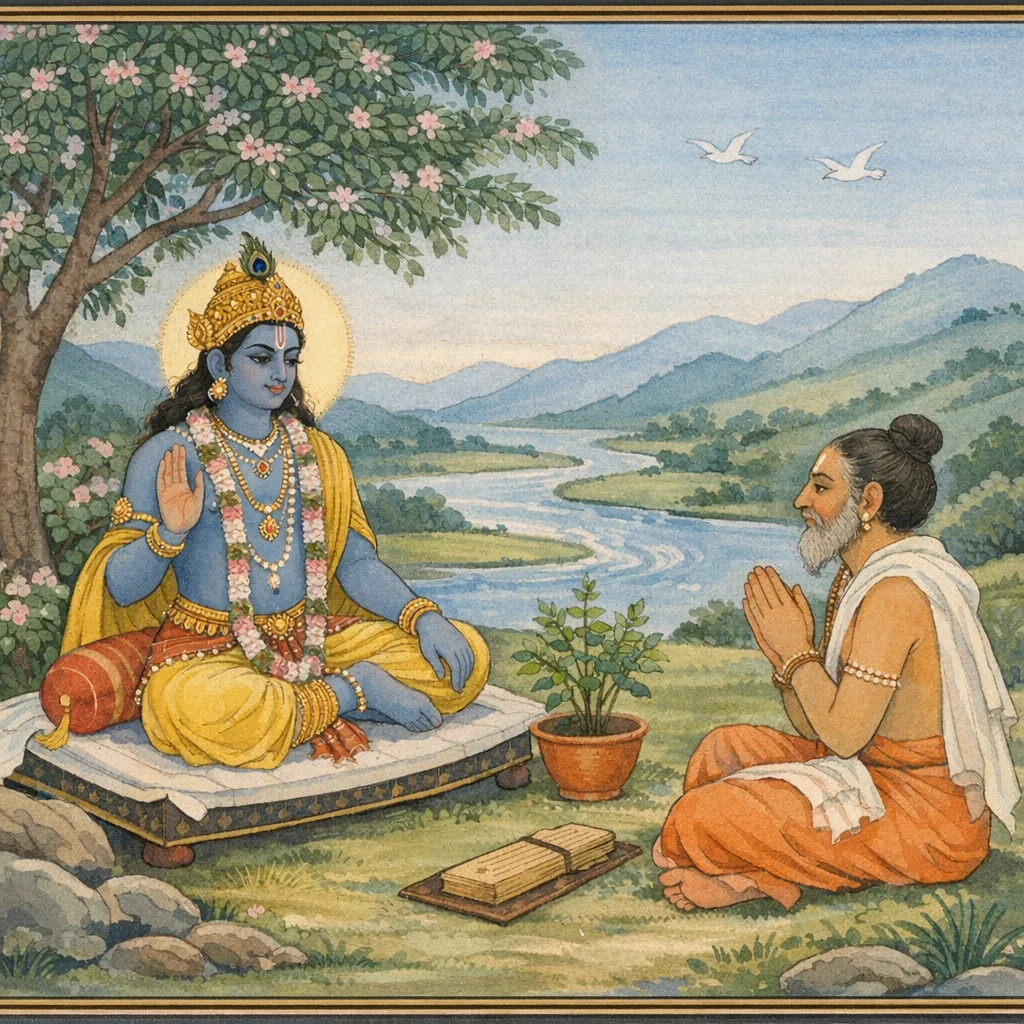
Bhīṣma asks how Rāma came to be instructed by Mārkaṇḍeya and how their meeting occurred. Pulastya recounts Mārkaṇḍeya’s birth to Mṛkaṇḍu and the prophecy of a short lifespan; this prompts his upanayana, the Saptarṣis’ intercession, and Brahmā’s decree granting Mārkaṇḍeya longevity equal to Brahmā’s. The narrative then turns to Puṣkara’s glory (Puṣkara-māhātmya). Rāma journeys to Puṣkara, meets Atri and Mārkaṇḍeya, and performs śrāddha for Daśaratha with prescribed offerings and at the proper ritual time (kutapa); dream-vision and the presence of the pitṛs affirm ancestral doctrine. At Maryādā mountain, Rāma offers an extended hymn of refuge (śaraṇāgati stotra) to Śiva. Rudra responds with blessings and a divine mandate to fulfill the gods’ work, uniting tīrtha, rite, and the purpose of the avatāra.
Shlokas
Verse 1
भीष्म उवाच । मार्कंडेयेन वै रामः कथमत्र प्रबोधितः । कथं समागमो भूतः कस्मिन्काले कदा मुने
Bhīṣma said: “O sage, how was Rāma instructed here by Mārkaṇḍeya? How did their meeting take place—at what time, and when, O muni?”
Verse 2
मार्कंडेयः कस्य सुतः कथं जातो महातपाः । नाम्नोऽस्य निगमं ब्रूहि यथाभूतं महामुने
O great sage, tell me truly: whose son is the great ascetic Mārkaṇḍeya, and how was he born? Explain also the origin and derivation of his name, exactly as it happened.
Verse 3
पुलस्त्य उवाच । अथ ते संप्रवक्ष्यामि मार्कंडेयोद्भवं पुनः । पुराकल्पे मुनिः पूर्वं मृकंडुर्नाम विश्रुतः
Pulastya said: Now I shall tell you again the account of the birth of Mārkaṇḍeya. In an ancient age, there was formerly a renowned sage named Mṛkaṇḍu.
Verse 4
भृगोः पुत्रो महाभागः सभार्यस्तप्तवांस्तपः । तस्य पुत्रस्तदा जातो वसतस्तु वनांतरे
Bhṛgu’s son, greatly blessed, performed austerities together with his wife. While they were dwelling in the forest wilderness, a son was then born to him.
Verse 5
सपंचवार्षिको भूतो बाल एव गुणाधिकः । ज्ञानिना स तदा दृष्टो भ्रमन्बालस्तदांगणे
Though only five years old, the boy was already rich in virtues. At that time a wise sage saw him, the child wandering about in that courtyard.
Verse 6
स्थित्वा स सुचिरं कालं भाव्यर्थं प्रत्यबुध्यत । तस्य पित्रा स वै पृष्टः कियदायुः सुतस्य मे
After remaining for a very long time, he came to understand what was to come. Then his father asked him: “How long is the lifespan of my son?”
Verse 7
संख्यायाचक्ष्व वर्षाणि तस्याल्पान्यधिकानि वा । मृकंडुनैवमुक्तस्तु स ज्ञानी वाक्यमब्रवीत्
“Tell me the number of years of his life—whether they be few or many.” Thus addressed by Mṛkaṇḍu, that wise man spoke these words.
Verse 8
षण्मासमायुः पुत्रस्य धात्रा सृष्टं मुनीश्वर । नैव शोकस्त्वया कार्यः सत्यमेतदुदाहृतम्
O lord among sages, Dhātṛ the Creator has ordained that your son’s lifespan is only six months. Therefore do not grieve; this has been spoken as the truth.
Verse 9
स तच्छ्रुत्वा वचो भीष्म ज्ञानिना यदुदाहृतम् । अथोपनयनं चक्रे बालकस्य पिता तदा
O Bhīṣma, having heard those fearsome words spoken by the wise man, the boy’s father then performed the upanayana—the sacred-thread initiation—for the child.
Verse 10
आह चैनं पितापुत्रमृषींस्त्वमभिवादय । एवमुक्तः स वै पित्रा प्रहृष्टश्चाभिवादने
Then the father said to his son, “Go and pay reverence to the ṛṣis.” Thus addressed by his father, the son gladly bowed in salutation.
Verse 11
न वर्णा वर्णतां वेत्ति सर्ववर्णाभिवादनः । पंचमासास्त्वतिक्रांता दिवसाः पंचविंशतिः
He does not recognize distinctions of varṇa, though he is greeted by people of all varṇas. Five months have passed, and twenty-five days as well.
Verse 12
मार्गेणाथ समायाता ऋषयस्तत्र सप्त वै । बालेन तेन ते दृष्टाः सर्वे चाप्यभिवादिताः
Then, O Lord, seven sages arrived there by the path. The boy beheld them all and duly offered reverence to each one.
Verse 13
आयुष्मान्भव तैरुक्तः स बालो दंडमेखली । उक्त्वैवं ते पुनर्बालमपश्यन्क्षीणजीवितम्
They addressed him, saying, “Be long-lived,” and the boy—wearing the staff and sacred girdle—stood there. Yet after these words, they saw him again, his life-breath already spent.
Verse 14
दिनानि पंच तस्यायुर्ज्ञात्वा भीताश्च ते नृप । तं गृहीत्वा बालकं च गतास्ते ब्रह्मणोंतिकम्
O King, learning that his lifespan was only five days, they were afraid; taking the child with them, they went into Brahmā’s presence.
Verse 15
प्रतिमुच्य च तं राजन्प्रणिपेतुः पितामहम् । अयमावेदितस्तैस्तु तेन ब्रह्माभिवादितः
After releasing him, O King, they bowed down before Pitāmaha, Brahmā. Then, having informed him, the boy duly saluted Brahmā with reverent homage.
Verse 16
चिरायुर्ब्रह्मणा बालः प्रोक्तः स ऋषिसन्निधौ । ततस्ते मुनयः प्रीताः श्रुत्वा वाक्यं पितामहात्
In the presence of the sages, Brahmā declared that the boy would be long-lived. Hearing the words of Pitāmaha, those munis were filled with joy.
Verse 17
पितामह ऋषीन्दृष्ट्वा प्रोवाच विस्मयान्वितः । कार्येण येन चायातः कोयं बालो निवेद्यताम्
Seeing the sages, the Grandfather (Brahmā) spoke in astonishment: “For what purpose have you come, and who is this boy? Let it be explained.”
Verse 18
ततस्त ऋषयो राजन्सर्वं तस्मै न्यवेदयन् । पुत्रो मृकंडोः क्षीणायुः सायुषं कुरु बालकम्
Then the sages, O King, reported everything to him: “Mṛkaṇḍu’s son is short-lived—make the child long-lived.”
Verse 19
अल्पायुषस्त्वस्य मुनिर्बध्वेमां चापि मेखलाम् । यज्ञोपवीतं दंडं च दत्वा चैनमबोधयत्
Seeing that his lifespan was short, the sage tied this girdle (mekhalā) on him; and after giving him the sacred thread and the staff, he instructed him.
Verse 20
यं कंचित्पश्यसे बाल भ्रमंतं भूतले जनम् । तस्याभिवादः कर्तव्य एवमाह पिता वचः
“My child, whoever you see wandering upon the earth—offer them your respectful salutation.” Thus spoke the father.
Verse 21
अभिवादनशीलोयं क्षितौ दृष्टः परिभ्रमन् । तीर्थयात्राप्रसंगेन दैवयोगात्पितामह
O Grandfather, this courteous man was seen wandering upon the earth—on the occasion of a pilgrimage to the sacred tīrthas, through the providential concurrence of fate.
Verse 22
चिरायुर्भव पुत्रेति प्रोक्तोसौ तत्र बालकः । कथं वचो भवेत्सत्यमस्माकं भवता सह
There, the boy was addressed: “Be long-lived, my son.” But he asked, “How can our statement become true, in association with you?”
Verse 23
एवमुक्तस्तदा तैस्तु ब्रह्मा लोकपितामहः । ऋतवाक्यादियं भूमिः संस्थिता सर्वतोभया
Thus addressed by them at that time, Brahmā—the grandsire of the worlds—declared: “This Earth, beginning with Ṛtavākya, has been established on all sides, secured from fear.”
Verse 24
ब्रह्मोवाच । मत्समश्चायुषा बालो मार्कंडेयो भविष्यति । कल्पस्यादौ तथाचांते मतो मे मुनिसत्तमः
Brahmā said: “The boy Mārkaṇḍeya will be equal to me in lifespan. At the beginning of a kalpa and likewise at its end, I regard him as the foremost of sages.”
Verse 25
एवं ते मुनयो बालं ब्रह्मलोके पितामहात् । संसाध्य प्रेषयामासुर्भूयोप्येनं धरातलम्
Thus those sages, having accomplished their purpose for the boy in Brahmā’s world through the Grandfather (Brahmā), sent him once again down to the earth.
Verse 26
तीर्थयात्रां गता विप्रा मार्कंडेयो निजं गृहम् । जगाम तेषु यातेषु पितरं स्वमथाब्रवीत्
When the Brahmins had departed on pilgrimage to the sacred tīrthas, Mārkaṇḍeya returned to his own home; and after they had left, he then spoke to his father.
Verse 27
ब्रह्मलोकमहं नीतो मुनिभिर्ब्रह्मवादिभिः । दीर्घायुश्च कृतश्चास्मि वरान्दत्वा विसर्जितः
I was led to Brahmaloka by sages who expounded Brahman; they granted me long life, and after bestowing boons, they dismissed me.
Verse 28
एतदन्यच्च मे दत्तं गतं चिंताकरं तव । कल्पस्यादौ तथा चांते भविष्ये समनंतरे
And this other matter too have I bestowed; it has become a cause of concern for you—at the beginning of the kalpa, at its end, and again in the immediate future.
Verse 29
लोककर्तुर्ब्रह्मणोहं प्रसादात्तस्य वै पितः । पुष्करं वै गमिष्यामि तपस्तप्तुं समुद्यतः
By the grace of Brahmā, the creator of the worlds—and indeed of his Father—I am resolved to go to Puṣkara to perform austerities.
Verse 30
तत्राहं देवदेवेशमुपासिष्ये पितामहम् । सर्वकामावाप्तिकरं सर्वारातिनिबर्हणम्
There I shall worship Pitāmaha (Brahmā), the Lord of the lords of gods—he who grants the attainment of all desires and who drives away all enemies.
Verse 31
सर्वसौख्यप्रदं देवमिन्द्रादीनां परायणम् । ब्रह्माणं तोषयिष्यामि सर्वलोकपितामहम्
I shall propitiate Brahmā—the divine bestower of all happiness, the supreme refuge of Indra and the other gods, the grandsire of all the worlds.
Verse 32
मार्कंडेयवचः श्रुत्वा मृकंडुर्मुनिसत्तमः । जगाम परमं हर्षं क्षणमेकं समुच्छ्वसन्
Hearing Mārkaṇḍeya’s words, the great sage Mṛkaṇḍu was filled with supreme joy, and for a single moment he breathed freely in relief.
Verse 33
धैर्यं सुमनसा स्थाय इदं वचनमब्रवीत् । अद्य मे सफलं जन्म जीवितं च सुजीवितम्
Then Dhairya, standing with a serene mind, spoke these words: “Today my birth has borne fruit, and my life has truly been well lived.”
Verse 34
सर्वस्य जगतां स्रष्टा येन दृष्टः पितामहः । त्वया दायादवानस्मि पुत्रेण वंशधारिणा
Through you—by whom Pitāmaha Brahmā, the creator of all the worlds, has been beheld—I have become one who has an heir, through a son who upholds the lineage.
Verse 35
त्वं गच्छ पश्य देवेशं पुष्करस्थं पितामहम् । दृष्टे तस्मिन्जगन्नाथे न जरामृत्युरेव च
Go—behold the Lord of the gods, Pitāmaha (Brahmā), who abides at Puṣkara. Upon seeing that Lord of the world, there is neither old age nor death.
Verse 36
नृणां भवति सौख्यानि तथैश्वर्यं तपोऽक्षयम् । त्रीणि शृङ्गाणि शुभ्राणि त्रीणि प्रस्रवणानि च
For human beings there arise happiness, prosperity, and inexhaustible merit born of tapas; it has three shining peaks and also three flowing springs.
Verse 37
पुष्कराणि तथा त्रीणि नविद्मस्तत्र कारणम् । कनीयांसं मध्यमं च तृतीयं ज्येष्ठपुष्करम्
Thus there are three Puṣkaras; we do not know the cause of it there—the Lesser, the Middle, and the third, the Elder Puṣkara.
Verse 38
शृंगशब्दाभिधानानि शुभप्रस्रवणानि च । ब्रह्माविष्णुस्तथा रुद्रो नित्यं सन्निहितास्त्रयः
There are appellations expressed by the word “Śṛṅga,” and there are auspicious springs as well; and there, the three—Brahmā, Viṣṇu, and Rudra—are eternally present.
Verse 39
पुष्करेषु महाराजा नातः पुण्यतमं भुवि । विरजं विमलं तोयं त्रिषु लोकेषु विश्रुतम्
O great king, on earth there is nothing more sacred than Puṣkara. Its water—stainless and pure—is renowned throughout the three worlds.
Verse 40
ब्रह्मलोकस्य पन्थानं धन्याः पश्यंति पुष्करं । यस्तु वर्षशतं साग्रमग्निहोत्रमुपासते
Blessed indeed are those who behold Puṣkara—the path leading to Brahmaloka. But as for the one who performs the Agnihotra for a full hundred years, without interruption—(his merit is spoken of in comparison).
Verse 41
कार्तिकीं वा वसेदेकां पुष्करे सममेव च । कर्तुम्मया न शकितं कर्मणा नैव साधितम्
To reside even for a single (month of) Kārtikā—or likewise at Puṣkara—this I have not been able to do; nor has it been accomplished by me through action (ritual effort) alone.
Verse 42
तदयत्नात्त्वया तात मृत्युस्सर्वहरो जितः । तत्र दृष्टस्स देवेशो ब्रह्मा लोकपितामहः
O dear one, without any effort on your part, Death—the all-seizing one—has been overcome. There you beheld the Lord of the gods, Brahmā, the grandsire and progenitor of the worlds.
Verse 43
नान्यो मर्त्यस्त्वया तुल्यो भविता जगतीतले । अहं वै तोषितो येन पञ्चवार्षिकजन्मना
No other mortal upon the face of the earth will be equal to you. Indeed, I have been pleased by your five-year human birth.
Verse 44
वरेण त्वं मदीयेन उपमां चिरजीविनाम् । गमिष्यसि न सन्देहस्तथाशीर्वचनम्मम
By the boon granted by me, you will attain the state of being like the long-lived; there is no doubt. Such indeed is my word of blessing.
Verse 45
एवं वदन्ति ते सर्वे व्रज लोकान्यथेप्सितान् । एवं लब्धप्रसादेन मृकण्डुतनयेन च
Thus did all of them speak, and they proceeded to the worlds of Vraja as they desired; and likewise, having obtained grace, along with Mṛkaṇḍu’s son.
Verse 46
आश्रमःस्थापितस्तेन मार्कण्डाश्रम इत्युत । तत्र स्नात्वा शुचिर्भूत्वा वाजपेयफलं लभेत्
An āśrama was established by him, known as “Mārkaṇḍāśrama.” Bathing there and becoming purified, one attains merit equal to that of the Vājapeya sacrifice.
Verse 47
सर्वपापविशुद्धात्मा चिरायुर्जायते नरः । पुलस्त्य उवाच । तथान्यं ते प्रवक्ष्यामि इतिहासं पुरातनम्
A man whose soul is purified of all sins is born long-lived. Pulastya said: “Now I shall tell you another ancient legend.”
Verse 48
यथा रामेण वै तीर्थं पुष्करं तु विनिर्मितम् । चित्रकूटात्पुरा रामो मैथिल्या लक्ष्मणेन च
Just as Rāma indeed established the sacred tīrtha of Puṣkara, so too in former times Rāma departed from Citrakūṭa together with Maithilī (Sītā) and Lakṣmaṇa.
Verse 49
अत्रेराश्रममासाद्य पप्रच्छ मुनिसत्तमम् । राम उवाच । कानि पुण्यानि तीर्थानि किं वा क्षेत्रं महामुने
Having reached Atri’s hermitage, Rāma questioned the best of sages: “O great sage, which are the meritorious tīrthas, and what holy region (kṣetra) is there?”
Verse 50
यत्र गत्वा नरो योगिन्वियोगं सह बंधुभिः । नैव प्राप्नोति भगवन्तन्ममाचक्ष्व सुव्रत
O Lord, O yogin—tell me, O you of excellent vow: to what place, having gone, does a man never again suffer separation from his kinsmen?
Verse 51
अनेन वनवासेन राज्ञस्तु मरणेन च । भरतस्य वियोगेन परितप्ये ह्यहं त्रिभिः
By this exile in the forest, by the king’s death, and by separation from Bharata—I am indeed tormented by these three.
Verse 52
तद्वाक्यं राघवेणोक्तं श्रुत्वा विप्रर्षभस्तदा । ध्यात्वा च सुचिरं कालमिदं वचनमब्रवीत्
Having heard those words spoken by Rāghava, the foremost of the brāhmaṇas reflected for a long time and then spoke these words.
Verse 53
अत्रिरुवाच । साधु पृष्टं त्वया वीर रघूणां वंशवर्धन । मम पित्रा कृतं तीर्थं पुष्करं नाम विश्रुतम्
Atri said: “Well asked, O hero, increaser of the Raghu dynasty. My father established a sacred tīrtha, renowned by the name Puṣkara.”
Verse 54
पर्वतौ द्वौ च विख्यातौ मर्यादा यज्ञपर्वतौ । कुंडत्रयं तयोर्मध्ये ज्येष्ठमध्यकनिष्ठकम्
There are two renowned mountains—Maryādā and Yajñaparvata. Between them lies a triad of sacred kuṇḍas: the Elder, the Middle, and the Younger.
Verse 55
तेषु गत्वा दशरथं पिंडदानेन तर्पय । तीर्थानां प्रवरं तीर्थं क्षेत्राणामपि चोत्तमम्
Go to those sacred places and satisfy Daśaratha by offering piṇḍa. It is the foremost among tīrthas and also the best among kṣetras.
Verse 56
अवियोगा च सुरसा वापी रघुकुलोद्वह । तथा सौभाग्यकूपोन्यः सुजलो रघुनंदन
O best of the Raghu line, there is the well named Aviyogā and the well named Surasā; likewise there is another, the well called Saubhāgya, abounding in good water, O delight of the Raghus.
Verse 57
तेषु पिंडप्रदानेन पितरो मोक्षमाप्नुयुः । आभूतसंप्लवं कालमेतदाह पितामहः
By offering piṇḍas to them, the ancestors attain liberation (mokṣa). Grandfather Brahmā declared that this observance remains effective until the time of the dissolution of all beings.
Verse 58
तत्र राघव गच्छस्व भूयोप्यागमनं क्रियाः । तथेति चोक्त्वा रामोपि गमनाय मनो दधे
“Go there, O Rāghava; and then arrange to return again.” Having said, “So be it,” Rāma too set his mind on departing.
Verse 59
ऋक्षवंतमभिक्रम्य नगरं वैदिशं तथा । चर्मण्वतीं समुत्तीर्य प्राप्तोसौ यज्ञपर्वतम्
Having approached Ṛkṣavat and likewise the city of Vidiśā, and having crossed the river Carmaṇvatī, he then reached Yajñaparvata (the Mountain of Sacrifice).
Verse 60
तमतिक्रम्य वेगेन मध्यमे पुष्करे स्थितः । पितॄन्संतर्पयामास अद्भिर्देवांश्च सर्वशः
Having swiftly crossed beyond that, he came to dwell at the Middle Puṣkara, where he duly satisfied the forefathers with water and likewise honored the gods in every way.
Verse 61
स्नानावसाने रामेण मार्कंडो मुनिपुंगवः । आगच्छन्शिष्यसंयुक्तो दृष्टस्तत्रैव धीमता
When Rāma had finished bathing, the eminent sage Mārkaṇḍa—arriving together with his disciples—was seen right there by the wise one.
Verse 62
गत्वा वै संमुखं तस्य प्रणिपत्य च सादरम् । पृष्टोऽवियोगदः कूपः कतमस्यां दिशि प्रभो
Going straight before him and bowing down with reverence, he asked: “O Lord, in which direction is the well named Aviyogada?”
Verse 63
सुतो दशरथस्याहं रामो नाम जनैः स्मृतः । सौभाग्यवापीं तां द्रष्टुमहं प्राप्तोत्रिशासनात्
I am the son of Daśaratha, known among people by the name Rāma. By Triśāsana’s command, I have come here to behold that Saubhāgya-vāpī, the Well of Good Fortune.
Verse 64
तत्स्थानं तौ च वै कूपौ भगवान्प्रब्रवीतु मे । एवमुक्तश्च रामेण मार्कंडः प्रत्युवाच ह
“May the Blessed One tell me about that place, and about those two wells.” Thus addressed by Rāma, Mārkaṇḍa replied.
Verse 65
मार्कंडेय उवाच । साधु राघव भद्रं ते सुकृतं भवता कृतम् । तीर्थयात्राप्रसंगेन यत्प्राप्तोसीह सांप्रतम्
Mārkaṇḍeya said: “Well done, O Rāghava; blessings upon you. A meritorious deed has been done by you, since—on the occasion of a pilgrimage to the tīrthas—you have now arrived here.”
Verse 66
एह्यागच्छस्व पश्य स्ववापीं तामवियोगदाम् । अवियोगश्च सर्वैश्च कूप एवात्र जायते
Come, approach and behold your own well—she who grants freedom from separation. Here, for everyone, that state of non-separation indeed arises at the well.
Verse 67
आमुष्मिके चैहिके च जीवतोपि मृतस्य वा । एतद्वाक्यं मुनींद्रस्य श्रुत्वा लक्ष्मणपूर्वजः
Whether in the other world or in this one—whether for one living or even for one who has died—having heard these words of the lord among sages, the elder brother of Lakṣmaṇa, Rāma, replied.
Verse 68
सस्मार रामो राजानं तदा दशरथं नृप । भरतं सह शत्रुघ्न्रंभातॄनन्यांश्चनागरान्
Then Rāma remembered the king—Daśaratha, O ruler—as well as Bharata along with Śatrughna, his other brothers, and the people of the city.
Verse 69
एवंचिंतयतस्तस्य संध्याकालो व्यजायत । उपास्य पश्चिमां संध्यां मुनिभिःसह राघवः
As he reflected thus, the time of twilight arrived. Rāghava, together with the sages, worshipped the western sandhyā—the evening twilight.
Verse 70
सुष्वाप तां निशां तत्र भ्रातृभार्यासमन्वितः । विभावर्यवसाने तु स्वप्नांते रघुनंदनः
There he slept through that night, accompanied by his brother’s wife. But at the end of the night—at the close of a dream—the descendant of Raghu, Rāma…
Verse 71
पित्रा मात्रा तथा चान्यैरयोध्यायां स्थितः किल । विवाहमंगले वृत्ते बहुभिर्बांधवैः सह
It is said that he stayed in Ayodhyā with his father, mother, and others; and when the auspicious marriage rite had taken place, he remained there along with many relatives.
Verse 72
समासीनः सभार्योऽसावृषिभिः परिवारितः । लक्ष्मणेनाप्येवमेव दृष्टोऽसौ सीतया तथा
He sat there with his wife, surrounded by sages; and in the same manner he was seen by Lakṣmaṇa as well—and likewise by Sītā.
Verse 73
प्रभाते तु मुनीनां तत्सर्वमेव प्रकीर्तितम् । ऋषिभिश्च तथेत्युक्तः सत्यमेतद्रघूत्तम
At dawn the sages recounted all of that. And the seers replied, “So it is.” “This is true, O best of the Raghus.”
Verse 74
मृतस्य दर्शने श्राद्धं कार्यमावश्यकं स्मृतम् । वृद्धिकामास्तु पितरस्तथा चैवान्नकांक्षिणः
It is remembered as obligatory to perform śrāddha upon seeing a dead body. For the Pitṛs desire the increase of welfare and merit, and they also long for offerings of food.
Verse 75
ददंति दर्शनं स्वप्ने भक्तियुक्तस्य राघव । अवियोगस्तु ते भ्रात्रा पित्रा च भरतेन च
O Rāghava, to one endowed with devotion they grant their vision in a dream; and for you there will be no separation from your brother, your father, and from Bharata as well.
Verse 76
चतुर्दशानां वर्षाणां भविता राघव ध्रुवम् । कुरु श्राद्धं तथा वीर राज्ञो दशरथस्य च
O Rāghava, it is certain that fourteen years will pass. Therefore, O hero, perform the śrāddha rites as well for King Daśaratha.
Verse 77
अमी च ऋषयः सर्वे तव भक्ताः कृतक्षणाः । अहं च जमदग्निश्च भारद्वाजश्च लोमशः
All these sages here are Your devotees, made ready in an instant. And I too—along with Jamadagni, Bhāradvāja, and Lomaśa—stand before You.
Verse 78
देवरातः शमीकश्च षडेते वै द्विजोत्तमाः । श्राद्धे च ते महाबाहो संभारांस्त्वमुपाहर
“Devarāta and Śamīka—these six are indeed the best of the twice-born. And for the śrāddha, O mighty-armed one, bring the required materials.”
Verse 79
मुख्यं चेंगुदिपिण्याकं बदरामलकैः सह । श्रीफलानि च पक्वानि मूलं चोच्चावचं बहु
And chiefly there is the oil-cake of the iṅgudī, along with jujubes and āmalakas; also ripe coconuts, and many kinds of roots, of various sorts.
Verse 80
मार्गेण चाथ मांसेन धान्येन विविधेन च । तृप्तिं प्रयच्छ विप्राणां श्राद्धदानेन सुव्रत
And then, with delicacies, with meat, and with various kinds of grains—O you of good vows—grant satisfaction to the Brahmins through the offering of śrāddha.
Verse 81
पुष्करारण्यमासाद्य नियतो नियताशनः । पितॄंस्तर्पयते यस्तु सोश्वमेधमवाप्नुयात्
Having reached the forest of Puṣkara, disciplined and restrained in food, whoever offers tarpaṇa (libations) to the ancestors attains the merit of the Aśvamedha sacrifice.
Verse 82
स्नानार्थं तु वयं राम गच्छामो ज्येष्ठपुष्करम् । इत्युक्त्वा ते गताः सर्वे मुनयो राघवं नृप
“O Rāma, we are going to Jyeṣṭha-Puṣkara for sacred bathing.” Having spoken thus, all those sages departed, O king, leaving Rāghava (Rāma).
Verse 83
लक्ष्मणं चाब्रवीद्रामो मेध्यमाहर मे मृगम् । शुद्धेक्षणं च शशकं कृष्णशाकं तथा मधु
Rāma said to Lakṣmaṇa, “Bring me a pure deer, fit for the rite; also a hare of clear appearance, dark leafy greens, and honey.”
Verse 84
जंबीराणि च मुख्यानि मूलानि विविधानि च । पक्वानि च कपित्थानि फलान्यन्यानि यानि च
Foremost among them are the jambīra citrons; there are also various kinds of roots, ripe kapittha wood-apples, and whatever other fruits may be found.
Verse 85
तान्याहरस्व वै श्राद्धे क्षिप्रमेवास्तु लक्ष्मण । तथा तत्कृतवान्सर्वं रामादेशाच्च राघवः
“Bring those things for the śrāddha—let it be done swiftly, O Lakṣmaṇa.” Thus, by Rāma’s command, Rāghava (Lakṣmaṇa) carried out everything.
Verse 86
बदरेङ्गुदिशाकानि मूलानि विविधानि च । तत्राहृत्य च रामेण कूटाकारः कृतो महान्
Bringing there badara jujubes and ingudī branches, along with various roots, Rāma constructed a great mound-like structure.
Verse 87
परिपक्वं च जानक्या सिद्धं रामे निवेदितम् । स्नात्वा रामो योगवाप्यां मुनींस्ताननुपालयन्
And the offering, fully prepared and perfected by Jānakī, was presented to Rāma. After bathing in the Yoga-vāpī, Rāma continued to attend upon and care for those sages.
Verse 88
मध्याह्नाच्चलिते सूर्ये काले कुतपके तथा । आयाता ऋषयः सर्वे ये रामेणानुमंत्रिताः
When the sun had moved beyond midday, at the auspicious kutapa time, all the ṛṣis whom Rāma had invited arrived.
Verse 89
तानागतान्मुनीन्दृष्ट्वा वैदेही जनकात्मजा । रामांतिकं परित्यज्य व्रीडिताऽन्यत्र संस्थिता
Seeing those munis arrive, Vaidehī—Janaka’s daughter—left Rāma’s side and, modest and shy, stood elsewhere.
Verse 90
विस्मयोत्फुल्लनयना चिंतयाना च वेपती । ब्राह्मणा नेह जानंति श्राद्धकाले ह्युपस्थिताः
Her eyes widened in wonder; lost in anxious thought, she trembled. The brāhmaṇas who had come for the time of the śrāddha did not recognize her there.
Verse 91
रामेण भोजिता विप्राः स्मृत्युक्तेन यथाविधि । वैदिक्यश्च कृतास्सर्वाः सत्क्रिया यास्समीरिताः
Rāma fed the vipras in accordance with the injunctions of the Smṛtis and in the proper manner; and all the Vedic rites and the prescribed virtuous observances were duly performed.
Verse 92
पुराणोक्तो विधिश्चैव वैश्वदेविकपूर्वकः । भुक्तवत्सु च विप्रेषु दत्वा पिंडान्यथाक्रमम्
One should follow the rite taught in the Purāṇas, beginning with the Vaiśvadeva offering; and when the brāhmaṇas have eaten, one should then present the piṇḍa-offerings in their proper order.
Verse 93
प्रेषितेषु यथाशक्ति दत्वा तेषु च दक्षिणाम् । गतेषु विप्रमुख्येषु प्रियां रामोऽब्रवीदिदम्
Having respectfully seen them off and given them gifts and dakṣiṇā according to his means, when the foremost brāhmaṇas had departed, Rāma spoke these words to his beloved.
Verse 94
किमर्थं सुभ्रु नष्टासि मुनीन्दृष्ट्वा त्विहागतान् । तत्सर्वं त्वमिदं तत्वं कारणं वद माचिरम्
Why, O fair-browed one, did you vanish upon seeing the sages who had come here? Tell me swiftly the true reason for all this—do not delay.
Verse 95
भवितव्यं कारणेन तच्च गोप्यं न मे कुरु । शापितासि मम प्राणैर्लक्ष्मणस्य शुचिस्मिते
What must come to pass, for a cause, will indeed come to pass—do not keep it hidden from me. O you of pure smile, I swear by my very life and by Lakṣmaṇa: you are under a curse.
Verse 96
एवमुक्ता तदा भर्त्रा त्रपयाऽवाङ्मुखी स्थिता । विमुंचंती साऽश्रुपातं राघवं वाक्यमब्रवीत्
Thus addressed by her husband, she stood with her face lowered in modesty; and, letting a stream of tears fall, she spoke these words to Rāghava.
Verse 97
शृणु त्वं नाथ यद्दृष्टमाश्चर्यमिह यादृशम् । राम त्वयाऽचिंत्यमानो राजेंद्रस्त्विह चागतः
Hear, O Lord, the wondrous marvel I have beheld here. O Rāma—while you were being remembered in thought—the king of kings has truly come to this place.
Verse 98
सर्वाभरणसंयुक्तौ द्वौ चान्यौ च तथाविधौ । द्विजानां देहसंयुक्तास्त्रयस्ते रघुनंदन
Two others were adorned with every ornament, and two more were of the same kind; and three of them, O delight of the Raghu line, were embodied as brāhmaṇas.
Verse 99
पितरस्तु मया दृष्टा ब्राह्मणांगेषु राघव । दृष्ट्वा त्रपान्विता चाहमपक्रांता तवांतिकात्
O Rāghava, I saw the pitṛs—the ancestral spirits—within the bodies of the brāhmaṇas; seeing this, I was filled with shame and withdrew from your presence.
Verse 100
त्वया वै भोजिता विप्राः कृतं श्राद्धं यथाविधि । वल्कलाजिनसंवीता कथं राज्ञः पुरःसरा
Indeed, you have fed the brāhmaṇas, and the śrāddha has been performed according to rule. Yet clad in bark-garments and a deerskin, how do you serve as the one who goes before the king?
Verse 101
भवामि रिपुवीरघ्न सत्यमेतदुदाहृतम् । कौशेयानि च वस्त्राणि कैकेय्यापहृतानि च
O slayer of hostile heroes, I shall indeed come—this has been truly declared. And I shall come also with the silken garments, even those that were taken away by Kaikeyī.
Verse 102
ततः प्रभृति चैवाहं चीरिणी तु वनाश्रयम् । ज्ञात्वाहं न वदे किंचिन्मा ते दुःखं भवत्विति
From that time onward I dwelt in the forest, clad in garments of bark. Though I knew the truth, I spoke nothing, thinking, “May no sorrow befall you.”
Verse 103
नाहं स्मरामि वै मातुर्न पितुश्च परंतप । कदा भविष्यतीहांतो वनवासस्य राघव
I remember neither my mother nor my father, O scorcher of foes. O Rāghava, when indeed will this forest-exile come to an end?
Verse 104
एतदेवानिशं राम चिंतयंत्याः पुनः पुनः । व्रजंति दिवसा नाथ तव पद्भ्यां शपाम्यहम्
O Rāma, thinking of this alone day and night, again and again, my days pass away, O Lord. By your holy feet, I swear it.
Verse 105
स्वहस्तेन कथं राज्ञो दास्ये वै भोजनं त्विदम् । दासानामपि यो दासो नोपभुंजीतयत्क्वचित्
“How could I, with my own hands, serve this food to the king? Even a servant, a servant of servants, should never partake at any time of what is meant for him.”
Verse 106
एतादृशी कथं त्वस्मै संप्रदातुं समुत्सहे । याहं राज्ञा पुरा दृष्टा सर्वालङ्कारभूषिता
How could I bring myself to give myself to him, being as I am—one whom the king once beheld, adorned with every ornament?
Verse 107
बालव्यजनहस्ता च वीजयंती नराधिपम् । सा स्वेदमलदिग्धांगी कथं पश्यामि भूमिपम्
With a child’s fan in her hand, she fanned the lord of men; yet her limbs were smeared with sweat and grime—how could I bear to look upon that king?
Verse 108
व्यक्तं त्रिविष्टपं प्राप्तस्त्वया पुत्रेण तारितः । दृष्ट्वा मां दुःखितां बालां वने क्लिष्टामनागसम्
Surely I have attained the manifest heaven, Triviṣṭapa, and by you—my son—I have been delivered. Yet you saw me, a sorrowful young girl, afflicted in the forest though innocent.
Verse 109
शोकः स्यात्पार्थिवस्यास्य तेन नष्टास्मि राघव । भवान्प्राणसमो राम न ते गोप्यं ममत्विह
That king would fall into grief because of this; therefore I am undone, O Rāghava. You are as dear to me as my very life, O Rāma—so I have no secret to hide from you here.
Verse 110
सत्येन तेन चैवाथ स्पृशामि चरणौ तव । तच्छ्रुत्वा राघवः प्रीतः प्रियां तां प्रियवादिनीम्
“By that very truth, I now touch your feet.” Hearing this, Rāghava was pleased with his beloved—she who spoke sweet and loving words.
Verse 111
अंकमानीय सुदृढं परिष्वज्य च सादरम् । भुक्तौ भोज्यं तदा वीरौ पश्चाद्भुक्ता च जानकी
Drawing her onto his lap and embracing her firmly with affection, the two heroes then ate the prepared food; afterwards, Jānakī (Sītā) also ate.
Verse 112
एवं स्थितौ तदा सा च तां रात्रिं तत्र राघवौ । उदिते च सहस्रांशौ गमनाय मनो दधुः
Thus, remaining there in that condition, the two Rāghavas spent that night there; and when the thousand-rayed sun rose, they set their minds on departure.
Verse 113
प्रत्यङ्मुखं गतः क्रोशं ज्येष्ठं यावच्च पुष्करम् । पूर्वभागे पुष्करस्य यावत्तिष्ठति राघवः
Turning westward, he went for a krośa, as far as the tīrtha called Jyeṣṭha, and then onward to Puṣkara—up to the eastern part of Puṣkara, where Rāghava remained.
Verse 114
शुश्राव च ततो वाचं देवदूतेन भाषितम् । भो भो राघव भद्रं ते तीर्थमेतत्सुदुर्लभम्
Then he heard the words spoken by the divine messenger: “Ho, ho, O Rāghava—blessings upon you! This tīrtha is exceedingly rare to obtain.”
Verse 115
अस्मिन्स्थाने स्थितो वीर आत्मनः पुण्यतां कुरु । देवकार्यं त्वया कार्यं हंतव्या देवशत्रवः
O hero, remaining in this place, cultivate your own merit (puṇya). A task for the gods must be carried out by you; the enemies of the gods are to be slain.
Verse 116
ततो हृष्टमना वीरो ह्यब्रवील्लक्ष्मणं वचः । सौमित्रेऽनुगृहीतोहं देवदेवेन ब्रह्मणा
Then the heroic one, delighted at heart, spoke these words to Lakṣmaṇa: “O son of Sumitrā, I have been favored by Brahmā, the god of gods.”
Verse 117
अत्राश्रमपदं कृत्वा मासमेकं च लक्ष्मण । व्रतं चरितुमिच्छामि कायशोधनमुत्तमम्
O Lakṣmaṇa, having established a hermitage (āśrama) here, I wish to observe for one month an excellent vow for the purification of the body.
Verse 118
तथेति लक्ष्मणेनोक्ते व्रतं परिसमाप्यतु । पिंडदानादिभिर्दानैः श्राद्धैश्चैव पितामहान्
When Lakṣmaṇa replied, “So be it,” the vow should be brought to completion, and the forefathers honored through piṇḍa-offerings and other gifts of charity, as well as through the śrāddha rites.
Verse 119
पुष्करे तु तदा रामोऽतर्पयद्विधिवत्तदा । कनका सुप्रभा चैव नंदा प्राची सरस्वती
Then, at Puṣkara, Rāma duly performed the tarpana libations according to proper procedure, invoking Kanakā, Suprabhā, Nandā, Prācī, and Sarasvatī.
Verse 120
पंचस्रोताः पुष्करेषु पितॄणां तुष्टिदायिनी । दैनंदिनीं पितॄणां तु पूजां तां पितृपूर्विकाम्
At Puṣkara, the five sacred streams bestow satisfaction upon the pitṛs. There, the daily worship of the ancestors—an ancestral rite handed down from forefathers—should be performed.
Verse 121
रचयित्वा तदा रामो लक्ष्मणं वाक्यमब्रवीत् । एहि लक्ष्मण शीघ्रं त्वं पुष्कराज्जलमानय
Having made the preparations, Rāma addressed Lakṣmaṇa: “Come, Lakṣmaṇa—quickly bring water from Puṣkara.”
Verse 122
पादप्रक्षालनं कृत्वा शयनं कुरु संस्तरे । विभावर्यां निवृत्तायां यास्यामो दक्षिणां दिशम्
Having washed your feet, lie down upon the bed. When the night has passed and dawn has arisen, we shall set out toward the southern quarter.
Verse 123
लक्ष्मणस्त्वब्रवीद्वाक्यं सीतयानीय तां पयः । नाहं राम सर्वकाले दासभावं करोमि ते
Then Lakṣmaṇa spoke these words: “Having brought that water together with Sītā, O Rāma, I do not at all times comport myself toward you with the mind of a servant.”
Verse 124
इयंपुष्टाचसुभृशंपीवरीचममाप्युत । किं त्वं करिष्यस्यनया भार्यया वद सांप्रतम्
“She is well-nourished and exceedingly full-figured—indeed, she is mine as well. What will you do with this wife? Tell me this very moment.”
Verse 125
किं वा मृतस्य वै पृष्ठ इयं यास्यति ते प्रिया । रक्षसे त्वं सदा कालं सुपुष्टां चैव सर्वदा
“Or else, what use is the back of a dead man—will this beloved of yours ever ride upon it? You, indeed, ever keep watch over time, and you are always well-nourished and strong.”
Verse 126
हृष्टा चैषा क्लेशयति सततं मां रघूत्तम । त्वं च क्लेशयसे राम परत्र जायते क्षतिः
“O best of the Raghus, she—delighted—torments me continually; and you too, O Rāma, afflict me. From this, harm will arise in the hereafter.”
Verse 127
त्वत्कृते च सदा चाहं पिपासां क्षुधया सह । संसहामि न संदेहः परत्र च निशामय
For your sake, I ever endure thirst together with hunger—of this there is no doubt. And hear also what comes to pass hereafter, in the next world.
Verse 128
मृतानां पृष्ठतः कश्चिद्गतो नैव च दृश्यते । भार्य्या पुत्रो धनं चापि एवमाहुर्मनीषिणः
Behind the dead, none is seen to go along—neither wife, nor son, nor wealth; thus do the wise declare.
Verse 129
मृतश्च ते पिता राम त्यक्त्वा राज्यमकंटकम् । विनिक्षिप्य वने त्वां च कैकेय्याः प्रियकाम्यया
O Rāma, your father has died—having forsaken his untroubled kingdom and, to fulfill Kaikeyī’s desire, having cast you into the forest.
Verse 130
इहस्थिता सा कैकेयी धनं सर्वे च बांधवाः । महाराजो दशरथ एक एव गतो गतिम्
Here remained Kaikeyī—together with wealth and all her kin—while the great King Daśaratha alone departed to his destined end.
Verse 131
मन्येहं न त्वया सार्धं सीता यास्यति वै ध्रुवम् । करिष्यसे किमनया वद राघव सांप्रतम्
I think Sītā will surely not go with you. Tell me now, O Rāghava—what will you do with her?
Verse 132
श्रुत्वा चाश्रुतपूर्वं हि वाक्यं लक्ष्मणभाषितम् । विमना राघवस्तस्थौ सीता चापि वरानना
Hearing the words spoken by Lakṣmaṇa—words he had never heard before—Rāghava stood there, downcast; and Sītā too, the fair-faced one, was likewise distressed.
Verse 133
यदुक्तं लक्ष्मणेनाथ सीता सर्वं चकार ह । स्नात्वा भुक्त्वा ततो वीरौ पुष्करे पुष्करेक्षणौ
O Lord, Sītā did everything that Lakṣmaṇa had said. Then the two heroic ones—both lotus-eyed—bathed and ate there at Puṣkara.
Verse 134
नीत्वा विभावरीं तत्र गमनाय मनो दधुः । एह्युत्तिष्ठ च सौमित्रे व्रजामो दक्षिणां दिशम्
Having spent the night there, they set their minds on departure. “Come, rise up, O Saumitra—let us go toward the southern direction.”
Verse 135
सौमित्रिरब्रवीद्राम नाहं यास्ये कथंचन । व्रज त्वमनया सार्धं भार्यया कमलेक्षण
Saumitrī said, “O Rāma, I will not go—by any means. You go with this wife of yours, O lotus-eyed one.”
Verse 136
नान्यद्वनं गमिष्यामि नैवायोध्यां च राघव । अस्मिन्वने वसिष्यामि वर्षाणीह चतुर्दश
“I will not go to any other forest, nor will I return to Ayodhyā, O Rāghava. In this very forest I shall dwell here for fourteen years.”
Verse 137
मया विना त्वयोध्यायां यदि त्वं न गमिष्यसि । अनेन वर्त्मना भूप आगंतव्यं त्वया विभो
If you will not go to Ayodhyā without me, then, O king—O mighty one—you must come by this very route.
Verse 138
यदि जीवामि तत्कालं पुनर्यास्ये पितुः पुरम् । तपस्संभावयिष्यामि मया त्वं किं करिष्यसि
If I survive even for that moment, I shall go again to my father’s city. I will undertake austerities—what will you be able to do to me then?
Verse 139
व्रज सौम्य शिवः पंथामा च ते परिपंथिनः । पश्यामि त्वां पुनः प्राप्तं सभार्यं कमलेक्षणम्
Go, gentle one—may your path be auspicious, and may there be no foes upon your way. I see you have returned again, O lotus-eyed one, together with your wife.
Verse 140
पितृपैतामहं राज्यमयोध्यायां नराधिप । शत्रुघ्नभरतौ चोभौ त्वदाज्ञाकरणे स्थितौ
O lord of men, the ancestral kingdom in Ayodhyā is now yours; and both Śatrughna and Bharata stand ready to carry out your command.
Verse 141
अहं ते प्रतिकूलस्तु वनवासे विशेषतः । अनारतं दिवा चाहं रात्रौ चैव परंतप
I am opposed to you—especially regarding this dwelling in the forest. Unceasingly, by day and likewise by night, O scorcher of foes, I remain so.
Verse 142
कर्मकर्तुं न शक्रोमि व्रज सौम्य यथासुखम् । एवं ब्रुवाणं सौमित्रिमुवाच रघुनंदनः
“I am not able to carry out this task. Go, gentle one, as you wish, in ease.” Speaking thus, Raghunandana (Rāma) addressed Saumitrī (Lakṣmaṇa).
Verse 143
कथं पूर्वमयोध्याया निर्गतोसि मया सह । वने वत्स्याम्यहं राम नववर्षाणि पंच च
“How was it that you once departed Ayodhyā together with me? O Rāma, I shall dwell in the forest for fourteen years.”
Verse 144
न तु त्वया विरहितः स्वर्गेपि निवसे क्वचित् । या गतिस्ते नरव्याघ्र मम सापि भविष्यति
“Yet I will dwell nowhere—not even in heaven—separated from you. O tiger among men, whatever destiny awaits you, that same destiny shall be mine.”
Verse 145
प्रसादः क्रियतां मह्यं नय मामपि राघव । इदानीमर्धमार्गे त्वं कथं स्थास्यसि शत्रुहन्
“Show me your favor—take me with you as well, O Rāghava. Now that you are already halfway along the road, how will you remain here, O slayer of enemies?”
Verse 146
लक्ष्मणस्त्वब्रवीद्रामं नाहं गंता वने पुनः । लक्ष्मणं संस्थितं ज्ञात्वा रामो वचनमब्रवीत्
But Lakṣmaṇa said to Rāma, “I will not go again to the forest.” Knowing that Lakṣmaṇa had taken a firm stand, Rāma spoke these words.
Verse 147
मामनुव्रज सौमित्र एको यास्यामि काननम् । द्वितीया मे त्वियं सीता रामेणोक्तस्तु लक्ष्मणः
“Follow me, O Saumitra. I alone shall go to the forest. Let this Sītā remain here as my companion.” Thus did Rāma instruct Lakṣmaṇa.
Verse 148
गृहीत्वाऽथ समुत्तस्थौ रामवाक्यं स लक्ष्मणः । मर्यादापर्वतं प्राप्तौ क्षेत्रसीमां परंतपौ
Then Lakṣmaṇa, having accepted Rāma’s word, rose. The two heroes—scorchers of foes—reached the boundary of the sacred region, at the mountain called Maryādā.
Verse 149
अजगंधं च देवेशं देवदेवं पिनाकिनम् । अष्टांगप्रणिपातेन नत्वा रामस्त्रिलोचनम्
With an eight-limbed prostration, Rāma bowed to Trilocana—the Lord of gods, the God of gods, bearer of Pināka—Devēśa, untouched by any worldly taint.
Verse 150
तुष्टाव प्रयतः स्थित्वा शंकरं पार्वतीप्रियम् । कृतांजलिपुटो भूत्वा रोमांचितशरीरकः
Standing in disciplined composure, he praised Śaṅkara, beloved of Pārvatī; with palms joined in reverence, his body thrilled with devotional rapture.
Verse 151
सात्विकं भावमापन्नो विनिर्धूतरजस्तमाः । लोकानां कारणं देवं बुबुधे विबुधाधिपम्
Having attained a sāttvika state and wholly cast off rajas and tamas, he understood the divine Lord, ruler of the devas, as the very cause of the worlds.
Verse 152
राम उवाच । कृत्स्नस्य योऽस्य जगतः स चराचरस्य कर्ता कृतस्य च पुनः सुखदुःखदश्च । संहारहेतुरपि यः पुनरंतकाले तं शंकरं शरणदं शरणं व्रजामि
Rāma said: He who is the maker of this entire world, moving and unmoving; who also dispenses the pleasure and pain that follow from deeds done; and who, at the final time, becomes the cause of dissolution—I take refuge in that Śaṅkara, the giver of refuge.
Verse 153
योऽयं सकृद्विमलचारुविलोलतोयां गंगां महोर्मिविषमां गगनात्पतंतीम् । मूर्ध्ना दधेऽस्रजमिव प्रविलोलपुष्पां तं शंकरं शरणदं शरणं व्रजामि
I take refuge in Śaṅkara, the giver of refuge—he who once bore upon his head the Gaṅgā, pure and lovely with rippling waters, plunging from the sky with mighty, turbulent waves, like a garland whose flowers sway and flutter.
Verse 154
कैलासशैलशिखरं परिकम्प्यमानं कैलासशृंगसदृशेन दशाननेन । यत्पादपद्मविधृतं स्थिरतां दधार तं शंकरं शरणदं शरणं व्रजामि
I take refuge in Śaṅkara, the giver of refuge—he who, by his lotus-feet, held firm the peak of Mount Kailāsa even as it was being shaken by the ten-faced one, who was like a Kailāsa-peak himself.
Verse 155
येनासकृद्दनुसुताः समरे निरस्ता विद्याधरोरगगणाश्च वरैः समग्रैः । संयोजिता मुनिवराः फलमूलभक्षास्तं शंकरं शरणदं शरणं व्रजामि
I take refuge in Śaṅkara, the giver of refuge—by whom the sons of Danu were repeatedly driven back in battle, the hosts of Vidyādharas and Nāgas were endowed with complete boons, and the best of sages—living on fruits and roots—were brought into rightful harmony.
Verse 156
दक्षाध्वरे च नयने च तथा भगस्य पूष्णस्तथा दशनपंक्तिमपातयच्च । तस्तंभयः कुलिशयुक्तमथेंद्रहस्तं तं शंकरं शरणदं शरणं व्रजामि
At Dakṣa’s sacrifice he struck down the eyes, and likewise cast down Bhaga’s; and he made Pūṣan’s row of teeth fall out. He also paralyzed Indra’s hand holding the thunderbolt (vajra). To that Śaṅkara—the giver of refuge—I go for refuge.
Verse 157
एनःकृतोपिविषयेष्वपिसक्तचित्ताज्ञानान्वयश्रुतगुणैरपिनैवयुक्ताः । यं संश्रिताः सुखभुजः पुरुषा भवंति तं शंकरं शरणदं शरणं व्रजामि
Even those who have committed sin—whose minds remain attached to sense-objects and who lack knowledge, noble lineage, learning, and virtues—become enjoyers of happiness when they take refuge in him. To that Śaṅkara, the giver of refuge, I go for shelter.
Verse 158
अत्रिप्रसूतिरविकोटिसमानतेजाः संत्रासनं विबुधदानवसत्तमानाम् । यः कालकूटमपिबत्प्रसभं सुदीप्तं तं शंकरं शरणदं शरणं व्रजामि
I take refuge in Śaṅkara—the giver of refuge—born of Atri, whose radiance equals ten million suns, the terror of the foremost among gods and demons, who forcibly drank the blazing Kālakūṭa poison.
Verse 159
ब्रह्मेंद्ररुद्रमरुतां च सषण्मुखानां दद्याद्वरं सुबहुशो भगवान्महेशः । नन्दिं च मृत्युवदनात्पुनरुज्जहार तं शंकरं शरणदं शरणं व्रजामि
Bhagavān Maheśa repeatedly grants boons to Brahmā, Indra, Rudra, the Maruts, and even to the six-faced one (Ṣaṇmukha). And he rescued Nandin again from the very mouth of Death. To that Śaṅkara—giver of refuge—I go for refuge.
Verse 160
आराधितः सुतपसा हिमवन्निकुंजे धूमव्रतेन मनसापि परैरगम्ये । संजीवनीमकथयद्भृगवे महात्मा तं शंकरं शरणदं शरणं व्रजामि
I take refuge in Śaṅkara, the giver of refuge—he who was worshipped by Dhūmavrata with austere penance in a Himalayan grove, a place inaccessible even to others’ minds; that great-souled Lord who taught the life-restoring Saṃjīvanī to Bhṛgu.
Verse 161
नानाविधैर्गजबिडालसमानवक्त्रैर्दक्षाध्वरप्रमथनैर्बलिभिर्गणैंद्रैः । योभ्यर्चितोमरगणैश्च सलोकपालैस्तं शंकरं शरणदं शरणं व्रजामि
I take refuge in Śaṅkara, the giver of refuge—he who is worshipped by the hosts of gods and the guardians of the worlds, and by mighty chiefs of the Gaṇas who shattered Dakṣa’s sacrifice, whose faces are of many kinds, like elephants and cats.
Verse 162
शंखेंदुकुंदधवलं वृषभं प्रवीरमारुह्य यः क्षितिधरेंद्रसुतानुयातः । यात्यंबरं प्रलयमेघविभूषितं च तं शंकरं शरणदं शरणं व्रजामि
I take refuge in Śaṅkara, the giver of refuge—he who, mounting the mighty bull, white as conch, moon, and jasmine, and followed by the daughter of the Lord of Mountains, moves through the sky adorned with clouds like those of cosmic dissolution.
Verse 163
शांतं मुनिं यमनियोगपरायणैस्तैर्भीमैर्महोग्रपुरुषैः प्रतिनीयमानम् । भक्त्यानतं स्तुतिपरं प्रसभं ररक्ष तं शंकरं शरणदं शरणं व्रजामि
I take refuge in Śaṅkara, the giver of refuge—who forcefully protected the tranquil sage as terrifying, fierce beings devoted to Yama’s commands were leading him away, while the sage bowed in devotion and remained intent on praise.
Verse 164
यः सव्यपाणि कमलाग्रनखेन देवस्तत्पंचमं प्रसभमेव पुरस्सुराणाम् । ब्राह्मं शिरस्तरुणपद्मनिभं चकर्त्त तं शंकरं शरणदं शरणं व्रजामि
I take refuge in Śaṅkara, the giver of refuge—he who, with the lotus-like tip of the nail of his left hand, forcibly severed Brahmā’s fifth head in the very presence of the gods, that head resembling a tender lotus.
Verse 165
यस्य प्रणम्य चरणौ वरदस्य भक्त्या स्तुत्वा च वाग्भिरमलाभिरतंद्रितात्मा । दीप्तस्तमांसि नुदते स्वकरैर्विवस्वांस्तं शंकरं शरणदं शरणं व्रजामि
Bowing in devotion at the feet of the boon-giver and praising him with pure words, tireless in spirit—he, like the radiant Sun that drives away darkness with its own rays—unto that Śaṅkara, the giver of refuge, I go for refuge.
Verse 166
ये त्वां सुरोत्तमगुरुं पुरुषा विमूढा जानंति नास्य जगतः सचराचरस्य । ऐश्वर्यमाननिगमानुशयेन पश्चात्ते यातनामनुभवंत्यविशुद्धचित्ताः
Those deluded men who do not recognize you—the supreme preceptor of the gods—as the Lord of this entire moving and unmoving world, later, with minds made impure by pride in power and by an attitude opposed to the Vedas, undergo suffering and torment.
Verse 167
तस्यैवं स्तुवतोऽवोचच्छूलपाणिर्वृषध्वजः । उवाच वचनं हृष्टो राघवं तुष्टमानसः
As he praised him thus, the Trident-bearing Lord, whose banner bears the bull, spoke. With a delighted heart, he joyfully addressed Rāghava, his mind fully pleased.
Verse 168
रुद्र उवाच । राम हृष्टोस्मि भद्रं ते जातस्त्वं निर्मले कुले । त्वं चापि जगतां वंद्यो देवो मानुषरूपधृत्
Rudra said: “Rāma, I am delighted—blessings upon you. You have been born in a pure lineage; and you too are worthy of the world’s reverence, a divine being who has assumed a human form.”
Verse 169
त्वया नाथेन वै देवाः सुखिनः शाश्वतीः समा । सेविष्यंते चिरं कालं गते वर्षे चतुर्दशे
With you as their lord and protector, the gods will remain happy for everlasting years; and when fourteen years have passed, they will continue to serve you for a long time.
Verse 170
अयोध्यामागतं त्वां ये द्रक्ष्यंति भुवि मानवाः । सुखं तेऽत्र भजिष्यंति स्वर्गे वासन्तथाक्षयम्
Those people on earth who behold you when you have come to Ayodhyā will enjoy happiness here in this world, and will also attain an imperishable dwelling in heaven.
Verse 171
देवकार्यं महत्कृत्वा आगच्छेथाः पुनः पुरीम् । राघवस्तु तथा देवं नत्वा शीघ्रं विनिर्गतः
“Having accomplished the great task of the gods, you should return again to the city.” Thus Rāghava, having bowed to the deity, quickly departed.
Verse 172
इंद्रमार्गां नदीं प्राप्य जटाजूटं नियम्य च । अब्रवील्लक्ष्मणं राम इदमर्पय मे धनुः
Having reached the river called Indramārgā and having bound up his matted locks, Rāma said to Lakṣmaṇa: “Hand me my bow.”
Verse 173
रामवाक्यं तु तच्छ्रुत्वा सीतां वै लक्ष्मणोऽब्रवीत् । किमर्थं देवि रामेण त्यक्तोहं कारणं विना
Hearing those words of Rāma, Lakṣmaṇa spoke to Sītā: “For what reason, O goddess, have I been cast off by Rāma without any cause?”
Verse 174
अपराधं न जानामि कुपितो यन्महाभुजः । रामेणाहं परित्यक्तः प्राणांस्त्यक्ष्याम्यसंशयम्
I do not know what offense I committed, for which the mighty-armed one became angry. Abandoned by Rāma, I shall surely give up my life—without doubt.
Verse 175
नैव मे जीवितेनार्थो धिग्धिङ्मां कुलपांसनम् । आर्यस्य येन वै मन्युर्जनितः पापकारिणा
My life is of no worth to me—shame, shame upon me, the disgrace of my lineage—since I, a doer of sin, have provoked the righteous one’s anger.
Verse 176
कांस्तु लोकान्गमिष्यामि अपध्यातो महात्मना । उभौ हस्तौ मुखे कृत्वा साश्रुकंठोऽब्रवीदिदम्
“To which worlds shall I go, now that I have been cast out by that great-souled one?” Covering his face with both hands, his throat choked with tears, he spoke these words.
Verse 177
नापराध्यामि रामस्य कर्मणा मनसा गिरा । स्पृष्टौ ते चरणौ देवि मम नान्या गतिर्भवेत्
I have not offended Rāma—by deed, by thought, or by speech. O Goddess, I have touched your feet; for me there can be no other refuge.
Verse 178
ततः सीताऽब्रवीद्रामं त्यक्तः किमनुजस्त्वया । वैषम्यं त्यज्यतां बाले लक्ष्मणे लक्ष्मिवर्धने
Then Sītā said to Rāma: “Why have you abandoned your younger brother? O child, in the case of Lakṣmaṇa—who increases prosperity—let partiality be given up.”
Verse 179
राघवस्त्वब्रवीत्सीतां नाहं त्यक्ष्यामि लक्ष्मणम् । न कदाचिदपि स्वप्ने लक्ष्मणस्य मतं प्रिये
Rāghava said to Sītā: “I will not abandon Lakṣmaṇa. Never—not even in a dream, my beloved—will I disregard Lakṣmaṇa’s counsel.”
Verse 180
श्रुतपूर्वं च सुश्रोणि क्षेत्रस्यास्य विचेष्टितम् । अत्र क्षेत्रे जनास्सत्यं सर्वे हि स्वार्थतत्पराः
And, O fair-hipped one, you have indeed heard before of the remarkable ways of this sacred place. In this holy region, truly, all people are intent upon their own self-interest.
Verse 181
परस्परं न पश्यंति स्वात्मनश्च हितं वचः । न शृण्वंति पितुः पुत्राः पुत्राणां पितरस्तथा
They do not look upon one another with understanding, nor do they heed words that are beneficial to their own selves. Sons do not listen to their fathers, and likewise fathers do not listen to their sons.
Verse 182
न शिष्या हि गुरोर्वाक्यं शिष्यस्यापि तथा गुरुः । अर्थानुबंधिनीप्रीतिर्न कश्चित्कस्यचित्प्रियः
A disciple is not truly dear to a teacher merely because of the teacher’s words; nor is a teacher dear to a disciple merely for that reason. Affection bound to self-interest is the common way—no one is genuinely dear to anyone.
Verse 183
इत्येवं कथयन्नेव प्राप्तो रेवां महानदीम् । चक्रेभिषेकं काकुत्स्थः सानुजः सह सीतया
While speaking thus, Kakutstha (Rāma) reached the great river Revā; and with his younger brother and with Sītā, he performed the abhiṣeka there—the sacred anointing and ritual bath.
Verse 184
तर्पयित्वा च सलिलैः स्वान्पितॄन्दैवतान्यपि । उदीक्ष्य च मुहुः सूर्यं देवताश्च समाहितः
Having offered libations of water (tarpana) to his own ancestors and also to the deities, he repeatedly gazed upon the Sun; and with a composed mind, he contemplated the gods.
Verse 185
कृताभिषेकस्तु रराज रामः सीता द्वितीयः सह लक्ष्मणेन । कृताभिषेकः सह शैलपुत्र्या गुहेन सार्धं भगवानिवेशः
Rāma, having received abhiṣeka, shone in splendor—accompanied by Lakṣmaṇa, with Sītā as his second. Likewise the Lord (Śiva), consecrated as well, shone—together with the Daughter of the Mountain (Pārvatī) and in the company of Guha.