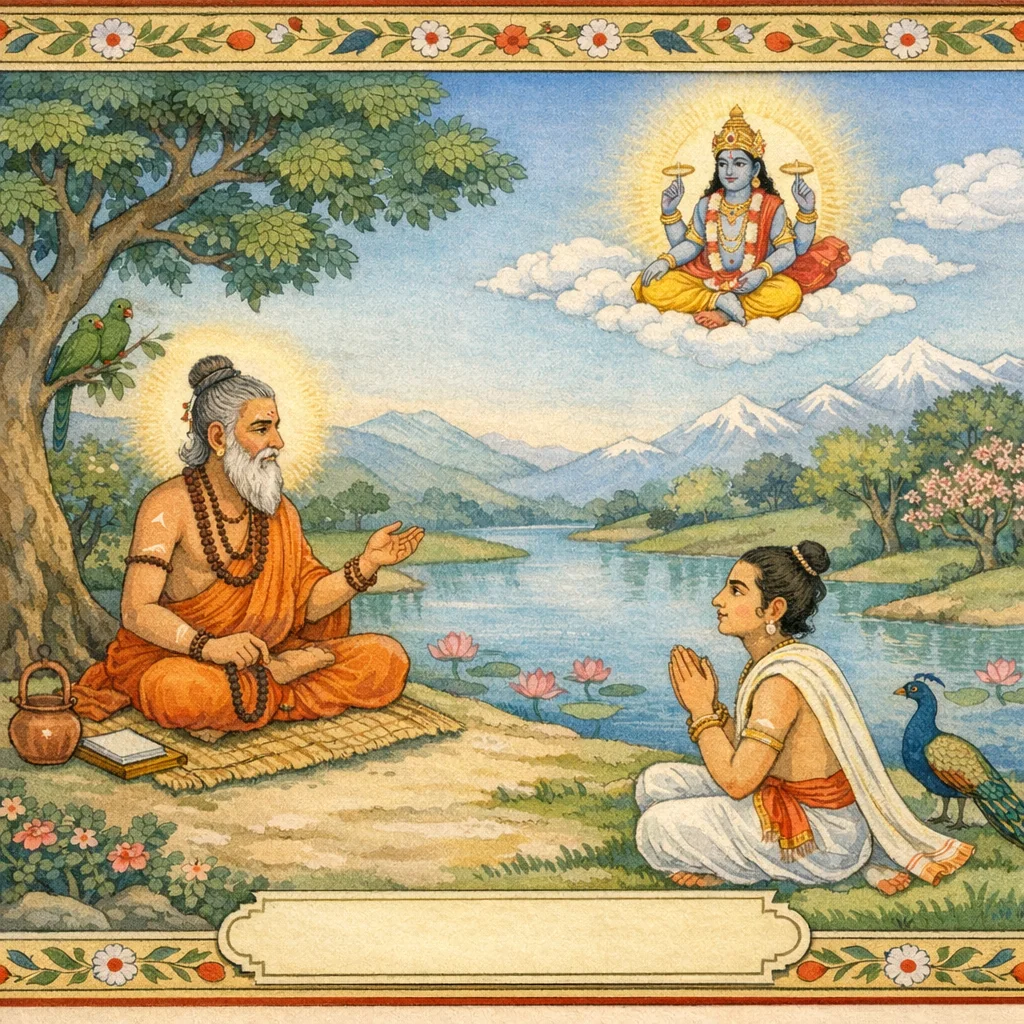
Adhyaya 12
Origin of the Lunar Dynasty: Soma’s Rise, the Tārā Abduction War, Budha–Purūravas Genealogy, and Kārtavīrya Arjuna
Bhīṣma asks Pulastya how the Lunar Dynasty arose and which renowned kings were born within it. Pulastya recounts Atri’s severe austerities and the manifestation of Soma (Candra), radiant and sovereign over herbs, who is ritually exalted under divine oversight, culminating in a duly ordained Rājasūya. Soma then abducts Tārā, the wife of Bṛhaspati, unleashing a ruinous war that draws in even Śiva, until Brahmā intervenes and Soma restores Tārā. From Tārā is born Budha, who begets Purūravas; the chapter outlines Purūravas’ reign, his bond with Urvaśī, and the onward flow of the lineage. The narration proceeds through dynastic branches, including the Yadu and Pūru lines, and culminates in the glorification of Kārtavīrya Arjuna, the thousand-armed Haihaya—his boons, conquests, conflict, and curse—ending with a phalaśruti praising the merit gained by reciting the account of his birth.
Shlokas
Verse 1
भीष्म उवाच । सोमवंशः कथं जातः कथयात्र विशारद । तद्वंशे केतुराजानो बभूवुः कीर्तिवर्द्धनाः
Bhīṣma said: “How did the Lunar Dynasty (Somavaṃśa) arise? Tell it here, O learned one. And in that lineage, which banner-bearing kings were born, enhancers of fame?”
Verse 2
पुलस्त्य उवाच । आदिष्टो ब्रह्मणा पूर्वमत्रिः सर्गविधौ पुरा । अनंतरं नाम तपः सृष्ट्यर्थं तप्तवान्विभुः
Pulastya said: Formerly, in the ancient ordinance of creation, Atri—having been instructed by Brahmā—performed a mighty austerity called Anantara, for the sake of bringing forth creation.
Verse 3
यदानंदकरं ब्रह्म भगवन्क्लेशनाशनं । ब्रह्मरुद्रेन्द्रसूर्याणामभ्यंतरमतींद्रियं
That Brahman—the blessed Lord, destroyer of affliction—who bestows bliss; who is the inner reality of Brahmā, Rudra, Indra, and the Sun; and who is beyond the reach of the senses.
Verse 4
शान्तिं कृत्वात्ममनसा तदत्रिः संयमे स्थितः । माहात्म्यं तपसो वापि परमानंदकारकं
Having established peace within his own mind, the sage Atri, abiding in self-restraint, (realized and taught) the greatness of austerity (tapas)—truly a cause of supreme bliss.
Verse 5
यस्माद्वंशपतिः सार्द्धं समये तदधिष्ठितः । तं दृष्ट्वाचष्ट सोमेन तस्मात्सोमोभवद्विभुः
Because the lord of that lineage was duly established there at the proper time, on seeing him Soma addressed him; therefore the mighty one came to be known by the name “Soma”.
Verse 6
अथ सुस्राव नेत्राभ्यां जलं तत्रात्रिसंभवम् । द्योतयद्विश्वमखिलं ज्योत्स्नया सचराचरम्
Then from his eyes there flowed water—born there from Atri—whose moonlike radiance illumined the entire universe, both the moving and the unmoving.
Verse 7
तद्दिशो जगृहुस्तत्र स्त्रीरूपेणासहृच्छयाः । गर्भो भूत्वोदरे तासां स्थितः सोप्यत्रिसंभवः
There, the Quarters seized him in the form of women, without any desire of the heart. Having become an embryo, he remained in their wombs—he too, born of Atri.
Verse 8
आशाश्च मुमुचुर्गर्भमशक्ता धारणे ततः । समादायाथ तं गर्भमेकीकृत्य चतुर्मुखः
Then the divine Hopes, unable to bear it, released the embryo. Thereupon the Four-faced One (Brahmā) took that embryo and made it one, whole and unified.
Verse 9
युवानमकरोद्ब्रह्मा सर्वायुधधरं नरम् । स्यंदनेथ सहस्तेन वेदशक्तिमये प्रभुः
Brahmā made that man youthful and endowed him with every weapon; and the Lord, whose power was of the nature of the Vedas, also provided him with a chariot.
Verse 10
आरोप्य लोकमनयदात्मीयं स पितामहः । ततो ब्रह्मर्षिभिः प्रोक्तं ह्यस्मत्स्वामीभवत्वयम्
Having installed him and led him to his own world, the Grandfather (Brahmā) did so. Then the Brahmarṣis said: “Indeed, you should become our lord.”
Verse 11
ऋषिभिर्देवगंधर्वैरप्सरोभिस्तथैव च । स्तूयमानस्य तस्याभूदधिकं महदंतरम्
As he was praised by the sages, the divine Gandharvas, and likewise by the Apsarases, the distance between him and them grew ever greater.
Verse 12
तेजोवितानादभवद्भुवि दिव्यौषधीगणः । तद्दीप्तिरधिका तस्माद्रात्रौ भवति सर्वदा
From the canopy of radiance there arose upon the earth a host of divine medicinal herbs; therefore their glow is stronger and is always seen at night.
Verse 13
तेनौषधीशः सोमोभूद्द्विजेष्वपि हि गण्यते । वेदधामा रसश्चायं यदिदं मंडलं शुभम्
Therefore Soma became the lord of medicinal herbs, and he is indeed counted among the twice-born as well. This auspicious orb is the abode of the Vedas and is itself the very essence (rasa).
Verse 14
कार्त्तवीर्यस्य राजर्षेर्महिमानं निरीक्ष्य सः । न नूनं कार्त्तवीर्यस्य गतिं यास्यंति पार्थिवाः
Beholding the greatness of the royal sage Kārttavīrya, he thought: “Surely, no earthly kings will ever attain the course and state of Kārttavīrya.”
Verse 15
रूपलावण्यसंयुक्तास्तस्मै कन्याः सुवर्चसः । ततः शक्तिसहस्राणां सहस्राणि दशैव तु
Then radiant maidens, endowed with beauty and grace, were given to him; and thereafter there came forth ten thousand thousands of śaktis—powers and energies.
Verse 16
तपश्चकार शीतांशुर्विष्णुध्यानैकतत्परः । ततस्तुष्टश्च भगवांस्तस्मै नारायणो हरिः
Śītāṃśu performed austerities, wholly devoted to meditation upon Viṣṇu. Then the Blessed Lord—Nārāyaṇa Hari—being pleased, appeared to him.
Verse 17
वरं वृणीष्व चोवाच परमात्मा जनार्दनः । ततो वव्रे वरं सोमः शक्रलोके यजाम्यहम्
“Choose a boon,” said Janārdana, the Supreme Self. Then Soma chose this boon: “May I perform sacrifice in Śakra’s world, in Indra’s heaven.”
Verse 18
प्रत्यक्षमेव भोक्तारो भवंतु मम मंदिरे । राजसूये सुरगणा ब्रह्माद्या ये चतुर्विधाः
“Let the diners be present in person in my temple. At the Rājasūya, let the hosts of gods—beginning with Brahmā—who are of the fourfold classes, partake there.”
Verse 19
रक्षपालः सुरोस्माकमास्तां शूलधरो हरः । तथेत्युक्तः समाजह्रे राजसूयं तु विष्णुना
“Let trident-bearing Hara (Śiva) be our divine guardian.” Thus addressed, he consented; and by Viṣṇu the Rājasūya sacrifice was duly arranged.
Verse 20
होतात्रिर्भृगुरध्वर्युरुद्गाता च चतुर्मुखः । ब्रह्मत्वमगमत्तस्य उपद्रष्टा हरिः स्वयम्
Atri served as the Hotṛ, Bhṛgu as the Adhvaryu, and the Four-faced One as the Udgātṛ. He attained the office of the Brahmā-priest, with Hari Himself as the witness and overseer of that rite.
Verse 21
सदस्याः सर्वदेवास्तु राजसूयविधिः स्मृतः । वसवोध्वर्यवस्तद्वद्विश्वेदेवास्तथैव च
All the gods are to be regarded as the officiating members of the rite; this is declared to be the procedure for the Rājasūya sacrifice. Likewise, the Vasus serve as the Adhvaryu priests, and so too do the Viśvedevas.
Verse 22
त्रैलोक्यं दक्षिणा तेन ऋत्विग्भ्यः प्रतिपादिता । सोमः प्राप्याथदुष्प्राप्यमैश्वर्यं सृष्टिसत्कृतं
By him, the three worlds were bestowed as the dakṣiṇā, the sacrificial fee, upon the officiating priests. Then Soma attained that hard-to-attain lordly prosperity, honored by the very order of creation.
Verse 23
सप्तलोकैकनाथत्वं प्राप्तस्स्वतपसा तदा । कदाचिदुद्यानगतामपश्यदनेकपुष्पाभरणोपशोभाम्
Having attained, through his own austerities, the sole lordship of the seven worlds, he then, on one occasion, saw a woman who had gone into a garden, radiant with many floral ornaments.
Verse 24
बृहन्नितंबस्तनभारखेदां पुष्पावभंगेप्यतिदुर्बलांगीं । भार्यां च तां देवगुरोरनंगबाणाभिरामायत चारुनेत्रां
He beheld the wife of the preceptor of the gods—wearied by the weight of her full hips and breasts, so delicate-limbed that even the fall of a flower could overwhelm her—lovely as though pierced by Kāma’s arrows, with long, beautiful eyes.
Verse 25
तारां स ताराधिपतिः स्मरार्तः केशेषु जग्राह विविक्तभूमौ । सापि स्मरार्ता सहते न रेमे तद्रूपकांत्याहृतमानसैव
Tormented by desire, the lord of the stars seized Tārā by her hair in a secluded place. She too, afflicted by passion, did not resist and did not refrain—her mind already captivated by the beauty and radiance of his form.
Verse 26
चिरं विहृत्याथ जगाम तारां विधुर्गृहीत्वा स्वगृहं ततोपि । न तृप्तिरासीत्स्वगृहेपि तस्य तारानुरक्तस्य सुखागमेषु
After sporting for a long time, the Moon took Tārā and went to his own house. Yet even in his own home he found no satisfaction, so deeply attached to Tārā was he in the pursuit of pleasures.
Verse 27
बृहस्पतिस्तद्विरहाग्निदग्धस्तद्ध्याननिष्ठैकमना बभूव । शशाक शापं न च दातुमस्मै न मंत्रशस्त्राग्निविषैरनेकैः
Bṛhaspati, scorched by the fire of separation, became wholly absorbed, single-minded and steadfast in meditation upon him. Yet he could not lay a curse upon him, not even by many means—by mantras, weapons, fire, or diverse poisons.
Verse 28
तस्यापकर्तुं विविधैरुपायैर्नैवाभिचारैरपि वागधीशः । स याचयामास ततस्तु देवं सोमं स्वभार्यार्थमनंगतप्तः
Unable to harm him by any means, not even through spells and sorcery, Vāgadhīśa—tormented by the god of love—then entreated the deity Soma for the sake of regaining his own wife.
Verse 29
स याच्यमानोपि ददौ न भार्यां बृहस्पतेः कामवशेन मोहितः । महेश्वरेणाथ चतुर्मुखेन साध्यैर्मरुद्भिः सह लोकपालैः
Though repeatedly entreated, he did not return Bṛhaspati’s wife, deluded by desire. This refusal endured even in the presence of Maheśvara and four-faced Brahmā, together with the Sādhyas, the Maruts, and the guardians of the worlds.
Verse 30
ददौ यदा तां न कथंचिदिंदुस्तदा शिवः क्रोधपरो बभूव । यो वामदेवप्रथितः पृथिव्यामनेकरुद्रार्चितपादपद्मः
When the Moon (Indu) would not give her up in any way, then Śiva became filled with anger—Śiva who is renowned on earth as Vāmadeva, whose lotus-feet are worshipped by many Rudras.
Verse 31
ततः सशिष्यो गिरिशः पिनाकी बृहस्पतेः स्नेहवशानुबद्धः । धनुर्गृहीत्वाजगवं पुरारिर्जगाम भूतेश्वरसिद्धजुष्टः
Then Girīśa (Śiva), wielder of Pināka, accompanied by his disciple and bound by affection for Bṛhaspati, took up the Ajagava bow; the foe of the Three Cities set forth, attended by the Lord of beings and by the Siddhas.
Verse 32
युद्धाय सोमेन विशेषदीप्तस्तृतीयनेत्रानलभीमवक्त्रः । सहैव जग्मुश्च गणेश्वराणां विंशाधिका षष्टिरथोग्रमूर्तिः
Blazing with heightened splendor, with a terrifying face as if born of the fire of his third eye, he set out for battle with Soma; and with him went the Gaṇeśvaras—sixty and twenty more—while he himself was of fierce form.
Verse 33
यक्षेश्वराणां सगणैरनेकैर्युतोन्वगात्स्यंदनसंस्थितानां । वेतालयक्षोरगकिन्नराणां पद्मेन चैकेन तथार्बुदानाम्
Accompanied by many troops of the lords of the Yakṣas, he proceeded—together with those stationed in chariots—along with Vetālas, Yakṣas, Nāgas (serpents), and Kinnaras, and also with a single host called Padma, besides multitudes (arbuda) beyond count.
Verse 34
लक्षैस्त्रिभिर्द्वा दशभी रथानां सोमोप्यगात्तत्र विवृद्धमन्युः । शनैश्चरांगारकवृद्धतेजा नक्षत्रदैत्यासुरसैन्ययुक्तः
Soma (the Moon) too advanced there with thirty-two lakh chariots, his wrath greatly increased; and Śanaiścara (Saturn), together with Aṅgāraka (Mars), blazing with augmented splendor, came accompanied by the armies of the Nakṣatras, Daityas, and Asuras.
Verse 35
जग्मुर्भयं सप्त तथैव लोका धरावनद्वीपसमुद्रगर्भाः । ससोममेवाभ्यगमत्पिनाकी गृहीतदीप्तास्त्रविशालवह्निः
Then fear seized the seven worlds—together with the earth, forests, islands, and the oceans’ depths. Pinākī (Śiva), blazing with the vast fire of his grasped, radiant weapons, advanced toward Soma.
Verse 36
अथाभवद्भीषण भीम सोम सैन्यद्वयस्याथ महाहवोसौ । अशेषसत्वक्षयकृत्प्रवृद्धस्तीक्ष्णप्रधानो ज्वलनैकरूपः
Then there arose between the two armies a dreadful and terrifying great battle, moon-like in its radiance—growing ever fiercer, bringing ruin upon countless beings, ruled by keen-edged weapons, and taking on the single form of blazing fire.
Verse 37
शस्त्रैरथान्योन्यमशेषसैन्यं द्वयोर्जगामक्षयमुग्रतीक्ष्णैः । पतंति शस्त्राणि तथोज्वलानि स्वर्भूमिपातालमलं दहंति
Then, with fierce and razor-sharp weapons, the entire armies on both sides destroyed one another. Blazing weapons kept raining down, scorching the heavens, the earth, and the netherworlds.
Verse 38
रुद्रः क्रोधाद्ब्रह्मशिरो मुमोच सोमोपि सोमास्त्रममोघवीर्यं । तयोर्निपातेन समुद्रभूम्योरथांतरिक्षस्य च भीतिरासीत्
Rudra, in wrath, released the Brahmaśiras weapon; and Soma too discharged the Soma-weapon, whose power never fails. At the descent of those two, fear arose for the ocean, the earth, and even the mid-region of the sky.
Verse 39
तदा सुयुद्धं जगतां क्षयाय प्रवृद्धमालोक्य पितामहोपि । ततः प्रविश्याथ कथंचिदेव निवारयामास सुरैः सहैव
Then, seeing that the fierce battle had swelled toward the destruction of the worlds, even Pitāmaha (Brahmā) entered the scene. Thereafter, somehow, together with the gods, he managed to restrain it.
Verse 40
अकारणं किं क्षयकृज्जनानां सोम त्वयापीदमकार्यकार्यं । यस्मात्परस्त्रीहरणाय सोम त्वया कृतं युद्धमतीव भीमम्
O Soma, why, without cause, have you become a destroyer of people by committing this unrighteous deed? For, O Soma, it was to abduct another man’s wife that you waged a most dreadful war.
Verse 41
पापग्रहस्त्वं भविता जनेषु पापोस्यलं वह्निमुखाशिनां त्वं । भार्यामिमामर्पय वाक्पतेस्त्वं प्रमाणयन्नेव मदीय वाचम्
Among people you shall be one seized by sin; among those who feed the sacred fire you shall be sufficiently sinful. Now hand over this wife to Vākpati, thereby proving my words to be true.
Verse 42
तथेति चोवाच हिमांशुमाली युद्धादपाक्रामदतः प्रशांतः । बृहस्पतिस्तामथ गृह्य तारां हृष्टो जगाम स्वगृहं च रुद्रः
“So be it,” said the Moon-crested one; then, calming down, he withdrew from the battle. Thereupon Bṛhaspati took Tārā and, delighted, returned to his own home—and Rudra also departed for his abode.
Verse 43
पुलस्त्य उवाच । ततः संवत्सरस्यांते द्वादशादित्यसन्निभः । दिव्यपीताम्बरधरो दिव्याभरणभूषितः
Pulastya said: Then, at the end of the year, one appeared—radiant like the twelve suns—wearing divine yellow garments and adorned with heavenly ornaments.
Verse 44
तारोदरविनिष्क्रान्तः कुमारस्सूर्यसन्निभः । सर्वार्थशास्त्रविद्विद्वान्हस्तिशास्त्रप्रवर्त्तकः
From Tārā’s womb emerged a radiant prince, brilliant like the sun—learned in all treatises on practical aims, and the pioneer who set forth the science of elephants.
Verse 45
नामयद्राजपुत्रोयं विश्रुतो राजवैद्यकः । राज्ञः सोमस्य पुत्रत्वाद्राजपुत्रो बुधः स्मृतः
This one, famed as a royal physician, was named “Rājaputra”; and because he was the son of King Soma, Budha is remembered as “Rājaputra” (the prince).
Verse 46
जनानां तु स तेजांसि सर्वाण्येवाक्षिपद्बली । ब्रह्माद्यास्तत्र चाजग्मुर्देवा देवर्षिभिः सह
But that mighty one drew away all the radiances of the people. Then Brahmā and the other gods came there, along with the divine seers.
Verse 47
बृहस्पतिगृहे सर्वे जातकर्मोत्सवे तदा । पप्रच्छुस्ते सुरास्तारां केन जातः कुमारकः
Then, at the celebration of the birth-rite (jātakarma) in Bṛhaspati’s house, all the gods questioned Tārā: “By whom was this boy begotten?”
Verse 48
ततः सा लज्जिता तेषां न किंचिदवदत्तदा । पुनः पुनस्तदा पृष्टा लज्जयंती वरांगना
Then, feeling ashamed before them, she said nothing at that time. Again and again she was questioned, and the noble woman, still bashful, remained silent.
Verse 49
सोमस्येति चिरादाह ततो गृह्णाद्विधुः सुतं । बुध इत्यकरोन्नाम प्रादाद्राज्यं च भूतले
After a long time he said, “(He is) Soma’s,” and then the Moon accepted the child as his son. He gave him the name Budha and granted him a kingdom upon the earth.
Verse 50
अभिषेकं ततः कृत्वा प्रदानमकरोद्विभुः । ग्रहमध्यं प्रदायाथ ब्रह्मा ब्रह्मर्षिभिर्युतः
Then, having performed the consecration (abhiṣeka), the all-powerful one made the gift. Thereafter Brahmā—accompanied by the Brahmarṣis—bestowed that offering in the very midst of the dwelling.
Verse 51
पश्यतां सर्वभूतानां तत्रैवांतरधीयत । इलोदरे च धर्मिष्ठं बुधः पुत्रमजीजनत्
While all beings looked on, he vanished then and there. And in Ilodarā, Budha begot a son most righteous, steadfast in dharma.
Verse 52
अश्वमेधशतंसाग्रमकरोद्यस्स्वतेजसा । पुरूरवा इति ख्यातः सर्वलोकनमस्कृतः
By his own splendor he performed a full hundred Aśvamedha sacrifices; he became renowned as Purūravas, revered by all the worlds.
Verse 53
हिमवच्छिखरे रम्ये समाराध्य पितामहं । लोकैश्वर्यमगाद्राजन्सप्तद्वीपपतिस्तदा
Having duly worshipped the Grandfather, Brahmā, upon a lovely peak of the Himālaya, that king attained sovereignty over the worlds, becoming the lord of the seven continents.
Verse 54
केशिप्रभृतयो दैत्यास्तद्भृत्यत्वं समागताः । उर्वशी यस्य पत्नीत्वमगमद्रूपमोहिता
Daityas such as Keśin and others entered into his service; and Urvaśī, bewitched by his beauty, became his wife.
Verse 55
सप्तद्वीपावसुमती सशैलवनकानना । धर्मेण पालिता तेन सर्वलोकहितैषिणा
That earth—comprising the seven continents, with its mountains, forests, and groves—was governed by him in accordance with dharma, for he sought the welfare of all worlds.
Verse 56
चामरग्रहणाकीर्तिः स्वयं चैवांगवाहिका । ब्रह्मप्रसादाद्देवेंद्रो ददावर्द्धासनं तदा
Renowned for bearing the royal fly-whisk and herself serving as a personal attendant, by Brahmā’s grace Indra then granted her a half-seat, a place of honor.
Verse 57
धर्मार्थकामान्धर्मेण समवेतोभ्यपालयत् । धर्मार्थकामास्तं द्रष्टुमाजग्मुः कौतुकान्विताः
United with righteousness, he governed and protected dharma, artha, and kāma. Then Dharma, Artha, and Kāma—filled with curiosity—came to see him.
Verse 58
जिज्ञासवस्तच्चरितं कथं पश्यति नः समम् । भक्त्या चक्रे ततस्तेषामर्घ्यपाद्यादिकं ततः
Eager to know his conduct, he wondered: “How can we behold his deeds equally and in full?” Then, with devotion, he offered them the rites of welcome, beginning with arghya and pādya.
Verse 59
आसनत्रयमानीय दिव्यं कनकभूषणम् । निवेश्याथाकरोत्पूजामीषद्धर्मेधिकां पुनः
Having brought three seats—divine, adorned with golden ornaments—he set them in place and then performed worship once again, with a rite slightly more in accordance with dharma.
Verse 60
जग्मतुस्तौ च कामार्थावतिकोपं नृपं प्रति । अर्थः शापमदात्तस्मै लोभात्त्वं नाशमेष्यसि
Then Kāma and Artha went to the king, who was exceedingly enraged. Artha pronounced a curse upon him: “Because of greed, you will meet destruction.”
Verse 61
कामोप्याह तवोन्मादो भविता गंधमादने । कुमारवनमाश्रित्य वियोगाच्चोर्वशीभवात्
Kāma too spoke: “In Gandhamādana you shall fall into madness; taking refuge in the grove called Kumāravana, it will arise from separation from Urvaśī.”
Verse 62
धर्मोप्याह चिरायुस्त्वं धार्मिकश्च भविष्यसि । संततिस्तव राजेंद्र यावदाचंद्रतारकम्
Dharma also declared: “You will be long-lived, and you will be righteous; and your lineage, O king, will endure for as long as the moon and the stars remain.”
Verse 63
शतशो वृद्धिमायाति न नाशं भुवि यास्यति । षष्टिं वर्षाणि चोन्माद ऊर्वशीकामसंभवः
It will increase a hundredfold and will not meet destruction on earth. And for sixty years there will be madness, born of desire for Urvaśī.
Verse 64
अचिरादेव भार्यापि वशमेष्यति चाप्सराः । इत्युक्त्वांतर्दधुः सर्वे राजा राज्यं तदान्वभूत्
“Very soon, even your wife—and the apsarās as well—will come under your control.” Having said this, they all vanished; and the king then ruled his kingdom.
Verse 65
अहन्यहनि देवेंद्रं द्रष्टुं याति पुरूरवाः । कदाचिदारुह्य रथं दक्षिणांबरचारिणा
Day after day Purūravas went to see Devendra (Indra). Once, mounting a chariot, he proceeded accompanied by one clad in a southern garment.
Verse 66
सार्धं शक्रेण सोऽपश्यन्नीयमानामथांबरे । केशिना दानवेंद्रेण चित्रलेखामथोर्वशीम्
Along with Śakra (Indra), he then beheld in the sky Citralekhā and Urvaśī being carried off by Keśin, lord of the Dānavas.
Verse 67
तं विनिर्जित्य समरे विविधायुधपातनैः । पुरा शक्रोपि समरे येन वज्री विनिर्जितः
Having defeated him in battle by hurling various weapons—he by whom, in former times, even Śakra, wielder of the thunderbolt, was overcome in combat—stood victorious.
Verse 68
मित्रत्वमगमत्तेन प्रादादिंद्राय चोर्वशीं । ततःप्रभृति मित्रत्वमगमत्पाकशासनः
Through this, friendship was established, and he gave Urvaśī to Indra. From that time onward, Pākaśāsana (Indra) entered into friendship with him.
Verse 69
सर्वलोकेतिशयितं पुरूरवसमेव तम् । प्राह वज्री तु संतुष्टो नीयतामियमेव च
Pleased, the thunderbolt-bearer spoke of that Purūravas—who surpassed all the worlds in excellence: “Let her be taken; yes, let this very one be led to him.”
Verse 70
सा पुरूरवसः प्रीत्यै चागायच्चरितं महत् । लक्ष्मीस्वयंवरंनाम भरतेन प्रवर्तितम्
To delight Purūravas, she also sang a great narrative called “Lakṣmī’s Svayaṃvara,” which had been set in motion by Bharata.
Verse 71
मेनकां चोर्वशीं रंभां नृत्यध्वमिति चादिशत् । ननर्त सलयं तत्र लक्ष्मीरूपेण चोर्वशी
He then commanded Menakā, Urvaśī, and Rambhā, saying, “Dance!” Thereupon Urvaśī danced there, assuming the form and beauty of Lakṣmī.
Verse 72
सा पुरूरवसं दृष्ट्वा नृत्यंती कामपीडिता । विस्मृताभिनयं सर्वं यत्पुरातनचोदितम्
Seeing Purūravas, she—dancing and tormented by desire—forgot all the gestures and expressions of performance that had been taught to her long ago.
Verse 73
शशाप भरतः क्रोधाद्वियोगात्तस्य भूतले । पंचपंचाशदब्दानि लताभूता भविष्यसि
Enraged by the pain of separation from him, Bharata cursed her upon the earth: “For fifty-five years you shall become a creeper, a vine.”
Verse 74
ततस्तमुर्वशी गत्वा भर्त्तारमकरोच्चिरं । शापानुभवनांते च उर्वशी बुधसूनुना
Then Urvaśī went to him and, after a long time, made him her husband; and when the experience of the curse came to an end, Urvaśī was again united with the son of Budha.
Verse 75
अजीजनत्सुतानष्टौ नामतस्तान्निबोध मे । आयुर्दृढायुर्वश्यायुर्बलायुर्धृतिमान्वसुः
He begot eight sons; learn their names from me: Āyu, Dṛḍhāyu, Vaśyāyu, Balāyu, Dhṛtimān, and Vasu.
Verse 76
दिव्यजायुः शतायुश्च सर्वे दिव्यबलौजसः । आयुषो नहुषः पुत्रो वृद्धशर्मा तथैव च
Divyajāyu and Śatāyu—indeed all of them endowed with divine strength and vigor—and Nahuṣa, the son of Āyuṣa, as well as Vṛddhaśarmā too.
Verse 77
रजिर्दंडो विशाखश्च वीराः पंचमहारथाः । रजेः पुत्रशतं जज्ञे राजेया इति विश्रुतं
Raji, Daṇḍa, and Viśākha—heroes and mighty chariot-warriors—were born. From Raji, a hundred sons were born, renowned by the name “Rājeyas.”
Verse 78
रजिराराधयामास नारायणमकल्मषं । तपसा तोषितो विष्णुर्वरं प्रादान्महीपतेः
Raji worshipped Nārāyaṇa, the stainless Lord. Pleased by his austerities, Viṣṇu granted a boon to that king.
Verse 79
देवासुरमनुष्याणामभूत्स विजयी तदा । अथ देवासुरं युद्धमभूद्वर्षशतत्रयम्
Then he became victorious over the devas, asuras, and humans. Thereafter, the war between the devas and asuras continued for three hundred years.
Verse 80
प्रह्लादशक्रयोर्भीमं न कश्चिद्विजयी तयोः । ततो देवासुरैः पृष्टः पृथग्देवश्चतुर्मुखः
In the dreadful conflict between Prahlāda and Śakra (Indra), neither gained victory over the other. Then the gods and the asuras separately questioned the four-faced god, Brahmā.
Verse 81
अनयोर्विजयी कः स्याद्रजिर्यत्रेति सोब्रवीत् । जयाय प्रार्थितो राजा सहायस्त्वं भवस्व नः
He said, “Which of these two shall be victorious, and where shall the contest be held?” Then, seeking victory from the king, they said, “Be our helper.”
Verse 82
दैत्यैः प्राह यदि स्वामी वो भवामि ततस्त्वलम् । नासुरैः प्रतिपन्नं तत्प्रतिपन्नं सुरैस्तदा
He said to the Daityas, “If I become your lord, let that be enough.” What the Asuras had not accepted was then accepted by the Devas.
Verse 83
स्वामी भव त्वमस्माकं बलनाशय विद्विषः । ततो विनाशिताः सर्वे ये वध्या वज्रपाणिनः
“Be our lord; destroy the strength of our enemies.” Thereupon all those who were destined to be slain by Vajrapāṇi (Indra) were destroyed.
Verse 84
पुत्रत्वमगमत्तुष्टस्तस्येंद्रः कर्मणा ततः । दत्त्वेंद्राय पुरा राज्यं जगाम तपसे रजिः
Pleased by his merit, Indra then attained the state of being his son. And Raji, having formerly bestowed the kingship upon Indra, departed to perform austerities.
Verse 85
रजिपुत्रैस्तदाछिन्नं बलादिंद्रस्य वैयदा । यज्ञभागश्च राज्यं च तपोबलगुणान्वितैः
When the sons of Raji—endowed with ascetic power, strength, and virtue—then forcibly wrested them away from Indra, they took both his share in the sacrifice and his sovereignty.
Verse 86
राज्यभ्रष्टस्ततः शक्रो रजिपुत्रनिपीडितः । प्राह वाचस्पतिं दीनः पीडितोऽस्मि रजेः सुतैः
Then Śakra (Indra), bereft of his kingdom and oppressed by the sons of Raji, spoke sorrowfully to Vācaspati (Bṛhaspati): “I am afflicted—tormented by the sons of Raji.”
Verse 87
न यज्ञभागो राज्यं मे पीडितस्य बृहस्पते । राज्यलाभाय मे यत्नं विधत्स्व धिषणाधिप
O Bṛhaspati, afflicted as I am, I have neither a share in the sacrifices nor a kingdom. O lord of wisdom, devise an effort for me to regain sovereignty.
Verse 88
ततो बृहस्पतिः शक्रमकरोद्बलदर्पितम् । ग्रहशांतिविधानेन पौष्टिकेन च कर्मणा
Then Bṛhaspati, by the prescribed rites for appeasing the grahas (planets) and by nourishing, prosperity-bestowing ritual acts, pacified and strengthened Śakra (Indra), who had become intoxicated with power and pride.
Verse 89
गत्वाथ मोहयामास रजिपुत्रान्बृहस्पतिः । जिनधर्मं समास्थाय वेदबाह्यं स धर्मवित्
Then Bṛhaspati went and deluded the sons of Raji; though a knower of dharma, he adopted the doctrine of the Jina, which lies outside the Veda.
Verse 90
वेदत्रयीपरिभ्रष्टांश्चकार धिषणाधिपः । वेदबाह्यान्परिज्ञाय हेतुवादसमन्वितान्
The Lord of intellect made them fall away from the three Vedas; recognizing them as outside the Veda, he rendered them adherents of hetuvāda—mere rational disputation.
Verse 91
जघान शक्रो वज्रेण सर्वान्धर्मबहिष्कृतान् । नहुषस्य प्रवक्ष्यामि पुत्रान्सप्तैव धार्मिकान्
Indra (Śakra) struck down with his thunderbolt all who had been cast out from dharma. Now I shall recount Nahusha’s seven sons, truly righteous.
Verse 92
यतिर्ययातिश्शर्यातिरुत्तरः पर एव च । अयतिर्वियतिश्चैव सप्तैते वंशवर्द्धनाः
Yati, Yayāti, Śaryāti, Uttara, and also Para—along with Ayati and Viyati—these seven are the increasers of the lineage.
Verse 93
यतिः कुमारभावेपि योगी वैखानसोभवत् । ययातिरकरोद्राज्यं धर्मैकशरणः सदा
Even in boyhood, Yati became a Vaikhānasa yogin; and Yayāti ruled his kingdom, ever taking refuge in Dharma alone.
Verse 94
शर्मिष्ठा तस्य भार्याभूद्दुहिता वृषपर्वणः । भार्गवस्यात्मजा चैव देवयानी च सुव्रता
Śarmiṣṭhā, the daughter of Vṛṣaparvan, became his wife; and Devayānī too—Bhārgava’s daughter—was a virtuous woman.
Verse 95
ययातेः पंचदायादास्तान्प्रवक्ष्यामि नामतः । देवयानी यदुं पुत्रं तुर्वसुं चाप्यजीजनत्
I shall now state, by name, the five heirs of Yayāti. Devayānī bore the sons Yadu and Turvasu.
Verse 96
तथा द्रुह्यमणं पूरुं शर्मिष्ठाजनयत्सुतान् । यदुः पूरूश्च भरतस्ते वै वंशविवर्द्धनाः
Likewise, Śarmiṣṭhā bore sons—Druhyamaṇa, Pūru, Yadu, Pūrū, and Bharata; indeed, they became the increasers of the lineage (dynasty).
Verse 97
पूरोर्वंशं प्रवक्ष्यामि यत्र जातोसि पार्थिव । यदोस्तु यादवा जाता यत्र तौ बलकेशवौ
I shall recount the lineage of Puru, O king, in which you were born; and also that of Yadu, from whom the Yādavas arose—wherein those two, Balarāma and Keśava (Kṛṣṇa), were born.
Verse 98
भारावतारणार्थाय पांडवानां हिताय च । यदोः पुत्रा बभूवुश्च पंच देवसुतोपमाः
For the purpose of lightening the earth’s burden, and also for the welfare of the Pāṇḍavas, five sons were born in the Yadu lineage—like the sons of the gods.
Verse 99
सहस्रजित्तथा ज्येष्ठः क्रोष्टा नीलोञ्जिको रघुः । सहस्रजितो दायादः शतजिन्नाम पार्थिवः
And (there were) Sahasrajit; likewise Jyeṣṭha, Kroṣṭā, Nīloñjika, and Raghu. Sahasrajit’s heir was the king named Śatajit.
Verse 100
शतजितश्च दायादास्त्रयः परमधार्मिकाः । हैहयश्च हयश्चैव तथा तालहयश्च यः
Śatajita had three heirs, all supremely righteous—Haihaya, Haya, and also the one known as Tālahaya.
Verse 101
हैहयस्य तु दायादो धर्मनेत्रः प्रतिश्रुतः । धर्मनेत्रस्य कुंतिस्तु संहतस्तस्य चात्मजः
Now it is proclaimed that the heir of Haihaya was Dharmanetra. Dharmanetra’s son was Kunti, and Kunti’s son was Saṃhata.
Verse 102
संहतस्य तु दायादो महिष्मान्नाम पार्थिवः । आसीन्महिष्मतः पुत्रो भद्रसेनः प्रतापवान्
Saṃhata’s heir was a king named Mahiṣmān. Mahiṣmān’s son was the valorous Bhadrasena.
Verse 103
वाराणस्यामभूद्राजा कथितः पूर्वमेव हि । भद्रसेनस्य पुत्रस्तु दुर्दमो नाम धार्मिकः
In Vārāṇasī there was a king—indeed already spoken of earlier—who was Bhadrasena’s son, the righteous one named Durdama.
Verse 104
दुर्दमस्य सुतो भीमो धनको नाम वीर्यवान् । धनकस्य सुता ह्यासन्चत्वारो लोकविश्रुताः
Durdama had a son, Bhīma, a mighty man named Dhanaka. Dhanaka had four sons, renowned throughout the world.
Verse 105
कृताग्निः कृतवीर्यश्च कृतधर्मा तथैव च । कृतौजाश्च चतुर्थोभूत्कृतवीर्याच्च सोर्जुनः
Kṛtāgni, Kṛtavīrya, Kṛtadharmā, and as the fourth Kṛtaujā were born; and from Kṛtavīrya was born that Arjuna.
Verse 106
जातो बाहुसहस्रेण सप्तद्वीपेश्वरो नृपः । वर्षायुतं तपस्तेपे दुश्चरं पृथिवीपतिः
Born with a thousand arms, that king became the sovereign lord of the seven dvīpas. Then the ruler of the earth performed arduous austerities for ten thousand years.
Verse 107
दत्तमाराधयामास कार्त्तवीर्योत्रिसंभवम् । तस्मै दत्तो वरान्प्रादाच्चतुरः पुरुषोत्तमः
Kārttavīrya, born in the lineage of Atri, worshipped Datta; and Datta—the Supreme Person—granted him four boons.
Verse 108
पूर्वं बाहुसहस्रं तु स वव्रे राजसत्तमः । अधर्मं ध्यायमानस्य भीतिश्चापि निवारणम्
Formerly, that best of kings chose as a boon a thousand arms, and also the removal of fear for one who, in his mind, was contemplating unrighteousness (adharma).
Verse 109
युद्धेन पृथिवीं जित्वा धर्मेणावाप्य वै बलम् । संग्रामे वर्तमानस्य वधश्चैवाधिकाद्भवेत्
Having conquered the earth by war and indeed obtained power through dharma, yet for one engaged in battle, killing becomes all the more excessive.
Verse 110
एतेनेयं वसुमती सप्तद्वीपा सपत्तना । सप्तोदधि परिक्षिप्ता क्षात्रेण विधिना जिता
By him this Earth—together with its seven dvīpas and cities, encircled by the seven oceans—was conquered in accordance with the kṣatriya code and rightful order.
Verse 111
जज्ञे बाहुसहस्रं च इच्छतस्तस्य धीमतः । सर्वे यज्ञा महाबाहोस्तस्यासन्भूरिदक्षिणाः
As that wise one willed it, a thousand arms were born to him. And all the sacrifices of that mighty-armed one were endowed with abundant dakṣiṇā, rich gifts bestowed upon the priests.
Verse 112
सर्वे कांचनयूपास्ते सर्वे कांचनवेदिकाः । सर्वे देवैश्च संप्राप्ता विमानस्थैरलंकृतैः
All of them had golden sacrificial posts; all had golden altars. All were attended by the devas, adorned by those stationed in celestial chariots.
Verse 113
गंधर्वैरप्सरोभिश्च नित्यमेवापि सेविताः । यस्य यज्ञे जगौ गाथा गंधंर्वो नारदस्तथा
He is ever attended by Gandharvas and Apsarases; and in his sacrifice the Gandharvas chanted sacred songs—Nārada as well.
Verse 115
यज्ञैर्दानैस्तपोभिश्च विक्रमेण श्रुतेन च । सप्तद्वीपाननुचरन्वेगेन पवनोपमः
Through sacrifices, gifts, and austerities—through valor and through sacred learning—he roamed across the seven continents, swift as the wind in his speed.
Verse 116
पंचाशीतिसहस्राणि वर्षाणां च नराधिपः । सप्तद्वीपपृथिव्याश्च चक्रवर्ती बभूव ह
For eighty-five thousand years, that lord of men became a cakravartin, a universal monarch, over the earth with its seven continents.
Verse 117
स एव पशुपालोभूत्क्षेत्रपालः स एव हि । स एव वृष्ट्या पर्जन्यो योगित्वादर्जुनोभवत्
He alone became the cowherd; he indeed became the guardian of the field. By mastery over rain he became Parjanya, and through yogic attainment he became Arjuna.
Verse 118
योसौ बाहुसहस्रेण ज्याघातकठिनत्वचा । भाति रश्मिसहस्रेण शारदेनेव भास्करः
He—whose skin has been hardened by the repeated strike of the bowstring upon his thousand arms—shines with a thousand rays, like the sun in the autumn season.
Verse 119
एष नाम मनुष्येषु माहिष्मत्यां महाद्युतिः । एष वेगं समुद्रस्य प्रावृट्काले भजेत वै
Among men there is one named Eṣa in Māhiṣmatī, a man of great splendor; indeed, he would match the force of the ocean in the monsoon season.
Verse 120
क्रीडते स्वसुखा ये विप्रतिस्रोतो महीपतिः । ललनाः क्रीडता तेन प्रतिबद्धोर्मिमालिनी
There the lordly king sports according to his own pleasure, moving as though against the current; and as he plays, the women sport with him as well—while the river, garlanded with waves, seems held back by their play.
Verse 121
ऊर्मिभ्रुकुटिमाला सा शंकिताभ्येति नर्मदा । एष एव मनोर्वंशे त्ववगाहेन्महार्णवम्
With rows of waves like furrowed brows, the Narmadā approaches in apprehension. It is this very one who, in the lineage of Manu, would plunge into the great ocean.
Verse 122
करेणोद्धृत्य वेगं तु कामिनीप्रीणनेन तु । तस्य बाहुसहस्रेण क्षोभ्यमाणे महोदधौ
Seizing and lifting the force of the waters with his hand, intent on pleasing the maiden, he churned the great ocean; by his thousand arms it was thrown into tumult.
Verse 123
भवंति लीना निश्चेष्टाः पातालस्था महासुराः । तदूरुक्षोभचकिता अमृतोत्पादशंकिताः
The mighty Asuras dwelling in Pātāla lay hidden and motionless; startled by that fierce upheaval, they suspected that amṛta—the nectar of immortality—was being brought forth.
Verse 124
नता निश्चलमूर्द्धानो भवंति च महोरगाः । एष धन्वी च चिक्षेप रावणं प्रति सायकान्
The mighty serpents bowed, their heads held utterly still. Then that archer loosed his arrows toward Rāvaṇa.
Verse 125
एष धन्वी धनुर्गृह्य उत्सिक्तं पंचभिः शरैः । लंकेशं मोहयित्वा तु सबलं रावणं बलात्
This mighty archer, taking up his bow, discharged five arrows and, overpowering him by force, bewildered the lord of Laṅkā—Rāvaṇa—together with his army.
Verse 126
निर्जित्य बद्ध्वा त्वानीय माहिष्मत्याम्बबंध तम् । ततो गतोहं तस्याग्रे अर्जुनं संप्रसादयन्
Having conquered him and bound him, I brought you and kept him confined at Māhiṣmatī. Then I went before him, appeasing Arjuna.
Verse 127
मुमोच राजन्पौत्रं मे सख्यं कृत्वा च पार्थिवः । तस्य बाहुसहस्रस्य बभूव ज्यातलस्वनः
O King, the earthly ruler released my grandson after making friendship with him; and for that thousand-armed one, the bowstring then rang out, taut and clear.
Verse 128
युगांताग्नेः प्रवृत्तस्य यथा ज्यातलनिःस्वनः । अहो बलं विधेर्वीर्यं भार्गवः स यदाच्छिनत्
Like the twang of a bowstring when the fire of cosmic dissolution has begun—so the deed resounded. Ah, wondrous is the power of destiny: that Bhārgava cut it down in an instant.
Verse 129
मृधे सहस्रं बाहूनां हेमतालवनं यथा । यं वसिष्ठस्तु संक्रुद्धो ह्यर्जुनं शप्तवान्विभुः
In battle, his thousand arms were like a forest of golden palm-trees. It was that Arjuna whom the mighty sage Vasiṣṭha, enraged, cursed.
Verse 130
यस्माद्वनं प्रदग्धं ते विश्रुतं मम हैहय । तस्मात्ते दुष्कृतं कर्म कृतमन्यो हनिष्यति
Since you, O Haihaya, have burned the forest famed as mine, therefore for that evil deed you have done, another will slay you.
Verse 131
छित्वा बाहुसहस्रं ते प्रमथ्य तरसा बली । तपस्वी ब्राह्मणस्त्वां वै वधिष्यति स भार्गवः
Having cut off your thousand arms and crushed your pride with force, that mighty ascetic Brāhmaṇa—the Bhārgava—will indeed slay you.
Verse 132
तस्य रामोथ हंतासीन्मुनिशापेन धीमतः । तस्य पुत्रशतं त्वासीत्पंच तत्र महारथाः
Then Rāma became his slayer, by the curse of a wise sage. He had a hundred sons; among them, five were great warriors.
Verse 133
कृतास्त्रा बलिनः शूरा धर्मात्मानो महाबल । शूरसेनश्च शूरश्च धृष्टो वै कृष्ण एव च
They were trained in the use of weapons—strong, heroic, righteous in dharma, and very mighty: Śūrasena, Śūra, Dhṛṣṭa, and indeed Kṛṣṇa as well.
Verse 134
जयद्ध्वजः स वै कर्ता अवन्तिश्च रसापतिः । जयध्वजस्य पुत्रस्तु तालजंघो महाबलः
Jayaddhvaja indeed became the ruler, and Avanti became the lord of Rasā; and Jayadhvaja’s son was Tālajaṅgha, a man of great strength.
Verse 135
तस्य पुत्राश्शतान्येव तालजंघा इति स्मृताः । तेषां पंचकुलान्यासन्हैहयानां महात्मनाम्
He had hundreds of sons, remembered as the Tālajaṅghas. Among those great-souled Haihayas, there were five clans.
Verse 136
वीतिहोत्राश्च संजाता भोजाश्चावंतयस्तथा । तुंडकेराश्च विक्रांतास्तालजंघाः प्रकीर्तिताः
There arose the Vītihotras; likewise the Bhojas and the Avantis; and the valiant Tuṇḍakeras are also spoken of, as well as the Tāla-jaṅghas.
Verse 137
वीतिहोत्रसुतश्चापि अनंतो नाम वीर्यवान् । दुर्जयस्तस्य पुत्रस्तु बभूवामित्रकर्षणः
And Vītihotra’s son was a valiant man named Ananta; and his son was Durjaya, a crusher of foes.
Verse 138
सद्भावेन महाराजः प्रजाधर्मेण पालयन् । कार्तवीर्यार्जुनो नाम राजा बाहुसहस्रधृत्
With noble intent, the great king—protecting his subjects according to the duties owed to the people—was a ruler named Kārtavīrya Arjuna, famed as the thousand-armed king.
Verse 139
येन सागरपर्यंता धनुषा निर्जिता मही । यस्तस्यकीर्तयेन्नाम कल्यमुत्थाय मानवः
He by whose bow the earth—bounded by the ocean—was conquered: the person who rises at dawn and praises that one’s name attains auspiciousness.
Verse 140
न तस्य वित्तनाशः स्यान्नष्टं च लभते पुनः । कार्तवीर्यस्य यो जन्म कथयेदिह धीमतः । यथा यष्टा यथा दाता स्वर्गलोके महीयते
For him there will be no loss of wealth, and what has been lost he regains again. The wise person who here recounts the birth of Kārtavīrya is honored in the heavenly world—just like one who performs sacrifices and one who gives gifts.