Adhyaya 97
Annadāna and the Obstruction of Viṣṇu-Darśana; Vāmadeva’s Teaching and the Vāsudeva Stotra Prelude
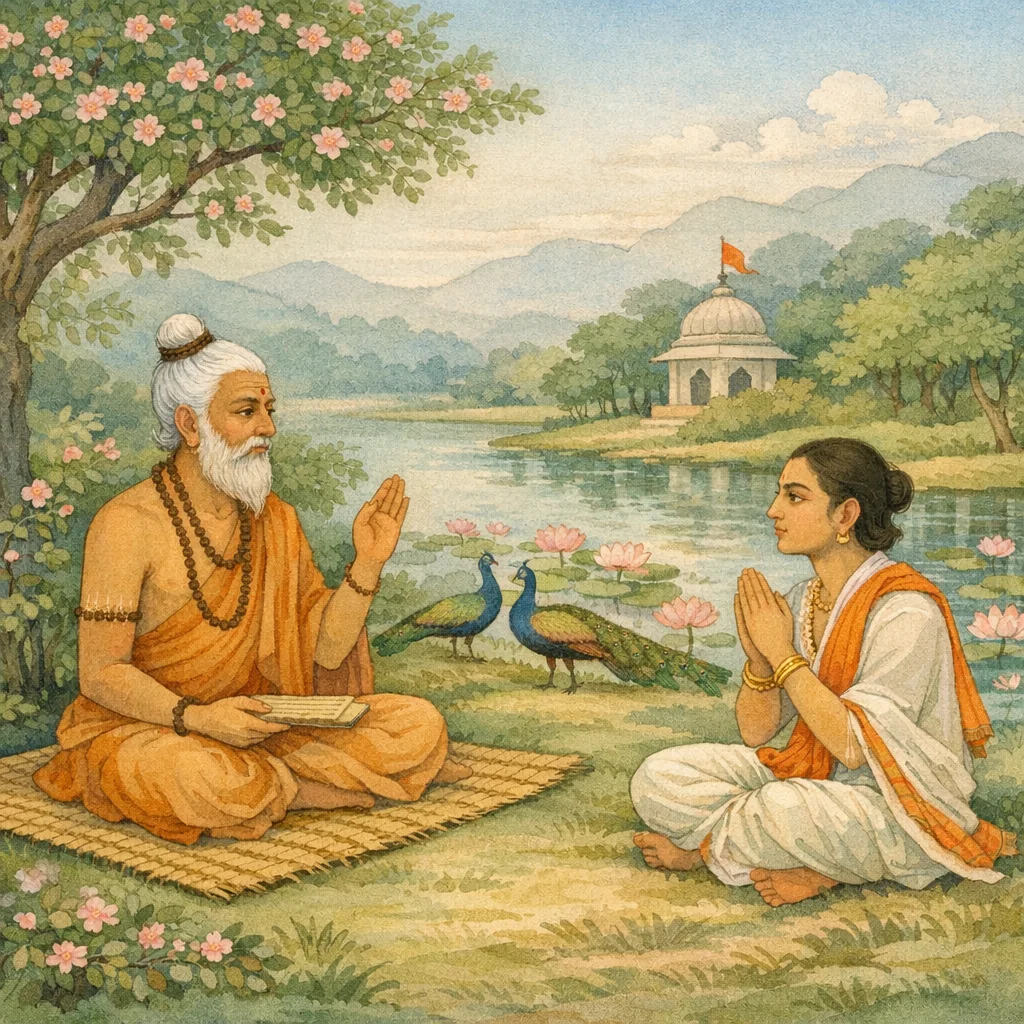
King Subāhu, though devoted to Viṣṇu and even having reached Viṣṇu’s realm, is seized by hunger and thirst and fails to obtain Viṣṇu-darśana. Vāmadeva explains that devotion shown only through rites and praise is incomplete without annadāna and allied gifts—food and offerings to brāhmaṇas, guests, ancestors, and the gods—performed as consecrated service to Viṣṇu. Teaching through the metaphor of the “field” (brāhmaṇa-kṣetra), Vāmadeva sets forth karmic causality: as one sows, so one reaps. Because Subāhu neglected food-gifts and observances such as Ekādaśī discipline, he must endure their fruit, culminating in the shocking image of consuming his own flesh. Personified Prajñā and Śraddhā laugh, exposing greed and delusion as the root of the obstruction. The chapter closes by pointing to the remedy through right instruction and practice, especially the great Vāsudeva hymn, which destroys grave sins and leads toward liberation.
Shlokas
Verse 1
सप्तनवतितमोऽध्यायः । कुंजल उवाच । एवमाकर्ण्य तां राजा मुनिना भाषितां तदा । धर्माधर्मगतिं सर्वां तं मुनिं समभाषत
Kuñjala said: Having then heard all that the sage had spoken, the king addressed that muni concerning the entire course and consequences of dharma and adharma.
Verse 2
सुबाहुरुवाच । सोहं धर्मं करिष्यामि सोहं पुण्यं द्विजोत्तम । वासुदेवं जगद्योनिं यजिष्ये नितरां मुने
Subāhu said: “I shall practice dharma; I shall perform meritorious deeds, O best of the twice-born. I will worship Vāsudeva, the source of the universe, O sage, with utmost devotion.”
Verse 3
होमेन तु जपेनैव पूजयेन्मधुसूदनम् । यष्ट्वा यज्ञं तपस्तप्त्वा विष्णुलोकं स भूपतिः
By offerings into the sacred fire and indeed by mantra-recitation alone, one should worship Madhusūdana (Viṣṇu). Having performed sacrifice and practiced austerity, that king attains the world of Viṣṇu.
Verse 4
पूजितः सर्वकामैश्च प्राप्तवान्सत्वरं मुदा । गते तस्मिन्महालोके देवदेवं न पश्यति
Having been worshipped, he quickly attained—with joy—all desired aims. But when he departed to that great world, he no longer beholds the God of gods.
Verse 5
क्षुधा जाता महातीव्रा तृष्णा चाति प्रवर्तते । तयोश्चापि महाप्राज्ञ जीवपीडाकरा बहु
Violent hunger has arisen, and thirst too has begun to press hard. Both of them, O great sage, greatly torment living beings.
Verse 6
राजापि प्रियया सार्द्धं क्षुधातृष्णाप्रपीडितः । न पश्यति हृषीकेशं दुःखेन महतान्वितः
Even a king, though accompanied by his beloved, when tormented by hunger and thirst, does not perceive Hṛṣīkeśa (Viṣṇu), being overwhelmed by great suffering.
Verse 7
सूत उवाच । एवं स दुःखितो राजा प्रियया सह सत्तम । आकुल व्याकुलो जातः पीडितः क्षुधया भृशम्
Sūta said: Thus that sorrow-stricken king, together with his beloved consort, became distressed and agitated, being severely tormented by hunger.
Verse 8
इतश्चेतश्च वेगैश्च धावते वसुधाधिपः । सर्वाभरणशोभांगो वस्त्रचंदनभूषितः
The lord of the earth ran swiftly this way and that, his limbs resplendent with every ornament, adorned with garments and sandalwood paste.
Verse 9
पुष्पमालाप्रशोभांगो हारकुंडलकंकणैः । रत्नदीप्तिप्रशोभांगः प्रययौ स महीपतिः
Adorned with garlands of flowers, and embellished with necklaces, earrings, and bracelets—his body resplendent with the radiance of jewels—that king then set forth.
Verse 10
एवं दुःखसमाचारः स्तूयमानश्च पाठकैः । दुःखशोकसमाविष्टः स्वप्रियां वाक्यमब्रवीत्
Thus, though he was being praised by the reciters, he—absorbed in sorrow and grief at the painful tidings—spoke these words to his beloved.
Verse 11
विष्णुलोकमहं प्राप्तस्त्वया सह सुशोभने । ऋषिभिः स्तूयमानोपि विमानेनापि भामिनि
O beautiful one, together with you I have reached Viṣṇu’s realm—being praised by the sages, and borne along in a celestial aerial car, O radiant lady.
Verse 12
कर्मणा केन मे चेयं क्षुधातीव प्रवर्द्धते । विष्णुलोकं च संप्राप्य न दृष्टो मधुसूदनः
By what action of mine has this affliction grown in me like hunger? Even after reaching Viṣṇu’s realm, I have not beheld Madhusūdana.
Verse 13
तत्किं हि कारणं भद्रे न भुनज्मि महत्फलम् । कर्मणाथ निजेनापि एतद्दुःखं प्रवर्त्तते
What, dear one, is the cause that I do not partake of a great reward? Even through my own deeds, this sorrow seems to arise and to continue.
Verse 14
सैवं श्रुत्वा च तद्वाक्यं राजानमिदमब्रवीत्
Having thus heard those words, he spoke this to the king.
Verse 15
भार्योवाच । सत्यमुक्तं त्वया राजन्नास्ति धर्मस्य वै फलम् । वेदशास्त्रपुराणेषु ये पठंति च ब्राह्मणाः
The wife said: “What you have spoken is true, O King: indeed, there is no fruit of dharma for those brāhmaṇas who merely recite the Vedas, the śāstras, and the Purāṇas.”
Verse 16
दुःखशोकौ विधूयेह सर्वदोषैः प्रमुच्यते । नामोच्चारेण देवस्य विष्णोश्चैव सुचक्रिणः
Here, one casts off sorrow and grief and is freed from all faults, simply by uttering the Name of Lord Viṣṇu, the bearer of the auspicious discus.
Verse 17
पुण्यात्मानो महाभागा ध्यायमाना जनार्दनम् । त्वयैवाराधितो देवः शंखचक्रगदाधरः
O virtuous and greatly fortunate ones, meditating upon Janārdana: by you alone has the Lord been worshiped—He who bears the conch, the discus, and the mace.
Verse 18
अन्नादिदानं विप्रेभ्यो न प्रदत्तं द्विजोदितम् । फलं तस्य प्रजानामि न दृष्टो मधुसूदनः
If one does not offer food and like gifts to the Brāhmaṇas, as enjoined by the twice-born, I know its result: such a person does not behold Madhusūdana (Viṣṇu).
Verse 19
क्षुधा मे बाधते राजंस्तृष्णा चैव प्रशोषयेत् । कुंजल उवाच । एवमुक्तस्तु प्रियया राजा चिंताकुलेंद्रियः
“Hunger troubles me, O king, and thirst indeed dries me up,” said Kuñjala. Thus addressed by his beloved, the king—his senses overwhelmed by anxiety—became deeply troubled.
Verse 20
ततो दृष्ट्वा महापुण्यमाश्रमं श्रमनाशनम् । दिव्यवृक्षसमाकीर्णं तडागैरुपशोभितम्
Then they beheld a supremely meritorious hermitage that dispelled fatigue, filled with celestial trees and beautified by ponds, and they proceeded onward.
Verse 21
वापीकुंडतडागैश्च पुण्यतोयप्रपूरितैः । हंसकारंडवाकीर्णं कह्लारैरुपशोभितम्
Wells, ponds, and lakes brimmed with sacred waters; it was thronged with haṃsas (swans) and kāraṇḍava ducks, and adorned by blooming kahlāra water-lilies.
Verse 22
आश्रमः शोभते पुत्र मुनिभिस्तत्त्ववेदिभिः । दिव्यवृक्षसमाकीर्णं मृगव्रातैश्च शोभितम्
“Son, this hermitage shines with sages who know the truth; it is filled with celestial trees and further adorned by herds of deer.”
Verse 23
नानापुष्पसमाकीर्णं हृद्यगंधसमाकुलम् । द्विजसिद्धैः समाकीर्णमृषिशिष्यैः समाकुलम्
It was strewn with many kinds of flowers and filled with delightful fragrance; crowded with perfected brāhmaṇas, and thronged with sages and their disciples.
Verse 24
योगियोगेंद्र संघुष्टं देववृंदैरलंकृतम् । कदलीवनसंबाधैः सुफलैः परिशोभितम्
Resounding with the acclaim of yogis and the foremost among yogis, adorned by hosts of gods, and splendid—densely filled with groves of banana trees and rich with excellent fruits.
Verse 25
नानावृक्षसमाकीर्णं सर्वकामसमन्वितम् । श्रीखंडैश्चारुगंधैश्च सुफलैः शोभितं सदा
It is filled with many kinds of trees, endowed with every desirable comfort; ever adorned with sandalwood trees of pleasing fragrance and with fine, fruitful growth.
Verse 26
एवं पुण्यं समाकीर्णं ब्रह्मलक्ष्मसमायुतम् । स सुबाहुस्ततो राजा तया सुप्रियया सह
Thus, filled with merit and endowed with the blessings of Brahmā and Lakṣmī, King Subāhu then continued on together with his beloved queen.
Verse 27
प्रविवेश महापुण्यं तद्वनं सर्वकामदम् । भासमानो दिशः सर्वा यत्रास्ते सूर्यसंनिभः
He entered that supremely meritorious forest, the fulfiller of all desires—where one, radiant like the sun, abides, illuminating all directions.
Verse 28
राजमानो महादीप्त्या परया सूर्यसंनिभः । योगासनसमारूढो योगपट्टेन संवृतः
Shining with supreme, great radiance, like the sun, he sat in a yogic posture, secured with a yoga-strap.
Verse 29
वामदेवऋषिश्रेष्ठो वैष्णवानां वरस्तथा । ध्यायमानो हृषीकेशं भुक्तिमुक्तिप्रदायकम्
Vāmadeva—the foremost of sages and the best among the Vaiṣṇavas—was meditating upon Hṛṣīkeśa, the Lord who bestows both bhukti (worldly enjoyment) and mokṣa (liberation).
Verse 30
वामदेवं महात्मानं तं दृष्ट्वा मुनिसत्तमम् । त्वरं गत्वा प्रणम्यैव स राजा प्रियया सह
Seeing Vāmadeva—the great-souled, best of sages—the king hurried forward and, together with his beloved queen, bowed down in reverence.
Verse 31
वामदेवस्ततो दृष्ट्वा प्रणतं राजसत्तमम् । आशीर्भिरभिनंद्यैव राजानं प्रिययान्वितम्
Then Vāmadeva, seeing that best of kings bowing in reverence, greeted him and blessed the king, who was attended by his beloved.
Verse 32
उपवेश्यासने पुण्ये सुबाहुं राजसत्तमम् । आसनादि ततः पाद्यैरर्घपूजादिभिस्तथा
Having seated Subāhu, the best of kings, upon an auspicious and sacred seat, he then honored him with the customary offerings—beginning with a seat, then water for the feet, arghya, worship, and the like.
Verse 33
मुनिना पूजितो भूपः प्रियया सह चागतः । अथ पप्रच्छ राजानं महाभागवतोत्तमम्
Honoured by the sage, the king arrived together with his beloved queen. Then he questioned that king—an eminent and most blessed devotee of the Lord.
Verse 34
वामदेव उवाच । त्वामहं विष्णुधर्मज्ञं विष्णुभक्तं नरोत्तमम् । जाने ज्ञानेन राजेंद्र दिव्येन चोलभूमिपम्
Vāmadeva said: “O best of men—O lord of kings, ruler of the Cola land—I know you, through divine knowledge, to be one who understands the duties taught by Viṣṇu and is devoted to Viṣṇu.”
Verse 35
निरामयश्चागतोसि तार्क्ष्यया भार्यया सह । राजोवाच । निरामयश्चागतोऽस्मि प्राप्तो विष्णोः परं पदम्
“You have returned in good health, along with Tārkṣyā, your wife.” The king said: “I too have returned in good health; I have attained the supreme abode of Viṣṇu.”
Verse 36
मया हि परया भक्त्या देवदेवो जनार्दनः । आराधितो जगन्नाथो भक्तिप्रीतः सुरेश्वरम्
For I, with supreme devotion, worshipped Janārdana—the God of gods, the Lord of the universe; and that Lord, pleased by devotion, became gracious even toward the Lord of the gods.
Verse 37
कस्मात्पश्याम्यहं तात न देवं कमलापतिम् । क्षुधा मे बाधते तात तृष्णातीव सुदारुणा
Why, dear father, do I not behold the Lord, the divine consort of Kamalā (Lakṣmī)? Hunger torments me, father, and a most dreadful thirst as well.
Verse 38
ताभ्यां शांतिं न गच्छाव सुखं विंदाव नैव च । एतन्मेकारणं दुःखं संजातं मुनिसत्तम
Because of those two, we attain neither peace nor happiness. This alone is the cause of the sorrow that has arisen in me, O best of sages.
Verse 39
तन्मे त्वं कारणं ब्रूहि प्रसादात्सुमुखो भव । वामदेव उवाच । त्वं तु भक्तोसि राजेंद्र श्रीकृष्णस्य सदैव हि
“Tell me the reason for that; out of grace, be kindly disposed.” Vāmadeva said: “O best of kings, you are indeed always a devotee of Śrī Kṛṣṇa.”
Verse 40
आराधितस्त्वया भक्त्या परया मधुसूदनः । भक्त्योपचारैः स्नानाद्यैर्गंधपुष्पादिभिस्तथा
Madhusūdana has been worshiped by you with supreme devotion—through devotional offerings such as bathing rites and the like, and likewise with fragrances, flowers, and other acts of reverence.
Verse 41
न पूजितोऽथ नैवेद्यैः फलैश्च जगतांपतिः । दशमीं प्राप्य राजेंद्र त्वयैव च सदा कृतम्
O king of kings, the Lord of the worlds has not (otherwise) been worshiped with offerings of food and fruits; rather, it is you alone who always performs this worship upon the arrival of the tenth lunar day, Daśamī.
Verse 42
एकभक्तं न दत्तं तु ब्राह्मणाय सुभोजनम् । एकादशीं तु संप्राप्य न कृतं भोजनं त्वया
You did not offer a fine meal to a brāhmaṇa under the one-meal vow; and when Ekādaśī arrived, you did not observe abstinence from eating.
Verse 43
विष्णुमुद्दिश्य विप्राय न दत्तं भोजनं त्वया । अन्नं चामृतरूपेण पृथिव्यां संस्थितं सदा
You did not give food to a brāhmaṇa, dedicating it to Viṣṇu. Yet food—ever abiding upon the earth—stands established in its true nature as amṛta, nectar.
Verse 44
अन्नदानं विशेषेण कदा दत्तं न हि त्वया । ओषध्यश्च महाराज नानाभेदास्तु ताः शृणु
You have never, in particular, bestowed the gift of food. And as for medicinal herbs, O great king—listen to their many kinds.
Verse 45
कटु तिक्त कषायाश्च मधुराम्लाश्च क्षारकाः । हिंग्वाद्योपस्कराः सर्वे नानारूपाश्च भूपते
Pungent, bitter, and astringent substances, as well as sweet and sour ones, and alkaline salts—together with all seasonings beginning with hiṅgu (asafoetida)—exist in many varieties, O king.
Verse 46
अमृताज्जज्ञिरे सर्वा ओषध्यः पुष्टिहेतवः । अन्नमेव सुसंस्कृत्य औषधव्यंजनान्वितम्
From amṛta arose all medicinal herbs, which are the causes of nourishment. Therefore one should prepare food well, combining it with healing herbs and fitting seasonings.
Verse 47
देवेभ्यो विष्णुरूपेभ्य इति संकल्प्य दीयते । पितृभ्यो विष्णुरूपेभ्यो हस्ते च ब्राह्मणस्य हि
Having resolved, “This is offered to the devas who are in the form of Viṣṇu,” one should give the offering. Likewise one should resolve, “to the ancestors who are in the form of Viṣṇu,” for indeed it is placed into the hand of a brāhmaṇa.
Verse 48
अतिथिभ्यस्ततो दत्वा परिजनं प्रभोजयेत् । स्वयं तु भुंजते पश्चात्तदन्नममृतोपमम्
After first giving to the guests, one should feed one’s own family; only afterward should one eat—such food is said to be like nectar.
Verse 49
प्रेत्य दुःखं न चैवास्ति तस्य सौख्यं तु भूपते । ब्राह्मणाः पितरो देवाः क्षत्ररूपाश्च भूपते
After death there is no suffering for him; rather, O king, there is happiness for him. The Brāhmaṇas, the Pitṛs (ancestors), and the gods—appearing in the form of Kṣatriyas—bestow that grace, O king.
Verse 50
यथा हि कर्षकः कश्चित्सुकृषिं कुरुते सदा । तद्वन्मर्त्यः कृषिं कुर्यात्क्षेत्रे विप्रास्यके नृप
Just as a farmer continually performs good cultivation, so too, O king, should a mortal ‘cultivate’ merit in the field belonging to a brāhmaṇa.
Verse 51
स्वभावलांगलेनापि श्रद्धा शस्त्रेण भेदयेत् । वृषभौ तु मतौ नित्यं बुद्धिश्चैव तपस्तथा
Even with the plough of one’s own nature, one should cut through obstacles with the weapon of faith. Right conviction is ever the bull that draws the work, and so too are discernment and austerity.
Verse 52
सत्यज्ञानानुभावीशः शुद्धात्मा तु प्रतोदकः । विप्रनाम्नि महाक्षेत्रे नमस्कारैर्विसर्जयेत्
The Lord, empowered by true knowledge and pure in essence, is indeed the sacred Pratodaka. In the great holy field called Vipranāma, one should take leave of it with reverent salutations.
Verse 53
स्फोटयेत्कल्मषं नित्यं कृषिको हि यथा नृप । क्षेत्रस्य उद्यमे युक्तो विष्णुकामः प्रसादयेत्
O king, just as a farmer ever drives away the impurities of his field, so should one devoted to Viṣṇu—engaged in cultivating the sacred kṣetra—continually cast off sin and thereby please Him.
Verse 54
तद्वद्वाक्यैः शुभैः पुण्यैर्विप्रांश्चापि प्रसादयेत् । पर्वतीर्थाप्तिकालश्च घनरूपोभिवर्षणे
Likewise, with auspicious and meritorious words one should also win the favor of the brāhmaṇas. And when the time comes to reach the mountain tīrtha, the rain pours down thickly, as though a cloud had taken form.
Verse 55
वप्तुकामो भवेत्क्षेत्री ततः क्षेत्रे प्रवापयेत् । तद्वद्भूपप्रसन्नाय विप्राय परिदीयते
If a farmer wishes to sow, he should first prepare the field and then cast the seed into that field. In the same way, a gift should be offered to a brāhmaṇa who is well-disposed and favorable toward the king.
Verse 56
क्षेत्रस्य उप्तबीजस्य यथा क्षेत्री प्रभुंजति । फलमेव महाराज तथा दाता भुनक्ति च
Just as the owner of a field enjoys the fruit of the seed sown within it, so too, O great king, does the giver enjoy the fruit of his gift.
Verse 57
प्रेत्य चात्रैव नित्यं च तृप्तो भवति नान्यथा । ब्राह्मणाः पितरो देवाः क्षेत्ररूपा न संशयः
After death—and also here in this very life—one becomes truly satisfied, and not otherwise. Brāhmaṇas, the Pitṛs (ancestors), and the Devas are indeed present in the form of the sacred kṣetra; of this there is no doubt.
Verse 58
मानवानां महाराज वापिताः प्रददंति च । फलमेवं न संदेहो यादृशं तादृशं ध्रुवम्
O great king, the reservoirs—ponds and tanks—that people cause to be built also bestow their fruit. Of this there is no doubt: the result is surely according to the deed—just as it is, so it becomes.
Verse 59
कटुकाद्धि न जायेत राजन्मधुर एव च । तद्वच्च मधुराख्याच्च न जायेत्कटुकः पुनः
From what is pungent, O King, only pungency arises—not sweetness. Likewise, from what is called “sweet,” pungency does not arise again.
Verse 60
यादृशं वपते बीजं तादृशं फलमश्नुते । न वापयति यः क्षेत्रं न स भुंजति तत्फलम्
As one sows the seed, so does one eat the fruit. He who does not sow in the field does not partake of its harvest.
Verse 61
तद्वद्विप्राश्च देवाश्च पितरः क्षेत्ररूपिणः । दर्शयंति फलं राजन्दत्तस्यापि न संशयः
Likewise, O King, the brāhmaṇas, the gods, and the ancestors—present in the very form of the sacred field—indeed reveal the fruit of a gift; of this there is no doubt.
Verse 62
यादृशं हि कृतं कर्म त्वयैव च शुभाशुभम् । तादृशं भुंक्ष्व वै राजन्नन्यथा तन्न जायते
For whatever deed—good or evil—you yourself have done, O King, you must indeed experience its corresponding result; it does not turn out otherwise.
Verse 63
न पुरा देवविप्रेभ्यः पितृभ्यश्च कदाचन । मिष्टान्नपानमेवापि दत्तं सुमनसा तदा
Formerly, at no time did he ever give to the gods, to the Brahmins, or to the ancestors—nor even offer sweet food and drink—with a willing and cheerful heart.
Verse 64
सुभोज्यैर्भोजनैर्मृष्टैर्मधुरैश्चोष्यपेयकैः । सुभक्ष्यैरात्मना भुक्तं कस्मै दत्तं न च त्वया
You yourself have eaten fine foods—delicacies, sweet dishes, and drinks—along with choice edibles; yet to whom have you given anything? Indeed, you have given nothing.
Verse 65
स्वशरीरं त्वया पुष्टमन्नैरमृतसन्निभैः । यस्मात्कृतं महाराज तस्मात्क्षुधा प्रवर्तते
Because your own body has been nourished by foods that are like nectar, O great king, therefore hunger arises—since the body has been constituted and sustained by that nourishment.
Verse 66
कर्मैव कारणं राजन्नराणां सुखदुःखयोः । जन्ममृत्य्वोर्महाभाग भुंक्ष्व तत्कर्मणः फलम्
O King, karma alone is the cause of people’s happiness and sorrow. O fortunate one, in birth and in death you must experience the fruit of that very karma.
Verse 67
पूर्वेपि च महात्मानो दिवं प्राप्ताः स्वकर्मणा । पुनः प्रयाता भूर्लोकं कर्मणः क्षयकालतः
Even in former times, great souls reached heaven by their own deeds; yet, when the merit of those deeds was exhausted, they returned again to the earthly world.
Verse 68
नलो भगीरथश्चैव विश्वामित्रो युधिष्ठिरः । कर्मणैव हि संप्राप्ताः स्वर्गं राजन्स्वकालतः
Nala, Bhagiratha, Viśvāmitra, and Yudhiṣṭhira too—by their deeds alone they attained heaven, O King, each in his own appointed time.
Verse 69
दिष्टं हि प्राक्तनं कर्म तेन दुःखं सुखं लभेत् । तदुल्लंघयितुं राजन्कः समर्थोपि हीश्वरः
Indeed, it is destiny—one’s former karma—by which a person attains sorrow or happiness. O King, who, even if powerful, can truly overstep that ordained law?
Verse 70
अथ तस्मान्नृपश्रेष्ठ स्वर्गतस्यापि तेऽभवत् । क्षुत्तृष्णासंभवो वेगस्ततो दुष्टं हि कर्म ते
Then, O best of kings, even though you had attained heaven, there arose in you a surge born of hunger and thirst; therefore your conduct became wicked.
Verse 71
यदि ते क्षुत्प्रतीकारो ह्यभीष्टो नृपसत्तम । तद्गत्वा भुंक्ष्व कायं स्वमानंदारण्यसंस्थितम्
O best of kings, if you truly wish to remedy your hunger, then go there and partake of your own body that remains situated in the Ānandāraṇya (Forest of Bliss).
Verse 72
तव चेयं महाराज्ञी क्षुत्क्षामातीव दृश्यते । सुबाहुरुवाच । कियत्कालमिदं कर्म कर्तव्यं प्रियया सह
And this queen of yours, O great king, appears utterly emaciated from hunger. Subāhu said: “For how long must this act be performed together with my beloved?”
Verse 73
तन्मे ब्रूहि महाभागानुग्रहो दृश्यते कदा । कस्य दानेन किं पुण्यं द्रव्यस्य मुनिसत्तम
Therefore tell me, O greatly fortunate one: when does divine favor become manifest? And by the gift of what kind of wealth does what kind of merit arise, O best of sages?
Verse 74
तत्प्रब्रूहि महाप्राज्ञ यदि तुष्टोसि सांप्रतम् । वामदेव उवाच । अन्नदानान्महासौख्यमुदकस्य महामते
Therefore, O greatly wise one, if you are pleased at present, then tell it.” Vāmadeva said: “From the gift of food comes great happiness; and likewise from the gift of water, O great-minded one.”
Verse 75
भुंजंति मर्त्याः स्वर्गं वै पीड्यंते नैव पातकैः । यदा दानं न दत्तं तु भवेदपि हि मानवैः
Mortals indeed enjoy heaven and are not afflicted by sins when charity has truly been given by people; but when human beings do not give dāna, they do become tormented.
Verse 76
मृत्युकालेपि संप्राप्ते दानं सर्वे ददंति च । आदावेव प्रदातव्यमन्नं चोदकसंयुतम्
Even when the time of death has arrived, everyone gives charity. But food, accompanied by water, should be given beforehand, in good time.
Verse 77
सुच्छत्रोपानहौ दद्याज्जलपात्रं सुशोभनम् । भूमिं सुकांचनं धेनुमष्टौ दानानि योऽर्पयेत्
Let one give a fine umbrella and footwear, and a beautiful water-vessel; also land, good gold, and a cow—whoever offers these fulfills the eight prescribed gifts.
Verse 78
स्वर्गे न जायते तस्य क्षुधातृष्णादिसंभवः । क्षुधा न बाधते राजन्नन्नदानात्स तृप्तिमान्
In heaven, hunger, thirst, and the like do not arise for him. O king, hunger does not afflict him—for by giving food he becomes fulfilled.
Verse 79
तृष्णा तीव्रा नहि स्याद्वै तृप्तो भवति सर्वदा । पादुकायाः प्रदानेन च्छत्रदानेन भूपते
O king, by gifting sandals and by gifting a parasol, one’s intense craving does not arise; one remains content at all times.
Verse 80
छायामाप्नोति दाता वै वाहनं च नृपोत्तम । उपानहप्रदानेन अन्यदेवं वदाम्यहम्
O best of kings, the giver surely obtains shade and also a vehicle. Now I shall speak of another result that comes from the gift of footwear.
Verse 81
भूमिदानान्महाभाग सर्वकामानवाप्नुयात् । गोदानेन महाराज रसैः पुष्टो भवेत्सदा
O fortunate one, by gifting land a person attains all desired aims. And, O great king, by gifting a cow one becomes ever nourished and strengthened with vital essences.
Verse 82
सर्वान्भोगान्प्रभुंजानः स्वर्गलोके वसेन्नरः । तृप्तो भवति वै दाता गोदानेन न संशयः
Enjoying every comfort, a man dwells in the heavenly world; indeed, the donor becomes fully satisfied through the gift of a cow—of this there is no doubt.
Verse 83
नीरुजः सुखसंपन्नः संतुष्टस्तु धनान्वितः । कांचनेन सुवर्णस्तु जायते नात्र संशयः
He becomes free from disease, endowed with happiness, content, and possessed of wealth; and by the offering or use of kāñcana, one obtains gold—of this there is no doubt.
Verse 84
श्रीमांश्च रूपवांस्त्यागी रत्नभोक्ता भवेन्नरः । मृत्युकाले तु संप्राप्ते तिलदानं प्रयच्छति
A man becomes prosperous and handsome, generous in spirit, and an enjoyer of precious treasures; and when the time of death arrives, he offers tiladāna, the gift of sesame.
Verse 85
सर्वभोगपतिर्भूत्वा विष्णुलोकं प्रयाति सः । एवं दानविशेषेण प्राप्यते परमं सुखम्
Becoming the lord of all enjoyments, he attains the world of Viṣṇu (Viṣṇuloka). Thus, by this particular excellence of giving, the highest happiness is obtained.
Verse 86
गोदानं भूमिदानं तु अन्नोदके च वै त्वया । जीवमानेन राजेंद्र न दत्तं ब्राह्मणाय वै
O king, while you were alive you did not give to a brāhmaṇa the gift of cows, the gift of land, nor gifts of food and water.
Verse 87
मृत्युकालेपि नो दत्तं तस्मात्क्षुधा प्रवर्तते । एतत्ते कारणं प्रोक्तं जातं कर्मवशानुगम्
Because you did not give in charity even at the time of death, therefore hunger afflicts you. This is the cause I have explained to you—arising in accordance with the compulsion of past karma.
Verse 88
यादृशं तु कृतं कर्म तादृशं परिभुज्यते । सुबाहुरुवाच । कथं क्षुधा प्रशांतिं मे प्रयाति मुनिसत्तम
As is the deed one has done, so is the fruit one must undergo. Subāhu said: “O best of sages, how shall my hunger come to rest?”
Verse 89
अनया शोषितः कायो ह्यतीव परिदूयते । क्षुधां प्रति द्विजश्रेष्ठ प्रायश्चित्तं वदस्व नौः
By this hunger our body has been dried up and suffers exceedingly. O best of brāhmaṇas, tell us the expiation (prāyaścitta) to be performed with regard to hunger.
Verse 90
कर्मणश्चास्यघोरस्य यथा शांतिर्भवेन्मम । वामदेव उवाच । प्रायश्चित्तं न चैवास्ति ऋतेभोगान्नृपोत्तम
“How may I find peace regarding this dreadful deed?” Vāmadeva said: “O best of kings, there is no expiation for it—except by undergoing its fruits.”
Verse 91
कर्मणोस्य फलं सर्वं भवान्स्वस्थः प्रभोक्ष्यति । यत्र ते पतितः कायः प्रियायाश्चैव भूपते
O king, you will in safety undergo the entire fruit of this deed—at that very place where your body has fallen, along with your beloved’s, O lord of the earth.
Verse 92
युवाभ्यां हि प्रगंतव्यमितश्चैव न संशयः । उभाभ्यामपि भोक्तव्यं कायमक्षयमेव तत्
Both of you must indeed depart from here—of this there is no doubt. And that imperishable state is to be enjoyed by you both.
Verse 93
स्वंस्वं राजन्न संदेहस्त्वया वै प्रियया सह । राजोवाच । कियत्कालं प्रभोक्तव्यं मयैवं प्रियया सह
“O King, let each person be certain in his own resolve—especially you, together with your beloved.” The King said: “For how long, O Lord, must I enjoy (this life) in this manner with my beloved?”
Verse 94
तदादिश महाभाग प्रमाणं तद्वचो मम । वामदेव उवाच । वासुदेव महास्तोत्रं महापातकनाशनम्
“Therefore, O greatly fortunate one, please instruct (me); your word is authoritative for me.” Vāmadeva said: “The great hymn to Vāsudeva is a destroyer of the gravest sins.”
Verse 95
यदा त्वं श्रोष्यसे पुण्यं तदा मोक्षं प्रयास्यसि । एतत्ते सर्वमाख्यातं गच्छ राजन्प्रभुंक्ष्वहि
When you hear this sacred and meritorious teaching, then you will attain liberation. All of this has been explained to you—go now, O king, and enjoy sovereignty here (in this world).
Verse 96
एवं श्रुत्वा ततो राजा भार्यया सह वै पुनः । स्वशरीरस्य वै मांसं भक्षते प्रियया सह
Having heard this, the king then again, together with his wife, ate the flesh of his own body along with his beloved.
Verse 97
इति श्रीपद्मपुराणे भूमिखंडे वेनोपाख्याने गुरुतीर्थमाहात्म्ये । च्यवनचरित्रे सप्तनवतितमोऽध्यायः
Thus ends the ninety-seventh chapter of the Śrī Padma Purāṇa, in the Bhūmi-khaṇḍa—within the narrative of Vena, in the glorification of Guru-tīrtha, and in the account of Cyavana.
Verse 98
यथायथा च राजा च भक्षते च कलेवरम् । हसेते वै सदा नार्यौ तयोर्भावं वदाम्यहम्
As the king, again and again, consumes the body, the two women continually laugh; I shall explain their intention.
Verse 99
प्रज्ञा सार्द्धं महासाध्वी चरित्रं तस्य भूपतेः । हास्यं हि कुरुते नित्यं तस्य श्रद्धानपायिनी
O king, that supremely virtuous lady—together with wisdom—continually brings forth a gentle laughter; her faith never departs from him.
Verse 100
प्रज्ञया प्रेर्यमाणेन न दत्तं श्रद्धयान्वितम् । ब्राह्मणेभ्यः सुसंकल्प्य अन्नमुद्दिश्य वैष्णवे
Food that is not given with faith—given merely under the prompting of one’s own calculating intellect—should be offered with a pure resolve to brāhmaṇas, dedicating it to a Vaiṣṇava (Viṣṇu).
Verse 101
एवं स भक्षते मांसं स्वस्य कायस्य नित्यदा । योषिदप्यात्मकायं च रसैश्चामृतसन्निभैः
Thus he continually eats the flesh of his own body; and a woman too (consumes) her own body, by indulging in pleasures whose tastes seem like nectar.
Verse 102
ततो वर्षशतांते तु वामदेवं महामुनिम् । स्मृत्वा स गर्हयामास आत्मानं प्रति सुव्रत
Then, at the end of a hundred years, remembering the great sage Vāmadeva, that noble one reproached himself.
Verse 103
न दत्तं पितृदेवेभ्यो ब्राह्मणेभ्यः कदा मया । न दत्तमतिथिभ्यो हि वृद्धेभ्यश्च विशेषतः
“Never have I given anything to the Pitṛs and the gods, nor ever to the brāhmaṇas. Indeed, I have not given to guests, and especially not to the elderly.”
Verse 104
दीनेभ्यो हि न दत्तं च कृपया चातुराय च । एवं स भुंक्ते स्वं मांसं गर्हयन्स्वीय कर्म च
For one who, even while speaking of compassion, does not give to the poor and distressed, this is the fruit: he ends up “eating his own flesh,” while condemning his own deeds.
Verse 105
एवं स्वमांसं भुंजानं सुबाहुं प्रियया सह । हसेते च तदा दृष्ट्वा प्रज्ञा श्रद्धा च द्वे स्त्रियौ
Thus, seeing Subāhu eating his own flesh together with his beloved, the two women—Prajñā (Wisdom) and Śraddhā (Faith)—laughed at that moment.
Verse 106
तस्य कर्मविपाकस्य शुभात्मा हसते नृप । मम संगप्रसंगेन न दत्तं पापचेतन
O king, the noble-hearted person laughs at the ripening of that karma. Through association with me, the sinful-minded one did not give in charity.
Verse 107
प्रज्ञा च वचनैस्तैस्तु राजानं हसते पुनः । क्वगतोसौ महामोहो येन त्वं मोहितो नृप
And Wisdom, Prajñā, by those very words, again laughed at the king: “Where has that great delusion gone by which you, O king, were bewildered?”
Verse 108
लोभेन मोहयुक्तेन तमोगर्ते निपात्यते । तत्रापतित्वा मामैव पतितं दुःखसंकटे
Through greed, joined with delusion, one is cast into the pit of darkness. Having fallen there, one finds oneself sunk in a perilous snare of suffering.
Verse 109
दानमार्गं परित्यज्य लोभमार्गं गतो नृप । भार्यया सह भुंक्ष्व त्वं व्यापितः क्षुधया भृशम्
O king, having abandoned the path of charity, you have taken to the path of greed. Eat now together with your wife—you are severely afflicted by hunger.
Verse 110
एवं तं हसते प्रज्ञा सुबाहुं प्रिययान्वितम् । एतद्धि कारणं सर्वं तयोर्हासस्य पुत्रक
Thus did the wise lady laugh at Subāhu, who was accompanied by his beloved. “Indeed, dear son, this is the entire reason for the laughter of them both.”
Verse 111
भक्ष्यमाणस्य भूपस्य देहं स्वं दुःखिते तदा । ऊचतुर्देहिदेहीति याच्यमानः सदैव हि
When the king was being devoured and his own body was in agony, they repeatedly cried, “Give! Give!”—for he was continually being begged (to give).
Verse 112
क्षुधातृष्णामहाप्राज्ञ भीमरूपे भयानके । पयसा मिश्रितं भक्षं याचेते नृपतीश्वरम्
O highly wise one, hunger and thirst—appearing in dreadful, terrifying forms—begged the lord of kings for food mixed with milk.
Verse 113
एतत्ते सर्वमाख्यातं यत्त्वया परिपृच्छितम् । अन्यत्किं ते प्रवक्ष्यामि तद्वदस्व महामते
All this has been declared to you—everything you asked. What else shall I tell you? Speak, O great-minded one.
Verse 114
विज्वल उवाच । वासुदेवाभिधानं तत्स्तोत्रं कथय मे पितः । येन मोक्षं व्रजेद्राजा तद्विष्णोः परमं पदम्
Vijvala said: O father, tell me that hymn known as the “Vāsudeva” (stotra), by which a king may attain liberation and reach the supreme abode of Viṣṇu.