Adhyaya 8
Womb-Suffering and the Path to Liberation (Dialogue of Wisdom, Meditation, and Discernment)
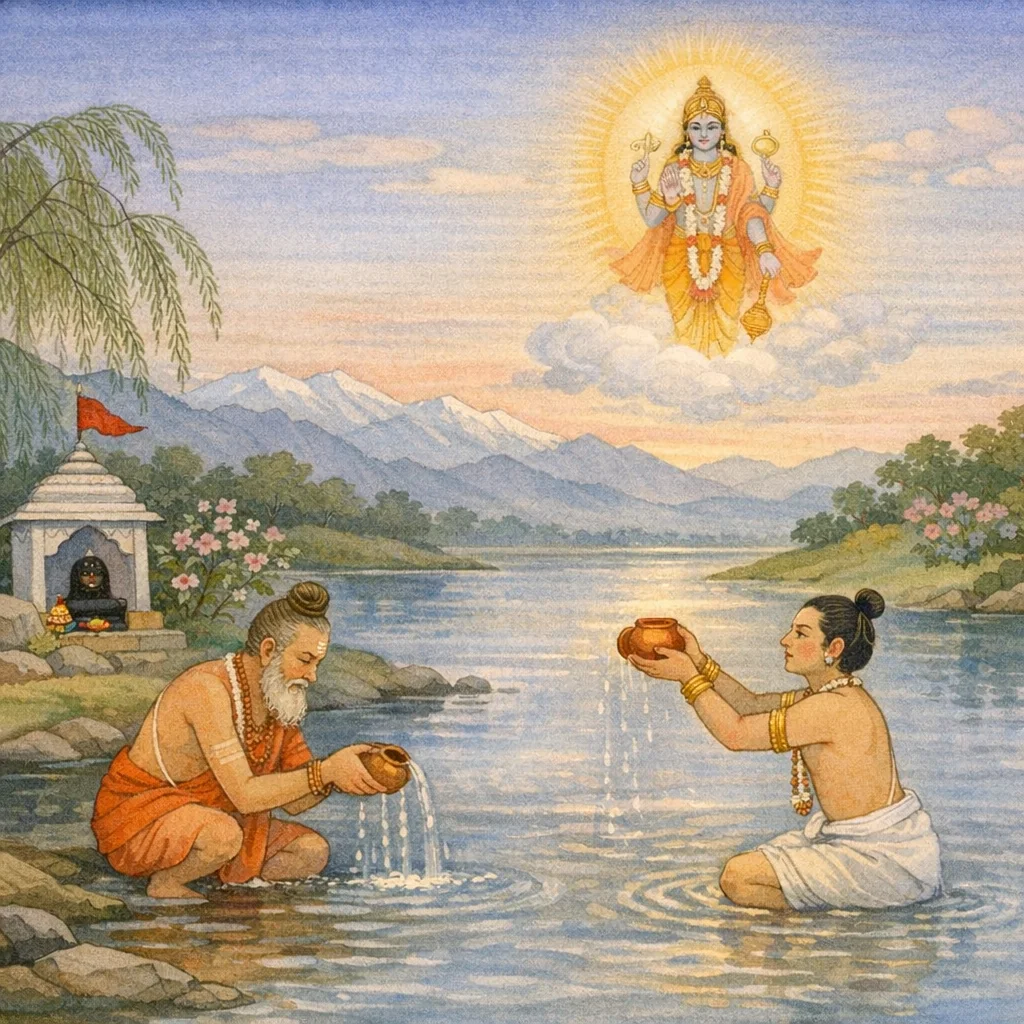
PP.2.8 portrays saṃsāra as an inner captivity beginning in the womb: the embryo suffers, forgets its knowledge at birth, and becomes ensnared by māyā, kinship, and sense-objects. Personified aids—Jñāna (Wisdom), Dhyāna (Meditation), Vītarāga (Dispassion), and Viveka (Discernment)—appear as rescuers and teachers. Śiva’s instruction to Devī emphasizes bodily pain and the metaphysical tragedy of the ātman’s forgetfulness. A philosophical interlude debates nakedness, shame (lajjā), and social propriety, turning toward non-dual intimations and the Puruṣa–Prakṛti framework. The chapter ends with practical yogic counsel—steadiness like a windless lamp, solitude, moderation, and self-meditation—promising attainment of Viṣṇu’s supreme abode.
Shlokas
Verse 1
कश्यप उवाच । स गर्भे व्याकुलो जातः खिद्यमानो दिने दिने । दुःखाक्रांतो हि धर्मात्मा सर्वपीडाभिपीडितः
Kaśyapa said: Even in the womb he became distressed, growing more afflicted day by day; that righteous-souled one was overwhelmed by sorrow, oppressed by every kind of suffering.
Verse 2
अधोमुखस्तु गर्भस्थो मोहजालेन बंधितः । आधिव्याधिसमाक्रांतो हाहाभूतो विचेतनः
Facing downward in the womb, the embryo is bound by a net of delusion; afflicted by mental anguish and bodily disease, it becomes helpless—crying “alas, alas”—and falls into unconsciousness.
Verse 3
दुःखेन महताविष्टो ज्ञानमाह प्रपीडितः । आत्मोवाच । तव वाक्यं महाप्राज्ञ न कृतं तु मया तदा
Overwhelmed by great sorrow and oppressed by distress, Jñāna spoke. The Self said: “O great sage, I did not act upon your words at that time.”
Verse 4
ध्यानेन वार्यमाणोपि पतितो मोहसंकटे । तस्माद्रक्ष महाप्राज्ञ गर्भवासात्सुदारुणात्
Though restrained by meditation, one may still fall into the peril of delusion. Therefore, O greatly wise one, protect me from the exceedingly dreadful dwelling in the womb.
Verse 5
ज्ञानमुवाच । मया त्वं वारितो ह्यात्मन्कृतं वाक्यं न चैव मे । पंचात्मकैर्महाक्रूरैः पातितो गर्भसंकटे
Jñāna said: “O dear one, I did warn you, but my words were not heeded. By the exceedingly cruel, fivefold forces, you have been cast into the peril of the womb.”
Verse 6
इदानीं गच्छ त्वं ध्यानं तस्मात्संप्राप्स्यसे सुखम् । गर्भवासाद्भविष्यस्ते मोक्ष एव न संशयः
Now go and enter meditation; from that you will attain happiness. And through dwelling in the womb, liberation itself will come to you—of this there is no doubt.
Verse 7
तस्य तद्वचनं श्रुत्वा ज्ञात्वा ज्ञानस्य तत्त्वताम् । ध्यानमाहूय प्रोवाच श्रूयतां वचनं मम
Having heard his words and understood the true principle of knowledge, he then summoned Dhyāna and said, “Let my words be heard.”
Verse 8
त्वामहं शरणं प्राप्तो ध्यान मां रक्ष नित्यशः । एवमस्तु महाप्राज्ञ ध्यानमाह महामतिम्
“I have come to you for refuge. O Dhyāna, protect me always.” “So be it, O greatly wise one,” said Dhyāna to that noble-minded person.
Verse 9
एतद्वाक्यं ततः श्रुत्वा आत्मा वै ध्यानमागतः । ध्यानेन हि समं गर्भे संस्थितो मोहवर्जितः
Having heard these words, the Self indeed entered meditation; and through that meditation, abiding steadily within the womb, he became free from delusion.
Verse 10
यदा ध्यानं गतो ह्यात्मा विस्मृतं गर्भजं भयम् । स द्वाभ्यां सहितस्तत्र आत्मा मोह विना कृतः
When the Self indeed entered meditation, the fear born of embodiment was forgotten; then, accompanied there by the two, the Self was rendered free from delusion.
Verse 11
चिंतयन्नेव वै नित्यमात्मकं सुखमेव हि । इतो निष्क्रांतमात्रस्तु त्यजे पंचात्मकं वपुः
Constantly contemplating the bliss that is the Self alone, one who has just departed from here abandons the body made of the five constituents.
Verse 12
एवं चिंतयते नित्यं गर्भवासगतः प्रभुः । सूतिकाले तु संप्राप्ते प्राजापत्ये वरानने
Thus the Lord, abiding in the womb, continually reflects. And when the time of delivery arrives, O fair-faced one, it occurs by the ordinance of Prajāpati.
Verse 13
वायुना चलितो गर्भः प्राणेनापि बलीयसा । योनिर्विकासमायाति चतुर्विंशांगुलं तदा
Moved by the vital wind—stronger even than the life-breath—the embryo is set in motion; then the womb opens and expands to twenty-four finger-breadths.
Verse 14
पंचविंशांगुलो गर्भस्तेन पीडा विजायते । एवं संपीड्यमानस्तु मूर्च्छया मूर्च्छितः प्रिये
When the embryo reaches a length of twenty-five finger-breadths, intense pain arises. Thus, being pressed and constricted in that way, it falls into a swoon—overcome by faintness, O beloved.
Verse 15
पतितो भूमिभागे तु ज्ञानध्यानसमन्वितः । प्राजापत्येन दिव्येन वायुना स पृथक्कृतः
Fallen upon a tract of earth, yet endowed with knowledge and meditation, he was separated (from the rest) by a divine, Prajāpati-born wind.
Verse 16
भूमिसंस्पर्शमात्रेण ज्ञानध्याने तु विस्मृते । संसारबंधसंदिग्ध आत्मा प्रियतया स्थितः
By the mere contact with the earth, when knowledge and meditation are forgotten, the self—uncertain and entangled in the bonds of worldly existence—remains fixed in attachment and fondness.
Verse 17
गुणदोषसमाक्रांतो महामोहसमन्वितः । खाद्यं पानादिकं सर्वमिच्छत्येव दिनेदिने
Overpowered by virtues and faults alike, and possessed by great delusion, he craves all kinds of food, drink, and the like—day after day.
Verse 18
एवं संपुष्यमाणस्तु आत्मा पंचात्मकैः सह । व्यापितो हींद्रियैः सर्वैर्विषयैः पापकारिभिः
Thus, as it is continually nourished, the self—together with the fivefold constituents—becomes pervaded by all the sense-organs and by their objects, which lead to sin.
Verse 19
बांधवानां समोहेन भार्यादीनां तथैव च । आकुलव्याकुलो देवि जायते च दिनेदिने
O Goddess, pressed by crowds of relatives—and likewise by wife and other dependents—one becomes ever more agitated and unsettled, day after day.
Verse 20
महामोहेन संदिग्धो मोहजालगतः प्रभुः । कैवर्तेन यथा बद्धः शकुलो जालबंधनैः
Bewildered by great delusion, the lord fell into the net of infatuation—like a fish bound fast in the meshes of a fisherman’s net.
Verse 21
चलितुं नैव शक्तोस्ति तथात्मासीत्प्रबंधितः । मोहजालैस्तु तैः सर्वैर्दृढबंधैस्तु बंधितः
He was not able to move at all; his very self had become restrained. Ensnared in those nets of delusion, he was bound fast by firm bonds on every side.
Verse 22
एवमादिप्रपंचेन व्यापितो व्यापकेन हि । ज्ञानविज्ञानविभ्रष्टो रागद्वेषादिभिर्हतः
Thus, within this manifold display, pervaded by the all-pervading Lord, one is deprived of true knowledge and realized discernment, and is struck down by attachment, aversion, and the like.
Verse 23
कामेन पीड्यमानस्तु क्रोधेनैव तथैव वा । प्रकृत्या कर्मणाबद्धो महामूढो व्यजायत
Afflicted by desire—or likewise by anger—bound by nature and by his own actions, the utterly deluded one comes to be born again.
Verse 24
सूत उवाच । एवं मूढो यदात्मासौ कामक्रोधवशंगतः । लोभरागादिभिः सर्वैर्व्यापृतस्तैर्दुरात्मभिः
Sūta said: Thus, when a person is deluded and comes under the sway of desire and anger, he is wholly occupied by all those evil dispositions—greed, attachment, and the rest.
Verse 25
इयं भार्या ह्ययं पुत्र इदं मित्रमिदं गृहम् । एवं संसारजालेन महामोहेन बंधितः
“This is my wife; this is my son; this is my friend; this is my home”—thus, through great delusion, one becomes bound in the net of worldly existence.
Verse 26
पुत्रशोकादिभिर्दुःखैर्विविधैराकुलस्तदा । जरयाव्याधिभिश्चैव संग्रस्तश्चाधिभिस्तथा
Then he is overwhelmed by many kinds of sorrow—such as grief for a son—and is likewise afflicted by old age and disease, and beset by various torments of the mind.
Verse 27
एवमात्मा संप्रतप्तो दुःखमोहैः सुदारुणैः । अभिमानैर्मानभंगैर्नानादुःखैश्च खंडितः
Thus the self, scorched by exceedingly cruel sorrow and delusion, is shattered by pride, by the breaking of one’s honor, and by many kinds of suffering.
Verse 28
वृद्धत्वेन तथा देवि शबलत्वेन पीडितः । दुःखं चिंतयते नित्यं हाहाभूतो विचेतनः
Afflicted, O Goddess, by old age and debility, he constantly broods on sorrow—crying “alas, alas,” and left senseless.
Verse 29
रात्रौ स्वप्नान्प्रपश्येत दिवा चैतन्यवर्जितः । वैकल्येन तथांगानां व्याप्तो देवि दिनेदिने
At night he beheld only dreams, and by day he was bereft of awareness; and, O Goddess, day by day infirmity spread through his limbs.
Verse 30
संसारे भ्रममाणेन वैराग्यं तत्र दर्शितम् । निःशंकं बंधुहीनं च प्रशांतं तुष्टमेव च
For one who wanders through samsaric existence, dispassion is revealed there—fearless, without clinging to kin, tranquil, and truly content.
Verse 31
तमुवाच तदात्मा वै कामक्रोधविवर्जितम् । को भवान्नग्नरूपेण कथं मित्रैर्न लज्जसे
Then that self-possessed one, free from desire and anger, spoke to him: “Who are you, in this naked form—and how are you not ashamed before your companions?”
Verse 32
यत्र लोकाः स्त्रियो वृद्धा युवत्यो मातरस्तथा । एतासां हि गतो मध्ये न बिभेषि अनावृतः
In a place where there are people—women, the aged, young maidens, and mothers—you have gone right among them and feel no fear, though you are uncovered and unprotected.
Verse 33
वीतराग उवाच । को ह्यत्र नग्नो दृश्येत न नग्नोस्मीति वै कदा । सुसंबद्धस्त्वमेवापि परिधान समन्वितः
Vītarāga said: “Who here could truly be seen as naked? And when could one rightly say, ‘I am not naked’? You too, in truth, are well bound—fully furnished with garments and coverings.”
Verse 34
न नग्नोस्मि कदा दिव्यभवान्नग्नः प्रदृश्यते । इंद्रियार्थवशेवर्ती मर्यादापरिवर्जितः
“I am never naked; rather you, though divine, are seen as naked—driven by the objects of the senses and having cast aside all propriety and restraint.”
Verse 35
आत्मोवाच । पुरुषस्य का हि मर्यादा तामाचक्ष्व च सुव्रत । विस्तरेण महाप्राज्ञ यदि जानासि निश्चितम्
Ātman said: “What, indeed, is the proper boundary—the rule of conduct—for a man? Tell me that, O you of good vows. Explain it in detail, O greatly wise one, if you know it with certainty.”
Verse 36
वीतरागो महाप्राज्ञस्तमुवाच महामतिः । सुस्थैर्यं भजते चित्तं सुखदुःखेषु नित्यदा
The passionless, greatly wise one spoke to him: “The mind attains firm steadiness at all times, amid both happiness and sorrow.”
Verse 37
क्लेशितं सर्वभावैश्च तेषुतेषु परित्यजेत् । अथ लज्जां प्रवक्ष्यामि मनो या निर्विशत्यलम्
One should abandon, again and again, those states of mind afflicted by every kind of distress, leaving them behind. Now I shall explain ‘modesty’ (lajjā)—that which thoroughly enters and pervades the mind.
Verse 38
मयाद्यैवं न कर्तव्यं नग्नः स्थानविवर्जितः । पश्चात्तापे सुसंलीनः सा लज्जा परिकथ्यते
“From today, I must not do such a thing again—standing naked and out of place. When one is deeply absorbed in remorse afterward, that is what is called ‘shame’ (lajjā).”
Verse 39
कस्य लज्जा प्रकर्तव्या द्वितीयो नास्ति सर्वदा । एकश्च पुरुषो दिव्यः कस्य किंचिन्न नाशयेत्
For whom should there be shame? For truly there is never a “second.” There is but one divine Person—what is there that He would not dissolve and bring to an end?
Verse 40
अथ लोकान्प्रवक्ष्यामि ये त्वया परिकीर्तिताः । यथा कुलालकश्चक्रे मृत्पिंडं च निधापयेत्
Now I shall describe the worlds you have mentioned—just as a potter sets a lump of clay upon the wheel.
Verse 41
भ्रामयित्वा तु सूत्रेण नानाभेदान्प्रकाशयेत् । भांडानां तु सहस्राणि स्वेच्छया मतिसंस्थितः
Having set it spinning by means of a thread, he displays its many variations; steady in mind and acting as he wills, he produces thousands of different vessels.
Verse 42
तथायं सृजते धाता नानारूपाणि नान्यथा । पश्चाद्विनाशमायांति येनकेनापि हेतुना
Thus the Creator brings forth manifold forms—and not otherwise; later, for one cause or another, they pass into destruction.
Verse 43
सर्वदैव स्थिता ये च ये लोकाश्च सनातनाः । तेषां लज्जा प्रकर्तव्या नावर्तंते हि ते भुवि
Those worlds that stand forever—those eternal realms—should be regarded with reverent awe; for they do not return again to the earth.
Verse 44
आकाशवायुतेजांसि पृथ्वी चापश्च पंचमः । अमी लोकाः प्रकाशंते ये च सर्वत्र संस्थिताः
Ether, air, and fire; earth and water as the fifth—these five elements shine forth, established everywhere.
Verse 45
सत्त्वानामंगदेशेषु पंचैतेषु सुसंस्थिताः । सर्वत्रैव च वर्तंते कस्य लज्जा विधीयते
These five are firmly established in the bodily regions of living beings. Since they function everywhere, for whom, then, can shame be enjoined?
Verse 46
स्त्रीणां रूपं प्रवक्ष्यामि श्रूयतां तात सांप्रतम् । यथाघटसहस्रेषुसोदकेषुविराजते
Now, dear one, listen as I speak of the nature of women’s beauty—how it shines, like water gleaming within thousands of pots.
Verse 47
एकश्चंद्रो हि सर्वत्र भवांस्तद्वद्विराजते । गतो जंतुसहस्रेषु मोहचक्रे महात्मवान्
Just as there is one moon that shines everywhere, so too do you shine. Yet that great soul has wandered among thousands of beings, caught in the revolving wheel of delusion.
Verse 48
स्थावरेषु च सर्वेषु जंगमेषु तथा भवान् । योनिद्वारेण पापेन मायामोहमयेन वै
You indeed exist among all immobile beings and likewise among all moving creatures—entering through the gateway of birth, through that sinful power of māyā, filled with delusion.
Verse 49
कुचाभ्यां च नितंबाभ्यां वयसा च विराजते । हृन्मांसस्याधिका वृद्धिर्दृष्टा चात्र न संशयः
She shines by her breasts and hips, and also by the bloom of youth; and here indeed an increased growth of the flesh of the heart is seen—of this there is no doubt.
Verse 50
पतनाय च लोकानां मोहरूपं विदर्शितम् । नभवत्येव सा नारी या त्वया परिकीर्तिता
And for the downfall of people, a delusive form has been displayed. Truly, the kind of woman you have described does not exist at all.
Verse 51
लीलया कुरुते धाता विनोदाय सदात्मनः । यथा नार्यास्तथा पुंसो जीवः सर्वत्र संस्थितः
The Creator (Dhātā) acts playfully, for the delight of the ever-present Self. As in a woman, so in a man—the individual soul abides everywhere.
Verse 52
कुचयोनिविहीना ये जीवन्मुक्ताः सदैव हि । नरस्तु पुरुषः प्रोक्तो नारी प्रकृतिरुच्यते
Those who are free from the notions of ‘breast’ and ‘womb’—ever liberated even while living—are indeed truly free. ‘Man’ is declared to be Puruṣa (the conscious principle), and ‘woman’ is said to be Prakṛti (the natural/material principle).
Verse 53
रमते तेन वै सार्द्धं न मुक्ता हि कदाचन । भवान्प्रकृतिसंयुक्तः पुरुषेषु प्रदृश्यते
She indeed delights together with that (Prakṛti) and is never, at any time, liberated. You, being conjoined with Prakṛti, are seen among embodied persons as the individual self.
Verse 54
कः कस्य कुरुते लज्जामेवं ज्ञात्वा सुखं व्रज । वृद्धां स्त्रियं प्रवक्ष्यामि सदावृद्धां वरानने
Who feels shame before whom? Knowing this, go at ease. O fair-faced one, I shall speak of an old woman—indeed, one who is ever old.
Verse 55
त्वचा जर्जरतां याता यस्याप्यंगे वरानने । श्वेतैश्चैव तथाकेशैः पलितैश्च समाकुला
O lovely-faced one, even a person’s body becomes marked by age—his skin turns wrinkled, and he is filled with white and grey hair.
Verse 56
बलहीनाथ दीनापि व्यापिता वलिना तदा । नेयं वृद्धा भवेन्नारी परं वृद्धा च कथ्यते
O lord, though she is weak and wretched, when she becomes covered with wrinkles, she is not thereby called an old woman; rather, she is said to be truly old in another, higher sense.
Verse 57
एतस्या लक्षणं प्रोक्तं युवतीं प्रवदाम्यहम् । ज्ञानेन वर्द्धते नित्यं जीवपार्श्वे समाश्रिता
Her characteristic has been described; now I shall speak of the maiden. Ever increasing through knowledge, she abides close by the living being (the jīva).
Verse 58
सुमतिर्नाम संप्रोक्ता सा वृद्धा युवतीति च । नारी पुरुषलोकेषु सर्वदैव प्रतिष्ठिता
She is declared to be named Sumati; she is spoken of as both an old woman and a young maiden. This feminine principle stands ever established among the worlds of men.
Verse 59
लज्जा तस्याः प्रकर्तव्या अन्यच्चैव वदाम्यहम् । मातरं वै प्रवक्ष्यामि या त्वया परिकीर्तिता
Her modesty should indeed be upheld. And I shall tell you something further: I will now speak of the Mother whom you have mentioned.
Verse 60
प्राणिनामंगदेशेषु सदैव चेतना स्थिता । परज्ञानप्रदा या च सा प्रज्ञा परिकथ्यते
In the bodily organs of living beings, consciousness is ever present; and that which bestows higher (transcendent) knowledge is called ‘prajñā’ (true wisdom).
Verse 61
प्रज्ञा माता समाख्याता प्राणिनां पालनाय सा । संस्थिता सर्वलोकेषु पोषणाय हिताय वा
Wisdom (prajñā) is called the Mother, for she protects living beings. She abides in all worlds, nourishing them and working for their welfare.
Verse 62
सुमतिर्नाम या प्रोक्ता सा माता परिकथ्यते । संसारद्वारमार्गाणि यानि रूपाणि नित्यशः
She who is declared to be named Sumati is described as the Mother; and the forms that are ever the pathways to the ‘door’ of worldly existence (saṃsāra) are spoken of.
Verse 63
भवंति मातरो ह्येता बहुदुःखप्रदर्शिकाः । मातृरूपं समाख्यातमन्यत्किं ते वदाम्यहम्
Indeed, these become ‘mothers’—yet they reveal many kinds of suffering. I have explained the nature of motherhood; what more can I say to you?
Verse 64
आत्मोवाच । भवान्को हि समायातो मम संतापनाशकः । विस्तरेण समाख्याहि स्वरूपमात्मनः स्वयम्
The Self said: “Who are you, who have come here as the remover of my distress? Describe in detail your own true nature—your form—yourself.”
Verse 65
वीतराग उवाच । यस्मात्कामानि वर्तंते निराशाः सर्व एव ते । यं दुष्टत्वान्न पश्यंति कर्माण्येतानि नान्यथा
Vītarāga said: “Because desires keep arising, all such people are truly without hope. Through their wickedness they do not perceive the truth; these are the deeds that lead to such a state, and it is not otherwise.”
Verse 66
यत्समीपं हि नायाति आशा चैव कदाचन । क्रोधो लोभस्तथा मोहो यद्भयात्प्रलयं गताः
Near whom even desire never approaches; from fear of whom anger, greed, and delusion have gone to destruction.
Verse 67
वीतरागोस्मि भद्रं ते विवेको मम बांधवः । आत्मोवाच । कीदृशोऽसौ तव भ्राता विवेको नाम नामतः
“I am Vītarāga, free from attachment—blessings to you. Discernment (Viveka) is my kinsman.” The Self said: “What is that brother of yours like—he who is called ‘Viveka’ by name?”
Verse 68
तस्य त्वं लक्षणं ब्रूहि भ्रातुरात्मन एव च । वीतराग उवाच । तस्यैव लक्षणं रूपं न वदामि तवाग्रतः
“Tell me his distinguishing marks—of your brother, and of his very nature as well.” Vītarāga said: “I will not state his characteristics and form here in your presence.”
Verse 69
भ्रातुस्तस्य महाभाग आह्वानं च करोम्यहम् । भोभो विवेक मे भ्रातरावयोस्त्वं वचः शृणु
O noble one, I shall also summon that brother. Ho there, Viveka—my brother—hear the words of us both.
Verse 70
एह्येहि सुमहाभाग मम स्नेहान्महामते । कश्यप उवाच । शांतिक्षमाभ्यां संयुक्तो भार्याभ्यां च समागतः
“Come, come, most fortunate one—out of my affection, O great-minded sage.” Kaśyapa said: “Accompanied by his two wives, Śānti and Kṣamā, he arrived.”
Verse 71
सर्वदृक्सर्वगो व्यापी सर्वतत्त्वपरायणः । संदेहानां च सर्वेषां यो रिपुर्ज्ञानवत्सलः
He is the all-seeing, all-pervading Lord, present everywhere, devoted to the highest truth; the foe of every doubt, yet tender toward true knowledge.
Verse 72
धारणा धीश्च द्वे पुत्र्यौ तस्यैव हि महात्मनः । तस्य योगः सुतो ज्येष्ठो मोक्षो यस्य महागुरुः
Dhāraṇā and Dhī were indeed the two daughters of that great-souled one. His eldest son was Yoga, and his great teacher was Mokṣa—Liberation.
Verse 73
निर्मलो निरहंकारो निराशो निष्परिग्रहः । सर्ववेलाप्रसन्नात्मा गतद्वंद्वो महामतिः
He is stainless and free from ego, without craving and without possessiveness; at all times his inner self remains serene—beyond the pairs of opposites, truly great-minded.
Verse 74
स विवेकः समायातो गुणरत्नैर्विभूषितः । यस्यामात्यौ महात्मानौ धर्मसत्यौ महामती
That wise one of discernment arrived, adorned with jewel-like virtues; and in that realm were two great-souled ministers—steadfast in dharma and truth, and of lofty intellect.
Verse 75
क्षमाशांतिसमायुक्तः स विवेकः समागतः । वीतरागमुवाचेदमाहूतोहं समागतः
Endowed with forgiveness and inner peace, Viveka—Discrimination—arrived. Then Vītarāga said: “Having been summoned, I have come.”
Verse 76
तद्भ्रातः कारणं सर्वं कथ्यतां हि ममाग्रतः । यमाश्रित्य त्वयाद्यैव कृतमाह्वानमेव मे
Therefore, O brother, tell me plainly, here before me, the whole reason—relying on which you have, today itself, summoned me.
Verse 77
वीतराग उवाच । पुमान्स्थितो यः पुरतो महापाशैर्नियंत्रितः । मोहस्य बाणैः संभ्रांतः संसारस्य च बंधनैः
Vītarāga said: “A man stands before you, restrained by mighty nooses—bewildered by the arrows of delusion (moha) and bound by the fetters of saṃsāra.”
Verse 78
सर्वस्य व्यापकः स्वामी अयमात्मा ममैव च । पंचतत्त्वैः समाविष्टो ज्ञानध्यानविवर्जितः
This Ātman is the all-pervading Lord of everyone—and indeed my very own Self as well; yet, enclosed by the five elements, it remains devoid of knowledge and meditation (dhyāna).
Verse 79
पृच्छतामेनमात्मानं भवांस्तत्त्वेषु पंडितः । वीतरागवचः श्रुत्वा विवेको वाक्यमब्रवीत्
“You, learned in the true principles, should question this very Self.” Having heard the words of the dispassionate one, Viveka spoke in reply.
Verse 80
विवेक उवाच । सुखेन स्थीयते देव भवता विश्वनायक । आगते त्वयि संसारे किं किं भुक्तं सुखं स्वयम्
Viveka said: “O Lord, O guide of the universe—when you dwell here at ease, having entered this worldly existence, what pleasures have you yourself enjoyed, and in what ways?”
Verse 81
आत्मोवाच । गर्भवासो महद्दुःखमसह्यं दारुणं मया । भुक्तमेव महाप्राज्ञ ज्ञानहीनेन वै सदा
The Self said: “Dwelling in the womb is a great suffering—unbearable and dreadful—which I have indeed endured, O greatly wise one, always while bereft of true knowledge.”
Verse 82
देहेपि ज्ञानविभ्रष्टः सोहं जातो ह्यनेकधा । बाल्यावस्थां गतेनाथ कृत्याकृत्यं कृतं मया
Even in this very body, I fell away from true knowledge and was thus born again and again in many ways. O Lord, when I had entered childhood, I committed both what ought to be done and what ought not to be done.
Verse 83
तारुण्येन कृता क्रीडा भुक्ता भार्या ह्यनेकशः । वार्धकं प्राप्य संतप्तः पुत्रशोकादिभिस्तथा
In youth he sported in pleasures; he enjoyed his wife again and again. But on reaching old age, he became afflicted—so too by grief over his son and other sorrows.
Verse 84
भार्यादीनां वियोगैस्तु दग्धोस्म्यहमहर्निशम् । दुःखैरनेकसंवर्णैः संतप्तोस्मि दिनेदिने
By separation from my wife and the others, I am burned day and night. Afflicted by sorrows of many kinds, I am tormented day after day.
Verse 85
दिवारात्रौ महाप्राज्ञ न विंदामि सुखं क्वचित् । एवं दुःखै सुसंतप्तः किं करोमि महामते
O greatly wise one, day and night I find no happiness anywhere. Thus scorched by sufferings, O great-minded sage, what am I to do?
Verse 86
तमुपायं वदस्वैव सुखं विंदामि येन वै । अस्मात्संसारजालौघान्मोचयाद्य सुबंधनात्
Tell me that very means by which I may truly attain peace, and by which I may be freed today from this vast flood of the net of saṃsāra—from this binding bondage.
Verse 87
विवेक उवाच । भवाञ्छुद्धोसि निर्द्वन्द्वो ह्यपापोसि जगत्पते । एनं गच्छ महात्मानं वीतरागं सुखप्रदम्
Viveka said: “O Lord of the world, you are pure—free from all dualities and without sin. Go to this great-souled one, who is free from attachment and who bestows happiness.”
Verse 88
निःसंशयं त्वया दृष्टं नग्नमाचारवर्जितम् । सुखप्रदर्शको ह्येष सर्वसंतापनाशकः
Without doubt, you have seen one who is naked and devoid of proper conduct. Yet this one points out the path to happiness and destroys every kind of torment.
Verse 89
एवमाकर्ण्य शुद्धात्मा वीतरागं गतः पुनः । तमुवाच श्वसन्दीनः श्रूयतां वचनं मम
Having heard thus, the pure-souled one again became free from attachment. Then Śvasandīna said to him, “Let my words be heard.”
Verse 90
सुखं विंदामि येनाहं तं मार्गं मम दर्शय । एवमस्तु महाप्राज्ञ करिष्ये वचनं तव
Show me the path by which I may attain happiness. So be it, O greatly wise one—I shall do as you say.
Verse 91
पुनर्गच्छ विवेकं हि सुखवार्ता कृता त्वया । सुखमार्गस्य वै वक्ता तव एष भविष्यति
Go back again, O Viveka; you have conveyed the message of well-being. Indeed, he will become your teacher concerning the path to happiness.
Verse 92
वीतरागेण पुण्येन प्रेषितो गतवान्प्रभुः । तमुवाच महात्मानं विवेकं शुद्धसत्तमम्
Dispatched by the merit of one free from attachment, the Lord set forth and went. He then addressed that great-souled one—Viveka, the most pure in his goodness.
Verse 93
सुखं मे दर्शय त्वं हि वीतरागेण प्रेषितः । भवच्छरणमापन्नो रक्ष संसारदारुणात्
Show me the path to peace and happiness, for you have been sent by the dispassionate one. I have taken refuge in you—protect me from the dreadful cycle of worldly existence.
Verse 94
विवेक उवाच । ज्ञानं गच्छमहाप्राज्ञ स ते सर्वं वदिष्यति । आत्मा तथोक्तः संप्राप्तो यत्र ज्ञानं प्रतिष्ठितम्
Viveka said: “O great sage, go to Jñāna; he will tell you everything. Thus instructed, the Self has reached that place where knowledge is firmly established.”
Verse 95
भोभो ज्ञान महातेजः सर्वभावप्रदर्शक । शरणं त्वामहं प्राप्तः सुखमार्गं प्रदर्शय
“O Jñāna, O radiant one of great splendor, revealer of all realities— I have come to you for refuge; please show me the path to true well-being and peace.”
Verse 96
ज्ञानमुवाच । भृत्योहं तव लोकेश त्वं मां वेत्सि न सुव्रत । मया ध्यानेन वै पूर्वं वारितस्त्वं पुनःपुनः
Jñāna said: “O Lord of the worlds, I am your servant; yet you do not recognize me, O noble-vowed one. Formerly, by meditation, I repeatedly restrained you again and again.”
Verse 97
पंचात्मकानां संगेन आपदं प्राप्तवान्भवान् । ध्यानं गच्छ महाप्राज्ञ स ते दाता सुखस्य च
“Through association with the fivefold constituents, you have fallen into misfortune. Go to meditation, O greatly wise one; that meditation will also be the giver of happiness to you.”
Verse 98
ज्ञानेन प्रेषितो ह्यात्मा ध्यानमाश्रित्य संस्थितः । सुखमत्यंतसिद्धं च ध्यानं मे दर्शयस्व ह
“Truly, the Self—impelled by knowledge—remains established by taking refuge in meditation. Show me that meditation which is supremely accomplished and blissful.”
Verse 99
भवच्छरणमायातं मामेवं परिरक्षय । एवं संभाषितं तस्य ध्यानमाकर्ण्य तद्वचः
“I have come seeking refuge at your feet—protect me in this way.” Thus addressed, he listened intently to those words and turned his mind toward them in contemplation.
Verse 100
समुवाच पुनश्चापि तमात्मानं प्रहृष्टवान् । नैव त्याज्योस्म्यहं तात सर्वकर्मसुनिश्चितः
Rejoicing, he spoke again to his own self: “Dear one, I am not to be abandoned at all; in every action I remain firmly resolved.”
Verse 101
त्वयैव वीतरागेण विवेकेन सदैव हि । ध्यानयुक्तो भवस्व त्वमात्मानमवलोकय
Indeed, by your own dispassion and constant discernment, be steadfast in meditation; behold and examine your own Self.
Verse 102
आत्मवांस्त्वं स्थिरो भूत्वा निरातंको विकल्पितः । यथा दीपो निवातस्थः कज्जलं वमते स्थिरः
Be self-possessed; become steady, free from anxiety and wavering. For just as a lamp set in a windless place, when steady, casts out soot, so steadiness drives out inner impurity.
Verse 103
तथा दोषान्प्रज्वलित्वा निर्वाणं हि प्रयास्यति । एकांतस्थो निराहारो मिताशी भव सर्वदा
Thus, having kindled the fire that burns away faults, one indeed attains nirvāṇa. Dwell in solitude, practice fasting, and always be moderate in eating.
Verse 104
निर्द्वंद्वः शब्दसंहीनो निश्चलो ह्यासने स्थितः । आत्मानमात्मना ध्यायन्ममैव स्थिरबुद्धिना
Free from the pairs of opposites, withdrawn from sound, motionless and firmly seated in the posture, he meditates on the Self by the Self, with steady understanding, intent on Me alone.
Verse 105
प्राप्स्यसे परमं स्थानं तद्विष्णोः परमं पदम्
You will attain the supreme abode—the highest station of Viṣṇu.