Adhyaya 118
Viṣṇu’s Māyā and the Stratagem Against Vihuṇḍa (with the Kāmodā–Gaṅgādvāra motif)
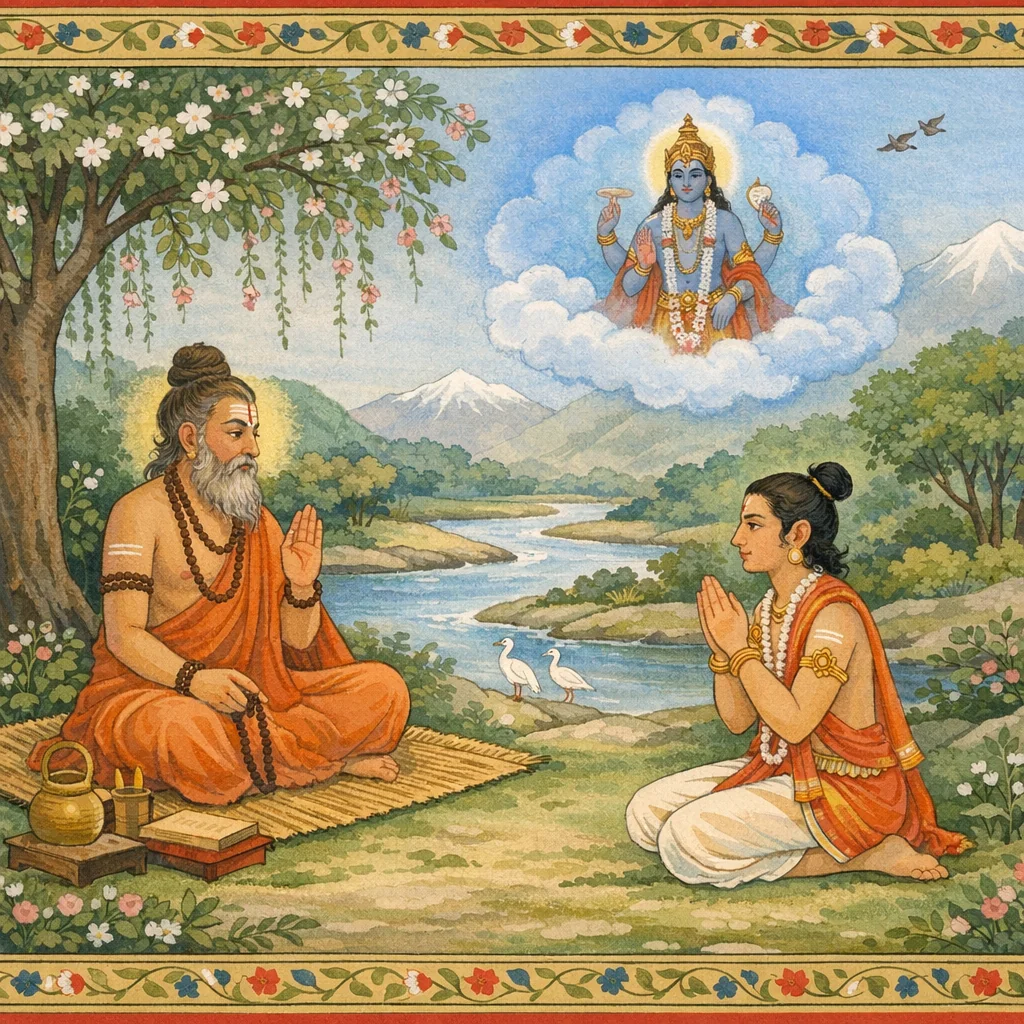
The chapter opens with a poignant tīrtha-scene at the Gaṅgā’s mouth: a noble woman weeps, and her tears fall into the river as divine lotuses and fragrant flowers. Inquiry follows—who are the woman and the ascetic-like man gathering lotuses for Śiva’s worship? Śiva questions Devī about the lament, and a “sin-destroying” account is set forth. The daitya lineage is then told: Huṇḍa is slain by Nahuṣa; his son Vihuṇḍa performs fierce tapas, becomes a terror to gods and brāhmaṇas, and vows revenge. The devas seek refuge in Viṣṇu, and Janārdana promises to destroy Vihuṇḍa through his māyā. In Nandana, Viṣṇu manifests an incomparable woman—Māyā—who ensnares Vihuṇḍa with desire and sets a condition: worship Śaṅkara with seven crores of rare flowers born of Kāmodā, and garland her. Unable to find the “Kāmodā tree,” Vihuṇḍa consults Śukra, who reveals Kāmodā as an apsaras whose laughter produces fragrant blossoms; she dwells at Gaṅgādvāra, where a city named Kāmoda is said to stand. Śukra advises a stratagem to make her laugh, thus furthering Viṣṇu’s design to undo the demon through the entanglement of ritual, eros, and tīrtha-linked floral merit.
Shlokas
Verse 1
कपिंजल उवाच । गंगामुखे पुरा तात रोदमाना वरांगना । नेत्राभ्यामश्रुबिंदूनि पतंति च महाजले
Kapiñjala said: “Formerly, dear one, at the mouth of the Gaṅgā, a noble lady was weeping; and from her eyes drops of tears were falling into the vast waters.”
Verse 2
गंगामध्ये निमज्जंति भवंति कमलानि च । पुष्पाणि दिव्यरूपाणि सौगंधानि महांति च
Within the Gaṅgā, lotuses appear, and there are also flowers of divine form—fragrant and great.
Verse 3
तस्यास्तात सुनेत्राभ्यां किमर्थं प्रपतंति च । गंगोदके महाभाग निर्मला अश्रुबिंदवः
O dear one—why do pure teardrops fall from her beautiful eyes into the waters of the Gaṅgā, O greatly fortunate one?
Verse 4
अस्थिचर्मावशेषस्तु जटाचीरधरः पुनः । तानि सौगंधयुक्तानि पद्मानि विचिनोति सः
Reduced to mere bones and skin, yet again wearing matted jātā-locks and bark-garments, he gathers those lotus-flowers filled with fragrance.
Verse 5
हेमवर्णानि दिव्यानि नीत्वा शिवं समर्चयेत् । सा का नारी समाचक्ष्व स वा को हि महामते
Having brought divine offerings of golden hue, one should duly worship Śiva. Tell me, O great-minded one: what sort of woman is she, and who indeed is that man?
Verse 6
अर्चयित्वा शिवं सोथ कस्मात्पश्चात्प्रदेवति । एतन्मे सर्वमाचक्ष्व यद्यहं वल्लभस्तव
“After worshipping Śiva, why do you lament afterwards, O goddess? Tell me all of this—if indeed I am dear to you.”
Verse 7
कुंजल उवाच । शृणु वत्स प्रवक्ष्यामि वृत्तांतं देवनिर्मितम् । चरित्रं सर्वपापघ्नं विष्णोश्चैव महात्मनः
Kuṃjala said: Listen, dear child; I shall recount a divine account—an episode that destroys all sins—concerning the great-souled Lord Viṣṇu.
Verse 8
योसौ हुंडो महावीर्यो नहुषेण हतो रणे । तस्य पुत्रस्तु विख्यातो विहुंडस्तप आस्थितः
That Huṇḍa of great valor was slain by Nahuṣa in battle. His renowned son, Vihuṇḍa, then undertook the practice of austerities (tapas).
Verse 9
निहतं पितरं श्रुत्वा सामात्यं सपरिच्छदम् । आयुपुत्रेण वीरेण नहुषेण बलीयसा
Hearing that his father had been slain—together with his ministers and all his attendants—by the heroic and mighty Nahuṣa, the son of Āyu,
Verse 10
तपस्तपति सक्रोधाद्देवान्हंतुं समुद्यतः । पौरुषं तस्य दुष्टस्य तपसा वर्द्धितस्य च
Tapastapati, inflamed with wrath, rose up intent on slaying the gods—his manly power, belonging to that wicked one, having been strengthened by austerities.
Verse 11
जानंति देवताः सर्वा दुःसहं समरांगणे । हुंडात्मजो विहुंडस्तु त्रैलोक्यं हंतुमुद्यतः
All the gods know him to be unbearable on the battlefield; Vihuṇḍa, the son of Huṇḍa, has risen up, intent on destroying the three worlds.
Verse 12
पितुर्वैरं करिष्यामि हनिष्ये मानवान्सुरान् । एवं समुद्यतः पापी देवब्राह्मणकंटकः
“I shall avenge my father’s enmity; I will slay men and even the gods.” Thus roused to action, that sinner became a tormentor of the gods and the brāhmaṇas.
Verse 13
उपद्रवं समारेभे प्रजाः पीडयते च सः । तस्यैव तेजसा दग्धा देवाश्चेंद्रपुरोगमाः
He began a campaign of oppression and tormented the people; and by the very blaze of his power, even the gods—led by Indra—were scorched.
Verse 14
शरणं देवदेवस्य जग्मुर्विष्णोर्महात्मनः । देवदेवं जगन्नाथं शंखचक्रगदाधरम्
They sought refuge in great-souled Viṣṇu—the God of gods, the Lord of the universe—who bears the conch, discus, and mace.
Verse 15
ऊचुश्च पाहि नो नित्यं विहुंडस्य महाभयात् । श्रीविष्णुरुवाच । वर्द्धंतु देवताः सर्वाः सुसुखेन महेश्वराः
They said, “Protect us always from the great terror of Vihuṇḍa.” Śrī Viṣṇu replied, “May all the deities—O great lords—prosper and flourish in perfect happiness.”
Verse 16
विहुंडं नाशयिष्यामि पापिष्ठं देवकंटकम् । एवमाभाष्य तान्देवान्मायां कृत्वा जनार्दनः
“I shall destroy Vihuṇḍa, that most wicked thorn to the gods.” Having spoken thus to those deities, Janārdana, employing his divine māyā, proceeded to act.
Verse 17
स्वयमेवस्थितस्तत्र नंदने सुमहायशाः । मायामयं चकाराथ स्त्रीरूपं च गुणान्वितम्
There, in Nandana, the greatly illustrious one stood by himself; then, by his māyā, he fashioned a womanly form endowed with noble qualities.
Verse 18
विष्णुमाया महाभागा सर्वविश्वप्रमोहिनी । चकार रूपमतुलं विष्णोर्मायाप्रमोहिनी
Viṣṇu’s Māyā—most blessed, the deluder of the entire universe—assumed an incomparable form, she who bewilders all by the power of Viṣṇu’s illusion.
Verse 19
विहुंडस्य वधार्थाय रूपलावण्यशालिनी । कुंजल उवाच । स देवानां वधार्थाय दिव्यमार्गं जगाम ह
Endowed with beauty and charm, she set forth to bring about the slaying of Vihuṇḍa. Kuñjala said: then he took the divine path, intending to kill the gods.
Verse 20
नंदनांते ततो मायामपश्यद्दितिजेश्वरः । तया विमोहितो दैत्यः कामबाणकृतांतरः
Then, at the edge of Nandana, the lord of the Diti-born demons beheld an illusory apparition. Bewildered by it, the demon—his heart pierced by the arrows of desire—lost his discernment.
Verse 21
आत्मनाशं न जानाति कालरूपां वरस्त्रियम् । तां दृष्ट्वा नवहेमाभां रूपद्रविणशालिनीम्
He does not recognize his own ruin when he beholds that excellent woman—Time itself in feminine form—radiant like newly minted gold, endowed with beauty and wealth.
Verse 22
लुब्धो विहुंडः पापात्मा तामुवाच वरांगनाम् । कासि कस्य वरारोहे ममचित्तप्रमाथिनि
Vihuṇḍa—greedy and sinful—addressed that excellent woman: “Who are you, O fair-hipped one? Whose are you, O lovely one, who stirs and bewilders my mind?”
Verse 23
संगमं देहि मे भद्रे रक्षरक्ष वरानने । संगमात्तव देवेशि यद्यदिच्छसि सांप्रतम्
“O auspicious one, grant me union; protect me, protect me, O fair-faced goddess. O Lady of the gods, from union with you, whatever you desire at this very moment shall come to be.”
Verse 24
तत्तद्दद्मि महाभागे दुर्लभं देवदानवैः । मायोवाच । मामेव भोक्तुमिच्छा चेद्दायं मे देहि दानव
“I shall grant you that, O noble one—something difficult to obtain even for gods and Dānavas.” Māyā said: “If you truly wish to enjoy me alone, then give me what is due to me, O Dānava.”
Verse 25
सप्तकोटिमितैश्चैव पुष्पैः पूजय शंकरम् । कामोदसंभवैर्दिव्यैः सौगंधैर्देवदुर्लभैः
Worship Śaṅkara with flowers numbering seven crores, and with divine, fragrant blossoms born of Kāmoda—rare even among the gods.
Verse 26
तेषां पुष्पकृतां मालां मम कंठे तु दानव । आरोपय महाभाग एतद्दायं प्रदेहि मे
O Dānava, place that garland made of those flowers upon my neck. O fortunate one, grant me this offering—give me what is due to me.
Verse 27
तदाहं सुप्रिया भार्या भविष्यामि न संशयः । विहुंड उवाच । एवं देवि करिष्यामि वरं दद्मि प्रयाचितम्
“Then I shall indeed become your beloved wife—there is no doubt.” Vihuṇḍa said: “So be it, O Devī; I shall do thus. I grant the boon that has been requested.”
Verse 28
वनानि यानि पुण्यानि दिव्यानि दितिजेश्वरः । बभ्राममन्मथाविष्टो न च पश्यति तं द्रुमम्
The lord of the Dānavas wandered through all the sacred, divine forests that were; yet, overcome by Kāma’s fever, he did not behold that tree.
Verse 29
कामोदकाख्यं पप्रच्छ यत्रतत्र गतः स्वयम् । कामोदाख्यद्रुमो नास्ति वदंत्येवं महाजनाः
He himself went here and there, inquiring about the place called Kāmodaka. Yet the common folk spoke thus: “There is no tree known by the name Kāmoda.”
Verse 30
पृच्छमानः स दुष्टात्मा कामबाणैः प्रपीडितः । पप्रच्छ भार्गवं गत्वा भक्त्या नमित कंधरः
That man of wicked mind, tormented by the arrows of desire, went to Bhārgava and questioned him, bowing his head in devotion.
Verse 31
कामोदकं द्रुमं ब्रूहि कांतं पुष्पसमन्वितम् । शुक्र उवाच । कामोदः पादपो नास्ति योषिदेवास्ति दानव
“Tell me of the Kāmodaka tree—lovely and adorned with blossoms.” Śukra replied: “There is no tree called Kāmoda; rather, O Dānava, there is a celestial maiden (apsaras) named Kāmodā.”
Verse 32
यदा सा हसते चैव प्रसंगेन प्रहर्षिता । तद्धासाज्जज्ञिरे दैत्य सुगंधीनि वराण्यपि
Whenever she laughed, delighted in the flow of conversation, then, O Daitya, from that very laughter there arose excellent boons, fragrant as well.
Verse 33
सुमान्येतानि दिव्यानि कामोदाया न संशयः । हृद्यानि पीतपुष्पाणि सौरभेण युतानि च
These excellent, divine blossoms are surely Kāmodā’s—without doubt. They delight the heart, are yellow-flowered, and are endowed with fragrance.
Verse 34
तेनाप्येकेन पुष्पेण यः समर्चति शंकरम् । तस्येप्सितं महाकामं संपूरयति शंकरः
Even with but a single flower, whoever worships Śaṅkara—Śaṅkara fulfills that person’s cherished great wish.
Verse 35
अस्याश्च रोदनाद्दैत्य प्रभवंति न संशयः । तादृशान्येव पुष्पाणि लोहितानि महांति च
From her very weeping, O listener, the Daityas come into being—of this there is no doubt. And flowers of that same kind arise as well: red in hue and great in size.
Verse 36
सौरभेण विना दैत्य तेषां स्पर्शं न कारयेत् । एवमाकर्णितं तेन वाक्यं शुक्रस्य भाषितम्
“O Daitya, without that fragrance, you should not bring about contact with them.” Thus hearing the words spoken by Śukra, he acted accordingly.
Verse 37
उवाच सा तु कुत्रास्ति कामोदा भृगुनंदन । शुक्र उवाच । गंगाद्वारे महापुण्ये महापातकनाशने
She said, “But where is Kāmodā, O descendant of Bhṛgu?” Śukra replied: “At Gaṅgādvāra—most sacred, the destroyer of the gravest sins.”
Verse 38
कामोदाख्यं पुरं तत्र निर्मितं विश्वकर्मणा । कामोदपत्तने नारी दिव्यभोगैरलंकृता
There, Viśvakarman fashioned a city called Kāmoda. In Kāmoda’s city, a woman was adorned with celestial pleasures and splendid luxuries.
Verse 39
तथा चाभरणैर्भाति सर्वदेवैः सुपूजिता । त्वया तत्रैव गंतव्यं पूजितव्या वराप्सराः
Thus she shines, adorned with ornaments, and is greatly honored by all the gods. Therefore you should go there at once; the excellent apsarās there are to be duly worshipped.
Verse 40
उपायेनापि पुण्येन तां प्रहासय दानव । एवमुक्त्वा तु योगींद्र सः शुक्रो दानवं प्रति
“O Dānava, even by some virtuous stratagem, make her laugh.” Having spoken thus, O lord of yogins, Śukra addressed the Dānava.
Verse 41
विरराम महातेजाः स्वकार्यायोद्यतोऽभवत्
The mighty one of great splendor paused, and became intent on accomplishing his own task.