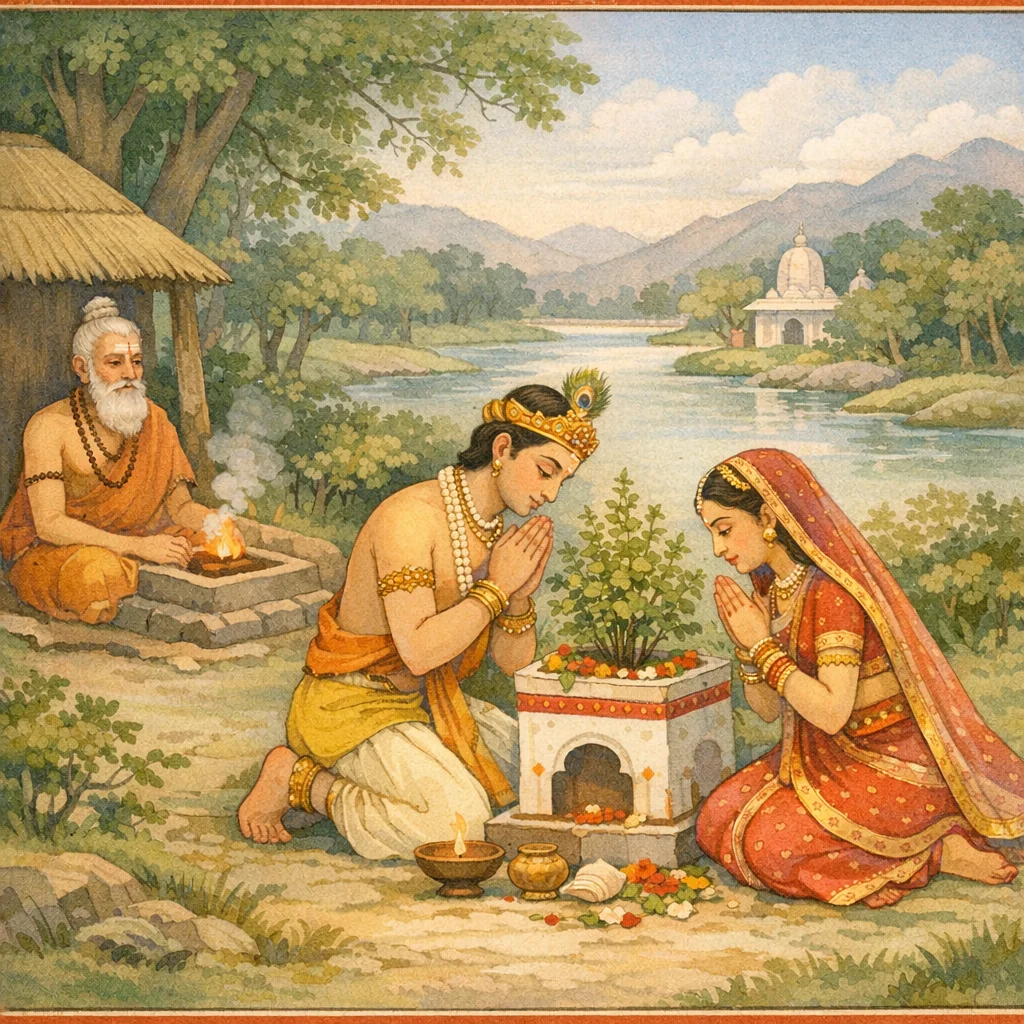
Adhyaya 1
Prologue to the Śivaśarmā Narrative with the Prahlāda Tradition (Variant-Resolution Frame)
The chapter begins with the sages presenting Sūta a doctrinal doubt: why Purāṇic hearings differ regarding Prahlāda and the attainment of the Vaiṣṇava state. To settle the conflict, the text appeals to authorized transmission—Brahmā (Vedhas) spoke to Vyāsa, and Vyāsa’s account, recited by Sūta, clarifies the matter. The narration then turns to an exemplum concerning Śivaśarmā of Dvārakā and his five sons—Yajñaśarman, Vedaśarman, Dharmaśarmā, Viṣṇuśarmā, and Somaśarmā—each learned in śāstra and marked by distinct devotional leanings, especially strong pitṛ-bhakti. Through māyā-based stratagems, Śivaśarmā tests and redirects their devotion, intensifying the filial ordeal. At its height, Vedaśarman is drawn into a demand that culminates in self-decapitation as an extreme proof of obedience and debt-release. The episode frames the moral inquiry to follow: what true dharma is when bhakti, illusion, and violence intersect, and how devotion and duty are ranked within Purāṇic ethics.
Shlokas
Verse 1
इति श्रीपद्मपुराणे भूमिखंडे शिवशर्मचरिते प्रथमोऽध्यायः
Thus ends the First Chapter—“The Account of Śivaśarmā”—in the Bhūmi-khaṇḍa of the venerable Padma Purāṇa.
Verse 2
केचित्पठंति प्रह्लादं पुराणेषु द्विजोत्तमाः । पंचवर्षान्वितेनापि केशवः परितोषितः
Some of the best among the twice-born recite in the Purāṇas the account of Prahlāda; and Keśava is pleased even by one who is only five years old.
Verse 3
देवासुरे कथं प्राप्ते हरिणा सह युध्यति । निहतो वासुदेवेन प्रविष्टो वैष्णवीं तनुम्
When the conflict between the gods and the demons arose, how did he fight alongside Hari? Slain by Vāsudeva, he entered into the divine Vaiṣṇavī form.
Verse 4
सूत उवाच । कश्यपेन पुरा ज्ञातं कृतं व्यासेन धीमता । ब्रह्मणा कथितं पूर्वं व्यासस्याग्रे स्वयं प्रभोः
Sūta said: “In ancient times this was known to Kaśyapa; it was composed by the wise Vyāsa; and earlier it was narrated by Brahmā himself, directly before Vyāsa.”
Verse 5
तमेवं हि प्रवक्ष्यामि भवतामग्रतो द्विजाः । संदेहकारणं जातं छिन्नं देवेन वेधसा
Thus I shall indeed explain it before you, O brāhmaṇas; the cause of the doubt that had arisen has been cut away by the divine Creator, Vedhas (Brahmā).
Verse 6
व्यास उवाचः । शृणु सूत महाभाग ब्रह्मणा परिभाषितम् । प्रह्लादस्य यथा जन्म पुराणेप्यन्यथा श्रुतम्
Vyāsa said: O fortunate Sūta, listen to what was expounded by Brahmā—how Prahlāda’s birth came to be, as it is heard differently even in other Purāṇas.
Verse 7
जातमात्रः सर्वसुखं वैष्णवं मार्गमाश्रितः । महाभागवतश्रेष्ठः प्रह्लादो देवपूजितः
From the very moment of his birth, Prahlāda embraced the Vaiṣṇava path, finding complete auspiciousness and true happiness; he was the foremost among great devotees, revered even by the gods.
Verse 8
विष्णुना सह युद्धाय सपुत्रः संगरंगतः । निहतो वासुदेवेन प्रविष्टो वैष्णवीं तनुम्
Accompanied by his son, he entered the battlefield to wage war with Viṣṇu; slain by Vāsudeva, he entered the Vaiṣṇava form—the state of liberation.
Verse 9
सृष्टिभावं शृणुष्व त्वमस्यैव च महात्मनः । संगरं प्राप्य पुत्राद्यैर्विष्णुना सह वीर्यवान्
Hear from me the account of creation concerning this very great-souled one. Mighty in valor, he—together with Viṣṇu, with sons and the rest—came to the battlefield.
Verse 10
प्रविष्टो वैष्णवं तेजः संप्राप्य स्वेन तेजसा । पुराकल्पे महाभाग यथा जातः स वीर्यवान्
Entering the Vaiṣṇava radiance and attaining it through his own brilliance, in a former aeon, O noble one, he was born just so—full of heroic potency.
Verse 11
वृत्तांतं तस्य वीरस्य प्रवक्ष्यामि समासतः । पश्चिमे सागरस्यांते द्वारका नाम वै पुरी
I shall briefly narrate the account of that heroic one. At the western edge of the ocean there is indeed a city named Dvārakā.
Verse 12
सर्वऋद्धिसमायुक्ता सर्वसिद्धिसमन्विता । तस्यामास्ते सदा देवो योगज्ञो योगवित्तमः
Endowed with every prosperity and accompanied by every siddhi, in her the Lord ever abides—knower of Yoga, and the foremost among those who truly understand Yoga.
Verse 13
शिवशर्मेति विख्यातो वेदशास्त्रार्थकोविदः । तस्यापि पंचपुत्रास्तु बभूवुः शास्त्रकोविदाः
He was renowned by the name Śivaśarman, well-versed in the meanings of the Vedas and the śāstras. He, too, had five sons, all learned in the śāstras.
Verse 14
यज्ञशर्मा वेदशर्मा धर्मशर्मा तथैव च । विष्णुशर्मा महाभागो नूनं तत्कर्मकोविदः
Yajñaśarmā, Vedaśarmā, and likewise Dharmaśarmā—and the fortunate Viṣṇuśarmā—surely are skilled and discerning in that appointed duty.
Verse 15
पंचमः सोमशर्मेति पितृभक्तिपरायणः । पितृभक्तिं विना चैव धर्ममन्यं द्विजोत्तमाः
The fifth was called Somaśarman, wholly devoted to reverence for the Pitṛs, the ancestors. Without devotion to the ancestors, O best of brāhmaṇas, there is no other dharma at all.
Verse 16
न विदंति महात्मानस्तद्भावेन तु भाविताः । तेषां तु भक्तिं संपश्यञ्छिवशर्मा द्विजोत्तमः
Those great souls, transformed by that very disposition, perceived nothing else. But Śivaśarmā, the best of brāhmaṇas, seeing their devotion, was moved within.
Verse 17
चिंतयामास मेधावी निष्कर्षिष्ये सुरोत्तमान् । पितृभक्तेषु यो भावो नैतेषां मनसि स्थितः
The wise one reflected, “I shall bring forth the best among the devas; for the reverent spirit found in those devoted to the Pitṛs is not established in the minds of these.”
Verse 18
यथा जानाम्यहं चाथ करिष्ये बुद्धिपूर्वकम् । विष्णोश्चैव प्रसादात्स सर्वसिद्धिर्बभूव ह
“As I understand it, I shall then act with deliberate discernment. And by the grace of Viṣṇu, complete success indeed came to pass.”
Verse 19
सद्भावं चिंतयामास अंजनार्थं द्विजोत्तमाः । उपायं ब्राह्मणश्रेष्ठस्तपसस्तेजसः किल
The best of the twice-born reflected with noble intent on how to obtain the healing añjana; indeed, that foremost Brāhmaṇa devised a means by the radiance born of his austerity (tapas).
Verse 20
चकार सोप्युपायज्ञो मायया ब्रह्मवित्तमः । तेषामग्रे ततो व्याजं शिवशर्मा व्यदर्शयत्
He too—expert in means and foremost among the knowers of Brahman—employed a stratagem through māyā; then, in their very presence, Śivaśarmā displayed a pretext, a deceptive ruse.
Verse 21
महता ज्वररोगेण मृता माता विदर्शिता । तैस्तु दृष्टा मृता माता पितरं वाक्यमब्रुवन्
Their mother, having died of a severe fever, was shown to them. Having seen their mother dead, they spoke these words to their father.
Verse 22
ययावयं महाभाग गर्भोदरे प्रवर्द्धिताः । कलेवरं परित्यज्य स्वयमेव गता क्षयम्
“O greatly fortunate one, we too—having grown within the womb—cast off the body and, of our own accord, went to dissolution.”
Verse 23
अपहाय गता सेयं स्वर्गे तात किमुच्यते । शिवशर्मोपरिभवं पुत्रं भक्तिपरायणम्
Having abandoned him, she has gone to heaven—what more is there to be said, dear one? But her son, born of Śivaśarman, is devoted wholly to bhakti.
Verse 24
यज्ञशर्माणमाहूय इत्युवाच द्विजोत्तमः । शिवशर्मोवाच । अनेनापि सुतीक्ष्णेन शस्त्रेण निशितेन वै
Having summoned Yajñaśarman, the best of the twice-born spoke thus. Śivaśarman said: “Even with this exceedingly sharp, well-honed weapon indeed…”
Verse 25
विच्छिद्यांगानि सर्वाणि यत्र तत्र क्षिपस्व ह । तत्कृतं तेन पुत्रेण यथादेशः श्रुतः पितुः
“Cut off all his limbs and fling them here and there!”—thus, having heard his father’s command, the son carried it out accordingly.
Verse 26
समायातः पुनः पश्चात्पितरं वाक्यमब्रवीत् । यथादिष्टं त्वया तात तत्सर्वं कृतवानहम्
Returning again afterward, he spoke these words to his father: “Dear father, I have done everything exactly as you instructed.”
Verse 27
समादिश ममान्यच्च कार्यकारणमद्य च । तच्च सर्वं करिष्यामि दुर्जयं दुर्लभं पितः
Command me, Father, as to whatever else must be done and for what purpose, even today. I will accomplish all of it—even what is hard to conquer and difficult to obtain.
Verse 28
तमाज्ञाय महाभागं पितृभक्तं स च द्विजः । निश्चयं परमं ज्ञात्वा द्वितीयस्य विचिंतयन्
Recognizing him as most fortunate and devoted to the forefathers, that brāhmaṇa—having ascertained the highest certainty—began to ponder the second course.
Verse 29
वेदशर्माणमाहूय गच्छ त्वं मम शासनात् । स्त्रिया विना न शक्नोमि स्थातुं कंदर्पमोहितः
Summon Vedaśarman and go at once by my command. Bewildered by Kāma’s delusion, I cannot remain without a woman.
Verse 30
मायया दर्शिता नारी सर्वसौभाग्यसंपदा । एनामानय वत्स त्वं ममार्थे कृतनिश्चयः
By my māyā a woman endowed with every auspicious fortune has been shown to you. Bring her here, my child—be firmly resolved to do this for my sake.
Verse 31
एवमुक्तस्तथा प्राह करिष्ये तव सुप्रियम् । पितरं तं नमस्कृत्य तामुवाच गतस्ततः
Thus addressed, he replied, “I will do what is most pleasing to you.” Then, having bowed to his father, he went and spoke to her.
Verse 32
त्वां देवि याचते तातः कामबाणप्रपीडितः । अतस्त्वं जरया युक्ते प्रसादसुमुखी भव
O Goddess, your father—tormented by the arrows of desire—begs you; therefore, though joined with old age, be gracious and turn your kindly face toward him.
Verse 33
भज त्वं चारुसर्वांगि पितरं मम सुंदरि । एवमाकर्णितं तस्य मायया वेदशर्मणः
“O fair one with lovely limbs, worship my father, O beautiful lady.” Hearing this, Vedaśarman, through (her) māyā, became deeply influenced.
Verse 34
स्त्र्युवाच । जरया पीडितस्यापि नैवेच्छामि कदाचन । सश्लेष्ममुखरोगस्य व्याधिग्रस्तस्य सांप्रतम्
The woman said: “Even if he is tormented by old age, I never desire him—least of all now, when he suffers from phlegm and diseases of the mouth and is presently stricken with illness.”
Verse 35
शिथिलस्यापि चार्तस्य तस्य वृद्धस्य संगमम् । भवंतं रंतुमिच्छामि करिष्ये तव सुप्रियम्
“Though he is feeble, distressed, and aged, I do not desire union with him. I desire union with you for pleasure; I will do what is most dear to you.”
Verse 36
भवंतं रूपसौभाग्यैर्गुणरत्नैरलंकृतम् । दिव्यलक्षणसंपन्नं दिव्यरूपं महौजसम्
“You are adorned with the auspicious fortune of beauty and with jewel-like virtues—endowed with divine marks, of divine form, and possessed of great splendor.”
Verse 37
किं करिष्यसि तातेन वृद्धेन शृणु मानद । ममांगभोगभावेन सर्वं प्राप्स्यसि दुर्लभम्
“What will you do with that old man, dear one? Listen, O giver of honor: through the enjoyment of my body you will obtain everything—even what is hard to attain.”
Verse 38
यद्यत्त्वमिच्छसे विप्र तद्ददामि न संशयः । एतद्वाक्यं महच्छ्रुत्वा अप्रियं पापसंकुलम्
“Whatever you desire, O brāhmaṇa, that I shall give—of this there is no doubt.” Hearing those weighty words—unwelcome and fraught with sin—he was disturbed.
Verse 39
वेदशर्मोवाच । अधर्मयुक्तं ते वाक्यमयुक्तं पापमिश्रितम् । नेदृशं मां वदेर्देवि पितृभक्तिमनागसम्
Vedaśarman said: “Your words are joined with adharma—improper and tainted with sin. O Goddess, do not speak to me in such a way; I am devoted to my father and am without fault.”
Verse 40
पितुरर्थं समायातस्त्वामहं प्रार्थये शुभे । अन्यदेवं न वक्तव्यं भज त्वं पितरं मम
“For my father’s sake I have come here, O auspicious one; I entreat you: do not speak of any other deity—worship my father.”
Verse 41
यद्यत्त्वमिच्छसे देवि त्रैलोक्ये सचराचरम् । तत्तद्दद्मि न संदेहो देवराज्याधिकं शुभे
“O Goddess, whatever you desire in the three worlds—moving and unmoving—I grant you that; there is no doubt. O auspicious one, I will give you even more than the sovereignty of the gods.”
Verse 42
स्त्र्युवाच । एवं समर्थो दातुं मे पितुरर्थे यदा भवान् । तदा मे दर्शयाद्यैव सेंद्रास्त्वं समहेश्वरान्
The woman said: “If you are indeed capable of granting this for my father’s sake, then show me—this very day—the great lords together with Indra.”
Verse 43
दातुमेवं समर्थोसि दुर्लभं सांप्रतं किल । किं ते बलं महाभाग दर्शयस्व त्वमात्मनः
Truly you are able to grant such a gift—rare in these times. O fortunate one, what is your power? Reveal your own strength.
Verse 44
वेदशर्मोवाच । पश्य पश्य बलं देवि प्रभावं तपसो मम । मयाहूताः समायाता इंद्राद्याः सुरसत्तमाः
Vedaśarmā said: “Look, look, O Goddess—behold the strength, the potency of my tapas. At my summons, the finest of the devas, beginning with Indra, have come here.”
Verse 45
वेदशर्माणमूचुस्ते किं कुर्मो हि द्विजोत्तम । यमेवमिच्छसे विप्र तं ददामो न संशयः
They said to Vedaśarman: “What shall we do, O best of the twice-born? Whatever you desire in this manner, O brāhmaṇa, that we will grant you—without doubt.”
Verse 46
वेदशर्मोवाच । यदि देवाः प्रसान्ना मे प्रसादसुमुखा यदि । ददंतु विमलां भक्तिं पादयोः पितुरेव मे
Vedaśarman said: “If the devas are pleased with me—if their favor is gracious and smiling—then let them grant me pure bhakti at the feet of my father alone.”
Verse 47
एवमस्तु सुराः सर्वे यथायातास्तथा गताः । तमुवाच तथा दृष्ट्वा दृष्टं ते तपसो बलम्
“So be it,” said all the devas; “as you came, so may you depart.” Then, seeing him thus, they said: “Truly, the power of your tapas has been witnessed.”
Verse 48
देवैस्तु नास्ति मे कार्यं यदि दातुमिहेच्छसि । यन्मां नयसि गुर्वर्थं तत्कुरुष्व मम प्रियम्
I have no need of the gods. If you truly wish to give me something here, then do what is dear to me: take me for the sake of my teacher.
Verse 49
देहि त्वं स्वं शिरो विप्र स्वहस्तेन निकृत्य वै । वेदशर्मोवाच । धन्योहमद्य संजातो मुक्तश्चैव ऋणत्रयात्
"Give me your own head, O brāhmaṇa—having indeed cut it off with your own hand." Vedaśarman said: "Blessed am I; today I have been born anew, and I am freed from the threefold debt."
Verse 50
स्वशिरो देवि दास्यामि गृह्यतां गृह्यतां शुभे । शितेन तीक्ष्णधारेण शस्त्रेण द्विजसत्तमः
"O Goddess, I shall give you my own head—accept it, accept it, O auspicious one." Thus spoke the excellent brāhmaṇa, taking up a weapon with a sharp, keen-edged blade.
Verse 51
निकृत्य स्वं शिरश्चाथ दत्तं तस्यै प्रहस्य च । रुधिरेण प्लुतं सा च परिगृह्य गता मुनिम्
Having cut off his own head, he then—laughing—gave it to her. And she, drenched in blood, took it up and went to the sage.
Verse 52
स्त्र्युवाच । तवार्थे प्रेषितं विप्र पुत्रेण वेदशर्मणा । एतच्छिरः संगृहाण निकृत्तं चात्मनात्मनः
The woman said: "O brāhmaṇa, this has been sent for your sake by your son Vedaśarman. Take up this head, cut off by his own hand."
Verse 53
उत्तमांगं प्रदत्तं मे पितृभक्तेन तेन ते । तवार्थे द्विजशार्दूल मामेवं परिभुंक्ष्व वै
That noble head was given to me by him—devoted to his father—for your sake. Therefore, O tiger among brāhmaṇas, for your purpose, accept me in this very way.
Verse 54
तस्य तैर्भ्रातृभिर्दृष्टं साहसं वेदशर्मणः । वेपितांगत्वमापन्नास्ते बभूवुः परस्परम्
When those brothers saw the rash audacity of Vedaśarman, their limbs began to tremble, and they looked at one another in alarm.
Verse 55
मृता नो धर्मसाध्वी सा माता सत्यसमाधिना । अयमेव महाभागः पितुरर्थे मृतः शुभः
Our mother—virtuous and devoted to dharma—has passed away, absorbed in the truth. And this noble, auspicious one has likewise died for the sake of his father.
Verse 56
धन्योयं धन्यतां प्राप्तः पितुरर्थे कृतं शुभम् । एवं संभाषितं तैस्तु भ्रातृभिः पुण्यचारिभिः
“Blessed is he—indeed, he has attained blessedness—for he has done a noble deed for his father’s sake.” Thus was it spoken by those brothers, who were devoted to righteous conduct.
Verse 57
समाकर्ण्य द्विजो वाक्यं ज्ञात्वा भक्तिपरायणम् । निकृत्तं च शिरस्तेन पुत्रेण वेदशर्मणा
Hearing those words, the brāhmaṇa recognized him as devoted to bhakti; and he learned that his head had been cut off by his own son, Vedaśarman.
Verse 58
धर्मशर्माणमाहाथ शिर एतत्प्रगृह्यताम्
Then he said to Dharmaśarmā: “Take up this head.”